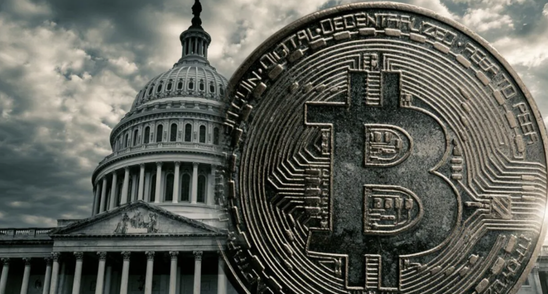
What would happen to Bitcoin if the U.S. government shuts down?
TechFlow Selected TechFlow Selected
What would happen to Bitcoin if the U.S. government shuts down?
Government shutdown may delay the release of non-farm payroll data, potentially increasing cryptocurrency volatility this week.
 Navigating Web3 tides with focused insights
By: Stacy Jones
Translated by: Chopper, Foresight News
TL;DR
-
If the U.S. government faces a shutdown, Friday's nonfarm payrolls report may be delayed—an important data point for Bitcoin traders assessing whether the Federal Reserve will cut rates.
-
Bitcoin has surged past $114,000 but remains 0.7% below its level from two weeks ago amid uncertainty over the potential shutdown.
-
Historical data shows mixed effects of government shutdowns on Bitcoin: it rose 14% during the 2013 shutdown but fell 6% during the 2018–2019 shutdown.
Bitcoin traders had hoped to use upcoming U.S. employment data to gauge whether the Federal Reserve would cut interest rates again. But with the U.S. government teetering on the brink of a shutdown, they may have to wait longer for this crucial data.
Analysts say the impact of a government shutdown on Bitcoin remains uncertain, which could amplify short-term market volatility. During the last two shutdowns, Bitcoin's price performance was markedly different.
"Rate cut expectations support risk assets, but bubble concerns and political risks increase short-term volatility. For cryptocurrencies, this brings both liquidity support and downside uncertainty," Bitunix analysts wrote in a report sent to Decrypt. "In the medium term, confirmed rate cuts will improve liquidity and support risk assets. But in the short term, fears of bubbles and shutdown risks heighten market fragility, making sharp declines followed by rebounds more likely."
If Congress fails to pass a full appropriations bill or a continuing resolution by midnight Tuesday, federal funding will lapse, and "non-essential" government functions will partially shut down. The U.S. federal fiscal year ends on September 30.
"This week’s main event—the nonfarm payrolls report—might not happen as scheduled. If Congress fails to reach consensus on a short-term funding bill by tomorrow night, Friday’s jobs data could become the first high-profile casualty of a government shutdown," said John Reid, Head of Macro and Thematic Research at Deutsche Bank, in a note to Decrypt. "In fact, during the October 2013 government shutdown, the September jobs report wasn’t released until October 22."
At the time of writing, Bitcoin had risen 3.8% in the past 24 hours, surpassing $114,000. However, according to cryptocurrency price aggregation platform CoinGecko, this price remains 0.7% lower than two weeks ago.
Economic statistics and data processing are not considered "essential government functions," meaning the U.S. Bureau of Labor Statistics would have to pause the release of the upcoming jobs report until government funding resumes. The data won't disappear, but delays could trigger market volatility. Investors know well that the Fed's monetary policy decisions are heavily influenced by employment and inflation data.
Nansen research analyst Nicolai Sondergaard told Decrypt that a government shutdown could exacerbate short-term volatility in crypto markets.
"But I'm not sure the impact will be greater. It might differ if most investors believe the shutdown issue can be resolved quickly," he added. "Also, even if there is an impact, I wouldn't be surprised if the potential effects of a shutdown ripple through broader financial markets before it actually happens."
Crypto markets aren't experiencing a government shutdown for the first time.
The October 2013 government shutdown lasted 16 days. From October 1 to October 17, Bitcoin rose 14%, climbing from $132.04 to $151.34.
However, "Bitcoin always rises during a shutdown" is not a rule. The longest government shutdown in U.S. history occurred from December 22, 2018, to January 25, 2019, lasting 35 days. During that period, Bitcoin fell 6%, declining from $3,802.22 to $3,575.85 by the end of the shutdown.
On Myriad, the prediction market under Dastan, Decrypt’s parent company, user skepticism is growing around the idea that the Federal Open Market Committee (FOMC) will adjust interest rates twice in 2025. The share of skeptical users has risen to 75%, up from 40% in the first week of September.
Among these skeptics, some believe the Fed will adjust rates at both of its remaining FOMC meetings this year, while others think the Fed will wait until 2026 before considering further adjustments.
Julio Moreno, Research Head at Cryptoquant, said the market environments during the 2013 and 2018–2019 government shutdowns were vastly different. "During the 2013 government shutdown, Bitcoin was in the final stage of a bull cycle, with strong demand growth," he explained to Decrypt. "By the time the 2018 shutdown occurred, Bitcoin was in a bear market, with shrinking demand."
Moreno added that Bitcoin’s current market positioning is closer to 2013 than to 2018.
"As we enter the fourth quarter, Bitcoin demand is rising. Historically, the fourth quarter tends to be a strong period for Bitcoin prices," he said.
Join TechFlow official community to stay tuned
Telegram:https://t.me/TechFlowDaily
X (Twitter):https://x.com/TechFlowPost
X (Twitter) EN:https://x.com/BlockFlow_News
 Decrypt