Interview with Plasma CEO: "Deposit 1 Dollar, Get 10,000" Aligns With Our Operational Philosophy—We Want to Build a Community-Driven Project
TechFlow Selected TechFlow Selected
Interview with Plasma CEO: "Deposit 1 Dollar, Get 10,000" Aligns With Our Operational Philosophy—We Want to Build a Community-Driven Project
Plasma's vision is very clear: global commerce will gradually shift toward stablecoins, and Plasma will become a key driving force behind this transition.
 Navigating Web3 tides with focused insights
Compiled & Translated: TechFlow
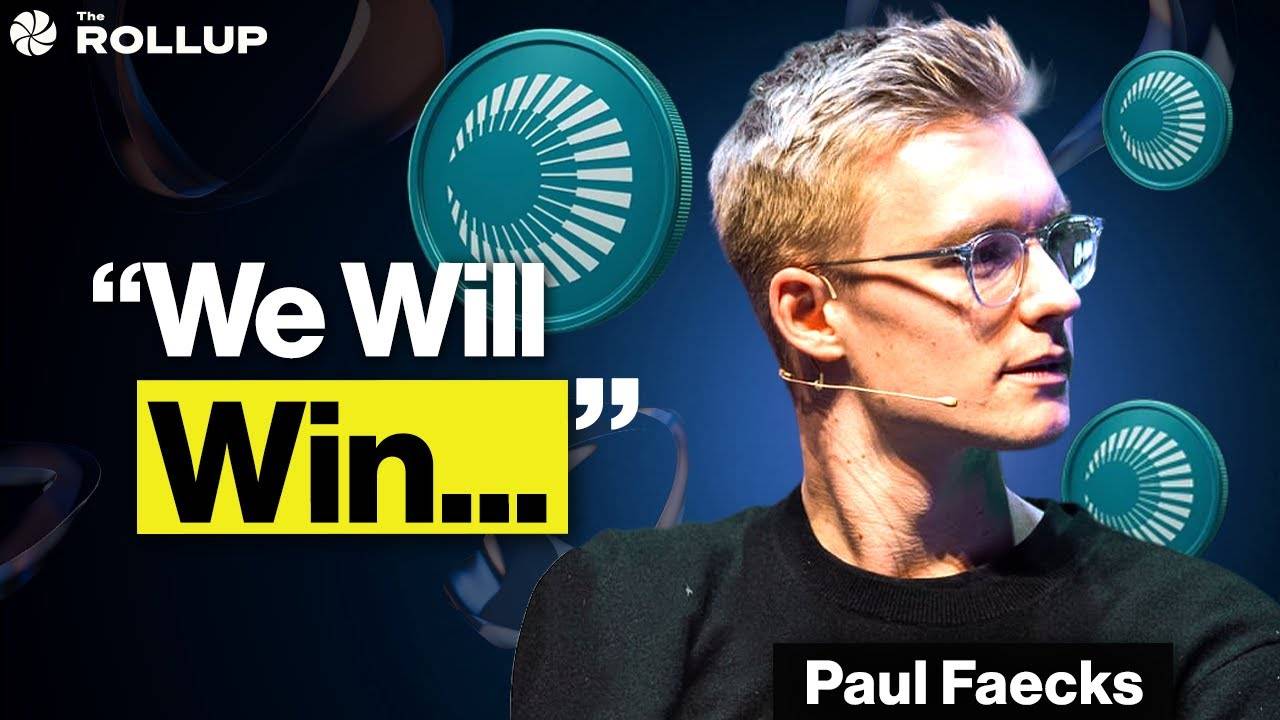
Guest: Paul Faecks, CEO of Plasma
Hosts: Andy; Robbie
Podcast Source: The Rollup
Original Title: How Plasma Plans To Win The Trillion Dollar Stablecoin Battle - CEO Paul Faecks
Air Date: September 28, 2025
Key Takeaways
The day after Plasma's mainnet and XPL token launch, The Rollup sat down with Plasma CEO Paul Faecks to discuss:
-
Airdrop and XPL distribution strategy
-
Bringing yield on-chain to Binance’s 280 million users
-
Vision for the XPL token
-
Plasma One: Building a new bank for the unbanked
-
Competing with Visa on market cap beyond $50 billion
-
Why "scaling" will look different five years from now
-
Tether partnership and USDT dominance
Notable Insights Summary
-
Decisions around token distribution and issuance are fundamentally about entering the market in an open way—allowing broad participation. Putting $1 on-chain could return $10,000. This aligns with our long-standing philosophy.
-
Prior to mainnet launch, we secured a major yield partnership with Binance. Through it, users can deposit directly from Binance into Aave on Plasma.
-
Relying solely on crypto-native users isn’t sustainable. We must drive genuine organic usage—not just incentive-driven behavior—and ensure the platform itself is compelling and meets real user needs.
-
We’ve always wanted this to become a community-driven project. I believe decisions made around token allocation reflect that vision—bringing the ecosystem closer to community needs.
-
Stablecoins are at the beginning of an industry inflection point. Today’s circulating supply is around $260–270 billion—we believe this market will eventually reach trillions.
-
I believe dedicated stablecoin chains will emerge, holding hundreds of billions in stablecoins and processing trillions in daily transactions.
-
Stablecoins have become a core strategic tool for global dollar monetary policy by attracting buyers without debt-price preferences.
-
The entire XPL system is designed to align closely with community interests while ensuring XPL plays a central role in the ecosystem.
-
Plasma’s vision is clear: global commerce will gradually shift toward stablecoins, and Plasma will be a key driver of that transformation.
-
We built Plasma around the USDT ecosystem. While we support a multi-stablecoin world, Tether’s market dominance and extensive distribution network are extremely difficult to replicate.
Reflections After XPL Launch
Andy:
Paul, tell us how the past few days have felt. What’s the experience been like?
Paul:
It's been incredibly intense. This whole week has been hectic because launching a blockchain isn't just flipping a switch. There are many moving parts and external variables beyond our full control. So yes, it's been a very high-pressure week. But so far, everything has gone smoothly, and we're thrilled. That said, everyone was completely exhausted last night.
Robbie:
What do you think was the hardest part? Has the toughest phase passed?
Paul:
Not at all. I think the real challenges lie ahead. We've just announced Plasma One, which was clearly part of pre-launch work. In fact, this feels like the true starting point for building our vision. While the chain, DeFi ecosystem, and exchange components are critical, there’s still much more to do.
Andy:
Now, we’d love to hear about your future vision—how you plan to evolve your product roadmap and where you see the chain heading. Clearly, due to the design of the pre-deposit mechanism, Plasma has already attracted significant activity and attention. Before diving deeper into the future, I have one question: Why did you choose the mechanism of rewarding XPL tokens for pre-depositing USDT? For instance, allocating tokens to early depositors has created a frenzy online. Some even say if you put $1 on-chain, you might get back $10,000.
Of course, not everyone operates at that ratio, but many users have indeed benefited. I think you successfully avoided some of the negative sentiment such mechanisms often generate. How did you pull that off? Why reward the Plasma community and Plasma Collective this way? What’s the logic behind this design?
Paul:
I think it's highly consistent with how we've always operated. For example, during our public sale, we set very clear, transparent parameters that anyone could participate in. That’s important to us because we want to enter the market openly and inclusively. Also, Nathan, who leads work on the stablecoin collective, has done an outstanding job achieving remarkable results.
Moreover, we’ve always wanted this to be a large-scale, community-driven collaboration. Especially for stablecoins, we want users not only to use it but truly love it. Only through grassroots adoption can stablecoins truly function and demonstrate their value. I believe our decisions around token distribution are rooted in this philosophy—making the ecosystem more responsive to community needs.
Sustainability of Yield on Plasma
Andy:
Let’s talk about current on-chain dynamics. For example, attractive yields are available on Aave and Ethena’s USDE, along with looping strategies and XPL rewards. These have drawn in many users. So, what’s currently the best way to earn yield on Plasma? How is the broader ecosystem performing? How do you view the sustainability of yield models tied to XPL token incentives? How do you aim to transform this model into one that attracts long-term community participants rather than just “farm-and-dump” behavior? Can you elaborate on your strategy and vision?
Paul:
That’s a great question. Indeed, there are examples where projects achieved high TVL (Total Value Locked) but failed to make meaningful progress due to lack of real-world utility. We’re well aware of this complexity. For us, distribution is key to capturing network value. As a stablecoin network, you need as many participants as possible to increase the network’s overall value.
One often overlooked point is that before mainnet, we established a major yield partnership with Binance. Through it, users can deposit directly from Binance into Aave on Plasma. Remember, Binance has 280 million users—this is a massive breakthrough for us. Our overarching goal is to leverage such partnerships to achieve broader token distribution, making the on-chain money market accessible to any user who sees its value.
Of course, relying solely on crypto-native users isn’t a sustainable model. This group tends to be short-term and highly sensitive to market volatility. Therefore, our strategy cannot revolve exclusively around them—we must expand to a wider audience.
Returning to your question about the sustainability of Plasma DeFi, I believe a key factor is driving genuine organic usage. By “organic,” I mean users engaging based on actual needs, not just reward incentives. In other words, we can’t rely solely on incentives to attract users—we must ensure the platform itself is compelling and meets real user needs. On this front, I believe we’ve made solid progress and will continue focusing here.
Reproducing Plasma’s Success
Robbie:
Your team has a unique advantage. Typically, blockchain projects launch their token only after mainnet and then begin planning ecosystems, using tokens to attract liquidity. But you achieved these goals before launching your token. This makes me wonder—what makes your team special in ways others can’t replicate?
Paul:
We have the best team.
Robbie:
Do you think other teams will try to copy your approach but ultimately fail because they can’t assemble a team like yours?
Paul:
Yes, I hope so. If they don’t, maybe I’ll need to have a direct conversation with them. But honestly, I truly believe we have an exceptional team. I genuinely think having such a smart, long-term-focused team is our biggest advantage. They’re not only capable but deeply committed to building something valuable—which is the most precious asset any company can have.
Stablecoins as an Industry Inflection Point
Andy:
About other teams entering this space—I spoke with Jeremy Elair last week. He shared Circle’s perspective on Arc and their chain, as well as Broads’ USDC distribution strategy. There are also other players like Stripe, Circle, and Tether, all trying to build global stablecoin transfer networks.
When discussing competitors, we often think of large payment processors like Visa—companies with over $50 billion market cap processing trillions in transactions daily. I talked to Jeremy about this—he believes USDC aims to be everywhere, like Netflix, present on smart TVs, smartphones, even smart fridges.
I feel Paul shares a similar vision and has executed it globally with great success. When talking about Arc and chains, he views them as natural evolutions of Web 2.0 tech. For example, you can use Google Chrome on a Mac, stream content on Apple TV or iPad, play shows on LG or Samsung TVs, or use Apple products on a Google Chromebook. This convergence of tech stacks is exactly what we’re discussing. He strongly emphasizes the idea of “expanding the pie” rather than fighting over existing market share. So I’d like to ask you:
In the competitive landscape of stablecoin chains—especially with Plasma as a leader and first-mover—what do you see as your key advantages? Under the “expand the pie” philosophy, what major contributions can Plasma bring to the industry?
Paul:
I believe stablecoins are at the beginning of an industry inflection point. Currently, total circulating stablecoins are around $260–270 billion, but we believe this market will eventually reach the trillion-dollar scale. Many predict stablecoin growth will far exceed past trends, which gives us great optimism about the future.
Looking back, our initial challenge wasn’t competing with giants like Stripe—it was whether what we were doing actually mattered. Why does a stablecoin need a dedicated chain? Why not just use Ethereum? Over time, market demand for stablecoin-specific chains has emerged, which reassures me because it reflects real industry needs.
Now, we do compete with payment giants like Stripe. But our goals and strategies differ. For example, we’re not directly competing with Temple. We believe winning the “large-scale” battle in this industry is key. No project has truly won this space yet—not even Ethereum or Tron. I believe the definition of “large-scale” will change within the next two to five years. I believe dedicated stablecoin chains will emerge, holding hundreds of billions in stablecoins and processing trillions in daily transactions. That’s the future we’re building. So we don’t focus too much on smaller competitors like Temple or Codex. While I respect those teams and their goals, our ambition is much larger.
Impact of a Saturated Stablecoin Market
Robbie:
Another notable shift is market acceptance of stablecoins. There’s now consensus that stablecoin circulation will reach the trillion-dollar level. This isn’t just a market trend—it’s becoming part of U.S. government financing. Stablecoin companies are being used as tools to issue debt, further accelerating stablecoin development. I’m curious—when the stablecoin ecosystem reaches trillion-dollar scale, what impact will that have on the industry?
People like Arthur Hayes believe stablecoin growth will create massive leverage for DeFi applications. But more specifically, regarding DeFi apps on Plasma and shifts in competitive dynamics you’ve observed—how do you see the industry landscape evolving? What are the transitional phases between now and reaching trillion-dollar scale? How do you view this journey from today to the future?
Paul:
This is a complex question involving multiple layers of change. But I firmly believe the future you describe is achievable. Reaching this goal will be complex, especially in the U.S., where stablecoins are gaining strategic importance. Scott Bessent once said stablecoins have become a core strategic tool for global dollar monetary policy, because they attract buyers without debt-price preferences. It may sound like a conspiracy theory, but it reflects reality. Stablecoins solve real problems and unlock vast potential across many domains.
Robbie:
The market seems to have accepted this view. More concretely, as stablecoins integrate further with other systems, how will that reshape the blockchain industry landscape?
Paul:
I believe the boundary between on-chain and off-chain will blur significantly. For years, institutional entry into crypto and DeFi involved debates about front-end vs. back-end, but real integration only began recently. These elements are now converging in practical ways. Our current clients are already using solutions that bridge on-chain and off-chain products. I believe we’ll see more such products—centralized user interfaces powered by on-chain processes. This fusion of on-chain and off-chain will be a key direction for the industry, and it’s a major focus for us at Plasma.
Andy:
I completely agree. This might also be why you’re focusing on developing Plasma One, right? Because stablecoins have critical use cases in cross-border payments, serving the unbanked, and helping people access strong U.S. dollars when they need it most. These were exactly the promises crypto made in 2017, and now the technology is regrouping around these use cases.
Paul:
I believe one of crypto’s core values is permissionless money. It’s a powerful concept. While it’s taken longer than many expected, it’s now gradually becoming a reality.
Andy:
So, tell us about the Plasma One app and the neo-bank vision. Looking five years ahead, what headline would you want to see about Plasma One? What’s your vision for this app? How do you plan to execute it?
Paul:
I believe stablecoins, as core infrastructure, are the perfect tech stack for building consumer-facing products. They serve both as a distribution entry point and dramatically improve financial product UX. As someone who uses stablecoins regularly in a country with a robust banking system and good fintech offerings, I know this isn’t the case for most of the world. So I believe stablecoin-based products can offer better experiences than traditional banking.
That’s exactly why we’re building Plasma One—to showcase stablecoin potential. We’re collaborating with many excellent companies building on Plasma. We welcome these partnerships because they clearly add value. Plasma is a prime example of how stablecoins can serve as a foundation for truly remarkable products.
Plasma’s Distribution Strategy
Robbie:
Can you elaborate on the core thinking behind your distribution strategy? I roughly understand the concept, but your earlier comments gave me a new perspective. Could you explain this strategy in more detail and how you apply it in practice?
Paul:
Absolutely. Our goal is to build a stable and efficient ecosystem, and network effects are key to achieving that. To realize this, we must ensure Plasma applications reach the broadest possible user base—from B2B to B2C. Simply put, it’s crucial that end users can actually access and use Plasma’s features. In fact, this is where Tron stands out in the industry—its strength in stablecoin distribution and user reach. That’s why we place such high importance on this area. To advance this goal, we need to develop concrete applications that truly demonstrate Plasma’s potential, and Plasma One is one of our flagship products in this effort.
Andy:
From theory to practice, the user experience on the Plasma chain appears more user-friendly than traditional crypto systems. For example, when considering the target audience for Plasma One, I think of markets like Turkey, Syria, Brazil, Argentina—regions where users are often the primary target demographic for stablecoins like USDT. These users typically don’t want to deal with complex seed phrases or cumbersome authorization flows. They need free transfers and a simple, secure way to send money to family. They also want privacy protection and, if necessary, the ability to reverse transactions. I know blockchain is designed differently from traditional payment systems, but traditional methods do have certain advantages.
Do you consider user experience a key factor in the design of the Plasma chain? Will Plasma One specifically address these needs in its UX design?
Paul:
Absolutely, completely agree. That’s a fantastic pitch for Plasma One—I fully endorse it.
XPL Token Value Accrual Plan
Andy:
I’ve noticed Visa’s market cap is around $50–60 billion, and other companies processing trillions in payments sit in that range. Many are watching how XPL accrues value and whether it can play a meaningful role in the Plasma network. Currently, revenue and token buyback models excite many, but this might be short-lived. Still, the crypto ecosystem keeps evolving, which I see as a positive trend.
How can XPL become a sustainable asset? For those comparing XPL to Circle or other public companies, can XPL become the best way to gain exposure to the stablecoin market? How do you turn this vision into reality for XPL holders? What would you say to them today?
Paul:
Happy to share. This is something our team has deeply considered. For the Plasma ecosystem, the XPL token must serve a core function.
We want to avoid a fragmented, chaotic scenario—where many separate entities accumulate value without forming a coherent system. Such models aren’t sustainable long-term. Designing XPL’s value accrual mechanism involves significant complexity, which we’ve spent considerable time studying. We’ll share more details publicly in the future. While it’s hard to give a simple answer now, I can say definitively that our entire system is designed to closely align with community interests. We’ll continue advancing in this direction while ensuring XPL plays a central role in the ecosystem.
Plasma’s Partnership with Tether
Andy:
Tether’s co-founder once said in an interview that his mission was to take startups from 0 to 1. Citing Peter Thiel, he noted Tether is no longer a startup. When asked where Tether stands on a 0-to-100 scale, he replied: “I think we’re still at 0.25. From here, our potential growth is infinite. Through innovation, we can disrupt many areas and build many things. Once people understand the real strategy behind every thoughtful action we take each day, they’ll realize the company’s true potential.” He described Tether as a “once-in-a-century company.” Additionally, Tether is seeking to raise $2 billion at a $500 billion valuation, and the CFTC has approved stablecoins for settlement in traditional U.S. derivatives markets.
How important is Tether to Plasma’s future development? Maybe that’s too simple a question. Also, how impactful is your partnership with Paolo in advancing stablecoins at the policy level—say, in the White House? What does this mean for Plasma?
Paul:
First, if Tether is at 0.25, I think Plasma might be at 0.01—we have a lot more to do. While the goal seems distant, I believe it’s a hopeful starting point. The Tether team has built a truly era-defining company through long-term strategic decisions—a path we at Plasma aspire to follow. In the stablecoin space, USDT has performed exceptionally well. I may sound biased, but I truly believe this is fact. That’s why we built Plasma around the USDT ecosystem. While we support a multi-stablecoin world, Tether’s market dominance and extensive distribution network are extremely difficult to replicate. We deeply respect Tether and greatly enjoy our collaboration. I have immense respect for Paolo and the entire team.
Robbie:
Given how fast the crypto industry evolves, Plasma’s successful launch might introduce the project to many for the first time. For these new users, what’s the most important thing you want them to know? Where can they learn more?
Paul:
Everyone can visit our website plasma.to to learn more. I want everyone to know our goal is to lead in the stablecoin space. I believe stablecoins will become one of the largest financial markets globally. Put simply, global economic growth is the opportunity for stablecoins, and we aim to capture a significant share of this massive market. Our vision is clear: global commerce will gradually shift toward stablecoins, and Plasma will be a key force driving this transformation.
Join TechFlow official community to stay tuned
Telegram:https://t.me/TechFlowDaily
X (Twitter):https://x.com/TechFlowPost
X (Twitter) EN:https://x.com/BlockFlow_News
 深潮TechFlow