DAT赛道未完待续:第四季度更多玩家蓄势待发
TechFlow Selected TechFlow Selected
DAT赛道未完待续:第四季度更多玩家蓄势待发
This is a guide to investing in treasury reserve companies for altcoin cryptocurrency.
 Navigating Web3 tides with focused insights
Author: Timothée
Compiled by: TechFlow
"I'm going to make him an offer he can't refuse." —— Altcoin crypto treasury reserve companies offering PIPE investors discounted mNAV entry tickets with fast unlocking. How to invest in (or not invest in) crypto treasury reserve companies (DAT). The current DAT (crypto treasury reserve company) market through Q4 will be driven by Alt DATs (altcoin crypto treasury reserve companies) issued via PIPE, as these altcoin crypto treasury reserve companies are launching the fastest and will immediately impact the scale of underlying tokens. Currently, BTC and ETH markets are saturated, while SOL is approaching a pivotal moment. Altcoins are rising.
TL;DR
-
Key elements of crypto treasury reserve companies -> Refer to the detailed bank comparison table
-
Additional question -> Ask yourself, who is the ultimate owner?
-
FUD around crypto treasury reserve companies -> Some concerns are valid, most aren't—do your own research (DYOR) and read the documents!
-
Q4 outlook -> The hype phase ends, real winners will emerge
<If you're building in this space, DM me>
Why are altcoin crypto treasury reserve companies doing DAT? The reason is simple:
-
New listing path: No longer Binance, but NASDAQ!
-
Buyback + burn... but now monetizable!
Below is some data I've gathered on altcoin crypto treasury reserve companies, excluding the following:
-
Some Alt SPACs (TechFlow note: altcoin special purpose acquisition companies, also known as "blank check companies"—publicly listed shell companies created to acquire or merge with existing companies), such as $TLGY (the ticker for "TLGY Acquisition Corporation," a SPAC serving the $ENA project) and $ETHM (the ticker for "The Ether Machine," a SPAC serving $ETH-related businesses), because they're expected to launch by year-end. While I'm bullish on $TLGY, these projects cannot use funds until deSPAC (TechFlow note: the process where a SPAC completes its merger with a target company. This is a critical stage in the SPAC lifecycle, marking the transition from a "blank check company" to one with actual business operations) is finalized, so promoting them before then is meaningless.
-
Listed operating companies adding BTC strategies, as they are not pure crypto projects. These companies (e.g., $SMLR) may trade at a premium between Q3 2024 and Q3 2025, but I believe long-term they'll trade at a discount to NAV per share as investors have more and better options to gain market exposure.
-
Crypto treasury reserve companies using ELOCs (equity line of credit) instead of PIPE (no immediate cash flow).
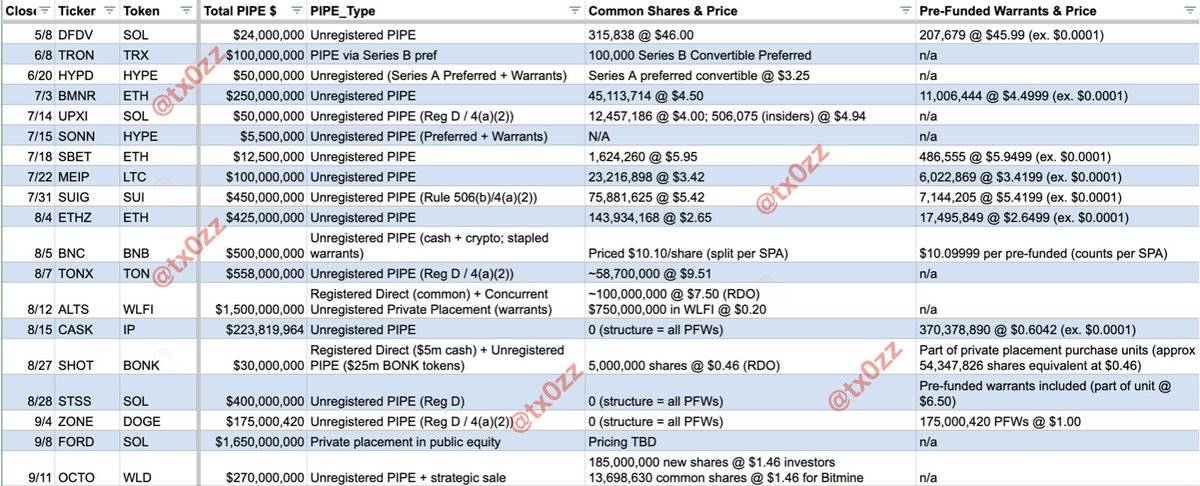
If you spot inaccuracies, DM me and I’ll update.
Key things to watch
-
RDO (rapid unlock): Unregistered portions unlock after registration becomes effective, typically taking 30–45 days, though if PIPE portion is settled in-kind, shareholder approval via NASDAQ may now be required (exact guidance pending).
-
Pre-funding warrants: Often used to avoid crossing certain ownership thresholds that trigger reporting requirements.
-
Warrants as incentives: While warrants are often sweeteners for investment, they help DAT lock in future funding prices to prevent mNAV from turning into a discount.
-
PIPE investor behavior: Assume 99% of PIPE investors will sell upon unlock.
-
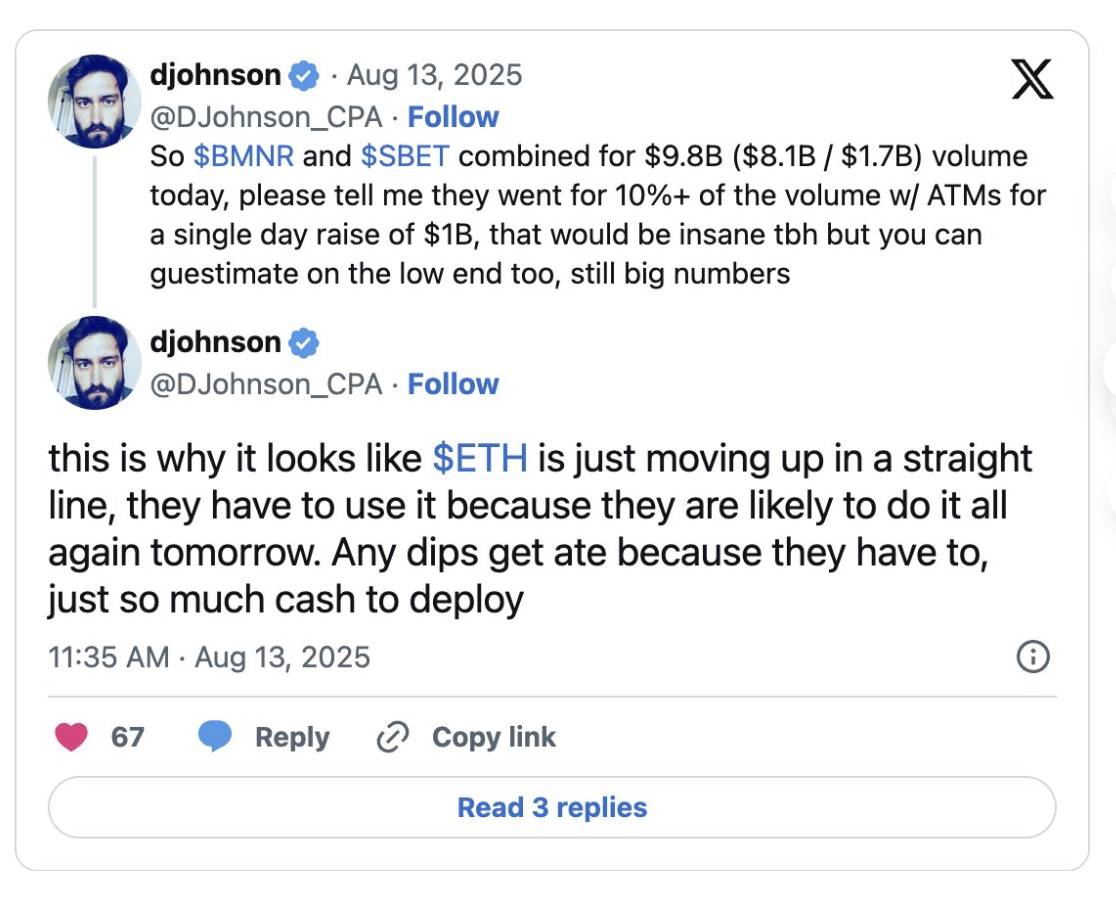
Large-scale fundraising strategy: Some players achieve WKSI (well-known seasoned issuer) status through large raises and high float, enabling immediate ATM (at-the-market offering) to monetize premiums (seen in $BMNR, $SBET, and possibly $OCTO).
-
Structure matters: Focus on NAV per share price and any future overhang pressure from warrants, etc.
-
Pay attention to how much crypto treasury reserve companies spend on banking fees. Currently, sub-$100M DATs often pay excessive fees during launch. Bank performance varies—some excel in branding, others in structuring, finding shells, etc.
Data to add later / Questions for due diligence:
-
Key spokesperson (attention return): Who can drive market attention? Distribution matters, but storytelling is equally important. Not everyone needs to be an industry leader like Tom Lee (@fundstrat), but grassroots momentum helps. For example, $BONK’s crypto treasury reserve company $SHOT has core contributor @theonlynom.
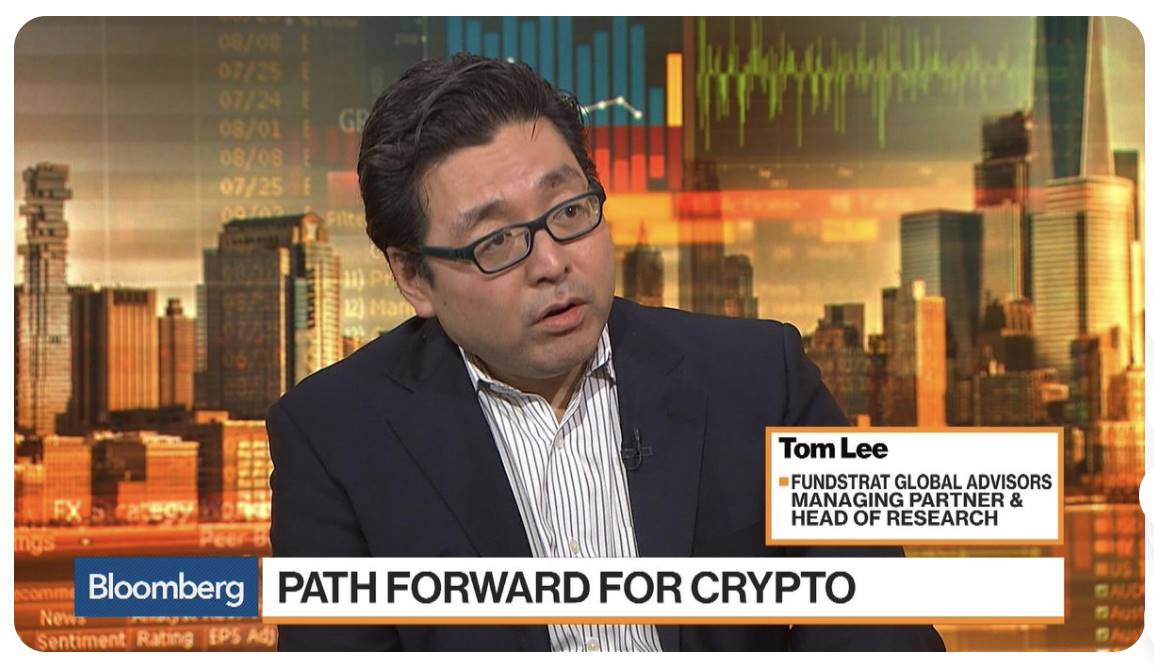
Ideal scenario: spokesperson frequently appears in news outlets like Bloomberg.
-
Financial management: What are the expenses of the crypto treasury reserve company? Are they dragging on cash flow?
-
Liquidity: Float and volume as a percentage of raise size.
-
Buy-side pressure: Net new capital raised as a percentage of token circulating market cap—how much is too much? How much is meaningfully impactful? 10%? 20%?
-
Target company business: Before full spin-out from legacy operations, does the target company have contingent liabilities or long-term risks?
-
Foundation involvement: Is this DAT backed by a foundation, or just one among many?
-
Buybacks: Does the DAT use part of raised funds for defensive buybacks? Are warrants or convertible notes raised to build a separate war chest?
-
Future strategy: If a DAT raises all funds via PIPE at once, it's just one-time cash capture. Watch for active communication from the target company or new team (or foundation). This isn't crypto—real-world consequences apply.
-
PR/IR targeting retail: If a DAT prioritizes data over narrative, their strategy is flawed. Check their tweets—who do you think writes them? Who is the target audience? Altcoin DATs must first build retail awareness.
Key concerns (FUD) and counterpoints:
-
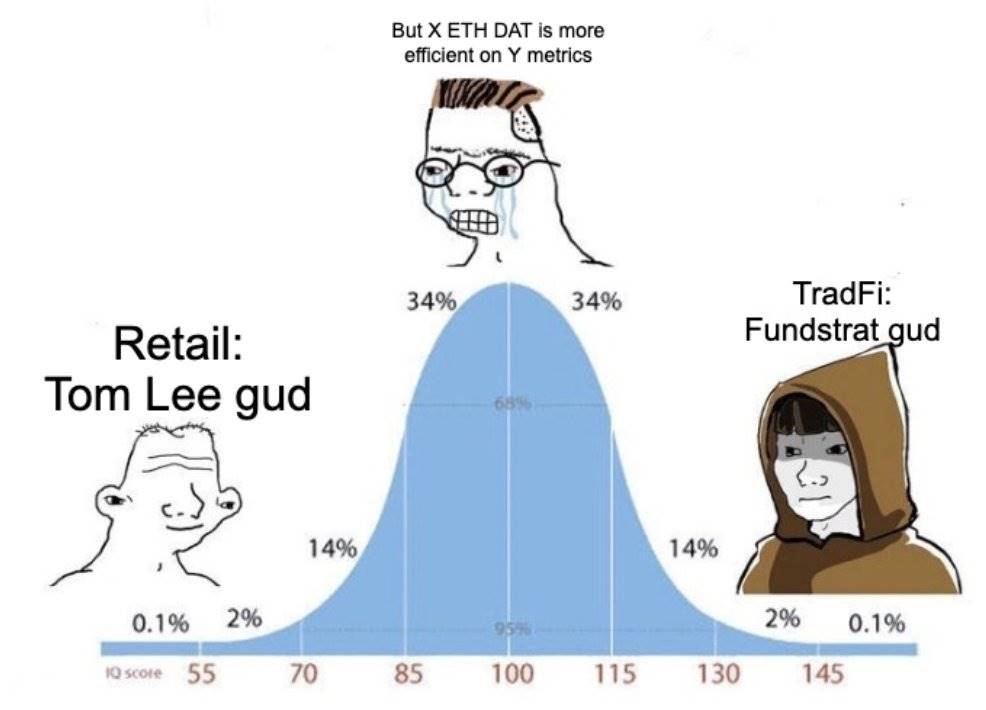
mNAV is compressing! -> Yes, for crypto treasury reserve companies unable to compete as category leaders. For ETH, mNAV compression stems from ATM over-dilution and broader market dynamics. But ask yourself: can a given DAT increase NAV per share meaningfully within months versus holding spot? If yes, that discounted mNAV is your opportunity. Not all DATs are equal—each sector (BTC/ETH/SOL and altcoins) should have one top winner, depending on storytelling ability.
-
This is a Ponzi! -> We haven’t seen wild leverage in these DATs yet, as most are equity-funded. If leverage emerges, it won’t cause runaway chain reactions but rather a broader market slowdown—like indigestion. Less efficient DATs may need to sell tokens to buy back stock, creating downward pressure on token prices.
-
They’re dumping on retail! -> You must trust NASDAQ has stricter listing standards. Companies locking tokens in-kind won’t perform well. The market has noticed (thank you for paying attention!), and I believe the market will act as the price arbiter at launch.
My Q4 outlook:
-
BTC/ETH/SOL markets are largely set, with little room for new entrants unless regionally focused.
-
We may see a few top-50 altcoin DATs backed by foundations, collectively raising ~$250M including in-kind contributions.
-
mNAV compression and potential hurdles with in-kind contributions mean traditional VCs may exit these deals, leading to funding droughts. This also implies shell prices could decline.
-
Structure is critical—we’ll soon see whether DATs launched in July/August can lay foundations for long-term success in Q4 by gaining meaningful media traction and effectively managing capital structures post-unlock.
-
I remain skeptical of SPACs unless you have a star team and highly differentiated story. Look at developments in ETH DAT space, e.g., $BMNR’s strong lead, and assume BTC plays will follow similarly—if you challenge the king (e.g., $MSTR), you must win.
-
I still believe DATs are net positive for the crypto industry, provided they raise net new capital from equity markets and deploy it to fuel flywheel effects within their ecosystems.
Join TechFlow official community to stay tuned
Telegram:https://t.me/TechFlowDaily
X (Twitter):https://x.com/TechFlowPost
X (Twitter) EN:https://x.com/BlockFlow_News
 @tx0zz