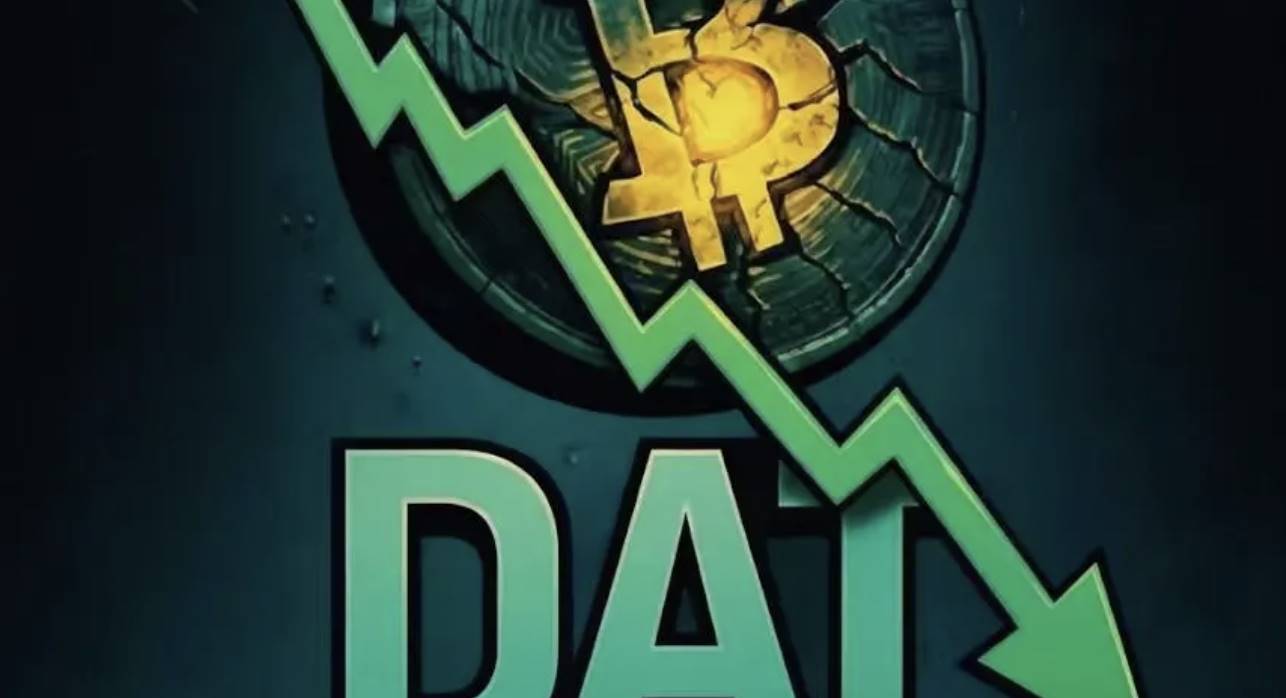
The demise of a DAT company
TechFlow Selected TechFlow Selected
The demise of a DAT company
The $1 billion Ethereum DAT plan led by Li Lin and others has been put on hold due to a bearish market, with funds being returned, which may reflect considerations of investor sentiment behind their "going with the flow" approach.
 Navigating Web3 tides with focused insights
Author: Dao Says Blockchain
Yesterday, several well-known media outlets in the crypto ecosystem reported a piece of news, which I've divided into three parts:
The $1 billion Ethereum DAT initiative led by Li Lin, Shen Bo, Xiao Feng, Cai Wensheng, and others has been suspended, and the funds raised so far have been returned. This was the largest DAT project led by Asian investors.
Regarding the reasons for the suspension, industry sources reported:
Insiders speculate that the main reason for the delay is the bear market following the 1011 incident, with many DAT companies seeing sharp declines in their stock prices recently.
As for future plans, the report states:
On whether the plan will be restarted, relevant parties said they will prioritize investor interests, and it remains to be seen based on market conditions, going with the flow.
I’ve been following this group of prominent figures preparing to launch this Ethereum-based DAT company since the news first emerged. There were two main reasons:
First, in my view, some of these individuals are known for focusing on long-term gains and rejecting short-term speculation.
Second, some of them made significant contributions to Ethereum’s early development.
To me, having such people lead an Ethereum-based DAT company seemed like a rational, level-headed organization capable of independent judgment, not swayed by market sentiment.
Besides, their investment target is Ethereum. In my opinion, from a long-term perspective, this choice is undoubtedly correct, making the risk quite manageable.
Therefore, this DAT company was highly worth watching—certainly more rational than those other Ethereum DAT firms mindlessly shouting that Ethereum will hit XXX dollars by year-end or next year.
The only question I had at the time was:
Was entering the market at over $4,000 per Ethereum (as it was then) the right timing? Could there be a better entry point?
Of course, from a longer-term view, entering at $4,000 could still work, though the team might face short-term market pressure.
Now fast forward to today—recent days have brought nothing but news of steep market drops ——— I’ve been waiting months for this moment.
I check every day to see if Ethereum has fallen below $2,500 and whether the S&P 500 has taken a major hit.
That’s when I came across the aforementioned news, which I split into three segments.
I divided it because each part deserves deep reflection and analysis.
Let’s look at the second segment first—it essentially says the plan was suspended due to the bear market.
By common sense, if you’re bullish on an asset and believe in its long-term potential, shouldn’t you enter during a bear market—be greedy when others are fearful?
I won’t judge whether entering now at $3,000 is ideal, but surely it’s better than buying at $4,000 earlier?
So why hesitate now that prices have dropped?
Has Ethereum’s fundamentals changed?
I don’t recall seeing any news indicating a shift in Ethereum’s fundamentals.
I considered another explanation: perhaps the team believes the current price is still too high.
But if that’s the case, they could simply wait longer until prices drop further. Why return funds now? They should instead intensify fundraising and tell investors: “Prices are low—this is the perfect time to enter. We need more capital now.”
So this explanation doesn’t hold either.
The third segment seems to reveal a deeper reason—summarized as: “pending observation” and “going with the flow.”
What does “going with the flow” really mean?
All I can think of is the typical trader mindset:
The market is rising, so I (by whatever method) predict it will keep rising—believing I can forecast continued upward momentum—and only then do I buy.
Conversely, if the market is falling, I assume it’ll keep falling, so I mustn’t buy.
But if you follow this trading logic, there are countless meme coins perfectly suited for such tactics—why pick Ethereum? If you truly can predict market direction, why not choose something more volatile?
Another line in the third segment is particularly telling: “Relevant parties stated they will prioritize investor interests.”
“Prioritize investor interests”?
Isn’t buying a fundamentally strong, long-term promising asset at a lower price the best way to serve investor interests?
Is buying only when the market keeps climbing really putting investors first?
I suspect what they really mean isn’t “prioritizing investor interests,” but rather “prioritizing investor emotions.”
Why?
Because most investors often care more about emotions and short-term market reactions. If an asset doesn’t rise within three days of purchase, they panic. Try explaining long-term prospects—even one-year projections—they lack the patience. They want to know why it hasn’t gone up yet. If you can’t calm them down, problems arise.
This is exactly the environment the current crypto ecosystem faces.
If you enter now amid poor market conditions and Ethereum falls further, how do you handle emotional investors?
So it’s easier to just suspend the plan, avoiding the risk of investors’ money facing potential losses in the short term. As for the once-promising long-term vision, it’s nearly impossible to explain under current circumstances—even if you did, it might not help.
This kind of investor behavior is a challenge many fund managers face.
Recently, I watched an interview with Lin Yuan discussing precisely this issue.
The reporter asked: What if your investors disagree with your investment decisions?
His answer was blunt: Why bother with them? The agreement is already signed.
Reporter pressed: How do you explain to them?
Again, his reply was direct: No explanation needed.
I appreciate many of Lin Yuan’s views, though some seem half brilliance, half recklessness.
Still, after watching that interview, I genuinely found him fascinating.
Mr. Buffett and Mr. Munger have also shared similarly firm views on handling investors.
When asked why they don’t split Berkshire Hathaway shares to lower the price and allow broader participation, both replied sharply (paraphrased): We don’t want lots of investors buying our stock. We intend to maintain this barrier. Investors who don’t agree with our approach should sell and find someone else.
Later, due to numerous Wall Street groups misusing their names to launch “copycat” funds, Buffett and Munger were forced to issue Class B shares. But since then, no further share splits have occurred.
In my view, whether it’s Lin Yuan, Buffett, or Munger, their message is essentially the same: Fund managers must not be swayed by investor emotions. The best approach is to strictly screen investors from the start. Those with misaligned philosophies and values shouldn’t be accepted—their money isn’t worth taking. Such people shouldn’t partner together; they’ll never sail the same boat to victory.
Join TechFlow official community to stay tuned
Telegram:https://t.me/TechFlowDaily
X (Twitter):https://x.com/TechFlowPost
X (Twitter) EN:https://x.com/BlockFlow_News