Will Newsom Issue a "Trump Corruption Coin"? What Unconventional Moves Will the New U.S. President Make After Taking Office?
TechFlow Selected TechFlow Selected
Will Newsom Issue a "Trump Corruption Coin"? What Unconventional Moves Will the New U.S. President Make After Taking Office?
A federal nation that appears to embrace Crypto is actually experiencing undercurrents behind the scenes.
 Navigating Web3 tides with focused insights
By Eric, Foresight News
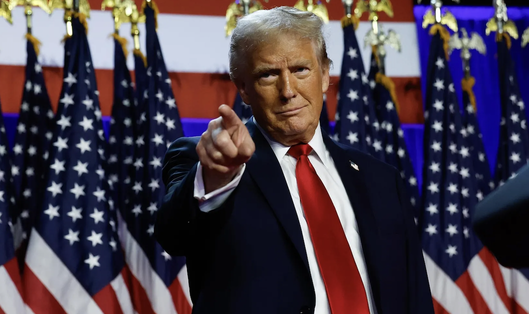
California Governor Gavin Newsom and current U.S. President Donald Trump have clashed repeatedly in recent years.
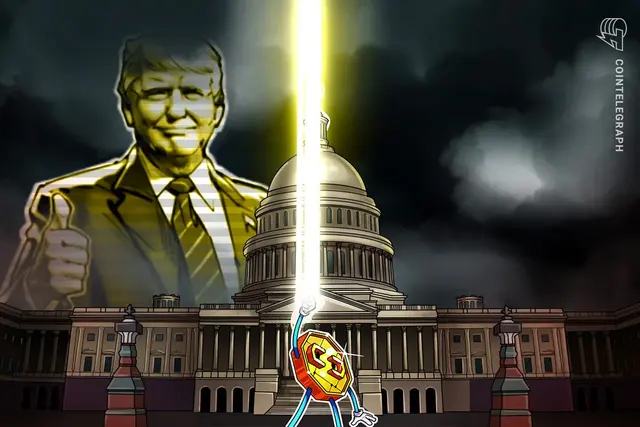
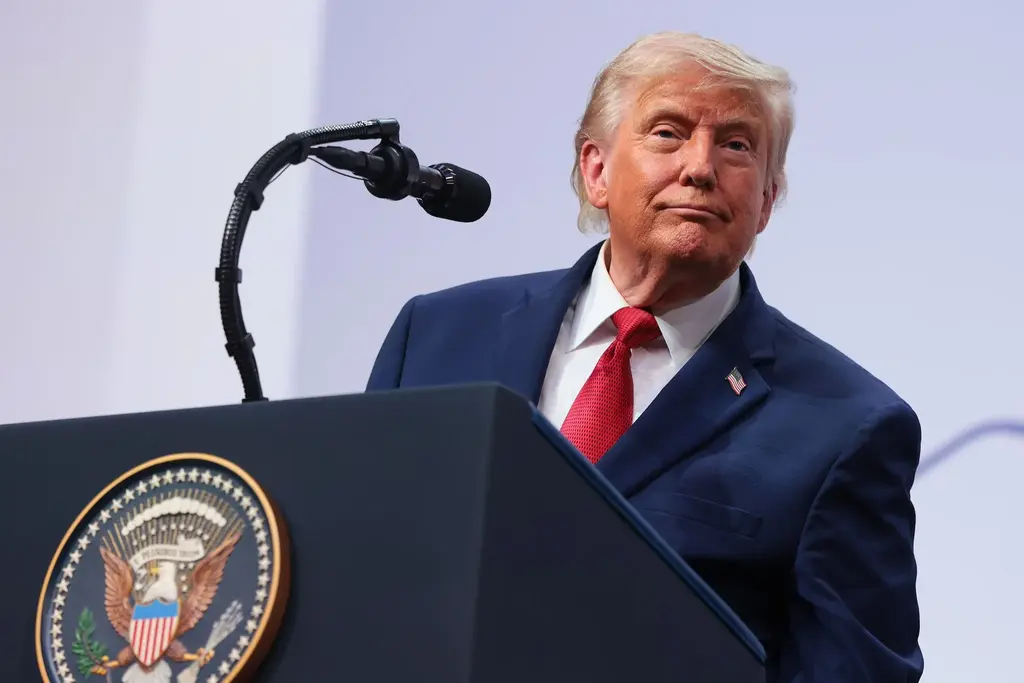
Recently, Newsom announced plans on the podcast Pivot—hosted by tech journalist Kara Swisher and New York University professor Scott Galloway—to issue a "Trump Corruption Coin" as satire against Trump's alleged misuse of cryptocurrency for personal gain.

Newsom's criticism of Trump during the podcast was sharp and unrelenting. This deep-seated animosity didn't emerge overnight. Their months-long escalating tensions reflect the outrage of certain American citizens who despise political corruption, and also serve as a microcosm of America’s broader partisan divide.
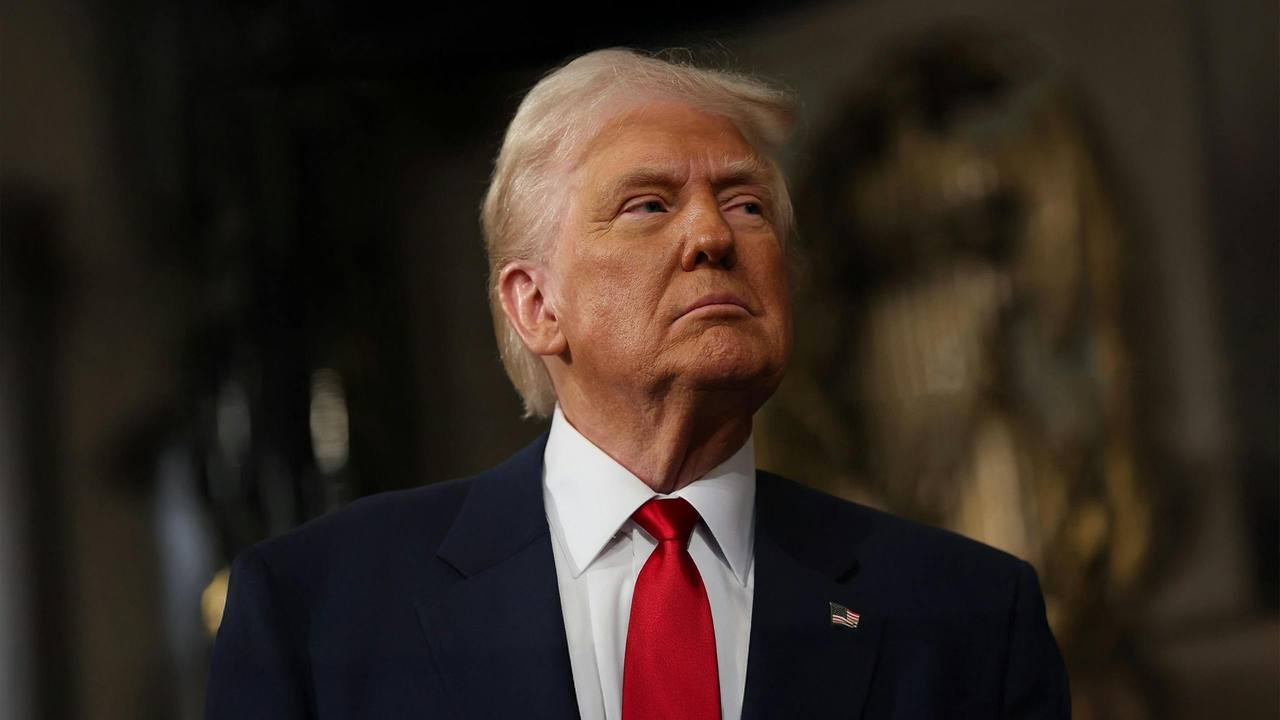
Controversies over Trump’s “corruption” are nothing new. According to an investigation by The Washington Post, the Trump International Hotel hosted official delegations from at least 47 countries between 2017 and 2020. The Saudi government spent over $270,000 at the hotel during that period, while the U.S. government finalized arms deals with Saudi Arabia worth $110 billion. Such apparent exchanges of preferential policies for commercial benefits have shocked many.
During his term beginning in 2025, the Trump family became best known in the Web3 industry for launching the meme token TRUMP and establishing World Liberty Financial. According to The New York Times, as of July 1 this year, Trump and his partners held $6.9 billion worth of TRUMP tokens and 15 billion WIFI tokens through World Liberty Financial. During WIFI’s presale, individuals and institutions including Justin Sun, DWF Labs, and Aqua 1 Foundation contributed generously.
In late May this year, Trump hosted a dinner at his private country club outside Washington, D.C., inviting the top 220 holders of the TRUMP token. Many eager to gain favor rushed to buy TRUMP tokens ahead of the event. However, the outcome disappointed many: Trump himself only made a brief appearance with a bland speech, offered no promised close interactions, and served an underwhelming meal. The president’s conduct sparked public protests.

The White House insists that the Trump family’s cryptocurrency activities are managed by a family trust and unrelated to Trump personally. In reality, however, the TRUMP and WIFI tokens represent just the tip of the iceberg regarding alleged corrupt acts during Trump’s current term.
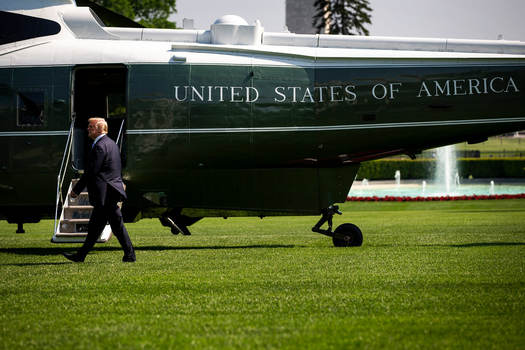
One of Trump’s most controversial actions so far this year came on May 21, when the U.S. Department of Defense announced it would accept a $400 million presidential aircraft gifted by Qatar. Xinhua News Agency reported that critics argue such acceptance of high-value gifts from foreign governments may violate the Foreign Emoluments Clause of the U.S. Constitution, which prohibits federal officials from accepting gifts from foreign states without congressional approval, aiming to prevent foreign influence on U.S. policymaking.
Trump, relevant U.S. government entities, and Qatari officials all claim the aircraft was donated to the United States as a nation, not to Trump personally. Democrats seized the opportunity to attack, with Democratic members of the House Judiciary Committee launching an investigation and demanding legal documents from the Trump administration to justify the plane’s acceptance.
Similar incidents have become too numerous to count in recent months. After taking office, Trump repealed a 50-year-old government ethics code, eliminated oversight personnel, and loosened restrictions on lobbyists and foreign bribes. He also cited “national security” to limit enforcement of the Foreign Corrupt Practices Act, effectively shielding U.S. companies and associated politicians from accountability for overseas bribery.
Moreover, Trump has strongly supported major donors who helped secure his election victory. For instance, Trevor Milton, founder of electric truck maker Nikola, was pardoned after being convicted of defrauding investors, despite having donated $1.8 million to Trump’s campaign. Jared Isaacman, a key investor in Elon Musk’s SpaceX, became the youngest-ever NASA administrator with support from both Musk and Trump. Musk himself was granted “special government employee” status, exempting him from asset disclosure and conflict-of-interest reviews. Of course, their later fallout is another story.
The New York Times commented in an article titled “Why Aren’t Americans Angry About Trump Profiting From Power?” that the public may have become numb to presidential self-dealing, which has in some ways become an accepted “unwritten rule.” As Trump’s son put it, during Trump’s first term, keeping a low profile still drew criticism, so they might as well act openly. Michael Johnston, Colgate University emeritus professor and author of multiple books on American corruption, said: “I’ve studied and written about corruption for 50 years, and I’m still shocked.” Even with Trump’s blatant actions, unless Democrats use this as grounds to try to remove him, the Republican Party and its powerful backers remain an iceberg no individual or organization can easily crack.
California Governor Gavin Newsom currently appears to be the most likely “fighter” willing to take on Trump.
Since taking office in 2019, Newsom has remained a staunch Democrat. Shortly after assuming office, he signed SB 54, prohibiting state police from assisting U.S. Immigration and Customs Enforcement (ICE) in detaining undocumented immigrants. Trump’s administration then sued California, claiming its “sanctuary state” policy was unconstitutional and threatening to cut federal funding. Newsom fired back defiantly, challenging, “Go ahead and try to arrest people in California.” A federal appeals court later ruled partially in favor of both sides: the White House must continue funding, but California must share certain data. Thus began their bitter feud.
Their back-and-forth continued frequently until an incident in June finally pushed Newsom over the edge.
Two months ago, an ICE raid on an immigrant neighborhood caused unrest. Without Newsom’s consent, Trump directly ordered the deployment of 4,000 National Guard troops and 700 Marines to Los Angeles. Newsom immediately sued Trump and the Secretary of Defense for violating the Constitution and joined 22 Democratic governors in condemning the “federal abuse of military forces.” From that point on, their mutual disdain escalated into a full-blown online war. On the podcast mentioned earlier, Newsom spared no words in lambasting Trump.
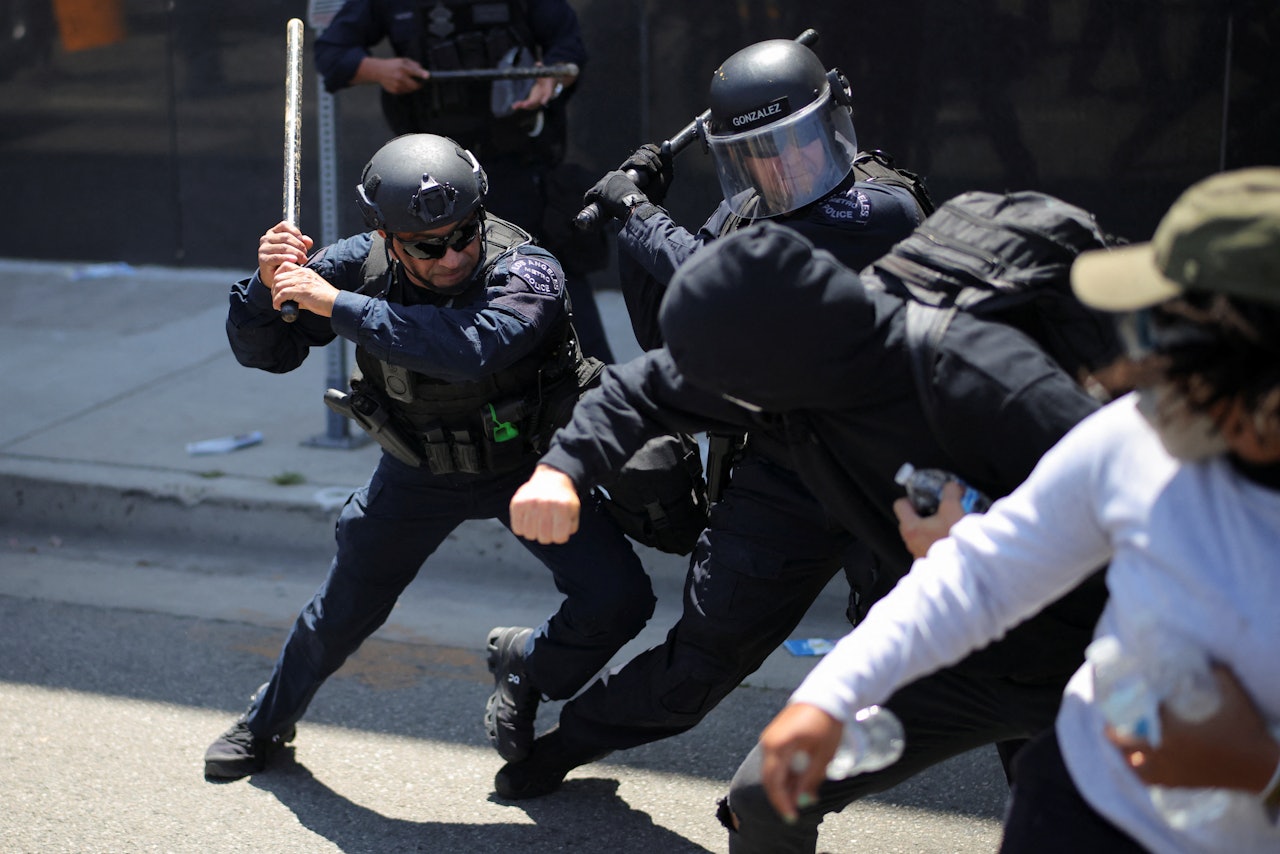
From immigration to military deployment, the conflict between Newsom and Trump has long transcended mere policy disagreements—it reflects a systemic clash between federal centralization and state autonomy, between Red America and Blue America. Though Newsom had previously stated he had no interest in the presidency, he recently acknowledged “the possibility of launching a campaign.” The potential 2028 presidential showdown between the two has turned this “California vs. White House” saga into an increasingly clear prelude to a presidential battle.
Recent analyses suggest Trump’s shocking move to take a stake in Intel signals a plan to implement “state capitalism” to revive the U.S. economy, yet this approach sharply conflicts with the nation’s long-standing culture of free-market principles. While Trump’s unconventional tactics have yielded some results, they also lay bare his corruption—and ironically, cryptocurrency has become an unintended beneficiary of these political struggles.
Nonetheless, despite strong support for cryptocurrency in Congress, numerous state-level crypto reserve bills have failed to pass governors’ offices. Lobbying from the Web3 industry represents significant campaign contributions. While current U.S. support for Web3 undoubtedly benefits industry growth, it may not always stem from altruistic motives—a nation seemingly open to crypto may in fact be navigating turbulent undercurrents behind closed doors.
Join TechFlow official community to stay tuned
Telegram:https://t.me/TechFlowDaily
X (Twitter):https://x.com/TechFlowPost
X (Twitter) EN:https://x.com/BlockFlow_News
 Foresight News