Michael Novogratz: Wall Street refugee
TechFlow Selected TechFlow Selected
Michael Novogratz: Wall Street refugee
Novogratz has never been a typical Wall Street figure.
 Navigating Web3 tides with focused insights
By: Thejaswini M A
Translated by: Block unicorn
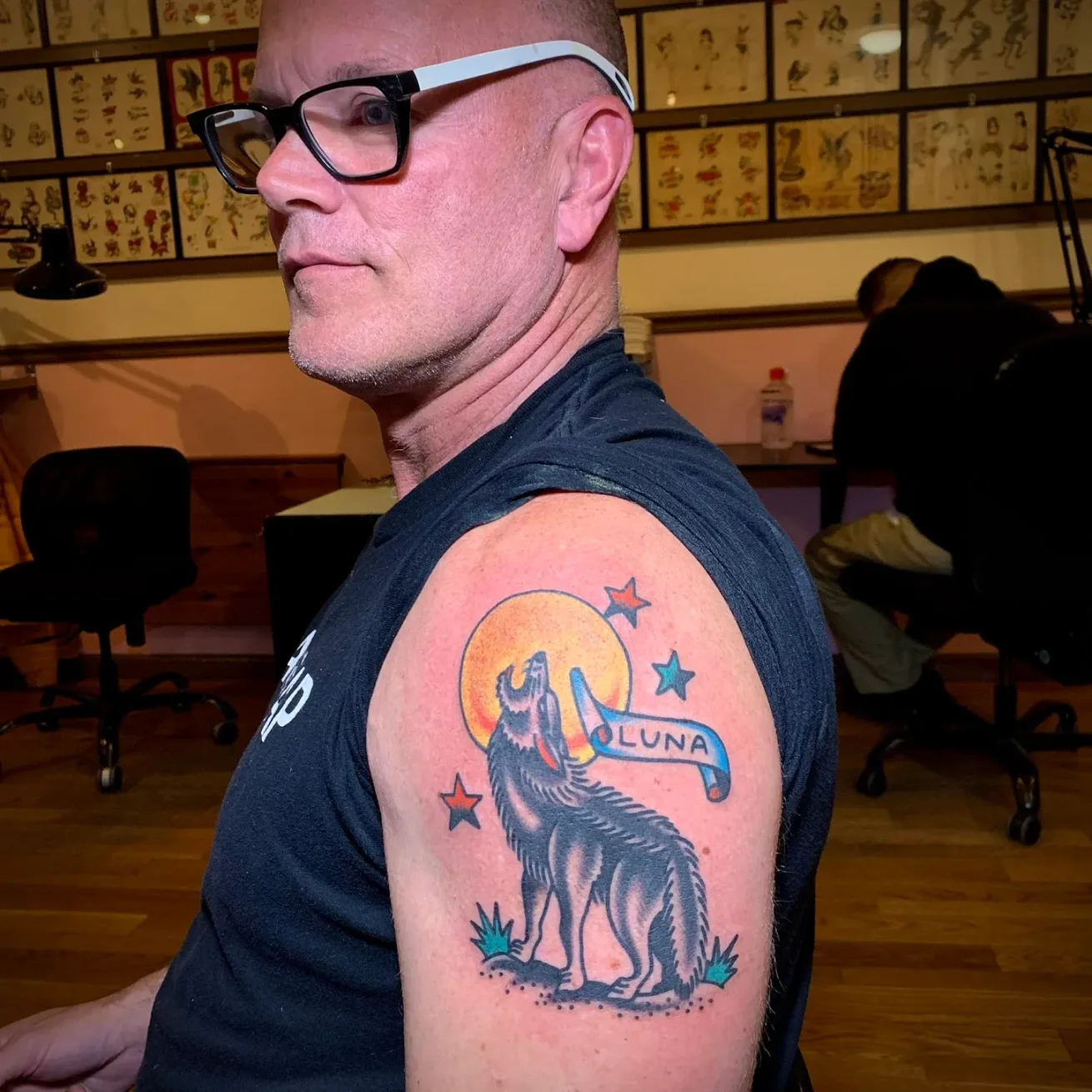
May 18, 2022. Michael Novogratz stared at his arm.
The Terra Luna tattoo stared back. This crescent-shaped ink cost him millions of dollars and nearly ruined his reputation. Luna’s price collapsed from $80 to zero within 72 hours, wiping out $60 billion—what the crypto world now calls a “death spiral.”
Most CEOs would hire crisis management firms, blame market manipulation, or simply stay silent until the news cycle passed.
What did Novogratz do? He sat down and wrote a letter.
“My tattoo will forever remind me that venture investing requires humility,” he wrote, detailing what went wrong and what Galaxy Digital learned from backing one of the biggest disasters in cryptocurrency history. The letter was published that afternoon.
When bets go bad, the standard playbook is clear: issue carefully worded statements, shift attention to “market conditions,” and wait for headlines to fade. Novogratz didn’t follow that script. He wrote a letter.
Instead of deflecting blame, he laid out exactly what happened with Terra, where Galaxy Digital misjudged things, and what he personally learned. In finance, confessions aren’t unheard of—but he turned it into an industry case study. While others might try to downplay losses, he placed his own mistakes under the spotlight, inviting everyone to learn from them.
Novogratz has never been a typical Wall Street figure. The former Goldman Sachs partner and Princeton wrestler built his career by treating both victories and defeats as material for the next big move.
Terra Luna’s collapse would have ended most crypto careers. For Novogratz, it was just another chapter in a story that began on the wrestling mat, passed through currency trading floors, and now spans from Bitcoin advocacy to multi-billion-dollar artificial intelligence data centers.
Personal Growth
November 26, 1964. Alexandria, Virginia.
Michael Novogratz was born third in a family of seven children—a household that treated competition like others treat vegetables: essential, beneficial, non-negotiable. His father played football at West Point, so expectations for excellence were basic, at minimum requiring convincingly strong performance.
At Fort Hunt High School, Novogratz discovered wrestling. It wasn’t just a sport; it was a laboratory where he learned how to read opponents, manage risk under pressure, and understand that preparation matters more than talent.
He became a state runner-up and was recruited to Princeton University. Competing in Division I wrestling at an Ivy League school meant cutting weight, tactical preparation, and everything depending on individual performance. Novogratz served as captain of Princeton’s wrestling team and earned first-team All-Ivy honors in 1986 and 1987.
April 1, 1989. Goldman Sachs.
Novogratz joined Goldman Sachs as a short-term bond salesman—one of hundreds of young recruits flooding in each year hoping to become partners. Most fail within five years. A few get rich. An even smaller number grasp the bigger game.
What set Novogratz apart was his timing and willingness to take on tasks others avoided. In 1992, Goldman sent him to Asia. Over the next seven years, he experienced currency volatility, interest rate shocks, and ultimately witnessed the 1997 Asian financial crisis. This firsthand exposure to one of modern markets’ most turbulent chapters made him one of Goldman’s global macro experts.
His experience in currency and interest rate markets positioned him as one of Goldman Sachs’ global macro specialists when he was elected partner in 1998.
Partnership brought equity, profit-sharing, and access to internal investment opportunities. More importantly, it established him as a key global macro expert just as Goldman prepared to dominate financial markets for the next decade.
But Novogratz’s ascent wasn’t over.
The Fortress Empire and Its Fall
2022. Fortress Investment Group.
Novogratz left Goldman to join one of the most iconic alternative investment platforms of the 2000s. Fortress was expanding from private equity and credit into global macro, and they needed someone who knew how to profit from currency chaos, interest rate swings, and commodity supercycles.
At the time, central banks actively managed exchange rates, emerging markets gradually opened to international capital, and technology enabled new ways to trade everything from Brazilian reals to copper futures. Macro investing was entering a golden age.
Novogratz ran Fortress’s macro fund, which grew to manage $2.3 billion in assets. The fund operated successfully for over a decade—until market conditions shifted after 2008.
February 2007. Fortress goes public.
The company became the first major U.S.-based alternative asset manager to list publicly, briefly creating multiple paper billionaires. Novogratz and his partners appeared on magazine covers and delivered keynote speeches at major conferences. For 18 months, they were stars of the financial industry, riding the peak of the credit bubble.
Then, 2008 hit like an asteroid impact.
The financial crisis fundamentally changed the environment for macro trading. Central banks began coordinating policies more closely, currency relationships shifted in unexpected ways, and many market inefficiencies that macro funds exploited disappeared.
By 2013, the macro fund was struggling. The post-crisis era proved challenging for many macro strategies. Coordinated central bank policies reduced the volatility that macro traders relied on. Methods that had worked for a decade suddenly failed completely.
October 2015. Announcement made.
Fortress would liquidate its $2.3 billion macro business. Novogratz would step away, and capital would be returned to investors. Thirteen years of building a top-tier macro operation ended with a press release and a series of final investor conference calls.
This closure could have ended a career. Instead, Novogratz treated it as education. The success of the macro fund was based on identifying policy-driven market misalignments and exploiting them before others noticed. Its failure reflected changing market conditions—not poor management.
He would need this lesson sooner than he expected.
Digital Gold Rush
2013. New York, Fortress office.
Pete Briger, co-CEO of Fortress Investment Group and fellow ex-Goldman colleague, called Novogratz with a life-changing question: “Bro, do you know about Bitcoin?”
The answer was no.
Novogratz had never heard of digital currencies, blockchain technology, or cryptocurrencies. Like most traditional finance professionals, he assumed it was either a scam or a programmer’s toy.
But Briger, after conversations with friends in California, believed Bitcoin represented something far more significant. They teamed up with Dan Morehead, former Tiger Management executive who founded Pantera Capital—one of the first investment firms focused exclusively on crypto.
They bought Bitcoin when it was around $200. Initially, it was just another macro bet. If digital currency succeeded, early adopters would profit. If it failed, they could absorb the loss.
It was a non-sovereign store of value emerging during unprecedented monetary expansion by central banks. It offered exposure to technological disruption while hedging against currency devaluation.
By 2016, Novogratz had become one of crypto’s most visible advocates, appearing on financial television to explain digital assets to institutional audiences who might otherwise dismiss other crypto enthusiasts. His Goldman background and macro investing experience gave him credibility among traditional investors who were just beginning to view crypto as a legitimate asset class.
But advocacy wasn’t enough. He wanted to build something.
January 9, 2018. Galaxy Digital announced.
Novogratz unveiled plans to create an integrated digital asset platform combining trading, asset management, investment banking, and proprietary investing.
The vision was to become the Goldman Sachs of crypto—offering institutions the same range of services as traditional investment banks, but focused exclusively on digital asset markets.
Through a business combination with a Canadian company, Galaxy was able to go public despite unclear regulatory frameworks for crypto businesses. On July 31, 2018, Galaxy completed a reverse takeover and began trading on the Toronto Stock Exchange’s Venture Exchange under the ticker GLXY.
Galaxy’s business model differed from pure-play crypto companies. Rather than simply buying and holding digital assets, the firm actively traded its treasury positions, using gains from successful trades to fund operations and expansion. This approach was more flexible than pure holding strategies, but meant financial results partially depended on market timing and trading performance.
During crypto bull markets, this strategy performed exceptionally well. As Bitcoin and Ethereum appreciated, Galaxy’s treasury operations generated hundreds of millions in profits. Venture investments in crypto infrastructure and applications created additional value as the ecosystem matured.
But 2022 brought new challenges.
May 2022. The Terra Luna ecosystem collapsed within days, erasing $60 billion in value and destroying one of crypto’s most hyped projects. When Luna’s algorithmic stablecoin mechanism catastrophically failed, Galaxy Digital faced both financial loss and reputational damage.
Galaxy Digital had invested in 18.5 million LUNA tokens at $0.22 per token back in 2020, gradually selling as prices rose. By April 2022, when LUNA peaked at $119, Galaxy had already earned hundreds of millions in profits and reduced its holdings to nearly zero. When the algorithmic stablecoin mechanism finally failed, Galaxy’s direct financial exposure was negligible—only about 2,000 LUNA tokens remained, worth less than ten dollars after the crash.
Instead of hiding mistakes, Novogratz issued a detailed explanation outlining where things went wrong and what lessons could be drawn from the event. His CEO letter discussed risk management, due diligence processes, and the importance of distinguishing sustainable business models from experimental protocols in crypto.
He acknowledged that his public support for Luna—including getting a Luna tattoo—was premature given the project’s experimental nature.
The letter became one of the most widely cited analyses following Luna’s collapse, praised for its honest assessment that even seasoned investors can make mistakes in emerging technologies.
Betting on Artificial Intelligence Infrastructure
2024. New York, Galaxy office.
As the crypto market recovered from the Terra Luna and FTX collapses, Novogratz was already planning Galaxy’s next phase. The company announced a major expansion into artificial intelligence infrastructure, leveraging its expertise in energy-intensive computing operations to enter the AI data center market.
Galaxy had learned how to operate large-scale computing infrastructure through its cryptocurrency mining business. Skills optimized for Bitcoin mining could be applied to AI computing—potentially with higher margins and more predictable revenue streams.
In August 2024, Galaxy secured $1.4 billion in project financing for its Helios data center campus in Texas. The facility will deliver 800 megawatts of computing capacity to GPU cloud provider CoreWeave under a 15-year contract, generating over $1 billion in annual revenue, according to Galaxy estimates.
The Helios project aims to develop up to 3.5 gigawatts of power capacity when fully built out, positioning Galaxy as a major player in the supply-constrained AI infrastructure market. The business model promises higher margins and more predictable income compared to crypto trading operations.
The company maintains its existing crypto operations while expanding into adjacent technology areas that leverage its core competencies.
Crypto has always been a blend of finance and theater. Few embody this better than Novogratz.
He is a storyteller who trades, and a trader who tells stories. The Luna tattoo, the candid letters, the cable TV appearances—these are not just acts of confession or branding, but proof that markets are driven as much by narrative as by data.
The enterprises he has built—whether Fortress’s macro fund or Galaxy’s hybrid of trading, venture capital, and now AI data centers—are attempts to give form to forces larger than any individual: currency volatility, decentralized finance, computational demands of machine learning.
If he sometimes appears reckless, it’s because he operates in domains without certainty. And if he sometimes seems prescient, it’s because these domains reward the rare few who act quickly, endure losses, and still double down on the next bet.
For Novogratz, the question has never been whether crypto or AI will face failures—because they won’t keep rising forever. The real question is who can build platforms resilient enough to survive those failures. Amid all the chaos and drama surrounding him, this may be his most important contribution: providing the scaffolding that allows the next generation of risk-takers to stand taller.
That’s all for today.
Join TechFlow official community to stay tuned
Telegram:https://t.me/TechFlowDaily
X (Twitter):https://x.com/TechFlowPost
X (Twitter) EN:https://x.com/BlockFlow_News