Interview with VanEck Head of Digital Asset Research: Is Bitcoin's Four-Year Bull Market Cycle Still Valid?
TechFlow Selected TechFlow Selected
Interview with VanEck Head of Digital Asset Research: Is Bitcoin's Four-Year Bull Market Cycle Still Valid?
In-depth discussion of cryptocurrency stock investment strategies, market cycles, and regulatory developments.
 Navigating Web3 tides with focused insights
Author: Anthony Pompliano
Translation: Baihua Blockchain
In this podcast, Anthony Pompliano speaks with Matthew Sigel, VanEck's Head of Digital Asset Research, discussing investment strategies for crypto-related equities, new staking regulations, and market cycles.
The NODE ETF he manages has delivered a 28-30% return since its launch in May—less than four months—and significantly outperformed both Bitcoin and the S&P 500. It employs a diversified "barbell" strategy covering traders, infrastructure, and fintech companies.
During the interview, he detailed the current NODE ETF portfolio and specific holdings, analyzed the potential of companies like Entergy and TEPCO in Bitcoin mining, emphasized leverage risks in investing, and discussed the SEC’s decision on staking non-securitization and its impact on Ethereum, Solana, and others.
He believes the four-year Bitcoin cycle may continue but in a milder form, shared market top indicators such as funding rates and unrealized profit ratios, and offered views on current regulatory dynamics in the crypto market.
Below is an excerpt from the conversation, translated by Baihua Blockchain.
Q1: The NODE ETF achieved a 28-30% return in just over three months—double that of Bitcoin and far exceeding indices like the S&P 500. How do you construct your investment portfolio for crypto-related stocks?
Matthew Sigel: Thanks for having me. We've been running a cryptocurrency equity strategy for nearly five years and have observed their extreme volatility. At market peaks, highly leveraged stocks perform best and rise the most, but leverage is toxic to crypto. This has been proven across past cycles.
At market tops, crypto equity indices are filled with high-leverage assets, which suffer sharp declines during corrections. Many crypto stock products have underperformed; from an investor perspective, putting significant capital into Bitcoin-related products hasn't yielded satisfactory returns. Therefore, the goal of NODE ETF is broad exposure—investing in companies that clearly benefit from on-chain economies, such as exchanges and infrastructure providers like Coinbase and Bullish.
Bitcoin dominance is around 65%. Large infrastructure firms involved in power, electrical equipment, and industrial infrastructure matter for earnings per share growth and valuation multiples. Additionally, fintech and e-commerce companies—similar to the Magnificent 7 but focused on Latin America or Asia—are beginning large-scale stablecoin adoption, delivering cost savings. Our investment universe spans over 150 companies with digital asset strategies.
We use a barbell strategy: one-third of the fund goes into pure crypto equities, while the rest targets peripheral sectors like e-commerce and fintech, plus low-volatility segments such as utilities, energy, and infrastructure, which provide stability.
High diversification helps avoid major drawdowns. Diversification is especially important when Bitcoin nears all-time highs. A rising tide lifts all boats, but we might miss 10x stocks—that was our strategy a year ago. During market pullbacks, we sell off low-volatility portions and increase exposure to more volatile assets. Since inception, we’ve delivered outperformance with lower volatility—returns double that of Bitcoin, yet with less risk. That’s our sweet spot. We can’t guarantee it will repeat, but that’s the objective.
Q2: You mentioned utilities and electrical hardware companies. Can you give specific examples? Are they solely serving Bitcoin miners, or do they have other intersections with crypto?
Matthew Sigel: Some utility companies operate in regions experiencing Bitcoin mining growth, such as Arkansas and Oklahoma.
This approach mirrors how public equity investors think—analyzing vertical integration across the system. Growth in Bitcoin mining implies demand for hardware, energy, and geographic locations. We trace the chain, identify growing regions and power suppliers, and evaluate their businesses. The crypto aspect is additive—it helps us spot opportunities, after which we conduct fundamental analysis to determine if valuations are reasonable or aligned with our strategy.
Unless a company explicitly mentions Bitcoin, blockchain, or crypto as a business driver, it won’t enter our investable universe. We manage the portfolio based on volatility relative to Bitcoin and the S&P 500, focusing on the entire supply chain. For example, Solaris SEI produces generators suitable for data center colocation, used for both Bitcoin mining and AI hybrid applications. Miners are shifting from pure mining to allocating part of their capacity to AI, requiring equipment upgrades—we’re watching this space closely.
Q3: In industrial and energy sectors, which other companies are included? What are your screening criteria for crypto-related companies?
Matthew Sigel: We prefer holding companies we're optimistic about because our diversified approach offers investors a smoother volatility experience. Screening criteria include corporate leverage relative to profitability.
For instance, MicroStrategy makes up 10% of pure crypto stock indices, but we hold only 3% or less due to its high leverage. When markets peak, indices become overly concentrated in high-leverage firms—the highest-risk setup. In the last cycle, many tech companies turned into Bitcoin banks and went bankrupt. This cycle, leverage creation is more professional, but naked assets like Bitcoin remain more volatile than equities. We aim for compounding growth with reduced drawdowns by targeting companies with strong balance sheets—that’s our core investment philosophy.
Q4: TEPCO stock recently rose 50%. Is this driven by Bitcoin and crypto, or increased AI demand in Japan? How do you view its potential?
Matthew Sigel: TEPCO invested in Bitcoin mining firm Agile X, though information is limited and media coverage sparse. EDF in France has also started Bitcoin mining, with Marathon acquiring three-quarters of its data center business. The French parliament proposed formalizing Bitcoin mining to pay down debt, as excess French power previously exported to Germany. Japanese lawmakers are also discussing expanding mining, amid renewed momentum for nuclear restarts.
TEPCO’s market cap dropped from $30 billion to $6 billion—high risk but cheap valuation. If Japan follows France’s increasing acceptance, TEPCO could benefit. Even without this trend, the risk-reward remains attractive.
We tweeted encouraging TEPCO to speak more about its mining activities, believing this could boost its valuation multiple. A solid fundamental story combined with Bitcoin integration—if operations expand—could drive substantial price gains. We leverage internal expertise in utilities and energy, collaborating with analysts from our natural resources strategy, which has worked well.
Q5: You noted leverage is one key investment risk, especially among Digital Asset Treasuries (DATs). If entering a bear market, what pitfalls should investors watch for?
Matthew Sigel: Leverage is the primary risk. Our digital asset exposure shows position sizing is critical, especially when dealing with assets exhibiting 80%, 90%, or even 100% volatility. We support some companies but remain more cautious than peers. In public equity funds, we look for valuation arbitrage opportunities. Valuation matters for DATs, especially small-cap firms where management can influence market signals through buyback authorizations and similar actions.
I’m not particularly bearish—some companies will succeed, like MicroStrategy, trading consistently above net asset value. But many may fail, trapping capital while executives collect millions. If trading at 0.8x NAV, it’s hard to act in shareholders’ best interests. This governance topic may warrant deeper discussion later.
Q6: The SEC clarified staking isn’t a security. How does this affect staking strategies for individuals, private funds, and public companies?
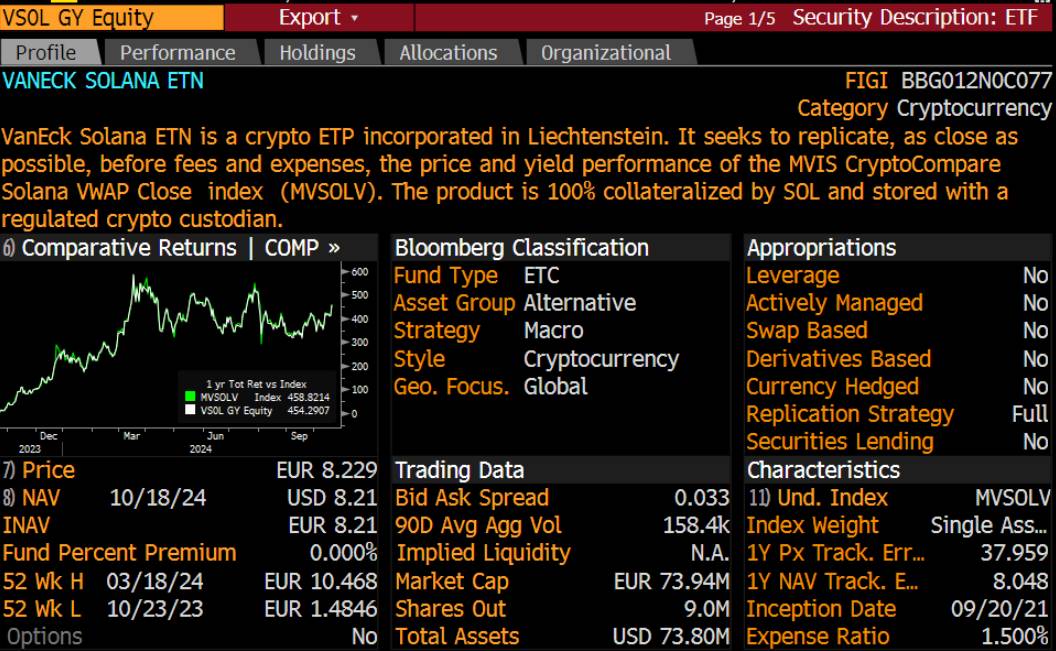
Matthew Sigel: A Solana ETF is expected this fall. We’re pushing for supported staking and in-kind redemption creation—market makers creating shares using Solana directly, reducing friction and professionalizing staking. For ETF staking coins, due diligence thresholds are high: organizational approval is required, regulators scrutinize partners, SOC certification matters, and possibly a U.S.-based validator set. Three years ago, overseas validators were safer; now domestic ones may be preferable.
Staking importance hasn’t changed much. Many altcoins have high inflation rates, diluting investors unless they stake to maintain network share—yield merely offsets inflation. The dollar has depreciated ~4% annually over 50 years; Treasuries return flat or negative after inflation. Staking Ethereum or Solana only breaks even if it merely offsets dilution—non-stakers lose out, real returns near zero. Ethereum and Solana offer positive yields on active blockchains, making positions reasonable. This space is early—most blockchains have low fees and immature token holder mechanisms, resembling high-liquidity venture assets.
Q7: Governments appear increasingly positive toward Bitcoin and crypto. The Treasury Secretary mentioned “budget-neutral” Bitcoin purchases. What Washington regulatory developments are you tracking?
Matthew Sigel: I’ve paid less attention to Washington lately because the foundation is already laid. Investment bank cases show capital formation catalysts. I have low expectations for federal Bitcoin purchases. Bessant’s comments may reveal truth—they likely won’t sell. Large-scale, budget-neutral Bitcoin acquisition would require legislation; even neutral fiscal moves need legal backing.
Q8: Some speculate governments might nationalize large-Bitcoin-holding firms like MicroStrategy. How likely do you see this?
Matthew Sigel: Someone joked on Twitter that he’s buying Bitcoin for the government—this might happen a generation from now, but rational investors won’t base decisions on that. We consider the possibility, but don’t trade stocks or Bitcoin based on it.
If the government sees Bitcoin as strategic, the U.S. already has public companies and ETFs holding large amounts. A century ago, governments demanded asset handovers; today, internet connectivity and public accountability make this difficult. The Treasury Secretary referenced confiscation only in criminal proceedings—easily misunderstood in the internet era. If Bitcoin backed 20% of new Treasury issuance, moral hazard considerations would be valid, say if prices crashed 99%. For now and coming years, governments are more likely to profit via financial repression—like taxing Bitcoin mining franchises or self-hosted transaction activity—much simpler to implement.
Q9: Stablecoin issuance may partially privatize “money creation.” What opportunities or risks are you watching here?
Matthew Sigel: The opportunity lies in stablecoin transaction clearing. The federal government won’t issue stablecoins; laws may make CBDCs impossible. Individual states might try—Wyoming leads.
Merchant acceptance is an issue—can a Wyoming stablecoin work in Miami? State-chartered banks can issue dollar-backed stablecoins, akin to branded electronic dollars. VanEck Ventures hired a team from Circle, and Wyatt is investing in next-gen stablecoin clearinghouses.
Q10: Will the four-year Bitcoin cycle persist, or has it been altered by ETFs and corporate purchases?
Matthew Sigel: I believe it will persist, but more mildly. The cycle has existed long enough to earn trust. Next year’s midterms will heat up, Washington progress slows, and rate cuts may already be priced in. It’s early, but I monitor down years—the cycle will reassert itself, with ETFs and corporate buying providing balance.
Q11: What data points do you use to judge if the market is nearing a top? Any unique indicators?
Matthew Sigel: We use funding rates to detect short-term tops. If leveraged position costs stay in double digits for several consecutive weeks, it signals the end—historical data supports this. Currently, no such pattern exists; occasional spikes lead to washouts but don’t persist. The blockchain unrealized profit ratio has risen slightly but not reached dangerous levels. Anecdotal signals—like app download surges or my ex-wife texting about Ethereum—also hint at risk. I got one such message recently—slightly concerning.
Join TechFlow official community to stay tuned
Telegram:https://t.me/TechFlowDaily
X (Twitter):https://x.com/TechFlowPost
X (Twitter) EN:https://x.com/BlockFlow_News
 @APompliano