Interview with VanEck Portfolio Manager: Altcoins Remain Severely Overvalued, Future Trend Lies in Tokenized Equities
TechFlow Selected TechFlow Selected
Interview with VanEck Portfolio Manager: Altcoins Remain Severely Overvalued, Future Trend Lies in Tokenized Equities
"We need to wait for more valuable assets to go on-chain."
 Navigating Web3 tides with focused insights
Compiled & Translated: TechFlow
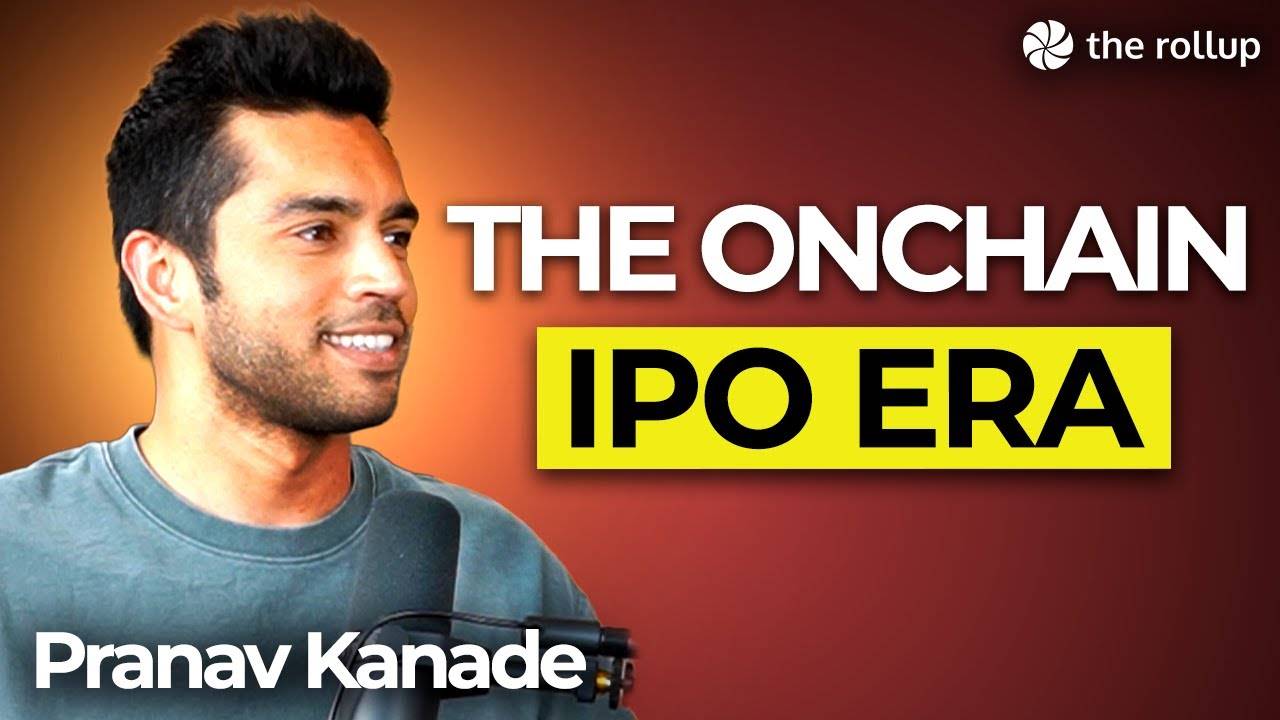
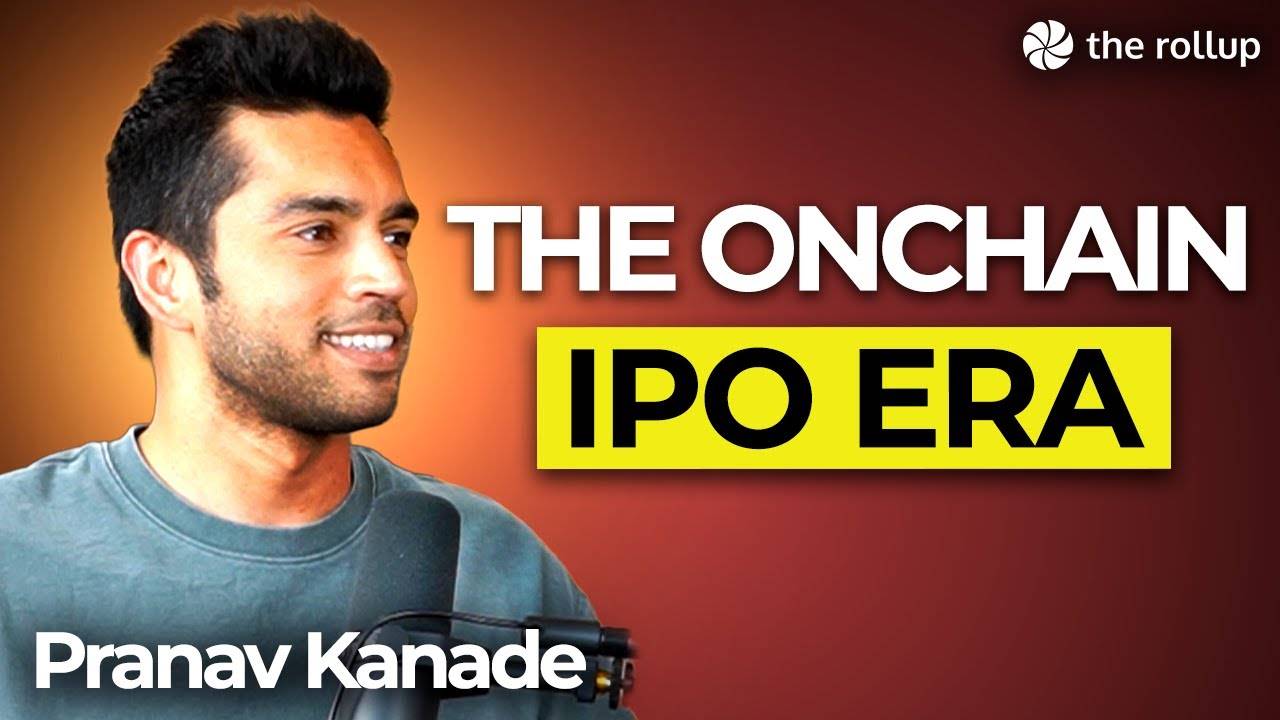
Guest: Pranav Kanade, Investment Manager at VanEck
Hosts: Andy; Robbie
Podcast Source: The Rollup
Original Title: VanEck PM: Tokenized Equities Are The Next Huge Opportunity
Air Date: June 2025
Key Takeaways
Pranav Kanade, portfolio manager at VanEck, joins this episode to address the current state of institutional investor allocation within crypto. He also discusses whether an alt season is approaching and why tokenized equities are drawing increasing attention.
(VanEck is a U.S.-based global asset management firm founded in 1955. It's known for innovative investment products, particularly in the areas of ETFs and mutual funds. VanEck was also one of the early traditional financial institutions to enter the cryptocurrency space, offering various investment products tied to digital assets such as Bitcoin and Ethereum.)
The idea that “institutions are entering the market” has become a popular narrative, but the reality behind it is far more complex than most assume. For the crypto industry to survive long-term, it must either establish real business models or remain stuck as a speculative arena with limited sustainability.
In today’s episode, we dive into the following topics:
-
How institutional capital is actually entering the crypto market
-
The shift from traditional venture capital to liquid token strategies
-
Why focus on revenue models is becoming increasingly polarized
-
How tokenized stocks compare with traditional IPO structures
-
What will truly drive the next wave of capital inflows
Highlights Summary
-
Tokenized equity is likely to be a future trend.
-
99.9% of tokens listed on CoinMarketCap are junk.
-
The majority of assets comprising today’s $700+ billion altcoin market lack long-term value and are severely overvalued. Our strategy is to maintain investment discipline and avoid exposure to these assets. We’re waiting for higher-quality assets to come on-chain.
-
If revenue models fail to go mainstream, crypto may end up as just a footnote in internet history.
-
“Institutions are entering this space” usually means two things: capital flowing in to buy our assets, or institutions building “on-chain” products—like tokenization—for others to use.
-
Notably, the institutions doing the tokenizing are not the same as those who will eventually allocate to these assets.
-
The market is getting more crowded, and the gap between high-performing and low-performing teams is widening—with more underperforming teams emerging. So I don’t need to do many deals unless they’re highly selective.
-
There’s relatively little top-tier talent building blockchain applications. Many elite founders have shifted toward AI because it was easier to raise funding at the time.
-
The industry must focus on what truly matters—product-market fit and why an asset holds value. Only when that answer becomes clear will capital follow.
-
I believe return mechanisms matter—I think every project should know how to monetize its product. Whether earnings flow back to token holders is just a matter of time.
-
Stablecoin legislation is imminent, which could push widespread corporate adoption to optimize cost structures. If public companies can boost gross margins from 40% to 60–70% by using stablecoins, their profitability and valuation multiples would rise significantly.
-
If you own the user relationship, you control the user experience—everything else can be commoditized.
-
Well-designed tokens can serve as incremental capital structure tools for companies—and in some cases, outperform both stocks and bonds.
Pranav on Institutional Adoption in Crypto
Andy:
I’ve noticed people often mean different things by “institutional.” Typically, it refers to capital—i.e., institutions allocating funds into this space. I entered this field in 2017, back when there was a joke: “When institutions come, we sell to them.” We were early; they were late. But I think there’s a misunderstanding about how institutions operate here.
I’d like to understand: How are institutions like VanEck deploying capital across venture, liquidity, and stablecoins? And what does “institutions are entering” actually mean? What’s the process, and what’s the timeline?
Pranav Kanade:
This can be answered from multiple angles. Let’s start with the premise: “Institutions are entering this space.” Like you, I’ve been involved since 2017 and have managed our liquid token fund since 2022—three years now. When I hear “institutions are entering,” it usually means two things: capital starts flowing in to buy our assets, or institutions begin building “on-chain” products—such as tokenization—for others to use. These two types of institutions are often entirely different groups.
Recently, product-focused institutions have mainly been tokenizing treasury instruments like government bond funds. But over time, we’ll see more assets tokenized—especially equities. We believe tokenized stocks are an inevitable trend—we can discuss why later. Importantly, the institutions doing the tokenizing aren’t the same as the ultimate allocators buying those assets. Because buying assets is more of a downstream capital allocation effect.
Capital typically flows like this: There are institutions or individuals holding capital—family offices, high-net-worth individuals, endowments, foundations, pensions, sovereign wealth funds, etc. Most don’t make direct investment decisions. Instead, they choose to allocate capital to passive strategies (like Exchange-Traded Funds, ETFs) or active managers (like us). They trust our expertise in a given domain and hand us capital to manage—we then invest it.
Right now, these institutions—pensions, sovereign wealth funds, family offices—are dipping toes into crypto, but not fully in. Family offices are probably the earliest adopters, seeing return potential, especially in liquidity. Their entry happens in two main ways: via crypto ETFs, which offer simple exposure; or through venture capital allocations to well-known blue-chip managers. But few are directly entering liquid markets or working with liquidity providers like us.
Since 2022, around $60 billion has flowed into seed-stage venture, backing a wave of founders. Some aim to exit via tokens; others plan IPOs. An IPO takes six to eight years; a token exit might take only 18 months. For certain businesses, tokenization makes more sense than public equity.
Now people are realizing capital pools are testing the waters. But too much capital has concentrated in venture, and tokens launched by these managers over the past 12–24 months have generally seen declining prices.
Because the liquid token market lacks a mature secondary market. In traditional finance, when a VC-backed company goes public, there’s a deep public equity market where investors readily buy shares at market price. That mechanism doesn’t exist in the liquid token world. So while venture capital is starting to look at liquidity, there are structural barriers to truly entering the liquid market.
Opportunities in Venture Capital
Andy:
My partner Robbie and I run a fund with our own capital. Over the past 18 months to two years, we’ve done about 40–50 deals—lots from late 2022 through 2023 and early 2024. This year, we’ve done just one or two. Now we have several projects in front of us, but whenever I look at charts for Bitcoin, Hyperliquid, or Ethereum, I ask Robbie: Why lock up $25,000 for four years hoping for massive appreciation, when we have clearer liquidity yield opportunities right now? I think the opportunity this year—or even early next—is better.
Our thinking has evolved from simply deploying seed capital. Back in 2021, catching L1 (Layer 1) opportunities—Avalanche, Phantom, Near—delivered unmatched returns. There are still big winners in venture. But now the market is more crowded. The gap between strong and weak teams is widening, and weak teams are multiplying. So, per my framework, I don’t need to do many deals—only highly selective ones. So, as you said, early allocators see the same pattern, but face friction when entering. That friction creates opportunity for those already in or able to get in. Do you observe this shift among early capital allocators? Is my logic sound? Are we mid-cycle? Is venture or liquidity a better play now? Am I right that bear market winners perform well?
Pranav Kanade:
I agree with much of what you’re saying. There’s clearly a supply-demand imbalance in liquidity—capital supply is insufficient, but demand is high. Many tokens and projects are searching for that rare “diamond in the rough.” In reality, 99.9% of tokens on CoinMarketCap are garbage—they’re not worth their market caps. But there are a few opportunities with clear product-market fit and fees that flow to the token. Simply put, if we define the alt market today at $75 billion in market cap, it could grow several times over. A project benefiting directly from that growth—where value accrues to the token—becomes a relatively simple investment thesis, potentially outperforming most pre-tokenization opportunities.
Liquidity is critical—you can achieve venture-like return profiles while retaining liquidity, so if your assumptions prove wrong, you can easily exit.
That said, I differ on one point—it actually contradicts my job direction. I focus on liquidity investing. Since 2022, the previous administration was very hostile toward crypto, and I noticed a concerning trend: very little top-tier talent was entering blockchain application development. Many elite founders pivoted to AI, where fundraising was easier. But after the election, things changed—many talented, interesting founders are returning to crypto and launching new projects.
Given that, I suspect: if one VC deployed all their capital into crypto between 2022 and 2024, and another waits to deploy gradually over the next 24 months, the latter may achieve better returns—because they’ll attract superior talent.
At the application layer, I observe that despite exciting new founders joining, valuations for app-layer projects remain below those of “me-too” plays—like new L1 blockchains. So I think many VCs are still anchored to past successes and missing current potential and future trends.
Analyzing Revenue Model Sustainability
Andy:
I recently spoke with a GP from VanEck Ventures about their deals. This week, a16z hosted a crypto event attracting professionals from Stripe, Visa, PayPal—people with real-world experience. Compared to the typical local developer background, these individuals focus on practical things—product-market fit, revenue—not technical blockchain details like validator counts. It seems the next-gen founders don’t care much about those technical debates—they care about generating revenue.
I tweeted asking, “How long will the revenue trend last?” The responses were interesting—some said less than three months, others said over two years. Many argued it would persist indefinitely. Regarding the election impact, I see it as a turning point—now we can build profitable projects that create shareholder value. Hyperliquid exemplifies this—operating independently of VC.
These two factors are pushing this mindset forward. So, is this a fleeting phenomenon or the end goal? Is cash flow the ultimate metric? What do you think about this revenue trend—is it long-lasting?
Pranav Kanade:
I see this as binary. If revenue models don’t go mainstream, crypto may end up as just a footnote in internet history. Most large capital pools want to allocate to “store of value” assets—like gold and Bitcoin. Bitcoin has successfully joined that category, and that’s remarkable. Other assets struggle to achieve that status.
Beyond that, other assets are viewed as capital return vehicles. Investors ask: “If I invest one dollar, what will it return in 25 years?” Like SpaceX—no one asks when it’ll return capital to shareholders, but people believe in its potential to colonize Mars in 20 years. While world-changing ideas can attract investment, ultimately they must tie back to investor returns. That’s what most of the world wants to invest in.
Within this framework, investors want to see how their capital generates returns, yet the crypto industry has often avoided this question—partly due to regulation. Everyone tries to avoid being classified as a security, so they dance around concepts like “ultrasound money.”
If we’re honest, the industry must focus on what truly matters—product-market fit and why an asset holds value. When I explain our fund, the first question people ask is, “Why is this valuable?” They’re used to stock and bond frameworks. Only when that answer becomes clear will capital flow in. Then the asset class expands. Otherwise, we’ll keep trading meaningless tokens.
Predicting Future Cash Flows
Andy:
Focusing on companies in this space that generate revenue helps narrow down potential holdings. But incorporating future cash flow projections opens up more investment possibilities.
Pranav Kanade:
I tell people our strategy allows us to invest in both tokens and public equities—we’re flexible in choosing the best opportunities. If I don’t want to hold certain altcoins, I won’t. Right now, truly attractive altcoins are extremely limited. But if we find a project with a great product—even if the token currently lacks clear value accrual mechanisms—that’s okay, because those are programmable. As long as the team is strong and manages their product well, we can consider the investment.
Of course, some teams build great products but channel most value to equity, leaving tokens unattractive long-term. That’s a risk to avoid. However, if a team builds a strong product and token value accrual isn’t yet defined—but we can reasonably foresee how it might work—that’s a compelling opportunity. Because if the product monetizes successfully and value flows to the token, that token could rise from obscurity to top 30—significantly boosting fund returns.
Exploring Protocols as Business Models
Andy:
This differs from past approaches. Previously, we’d build a better infrastructure product first, then figure out the token. But your view is different—you suggest building a product that works sustainably in the market, and then finding ways to return value to the token.
Back to your binary view—when analyzing these revenue-focused companies, how do you assess timing for charging fees and protocol monetization? You’re viewing this as an investor, not a founder. But every protocol faces competition—someone else will undercut prices. So how do you view pricing timing and user adoption curves? When to start earning revenue is a real concern—you don’t want to kill network effects.
Pranav Kanade:
Great question. When evaluating investments, we assess whether the project has a moat (competitive advantage). For most crypto projects, the answer is no. If you ask, “What happens if I start charging?” the likely outcome is losing customers immediately—others will offer cheaper alternatives. That means no moat, easy substitution. So we typically avoid such projects—even if we use them as consumers. Many great products aren’t good investments—this applies in crypto too.
So if charging causes churn, it’s probably not a good investment. But crucially, charging and returning fees to token holders are separate decisions. Ideally, a product should have a moat, earn revenue, and reinvest part of it into better products—just like Amazon. They built e-commerce cash flow, then AWS, then advertising—using profits wisely. If R&D ROI exceeds shareholder returns, reinvestment makes sense. I hope top crypto projects do the same. If a founder earns solid revenue and reinvests instead of returning it all, that’s smart capital allocation. Then the question becomes: What’s next?
Andy:
I think people misunderstand buybacks. They assume it’s efficient capital use. As a protocol token holder, you might like it, but it’s not always efficient. Buybacks cost money, but token holders still expect them.
Pranav Kanade:
We might differ slightly. I’m not saying revenue generation is wrong. I believe return mechanisms matter—every project should know how to monetize. Whether earnings flow to token holders is just a matter of time. We live in a scarce market today.
Capital pools are limited. Pensions haven’t entered token markets—they’re focused on Bitcoin and public crypto-adjacent stocks. Meanwhile, token supply grows, but demand stays flat. I often say: remove Bitcoin, Ethereum, and stablecoins—the rest peaked at ~$1 trillion last cycle, now ~$700 billion. No significant growth. We’re in scarcity. In this environment, everyone seeks exceptionality. Right now, capital returns (buybacks) dominate. But in 24–36 months, regulators may allow multi-token ETFs—like S&P 500 equivalents. Such passive products could bring new capital pools in, just like Bitcoin ETFs did—creating a new inflow channel and ending the scarcity.
Shifting Focus from Bitcoin (BTC) and Short-Term Hype
Andy:
People keep asking: Where’s alt season now? I think market hype and lower entry barriers have fundamentally changed how people allocate attention and capital. In the past, we did deep due diligence on undervalued assets, allocated, and waited. Now it’s about who buys the first token fastest or captures liquidity quickest. Fundamentals are replaced by speed. I think this has created a major market misalignment.
Pranav Kanade:
Bitcoin’s current market dynamic is nothing like before—it’s not the classic BTC, ETH, alts model anymore. Bitcoin still dominates. But Ethereum might rebound, and some alts could move. What triggers a broader alt season?
Andy:
Like in summer/fall 2017, when every token on CoinMarketCap rose 100%. What prevents that surge from reversing into collapse? Is total market breakdown inevitable? Will Bitcoin dominance keep rising? What will truly change market structure beyond BTC and short-term hype?
Pranav Kanade:
I think it’s a matter of time—things may shift. Two scenarios could unfold. First, the alt market cap grows from $700B to much higher—driven by “tokenized equity” (using blockchain technology to represent equity as tokens). I don’t mean Nasdaq-listed stocks necessarily, but bringing assets on-chain so global investors can access them. That could fuel growth.
I’d love to see more traditional companies—especially VC-backed ones—exit via tokens instead of equity. Tokens replicate equity functions with added programmability. For example, news recently said OnlyFans is selling. Imagine if OnlyFans issued a token representing equity. That’d be fascinating. Creators driving more viewers could earn these tokens. This way, tokens gain value and help the company allocate resources flexibly. Market cap could grow via real enterprise tokenized exits—not just Nasdaq IPOs.
Second scenario: a return to the alt season you described—broad price increases across existing assets. If we return to a pandemic-style cash stimulus environment, people will take risks and speculate. With rising risk appetite, even dormant assets get bid up.
It mirrors the post-pandemic market. Governments sent checks, liquidity surged, central banks eased. First, capital flowed to credit—investment-grade and high-yield debt. Then big tech stocks rose, followed by unprofitable tech—like ARK ETF holdings. Then SPACs attracted risk-seekers. When SPACs performed well and sentiment peaked, Bitcoin and alts entered bull runs. So when risk appetite is high enough, even stagnant assets get lifted. But this requires falling rates and abundant liquidity.
Pranav’s Macroeconomic Outlook
Andy:
You seem skeptical about current market holdings, believing non-Bitcoin markets could grow substantially as more assets come on-chain—creating a large new market. These could include companies like OnlyFans or actual equities. This expansion happens via new mechanisms and users. How does this market shift support your current liquidity positions and investment strategy? From an industry perspective, what upside opportunities stand out in Q3 and Q4?
A few weeks ago, we hosted Jordi from Selini, who argued the summer market will be quiet—because there’s insufficient economic pressure for the Fed to stimulate, and markets have recovered from recent tariff issues. Do you agree? If so, how would you adjust your strategy for these two possible outcomes?
Pranav Kanade:
I don’t make macro forecasts. Every month brings recession headlines, but the economy seems to be functioning fine. My view: most assets in today’s $700B+ alt market lack long-term value and are severely overvalued. List all L1 blockchains and examine actual fees generated—only three or four produce meaningful revenue. Six to ten others generate almost nothing but carry high valuations. Their valuations rely on “optionality”—the chance they’ll steal share from the top few. But probability-wise, that’s unlikely—markets don’t work that way. So I believe most alt assets are valueless. Our strategy is disciplined—we avoid these. We wait for higher-value assets to come on-chain.
While waiting, besides holding cash, what can we invest in? Where’s the best return?
I believe Bitcoin is a compelling opportunity. Also, stablecoin legislation is imminent, which could drive widespread corporate adoption to optimize cost structures. Early this year—especially after the election—we studied public companies: internet stocks, e-commerce, gig economy, sports betting—analyzing how much of their costs go to banking systems. We asked: Can they reduce costs using stablecoins? By how much? How would implementation work? Finally, do their founders, CEOs, and management teams have incentives to drive change—or are they complacent? After screening, we identified a few promising companies and invested. I can’t disclose names, but I believe this is an underappreciated area. Crypto investors focus on obvious public market plays, while traditional investors rarely consider stablecoin potential—it’s too distant from their radar.
I see this as a latent option. If the companies we track can boost gross margins from 40% to 60–70% via stablecoins, their profitability and valuation multiples will rise sharply. This is our current focus—an asymmetric opportunity. But if truly valuable token assets emerge and align with our earlier logic, we’ll pivot quickly—because returns there could be higher.
Views on High-Valuation Assets
Andy:
Back to L1s—there’s heavy discussion around Rev and SOV (store of value). Outside Bitcoin, is there a way to identify which top assets might survive long-term? Ethereum, Solana, Chainlink, BNB—all often seen as overvalued. Are they really? Is it because we evaluate them on fees, or do they have Bitcoin-like “monetary premium” (extra valuation from being perceived as money) potential?
Pranav Kanade:
Monetary premium is hard to quantify. I might be wrong, but some people hold top-10 assets with almost no utility—simply because they believe they’re stores of value. There’s rationality in the market, but many view L1 tokens as gross cash flow (GCF) multiples—comparing valuations to cash flows. From that lens, some appear cheap, others expensive, some fairly valued.
A better approach may be avoiding evaluations based solely on last month’s or last week’s data. Many annualize one month’s data to judge cheapness. But the key question is: What will these chains look like in two, three, or five years? Each chain has unique user demand for block space—e.g., Ethereum’s L2s or consumer apps on Solana. So: Will projects building on these chains today significantly increase block space demand as they scale? Meanwhile, chains are expanding supply. If both demand and supply grow, what will future revenues be? And how will these assets be valued then?
Andy:
This sounds concerning—if we apply these methods, these assets look overvalued on GCF multiples.
Pranav Kanade:
It’s complex. How do you view these assets? I think we should focus on their potential three years out. Best estimate: ~50 million crypto holders in the U.S., ~400 million globally. On-chain active users? Maybe 10–30 million, depending on methodology.
If on-chain users grow 5% annually, the sector may indeed be overvalued. But if user base explodes like ChatGPT—from zero to hundreds of millions in a hockey-stick curve—then everything changes. If you believe on-chain wealth and users can reach that scale, maybe 500 million users directly use on-chain apps in three years. In that case, some blockchains may be undervalued.
User Relationship Ownership
Andy:
In discussions about top blockchains, we often focus on infrastructure, but polls emphasize applications. The shift from no revenue to revenue, from infra to apps, happened fast. “Fat application thesis” (value concentrates at app layer) emerged, evolving into “fat wallet thesis.”
I wonder—how important is owning user relationships from an infrastructure standpoint? For example, Solana and Ethereum attract developers—Phantom Wallet on Solana, MetaMask on Ethereum—but these are third-party apps, not owned by the infra layer. In this infra-to-app shift and changing user dynamics, how crucial is this for infra teams? To reach a ChatGPT-like breakout moment, is there huge growth potential here?
Pranav Kanade:
I’ll approach this differently—my answer might be vague. We haven’t seen a true killer app leave its underlying blockchain to build its own chain and fully control the stack. Because if it does, it’s saying “I own the user relationship,” making the base layer a replaceable commodity while capturing full profit flow without losing users. This hasn’t happened yet. But if it does, we must ask: Will it hurt or improve user experience? If apps stop leaking value, profitability could surge.
Once we answer that, we’ll better understand the industry’s trajectory. Right now, my instinct is: If you own the user relationship, you control the user experience—everything else is commoditized. This pattern exists in other industries. But we also see cloud giants—Amazon, Google, Microsoft—dominate. L1 blockchains may evolve similarly—three dominant players, switching between them. Yet, full self-hosting may not be economically viable. That needs testing. This is part of our liquidity value proposition: we monitor these questions and adapt strategies quickly. If killer apps can fully replace and operate independently of base layers, holding L1s may no longer be optimal.
Andy:
Exactly. I agree liquidity is key. User relationships, data, brand recognition matter—but in this space, infrastructure owns all the branding. Ethereum is a brand, but users don’t interact with it directly—they use tools and apps. This model persists.
Pranav Kanade:
Interestingly, another question emerges: Will crypto go mainstream because existing Web2 companies decide to build and leverage blockchain technology on these chains, or because VC-backed startups create killer apps? If the latter, their decision path is: Which chain lets me demonstrate traction fastest to raise next round? Two years ago, most chose Ethereum or its L2s—they offered easiest traction and fundraising. Now, that’s changing.
Today, it’s easier to gain traction on Solana. Still, outside Bitcoin and stablecoins, no true killer app has emerged yet. So we can’t confirm current supported projects are correct. If WhatsApp adds stablecoin features and becomes the next hit—will it leverage these blockchains?
Building Attractive Projects
Andy:
Can you build your own apps? Say you’ve launched an L2—what app should you build? What’s the raison d’être? You must deeply consider creating something truly user-attractive. This ties to your point: building apps nearly unrelated to blockchain—typical app store or Web apps—then connecting them to blockchain, or re-integrating somehow. But I’m unsure how we transition from current UX and dev ecosystems to the next killer app without regressing in product design thinking. So I think many L2 builders face this reality. Look at TPS (Transactions Per Second) on some Ethereum L2s—it’s disappointing.
Pranav Kanade:
People enter crypto for different reasons. I’m here because I believe well-designed tokens can serve as incremental capital structure tools for companies—and in some cases, outperform stocks and bonds. That’s my core thesis. For example, if Amazon’s stock were tokenized, it might have scaled Prime faster—without taking 14 years—by using tokens as incentives. So I believe tokenized equity is a future trend. Then the question is: What’s needed to achieve this? Must it be on a fully decentralized blockchain? I’m not sure. More importantly, we need tech and tools that deliver great user experiences.
In my tokenized equity example, the customer is the issuer—say, Amazon. So what do issuers truly need? We must reverse-engineer solutions from their needs.
Join TechFlow official community to stay tuned
Telegram:https://t.me/TechFlowDaily
X (Twitter):https://x.com/TechFlowPost
X (Twitter) EN:https://x.com/BlockFlow_News
 深潮TechFlow