Stock Tokenization: Wealth Opportunities and Compliance Considerations
TechFlow Selected TechFlow Selected
Stock Tokenization: Wealth Opportunities and Compliance Considerations
Analyzing the multidimensional implications of stock tokenization for traditional finance and the crypto industry.
 Navigating Web3 tides with focused insights
Author: FinTax
"Stock tokenization" is evolving from a niche topic in the crypto space into a focal point of global fintech. Days ago, under its new chair, the U.S. SEC launched "Project Crypto," aligning with the Trump administration's proactive policies and stablecoin strategy to facilitate easier inflows of global capital into high-quality assets like U.S. equities, reinforcing the long-term leadership of U.S. capital markets. Meanwhile, the concept of on-chain capital markets is rapidly gaining traction worldwide—not only capturing the attention of the crypto-native community but also increasingly drawing interest from traditional financial institutions. Against this backdrop, we examine the multidimensional implications of stock tokenization for both traditional finance and the crypto industry, explore whether it can become a new narrative driving industry-wide prosperity, and analyze the compliance challenges and uncertainties it faces.
1. What are the implications of stock tokenization for traditional finance and the crypto industry?
1.1 Changes in liquidity and settlement efficiency
Stock tokenization breaks the long-standing settlement lag inherent in traditional financial markets. For years, most major markets—including U.S. equities—have relied on delayed settlement systems such as T+1 or T+2, which not only constrain market liquidity but also limit capital efficiency. Stock tokenization enables "atomic settlement," where payment and delivery occur nearly instantaneously as an inseparable, simultaneous exchange of asset and funds. This drastically shortens settlement cycles, frees up capital previously locked in settlement processes, and significantly reduces counterparty risk. Combined with the automatic execution capabilities of on-chain smart contracts, trading and settlement can operate around the clock, across time zones, making 7×24 global trading a reality. This efficiency boost is significant not only for high-frequency trading and cross-border arbitrage but also clearly improves capital utilization for retail investors.
1.2 Restructuring the cross-border securities investment system
Traditional cross-border securities investment is hampered by complex custody arrangements, correspondent banking networks, and compliance checks—resulting in low efficiency and high costs. Stock tokenization, built on distributed ledgers and smart contracts, allows compliance rules such as KYC, AML, and geographic restrictions to be directly embedded into the asset itself. On one hand, it reduces investor reliance on multiple intermediaries, as individuals can create wallets and directly hold and trade assets within an on-chain capital market. On the other hand, programming compliance logic into token smart contracts enables automated compliance checks, lowering the operational cost of cross-border investments. While national laws and regulatory frameworks cannot be fully harmonized in the short term, technological advancements have already laid a solid foundation for restructuring cross-border securities investment systems.
1.3 A bridge connecting traditional capital and the on-chain world
In countries actively embracing stock tokenization, it is not merely seen as a technological innovation but also positioned as a key component of national financial strategy. By digitizing high-quality traditional assets, it enables global capital to more easily access domestic capital markets. For traditional investors, this model preserves familiar investment instruments and regulatory frameworks while offering blockchain-driven advantages such as faster settlement, enhanced liquidity, and 24/7 trading. For the crypto ecosystem, it introduces high-value, low-volatility quality assets as collateral and trading pairs, enriching on-chain asset structures and financial tools, and bringing unprecedented new capital and users to the industry. Although building a fully decentralized on-chain market will take time, the parallel coexistence of traditional and on-chain capital markets will persist for the foreseeable future, complementing each other—with stock tokenization serving as one of the bridges between TradFi and DeFi.
2. Can stock tokenization become a new crypto narrative?
From a community culture perspective, native crypto users tend to favor high-risk, high-volatility, ultra-high-return speculative assets—they are willing to take large positions when Bitcoin trades at just hundreds of dollars or chase double- or even triple-digit returns in meme coins and DeFi projects. In contrast, the stable yields of traditional assets like government bonds or gold offer limited appeal, raising a question: could this investment behavior hinder strong liquidity for traditional assets on-chain?
In the short term, this cultural gap does exist. However, stock tokenization remains one of the few RWA categories with the potential to bridge this divide, thanks to its "dual characteristics." On one hand, it retains the value backing and stability of high-quality underlying assets; on the other, once tokenized, these stocks can be combined with leverage, futures, options, and other derivatives to generate sufficient volatility and strategic depth to meet the speculative demands of crypto users. Traditional assets may still deliver substantial returns, making them attractive even to crypto traders. Moreover, the evolving investor profile driven by crypto industry growth is equally important. As early crypto adopters accumulate wealth, their risk appetite naturally declines, prompting them to seek diversified portfolios and stable returns. For these users, tokenized traditional assets may gradually enter their investment mix—not solely based on price volatility, but also due to the appeal of "on-chain availability" and "always tradable" features.
More importantly, the target audience for stock tokenization extends far beyond native crypto users to include a vast pool of potential retail and institutional investors. For institutions, tokenization offers 24/7 liquidity and lower cross-border settlement costs while preserving traditional rights such as dividend distribution and voting—making it potentially attractive to private funds, family offices, and sovereign wealth funds. For retail investors, familiarity with the underlying assets and compliance frameworks lowers psychological barriers, encouraging them to allocate assets via on-chain channels. Thus, stock tokenization could become the "first step" for traditional capital entering the DeFi world. This is not just about expanding funding channels but about building infrastructure for bidirectional capital flows—enabling smooth entry of traditional capital into on-chain markets while providing efficient pathways for on-chain capital to access high-quality real-world assets. Therefore, the potential of stock tokenization goes well beyond internal crypto market dynamics, pointing toward a fundamental reshaping of the entire financial ecosystem.
3. What compliance risks does stock tokenization bring?
3.1 Unavoidable risks
While stock tokenization and on-chain capital markets enhance efficiency and liquidity, they also introduce new systemic risks and compliance challenges. Below are some key issues:
(1) Lack of regulations and investor protection: The sector currently lacks clear and comprehensive regulatory and trading rules, risking the market devolving into an unregulated "free-for-all" that breeds uncontrollable risks. In such an environment, allowing unrestricted investor access could trigger market volatility. While this may have limited impact on AI or institutional players, it could be highly detrimental to retail investors. Governments must therefore ensure that risk management and compliance mechanisms evolve in tandem with innovation to prevent regulatory gaps from becoming systemic vulnerabilities.
(2) Regulatory and compliance challenges: The decentralized nature of on-chain markets makes it difficult to fully track transaction sources and destinations, especially given participation from users across diverse jurisdictions, increasing regulatory complexity. However, these risks are not unique to stock tokenization—many such issues already exist in today’s crypto markets. For example, money laundering and illicit transactions have long occurred on-chain and won’t be significantly worsened by stock tokenization. At the corporate level, for listed company stock tokenization, traditional brokers and large financial institutions will continue to act as "gatekeepers," handling critical functions like KYC and tax reporting, thereby mitigating some regulatory pressure. For private company equity tokenization, the limited scale means minimal systemic impact.
(3) Tax enforcement challenges: Decentralized on-chain transactions complicate tracking. Without a centralized intermediary, authorities cannot easily collect transaction data or enforce withholding taxes as in traditional markets. Additionally, cross-border tax enforcement involves investors across multiple jurisdictions with differing tax laws and information-sharing mechanisms, leading to high coordination costs. This places higher demands on tax authorities and industry participants. However, these challenges mirror existing cryptocurrency tax issues and are not exclusive to stock tokenization. In the short term, governments can rely on centralized intermediaries for tax oversight. Long-term, a dual-track market—traditional and on-chain—may emerge, balancing efficiency with regulatory control.
3.2 Recommendations for individual investors
(1) Choose regulated, reputable platforms: While stock tokenization may seem like a hot new trend in the blockchain world, investors still primarily face platform risk. Especially for beginners or those unfamiliar with the market, priority should be given to platforms that have undergone rigorous regulatory scrutiny, possess proper credentials, and enjoy strong reputations to safeguard funds and legal rights. For instance, tokenized stocks issued in partnership with traditional brokers, banks, or large financial institutions typically feature more robust compliance procedures, KYC/AML mechanisms, and segregated client fund arrangements.
(2) Diversify investments and manage position sizes: The crypto and traditional markets differ significantly in volatility, and stock tokenization sits precisely at their intersection—meaning investors could benefit from dual advantages but also face dual risks. Avoid overconcentrating in a single asset or platform. Instead, spread allocations across different asset classes and platforms to reduce overall risk.
(3) Invest in familiar assets: Tokenized stocks are essentially alternative representations of existing assets. In this new environment, prioritize companies, products, or industries you understand well, ensuring investment decisions are grounded in familiar business logic rather than swayed by market sentiment.
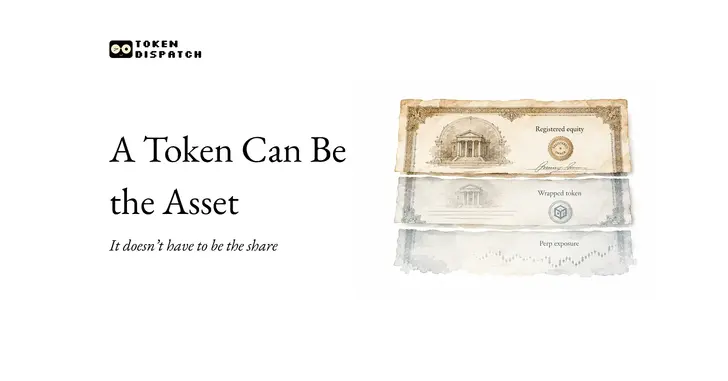
(4) Understand product structure and rights: Tokenized stocks vary significantly in design—they may represent true ownership (entitling holders to shareholder rights) or be price-tracking contracts (offering no shareholder rights). Before investing, clarify the structure of the product you’re purchasing and understand differences in dividend rights, voting rights, liquidity, and exit mechanisms to properly assess associated risks and avoid misinvestment.
(5) Comply with tax obligations: Tokenized stocks do not exist in a "tax gray zone." Regardless of transaction form, investors remain liable for taxes. Keep detailed records of trades, fund flows, and cost basis throughout your investment journey to accurately calculate capital gains or dividend income during tax filing. Also, stay informed about how your jurisdiction classifies tokenized stocks for tax purposes, as different classifications entail varying tax rates and reporting methods. Proactively fulfilling tax duties not only avoids legal risks but ensures ongoing compliance as regulations tighten, preventing retroactive penalties for past activities.
4. Conclusion
In summary, stock tokenization stands at the intersection of technological transformation and institutional reinvention. It is not only a crucial element of the global capital market’s digital evolution but also a key link connecting TradFi and DeFi. In the short term, its impact may center on improvements in liquidity, settlement efficiency, and trading hours. But in the long run, its true potential lies in reshaping how global assets are issued, circulated, and managed—creating an on-chain wealth ecosystem that cyclically interacts with the real economy.
Yet, opportunities always come with challenges. Issues such as regulatory gaps and investor protection mean the path to maturity will inevitably involve institutional adaptation and regulatory negotiation. For industry participants, seizing policy windows and advancing the integration of technology and compliance will be key to gaining an early advantage. For investors, rational platform selection, portfolio diversification, and tax compliance will be essential survival principles in this emerging market.
Looking ahead, as on-chain infrastructure matures and traditional finance becomes deeply integrated with the crypto ecosystem, stock tokenization is poised to become a common language between the next phase of the crypto industry and global capital markets—sparking new investment paradigms and wealth opportunities. In this transformation, those who successfully balance innovation with稳健 compliance will secure a prominent place in the future financial landscape.
Join TechFlow official community to stay tuned
Telegram:https://t.me/TechFlowDaily
X (Twitter):https://x.com/TechFlowPost
X (Twitter) EN:https://x.com/BlockFlow_News
 @FinTax_CN