The Way Forward in "The Stage": From "Survival of the Fittest" to a Decentralized Social Evolution
TechFlow Selected TechFlow Selected
The Way Forward in "The Stage": From "Survival of the Fittest" to a Decentralized Social Evolution
Blockchain is replicating this fragmentation into virtual space, like a silent undercurrent flowing between iron curtains and severed networks, carving escape tunnels for those under oppression.
 Navigating Web3 tides with focused insights
Author: Daii
The震撼 I felt from "The Stage" is no less than that from "To Live." One could even say "The Stage" is a condensed version of "To Live"—within the confines of a single theater, it hurls both "barely surviving" and "unable to live" at the audience, blade against blade, without mercy.
In "To Live," Fugui's family struggles desperately under the crushing weight of history; fate drifts like fallen leaves, arbitrarily tossed by an invisible hand. In "The Stage," however, that hand is no longer hidden—it grips a cold golden pistol, suspending "life" and "death," "performing" and "not performing," on the trigger, forcing people to answer.

This hand belongs to General Hong, who has just entered the city. He demands changes to the classic play "Farewell My Concubine." The entire troupe instantly faces a dilemma: refuse, and the gun barrel presses against their temples; comply, and how then face their ancestors, their conscience?
Just as everyone is pushed to the brink, cannon fire erupts—General Lu enters the city, toppling General Hong in a dramatic climax.
Yet, when you see the entire play through to the end, you realize: General Lu is no savior. Though he doesn't demand script changes, he is far more vicious. He forces the male dan (female-role actor) to submit to his desires. Ultimately, the dan commits suicide by drowning, completing a silent, uncurtainable resistance.

That splash echoes like a cold mirror, reflecting how both "changing the play" and "not changing it" lead to the same outcome: before absolute violence, artists are mere targets—mere survival becomes a luxury.
This is the raw law of the jungle:
The strong wield guns as fangs, cannons as claws, ready to tear apart any fate they dislike; the weak can only choose between gun barrels and conscience—but are destined to lose either way.
When power can be easily replaced yet remains concentrated in one corner, no matter how splendid the stage or melodious the opera, it merely serves as backdrop for beasts at play. The story of Generals Hong and Lu in "The Stage" may seem absurd, but it's a true script repeatedly performed throughout human history.
I write this article not to discuss a play, but to ask one question:
Why has the "law of the jungle" never been reckoned with, instead repeatedly donning the garments of "realism" and "rationality" in public discourse, even becoming some people's standard for judging right and wrong?
You will gain three things from this article:
-
A magnifying lens: to see exactly how that gun gets placed into hands, and how people are trained to accept it;
-
A historical map: understanding how humanity gradually broke the jungle loop through "fragmentation of power," "rule-of-law constraints," and "technology diffusion";
-
A practical path: how ordinary individuals today can use tools like blockchain to dig underground escape routes for themselves and others.
Below, let us first dissect this oldest and most stubborn logic in human history—the law of the jungle.
1. Survival of the Fittest: The Psychological Code Behind the Jungle Law
What truly drives the jungle law is never guns or cannons themselves, but the flame within human hearts—a simultaneous craving for safety and domination.
If left unchecked, this flame spreads like dry-season grass, ignited by a single spark. History and psychology have already laid bare the skeleton of this rule.
1.1 First, the "sweetness of obedience."
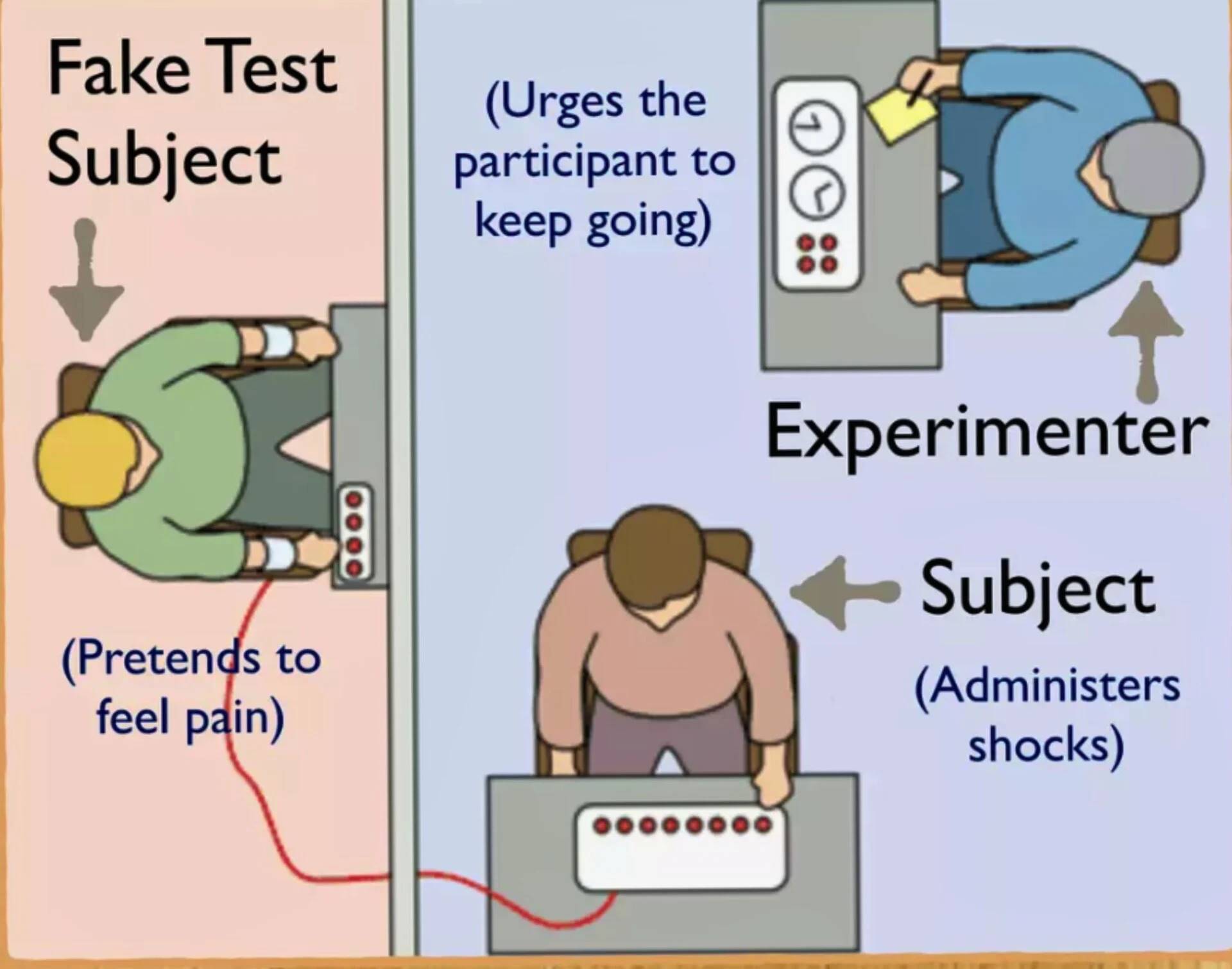
In 1963, Yale psychologist Stanley Milgram conducted a famous experiment. Ordinary people played "teachers," administering electric shocks to "students" under authority commands. The result was shocking: 65% of participants still turned the voltage to maximum despite hearing victims' agonized screams (Simply Psychology). Milgram concluded: people aren't inherently cruel—they subconsciously "outsource responsibility" under authority—"I was just following orders" is enough to put conscience to sleep.
1.2 Next, the "intoxication of position."

In 1971, Stanford psychologist Philip Zimbardo built a "fake prison" in a basement. He randomly assigned students as "guards" and "prisoners." Within six days, previously mild-mannered youths began humiliating and torturing peers, forcing early termination. Zimbardo said: "Put on a uniform, wear sunglasses, and any of us might become the kind of person we hate" (Wikipedia).
Then comes the "corrosion of unlimited power."
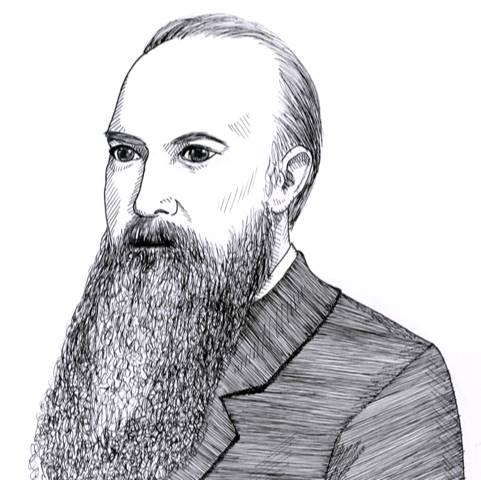
In 1887, British historian Lord Acton wrote a letter to Bishop Creighton containing a quote endlessly cited by political scholars: "Power tends to corrupt, and absolute power corrupts absolutely" (oll.libertyfund.org). This phrase endures because countless cases confirm its cruelty:
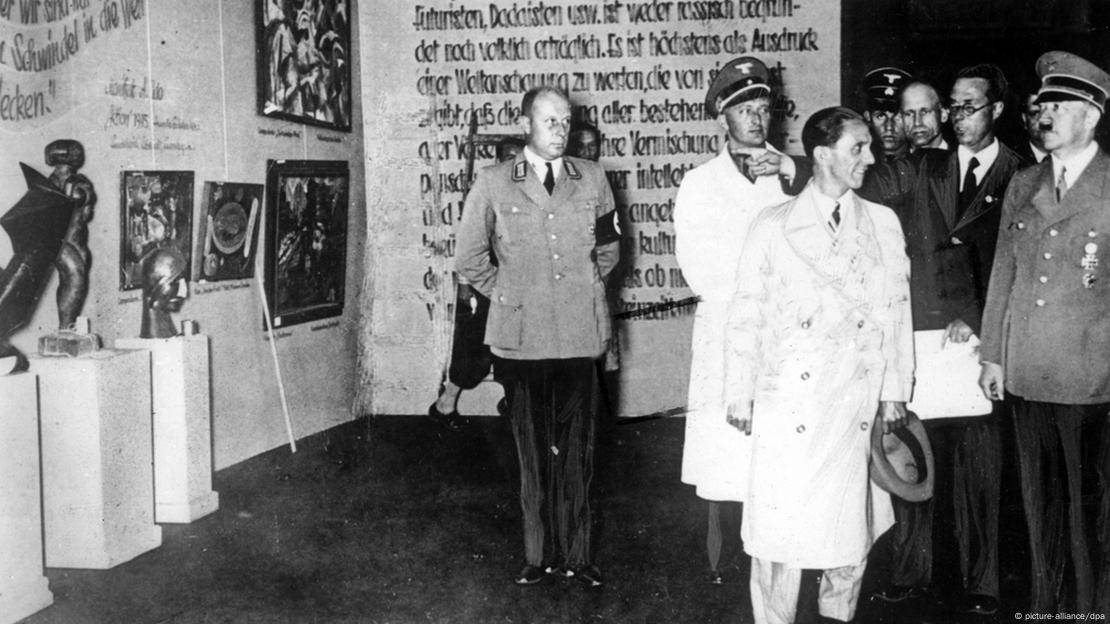
From 1937–1945, Nazi Germany burned over 16,000 modern artworks under the label of "degenerate art," including originals by Picasso and Kandinsky. This erased an entire generation of European modern art.
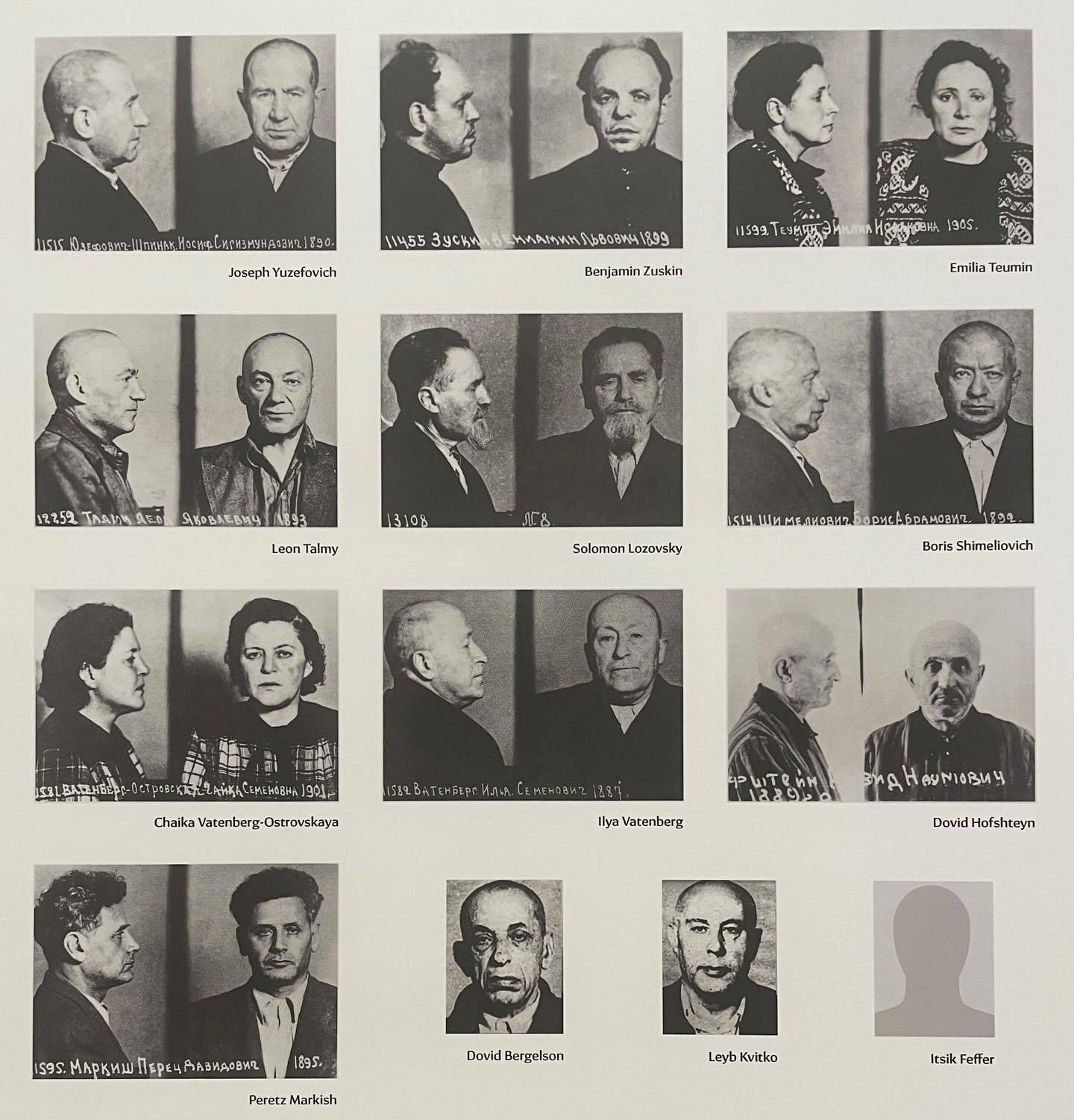
On August 12, 1952, the Soviet regime secretly executed 13 Jewish writers overnight—the "Night of the Murdered Poets." Under totalitarianism, they didn't even weigh as much as a sheet of paper.
Perpetrators aren't always demons—they become so only when placed in environments where evil carries no cost, sliding step by step into the abyss.
1.4 Finally, the "contagion of fear."
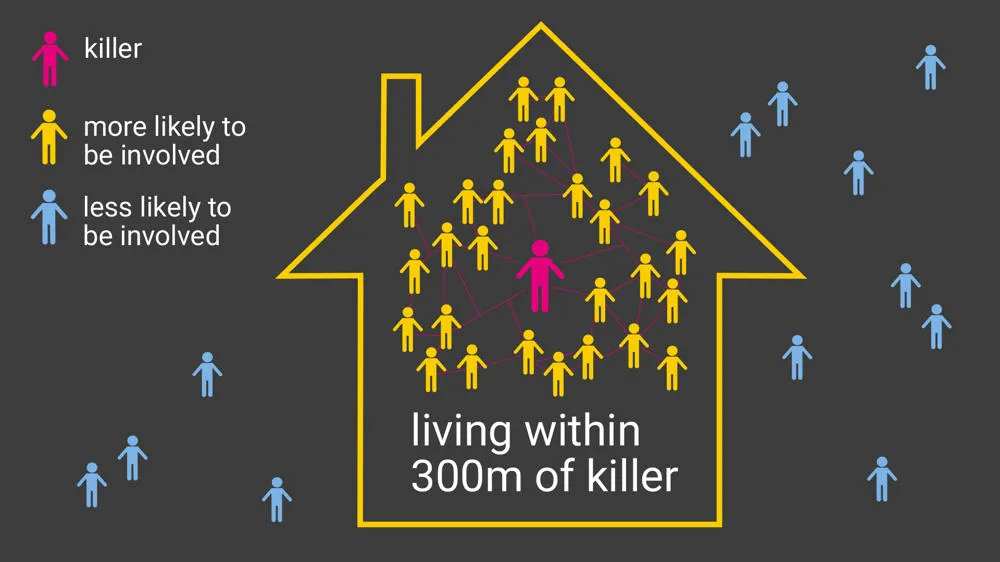
During the 1994 Rwandan genocide, radio station RTLM broadcast incitement continuously, mobilizing nationwide mutual slaughter within 100 days, killing approximately 800,000. Research found: people living within 300 meters of the first killer had significantly higher participation rates. Fear and conformity spread like viruses across social networks along geographic paths (lse.ac.uk).
Assembling these experiments and historical fragments reveals a profound portrait of human nature:
-
Obedience lets individuals shed responsibility—"I was just following orders";
-
Position intoxicates individuals with power—"I am the enforcer of rules";
-
Unconstrained power ensures zero cost—"I won't be held accountable";
-
Fear and conformity turn evil into collective action—"If I don't act, I'll be next."
When these four factors simultaneously align, the jungle law completes its loop: violence costs nothing, evil gains soar. Generals Hong and Lu are merely microcosms of countless hands gripping guns throughout history; the image of the male dan repeats as the sacrificial figure projected under each sweep of power.
To break this formula, safety valves must be installed at any point in the cycle of "obedience-position-consequence-fear": make obedience bounded, positions supervised, consequences real and reachable, fear deprived of information monopoly.
You might already guess: the solution lies in two familiar words—"democracy" and "rule of law."
In real-world context, recall those 24 characters inscribed in socialist core values: "Prosperity, democracy, civility, harmony, freedom, equality, justice, rule of law, patriotism, dedication, integrity, friendliness." These aren't mere rhetoric, but precise responses to history and human nature.
But we must understand: democracy and rule of law aren't naturally grown fruits, nor automatic upgrades in authoritarian lands. Their seeds sprout from real soil where power has been shattered again and again.
2. Fragmentation of Power: The Fertile Ground for Democracy and Rule of Law
To break the jungle loop of "obedience-position-consequence-fear," the first step is dismantling the central node perpetually looming above. As long as violence and information can be monopolized, civilization cannot take root.
Throughout history, nearly every sustainable democratic and legal process germinates precisely when power is "forced to disperse"—like rivers branching, preventing water from raging into disaster.
Ancient Greece: The Granular Revolution from City-State to Citizen
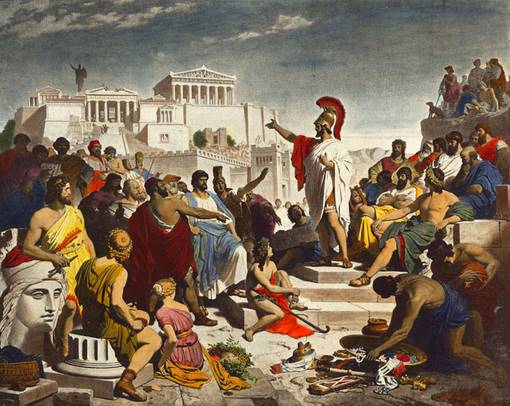
In the 6th century BC, Athens deliberately compressed urban scale to "walking distance," slicing political power into minimal units: 6,000 jurors selected by lot, 500 citizens rotating governance. By the 4th century BC, about half of Greek city-states practiced some form of democracy (Wikipedia). In such highly decentralized structures, no individual or family could fully monopolize governance. Law, for the first time, stepped onto the public debate stage—became everyone's concern.
Britain: Nobles Rebel, Royal Power Accountable

In 1215, King John of England provoked noble rebellion by imposing heavy taxes and imprisoning landowners arbitrarily. Twenty-five rebel barons surrounded Runnymede with spears, forcing out the Magna Carta—a covenant constraining royal power, emphasizing "trial by law" (Encyclopedia Britannica). Imperfect and undemocratic, it nonetheless established for the first time that even kings must bow before written rules. This historical moment moved law from beneath imperial feet onto the negotiation table.
Netherlands: A Decentralized Experiment in Provincial Republic
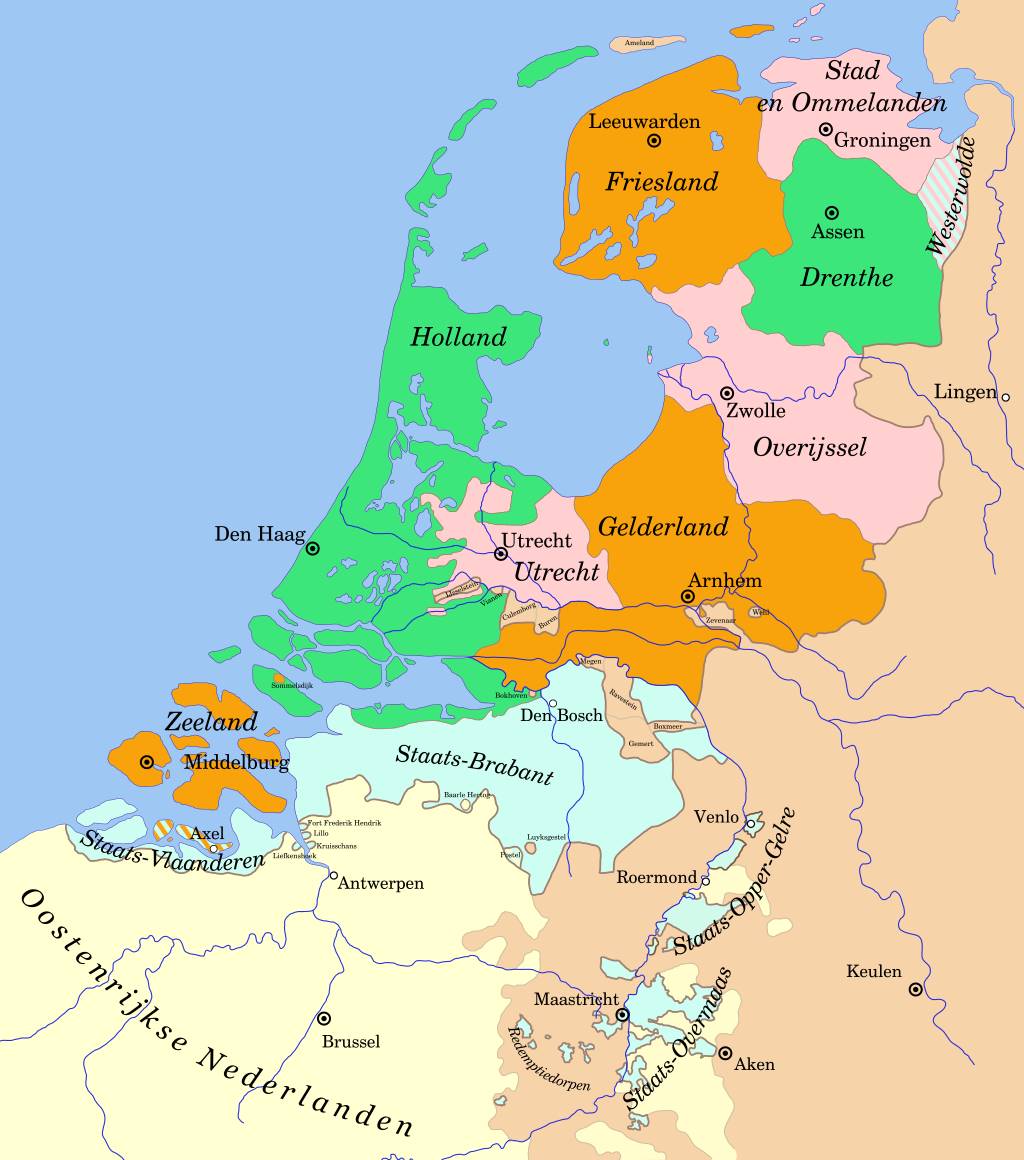
In 1581, seven Dutch provinces united to break free from Habsburg rule, forming one of the world's earliest republics. Unlike centralized monarchies, it delegated foreign affairs and defense to councils while granting provinces high autonomy over taxation, churches, and personal freedoms. Under this system, Amsterdam merchants freely published newspapers, founded institutions, raised funds. In the 17th century, Dutch merchant ships accounted for one-third of the global total; financial markets and press systems sprouted amid multi-center competition (gale.com).
Britain (again): Parliamentary Chains Binding Royal Power
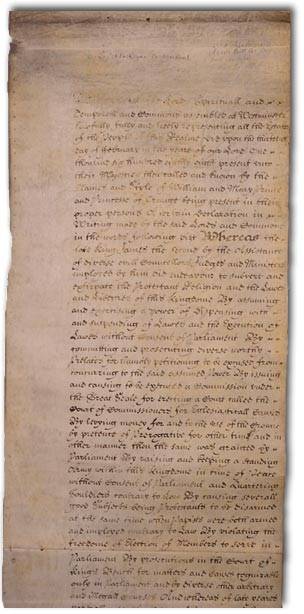
After the 1688 "Glorious Revolution," William III ascended the throne but needed annual parliamentary approval for military funding. Thus, the 1689 Bill of Rights established "no taxation or standing army without Congressional consent" (Wikipedia). Fiscal sovereignty returned to the people; Parliament controlled budgets, laws underwent deliberation—royal power wore "budget shackles" for the first time.
These historical fragments appear disjointed at first glance, yet resonate with a shared melody:
When power disperses, rules gain chance to rise; when the center weakens, law and reason find space to breathe.
Democracy and rule of law were never gifts from above, but byproducts of countless "power nodes" checking and balancing each other through repeated博弈. Like forest balance, it relies not on predators' mercy, but on mutual restraint among species.
Thus, only when power fragmentation becomes reality could human society evolve from "might makes right" toward "rightness earns hearing."
Consequently, human creativity exploded: institutions created secure expectations, security nurtured trust, trust unleashed imagination—igniting the scientific revolution quietly. Democracy, rule of law, and innovation together formed a double-helix ascent of civilization.
3. The Mutual Embrace of Science, Technology, Democracy, and Rule of Law
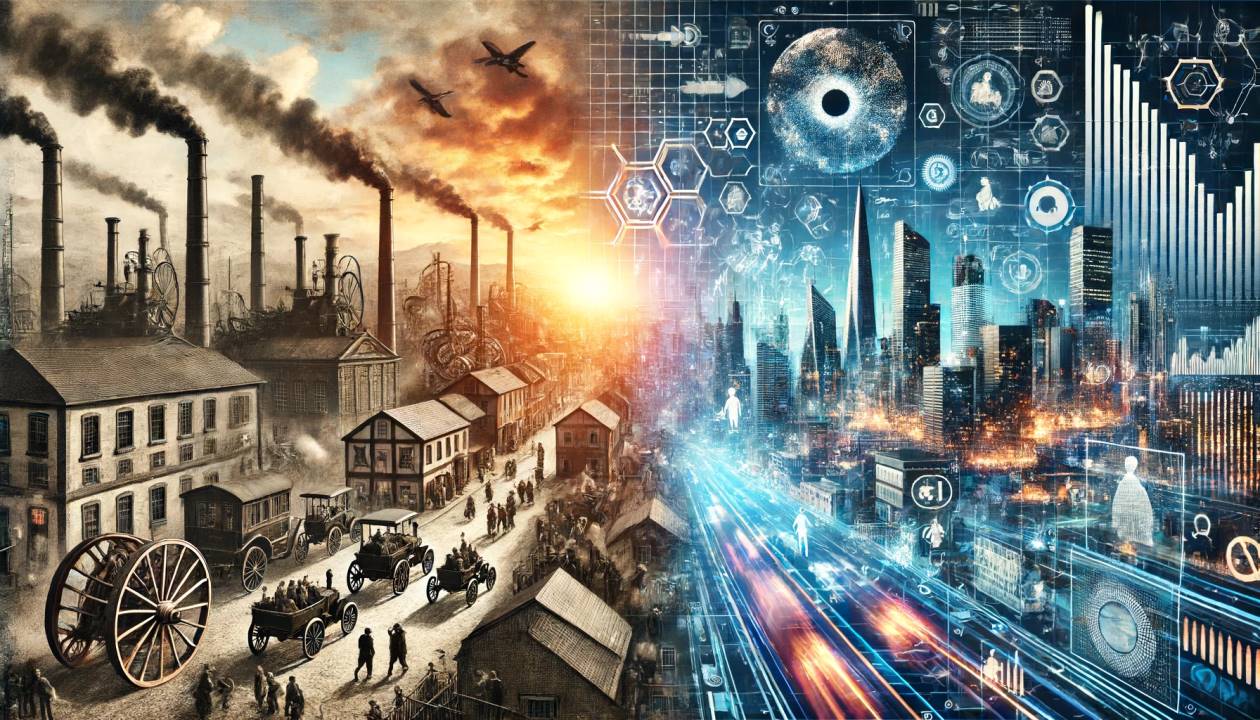
When Gutenberg's printing press roared to life in Mainz around 1450, the smell of ink and clatter of lead type quietly reshaped power distribution. For the next six centuries, technology and institutions evolved like intertwined DNA strands: whenever one mutated, the other followed closely in co-evolution. Humanity thus gradually advanced from "gunpoint rules" toward "written rules."
3.1 Technology Expands Democracy
After humans left primitive tribes, "centralized power" was once synonymous with efficiency. Technology often served power centers first. But as barriers to information dissemination, communication, and public expression continually lowered, technology ceased being merely a tool serving "golden scepters," beginning instead to quietly expand ordinary people's rights boundaries.
3.1.1 Printing Press: Turning "Literacy Rights" from Rationed Goods into Affordable Commodities
Within twenty years of the Gutenberg Bible's release, the price of Bibles in German regions plummeted from 50 gold coins for handwritten parchment to under 3 silver coins—costs collapsed by over 90% (Wikipedia).
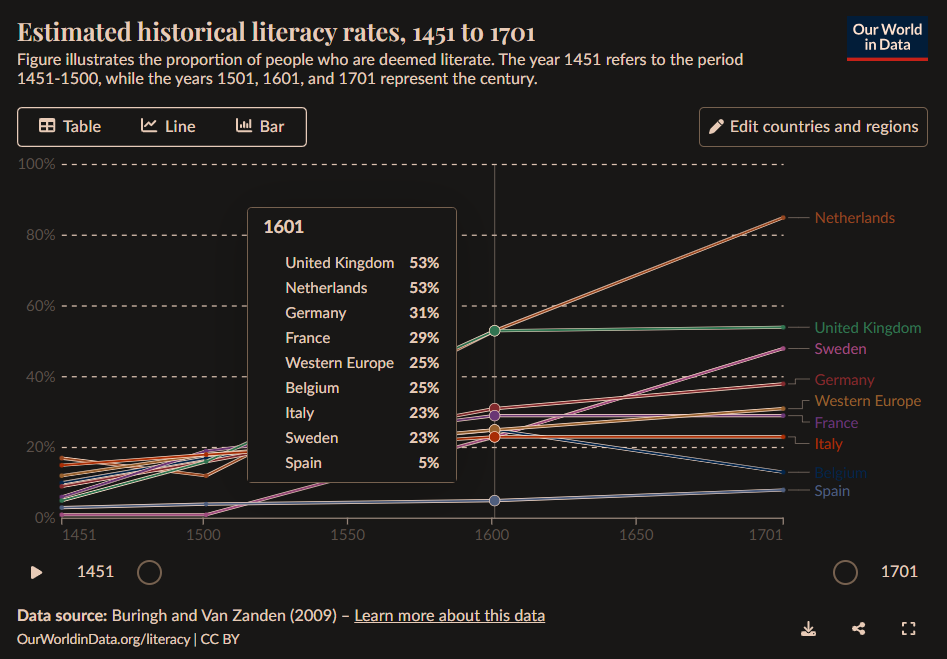
Literacy barriers dropped accordingly: French literacy rose from 6% in 1450 to 29% by 1600 (Our World in Data).
When ordinary craftsmen could read books and write petitions, Luther's "Ninety-Five Theses" spread across both banks of the Rhine within six months, forcing the Imperial Diet to publicly debate "freedom of faith" for the first time. Technology transformed "priestly dictation" into "everyone reading books," dragging ecclesiastical authority into the public square for scrutiny.
3.1.2 Telegraph: Shrinking "Next-Day Oversight" to "Same-Day Oversight"
In 1844, Morse code linked Washington and Baltimore. Within ten years, the U.S. laid over 50,000 kilometers of telegraph lines. The New York Herald used telegraphs to transmit congressional debate transcripts, publishing them on streets the same night.
Research shows: between 1870–1890, every 10% increase in telegraph coverage reduced state legislators' absentee voting rates by 2.3% on average (NBER). For the first time, technology connected "people's representatives" with "people's eyes" in real time. Voter oversight no longer lagged weeks but demanded accountability the next day via newspapers.
3.1.3 Internet and Social Platforms: Upgrading the "Magnifying Glass" to a "Microscope"
In 1997, global average weekly internet usage was just 30 minutes; by 2024, this climbed to 6 hours 40 minutes daily. Internet users surpassed 5.35 billion, nearly 70% of the global population (DataReportal). Britain's e-Petition platform, operational for just over a decade, has already triggered mandatory parliamentary debates on 62 issues (publications.parliament.uk).

During the 2020 U.S. presidential debates, fact-checking organizations issued 187 real-time corrections within 90 minutes, averaging just 42-second delays (Poynter). Technological transparency leapt from "newspaper magnifiers" to "second-level microscopes," compressing the half-life of public falsehoods to historical lows.
In fact, every technological leap not only changed how we access information but also altered our potential to participate in decision-making—from "able to listen" to "able to speak," evolving further to "able to change."
3.2 Good Democracy Nurtures Good Rule of Law
Technology amplifies voices, but only democracy channels them into rule-making processes. Rule of law then solidifies these voices into "institutional code"—verifiable, actionable, enforceable by all.
Only when "who writes the rules" and "rules actually work" hold simultaneously can technology avoid becoming a new monopoly tool. This isn't abstract reasoning—three historical coordinates suffice:
A. 1689 Bill of Rights: Representation First, Then Rule of Law
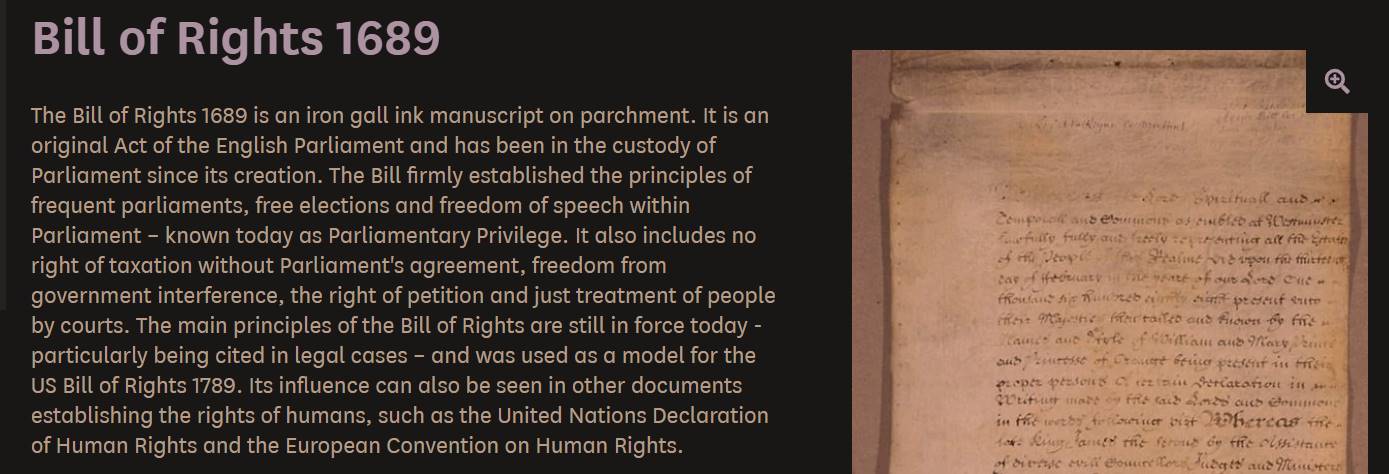
After the Glorious Revolution deposed James II, William III could tax and maintain armies only with parliamentary approval. This structure was codified in the Bill of Rights, explicitly establishing core principles like "freedom of speech" and "standing parliament" (parliament.uk). "Representative authorization" preceded "limited royal power." Without the former, the bill would be mere paper; without the latter, representation would be empty talk.
B. Data Resonance: Democracy Index ≈ Rule of Law Index
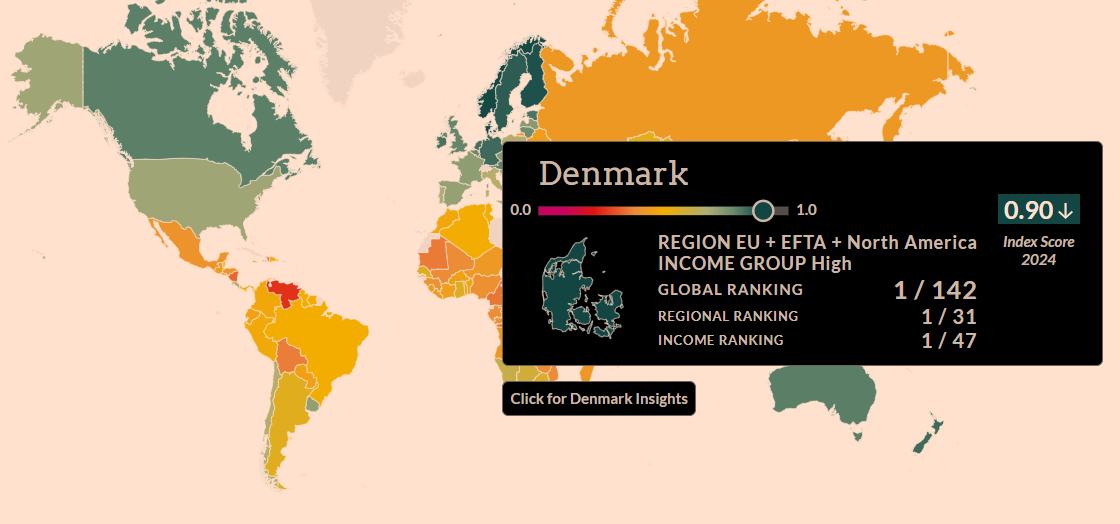
The World Justice Project's 2024 Rule of Law Index ranked Denmark, Norway, and Finland in the top three (World Justice Project).
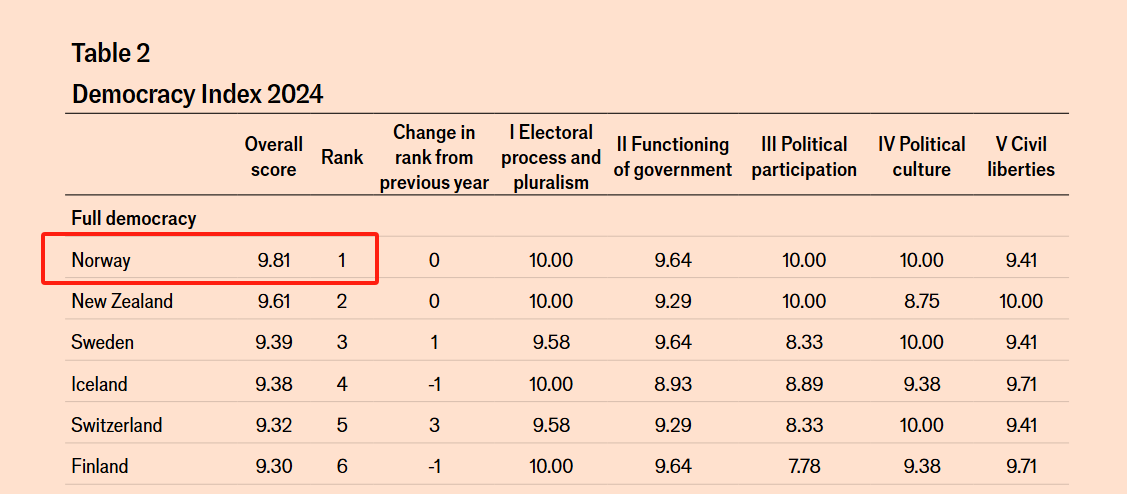
The Economist's Democracy Index also placed these three nations in the global top five (Denmark 9.80, Norway 9.81, Finland 9.58) (d1qqtien6gys07.cloudfront.net).
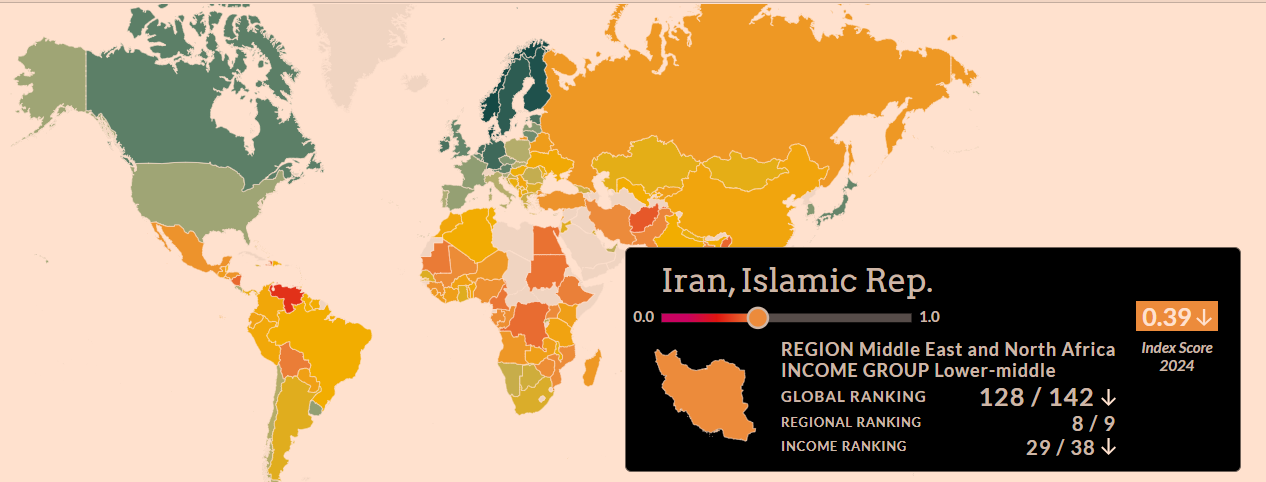
Conversely, Venezuela, Cambodia, and Afghanistan—ranked lowest—score below 3 in democracy.
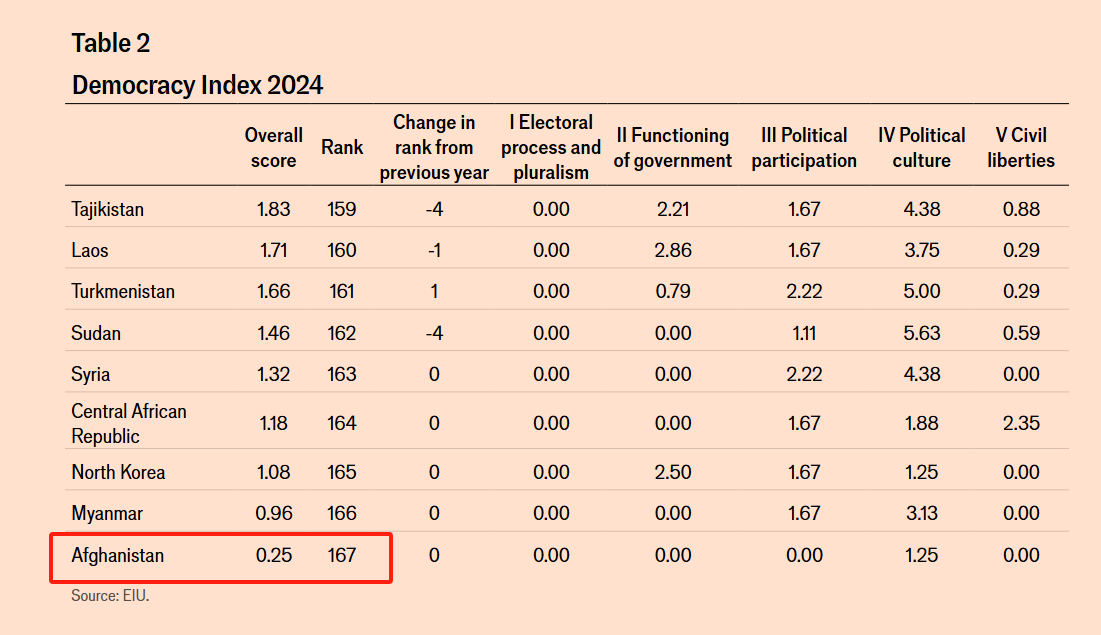
Across 142 countries, the correlation coefficient between the two indices reached 0.86, almost moving in sync. Clearly: democracy is the source of institutions; rule of law is their form.
C. "Going After the Big Boss": Rule of Law's Blade Must Be Sheathed in Democratic Scabbard
After losing the 2022 election, Jair Bolsonaro faced multi-pronged investigations by Brazil's Supreme Electoral Court and Federal Police—including alleged coup plotting, vaccine record tampering, inciting violent protests. Between 2023–2024, he testified multiple times. Loss of political power allowed judicial procedures to advance fully.
Benjamin Netanyahu faced trial at Israel's District Court in 2022 on three corruption charges (bribery, fraud, breach of trust). Proceedings continue; he underwent cross-examination in court for the first time in December 2024. Regular elections and opposition party parliamentary seats preserved trial independence.
Time Magazine reviewed 15 similar global cases, concluding: only in systems where votes flow genuinely and opposition thrives does judiciary dare "go after the big boss." Conversely, in "strongman + rubber-stamp parliament" systems—like Venezuela or Myanmar—"judicial accountability" remains paper illusion.
The essence of printing presses, telegraphs, and the internet lies in passing microphones to more people. But this isn't enough—only when these voices enter legislative channels and land in courts does technology avoid being hijacked by power. Whether tech dividends get swallowed by surveillance machines ultimately depends on: whether democratic authorization is real, and rule-of-law constraints are robust.
3.3 Rule of Law Feeds Back to Boost Technological Innovation
We mustn't overlook this chain's backflow effect: rule of law isn't merely a cage restraining technology—it's also an accelerator driving innovation.
-
In 1889, the U.S. Supreme Court established the "obviousness" principle in the "Edison lightbulb case," opening patent gates for cross-licensing, directly accelerating the electrification wave;
-
In 1958, the National Defense Education Act funded training for 650,000 engineers, with a $10 million grant birthing ARPANET—the internet's precursor;
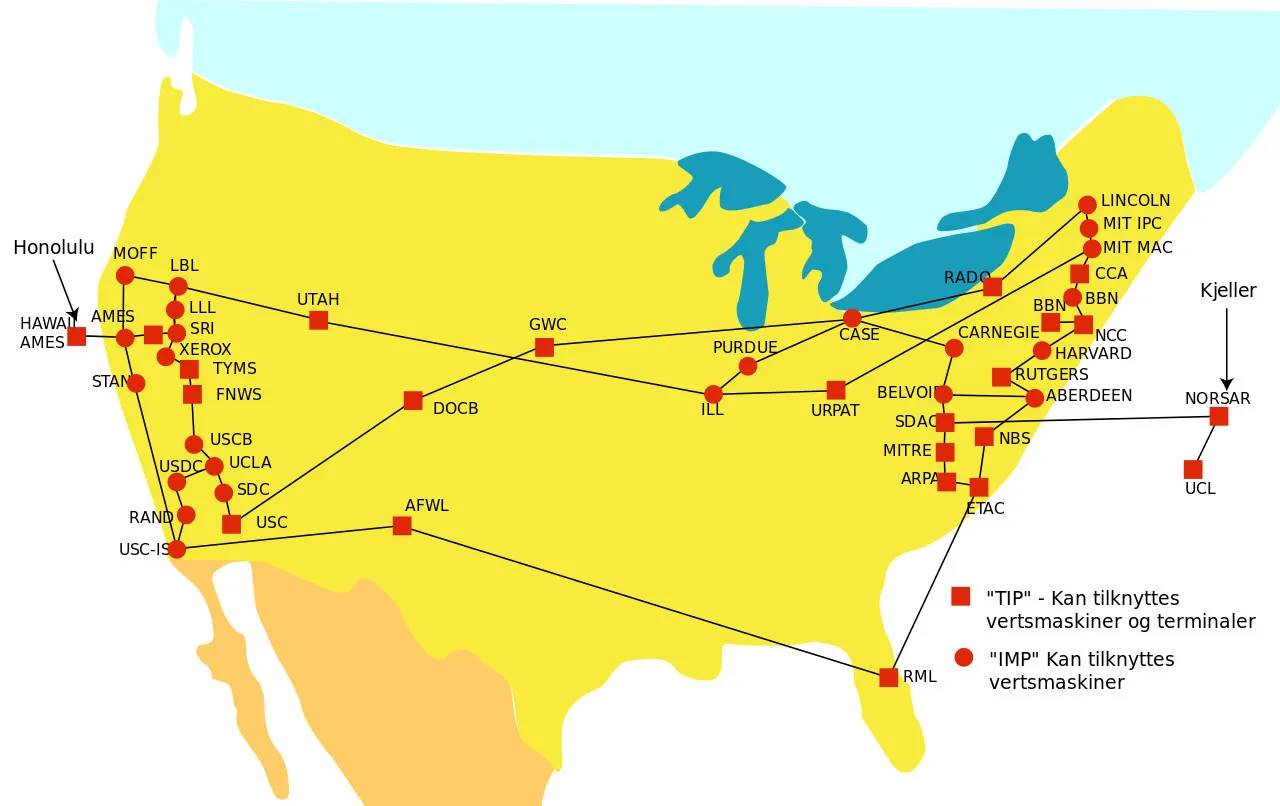
In 2016, the EU's General Data Protection Regulation (GDPR) enshrined "data portability rights" in Article 20, sparking waves of innovation in encryption protocols and zero-knowledge proofs.
As long as rule of law provides clear property rights, transparent budgets, reliable litigation mechanisms, innovators dare place bets in daylight. Conversely, ambiguity and disorder only pervert technology into breeding grounds for monopoly and crime.
3.4 Summary
From printing press to blockchain, every technological leap weakens the "barrier costs" of information and capital, forcing power to decentralize and share benefits. Every institutional innovation—from paper petitions to on-chain voting—reciprocally lays "rule tracks" for technology diffusion.
Science, technology, democracy, and rule of law have thus entwined and co-evolved across centuries of marathon. As long as this double helix keeps spinning, the golden pistol in General Hong's hand will struggle to easily pull the trigger.
Yet, as we see, the world never develops evenly. In some countries, ballots and rule of law shine like dense starlight; elsewhere, the jungle law never truly departs, awaiting favorable winds to return.
When the state itself becomes an obstacle to civilizational progress, traditional governance tools fall short. Economic sanctions and diplomatic isolation, though grand in scale, fail to reach individuals' micro-level destinies.
But in this relay of evolution, a new variable has quietly emerged:
Blockchain—the virtual replica of real-world "power fragmentation"—may offer those trapped under tyranny a faint yet firm escape route.
4. Decentralization: A Sliver of Hope Under Tyranny's Shadow
When traditional finance, media, and judiciary are tightly gripped by one iron fist, blockchain flows like a silent undercurrent—though narrow at surface, it digs an underground river for value transfer through impermeable walls of power.
But we must understand: the power of "blockchain decentralization" stems from "power fragmentation."
4.1 From "Power Fragmentation" to "Decentralization"
When medieval Europe fragmented into hundreds of principalities, no central authority could monopolize violence and knowledge long-term. It was precisely in these fragmented gaps that movable-type printing burst through walls, turning clerical Latin scriptures into affordable paper, flushing "knowledge moats" into public streams. Over the next four centuries, history ascended a data-verifiable ladder:
-
By 1600, French literacy reached 29%, triple that of 1470;
-
Two generations later, the Bill of Rights nailed "no taxation without Parliament" into the British crown;
-
A century onward, Britain's industrial patent system exploded alongside steam engines, making its per capita GDP 2.4 times the continental European average (IMF long-term series).
Each dismantled "single-point power" earned humanity another technology dividend coupon. Blockchain attempts to replicate this physical ladder into virtual space:
-
No central ledger: over 23,000 full Bitcoin nodes distributed across 140+ countries. Want to "shut down the chain with one click"? You'd need to simultaneously unplug tens of thousands of global data lines.
-
Permissionless access: users bypass foreign exchange controls via mobile wallets, transferring entire assets across borders using just 24 seed words.
-
Verifiable consensus: every transaction recorded on-chain prevents embezzlement, enabling global observers to monitor chains in real time.
Real-world power fragmentation paved the way for the Industrial Revolution; virtual-world decentralization may now open doors to future "public-chain governance" and "code constitutions."
4.2 Three Real Escape Routes
The following three true stories best illustrate how decentralized technology delivers hope within real-world oppression.
● Venezuela: Private Keys Against Millionfold Inflation
From 2015 to 2020, the Bolívar lost over 99.9999% purchasing power. At worst, buying a pound of bread required three large bags of banknotes. Amid this "cash black hole," Caracas workers learned a new habit: upon receiving wages, immediately open phones and convert money to BTC or USDT.
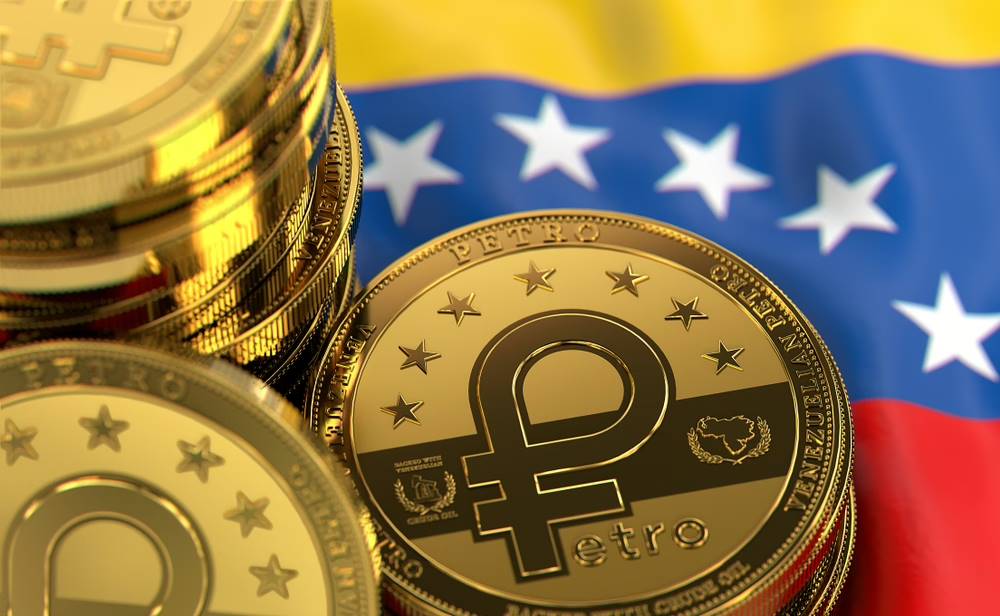
In 2024, NGO statistics showed local P2P Bitcoin trading volumes steadily rising, peaking weekly among the world's top three. In a country where no one trusts official exchange rates, 24 seed words form a "portable bank."
● Nigeria: Skipping Banks, Moving Funds On-Chain

After the #EndSARS anti-police brutality protests erupted in 2020, the government froze key organizers' bank accounts. Within hours, feminist group Feminist Coalition switched donation QR codes to Bitcoin addresses. In five days, they received ~$51,000 in BTC, converting locally via P2P OTC trades to buy medical supplies (The Columnist). Traditional finance valves slammed shut, but on-chain pipelines remained uncappable.
● Belarus: Cryptocurrency Sustains Exiles' Lifeline
Lukashenko's regime controlled banks and severed charity accounts, leaving many political prisoners' families destitute. Exile organization BYSOL opened BTC and USDT wallets in Lithuania, distributing over €600,000 in crypto aid in 2022.

Each payment arrived within 48 hours on average, recipients exchanging via instant counters into rubles (source: bysol.org). Decentralized ledgers ensured transparent donations, nearly impossible to freeze en masse.
These stories aren't distant or isolated. They're merely the tip of the iceberg—under countless tyrannical shadows worldwide, more people are already using old phones and seed phrases to challenge untouchable powers. As "on-chain value transfer" grows increasingly accessible, ordinary users can similarly employ low-cost strategies to gain dual benefits of awareness and returns in daily practice.
4.3 Summary: Dark Rivers May Not Be Omnipotent, But Are Widening
Blockchain isn't a master key. It fears network outages, power failures, misuse for scams or speculation. Without rule-of-law safeguards, on-chain spaces may also become Ponzi stages. But this planet already has more than ground stations—
As of August 2025, SpaceX's Starlink constellation deployed 8,075 satellites, comprising 65% of all active satellites globally (Space.com).

Even if iron curtains rise on Earth, starry canopies remain overhead.
Just as movable type smuggled truth into backpacks, telegraphs embedded parliaments in morning papers, blockchain now tries packing finance, contracts, and governance into hash strings. It may not bring utopia, but it's pushing the success rate of "golden-scepter autocracy" to historic lows—
This is the most subtle yet steadfast resistance against the jungle law.
Conclusion
"The Stage" reveals a bloodstained theater—scripts flipped by gun muzzles, actors taking final bows with their lives. It tells us:
As long as power sings solo, all other voices remain mute.
The long lens of history tells us:
Real-world "polyphony" became possible only because power was repeatedly fragmented, caged by rule of law, propelled by technology.
Today, blockchain replicates this fragmentation into virtual space, like a silent dark river flowing between iron curtains and network blackouts, carving escape tunnels for the oppressed.
It's far from perfect, yet sufficient to make the golden pistol hesitate before pulling the trigger—for the first time, costs and consequences emerge as part of power calculations.
True civilization is never measured by the splendor of stage sets, but by:
Whether any "General Lu" can still decree life and death with a single command.
Join TechFlow official community to stay tuned
Telegram:https://t.me/TechFlowDaily
X (Twitter):https://x.com/TechFlowPost
X (Twitter) EN:https://x.com/BlockFlow_News
 @yzdxs8