Michael Saylor: How does a Bitcoin strategy avoid being liquidated?
TechFlow Selected TechFlow Selected
Michael Saylor: How does a Bitcoin strategy avoid being liquidated?
Since launching the Bitcoin reserve strategy in 2020, Michael Saylor has remained committed to maintaining a healthy balance sheet.
 Navigating Web3 tides with focused insights
By: Steven Ehrlich
Translated by: Saoirse, Foresight News
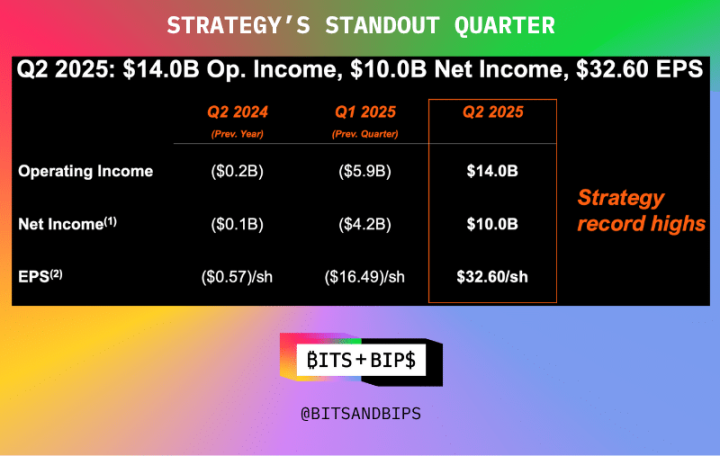
Michael Saylor, Chairman of Strategy (MSTR), earned widespread acclaim from the investment community on Friday after his company achieved record highs in revenue, net income, and earnings per share during the last quarter (see chart below).
In fact, the company's stock has risen 166% over the past year—twice the gain of Bitcoin (BTC) over the same period.
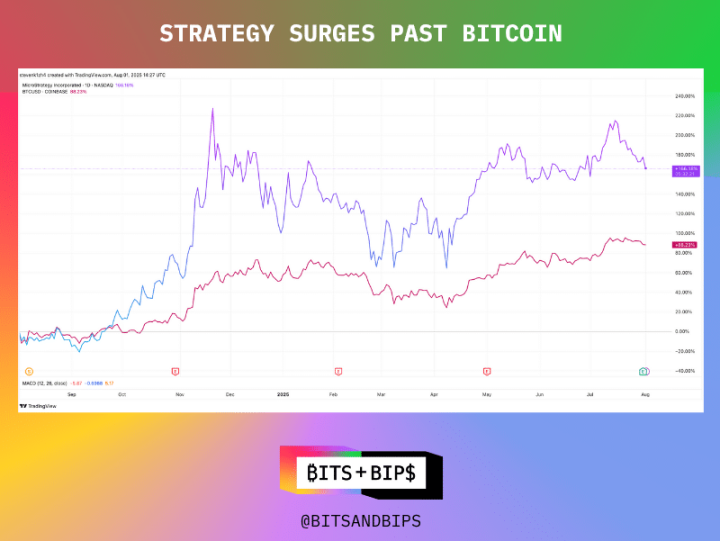
(TradingView)
By any measure, this performance is outstanding. It’s especially impressive given the influx of imitators that could potentially divert investor capital.
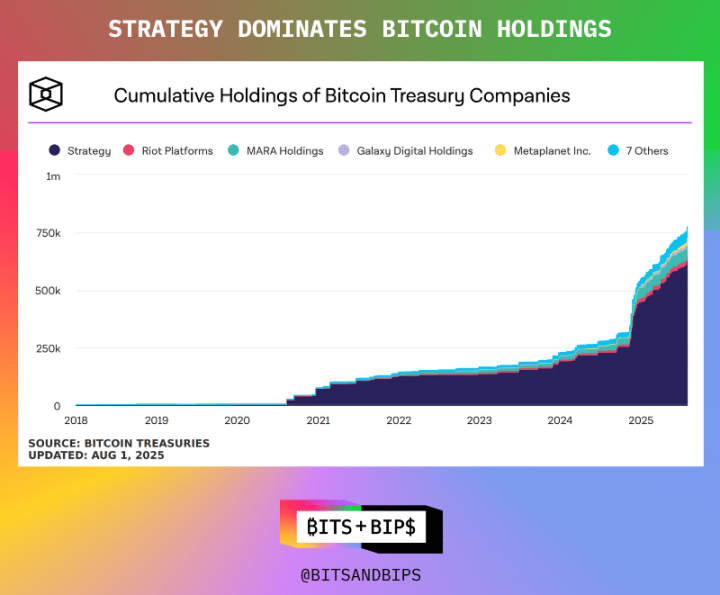
But this doesn't mean Strategy can rest on its laurels. As a leader in crypto asset management, it holds certain privileges—and now appears ready to fully leverage them.
Continued Bitcoin Accumulation, But With a New Strategic Shift
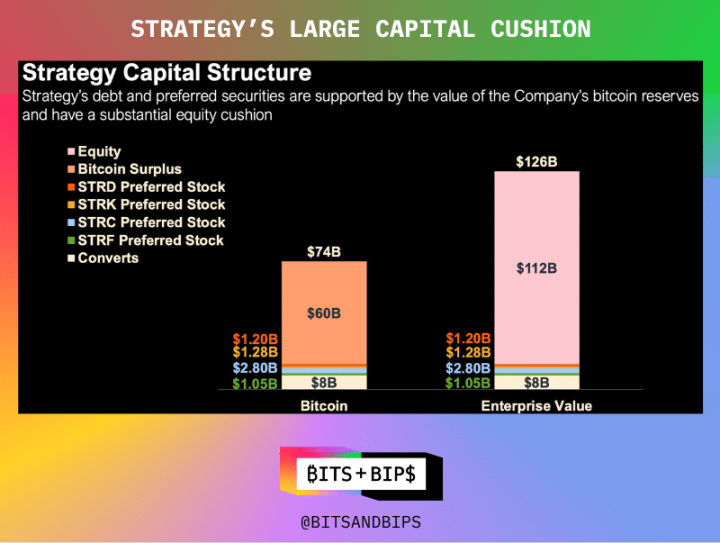
At the time of writing, Strategy holds 628,791 bitcoins, worth $71.9 billion. The company has built this portfolio through various means: issuing common stock, multiple types of preferred shares (which offer dividends or conversion rights in future years), and convertible bonds. Details on the different classes of preferred shares are shown in the chart below.
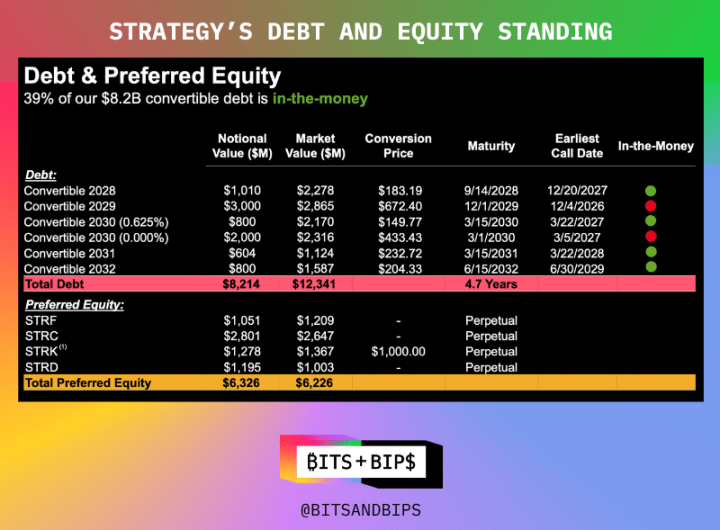
Now, however, the company plans a major shift in its financing strategy—specifically, eliminating debt entirely. Despite a strong balance sheet (with an enterprise value of $126 billion and just $8.2 billion in debt according to financial reports), the company aims to reduce its debt to zero. During the investor call following its July 31 earnings release, Strategy announced plans to redeem its outstanding convertible bonds and instead focus on issuing preferred shares in multiple tranches.
This suggests its current $6.3 billion in preferred share issuance could grow significantly. In fact, during the investor presentation, the company announced plans to raise another $4.2 billion via a new preferred product called Stretch (STRC), targeting a 10% monthly yield.
"This move reflects Strategy's maturing access to capital markets. The convertible bond market is crowded with hedge funds and arbitrageurs who buy convertibles to establish long positions in Strategy, but then significantly reduce their net exposure by shorting large amounts of stock—around 25%. So for every bond they buy, they sell a lot of stock, meaning they're only mildly bullish on Strategy," said Lance Vitanza, Managing Director at TD Cowen, in an interview with Unchained (full discussion available on X or YouTube). "A few years ago, convertibles were the best option for the company. But as Strategy has grown, it’s now able to enter the preferred share market, where terms are better, upside potential greater, and pricing more efficient."
This move further reinforces why Saylor is seen as a "demigod" in the Bitcoin community—not only for stockpiling Bitcoin, but also for operating responsibly. With few exceptions, he almost never uses leverage, relying primarily on equity markets instead.
Even though its robust capital structure already protects against forced liquidation (unless Bitcoin drops more than 80%), Saylor continues to push boundaries.
Imitated Often, Never Surpassed
But don’t expect the many followers in Bitcoin, ETH, SOL, BNB, and other sectors to follow suit. These firms are just getting started, and as I’ve noted elsewhere, they’re rushing to scale quickly amid intense competition.
This means they’ll use every tool available in capital markets: private investments in public equity (PIPEs), credit lines, and of course, debt.
I wrote previously: "Each method has pros and cons. PIPEs allow rapid fundraising, helping launch reserve strategies quickly, but can create significant selling pressure. Companies could instead register shares with the SEC before issuing, but that takes longer. Now, many adopt hybrid models: one-third from PIPEs, the rest from convertible bonds or credit facilities. While this delays selling pressure, it increases leverage on the balance sheet, which becomes risky if prices collapse."
This makes debt attractive for financing: shareholder dilution may not hit for years, and in today’s frothy market, coupon rates are nearly zero. For example, Bitcoin asset manager Twenty One raised $485 million in May via convertible bonds to launch its strategy; Anthony Pompliano raised $235 million in June for his Bitcoin firm ProCap Financial using the same instrument.
This is essentially a "buy now, pay later" model.
A One-of-a-Kind Entity
For investors, this means one thing must remain top of mind: in today’s crowded crypto asset management space, Strategy remains a unicorn. Currently, it’s the only company with access to the preferred share market. Its first preferred share issuance occurred as recently as January, and future issuances are expected to expand dramatically.
For others, entering the preferred share market and eliminating debt remains a distant goal. "Most will start in the convertible bond market, hoping some grow large enough to eventually qualify for preferred share access," said Vitanza.
Join TechFlow official community to stay tuned
Telegram:https://t.me/TechFlowDaily
X (Twitter):https://x.com/TechFlowPost
X (Twitter) EN:https://x.com/BlockFlow_News
 @Unchained_pod