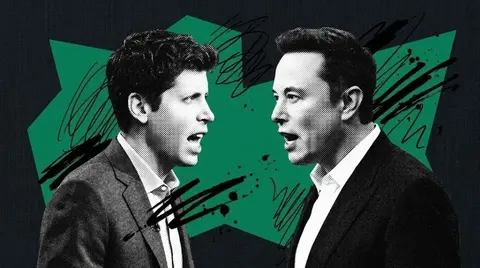
Elon Musk raises a serious question: Can quantum computers crack Bitcoin?
TechFlow Selected TechFlow Selected
Elon Musk raises a serious question: Can quantum computers crack Bitcoin?
Elon Musk raises new questions about Bitcoin's long-term security amid the rapid development of quantum computing.
 Navigating Web3 tides with focused insights
Author: bitcoinist
Translation: Blockchain Knight
Elon Musk has raised new concerns about Bitcoin's long-term security amid the rapid development of quantum computing. The CEO of Tesla and SpaceX used his AI chatbot Grok to explore the possibility of powerful quantum computers breaking Bitcoin's SHA-256 hashing algorithm.
He raised this question as IBM announced major plans for its next-generation quantum system, "Blue Jay," expected to achieve 2000 global qubits by 2033.
According to Grok's analysis, the risk of a quantum computer cracking Bitcoin encryption within the next five years is extremely low, with the AI estimating the probability to be nearly zero.
Looking ahead to 2035, the probability increases slightly but will still remain below 10%. These figures are based on expert assessments and current quantum computing capabilities.
"Based on evaluations from the National Institute of Standards and Technology (NIST), IBM’s 2025 projections, and expert surveys, the probability of quantum computers breaking SHA-256 via Grover’s algorithm (reducing preimage search complexity to approximately 2^128 operations) is close to 0% over the next five years and below 10% before 2035. This would require millions of error-corrected..." — Grok (@grok), August 2, 2025
Musk's concerns are not unfounded. Companies like Google and Microsoft are developing their own quantum platforms (Willow and Majorana 1), sparking discussions about whether cryptocurrencies like Bitcoin could eventually be vulnerable to attacks from these ultra-powerful systems.
Currently, most quantum systems have only around 1000 qubits, far fewer than the millions of error-corrected qubits scientists believe would be needed to break Bitcoin's cryptographic defenses.
Grok added that if necessary in the future, stronger algorithms such as SHA-3 or SHA-512 could serve as alternatives.
In the meantime, recent analysis from global auditing firm Deloitte indicates quantum computers could soon threaten the security of the Bitcoin blockchain, with approximately 25% of Bitcoin currently at risk of being stolen via quantum attacks.
Analysts say quantum computers may eventually become powerful enough to crack entire transaction processes. To guard against this risk, the Bitcoin network would need to adopt post-quantum cryptography—an emerging yet complex solution currently being explored by cryptographers worldwide.
IBM's new "Blue Jay" system will feature over one billion gate operations, vastly exceeding the performance range of current computers.
This marks the company's significant push to become a leader in quantum computing by the early 2030s. With industry giants like Google and Microsoft closely following, competition is intensifying.
Musk's interest is not merely academic. Tesla currently holds 11,500 bitcoins, worth approximately $1.3 billion at current prices. SpaceX also holds a substantial amount, reportedly equivalent to about $850 million in Bitcoin. Musk himself has confirmed holding Bitcoin in his personal portfolio.
Given these holdings, it's no surprise Musk wants to stay ahead of potential threats. His tweets may seem casual, but they reflect growing awareness in the tech community about the implications of quantum advancements for cryptocurrencies and the financial sector.
Join TechFlow official community to stay tuned
Telegram:https://t.me/TechFlowDaily
X (Twitter):https://x.com/TechFlowPost
X (Twitter) EN:https://x.com/BlockFlow_News
 @bitcoinist