








Satoshi's statue sinks to the bottom of the lake, revealing the anxiety of "Europe's crypto capital"
TechFlow Selected TechFlow Selected
Satoshi's statue sinks to the bottom of the lake, revealing the anxiety of "Europe's crypto capital"
The night the Satoshi Nakamoto statue spent at the bottom of the lake may have been the most ironic moment in its existence.
 Navigating Web3 tides with focused insights
By David, TechFlow

In the early morning of August 3, in Lugano, Switzerland, municipal workers fished several stainless steel fragments from the lake.
Just hours earlier, these fragments had formed a complete statue of Satoshi Nakamoto. A city’s tribute to the creator of Bitcoin had now become scrap metal at the bottom of the lake.
The Twitter user @Grittoshi was the first to notice the statue’s disappearance. He recalled that on the night of Switzerland's National Day, August 1, the statue still stood in Parco Ciani park. Nearby, young people were celebrating with drinks at an open-air café.
Hours later, this artwork—designed over 21 months and touted to "disappear" when viewed head-on—had truly vanished, in a way no one anticipated.
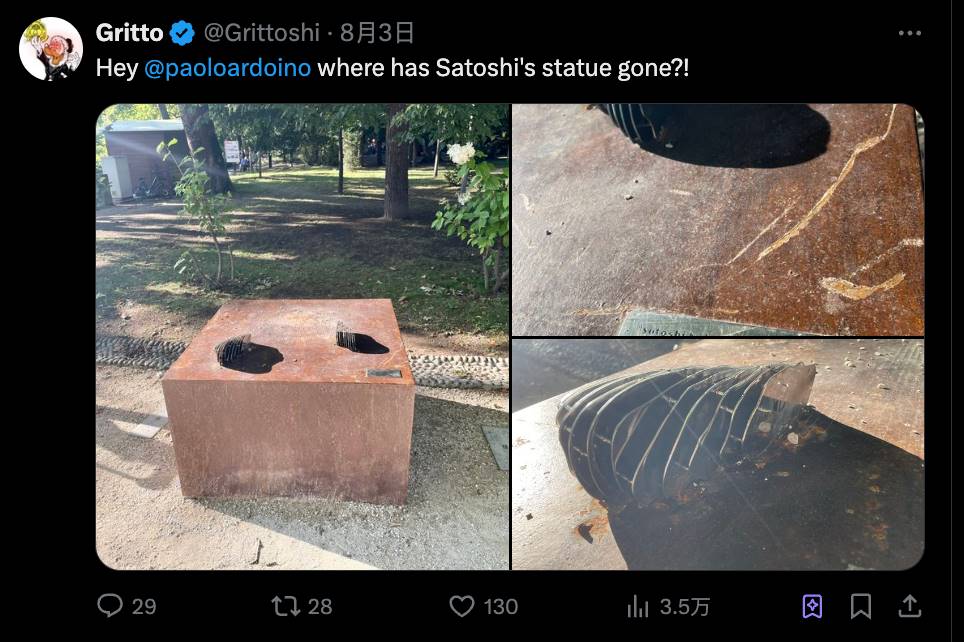
Satoshigallery, the art collective dedicated to erecting Satoshi statues in 21 cities worldwide, quickly offered a 0.1 Bitcoin reward on social media for clues.
But solving the case turned out surprisingly simple.
Once again, it was @Grittoshi who applied “Occam’s Razor” in his reasoning: after the National Day celebrations, drunk revelers likely passed by the statue and spontaneously decided to “have some fun.” They wouldn’t have carried it far—throwing it into the adjacent lake would be the most plausible option.
Hours later, his guess proved correct—municipal workers indeed retrieved the shattered remains of Satoshi from the lakebed.
No one was arrested, and perhaps no one ever will be. To locals, this was most likely just a prank by a group of intoxicated youth.
The statue had been secured to its base by only two welding points—easily broken by a few people working together. In a way, this is more disheartening than a premeditated attack: to the vandals, this costly sculpture was nothing more than a drunken plaything.
The statue is indeed broken. Satoshigallery posted on Twitter: "You can steal our symbol, but you can never steal our soul."
Satoshi may be the soul of the entire crypto industry, but not necessarily of Lugano, Switzerland.
Beneath the bold declaration lies the fact that less than a year ago, in October, this very statue was unveiled during Lugano’s most important blockchain event, with the mayor personally attending and calling it a symbol of the city’s digital innovation spirit.
Less than a year later, citizens threw it into the lake.
As the Lugano government boldly vows to become the “Crypto Capital of Europe,” within Switzerland—the world’s most crypto-friendly nation—a deeper rift may exist between official enthusiasm and public sentiment than even Lake Lugano itself.
The statue can be salvaged—but what about trust?
Lugano Plan B: A Crypto Capital Bought with Money?
In March 2022, as Bitcoin hovered around $40,000, Lugano’s mayor Michele Foletti stood under the spotlight announcing an ambitious plan. Beside him stood Paolo Ardoino, Chief Technology Officer of the stablecoin giant Tether.
Together, they unveiled “Plan B”—an initiative aiming to transform this southern Swiss town of just 60,000 people into the “Crypto Capital of Europe.”

As the name suggests, Plan B is a backup option. When traditional financial systems fail, cryptocurrency becomes Plan B. But for Lugano, the name carries another meaning—when other Swiss cities are already far ahead in the crypto race, it needs a Plan B to leapfrog forward.
Two years on, the results look impressive:
According to data from Tether, the Plan B Forum in October 2024 set a record with over 2,500 global attendees. During the week of the forum, Lugano recorded 6,121 cryptocurrency transactions.
Nearly 100 local merchants accept Bitcoin and USDT payments, and 300 accept the city’s token LVGA. Even the Lugano football club’s jerseys now bear the Bitcoin logo.
But a closer look reveals a different picture.
What was the total value of those 6,121 transactions? $160,000. That averages just $26 per transaction—a rather small figure.
"We chose to put the Bitcoin logo instead of Tether on our jerseys for educational reasons," Ardoino said in an interview. Yet local merchants privately complain that most customers still opt for cards or cash. Accepting crypto payments feels more like fulfilling a requirement from the city government than responding to actual market demand.
More subtly, there’s Lugano’s relationship with Tether. This largest global issuer of stablecoins isn’t just the primary funder of Plan B—it’s deeply involved in the city’s digital transformation.
The question is, is it wise to stake a city’s crypto future on a single commercial company—especially one mired in controversy? Tether’s lack of full reserve transparency remains the sword of Damocles hanging over the crypto world.
The incident of the Satoshi statue being tossed into the lake seems like a prophecy fulfilled.
This allegedly expensive artwork prioritized visual effect—“disappearing” from certain angles—while neglecting basic security, being fixed by only two weld points.
Is this form-over-substance approach a microcosm of the entire Plan B?
While organic crypto ecosystems grow naturally over years within communities, Lugano has chosen a shortcut: funding first, marketing second. But as the sunken statue shows, technology transplanted without social roots may end up as nothing more than expensive decoration.
Switzerland’s Crypto Landscape: Lugano’s Misaligned Competition
If Switzerland’s crypto landscape were a marathon, Lugano would be the runner who started last but is sprinting hardest.
Zug, a small town of just 30,000 people, began its crypto journey as early as 2013. When entrepreneur Johann Gevers relocated his company Monetas there, the term “Crypto Valley” was merely a borrowed dream inspired by Silicon Valley. But by 2024, Zug had attracted 719 blockchain companies—41% of all such firms in Switzerland.
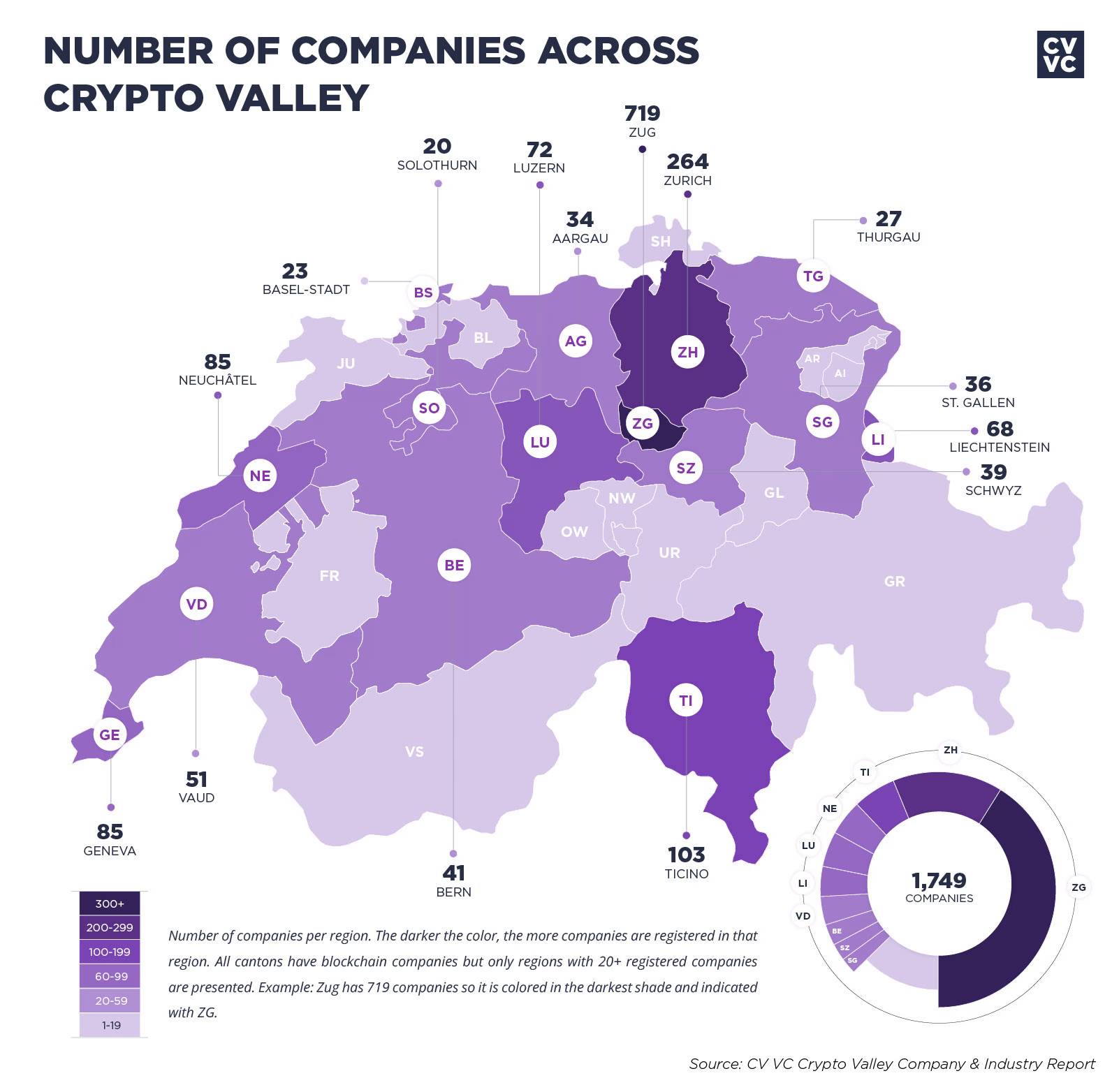
More importantly, Ethereum was born here—if Bitcoin is Adam of the crypto world, Ethereum is Eve.
The numbers are cold, yet they tell vastly different stories of development. In Zug, 47% of blockchain-based financial service firms and 43% of infrastructure firms have chosen to establish themselves. This wasn’t due to government planning, but natural market selection—driven by low taxes, lenient regulations, and, crucially, an organically grown entrepreneurial ecosystem.
People working at blockchain firms in Zug likely live in the same neighborhoods, their children attend the same schools, and they discuss technical issues over drinks at the same weekend bars.
In contrast, the entire Ticino canton, where Lugano is located, hosts only 103 blockchain companies. Yet Lugano refuses to play a supporting role.
When launching Plan B in 2022, their strategy was clear: unable to replicate Zug’s first-mover advantage, they would take a different path. If Zug is paradise for engineers, Geneva the domain of compliance experts, and Zurich the hub of fintech, then what should Lugano become?
The answer: a testing ground for consumer applications.
Lugano chose a seemingly sexier route: bringing crypto to ordinary people. Yet two years into Plan B, merchants accepting Bitcoin payments are mostly playing along rather than driven by real demand.
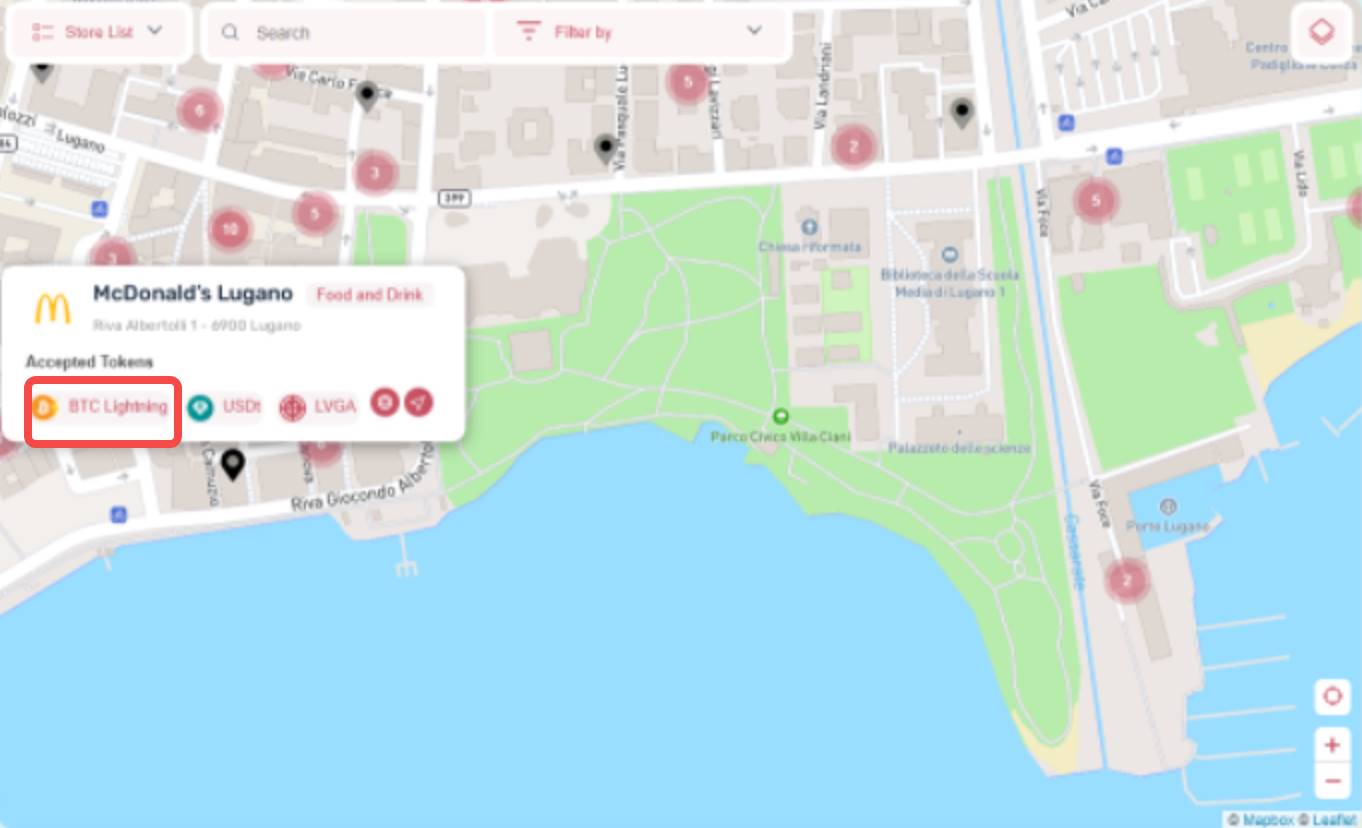
A McDonald’s in Lugano accepts Bitcoin payments
Photo source: PlanB.lugano
Even more awkward is the internal competition among Swiss cities. In 2023, Zug announced it would raise the cap on tax payments in cryptocurrency from 100,000 to 1.5 million Swiss francs—a tangible use case. The same year, Lugano followed by issuing a 100-million-franc blockchain bond. Innovative as it sounds, what difference does this make to average citizens compared to traditional bonds?
Lugano seems determined to cover in two years the decade-long journey of Zug.
But a crypto ecosystem isn’t like building a statue—erecting it doesn’t mean the job is done. It requires time to ferment, fertilizer from failed projects, and genuine participation from the local community.
The Satoshi statue thrown into the lake may not reflect hatred toward Bitcoin, but rather that people in Luganosimply don’t care.
Pushing a crypto agenda in a city lacking a crypto DNA is like growing rice in the desert—not impossible, but extremely costly, and against nature.
The Statue as Metaphor
The night the Satoshi statue spent at the bottom of the lake might have been the most ironic moment of its existence. This artwork designed to “honor decentralization” ultimately required centralized municipal forces to retrieve it.
While Lugano officials talk about blockchain revolution, citizens have their own priorities in life.
The drunken youths who tossed the statue into the lake on Swiss National Day were probably not anti-crypto activists. They likely damaged it simply because it was there—an object that seemed ripe for mischief.
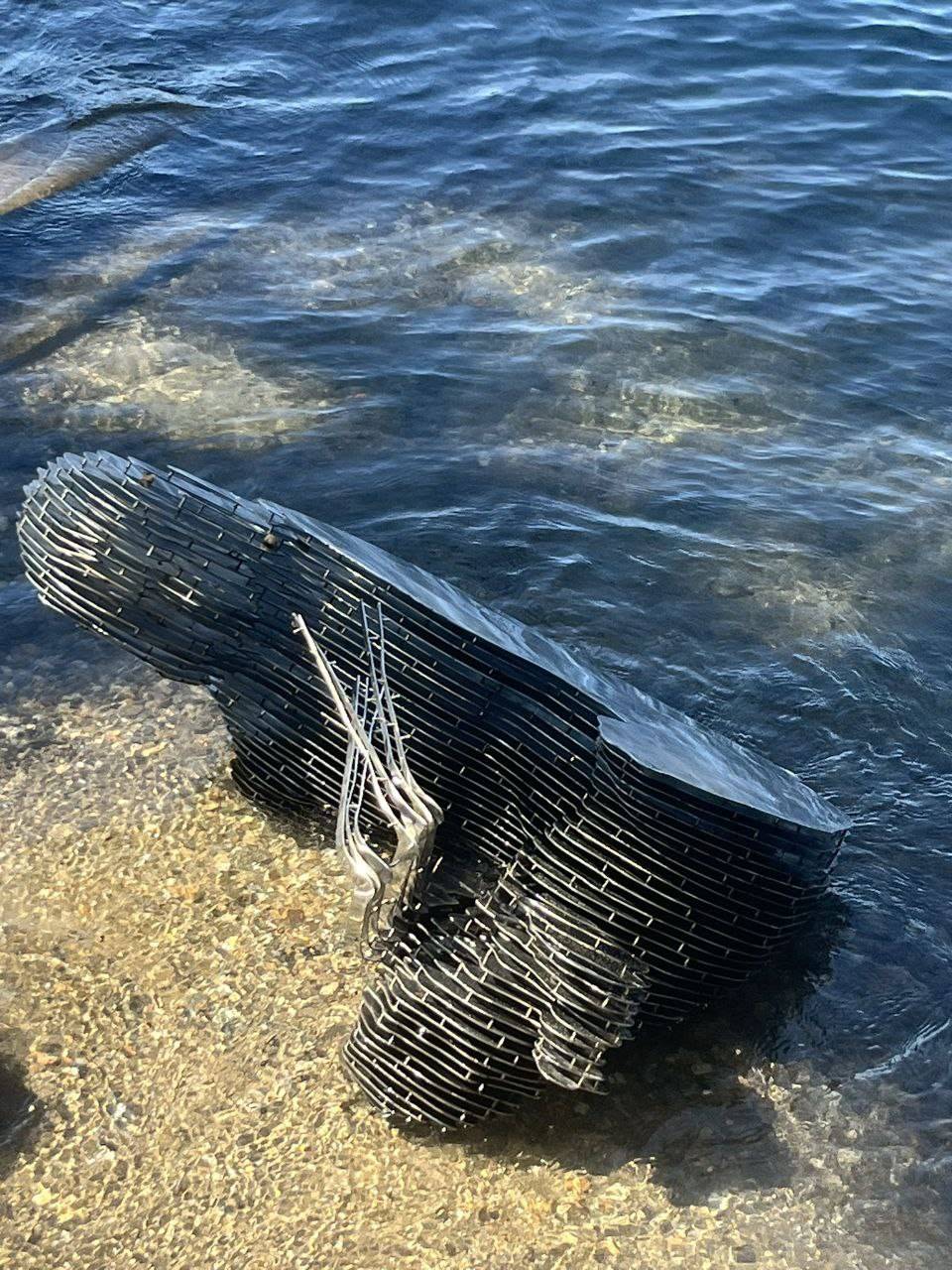
This casualness is more troubling than hatred.Hatred at least implies attention; indifference means “I don’t care.”
The deeper issue lies in the model of “embracing crypto” itself. Zug’s success in Switzerland emerged from ten years of organic growth—a shared ecosystem built by entrepreneurs, investors, and tech enthusiasts. Lugano, however, attempts to replicate this in two years through top-down administrative force.
It’s like trying to recreate slow-cooked flavors using a microwave—looks done, but the taste is off.
When political leadership changes, when budgets tighten, when the next policy trend emerges, will crypto-friendly Plan B remain a priority?
The statue can be re-welded, even reinforced to be unbreakable, but once a crack in trust forms, repairing it is far harder than imagined.
The young people who threw Satoshi into the lake aren’t villains. But pushing a crypto agenda in a city that “doesn’t care” about cryptocurrency may yield less-than-ideal results.
Join TechFlow official community to stay tuned
Telegram:https://t.me/TechFlowDaily
X (Twitter):https://x.com/TechFlowPost
X (Twitter) EN:https://x.com/BlockFlow_News
 深潮TechFlow






