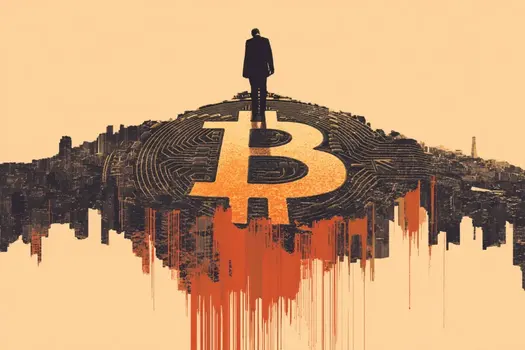
Will Satoshi Nakamoto's 1.09 million bitcoins become the price of faith?
TechFlow Selected TechFlow Selected
Will Satoshi Nakamoto's 1.09 million bitcoins become the price of faith?
True faith is never fragile; it only needs repeated crises to prove that it is worth defending.
 Navigating Web3 tides with focused insights
Author: Daii
This is not a rhetorical question, but an increasingly imminent reality.
In the world of Bitcoin, Satoshi's 1.096 million bitcoins have never moved, serving as the system's original "anchor of faith"—symbolizing pure decentralization and the creator’s retreat and non-intervention.
But now, a technological variable is pushing this pile of "sacred relics" into the spotlight.
Not because of whether they will be used, but because they are almost “destined” to be cracked—except the one doing the cracking won’t be a hacker, but a quantum computer.
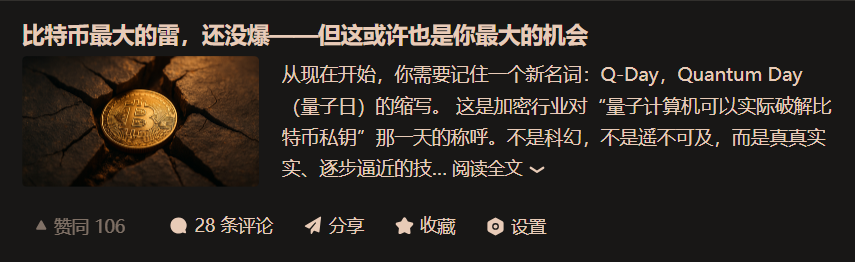
After my article “Bitcoin’s biggest time bomb hasn't exploded yet—but this might also be your greatest opportunity” was published on Zhihu, there has been a growing consensus:
The issue is no longer whether the bomb will explode, but when it will.
Thus, a more sensitive and controversial question has come under the spotlight:
Facing quantum threats, should we intervene with Satoshi’s bitcoins?
-
Acting may prevent disaster;
-
Inaction may preserve faith.
This debate does not tear open code itself, but exposes the deepest philosophical wound in the decentralized world:
When protecting faith undermines its real-world foundation—how should we choose?
Before exploring such a profound issue, let’s first revisit: how did decentralization become a faith?

1. Decentralization, a Faith?
"Decentralization" is not a new term, but within the context of Bitcoin, it has long transcended technical architecture and gradually evolved into a non-negotiable belief.
To understand the power of this belief, we must first understand its "opposite"—the deep structure of the centralized world.
In traditional financial systems, institutions like banks, clearing houses, and central banks monopolize final authority over ledgers. Whether an account is frozen, a transaction valid, or a person deemed "trustworthy," is never up to you—it's decided by the "power structure" behind the system.
This structure appears orderly on the surface, but in reality grants property rights conditionally: what you possess isn’t a right, but merely a privilege temporarily allowed by them.
Bitcoin’s creation was precisely a radical attempt to dismantle this system from its roots.
In Bitcoin:
-
You don’t need to apply, authorize, or identify yourself;
-
Anyone can initiate transactions, and any node can verify their validity;
-
The ledger is secured by proof-of-work; once written, history cannot be altered;
-
There is no "administrator," no "backdoor," no "exceptions."
Here, decentralization doesn’t mean "many people maintaining together," but rather that no individual has special privileges to maintain it.
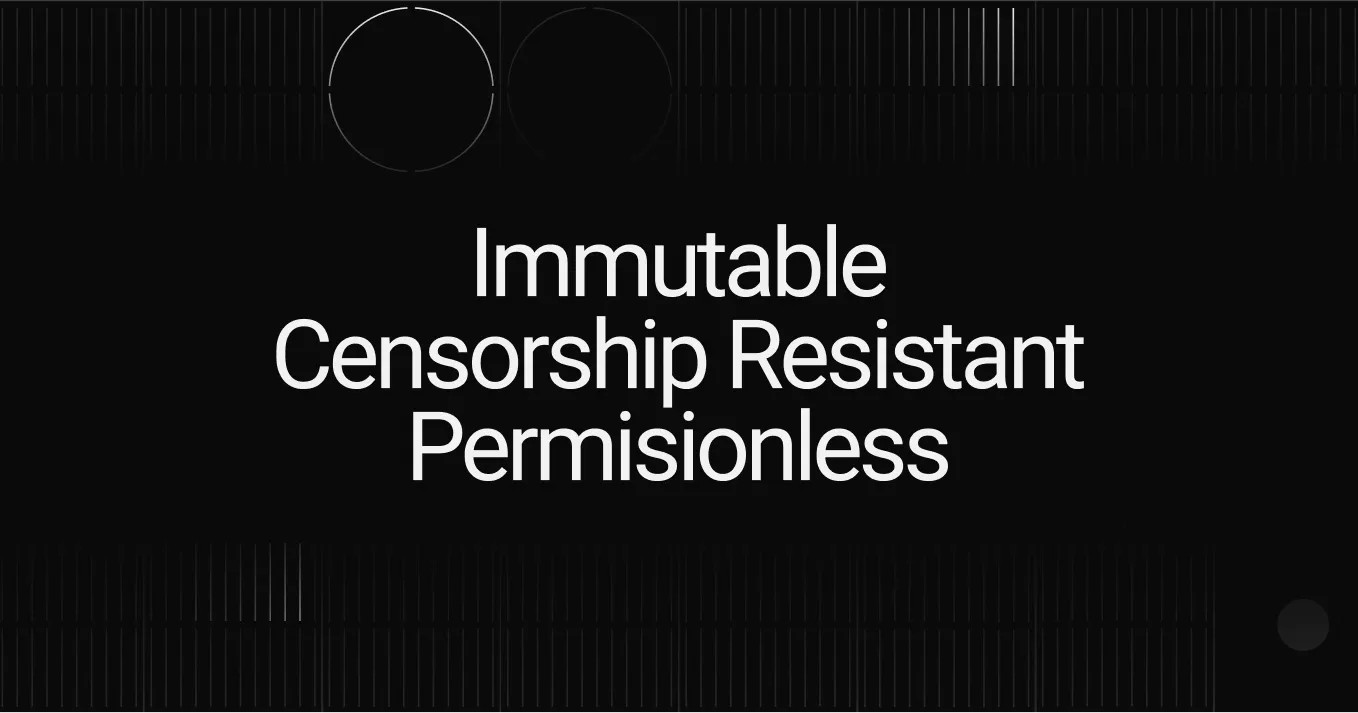
This structure gives rise to Bitcoin’s three core principles:
-
Immutability: Once recorded on the ledger, never changed;
-
Censorship Resistance: No one can stop your transactions;
-
Permissionless: Everyone inherently has access—no approval needed.
These three principles aren’t moral declarations written in whitepapers for discussion—they are coded into the protocol, validated in operation, embraced as consensus, and ultimately elevated into a spiritual beacon resisting power interference.
For many Bitcoin believers, decentralization is no longer just an engineering mechanism, but a belief worth enduring volatility, sacrificing convenience for freedom, and even risking survival to protect.
They believe:
A ledger controlled by no one is more trustworthy than a compromised world where everyone has an excuse.
But here lies the problem.
Because once you accept "exceptions"—such as freezing a high-risk address, modifying historical records, or complying with regulatory demands—Bitcoin’s sacred inviolability shifts from "absolute rule" to "consensus negotiation."
In other words, decentralization ceases to be faith and becomes merely a "strategy."
The arrival of quantum computers marks the first real test of this belief system.
It’s not challenging technology, but human resolve: When the system truly faces life or death, will you still choose non-intervention?
This is no longer about how nodes synchronize, but whether humanity can uphold the "untouchable"底线 during crisis.

2. Quantum Computers, Triggering a Crisis of Faith?
Bitcoin’s faith isn’t just abstractly defined by the word "consensus." Its security rests on one of the most solid foundations in the real world—cryptography.
Bitcoin uses the Elliptic Curve Digital Signature Algorithm (ECDSA). The security of this algorithm relies on the "elliptic curve discrete logarithm problem":
Given a public key, deriving the private key is nearly impossible—at least, on classical computers, it truly is.
However, quantum computing changes this game.
In 1994, mathematician Peter Shor proposed a quantum algorithm (Shor’s algorithm) capable of efficiently solving large integer factorization and discrete logarithm problems on quantum computers. This means that once the number and stability of qubits reach a threshold, existing ECDSA security mechanisms will be completely broken.
According to research by MIT and Google’s joint team, breaking a 256-bit Bitcoin address theoretically requires around 2,330 stable logical qubits and millions of gate operations [Source: Google AI Quantum + Nature, https://www.nature.com/articles/s41586-019-1666-5].
Private keys that would take classical computers hundreds of millions of years to brute-force could theoretically be cracked by quantum computers in hours—or even minutes.
This isn’t alarmist rhetoric. As early as 2019, Google announced achieving "quantum supremacy"—a 53-qubit quantum computer completed a task estimated to take supercomputers tens of thousands of years. IBM, Intel, Alibaba—all are racing along this quantum track. Conservative estimates suggest quantum computers with over a thousand qubits will emerge before 2040.
By then, all systems relying on current asymmetric encryption—including Bitcoin, Ethereum, and even HTTPS protocols securing the internet—will face massive failure risks.
This is no longer just a "technology upgrade" issue, but a challenge to an entire order.
As of the end of 2024:
-
IBM announced its latest quantum chip, Condor, reached 1,121 qubits—not yet fully fault-tolerant, but nearing the thousand-qubit threshold [Source: IBM Quantum Roadmap, https://www.ibm.com/quantum/roadmap].
-
The U.S. National Institute of Standards and Technology (NIST) is urgently advancing its "Post-Quantum Cryptography Standardization" project, explicitly stating that ECDSA faces "foreseeable risks" within the next decade [Source: NIST PQC Project, https://csrc.nist.gov/Projects/post-quantum-cryptography].
Against this backdrop, Bitcoin’s risk has officially transitioned from a distant "theoretical threat" into a "strategic defense phase."
And the most vulnerable and sensitive part of the system is precisely those early bitcoins that have never moved—the addresses belonging to what we know as Patoshi blocks.
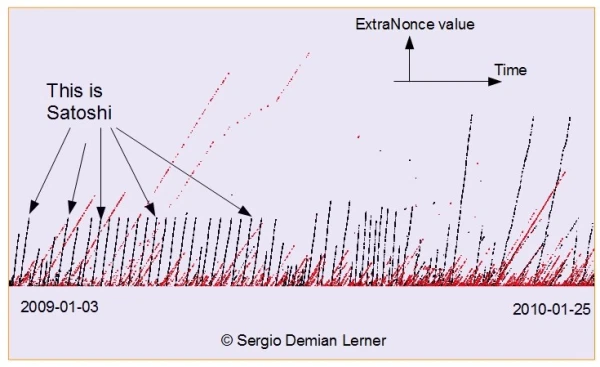
Patoshi blocks refer to a series of blocks mined in Bitcoin’s early days, identified by blockchain analysts through mining behavior patterns likely operated by Satoshi Nakamoto himself.
These blocks exhibit characteristics such as fixed time intervals, highly consistent Nonce distributions, and unique "ExtraNonce" growth patterns. Based on these on-chain traces, researchers speculate that the miner accounts controlling these blocks very likely belong to Satoshi Nakamoto.
Approximately 1.096 million bitcoins were mined via Patoshi blocks, which have never been moved or spent since their creation, becoming the most mysterious and sensitive "silent assets" in the Bitcoin world. Their security status directly impacts both the symbolic value of Bitcoin’s faith and the system’s potential vulnerabilities.
Compared to anti-quantum upgrades achievable through soft or hard forks, these 1.096 million Satoshi bitcoins are the true potential spark that could split the community.
3. Handling Satoshi’s Bitcoins Will Trigger Value Conflicts?
So why are these Satoshi bitcoins so dangerous?
Because they use the earliest Pay-to-PubKey (P2PK) script format, whose public keys have long been exposed in plaintext on the chain. This means:
-
An attacker only needs the public key to derive the private key and directly transfer the assets.
-
This attack method is exactly where quantum computing excels.
On-chain tracking data shows these addresses hold approximately 1.096 million BTC. If these assets are ever compromised and dumped, the market would face a shock exceeding $120 billion, with unimaginable consequences.
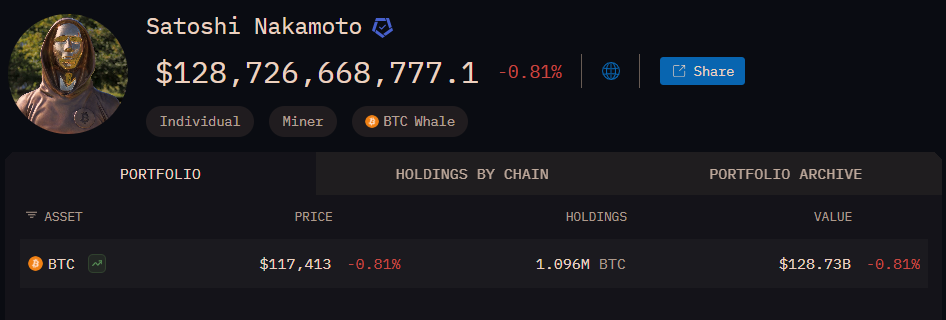
Therefore, discussions on whether to "preemptively handle" these Satoshi bitcoins are shifting from fringe topics to unavoidable realities. A major debate within the community about whether Satoshi’s coins should be touched is heating up, with currently three main voices:
3.1 First Voice: "Untouchable"—Bitcoin’s Ledger Must Never Be Altered
This is the oldest and most orthodox voice in the Bitcoin community. They argue: even if these coins are stolen, dumped, or confidence shaken, we must never set a precedent for "human intervention in the ledger."
Why? Because once you do it once, you’ll do it again. It’s no longer a single event, but the beginning of "privilege"—who defines what constitutes "reasonable intervention"? Core developers? Miners? A nation or court?

As Bitcoin Core developer Matt Corallo has publicly stated multiple times:
If you ever alter the ledger, it’s no longer Bitcoin.
They believe the essence of decentralization is this: even if the system explodes, no one should be allowed to hit pause.
This is a stance of "faith above risk." But here’s the problem—if this isn’t political correctness or self-hypnosis, it must prepare psychologically for watching Bitcoin get looted by hackers.
3.2 Second Voice: "We Should Act, But With Extreme Caution and Limits"
This camp avoids acting lightly, but doesn’t view "inaction" as sacred. They emphasize realism:
"If we can, through consensus, prevent an impending nuclear-scale dump, why wouldn’t we?"
Their proposed solutions often include several elements:
-
Implement locking mechanisms via soft fork—for example, imposing spendability restrictions on specific P2PK addresses;
-
Freezing is not permanent but delayed activation: e.g., setting a 10-year cooling period, during which holders can redeem via post-quantum signatures to "prove ownership";
-
Community-wide consensus voting: decisions made collectively by miners, nodes, developers, and users—not dictated by any single team.
This path sounds more rational and has precedents.
For instance, BIP-119 (OP_CHECKTEMPLATEVERIFY) is a proposal tool that could enable complex lock-up scripts. Though initially designed for batch payments and fee optimization, some developers suggest it could restrict spending permissions of specific UTXOs, effectively "freezing" certain addresses [Source: Bitcoin Optech Newsletter, https://bitcoinops.org/en/topics/op_checktemplateverify/].
They stress this isn’t "centralized intervention," but a technical, community-consensus-driven "system self-defense mechanism."
But the issue remains: even with overwhelming consensus, once the ledger becomes alterable, trust is no longer "automatic," but "negotiated."
3.3 Third Voice: "Don’t Freeze, Don’t Change, Don’t Negotiate—Let It Die Naturally"
Another faction argues: "We don’t need to do anything."
This isn’t surrender, but a cool-headed technocratic stance. They believe: instead of creating ethical dilemmas, we should upgrade the protocol to guide users toward quantum-safe addresses, allowing these high-risk legacy addresses to "naturally deactivate."
How?
-
Encourage users to migrate assets from old addresses to quantum-resistant P2TR (Taproot) or future XMSS/LMS addresses;
-
Use economic incentives (e.g., fee discounts) to drive on-chain "security upgrades";
-
Do not freeze any addresses at the system level, but also refuse to recognize non-post-quantum signatures for control over critical paths.
The benefit of this approach is it preserves consensus, leaves the ledger untouched, and avoids controversy. But the cost is extreme slowness—and it does nothing for Satoshi’s "naked coins," since no one can "migrate" them.
In other words, this solution takes responsibility for the future but is powerless against "that one bomb."
3.4 Summary
Currently, no solution can avoid controversy entirely. Each path represents a value prioritization: Do you care more about unchanging rules, or real-world safety?
Some say Bitcoin is a temple—you shouldn’t remove the deity just because of danger; others say Bitcoin is a ship—if you know there’s explosives in the hull, you should deal with it immediately.
But this time, it’s no longer a problem code can automatically solve. It’s a trial of collective community will, a final vote on "power versus principle."
And its real question is:
Are we truly ready to face a future where Bitcoin isn’t "cannot be changed," but "can be changed, but we choose not to"?
Clearly, this is another clash of values.
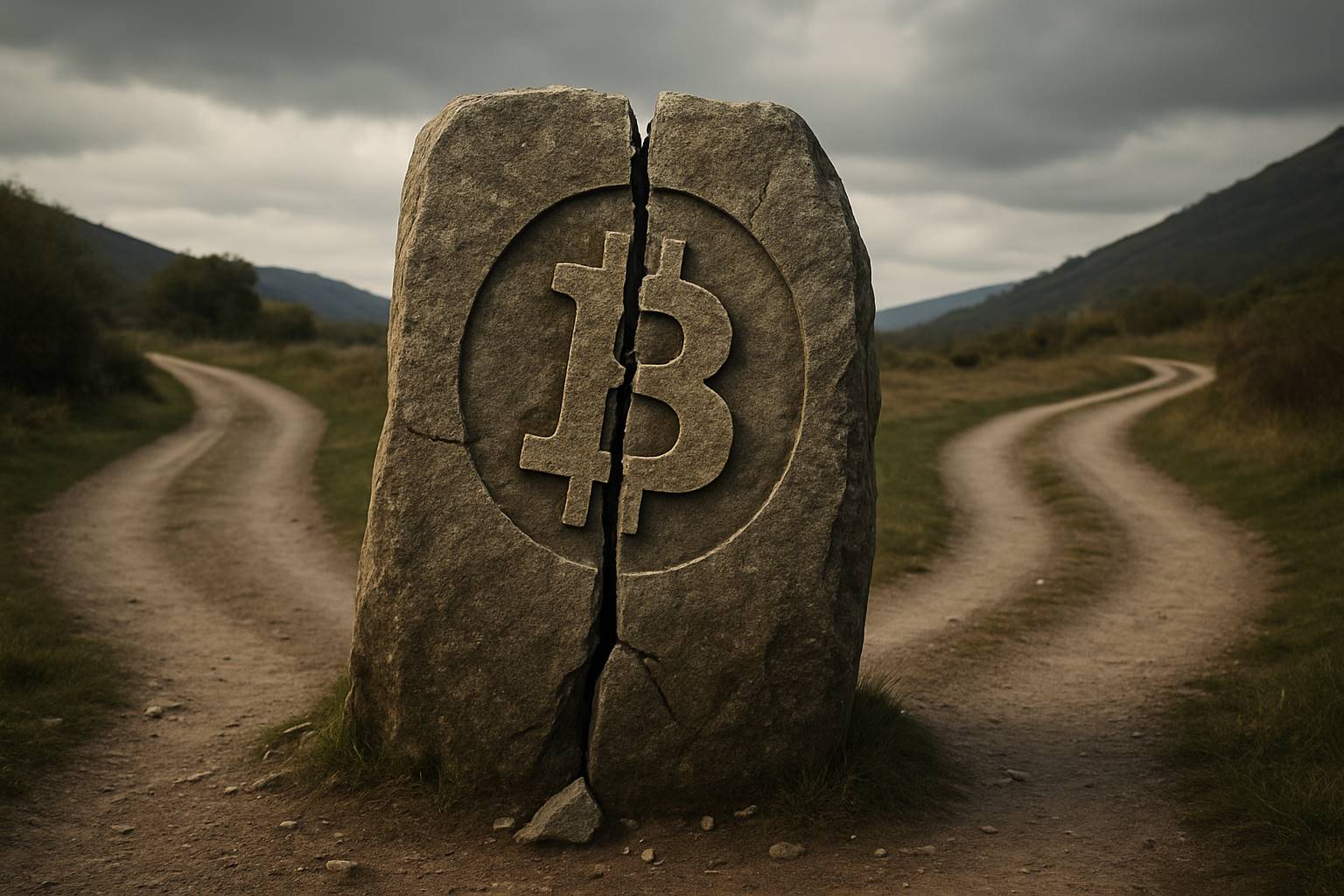
4. Values, Non-Negotiable?
Every time Bitcoin faces a crisis, the surface-level dispute may appear to be about code, parameters, or addresses, but fundamentally, it almost always points to the same deep question:
Can we still share a unified definition of "what Bitcoin is"?
This time is no exception.
You might think the community is debating whether to freeze Satoshi’s bitcoins or intervene to prevent theft, but in reality, what people are fighting over is something far harder to unify—priority in value ranking.
And this isn’t the first time Bitcoin has faced such a "faith rift."
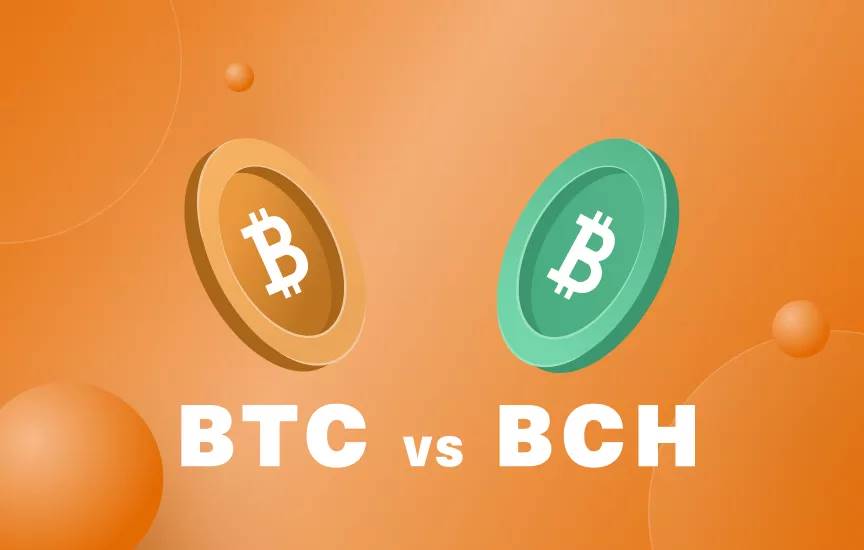
Go back to 2017, when Bitcoin fell into civil war over the "scaling" issue.
-
One side insisted on maintaining the 1MB block limit, emphasizing decentralization and node operability;
-
The other advocated increasing block size to boost TPS, making Bitcoin more like a "global payment network."
The debate ended in a hard fork, birthing Bitcoin Cash (BCH). History tells the story clearly: BTC held firm to the "simple ledger" boundary and remains the largest cryptocurrency by market cap; BCH, while not dead, stays outside mainstream narratives.
What does this show?
Bitcoin’s technology can be upgraded, routes debated, but consensus cannot be easily fractured. Once split, the cost isn’t just "switching to another chain," but the reconstruction of the entire belief system.
And compared to the 2017 "block size war," today’s dispute over "whether to intervene in Satoshi’s address" will be even fiercer.
-
That debate was about "transaction efficiency"; this one is about "whether the ledger can be rewritten";
-
That disagreement was over "application positioning"; this one tears apart the "boundaries of decentralized governance";
-
That controversy centered on "how to make a better Bitcoin"; this one questions "what still qualifies as Bitcoin."
Some supporting proactive intervention argue it’s time for Bitcoin to gain a degree of "governance flexibility" like Ethereum, no longer remaining a "passive observer system." But opponents’ criticisms are equally sharp:
"If we start modifying history, freezing addresses, filtering transactions, what essential difference remains between us and Ethereum?"
This isn’t emotional rhetoric, but a wake-up call.
Once you open the door for "special circumstances," the logical dam begins to crumble:
-
You can freeze Satoshi’s coins;
-
You might freeze addresses under U.S. sanctions (e.g., Tornado Cash);
-
Then perhaps comply with regulators by establishing a "transaction whitelist" mechanism…
This path is precisely the one Bitcoin spent fourteen years refusing to take.
And if this divide over "whether to act" fails to achieve overwhelming consensus, the likely outcome is—another hard fork.
Don’t misunderstand: while the Bitcoin protocol is robust, it is not "indivisible."
Any individual, organization, or mining pool can fork the source code, modify the rules, and launch a new blockchain—creating "another Bitcoin."
In the past decade, such attempts have been numerous—from Bitcoin XT to Bitcoin Gold, to Bitcoin SV—most of which eventually faded into silence.
But if this time the core of the split isn’t technical parameters, but differing views on the "boundary of governance authority," then this forked chain may not just be a temporary "testnet," but the beginning of a new "consensus."
At that point, BTC may remain BTC, but it will no longer be the "digital gold" upon which everyone once shared minimal consensus.
It may become two Bitcoins:
-
One guarding the "pure ledger," refusing to exercise authority even under passive attack;
-
Another advocating "rational intervention," willing to make limited historical modifications for system security.
And you, as a member of this system, will ultimately have to choose:
Do you believe in "rule supremacy"? Or "flexible survival"?

Conclusion
The quantum threat has thrust Satoshi’s 1.096 million bitcoins into the spotlight, but this doesn’t mean "doomsday countdown." Even if they are eventually cracked, the most direct consequence would only be a sudden supply shock—price may fluctuate violently, but not enough to destroy the entire system.
Bitcoin has already survived Mt. Gox collapse, 3AC liquidation, FTX disaster. Every seemingly "catastrophic" moment has ultimately been absorbed by the market, forming new bottoms and climbing to new highs. New supplies eventually fall into the hands of long-term believers, while on-chain fees and hash power reprice amid volatility.
The quantum storm may create massive waves, but what truly steers the course is the resilience and direction of consensus.
The quantum impact is not an end, but a magnifying glass.
It magnifies panic, and also magnifies confidence; magnifies technical fragility, and also magnifies collective wisdom.
In the end, Bitcoin will prove to the world through real-world testing:
Faith is not fragile—it simply needs repeated crises to prove it’s worth defending.
Join TechFlow official community to stay tuned
Telegram:https://t.me/TechFlowDaily
X (Twitter):https://x.com/TechFlowPost
X (Twitter) EN:https://x.com/BlockFlow_News
 @yzdxs8