Satoshi's Prophecy and Wall Street's Turn: An Unfinished Revolution
TechFlow Selected TechFlow Selected
Satoshi's Prophecy and Wall Street's Turn: An Unfinished Revolution
The ultimate battle for Bitcoin is not in code, but in people's minds.
 Navigating Web3 tides with focused insights
By Jon Helgi Egilsson, Forbes
Translated by AididiaoJP, Foresight News
This Friday marks the seventeenth anniversary of Satoshi Nakamoto releasing Bitcoin's white paper.
The revolution now seems to have come full circle: Wall Street holds the keys.
From BlackRock’s Bitcoin ETF to JPMorgan’s decision to accept Bitcoin and Ether as collateral, the very institutions Bitcoin was designed to bypass have become its custodians, biggest beneficiaries, and advocates—and perhaps its greatest test.
From Economic Rebellion to Regulatory Acceptance
This irony reveals a deeper truth about how revolutions evolve and why this moment matters.
First they ignore you, then they laugh at you, then they fight you, then you win.
Gandhi described a pattern that repeats throughout technological revolutions—and is unfolding once again. Bankers mocked, regulators fought, and now Wall Street embraces what it once dismissed.
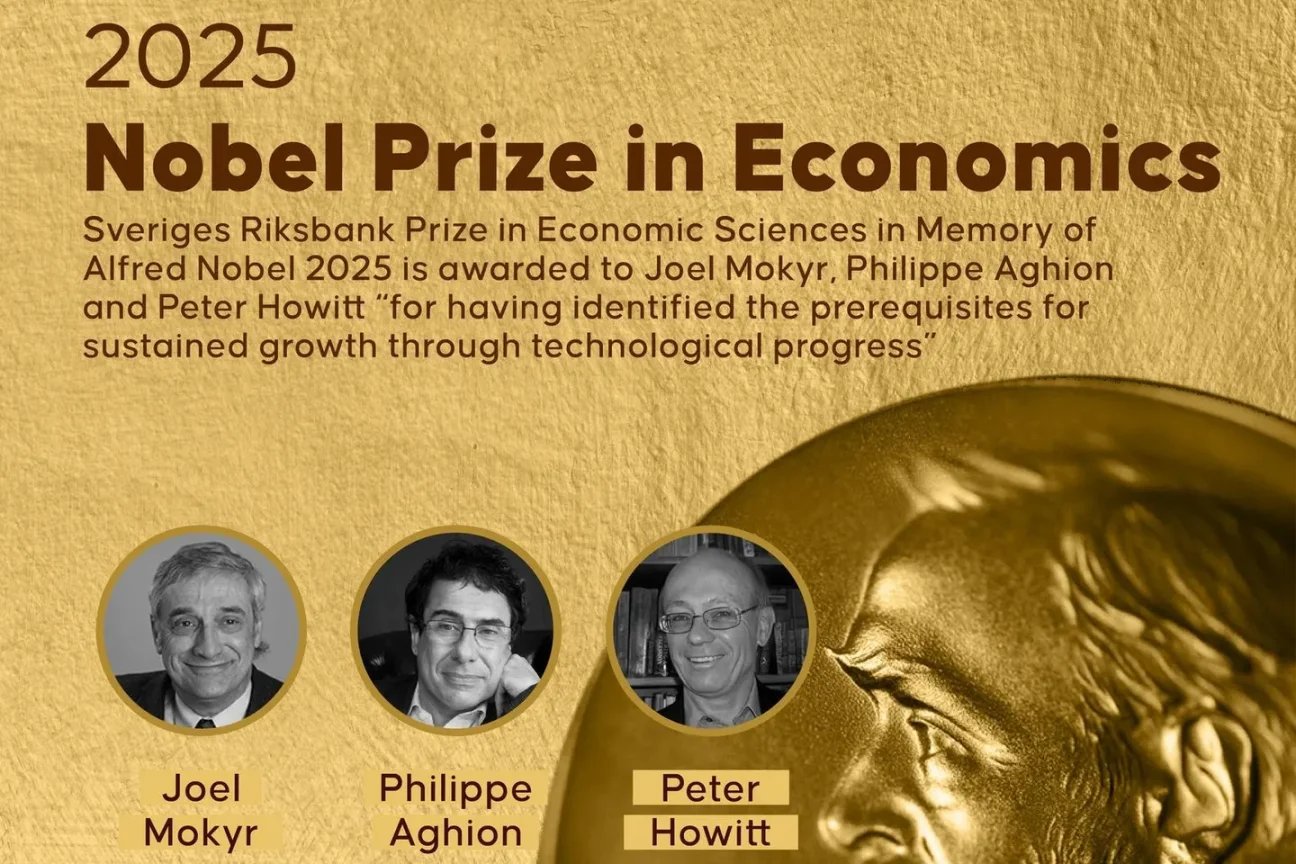
Earlier this month, the Nobel Prize in Economics was awarded to Joel Mokyr, Philippe Aghion, and Peter Howitt for their complementary work on creative destruction and cultures of growth. Their research explains how progress depends on a society’s willingness to allow old institutions, technologies, and habits to be replaced by new, more efficient ones.
"Creative destruction," coined by Joseph Schumpeter, is not just about innovation—it's about the courage to break with convention. Mokyr links sustained growth to a culture that celebrates curiosity and experimentation, while Aghion and Howitt show how innovation advances by continuously replacing the old with the new—disruptive in the short term but essential for long-term progress.
Bitcoin’s Creative Evolution
The story of Bitcoin and cryptocurrencies fits this pattern almost perfectly. Born as a rebellion against financial institutions, it is now being absorbed by them. Jamie Dimon, who once called Bitcoin a "fraud" with "no intrinsic value," now leads a bank that accepts it as collateral. The U.S. Securities and Exchange Commission spent last year cracking down on crypto, only to undergo a historic shift—embracing it and openly considering crypto standards as a regulatory bridge to a trillion-dollar market.
As these institutions adapt, they are proving Mokyr’s point: progress rarely unfolds directly. It happens through resistance, absorption, and ultimately cultural transformation—the very process that reshapes the institutions governing society.
From Cryptographic Code to Cypherpunk Culture
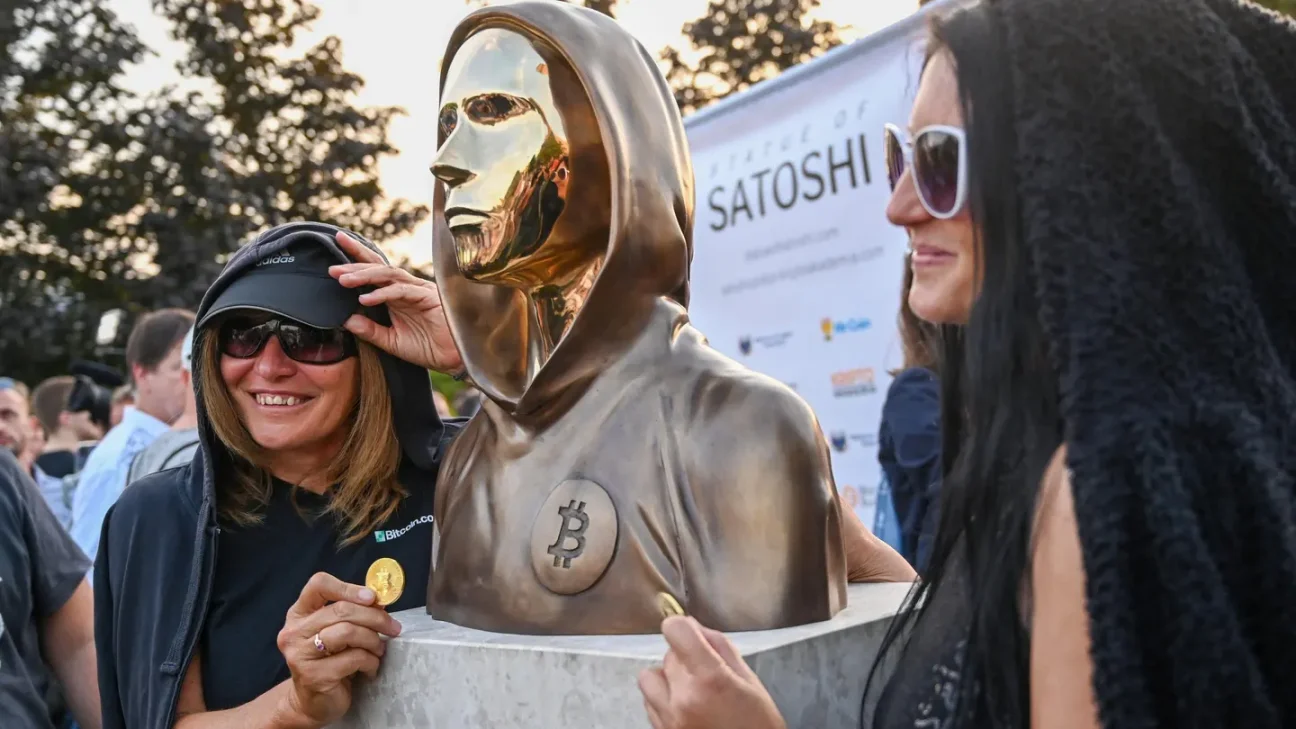
ATTILA KISBENEDEK / AFP
Fans take photos with a statue of Bitcoin’s pseudonymous creator, Satoshi Nakamoto. The hooded figure symbolizes the mystery behind Bitcoin’s origins and the movement it sparked seventeen years ago. Today, that revolution no longer takes place in code—but in culture. Communities around the world are striving to win hearts and minds, turning technology into shared belief. As this year’s Nobel laureates remind us, innovation can only reshape institutions when it becomes part of a society’s culture.
The milestones are real, but the mission is unfinished. Institutional adoption of Bitcoin marks progress, but its core promises—self-custody, open networks, and user sovereignty—are still being fought for on the cultural front lines. Around the world, Bitcoin-native builders and communities are shaping that culture from the ground up.
The energy at these gatherings is not merely technical—it is cultural and communal. The struggle is no longer just about code, but about preserving individual choice and freedom in a world increasingly mediated, centralized, and surveilled. As Mokyr says, the transition from technology to culture to institutions is still underway. The question now is whether society will complete the work Satoshi began—not by writing new code, but by choosing the values that will define the next era of money and freedom.
The Battle for Bitcoin Has Begun
At a Bitcoin-themed event in Los Angeles this month, MIT’s Christian Catalini argued that open networks and interoperability are the foundation of the next era of payments. Catalini believes the future of money depends on shared infrastructure, not closed gardens, and that the fight for openness is ultimately cultural, not technical. Education and community will determine whether innovation remains free or gets captured by entrenched interests.
A similar pattern emerged in Prague, where Trezor’s “Design as Trust” gathering framed self-custody as an extension of Europe’s long-standing pursuit of individual liberty. Speakers drew historical parallels between digital sovereignty and hard-earned lessons of self-reliance, reminding attendees that freedom is not a product feature—it’s a mindset.

Prague, Czech Republic, October 21, 2025—At the “Design as Trust” conference in Prague, speakers focused less on technology and more on culture—the mindset that sustains financial freedom. “Czechs have learned not to trust authority,” said Matěj Žáák, capturing a deeper theme of the event: lasting change begins with culture, because institutions rarely change before society does.
In Lugano, Switzerland, the “Plan B Forum” brought together policymakers, entrepreneurs, and technologists around a shared belief: Bitcoin’s core principles—transparency, openness, and individual choice—must extend beyond financial markets into the way societies govern themselves. As one participant put it, “What started as Plan B is rapidly becoming Plan A.”
These are not isolated events. Across podcasts, online communities, and social media, a broader movement to win hearts and minds is underway—a reminder that no revolution succeeds unless individuals believe in its value and act accordingly.
These gatherings amount to cultural engineering—rebel community-building. As Mokyr argues, once a technology is invented, its spread depends on culture: people’s willingness to adopt new norms and leave behind old comforts.
The Bitcoin movement is now testing that threshold. It has conquered institutional balance sheets, but not yet individual habits. Unless ordinary people both feel the need and gain the confidence to hold their own keys, support open-source innovation, and trust public networks, the revolution remains incomplete.
A Revolution in Transition

NASA flight controllers applaud the safe return of Apollo 13, provided by Heritage Space/Heritage Images via Getty Images.
NASA flight controllers applaud the safe return of Apollo 13—one of the most dramatic missions in space history. A mission that began as a near-disaster ended in triumph through intelligence, trust, and collaboration. It reminds us that some revolutions succeed through adaptation. Like Apollo 13, the revolution of Bitcoin and cryptocurrencies is in transition. Its challenge today is not technical, but cultural: will society muster the same resolve to return to first principles and finish the job?
Seventeen years on, we’re no longer debating whether the technology works—we’re deciding what kind of society we want it to serve. The choice is ours.
The phrase from Apollo 13—“Houston, we’ve had a problem”—has become shorthand for crisis, but the mission it described did not fail; it adapted. The astronauts solved their problems through ingenuity, trust, and cooperation, turning disaster into discovery.
Similarly, Satoshi’s revolution is not in crisis—it is in transition. The challenge is not technical; it is cultural. Whether Bitcoin fulfills its founding promise or becomes just another layer of financial intermediation will depend on our collective choices. It will depend on whether society, like those astronauts, chooses to return to first principles and complete the unfinished work.
Freedom from financial intermediaries and independence are not granted by institutions that profit from dependence—they are acts of will, conscious choices made by users.
Freedom is not given. It is chosen. Shaped by our culture, rooted in our values, and sustained by our choices.
The struggle continues.
Join TechFlow official community to stay tuned
Telegram:https://t.me/TechFlowDaily
X (Twitter):https://x.com/TechFlowPost
X (Twitter) EN:https://x.com/BlockFlow_News
 Forbes