Wall Street vs Cryptocurrency: The lobbying battle for finance is heating up in Washington
TechFlow Selected TechFlow Selected
Wall Street vs Cryptocurrency: The lobbying battle for finance is heating up in Washington
Tensions between Wall Street and cryptocurrency are escalating, and the power struggle is about to enter a heated phase.
 Navigating Web3 tides with focused insights
Authors: Jasper Goodman, Michael Stratford, Declan Harty
Translation: TechFlow
Powerful Wall Street groups are trying to block several Republican proposals aimed at advancing the crypto industry.
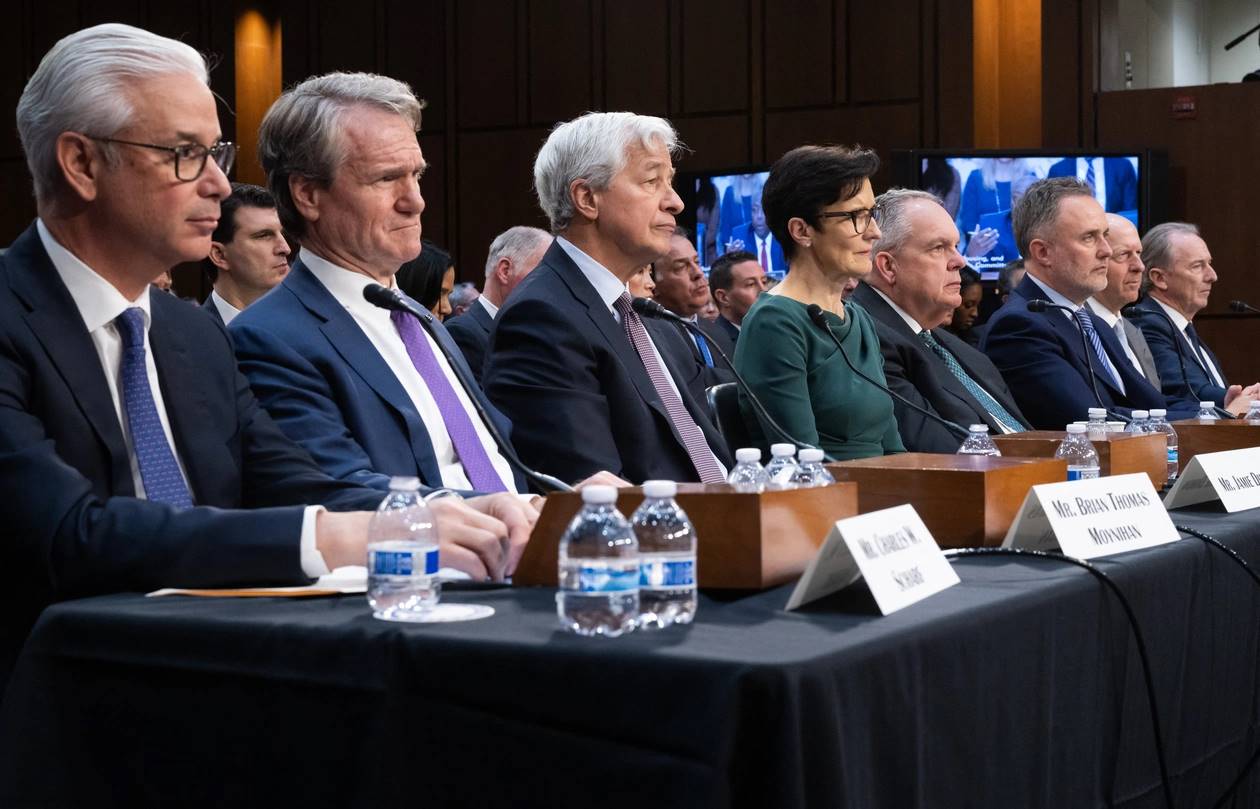
The massive campaign spending by cryptocurrency executives in the 2024 election has had far-reaching implications for banking. | Saul Loeb/AFP via Getty Images
The financial world is embroiled in a lobbying civil war in Washington.
Tensions between cryptocurrency firms and banks as well as other Wall Street businesses are escalating, centered on new digital asset rules pushed by Republican leaders. The conflict is expected to peak when Congress reconvenes after its August recess.
With President Donald Trump returning to the White House, the crypto industry has achieved a series of lobbying victories, including the first legislative reform on digital asset regulation. Now, Republicans in Congress are preparing to pass a second, broader bill to boost the crypto market, while Wall Street groups are hitting the brakes, warning that certain crypto-friendly reforms could disrupt their business and threaten financial stability.
Some banks worry lending institutions may face deposit outflows as customers shift toward lightly regulated crypto products.
But the battle isn't confined to Congress. It's also spreading into some of the more obscure corners of financial policy. For example, bank groups are trying to block cryptocurrency firms from obtaining national bank charters. Meanwhile, crypto industry executives are lobbying the White House to preserve a ban on banks charging fees for customer data access. At the same time, some traditional financial firms are warning Wall Street regulators they're attempting to make stock trading resemble cryptocurrency.
"Change is always difficult, especially for those who have already succeeded and become entrenched within an organization—they naturally feel somewhat uneasy about drastic shifts," said Dan Zinn, general counsel at OTC Markets, a firm that operates stock trading systems. "This absolutely keeps everyone alert, whether due to a bit of fear or a bit of excitement."
The conflict highlights how lobbying dynamics around financial policy issues have dramatically shifted in recent months as Washington begins embracing the crypto industry. The right's enthusiasm for crypto has poured hundreds of millions of dollars into influence operations in Washington over recent years, in some cases surpassing the interests of traditional financial firms, which typically align with most of the Republican party’s financial policy agenda.
This month, the lobbying fight intensified as banking trade associations called on lawmakers to retroactively amend a recently signed crypto law passed by Congress in July through upcoming legislation—sparking fierce opposition from the crypto industry. (House Republicans are also pushing for retroactive changes to the bill after opting to accept the Senate version.)
Banks have long been skeptical of cryptocurrencies. Industry leaders including JPMorgan CEO Jamie Dimon have previously dismissed digital assets, and their Washington agendas have long diverged from those of digital asset companies.
"It's been a turf war going on for years, and frankly, we haven't been able to achieve any regulatory clarity so far," said Ohio Republican Rep. Warren Davidson of the House Financial Services Committee, a longtime ally of the crypto industry.
But for months, major trade associations representing the banking sector have offered only lukewarm public criticism of the fast-moving Republican legislation aimed at legitimizing digital asset regulation.
They've grown more outspoken since Trump signed a major bill last month establishing new rules for so-called stablecoins—cryptocurrencies pegged to the dollar. Groups like the American Bankers Association are now urging senators to amend the stablecoin law when they take up a second, broader crypto market structure bill next month. They hope to prevent all crypto firms from paying yields to customers holding stablecoins and to repeal what they describe as provisions allowing nationally chartered, uninsured depository institutions to operate nationwide without adequate oversight, as outlined in certain legal clauses.
The concerns are especially acute for small banks, which say they could suffer losses if customers withdraw funds and place them into crypto products like stablecoins.
"It feels like a move to replace us," said Christopher Williston, president and CEO of the Independent Bankers Association of Texas, the only major bank group to publicly oppose the stablecoin bill.
Williston said the stablecoin bill, known as the GENIUS Act, poses a "fundamental threat" to bank deposits for small lenders. He added that the new legislation feels like a "thousand-and-first cut" for community banks "after 15 years of regulatory burdens stemming from post-2008 financial crisis reforms."
Crypto companies that have lobbied for the stablecoin bill for years insist the matter is settled.
Sommer Pinner, CEO of the Blockchain Association, a leading industry trade group, said the GENIUS Act "is established law." "Congress debated it intensely, and this bill emerged as a compromise among policymakers. So we really shouldn't be trying to go back and re-litigate this issue."
Paige Pidano Paridon, executive vice president at the Bank Policy Institute, which represents large banks, said the organization wants to work with the crypto industry to develop "clear, fair rules."
"This isn't a battle between banks and crypto," she said, "but a joint effort to establish rules that apply to everyone, while protecting consumers and the financial system. America's financial system is built on trust, and risks grow when ordinary consumers can't distinguish between safe and unsafe offerings, undermining U.S. competitiveness."
At the Securities and Exchange Commission (SEC), traditional financial institutions have been urging Wall Street regulators to proceed cautiously as the agency considers requests from the crypto industry for "tokenization of U.S. stocks." Tokenization refers to placing such assets on blockchains similar to Bitcoin and Ethereum.
Proponents argue tokenization would help accelerate stock trading and reduce costs globally. However, organizations like the Securities Industry and Financial Markets Association and Citadel Securities, the trading giant led by Republican mega-donor Ken Griffin, argue tokenized stocks should follow the same rules as the thousands of traditional stocks currently traded. Lobbyists expect the debate over tokenization will play a role in Congress' upcoming discussions on a market structure bill that will divide regulatory authority over crypto among market regulators. Senate Republicans have vowed to pass the bill this fall.
To be sure, banks still wield immense influence in Washington. Large bank CEOs continue to win meetings in the Oval Office, and lending institutions benefit from Republicans’ sweeping deregulatory agenda. Some figures in traditional finance are also beginning to embrace the potential of crypto.
Yet at the same time, the banking sector is contending with a political landscape shaped by massive campaign spending from crypto executives during the last election—and renewed hopes for the upcoming midterms. Cryptocurrency is a top policy priority for the White House and Trump, whose family has invested in multiple crypto ventures.
These dynamics have made the industry a formidable force. At the Consumer Financial Protection Bureau (CFPB), crypto executives successfully lobbied the Trump administration to abandon efforts, previously coordinated with large banks, to repeal Biden-era "open banking" rules governing consumer data sharing.
The policy prohibits banks from charging fees to access this data, which fintech and crypto firms use to support their services and enable customers to open accounts and transfer funds. After intervention by crypto executives teaming up with fintech companies, the CFPB is now reconsidering the rule rather than eliminating it entirely.
"Banks are still respected," Davidson said, adding that Republicans have worked with banks to roll back some post-2008 regulations. "But frankly, banks have enjoyed protections in other areas that, in many ways, shielded them from market forces."
Join TechFlow official community to stay tuned
Telegram:https://t.me/TechFlowDaily
X (Twitter):https://x.com/TechFlowPost
X (Twitter) EN:https://x.com/BlockFlow_News
 @politico