Wired: Trump's Second Son and the Secret Entanglement with American Bitcoin
TechFlow Selected TechFlow Selected
Wired: Trump's Second Son and the Secret Entanglement with American Bitcoin
A new cryptocurrency mining company is emerging with Trump's name and connections.
 Navigating Web3 tides with focused insights
By Jessica Klein, Wired
Translated by Luffy, Foresight News
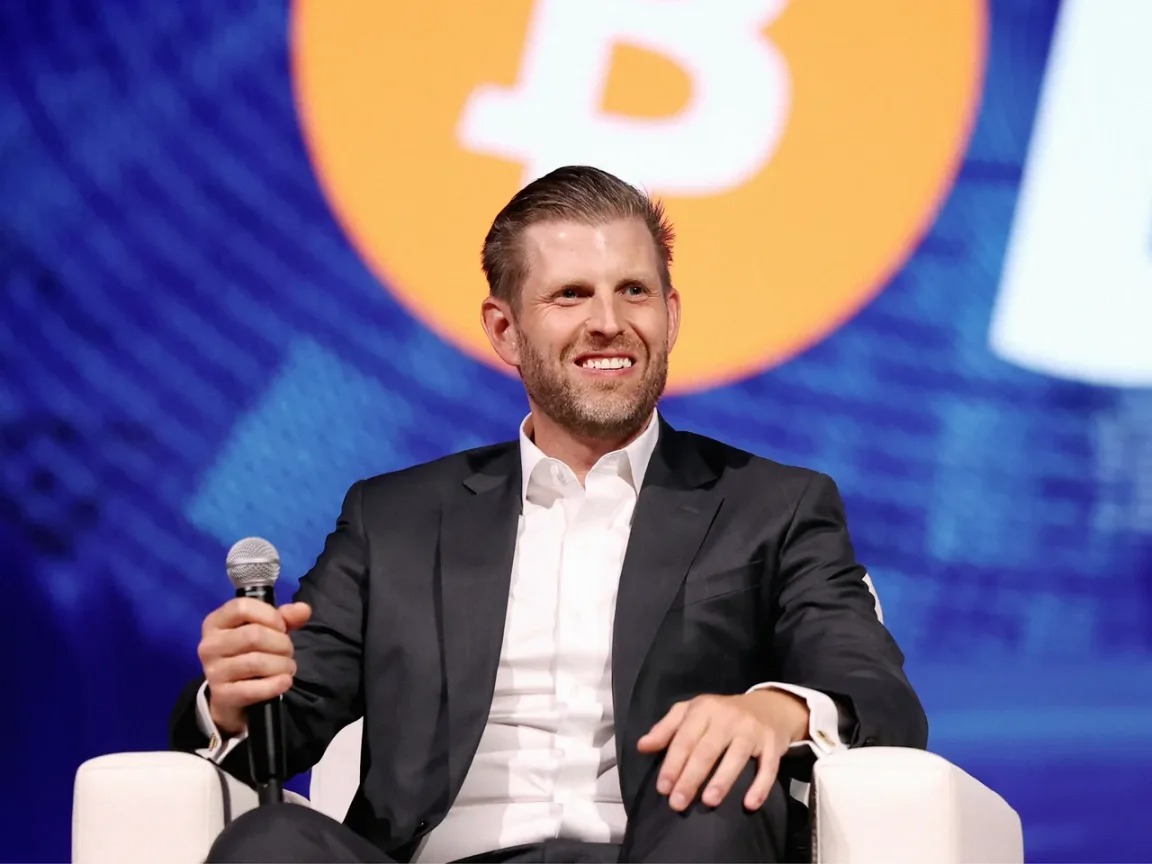
Eric Trump (second son of U.S. President Donald Trump and Executive Vice President of the Trump Organization) attended the "Bitcoin 2025" conference in Las Vegas, Nevada on May 28, 2025.
In the early days of Trump's second term, Asher Genoot, CEO of Hut 8—a core infrastructure company—and Chief Strategy Officer Michael Ho shared thin-crust pizza with Eric Trump at the Trump Golf Club in Jupiter, Florida. Genoot recalled hours of conversation that culminated in a business plan deeply intriguing to Eric Trump: forming a bitcoin mining alliance.
The two first met through mutual friends at the end of 2024: Genoot said he showed Eric photos of a “beautiful liquid-cooled data center” in Amarillo, Texas. Eric expressed interest and shared stories with Genoot about growing up on construction sites with his father. According to Genoot, after that pizza night, they met nearly every day. The result was announced on April 1: the founding of American Bitcoin (ABTC). Hut 8 holds 80% of the company (which claims to “manage 1020 megawatts of energy capacity across 15 locations in the U.S. and Canada”), while the Trump brothers (Eric and Donald Jr.) and existing shareholders of their data center company, American Data Centers, hold the remaining 20%. Eric serves as co-founder and Chief Strategy Officer of American Bitcoin.
Matt Prusak, CEO of American Bitcoin (formerly CEO of Ionic Digital, a Hut 8-affiliated bitcoin mining firm), said the Trump brothers bring “two things”: access to global capital markets through the Trump family’s international business network, and—using Prusak’s words—a more compelling “narrative value” derived from the Trump name.
Although Prusak said Eric “can reach numerous potential partners with just one phone call,” both he and Genoot insist Eric’s role does not grant them privileged access to the president. They emphasize instead Eric’s connections with major family offices and institutions. “Institutions from Europe, Canada, and even the Middle East are interested in strategic partnerships with American Bitcoin,” Prusak said.
In March, cryptocurrency exchange Binance announced a $2 billion investment from an Abu Dhabi government-backed fund. Two months later, USD1, the stablecoin from the Trump family’s crypto venture World Liberty Financial, was selected as the settlement currency for transactions. On July 18, President Trump signed the GENIUS Act, establishing a regulatory framework for stablecoins. The House had passed a cryptocurrency market regulation bill the day before, and the president demanded it be delivered to the White House by August.
“We can leverage the U.S. energy market,” Prusak said, noting that Eric and Donald Jr. command a large and increasingly crypto-interested audience. Sean Glennan, CFO of Hut 8 (a former Citigroup executive), said his industry is “highly imitative,” and having an executive from the world’s most talked-about family fronting a venture is certainly no drawback.
“American Bitcoin has unique advantages enabling faster expansion and leaner operations than any other player in the industry,” Eric stated in a written statement to Wired, praising Hut 8’s track record, infrastructure, and energy expertise as “unparalleled.”
Will Foxley, co-founder of Blockspace Media, a firm focused on bitcoin mining, put it more bluntly: In the fiercely competitive bitcoin mining space, “there are few ways to stand out. Having the president’s son co-found your company is one of them.”
From its founding in April through May 31, American Bitcoin mined 215 bitcoins, further expanding the Trump family’s cryptocurrency portfolio. As of July 1, American Bitcoin had raised $220 million from investors, intended for purchasing bitcoin and mining equipment. Combined with the Trump family’s prior crypto ventures—including meme coins, stablecoins, and a $2.5 billion bitcoin treasury investment by Trump Media & Technology Group (owner of Truth Social)—American Bitcoin is strengthening the family’s influence within the growing cryptocurrency ecosystem, which is becoming increasingly intertwined with institutional and governmental systems.
Reports indicate that by mid-March, the Trump family’s crypto ventures had contributed approximately $2.9 billion to their wealth. Accumulating bitcoin is American Bitcoin’s core objective, potentially increasing the family’s fortune further. First, through mining—at a cost below market prices (miners receive rewards based on computational contribution, cheaper than buying on exchanges); second, by acquiring additional bitcoin to expand strategic reserves.
On June 18, Prusak told Wired he could not disclose when the company began purchasing bitcoin or which exchange it used, but noted Coinbase Prime is currently its “primary market.” (It is reported that Coinbase CEO Brian Armstrong met with President Trump to support U.S. crypto policy development.)
Foxley said the announcement of Hut 8 partnering with the Trump brothers to launch American Bitcoin caught many in the crypto mining community “off guard.” While meme coins like TRUMP coin generate headlines and buzz, Foxley views bitcoin mining as a “backwater” of the crypto world—unexciting, underreported, and often criticized for high energy consumption.
But Foxley added that this move makes sense in light of the Trump administration’s “America First Energy” policy. In June 2024, the president met with some of America’s largest mining operators at Mar-a-Lago to discuss how the U.S. could become the “number one bitcoin mining nation.” He reiterated this goal the following month at the Bitcoin Conference in Nashville.
During the 2024 election cycle, the crypto industry spent $135 million lobbying Congress and cultivating ties with the president to maintain political influence. While advancing pro-crypto legislation and planning a federal bitcoin strategic reserve, President Trump also ensured direct financial benefits from industry profits.
Although the president has proposed tariffs on Chinese-made mining hardware—a move not favorable for U.S. crypto mining—the policy has not yet been implemented. On May 12, American Bitcoin announced plans to go public via a merger with Gryphon Digital Mining, a Nasdaq-listed company. According to Gryphon’s SEC filings, it operates “approximately 5,880 bitcoin miners at third-party facilities in Pennsylvania,” with equipment sourced from Chinese manufacturer Bitmain.
According to American Bitcoin’s SEC filings, after accumulating sufficient bitcoin through mining and acquisitions, the company’s ultimate goal is to “lead the Bitcoin ecosystem,” potentially including supporting Bitcoin’s technological development and driving broader adoption.
“Like all Trump family ventures, American Bitcoin aims to become an industry giant,” Eric said during an interview at the Consensus blockchain conference in May. According to Gryphon’s SEC documents, the merger will create a publicly traded company “focused on building the world’s largest and most efficient pure-play bitcoin mining powerhouse.” Post-merger, the board will consist of five members: Ho, Prusak (also founder and partner at venture firm Defense Angels, whose website states it “invests in the future of national security”), and three outside directors—Michael Broukhim (co-founder of FabFitFun), Justin Mateen (co-founder of Tinder), and Genoot.
“Going public changes the game. It unlocks capital and institutional access, accelerating our mission to build the largest and most investable long-term bitcoin accumulation platform,” Eric said.
However, Hut 8 provides only infrastructure. According to SEC filings, American Bitcoin pays Hut 8 for energy, operations, and shared services, including “accounting, HR support, payroll, benefits, IT support,” and legal services. Hut 8 supplies mining facilities (currently located in Niagara Falls, New York; Medicine Hat, Alberta; and Odessa, Texas). Prusak said American Bitcoin helps Hut 8 “raise and deploy massive capital” without “burdening Hut 8’s balance sheet.” Foxley believes that with American Bitcoin focusing on mining, Hut 8 can concentrate on supporting emerging technologies like AI and competing for “hyperscale data center clients”—such as Meta and Google, companies needing high-power data centers.
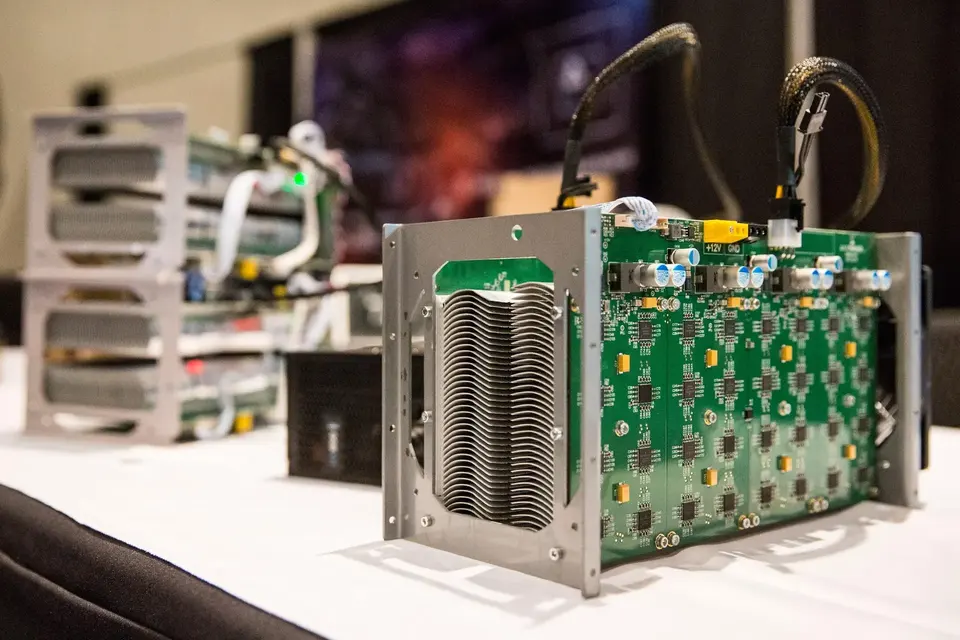
Since Hut 8 funds the data centers, American Bitcoin only needs to procure miners. The company inherited an agreement from Hut 8 subsidiary Zephyr to purchase up to approximately 17,280 Bitmain U3S21EXPH miners for up to $320 million. As of May 31, American Bitcoin operated over 60,000 miners, primarily Bitmain Antminer S21+ series (Glennan described them as “Cadillacs… not Ferraris”) and MicroBT M5X and M6X series miners from China.
The U.S. controls 30%-40% of global Bitcoin hash power, but 90% of the mining hardware comes from China. “Bitcoin is increasingly becoming central to the U.S. financial ecosystem,” said Sanjay Gupta, Chief Strategy Officer at Auradine, a U.S.-based crypto mining hardware supplier and competitor to Bitmain. As President Trump pushes to integrate Bitcoin into the U.S. financial system, experts warn that connecting Chinese hardware to critical U.S. power infrastructure may pose security risks. For example, Bitmain is a private company linked to Sophgo, an AI firm blacklisted by the U.S. government over security concerns (Bitmain and Sophgo share a co-founder but Bitmain has not yet been placed on the Entity List).
Bitcoin mining must confront an increasingly harsh economic reality: reliance on an asset with volatile pricing and a halving of mining rewards roughly every four years. Over 19 million of the total 21 million bitcoins have already been mined.
Glennan said maintaining low debt and hedging risk via bitcoin derivatives markets will help American Bitcoin “weather market volatility.” The company also plans to increase hash power to boost profitability, which may involve replacing older machines with more efficient models or acquiring other mining firms.
All of this requires capital, and the company hopes the Trump name will attract investors. Although representatives from Hut 8 and American Bitcoin claim their business is separate from Trump’s political connections, at the 2025 Las Vegas Bitcoin Conference, they couldn’t resist showcasing the association. At an event hosted by American Bitcoin, the Winklevoss twins (each donated $1 million to Trump’s 2024 campaign) and Brandon Lutnick, chairman of Cantor Fitzgerald (son of U.S. Commerce Secretary Howard Lutnick), were in attendance.
On the same stage where Vice President J.D. Vance had spoken just hours earlier, Donald Jr. joined Prusak and Ho for a panel discussion. Speaking to a conservative-leaning audience, he said: “My father made many promises to the crypto community… Everything my brother and I do in this space demonstrates our commitment.” The first thing he mentioned was American Bitcoin.
Join TechFlow official community to stay tuned
Telegram:https://t.me/TechFlowDaily
X (Twitter):https://x.com/TechFlowPost
X (Twitter) EN:https://x.com/BlockFlow_News
 @WIRED