Did Bitcoin hit a new high? Is anyone on your Twitter flexing a Rolex?
TechFlow Selected TechFlow Selected
Did Bitcoin hit a new high? Is anyone on your Twitter flexing a Rolex?
Rolex, the "sentiment barometer" of the crypto market.
 Navigating Web3 tides with focused insights
By: Pix
Translation: Luffy, Foresight News
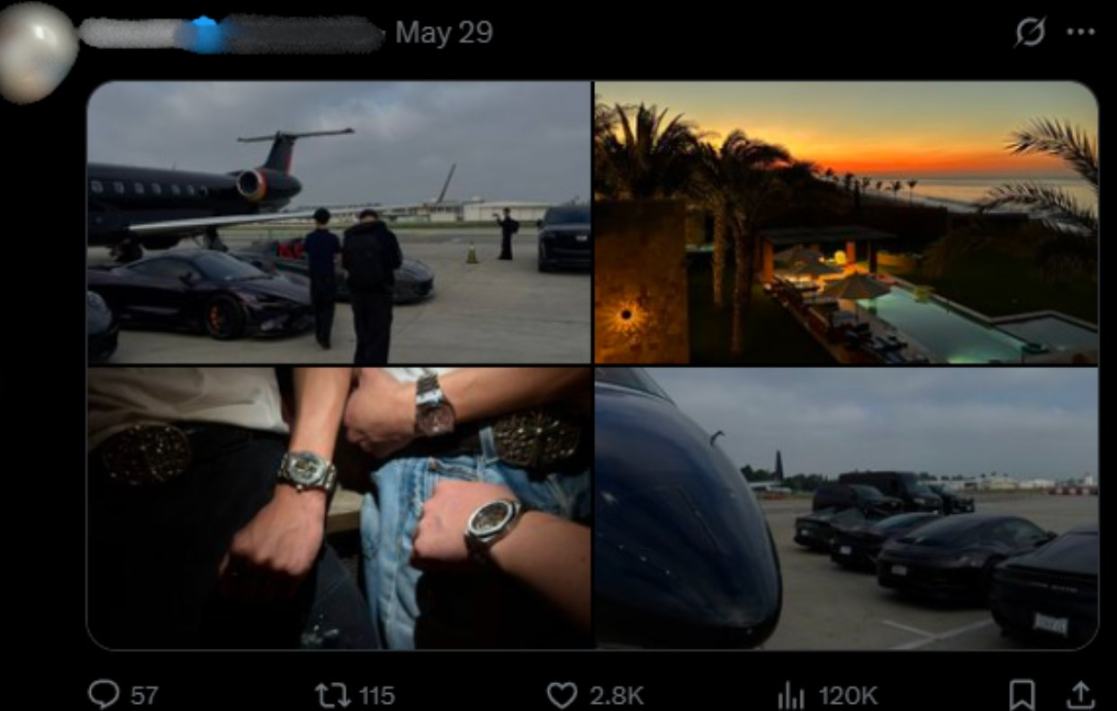
In every crypto cycle, there comes a moment when wealth becomes visible. Not just on-chain or in portfolio screenshots, but in the real world.
A year ago, unknown individuals walk into dealerships, buy a watch with cash, and post photos online of their wrists. This seemingly small act marks a significant shift in market psychology.
Why watches?
The logic is simple. Rolex is a Veblen good (a product whose demand increases as its price rises).
The higher the price, the more people want it. Their value isn't demonstrated through functionality, but through price. Because what people are buying isn't utility, but status.
When the newly wealthy suddenly become rich, the first thing they want to do is let others know they have money.
They don't go out and buy farmland or government bonds. They buy status symbols—watches, cars, and sometimes JPEGs known as NFTs (non-fungible tokens).
But the reality isn't quite as simple as it first appears...
Lagging response
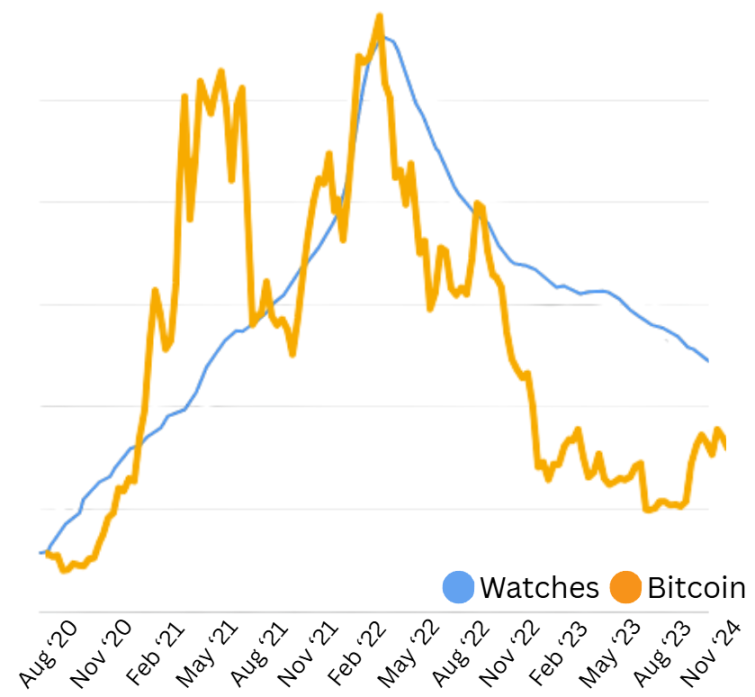
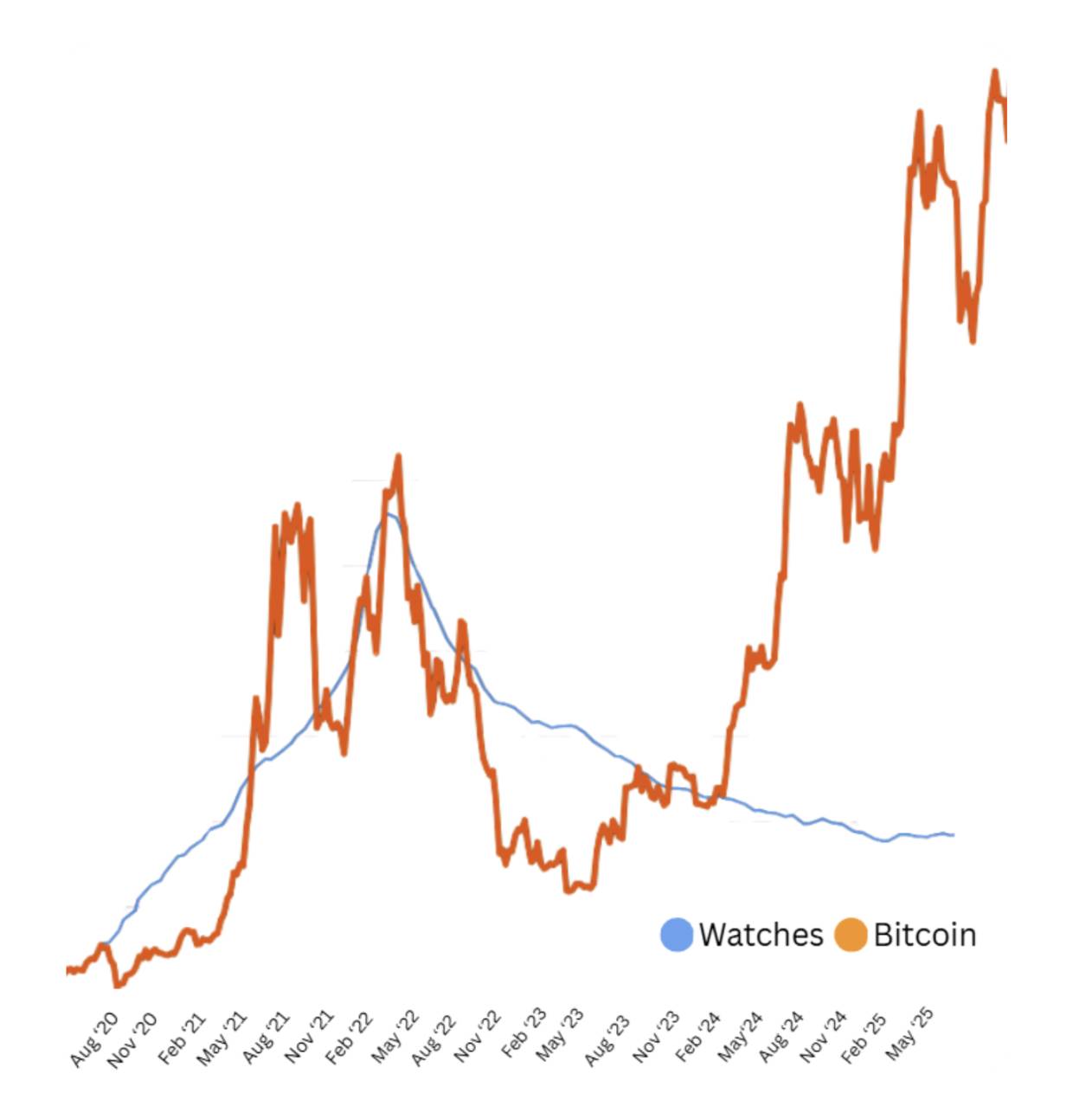
Watch index vs. Bitcoin price, 2020–2024
In 2021, most people assumed luxury watch prices would rise alongside cryptocurrencies.
But if you look closely at the timing, the watch market didn't boom when Bitcoin first hit all-time highs. It surged during the second peak, when tokenized JPEGs (NFTs) were trading at house prices.
The surge in Rolex prices wasn't the start of the bull run—it was its peak.
The significance lies in the lag. The delay isn't long, but just enough to reveal a pattern visible in the data.
The watch index lags behind during the crypto rally, peaks slightly later, and then crashes almost in sync.
In the year following the crypto crash, Rolex prices fell nearly 30%. Not because demand vanished, but because the status-driven motivation behind that demand dried up.
This makes watches an unusual signal. They don't predict fundamentals—they reflect market sentiment.
And they do so more clearly than most of the indicators we currently have...
A different kind of indicator
In traditional finance, there's the volatility index. In crypto, there are funding rates. But both are indirect measures of market behavior.
Luxury goods are different. They don't just tell you what investors are doing—they tell you how investors feel.
How rich they feel, and how badly they want the world to notice.
It's not perfect. But when you see watches reselling for double retail, or people posting custom NFT Rolexes, it usually means the market is nearing its top.
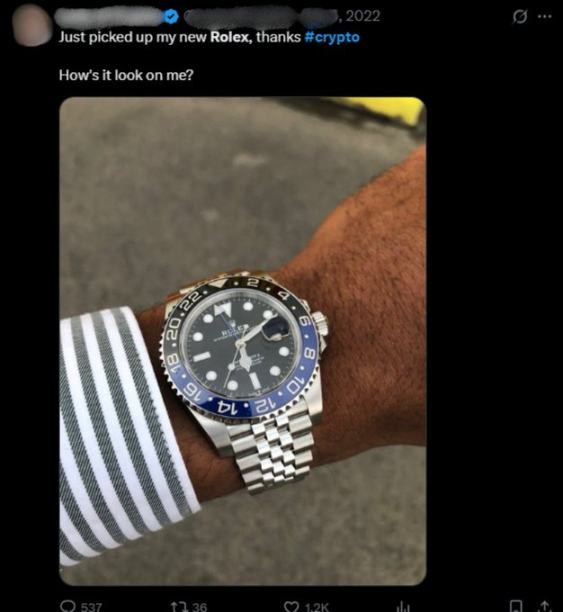
Because by then, wealth has already been captured—it's entering the consumption phase.
So where are we now in the cycle?
The current cycle
Right now, we're approaching historical highs again. Bitcoin is rising, Ethereum too.
Even "mass-market" cryptos like ADA and XRP have surged 50% over the past month.
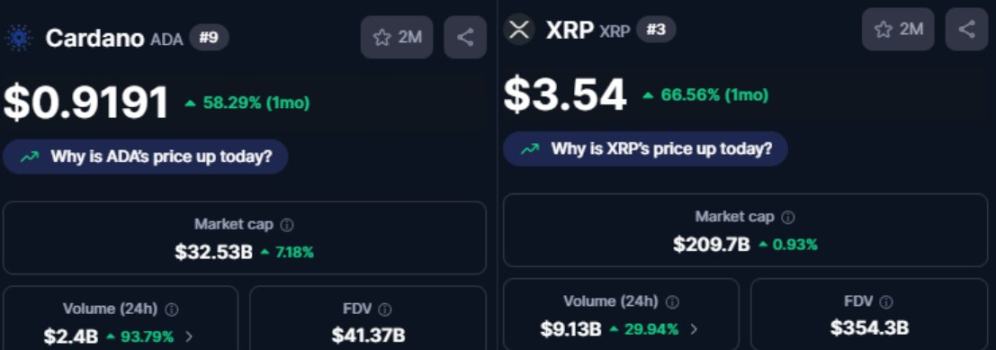
Yet... the Rolex market remains calm. Prices are stable, some models aren't even selling well. Dealers aren't reporting shortages, and premiums are low.
At first glance, this seems bearish—but the truth may be the opposite. The fact is, profits from this cycle haven't widely diffused yet.
The recent Memecoin craze created only hundreds of millionaires. That's not enough to fuel a market built on widespread speculative excess—like the watch market.
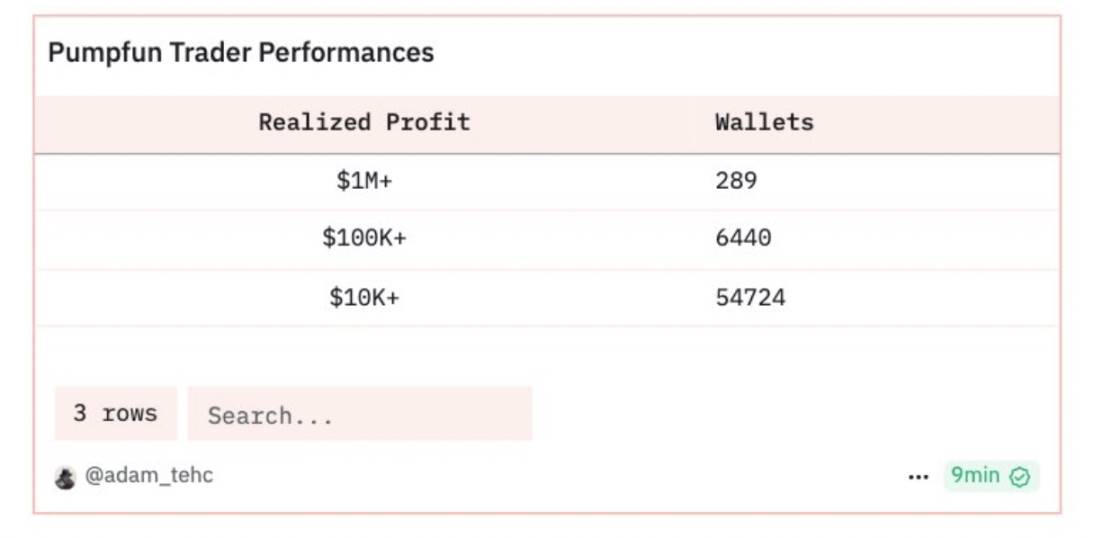
You can see early signs of the pattern returning. More Rolex photos appearing on Crypto Twitter (CT), increasing mentions—but still nowhere near the intensity of 2021.
Also worth remembering: last time, the watch market didn't move until late in the cycle.
Not at Bitcoin’s first peak, but after the second, when everyone felt rich and wanted to be seen.
History doesn't repeat, but it rhymes
Over the past few months, things have shifted. Bitcoin and watch prices have started moving together—not perfectly, but a clear correlation is emerging.
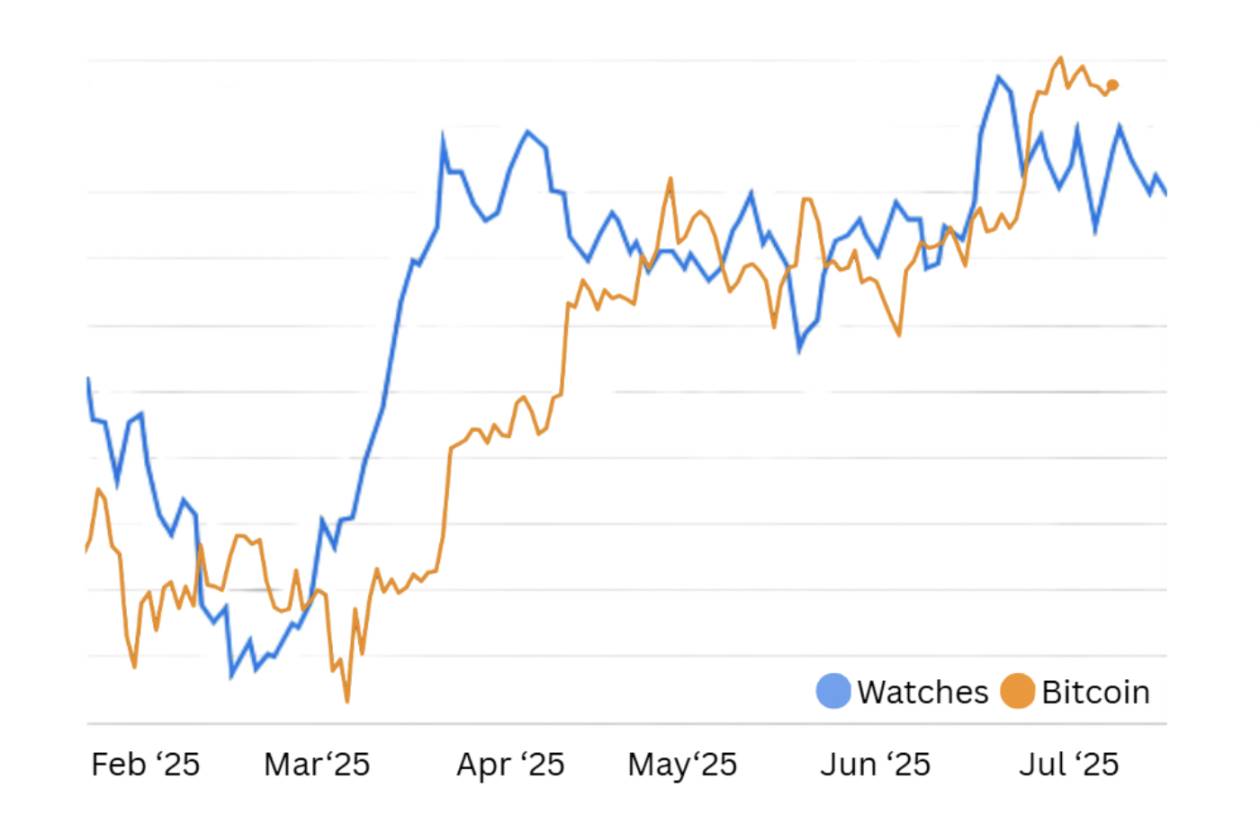
Last cycle wasn't like this. In 2021, watches lagged. First came the crypto rally, then the NFT frenzy, and only afterward did Rolex prices surge.
This time, are watches already moving? Well, not exactly...
This time, the chart looks different. Watches and Bitcoin began rising almost simultaneously.
Since March, their movements have been nearly synchronized. But zoom out further, and the picture changes.
The bigger picture
Bitcoin is nearing all-time highs, but watches aren't. Most models remain far below their 2022 peaks.
Outside Rolex and Patek Philippe, the entire watch market is weak. Cartier, Omega, even Audemars Piguet—prices are 30%–40% below retail.
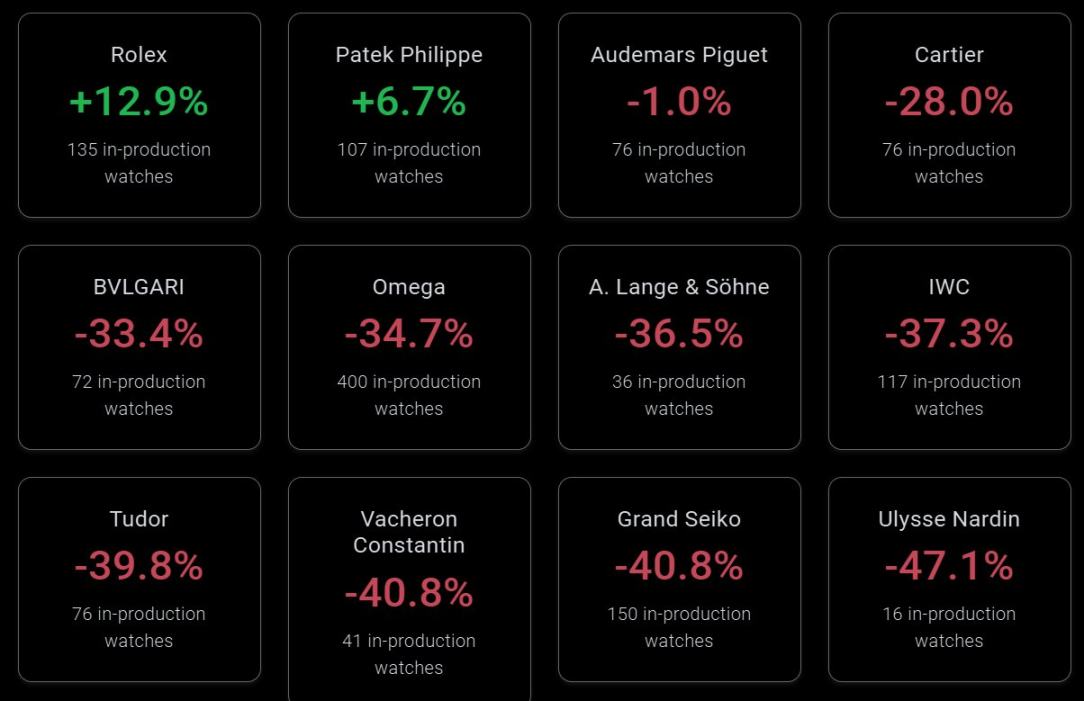
This matters because it sends two signals.
First, we’re not in the mania phase yet. Second, most watches are currently poor investments.
They weren’t designed to hold value—they were designed to signal status.
Watch prices rising again doesn't mean we've reached the top of the cycle, but it does suggest we've passed well beyond its early stages.
People only begin buying status symbols when they feel the hardest part is behind them.
Typically, this happens around the middle to late stage—roughly two-thirds into the cycle.
Wealth is accumulating, confidence is returning, but the real wave of spending hasn't begun. When it does, you won't need charts to see it—you'll feel it.
Join TechFlow official community to stay tuned
Telegram:https://t.me/TechFlowDaily
X (Twitter):https://x.com/TechFlowPost
X (Twitter) EN:https://x.com/BlockFlow_News
 @PixOnChain