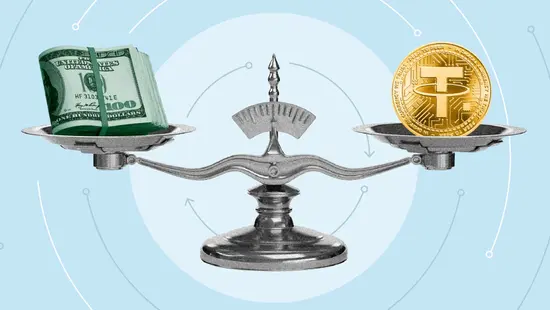
a16z: Three Challenges for Stablecoins to Become Money—Liquidity, Sovereignty, and Credit
TechFlow Selected TechFlow Selected
a16z: Three Challenges for Stablecoins to Become Money—Liquidity, Sovereignty, and Credit
Entrepreneurs and policymakers who deeply understand the complexities of stablecoins have the opportunity to shape a smarter, safer, and superior financial future.
 Navigating Web3 tides with focused insights
Author: Sam Broner
Translation: TechFlow
Traditional finance is gradually incorporating stablecoins into its infrastructure, and stablecoin transaction volumes continue to grow. Thanks to their speed, near-zero cost, and programmability, stablecoins have become the premier building block for global fintech. Transitioning from legacy systems to new technologies means adopting fundamentally different business models—but this shift also introduces novel risks. After all, self-custody based on digital assets represents a disruptive departure from banking systems that rely on deposit registries, challenging centuries-old financial conventions.
So what broader monetary structural and policy issues must entrepreneurs, regulators, and traditional financial institutions address during this transformation?
This article explores three major challenges and potential solutions—offering focal points for both startups and builders in traditional finance: the singleness of money; the use of dollar-backed stablecoins in non-dollar economies; and the implications of higher-quality currencies backed by U.S. Treasuries.
1. “Singleness of Money” and Building a Unified Monetary System
“Singleness of Money” refers to the principle that within an economy, regardless of who issues money or where it’s stored, all forms of money should be interchangeable at a fixed 1:1 ratio for payments, pricing, and contract fulfillment. The singleness of money ensures that even with multiple institutions or technologies issuing money-like instruments, there remains one unified monetary system. In practice, whether you hold dollars in a JPMorgan account, a Wells Fargo account, or as a Venmo balance, they should always be equivalent to stablecoins—and maintain parity at exactly 1:1. This holds true despite differences in how these institutions manage assets and despite significant (though often overlooked) variations in their regulatory status.
In many ways, the history of U.S. banking has been about ensuring dollar interchangeability and continuously improving the systems that support it.
Global banks, central banks, economists, and regulators champion the "singleness of money" because it dramatically simplifies transactions, contracts, governance, planning, pricing, accounting, security, and daily commerce. Today, businesses and individuals take this principle for granted.
However, “money singleness” does not currently describe how stablecoins operate, as they are not yet fully integrated with existing infrastructure. For example, if Microsoft, a bank, a construction firm, or a homebuyer attempts to swap $5 million worth of stablecoins on an automated market maker (AMM), they may receive less than $5 million due to slippage caused by insufficient liquidity depth. If stablecoins are to truly transform the financial system, such outcomes are unacceptable.
A universal par-value redemption system would help integrate stablecoins into a unified monetary framework. Without becoming part of a single monetary system, the potential utility and value of stablecoins will be significantly diminished.
Currently, stablecoins function through direct redemption services offered by issuers (such as Circle and Tether) for their respective tokens (USDC and USDT). These services are primarily available to institutional clients or verified users and typically require minimum transaction thresholds.
For instance, Circle offers Circle Mint (formerly Circle Account) to enterprise users for minting and redeeming USDC; Tether allows verified users to redeem directly, usually subject to certain thresholds (e.g., $100,000).
Decentralized MakerDAO uses its Peg Stability Module (PSM) to allow users to exchange DAI for other stablecoins (like USDC) at a fixed rate—effectively serving as a verifiable redemption/exchange mechanism.
While effective, these solutions are not universally accessible and require integrators to connect individually with each issuer. Without direct integration, users can only exchange or "exit" stablecoins via market execution rather than par-value settlement.
In the absence of direct integration, some enterprises or applications might claim they can maintain extremely tight spreads—say, consistently exchanging 1 USDC for 1 DAI at just one basis point difference—but such promises depend on liquidity, balance sheet capacity, and operational capabilities.
Theoretically, central bank digital currencies (CBDCs) could unify the monetary system, but they come with numerous drawbacks—including privacy concerns, financial surveillance, constrained money supply, and slower innovation. As a result, superior models that improve upon existing financial architecture are likely to prevail over those merely replicating it.
For builders and institutional adopters, the challenge lies in designing systems so that stablecoins can function as “pure money”—on par with bank deposits, fintech balances, and cash—even while differing in collateral, regulation, and user experience. Achieving monetary singleness presents entrepreneurs with the following opportunities:
-
Universally Accessible Minting and Redemption Mechanisms
Stablecoin issuers need to collaborate closely with banks, fintech companies, and existing financial infrastructure to create seamless, par-value on- and off-ramps. Enabling par-value interchangeability through established systems makes stablecoins indistinguishable from traditional money, accelerating global adoption.
-
Stablecoin Clearinghouses
Create decentralized consortia—akin to a stablecoin version of ACH or Visa—that guarantee instant, frictionless, and transparently priced exchanges. MakerDAO’s Peg Stability Module (PSM) provides a promising prototype; expanding this into a protocol ensuring par-value settlement among participating issuers and between stablecoins and fiat dollars would be revolutionary.
-
Develop a Trustworthy, Neutral Collateral Layer
Shift stablecoin interoperability onto a widely accepted collateral layer—such as tokenized bank deposits or wrapped Treasuries—enabling stablecoin issuers to innovate in branding, marketing, and incentives, while allowing users to easily unwrap and convert across platforms.
-
Better Exchanges, Intent-Based Trading, Cross-Chain Bridges, and Account Abstraction
Leverage improved versions of existing or known technologies to automatically discover and execute optimal on/off ramps or exchange paths for best rates. Build multi-currency exchanges that minimize slippage and abstract away complexity, delivering predictable fee experiences for stablecoin users even under large-scale usage.
2. Global Demand for Dollar Stablecoins: A Lifeline Under High Inflation and Capital Controls
In many countries, structural demand for the U.S. dollar is extremely strong. For citizens living under high inflation or strict capital controls, dollar-backed stablecoins serve as a lifeline—preserving savings and enabling direct access to global commercial networks.
For businesses, the dollar acts as a common unit of account, making international transactions easier and more transparent. People need a fast, widely accepted, and stable currency for spending and saving.
Yet current cross-border remittance fees average 13%, nearly 900 million people live in high-inflation economies without access to stable money, and another 1.4 billion remain underserved by banking. The success of dollar-backed stablecoins reflects not only demand for dollars but also a desire for “better money.”
Beyond politics and nationalism, a key reason countries maintain local currencies is that they give policymakers tools to respond to domestic economic conditions. When disasters disrupt production, key exports decline, or consumer confidence wanes, central banks can adjust interest rates or issue currency to cushion shocks, boost competitiveness, or stimulate spending.
Widespread adoption of dollar-backed stablecoins could undermine local policymakers’ ability to manage their economies. This stems from the economic “Impossible Trinity,” which states that a country can only pursue two of the following three policies at any time:
-
Free capital mobility;
-
Fixed or tightly managed exchange rates;
-
Independent monetary policy (freedom to set domestic interest rates).
Decentralized peer-to-peer transfers impact all three legs of the Impossible Trinity. Such transfers bypass capital controls, forcing open capital flows. Dollarization anchors citizens to an international unit of account, weakening the effectiveness of exchange rate or domestic interest rate policies. Governments traditionally channel citizens toward local currency through narrow banking channels.
Nonetheless, dollar-backed stablecoins remain attractive abroad because cheaper, programmable dollars facilitate trade, investment, and remittances. Most global business is priced in dollars, so easier access enables faster, simpler, and more widespread international trade. Additionally, governments can still tax on/off ramps and supervise local custodians.
At correspondent banking and international payment levels, a range of regulations, systems, and tools already exist to prevent money laundering, tax evasion, and fraud. Although stablecoins operate on public, programmable ledgers—making security tooling easier to build—these tools still need to be developed. This creates opportunities for entrepreneurs to connect stablecoins with existing international payment compliance infrastructure to support and enforce policy goals.
Unless we assume sovereign nations will abandon valuable policy tools for efficiency (highly unlikely) or ignore fraud and financial crime (also improbable), entrepreneurs have a clear opportunity to build systems that help stablecoins integrate more effectively into local economies.
While embracing superior technology, existing safeguards—such as foreign exchange liquidity, anti-money laundering (AML) oversight, and macroprudential buffers—must be enhanced so stablecoins can smoothly enter local financial systems. These technical solutions can achieve the following:
-
Localized Acceptance of Dollar-Backed Stablecoins
Integrate dollar-backed stablecoins into local banks, fintech firms, and payment systems, supporting small-scale, optional, and potentially taxable conversions. This boosts local liquidity without fully eroding the role of local currency.
-
Local Stablecoins as On/Off Ramps
Issue stablecoins pegged to local currencies and deeply integrate them with local financial infrastructure. These can act as efficient foreign exchange instruments and default high-performance payment rails. Widespread integration may require establishing clearinghouses or neutral collateral layers.
-
On-Chain Foreign Exchange Markets
Build matching and price aggregation systems spanning stablecoins and fiat currencies. Market makers may need to hold yield-bearing reserve assets and employ high leverage to support existing FX trading strategies.
-
Competitors Challenging MoneyGram
Develop compliant, retail-based cash deposit and withdrawal networks that incentivize agents to settle in stablecoins. While MoneyGram recently announced similar offerings, ample room remains for other players with mature distribution networks to compete.
-
Improved Compliance Tools
Upgrade existing compliance solutions to support stablecoin payment networks. Leverage the greater programmability of stablecoins to provide richer, faster insights into fund flows, enhancing transparency and security.
3. Implications of Using Treasuries as Stablecoin Collateral
Stablecoins gained popularity not because they’re backed by U.S. Treasuries, but because of their near-instant, nearly free transactions and infinite programmability. Fiat-backed stablecoins were first adopted widely because they are easy to understand, manage, and regulate. However, the core drivers of user demand are utility and trust—such as 24/7 settlement, composability, and global accessibility—not the specific form of collateral.
Fiat-backed stablecoins may face challenges due to their own success: What happens if stablecoin issuance grows from today’s $262 billion to $2 trillion within a few years, and regulators mandate backing solely by short-term U.S. Treasury bills (T-bills)? This scenario is plausible, and its impact on collateral markets and credit creation could be profound.
Potential Impact on Treasury Holdings
If $2 trillion in stablecoins were required to invest exclusively in short-term U.S. Treasuries—one of the few assets currently recognized by regulators—stablecoin issuers would hold roughly one-third of the approximately $7.6 trillion in outstanding Treasury bills. This shift would mirror the role of money market funds today: concentrating holdings in highly liquid, low-risk assets, but with potentially deeper implications for the Treasury market.
T-bills are considered ideal collateral because they are widely seen as among the safest and most liquid assets globally, and being dollar-denominated simplifies currency risk management.
However, if stablecoin scale reaches $2 trillion, downward pressure on Treasury yields could emerge, reducing active liquidity in the repo market. Each newly issued stablecoin represents additional demand for Treasuries, enabling the U.S. Treasury to refinance at lower costs—but also making Treasuries scarcer and more expensive for other parts of the financial system.
This dynamic could reduce income for stablecoin issuers and make it harder for other financial institutions to obtain the collateral needed to maintain liquidity.
One potential solution is for the U.S. Treasury to issue more short-term debt—for example, doubling T-bill supply from $7 trillion to $14 trillion. Still, rapid growth in the stablecoin industry would reshape supply-demand dynamics, creating new market challenges and transformations.
Narrow Banking Model
At their core, fiat-backed stablecoins resemble narrow banking: they hold 100% reserves (in cash or equivalents) and do not lend. This low-risk profile is partly why fiat-backed stablecoins have received early regulatory acceptance.
Narrow banking is a trusted, easily auditable model that provides clear value assurance to token holders while avoiding the full regulatory burden placed on fractional reserve banks.
But if stablecoin scale increases tenfold to $2 trillion, their full-reserve, Treasury-backed nature could trigger ripple effects on credit creation.
Economists worry that narrow banking restricts capital availability for lending to the real economy. Traditional (fractional reserve) banks keep only a fraction of customer deposits as cash or equivalents, lending out the majority to businesses, homebuyers, and entrepreneurs. Under regulatory supervision, banks manage credit and maturity risks to ensure depositors can withdraw funds when needed.
This is precisely why regulators are wary of narrow banks accepting deposits: such models exhibit a low money multiplier (i.e., less credit expansion per dollar of reserves). Fundamentally, economies depend on credit flow—regulators, businesses, and consumers all benefit from a more active, interconnected economy. Even a small migration from the $17 trillion U.S. deposit base into fiat-backed stablecoins could deprive banks of their cheapest funding source.
Faced with deposit outflows, banks face two unattractive options: either reduce credit creation (e.g., cut mortgages, auto loans, SME credit lines), or replace lost deposits with wholesale funding (e.g., advances from Federal Home Loan Banks)—which tends to be more expensive and shorter-term.
Yet stablecoins as “better money” enable much higher velocity. A single stablecoin can be sent, spent, lent, or borrowed multiple times within a minute—controlled by humans or software, operating 24/7, 365 days a year.
Stablecoins don’t have to be backed solely by Treasuries. Tokenized deposits offer an alternative: keeping the value proposition of stablecoins on bank balance sheets while enabling modern blockchain-speed circulation throughout the economy.
In this model, deposits remain within the fractional reserve banking system, meaning each stable value token continues to support the issuer’s lending activities.
The money multiplier effect is restored—not just via velocity, but through traditional credit creation—while users retain benefits like 24/7 settlement, composability, and on-chain programmability.
Designing stablecoins to balance economic vitality and innovation involves approaches such as:
-
Tokenized Deposit Model: Keep deposits within the fractional reserve system;
-
Diversified Collateral: Expand beyond T-bills to include other high-quality, liquid assets;
-
Embedded Automated Liquidity Pipelines: Use on-chain repos, tri-party facilities, CDP (Collateralized Debt Position) pools, etc., to recycle idle reserves back into the credit market.
These designs aren't concessions to traditional banking—they're choices that preserve economic dynamism.
The ultimate goal is sustaining an interdependent, growing economy where sensible business lending remains accessible. Innovative stablecoin designs can achieve this by supporting traditional credit creation while increasing monetary velocity, enabling decentralized collateralized lending, and facilitating direct private credit.
Although current regulations make tokenized deposits infeasible today, increasing clarity around fiat-backed stablecoins may soon open the door for stablecoins backed by bank deposits.
Deposit-backed stablecoins allow banks to extend credit while improving capital efficiency, combining the programmability, low cost, and speed of stablecoins with traditional banking functions. When a user mints a deposit-backed stablecoin, the bank deducts the corresponding amount from their deposit balance and transfers the liability to a consolidated stablecoin account. These tokens represent a dollar-denominated claim on those assets and can be sent to any public address chosen by the user.
Beyond deposit-backed stablecoins, the following innovations can further enhance capital efficiency, reduce friction in Treasury markets, and accelerate monetary velocity:
-
Help Banks Embrace Stablecoins
By adopting or even issuing stablecoins, banks can let users extract value from deposits while retaining yield on underlying assets and maintaining customer relationships. Stablecoins also offer banks direct payment opportunities without intermediaries.
-
Enable Individuals and Businesses to Adopt DeFi
As more users directly manage their finances via stablecoins and tokenized assets, entrepreneurs should help them access funds quickly and securely.
-
Expand and Tokenize Collateral Types
Extend acceptable collateral beyond T-bills to include municipal bonds, high-grade corporate paper, mortgage-backed securities (MBS), or secured real-world assets (RWAs). This reduces reliance on a single market, extends credit to borrowers beyond the U.S. government, and maintains high quality and liquidity to preserve stability and user confidence.
-
Bring Collateral On-Chain to Enhance Liquidity
Tokenize collateral assets such as real estate, commodities, equities, and Treasuries to create a richer, more diverse collateral ecosystem.
-
Adopt CDP Models
Follow MakerDAO’s DAI and other CDP-based stablecoins that use diversified on-chain assets as collateral to spread risk and recreate, on-chain, the monetary expansion function traditionally performed by banks. These stablecoins should undergo rigorous third-party audits and transparent disclosures to verify the robustness of their collateral models.
The stablecoin space faces enormous challenges—but each challenge brings immense opportunity. Entrepreneurs and policymakers who deeply understand the complexities of stablecoins have the chance to shape a smarter, safer, and superior financial future.
Acknowledgments
Special thanks to Tim Sullivan for his continued support. I’m also grateful to Aiden Slavin, Miles Jennings, Scott Kominers, Christian Catalini, and Luca Prosperi for their insightful feedback and suggestions, which greatly improved this piece.
About the Author
Sam Broner is a Partner on the investing team at a16z crypto. Prior to joining a16z, he was a software engineer at Microsoft, where he co-founded Fluid Framework and Microsoft Copilot Pages. Sam attended MIT Sloan School of Management, participated in the Hamilton Project at the Federal Reserve Bank of Boston, led the Sloan Blockchain Club, organized Sloan’s inaugural AI Summit, and received MIT’s Patrick J. McGovern Award for building entrepreneurial communities. You can follow him on X (formerly Twitter) @SamBroner or visit sambroner.com for more content.
Join TechFlow official community to stay tuned
Telegram:https://t.me/TechFlowDaily
X (Twitter):https://x.com/TechFlowPost
X (Twitter) EN:https://x.com/BlockFlow_News
 a16z
a16z