Aave V4 Deep Dive: How the Lending Leader Reinforces Its Moat?
TechFlow Selected TechFlow Selected
Aave V4 Deep Dive: How the Lending Leader Reinforces Its Moat?
Unified liquidity layer + GHO liquidation upgrade: two core features empowering Aave to solidify its position as the DeFi leader.
 Navigating Web3 tides with focused insights
Author: Matt, Researcher at Castle Labs
Translation: Tim, PANews
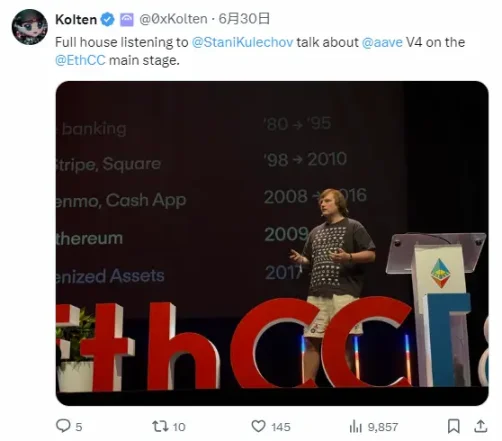
At the Ethereum Community Conference (ETHCC), Stani, founder of Aave, announced the upcoming release of Aave V4, a new version of its protocol. As the largest lending protocol in the DeFi space, this iteration has drawn significant market attention.
Today, I will focus on the functional upgrades in Aave V4, particularly how the new interest rate parameters and GHO stablecoin enhancements are reshaping the protocol’s ecosystem. These innovations could profoundly transform capital efficiency models—liquidity pools adopting a dynamic spread mechanism will enable market-driven pricing of borrowing and lending rates for the first time. Meanwhile, GHO's cross-chain enhancement module will not only improve the utility of the stablecoin but also lay the foundation for an entirely new financial infrastructure through on-chain optimization of debt position liquidations.
What is Aave V4?
Aave has surpassed $25 billion in total value locked (TVL) for the first time, becoming the first lending protocol in DeFi to reach this milestone. Its development team is actively advancing new features aimed at further driving platform growth through refined risk parameter adjustments.
The new features announced last year are now nearing launch:
-
Unified Liquidity Layer: Introduces a suite of modules that remove previous constraints on liquidity migration while enabling new capabilities such as cross-chain lending.
-
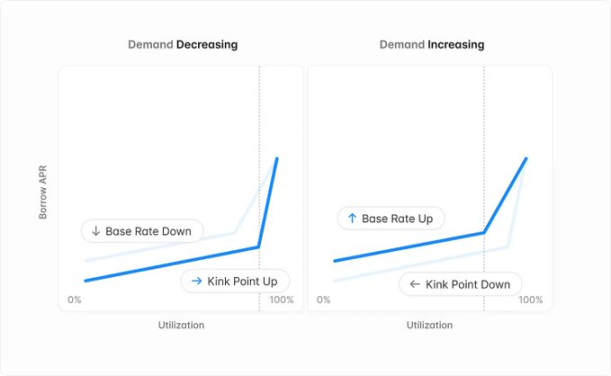
Fuzzy Control Interest Rates: This mechanism automatically adjusts interest rate curves and kinks based on market conditions, eliminating reliance on governance votes.
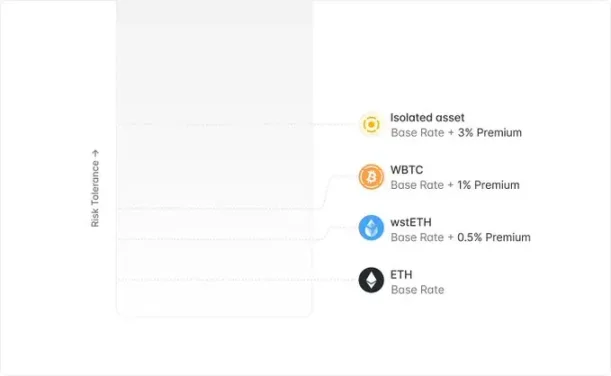
Liquidity Premium: Borrowing costs will be more closely tied to the liquidity status of individual tokens. Assets like ETH will remain premium-free, serving as the base currency, while others such as WBTC and wstETH will have premiums applied according to their respective liquidity profiles.
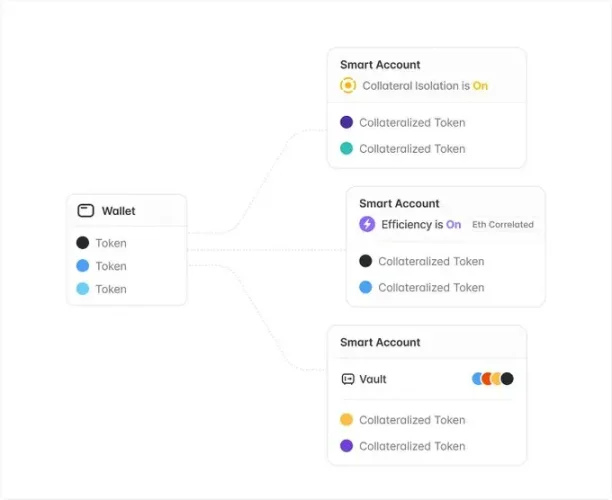
Aave V4 Lending Module: The team is exploring the use of smart accounts to support functionalities like Aave Vault, which can lock liquidity and disable collateralization features.
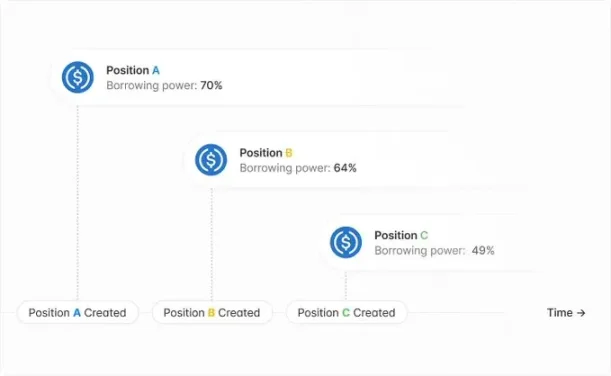
Dynamic Risk Configuration: Collateral ratios will be determined by market conditions at the time a position is opened, rather than being affected by subsequent market volatility, thereby offering greater stability for user positions.
-
Automated asset delisting
-
Automated fund management
-
Liquidation Engine V4: Aave’s liquidation mechanism is undergoing a major upgrade, featuring variable liquidation parameters and incentives, along with support for batch liquidations.
-
Deeper GHO Integration: GHO will achieve deeper native integration within Aave V4, including enhanced soft liquidation mechanisms, paying stablecoin interest in GHO, and introducing an emergency redemption mechanism among other optimizations.
-
Additional upgrades include gas fee optimizations and the deprecation of tokenized positions and stable interest rate functions.
Now let us dive into two key transformations: the Unified Liquidity Layer and GHO upgrades.
Unified Liquidity Layer
The Unified Liquidity Layer introduces a completely new, chain-agnostic, independent, and abstracted liquidity infrastructure.
A major improvement of this modular system is that it allows new lending modules to be deployed or old ones decommissioned without requiring liquidity migration.
This architecture enables the addition or optimization of lending functions—including isolated pools, real-world asset modules, and collateralized debt positions—without altering the core system or liquidation modules. It also effectively addresses the issue of fragmented liquidity present in earlier versions of the protocol.
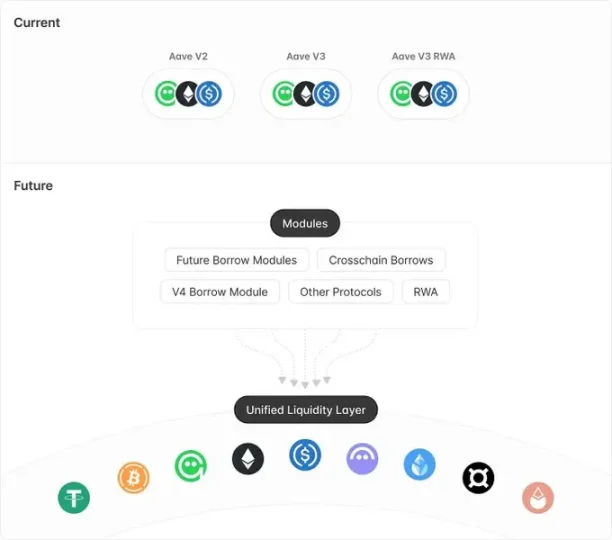
The liquidity layer supports both user-supplied assets and natively minted assets, improving integration with GHO and other crypto assets backed by Aave-native collateral.
Cross-chain lending may be one of the most impactful feature modules, allowing users to deposit on one chain and borrow on another. This not only significantly enhances cross-chain liquidity potential but also creates new opportunities for market expansion.
GHO Upgrade
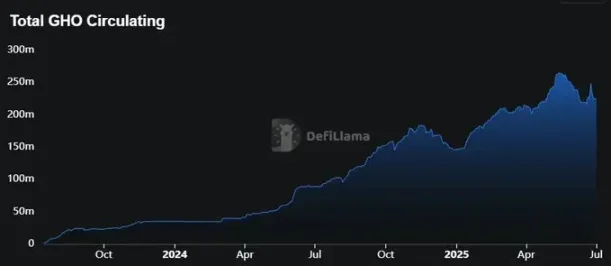
GHO is Aave’s overcollateralized stablecoin, currently with a market cap exceeding $220 million and a 53% increase since early 2025.
Beyond subtle improvements such as increased native minting efficiency, the most notable upgrade is the introduction of a soft liquidation mechanism. Inspired by crvUSD’s innovative model, this mechanism uses a Lending and Liquidation Automated Market Maker (LLAMM) to streamline the liquidation process.

Liquidations occur within customizable price ranges, guiding the system to convert assets into GHO during price declines and repurchase collateral when prices rise. Compared to crvUSD, Aave V4 offers three key advantages: users can choose from their asset basket which collateral to use for liquidating positions; they can freely select any available asset on the Aave platform—including those not originally deposited—for repurchasing collateral; and they benefit from earning interest income automatically generated by holding GHO.
Another noteworthy change is that stablecoin market participants can receive interest payments in GHO form—a mechanism that increases GHO supply by directly converting accrued interest into tokens.
Aave V4 introduces an emergency redemption mechanism designed to address extreme scenarios where GHO experiences severe and prolonged de-pegging. Once triggered, the platform will gradually exchange assets from the lowest health factor collateral positions into GHO tokens using the innovative LLAMM design, thereby settling user debts.
Conclusion
For a protocol of Aave’s scale and importance, minimizing risk is paramount—especially when launching major features like cross-chain lending.
Automating processes such as asset delisting and interest rate model adjustments helps reduce dependence on slow DAO governance procedures, particularly when responding to market-driven changes.
Aave expresses strong confidence in the growth of its stablecoin GHO, which has received significant enhancements and achieved deeper integration within the protocol.
In the foreseeable future, Aave is well-positioned to maintain its foundational role in the DeFi landscape. The broader ecosystem’s success remains highly dependent on its continued leadership—after all, no other project has managed to accumulate comparable TVL while maintaining the same level of security.
Join TechFlow official community to stay tuned
Telegram:https://t.me/TechFlowDaily
X (Twitter):https://x.com/TechFlowPost
X (Twitter) EN:https://x.com/BlockFlow_News
 @castle_labs