DeFi Lego Game: Unveiling the Billion-Dollar Growth Flywheel of Ethena, Pendle, and Aave
TechFlow Selected TechFlow Selected
DeFi Lego Game: Unveiling the Billion-Dollar Growth Flywheel of Ethena, Pendle, and Aave
A deep analysis of the evolution, internal mechanisms, and profound impact on the entire DeFi ecosystem of the Pendle-Aave PT-USDe looping strategy.
 Navigating Web3 tides with focused insights
Author: Shaunda Devens, Blockworks Research Analyst
Translation: Yuliya, PANews
Over the past 20 days, the supply of Ethena's decentralized stablecoin USDe has increased by approximately $3.7 billion, primarily driven by the Pendle-Aave PT-USDe looping strategy. Currently, Pendle locks around $4.3 billion (about 60% of total USDe), while Aave holds approximately $3 billion in deposits. This article breaks down the PT looping mechanism, growth drivers, and potential risks.
Core Mechanism of USDe and Yield Volatility
USDe is a dollar-pegged decentralized stablecoin whose price anchoring does not rely on traditional fiat or crypto collateral, but instead uses delta-neutral hedging in perpetual futures markets. In simple terms, the protocol hedges ETH price volatility by holding long spot ETH positions while shorting an equivalent amount of ETH perpetual contracts. This mechanism allows USDe to algorithmically stabilize its price and capture yield from two sources: staking rewards on spot ETH and funding rates from the futures market.
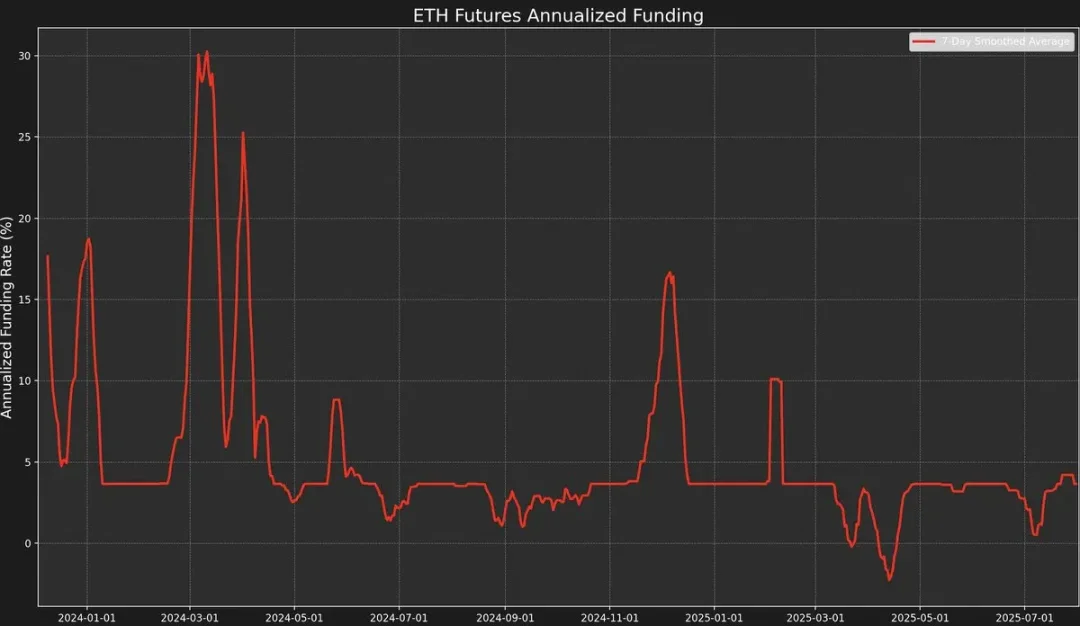
However, this strategy carries high yield volatility because returns depend on funding rates, which are determined by the premium or discount between the perpetual contract price and the underlying ETH spot price ("mark price").
In bullish market conditions, traders tend to open highly leveraged long positions, pushing perpetual prices above the mark price and generating positive funding rates. This incentivizes market makers to short perpetuals and go long spot as a hedge.
Yet, funding rates are not always positive.
In bearish markets, increasing short positions can drive ETH perpetual prices below the mark price, causing funding rates to turn negative.
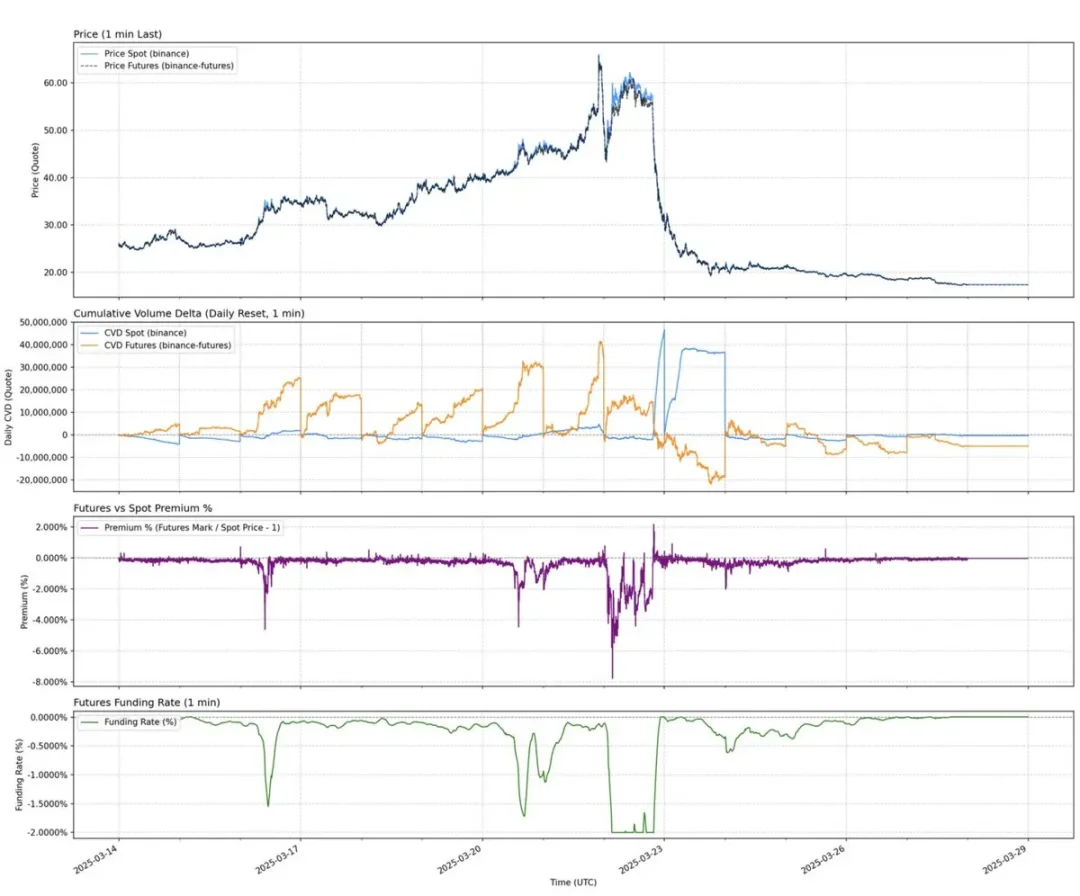
For example, recently AUCTION-USDT experienced a -2% 8-hour funding rate (annualized ~2195%) due to a spot premium created by strong spot buying and perpetual selling.
Data shows that since the beginning of 2025, USDe’s annualized yield has been about 9.4%, with a standard deviation of 4.4 percentage points. It is precisely this extreme yield volatility that has fueled market demand for a product offering more predictable and stable returns.
Pendle’s Fixed Yield Conversion and Limitations
Pendle is an AMM (automated market maker) protocol that splits yield-bearing assets into two tokens:
-
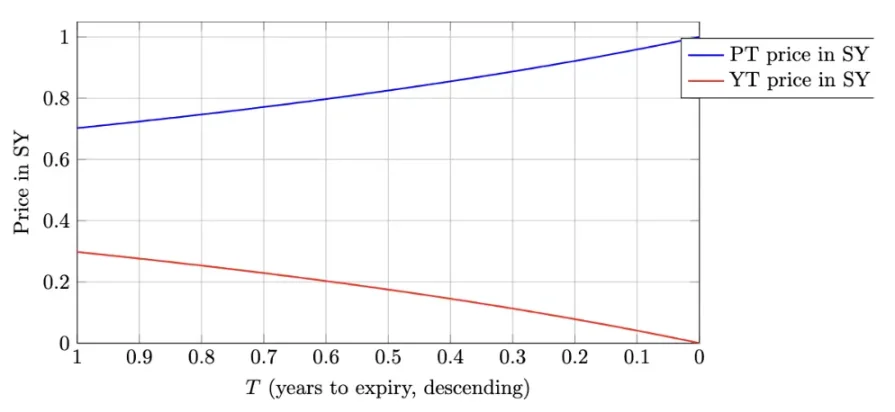
Principal Token (PT): Represents principal redeemable at a fixed future date. It trades at a discount, similar to zero-coupon bonds, and gradually converges to par value (e.g., 1 USDe) over time.
-
Yield Token (YT): Represents all future yield generated by the underlying asset until maturity.
Taking the PT-USDe maturing on September 16, 2025, as an example, the PT token typically trades below its face value at maturity (1 USDe), akin to a zero-coupon bond. The difference between the current PT price and its redemption value (adjusted for remaining time) reflects the implied annualized yield (i.e., YT APY).
This structure offers USDe holders an opportunity to lock in a fixed APY while hedging against yield volatility. During periods of historically high funding rates, this approach has yielded over 20% APY; currently, it stands at around 10.4%. Additionally, PT tokens can receive up to a 25x SAT boost from Pendle.
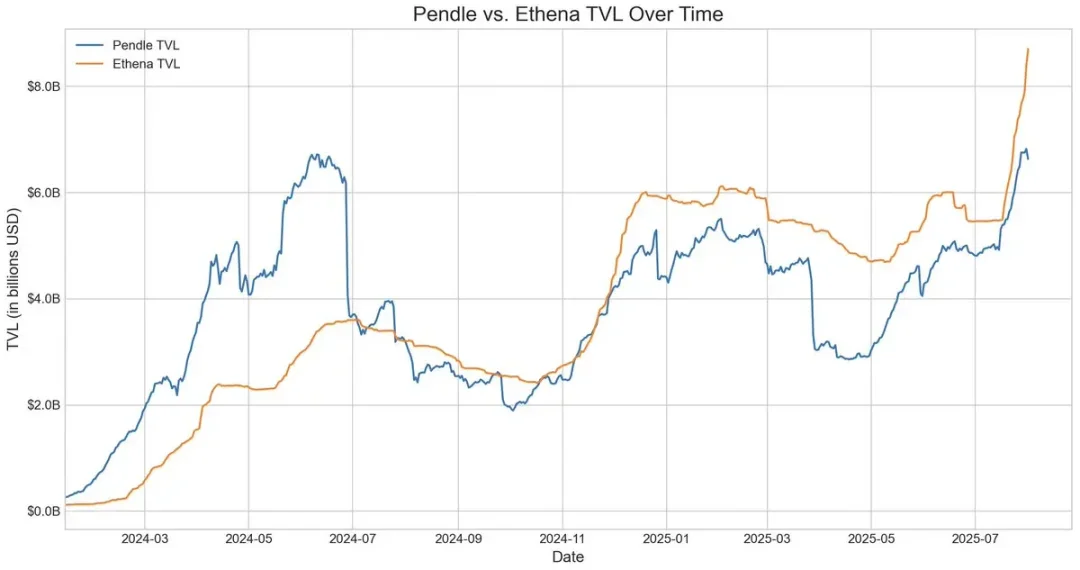
Pendle and Ethena have thus formed a highly complementary relationship. Pendle’s total TVL is currently $6.6 billion, with approximately $4.01 billion (about 60%) coming from Ethena’s USDe market. While Pendle solves USDe’s yield volatility issue, capital efficiency remains constrained.
YT buyers gain efficient exposure to yield, but PT holders must lock $1 of collateral per PT token when shorting floating yield, limiting gains to narrow spreads.
Aave Architecture Adjustments: Removing Barriers for USDe Looping
Two recent architectural changes at Aave have enabled rapid development of the USDe looping strategy.
First, after risk assessment teams highlighted significant liquidation risks from potential de-pegging of sUSDe, the Aave DAO decided to directly anchor USDe’s price to the USDT exchange rate. This move nearly eliminated the primary source of liquidation risk, leaving only the inherent interest rate risk of carry trades.
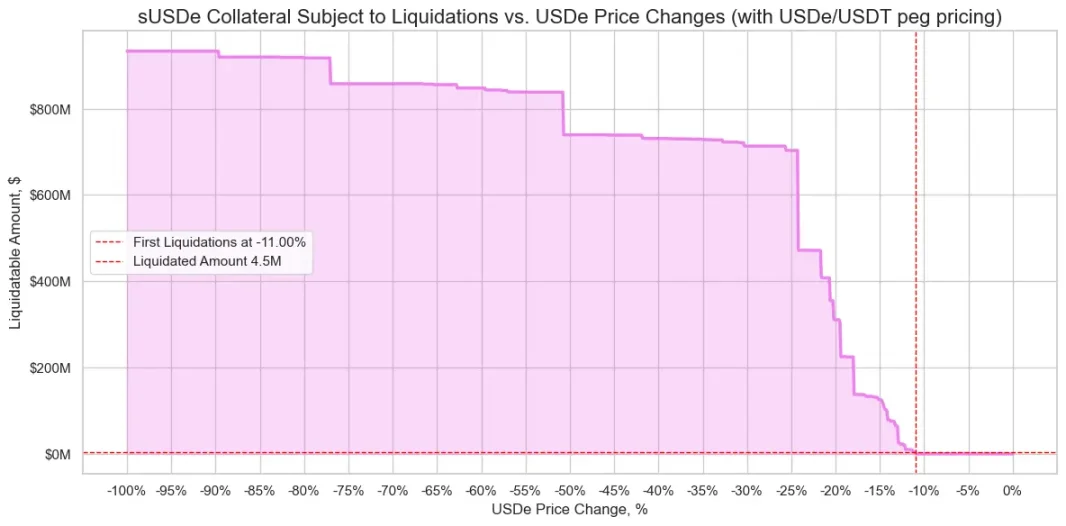
Second, Aave began accepting Pendle’s PT-USDe directly as collateral. This change is even more significant, as it simultaneously addresses both previous limitations: low capital efficiency and yield volatility. Users can now use PT tokens to establish leveraged positions at fixed interest rates, greatly enhancing the feasibility and stability of the looping strategy.
Strategy Emergence: High-Leverage PT Arbitrage Loops
To improve capital efficiency, market participants have adopted leveraged looping strategies—a common form of carry trade—whereby borrowing and redepositing are repeated to amplify returns.
The typical process is as follows:
-
Deposit sUSDe.
-
Borrow USDC at a 93% loan-to-value (LTV) ratio.
-
Convert borrowed USDC back into sUSDe.
-
Repeat the steps to achieve approximately 10x effective leverage.
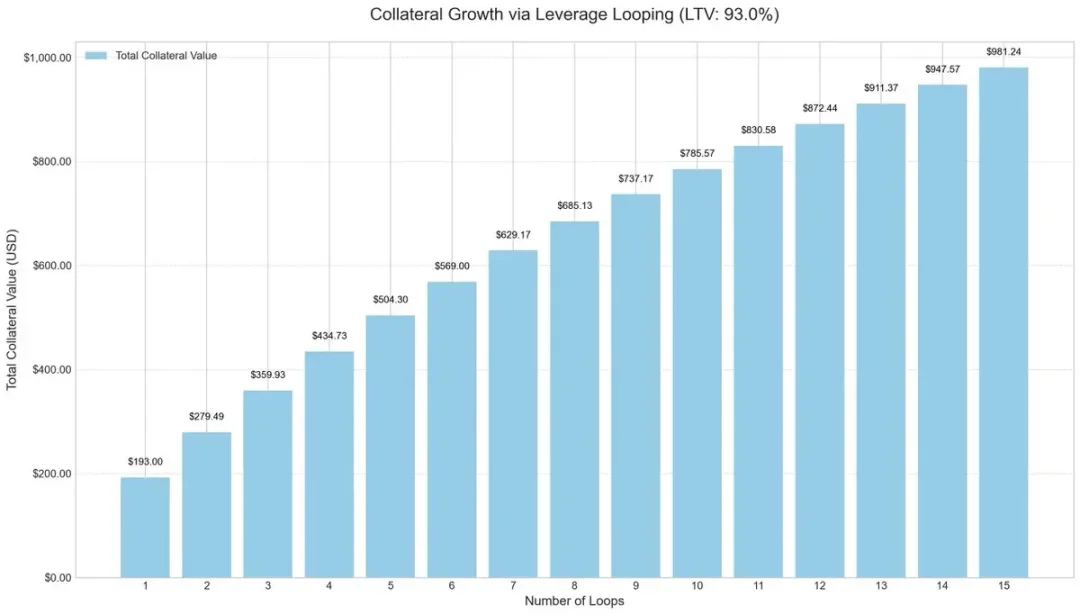
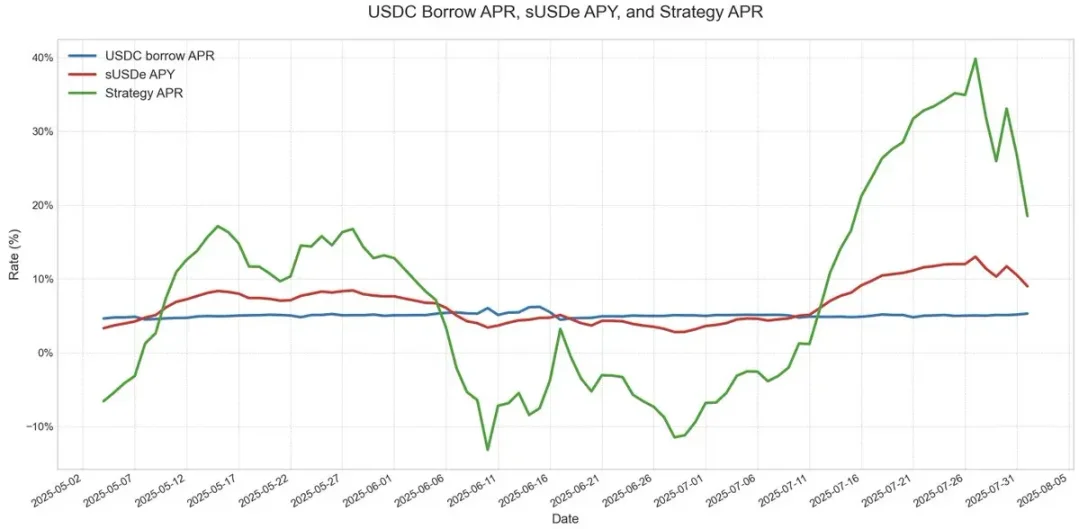
This leveraged looping strategy has become popular across multiple lending protocols, especially in Ethereum-based USDe markets. As long as USDe’s annualized yield exceeds USDC borrowing costs, the trade remains highly profitable. However, if yields drop sharply or borrowing rates spike, profits can quickly erode.
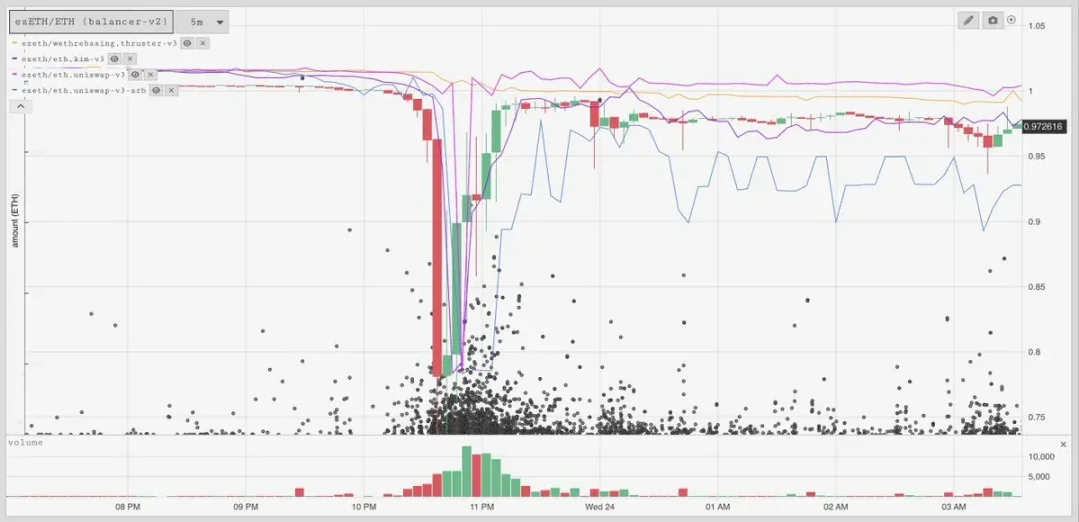
The key risk previously lay in oracle design. Billions of dollars in positions often relied on AMM-based oracles, making them vulnerable during temporary price dislocations. Such events (as seen in ezETH/ETH looping strategies) could trigger cascading liquidations, forcing lenders to sell collateral at steep discounts—even when collateral was fully backed.
PT Collateral Valuation and Arbitrage Opportunities
When pricing PT collateral, Aave applies a linear discount based on the PT’s implied APY, anchored to the USDT price. Similar to traditional zero-coupon bonds, Pendle’s PT tokens gradually approach par value as they near maturity. For instance, PT tokens maturing on July 30 clearly demonstrate this price convergence toward 1 USDe over time.
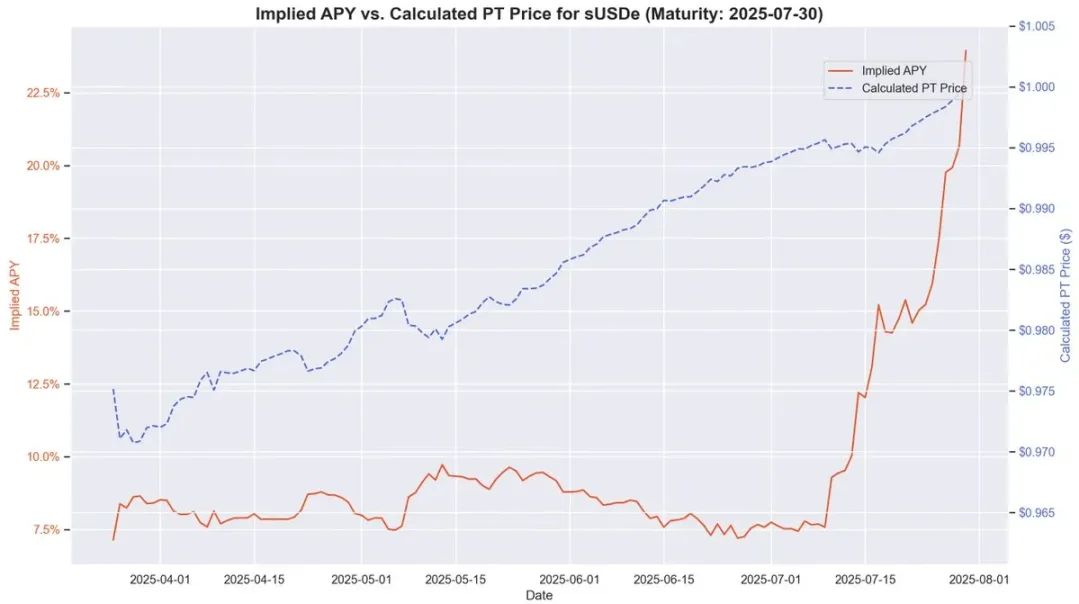
Although PT prices do not perfectly track par value—one-to-one—and market discount fluctuations still affect pricing, their returns become increasingly predictable as maturity approaches. This closely resembles the stable value appreciation pattern of zero-coupon bonds nearing maturity.
Historical data shows that the appreciation of PT token prices relative to USDC borrowing costs creates a clear arbitrage opportunity. The introduction of leverage further amplifies these profits. Since last September, every $1 deposited has generated approximately $0.374 in earnings, equating to an annualized yield of about 40%.
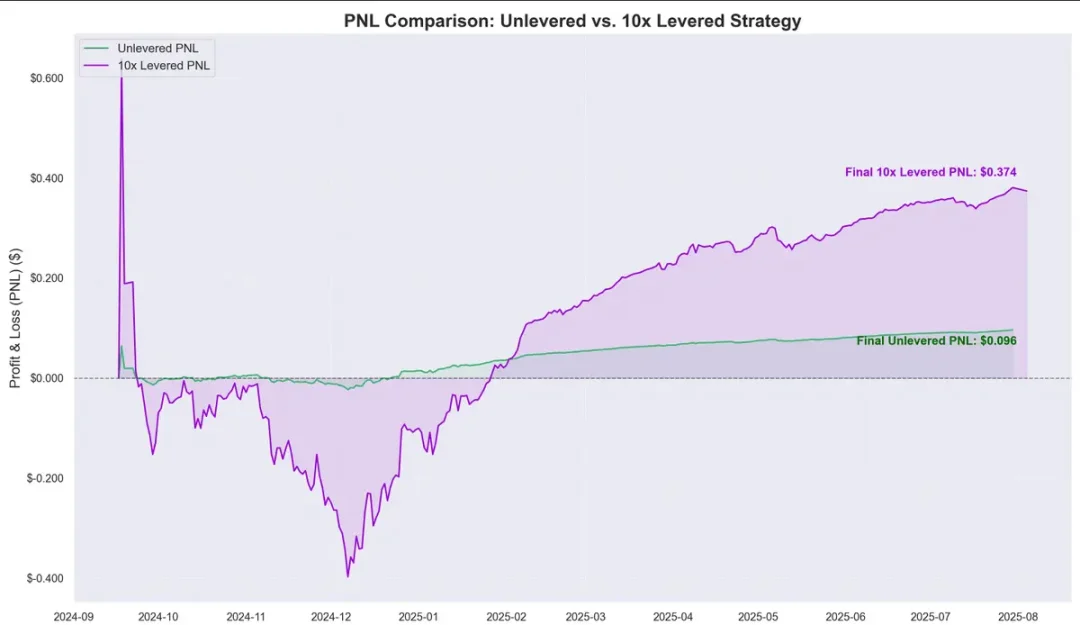
This raises a critical question: Does this looping strategy equate to risk-free returns?
Risks, Interdependencies, and Future Outlook
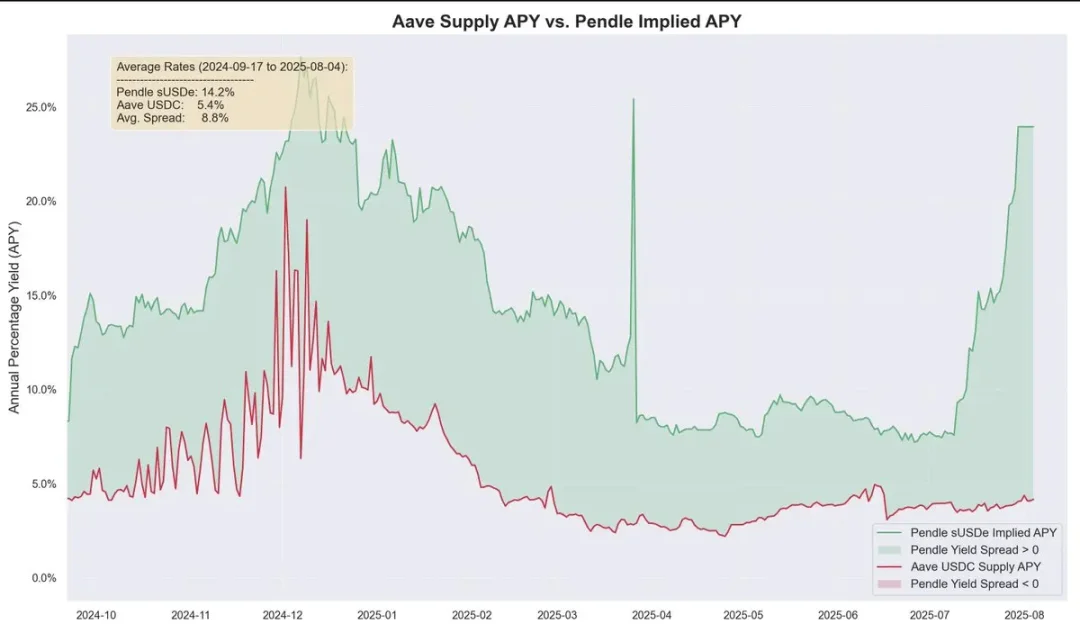
Historically, Pendle’s yields have significantly exceeded borrowing costs, with unleveraged average spreads around 8.8%. Under Aave’s PT oracle mechanism, liquidation risk is further reduced. The system includes a floor price and a kill switch. Once triggered, the LTV drops immediately to 0 and the market freezes, preventing bad debt accumulation.
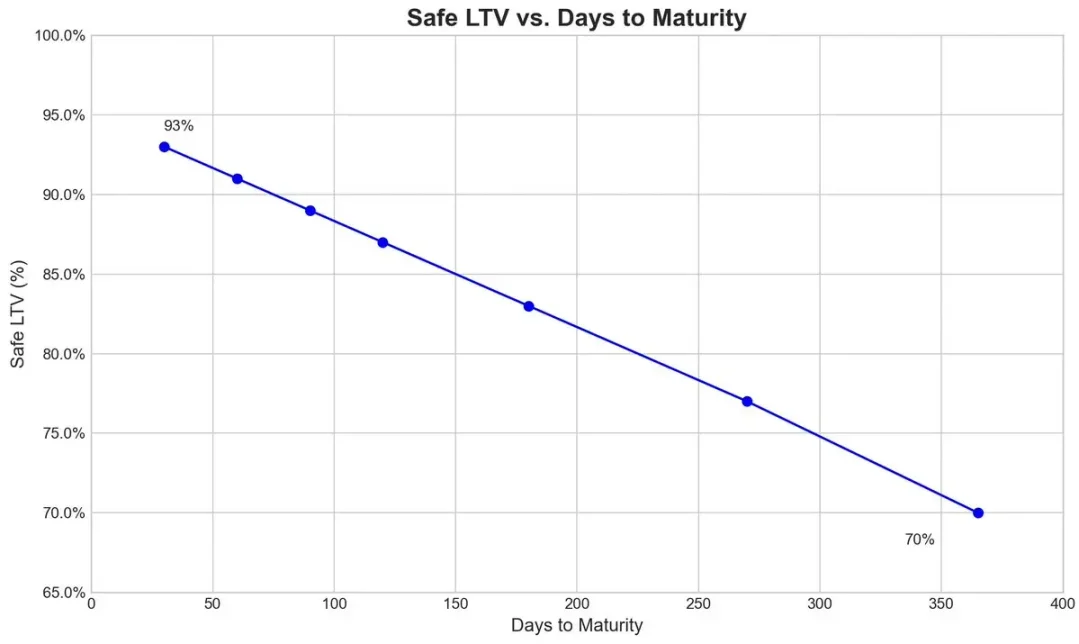
For example, with Pendle’s PT-USDe expiring in September, the risk team set an initial discount rate of 7.6% per year for its oracle, allowing up to a 31.1% discount (the kill switch threshold) under extreme market stress.
The chart below illustrates various safe LTV levels (calculated such that once the discount reaches the kill switch minimum, liquidation becomes impossible, ensuring PT collateral remains above the liquidation threshold).
Ecosystem Interconnectedness
Because Aave underwrites USDe and its derivatives at par with USDT, market participants can execute looping strategies at scale. However, this also tightly links the risks among Aave, Pendle, and Ethena. Whenever collateral supply caps are raised, pools are quickly filled by looping strategy users.
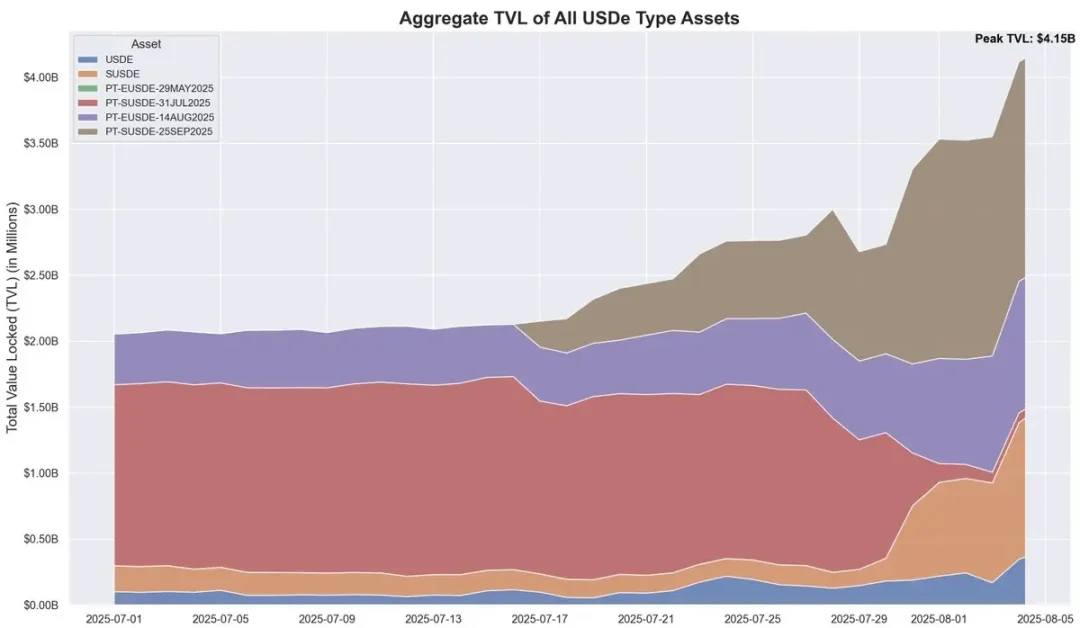
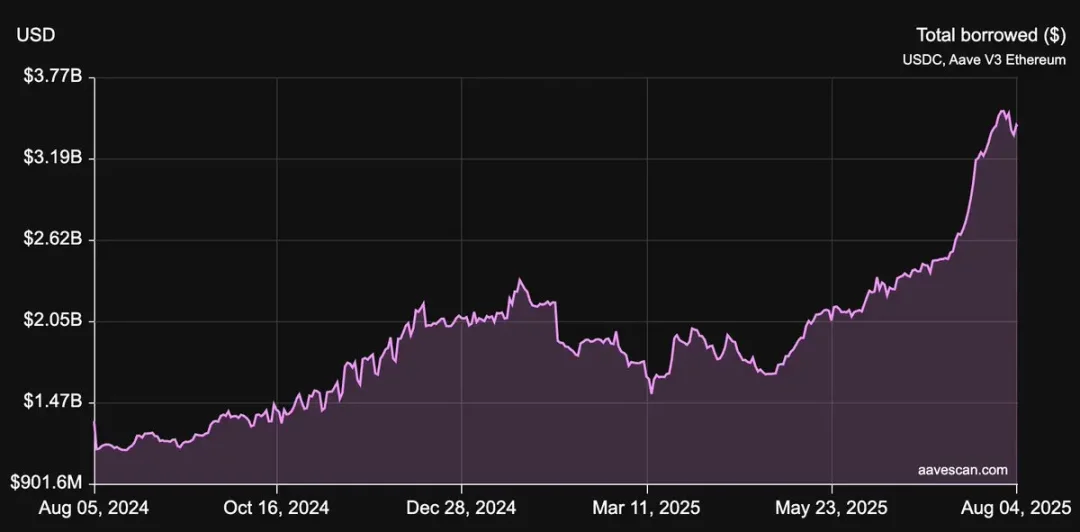
Currently, Aave’s USDC supply is increasingly backed by PT-USDe collateral. Looping strategy users borrow USDC and reinvest it into PT tokens, structurally making USDC resemble a senior tranche: holders earn higher APR due to high utilization and are generally shielded from bad debt unless an extreme default event occurs.
Scalability and Ecosystem Revenue Distribution
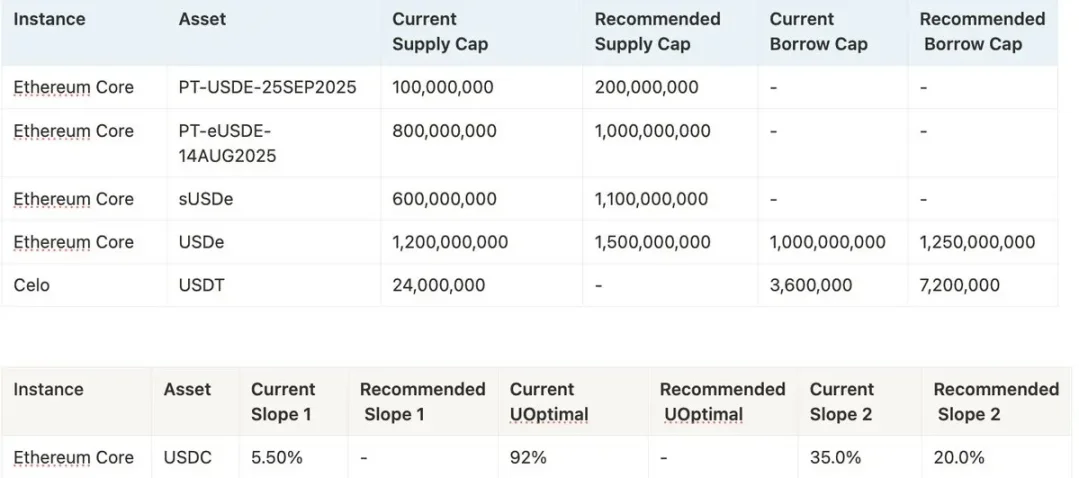
The future scalability of this strategy depends on whether Aave continues raising the PT-USDe collateral cap. The risk team currently favors frequent increases—for example, proposing an additional $1.1 billion expansion—but policy limits require each cap increase to be no more than double the prior cap and spaced at least three days apart.
From an ecosystem perspective, this looping strategy generates revenue for multiple parties:
-
Pendle: Earns a 5% fee from the YT side.
-
Aave: Takes a 10% reserve cut from USDC borrowing interest.
-
Ethena: Plans to take approximately a 10% share once the fee switch is activated.
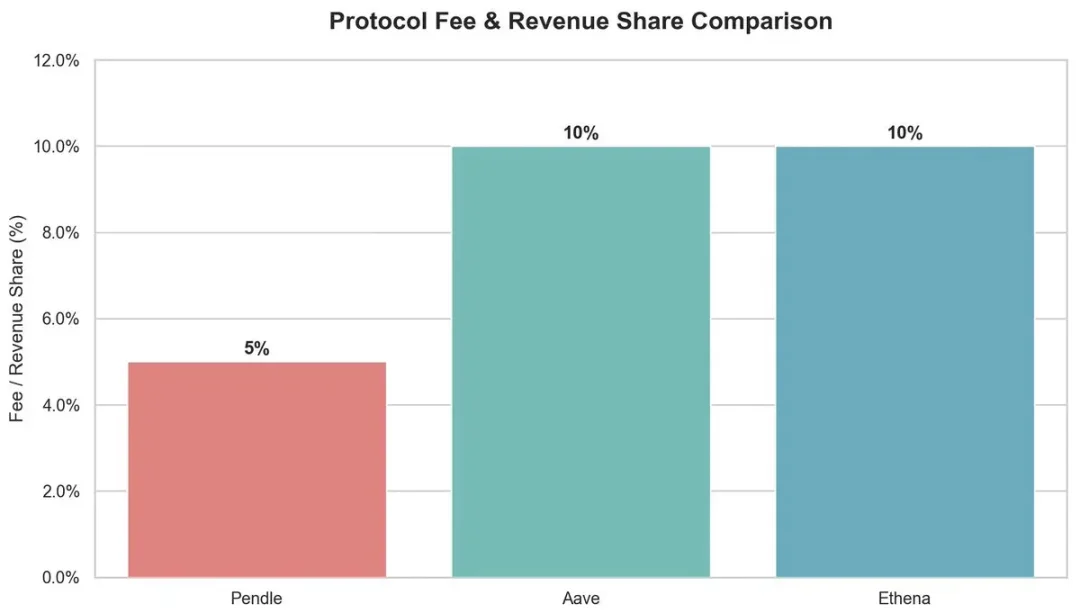
Overall, Aave provides underwriting support for Pendle’s PT-USDe by anchoring to USDT and setting discount ceilings, enabling the looping strategy to operate efficiently and profitably. However, this high-leverage structure introduces systemic risk—any issue in one party could create cascading effects across Aave, Pendle, and Ethena.
Join TechFlow official community to stay tuned
Telegram:https://t.me/TechFlowDaily
X (Twitter):https://x.com/TechFlowPost
X (Twitter) EN:https://x.com/BlockFlow_News
 @blockworksres