Solana Trench June Updates: Pumpfun ICO, Trading Software Wars, and Launchpad Competition
TechFlow Selected TechFlow Selected
Solana Trench June Updates: Pumpfun ICO, Trading Software Wars, and Launchpad Competition
Solana memecoin daily trading volume starts rising from 10-11 UTC and peaks between 15-20 UTC, closely aligning with U.S. daytime working hours.
 Navigating Web3 tides with focused insights
Author: Nico
Translation: TechFlow
In early April this year, I conducted a quantitative analysis of the current state of the "Solana Meme Coin market" (commonly known as the "trench").
Now let's revisit and see what has changed during this period!
Introduction
Since my last analysis, several new developments have emerged in the market:
-
Rumors surrounding a Pumpfun Token ICO, with private sales already underway;
-
Axiom has achieved market dominance and launched new platforms;
-
Intensifying competition among launchpad platforms, along with diversification and expansion trends.
In the past, many trading infrastructures were commonly referred to as "bots." However, I believe they can now be more accurately described as "trading terminals." With technological advancements, many traditional bots have become obsolete—only those tailored for mobile use, social scenarios, or niche needs remain active.
Pumpfun Token ICO: The Market Focus
What we currently know:
-
Targeting $1 billion in fundraising, with a fully diluted valuation (FDV) of $4 billion, to be fully released at launch;
-
The ICO will be conducted through top centralized exchanges (CEXs) as well as the Pump.fun platform;
-
KYC (identity verification) is required to participate in the ICO;
-
Early investors in the private sale will still be subject to vesting periods;
-
An airdrop is highly likely, with an estimated allocation of around 10%.
Impact on the "Trench":
-
The launch of the Pump Token is likely to become a highly anticipated market event;
-
As one of the few widely accessible tokens on Solana with long-term investment potential, Pump Token could establish a positive growth flywheel due to its revenue model;
-
In the short term, it may draw liquidity away from the Solana ecosystem and the "trench" market, but in the long run, if incentives are properly structured, it could positively impact ecosystem development;
-
The airdrop could generate a wealth effect, attracting participation from existing users, returning users, and new users alike.
I expect Pump Token’s FDV to fall within the $10–20 billion range—comparable to HYPE, higher than ENA, and potentially placing it among the top 10–20 largest tokens.
The Battle of Trading Terminals
Over the past two months, all trading terminal platforms have experienced a gradual decline in activity.
Currently, Axiom has surpassed 60% market share, firmly securing first place. Photon ranks second, while GMGN, Trojan, and BullX compete for the remaining share. Bloom and Bonkbot have maintained some relevance, while emerging contenders like Padre and Nova are gaining increasing attention.
Trading Terminal Market Share (Snapshot as of June 25, 2025)
-
Axiom: 61% market share / $137 million in cumulative fees / DAU approximately 33k–45k
-
Photon: 9.9% market share / $410 million in cumulative fees / DAU approximately 20k–30k
-
BullX: 5.8% market share / $197 million in cumulative fees / DAU approximately 10k–20k
-
GMGN: 6.8% market share / $78 million in cumulative fees / DAU approximately 10k
-
Trojan: 4.8% market share / $187 million in cumulative fees / DAU over 20k
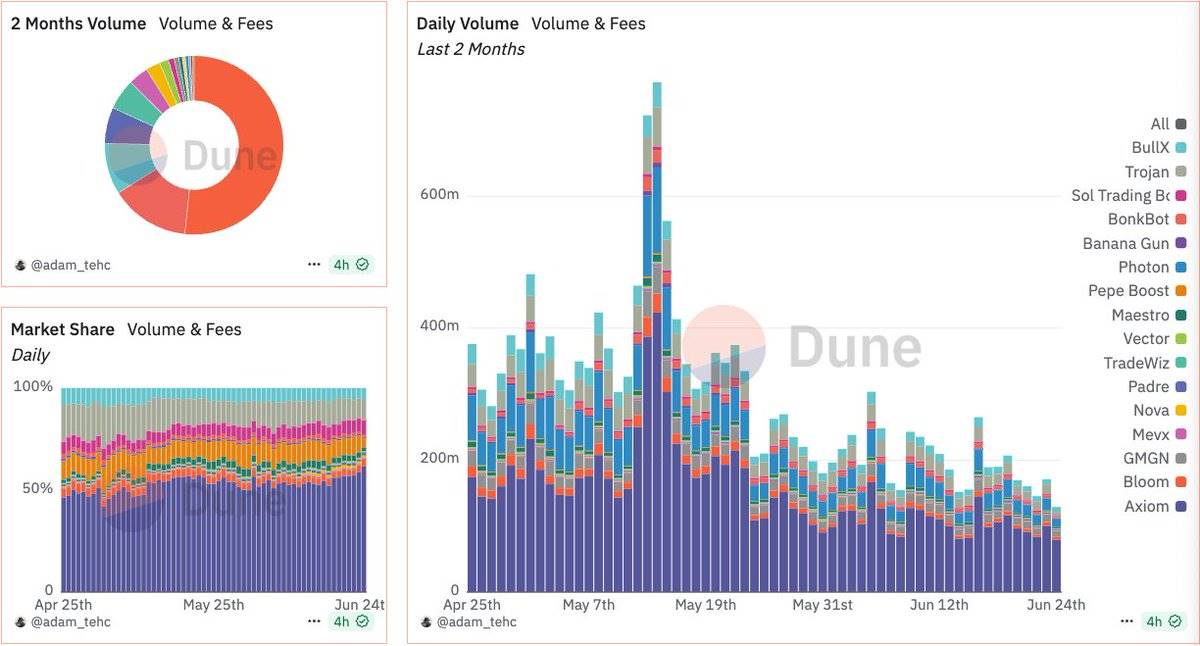
Given that trading bots and terminals have collectively generated around $1 billion in revenue, this space has attracted numerous competitors. I’ve spoken with many individuals planning to build their own terminals and enter the competition, but the general consensus is that it's a tough battle, especially as overall trading volume gradually declines. That said, this situation might change after the release of the Pumpfun Token.
Notably, the most popular and profitable platforms today aren't necessarily those with the best UI, feature set, speed, or data accuracy. Instead, they’ve won through superior distribution—a key differentiator.
I plan to write a dedicated article exploring the tension between technology and distribution power, and how it influences user adoption across specific demographics—stay tuned.
The Launchpad War
Between April and May, we saw the rise of the following launchpad platforms:
-
@RaydiumProtocol's Launch Lab
Although these competing launchpads initially drew significant attention, their market shares are now gradually declining. However, the success of tokens like $USELESS on letsbonk.fun has attracted renewed interest, positioning it as a less competitive launchpad with stronger support from the Bonk ecosystem.
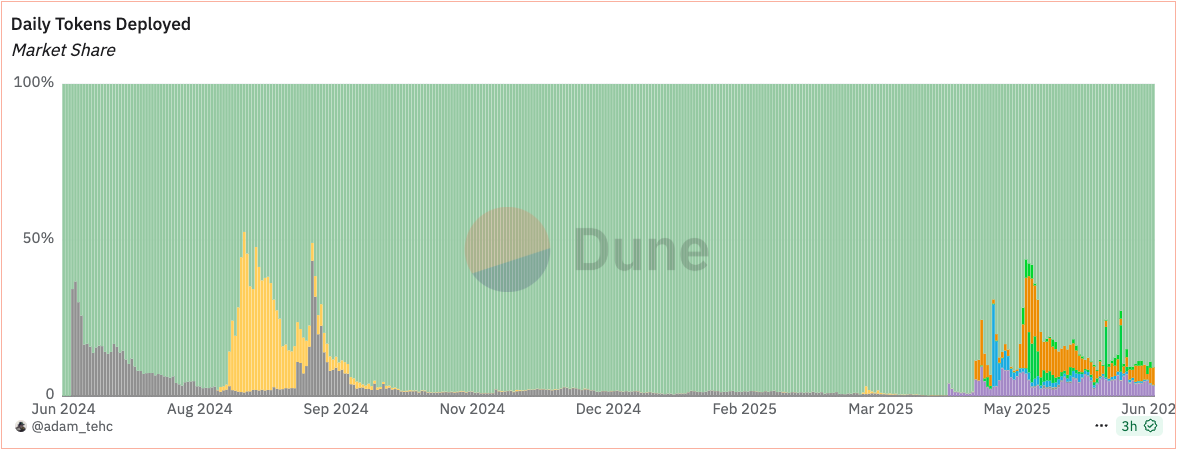
Orange (Bonk), Green (Believe), Purple (Raydium Launchlab)
In June, only Pumpfun and LetsBonk showed significant activity in bonded coins. From the data, green represents Pumpfun, orange represents LetsBonk—with green dominating the market and orange following. Pumpfun has around 200 bonded coins, while LetsBonk ranges between 10 and 30. However, growth rates for both platforms are slowing.
LetsBonk
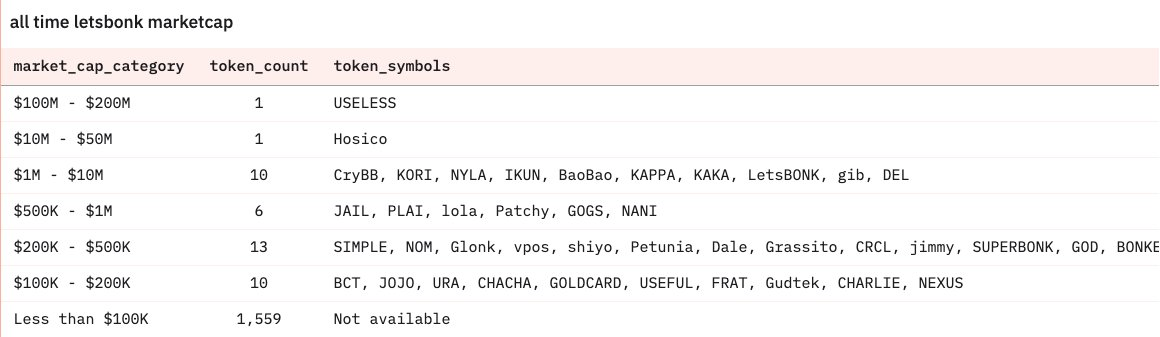
On the LetsBonk.fun platform, the total market cap of all its tokens is under $200 million, concentrated primarily in the following:
-
$USELESS: $140 million market cap
-
$HOSICO: $22 million market cap
-
$CryBB: $11 million market cap
Among these, $USELESS stands out, receiving enthusiastic support and promotion from members of the Bonk community (e.g., @theunipcs).
Believe
The emergence of Believe was unexpected yet logical. Positioned as an “Internet Capital Markets” platform, it aims to help startups with real utility raise funds and gain visibility through token issuance—not limited to meme coins alone.
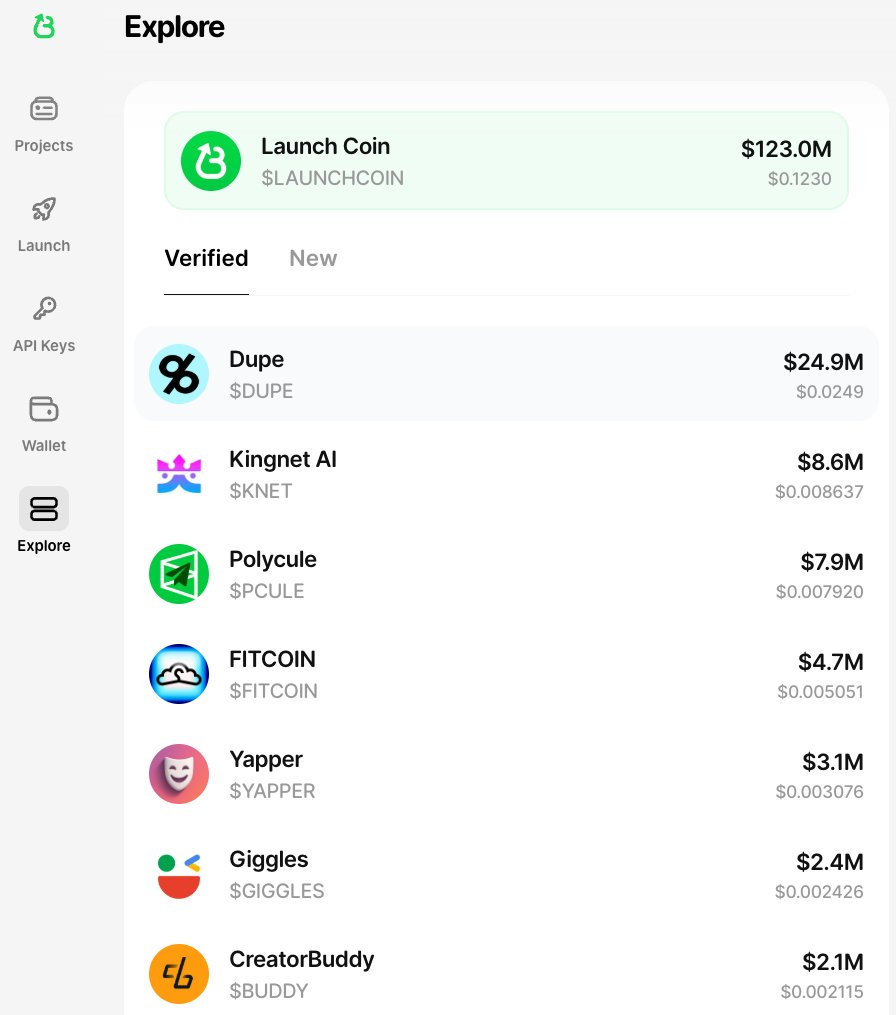
Launch Coin is its official token and the standout performer, focusing on launching tokens via Twitter campaigns. While the concept isn’t new, Believe attempts to innovate and reshape market dynamics.
The platform introduced anti-snipe measures, such as taxing early buyers to penalize liquidity-draining snipers, while incentivizing creators to buy and hold their own tokens—potentially driving further price appreciation.
These mechanisms sparked a brief but interesting market surge. However, currently, Launch Coin remains the primary beneficiary of the Believe ecosystem, absorbing most of the liquidity, while other tokens occasionally experience volatility due to sudden demand spikes.
The community has generated extensive discussion and controversy around its founder @pasternak (both supportive and critical), as anticipation builds for the platform to enter its next-stage flywheel. For now, efforts appear ongoing.
I recommend closely monitoring Believe’s latest developments using these screening tools:
-
Believe App Screener (by @0x_ultra) and Believe Screener
Launch Lab
Raydium’s Launch Lab features top tokens that were actually initiated through LetsBonk, with Launch Lab serving merely as a backend tool to create Raydium-based liquidity pools.
Pumpfun Activity & Metrics
As a launchpad, Pumpfun has generated nearly $765 million in fee revenue—essentially pure profit—with daily income averaging between $1–2 million.
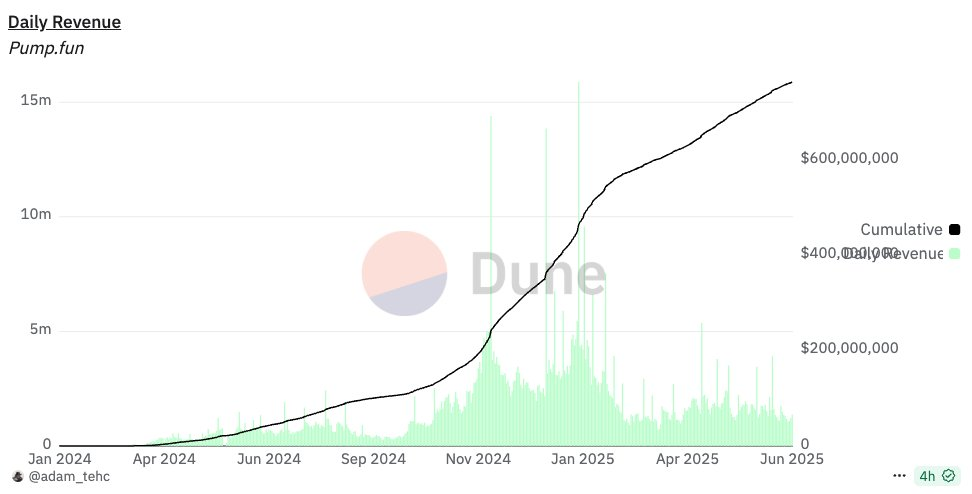
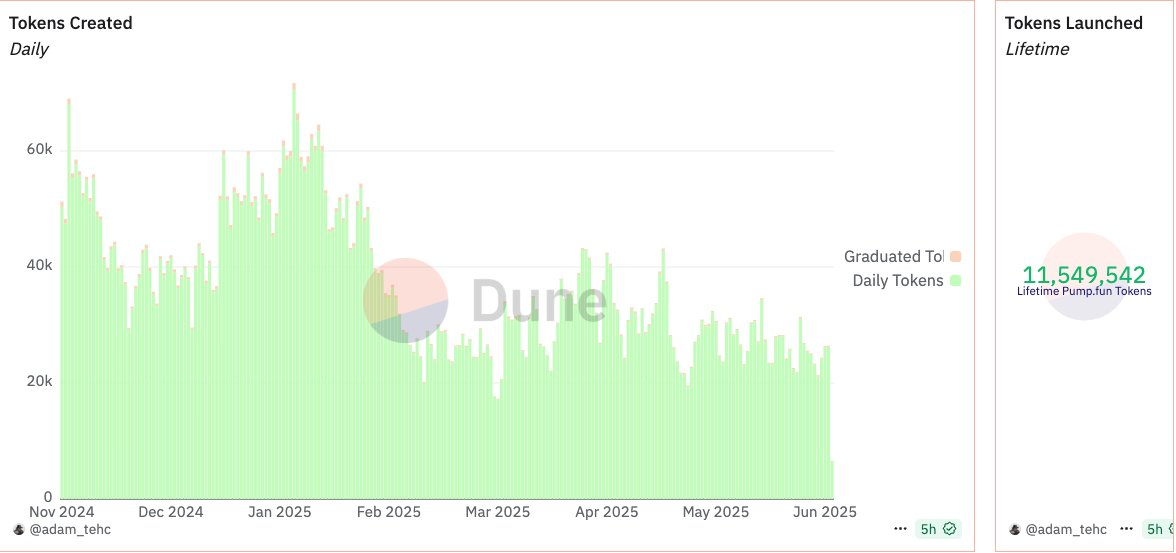
The platform has created over 11.5 million tokens, though the pace has slowed since the launch of the $TRUMP token.
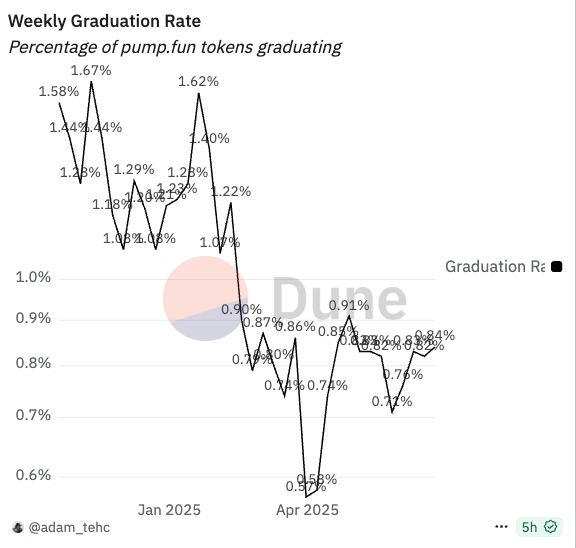
The graduation rate (tokens successfully meeting targets) has also significantly declined but appears to have slightly rebounded and stabilized at around 0.8%.
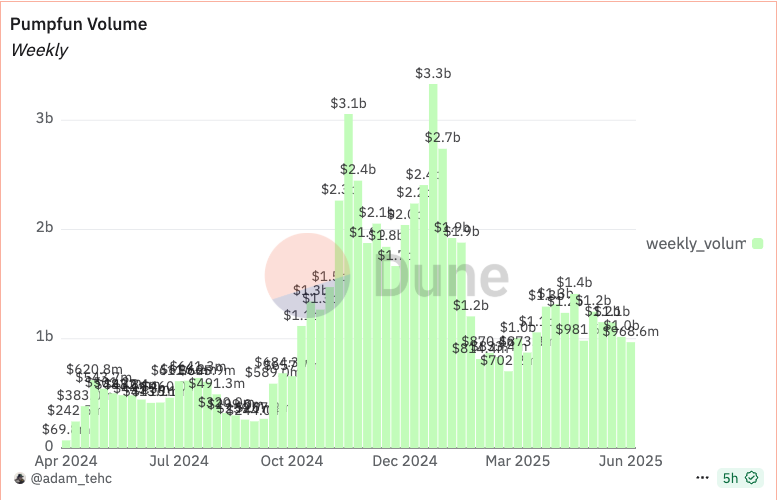
Trading volume spiked notably in March and April but has since decreased, trending downward to about $10 billion per week.
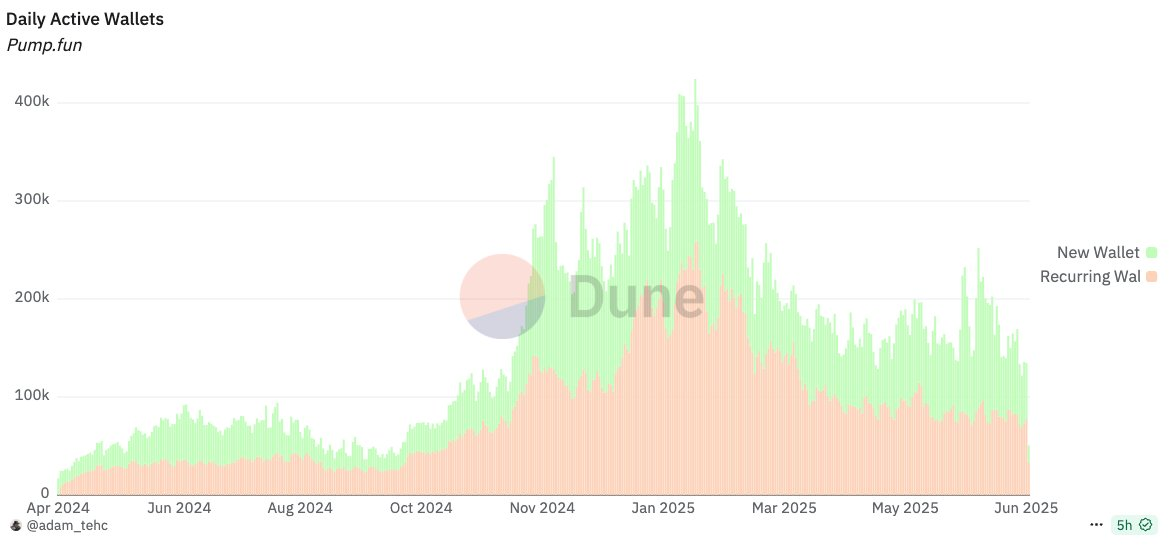
User activity has also declined, consistent with the surge seen in March/April—when many new wallets joined. Now, there are approximately 70K+ daily active users and 50K+ new users per day.
PumpSwap
On PumpSwap, token creators have earned $6.6 million in fee revenue.
Total platform revenue reached $93 million, with $73 million going to liquidity providers (LPs) and $18 million to the protocol itself.
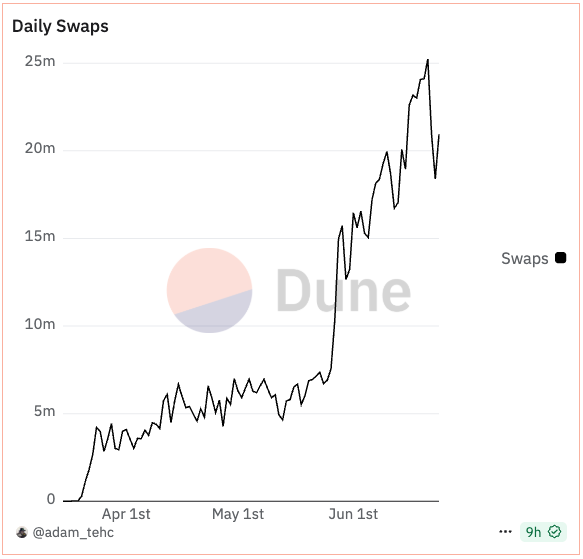
Despite declining trading volume, daily transaction counts continue to rise—indicating that PumpSwap is gradually expanding its market share within the decentralized exchange (DEX) landscape.
Interesting Market Insights
For those unfamiliar with the Solana Meme Coin market, here are some intriguing trends:
Daily trading volume begins rising around 10–11 UTC, peaking between 15–20 UTC—closely aligning with U.S. business hours.
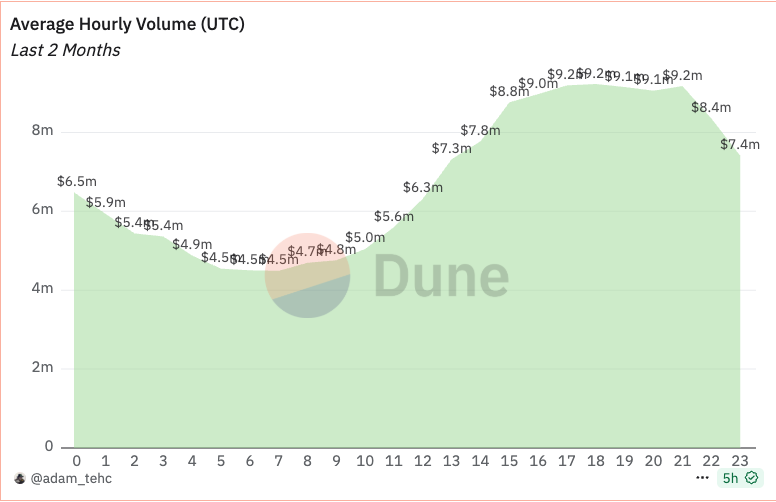
Not only does trading volume show cyclical patterns, but average trade size and transaction count follow similar rhythms.
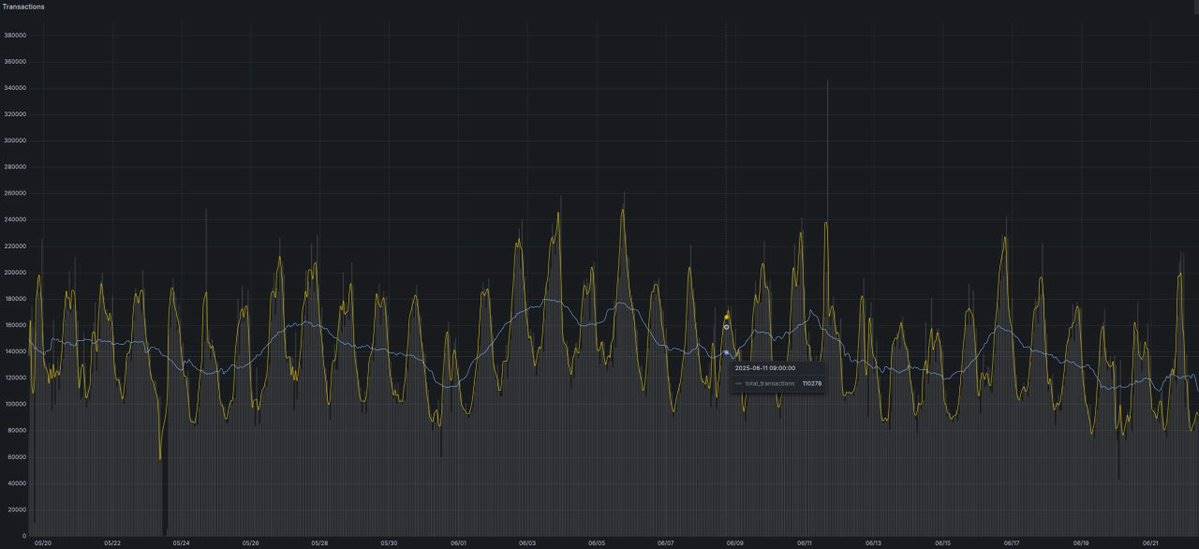
Data shows that the 3-hour moving average (yellow) and 24-hour moving average (blue) of transaction count exhibit clear periodicity.
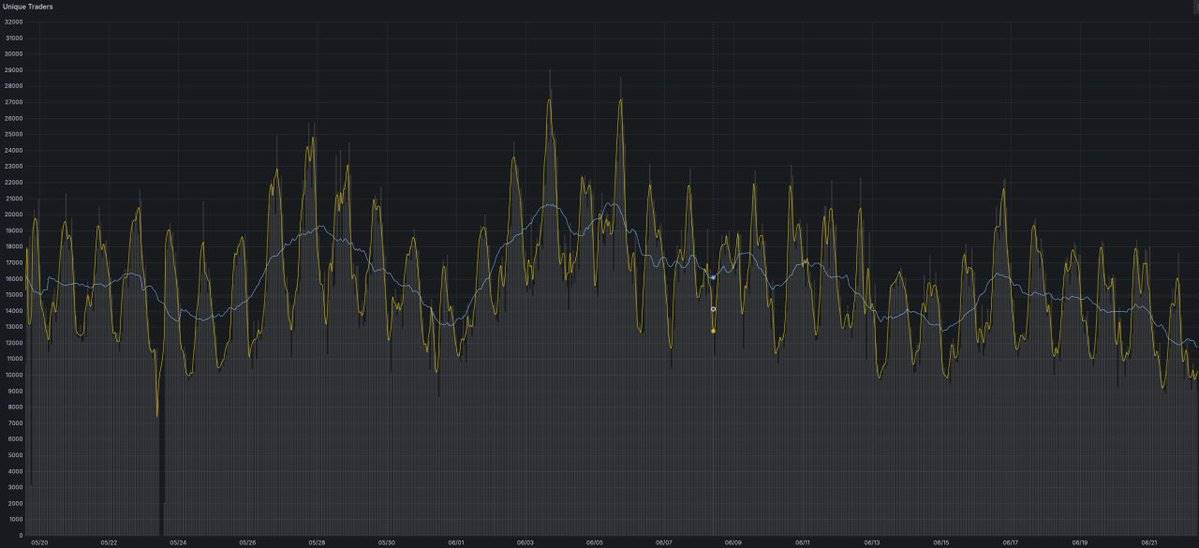
Number of unique traders
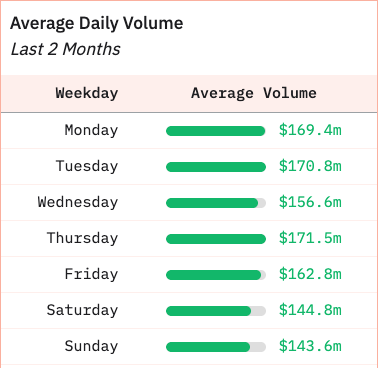
Weekend trading volume typically drops by 10–15%, while weekday volumes remain relatively stable.
Sources:
-
Dune dashboards by @Adam_Tehc, available here: https://dune.com/adam_tehc
-
Transaction count and unique user cyclicity charts provided by @idatsy
-
Some data sourced from @whale_hunter_'s dashboard: https://dune.com/whale_hunter
Join TechFlow official community to stay tuned
Telegram:https://t.me/TechFlowDaily
X (Twitter):https://x.com/TechFlowPost
X (Twitter) EN:https://x.com/BlockFlow_News
 @nicodotfun