Guotai Junan surges 190%—is Hong Kong's stock market riding the "crypto stock" wave?
TechFlow Selected TechFlow Selected
Guotai Junan surges 190%—is Hong Kong's stock market riding the "crypto stock" wave?
Whether through the "MicroStrategy" route or the cryptocurrency business布局 centered on trading, custody, and infrastructure, both are jointly driving a new round of market momentum in the Hong Kong stock market.
 Navigating Web3 tides with focused insights
Text: BlockBeats
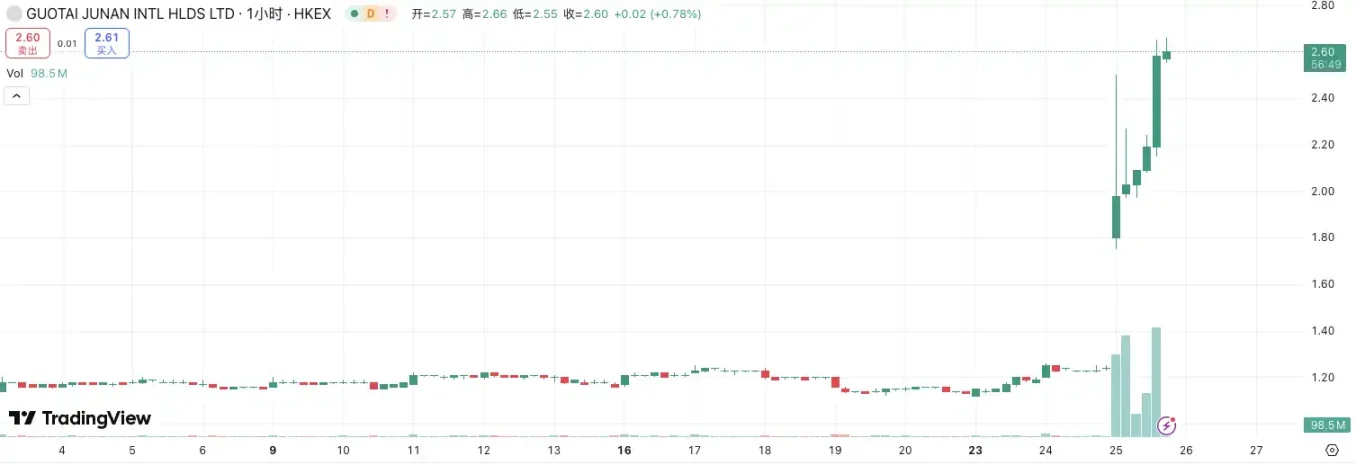
On June 25, Guotai Junan International's stock price surged 80% at the market open and soared over 190% during the session, making it one of the strongest-performing Hong Kong stocks for the day. Behind this sharp rally was the traditional financial brokerage’s high-profile entry into the crypto-equity space. The company announced today that it has received approval from the Securities and Futures Commission (SFC) of Hong Kong to officially launch cryptocurrency trading services. Coupled with multiple previous moves by other Hong Kong-listed companies to allocate assets into Bitcoin and Ethereum, as well as policy momentum driven by the upcoming implementation of the Stablecoin Ordinance, a "crypto-stock boom" is quietly taking shape in the Hong Kong stock market.
Brokerage Juggernaut
Guotai Junan International is a key subsidiary of Guotai Haitong Group, primarily engaged in traditional financial businesses. It operates through six business divisions. The Brokerage Division provides clients with securities, futures, options, leveraged foreign exchange trading, brokerage, and insurance brokerage services.
Its parent company, Guotai Haitong Securities, was formed in 2024 through the merger of two major brokerages—Guotai Junan and Haitong Securities—creating a "carrier-grade" securities firm offering comprehensive financial services including investment banking and asset management to individual and institutional clients. In April 2025, the merged entity officially rebranded as Guotai Haitong Securities. Haitong Securities was established in 1988, while Guotai Securities and Junan Securities were both founded in 1992, merging in August 1999 to form Guotai Junan. This "juggernaut" is no longer content with traditional finance and is now advancing into RWA (real-world asset tokenization) and tokenized securities.
On June 25, Guotai Junan International officially obtained SFC approval to upgrade its existing securities license to a comprehensive license allowing virtual asset trading and related advisory services. It becomes the first Chinese-owned Hong Kong brokerage to receive full-fledged virtual asset trading service qualifications. Its share price surged more than 80% at the opening and reached an intraday peak gain exceeding 190%.
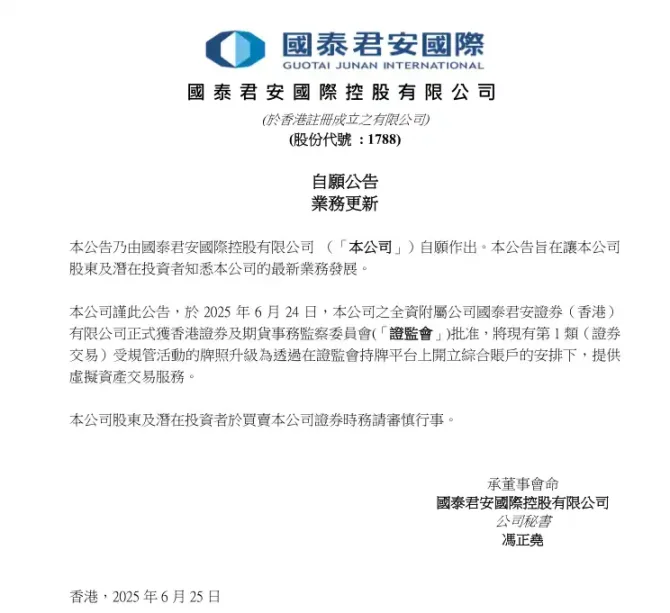
As such, Guotai Junan International is now the first mainland-affiliated Hong Kong brokerage authorized to offer full-spectrum virtual asset trading services. Its scope covers virtual asset trading, professional advisory during transactions, and issuance and distribution of virtual asset-related products—including OTC derivatives—marking a significant milestone in traditional brokers' accelerated shift toward Web3 finance.
This means that in the near future, Guotai Junan International’s clients will be able to directly trade various virtual assets on its platform, including mainstream cryptocurrencies like Bitcoin and Ethereum, as well as stablecoins such as USDT—signaling a clear transformation of traditional brokerages into Web3 financial institutions.
Competition or Collaboration? A Comparison with HashKey
Guotai Junan International’s approach to entering crypto trading can be summarized as: “Starting from a traditional brokerage foundation, moving from asset tokenization toward regulated virtual asset trading services.”
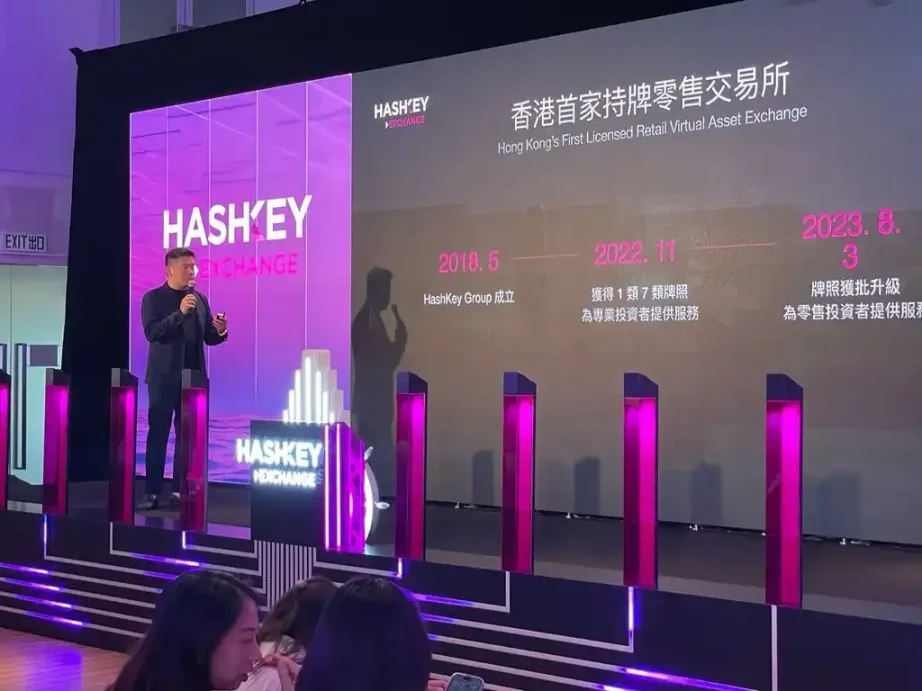
HashKey, one of Hong Kong’s most representative licensed crypto exchanges, follows a different path: “Starting with compliance, building institutional-grade infrastructure, and steadily expanding into the retail market.”
Against the backdrop of Hong Kong accelerating its development as a virtual asset hub, HashKey Exchange and Guotai Junan International represent two distinct models of crypto finance—one emerging from Web3 native roots and the other from traditional brokerage—both targeting the RWA and tokenized securities markets.
As one of Hong Kong’s first licensed virtual asset trading platforms, HashKey currently offers retail investors spot trading in BTC and ETH, and has integrated deposit and withdrawal channels with local banks including ZA Bank and Standard Chartered Bank. The platform also provides OTC and custody services, actively developing infrastructure in stablecoins and asset tokenization. Its parent group, HashKey Group, is also active in Web3 investments.
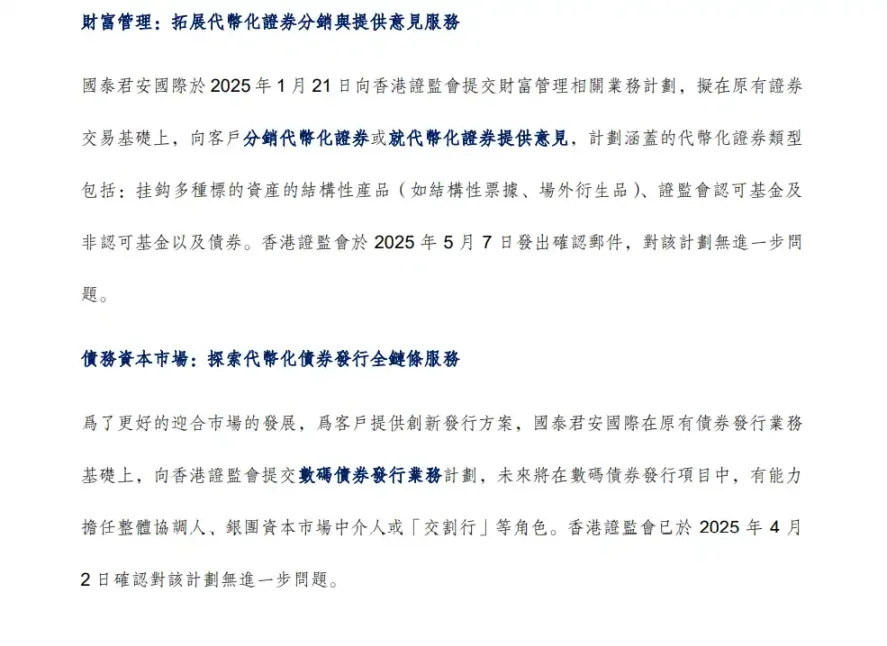
In contrast to HashKey’s focus on trading use cases, Guotai Junan International’s strategy leans more toward “blockchain transformation” and “securities-grade asset tokenization.” Since January this year, it has submitted and received SFC approval for plans to issue and distribute tokenized structured notes, funds, and digital bonds—aiming to map traditional financial products onto the blockchain. These projects were approved in April and May respectively.
HashKey better serves crypto-native users—for example, if you want to buy BTC, stake on-chain, or arbitrage USDT, it acts as a “compliant yet decentralized-friendly” gateway. Guotai Junan International plays a role closer to a “tokenized asset investment bank”—it won’t trade coins with you, but might underwrite a “tokenized government bond” and provide on-chain settlement services.
Is Hong Kong’s Market Momentum Shifting from ‘Stablecoin’ to ‘Crypto Stocks’?
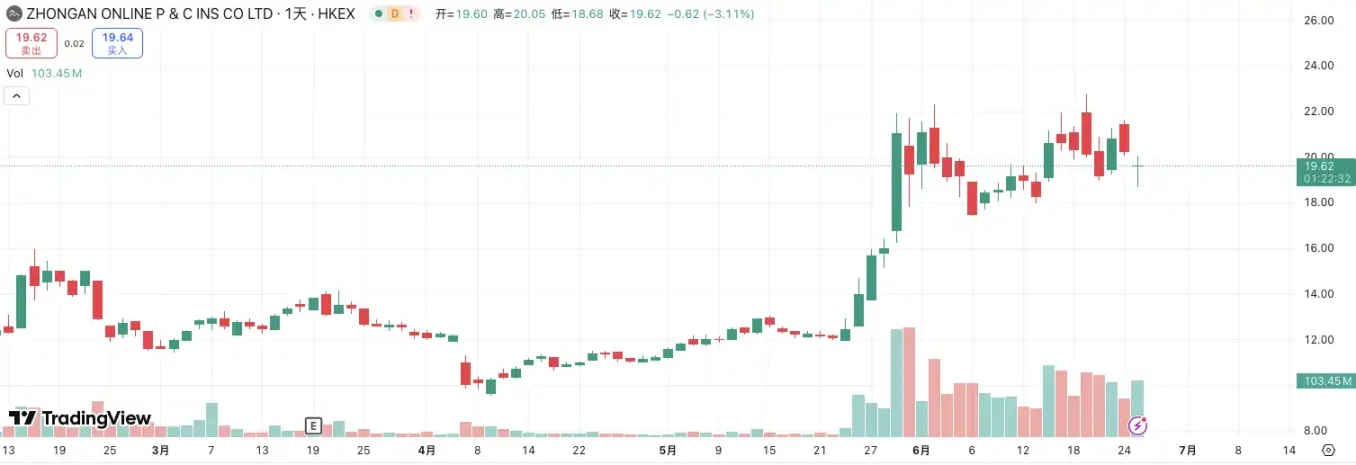
The Hong Kong Legislative Council recently passed the Stablecoin Ordinance, set to take effect on August 1. The first batch of authorized issuers includes JD Blockchain Technology, Circle Innovation Technology, and a consortium led by Standard Chartered Hong Kong. Following the announcement, related stablecoin concept stocks such as ZhongAn Online, JD Group, and LianLian Digital saw strong rallies.
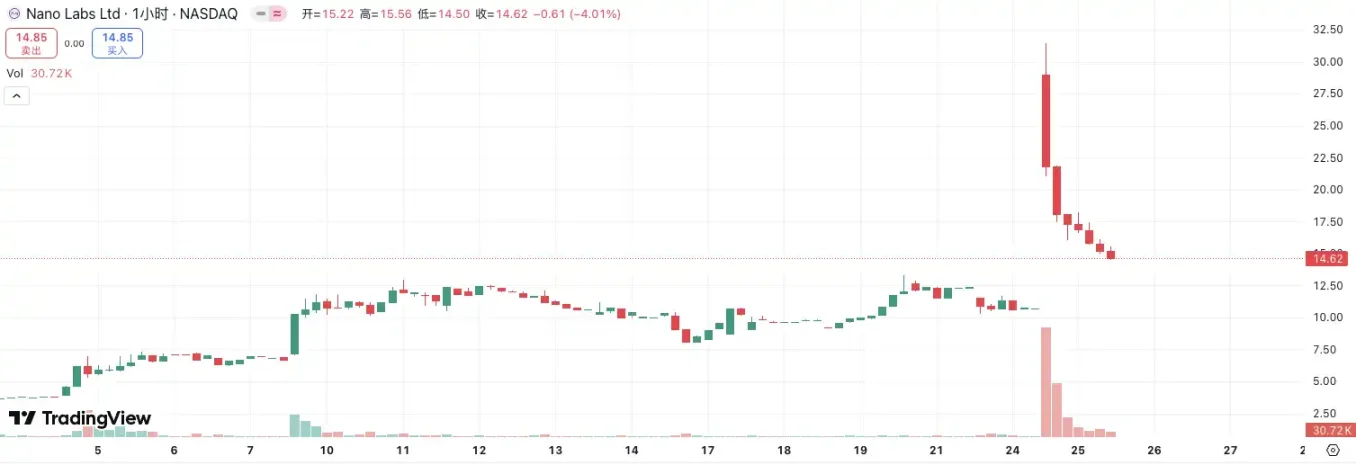
Meanwhile, a new wave of “corporate crypto accumulation” is sweeping U.S. equities, as companies follow MicroStrategy’s playbook—using financing or bond issuance to add cryptocurrencies to their balance sheets. SBET purchased ETH, DFDV bought SOL, and both saw their stock prices surge tenfold. On June 24, Nano Labs announced a $500 million private placement of convertible bonds to fund its BNB reserve strategy, with its stock soaring up to 170% intraday. There are early signs this trend may now be repeating in Hong Kong.
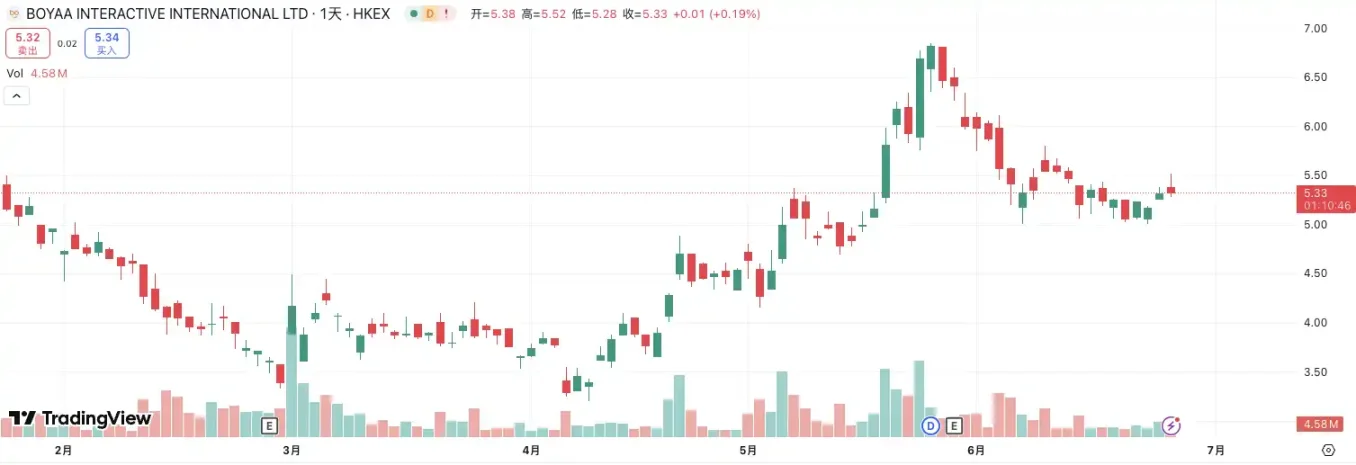
Boya Interactive began purchasing and holding Bitcoin in 2023. As of March 31, 2025, it held 3,351 BTC and 297 ETH—the largest crypto holdings among all Hong Kong-listed companies. Its share price doubled from HK$3.3 in April to HK$6.8 in May. Additionally, GF Innovation invested HK$36 million in Bitcoin between March and August 2024; Bluehole Interactive held BTC and ETH worth $8.8 million as of mid-2024. These Hong Kong versions of “MicroStrategy” have significantly benefited from recent crypto-themed market movements, becoming new focal points for capital inflows.
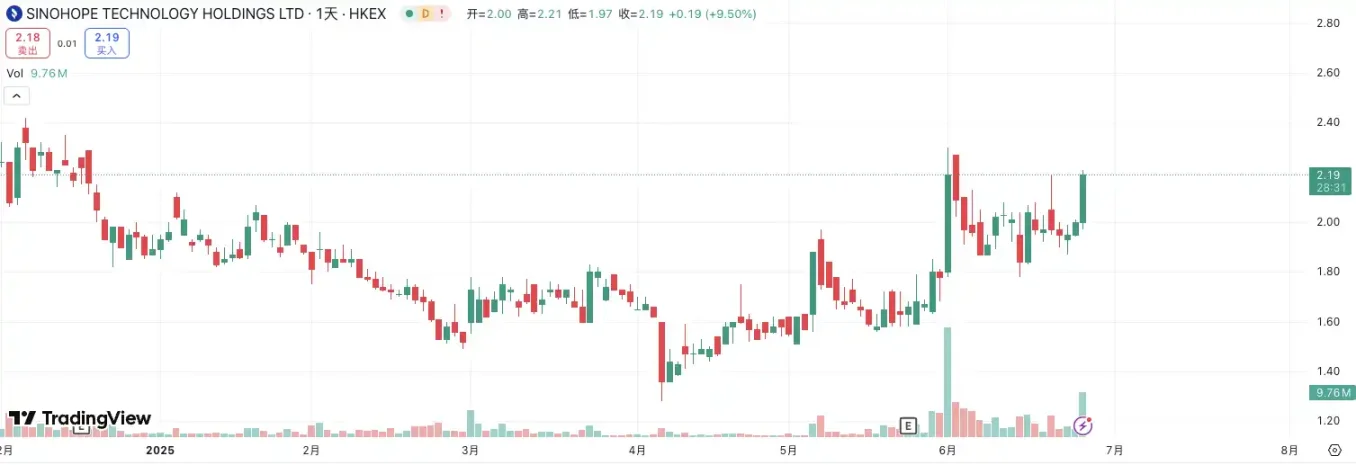
Beyond the “MicroStrategy model,” other crypto-related stocks have also seen explosive growth recently. OKLink, focused on blockchain explorers; SparkPool Technology, specializing in digital asset custody; and OSL Group, providing digital asset infrastructure services—all demonstrated sustained strength during May’s market rally, attracting significant investor attention.
On June 25, Guotai Junan International’s shares surged over 190% following news of its entry into virtual asset trading, marking a pivotal step in traditional brokerages transitioning into Web3. Whether via the “MicroStrategy” model or strategic positioning around trading, custody, and infrastructure, these developments are collectively fueling a new wave of momentum in the Hong Kong stock market.
Join TechFlow official community to stay tuned
Telegram:https://t.me/TechFlowDaily
X (Twitter):https://x.com/TechFlowPost
X (Twitter) EN:https://x.com/BlockFlow_News
 BlockBeats