








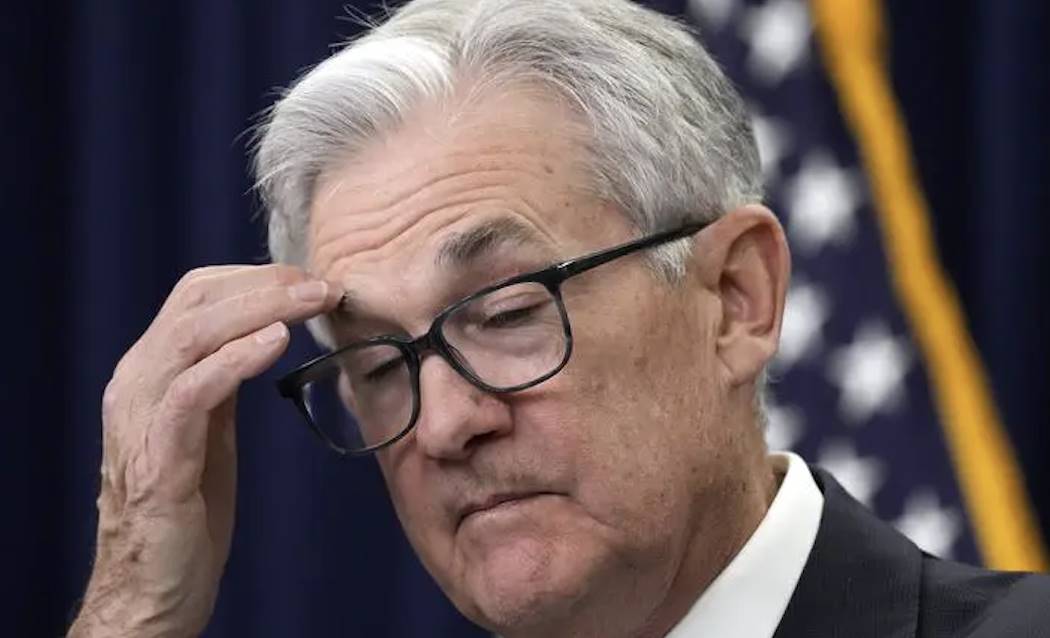
Powell's First Day of Congressional Hearing: Does Not Rule Out Possibility of Early Rate Cuts, But June and July Data Are Important
TechFlow Selected TechFlow Selected
Powell's First Day of Congressional Hearing: Does Not Rule Out Possibility of Early Rate Cuts, But June and July Data Are Important
Powell said the Fed has held off on cutting rates so far due to the outlook for higher inflation and uncertainties brought by tariffs.
 Navigating Web3 tides with focused insights
By Li Dan, Wall Street Journal
On the first day of a congressional hearing dedicated to the Federal Reserve's monetary policy, Fed Chair Jerome Powell did not comment on the possibility of a rate cut at the next Fed meeting in July. He reiterated that more data are needed to assess how high tariffs will affect inflation, noting that expectations of tariff-driven inflation have led the central bank to pause rate cuts so far. However, he left open the possibility that the impact of tariffs on inflation might be smaller than expected, and thus also left open the door to an earlier rate cut.
On Tuesday, June 24, during the question-and-answer session before the House Financial Services Committee, when asked about recent comments by Fed Governor Christopher Waller suggesting a possible July rate cut, Powell said "many paths are possible." He noted that inflation could prove weaker than anticipated, and downward pressure on inflation along with signs of labor market softness could lead the Fed to cut rates earlier than expected.
Later, Powell said data indicate that tariffs in certain sectors are already affecting U.S. consumers. Regarding June and July data, he stated, "We believe we should start to see" the impact of tariffs on inflation. "If we don't, we'll learn from that."
He emphasized that the Fed remains "completely open" to the view that the inflationary effect of tariffs may be less than previously assumed. If tariffs have a smaller-than-expected impact on consumer prices, that would have meaningful implications for the Fed’s monetary policy.
Subsequently, Powell reiterated his expectation that tariffs will exert a significant effect on prices over June, July, and August. If such effects fail to materialize, it would provide important lessons. "We won’t know until we see it firsthand, but I think we’ll learn as we go," he said.
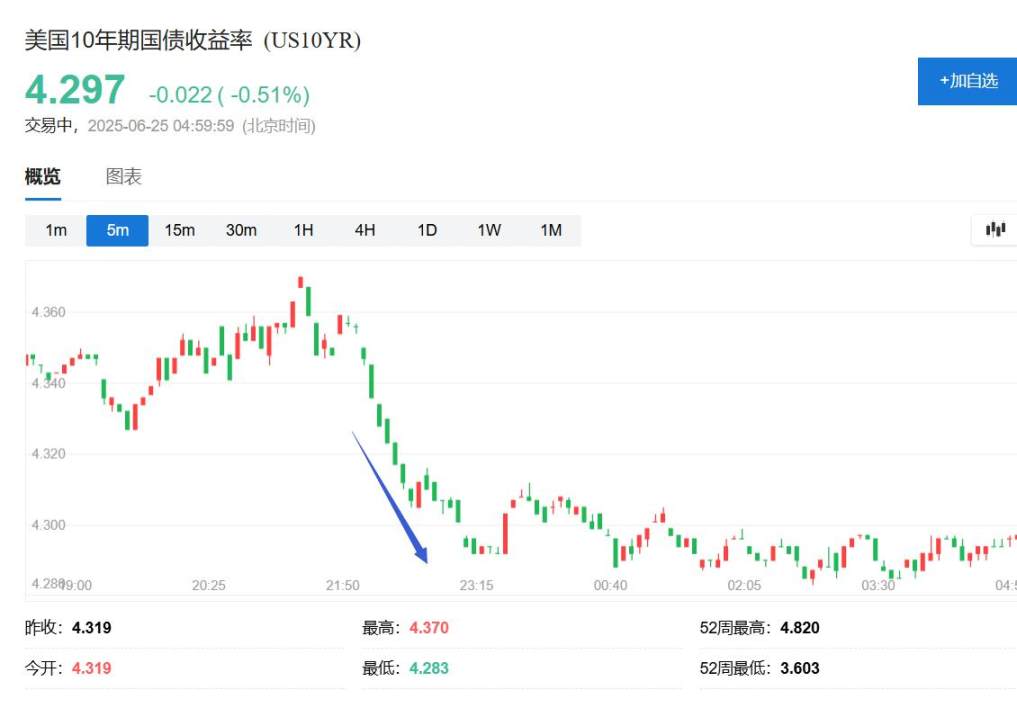
After Powell raised the possibility of an early rate cut and suggested that lower-than-expected inflationary effects from tariffs could prompt easing, U.S. Treasury yields continued to fall during the late morning trading session. The benchmark 10-year Treasury yield dipped below 4.30%, while the more rate-sensitive two-year yield fell below 3.81%, both reaching their lowest levels in over a month following the conclusion of Powell’s testimony. Commentators observed that Powell did not rule out a July rate cut and, more importantly, did not rule out the prospect of weakening inflation.
'The New Fed Whisperer': Powell Leaves July Rate Cut Open But Hints It’s More Likely to Wait Until September
Nick Timiraos, known as "the new Fed whisperer," wrote that Powell told lawmakers during this hearing that recent economic data would likely justify further rate cuts—were it not for concerns that higher tariffs could undermine years of progress in fighting inflation. Powell believes economic activity remains solid, allowing Fed officials time to carefully evaluate incoming data before deciding whether to resume rate cuts.
The article states:
"Powell did not explicitly rule out a rate cut next month (July), but offered no specifics. However, in answering questions from lawmakers, he hinted that officials are more likely to wait at least until the September meeting—to see whether price increases driven by tariffs turn out lower than expected—before resuming rate cuts."
The article quotes Powell:
"If it turns out that inflation pressures are indeed under control, we will cut rates sooner rather than later, but I don’t want to point to any specific meeting."
Immediately after that statement, Powell added: "I don’t think we need to rush, because the economy remains strong."
No Rate Cuts Due to Inflation Outlook Rising and Tariff-Driven Uncertainty
During the hearing, a lawmaker asked about changes in Federal Open Market Committee (FOMC) members’ forecasts since March. Powell attributed these shifts primarily to tariffs.
He said the vast majority of FOMC participants still view rate cuts later this year as appropriate, though he stressed that the economic outlook remains "highly uncertain."
When asked whether the Fed incorporates assumptions about the Trump administration's tariff policies into its deliberations, Powell said officials try to make their assumptions public in speeches, but avoid commenting on policy. Even if not explicitly detailed in the quarterly Summary of Economic Projections, officials discuss their assumptions publicly.
One lawmaker asked why the Fed couldn't follow other central banks in cutting rates. Powell responded that all professional forecasters outside the Fed expect U.S. inflation to rise this year—that is precisely why the Fed has not acted.
Another lawmaker criticized the Fed for being too slow to raise rates under Biden and too slow to cut them under Trump. In response, Powell directly attributed the current pause in rate cuts to uncertainty created by tariffs.
He later noted that uncertainty was a partial reason for holding off on rate cuts. That uncertainty peaked in April and has since declined. Businesses now appear "more positive" in sentiment.
In prepared remarks released ahead of the hearing, Powell noted that short-term inflation expectations have risen in recent months, with tariffs being a key driver. Most long-term inflation expectations, however, remain consistent with the Fed’s 2% target. The inflationary impact of tariffs could be transitory—or more persistent, depending on how they play out.
Interest Rate Policy Doesn’t Affect Long-Term Housing Supply; Rates Are Modestly Restrictive
Asked whether Fed policy restricts housing supply, Powell replied that the Fed cannot address the long-term shortage of U.S. housing supply. Chronic housing shortages exist, and the Fed cannot fix them. What the Fed can best do is bring down inflation, which in turn lowers interest rates across relevant markets.
Powell acknowledged that interest-rate-sensitive sectors like real estate are affected by Fed policy, but emphasized this is "part of restoring overall price stability." Over the long term, monetary policy does not influence housing supply and demand.
He noted that housing-cost-related inflation has been very "sticky," but recently showed signs of decline—"very good news." Inflation tied to rental housing is now declining in a fairly regular pattern.
Bringing down housing inflation, Powell said, "just takes time." The full effect of falling rents may take up to three or four years to fully reflect in price indices.
Another lawmaker raised concerns about the housing market, noting many homeowners seem "trapped" due to low rates locked in years ago, making them reluctant to sell. Powell acknowledged "people are locked in." Still, he reiterated that the Fed’s top priority is bringing inflation sustainably down to 2% and keeping it there over the long run.
Powell described current interest rates as being at a "modestly" restrictive level—not "moderately" restrictive.
September 2023 Rate Cut Driven by Job Market Concerns; Decisions Free From Political Influence
When asked about debt challenges stemming from large tax cuts and spending plans under the Trump administration—and whether those could weaken America’s ability to respond to future recessions—Powell said the Fed would still have substantial room to cut rates in such a scenario.
He then reaffirmed his long-standing view that the U.S. federal budget has been on an "unsustainable path for some time."
A lawmaker asked why the Fed cut rates by 50 basis points in September 2023 instead of 25. Powell explained that the Fed was concerned about a sharp rise in unemployment. Historical experience shows that surging unemployment is often linked to heightened recession risks.
That decision, he said, was "entirely about the labor market"—not politics. Powell noted the Fed had previously been criticized for moving too slowly on monetary easing.
He told lawmakers the Fed does not consider political factors when setting interest rates.
Labor Market Not Softening; Strong Economy Justifies Pause on Rate Cuts
Asked why the Fed isn’t cutting rates now despite indicators resembling those in September 2023, Powell again cited widespread expectations that tariffs will boost inflation. He also emphasized there are currently no signs of labor market weakness. Given the strength of the economy, the Fed doesn’t need to rush into rate cuts. "As long as the economy remains strong, we can afford to pause slightly (on rate cuts)."
On why the Fed hasn’t cut rates yet, Powell said the central bank is simply trying to be careful and cautious about inflation. "It’s just a matter of prudence."
He reiterated that if the labor market weakens, the Fed would act more swiftly. If inflation continues to ease, the Fed would cut rates sooner rather than later. But he stressed he does not want to signal that the Fed will decide on rate cuts at any specific FOMC meeting.
If Labor Market Remains Strong and Inflation Rises, Rate Cuts Would Come Later, Not Sooner
A lawmaker questioned why current Fed rate settings diverge from what’s known as the "first-difference" rule—a model where the Fed adjusts the benchmark rate based on recent changes in inflation and growth forecasts.
Powell noted that the first-difference rule currently suggests the Fed should be raising rates. However, he called the rule "somewhat volatile." Other models suggest rates close to the current level. He added: "If the labor market stays strong and inflation rises, I think we’d still cut rates—but later, not sooner."
At Least Some Tariffs Will Be Passed On to Consumers; Price Stability Not Yet Fully Restored
Asked about potential lags in how tariffs show up in inflation data, Powell said retailers often cite such lags. The Fed simply doesn’t yet know how much of the tariff burden will ultimately be passed through to consumers.
When asked whether consumers bear the cost of tariffs, Powell explained that initially importers pay. But over time, five types of actors share the burden: manufacturers, exporters, retailers, and consumers. Data show that at least some portion of tariffs is passed on to consumers.
On the impact of tariffs on small businesses, Powell said small firms that import only one product tend to be hit harder than others.
"We haven’t fully restored price stability," Powell said. The Fed must proceed cautiously to avoid another inflation shock.
Commenting on Tariff Policy Is Not the Fed’s Role
A lawmaker urged Powell to comment on whether Trump’s tariff policy is "coherent." Powell repeatedly declined to respond.
Another lawmaker complained that tariff policy is hurting business and demanded Powell "give me an answer," asking, "Why are you avoiding the tariff fight?" and "Are you afraid of Trump? Why won’t you deal with this?"
Powell replied: "Frankly, that’s just not our role. We are not an institution that comments on or analyzes the president’s decisions."
Economic Growth to Slow This Year; Immigration Is a Factor; AI Could Replace Many Jobs
Asked about the economic impact of the Trump administration’s policy of deporting undocumented immigrants—particularly its "collateral damage" in labor-short fields like agriculture—Powell said immigration is an area the Fed does not oversee. The Fed "takes as given" changes in immigration policy, which reduce labor force growth, even as demand for workers also declines.
Powell expects U.S. economic growth to slow this year, with immigration being one contributing factor.
He noted labor economists believe native-born U.S. population growth alone "likely" won’t meet future labor demand. Productivity gains might reduce labor needs, but "I wouldn’t count on that."
Powell expressed skepticism that AI will deliver broad productivity benefits soon. He believes it may take longer for AI to meaningfully boost productivity—or its impact may be less than widely believed. There is certainly a possibility that "AI replaces a large number of jobs."
On AI’s broader economic impact, Powell said economists are actively studying it, but its effects remain "unknown" for now. While he’s heard CEOs say AI might lead to major layoffs, "I don’t think we really know yet."
U.S. Oil Industry Focuses More on Returns; Doubt Cast on 'Automatic Shock Absorber' View of Energy
Asked about risks from global energy price volatility, including oil potentially rising to $120 per barrel, Powell said, "We would definitely feel that."
He noted evolving views on U.S. energy independence. In the past, there was a belief that soaring energy prices would trigger a "natural shock absorber," as domestic producers would simply ramp up output—avoiding prolonged oil shocks like those in the 1970s.
But, Powell said, "that view is now actually being questioned." After suffering from overinvestment, the U.S. energy sector has become "more cautious and more focused on investment returns." He referred to the oil industry downturn in the mid-2010s.
If oil prices surge, Powell said the Fed would monitor the broader inflation picture.
Banks Can Freely Engage in Crypto Activities as Long as They Meet 'Safe and Sound' Standards
Bryan Steil, a leading Republican on cryptocurrency legislation, asked about the Fed’s decision to eliminate reputational risk as a barrier in bank regulation.
Powell said the Fed recognizes de-banking is a real issue that needs addressing. As long as banks operate within their "safe and sound" principles, they are free to provide services to cryptocurrency firms and engage in crypto activities.
He noted a major shift in attitudes toward cryptocurrencies and expects increased activity in the space. Congressional progress on a stablecoin regulatory framework is encouraging, he said.
Powell clarified that the Fed has no authority to buy Bitcoin and does not seek congressional approval to gain such power.
Dollar Remains Top Safe-Haven Currency; April Treasury Volatility Didn’t Harm Global Status; Talk of Dollar Decline Premature and Exaggerated
Asked about the dollar’s safe-haven status and foreign demand for U.S. Treasuries, Powell said the dollar’s role remains unchanged—it is still the world’s primary safe-haven currency.
He warned against hastily declaring that status eroded: "We need to be careful about these sudden narratives."
On the dollar as a reserve currency, Powell said the Fed’s responsibility is to maintain long-term price stability. Rule of law, price stability, and open capital markets are key to the dollar’s global dominance.
When asked whether April’s volatility in the U.S. Treasury market damaged the dollar’s global standing, Powell agreed it did not.
While preserving the dollar’s dominant role is "not our formal responsibility," Powell said it matters to the Fed. "We certainly don’t want to undermine it." He noted the Treasury Department plays the lead role on dollar-related issues.
In response to a lawmaker who claimed the dollar weakened under Trump and asked whether the dollar is now in decline, Powell replied, "I wouldn’t say that. The dollar remains the top safe-haven currency. I think talk of dollar decline is premature and somewhat overstated."
Easing SLR Rules Would Encourage Banks to Participate in Treasury Markets
Asked about the supplementary leverage ratio (SLR), a key banking regulation, Powell said that when SLR becomes binding, it hinders banks from engaging in Treasury trading and similar activities. "It prevents banks from doing low-margin, very safe activities—like serving as intermediaries in the Treasury market." Easing the rule should encourage more bank participation, though Powell offered no quantitative estimate of the effect.
On being asked again about SLR, Powell said, "I’ve always thought it would be better if we had a leverage ratio as a backstop, not as a binding constraint," because the latter discourages banks from holding U.S. Treasuries.
The Fed and other banking regulators are expected to announce a plan this week to lower the so-called enhanced supplementary leverage ratio (eSLR), which requires banks to hold a certain amount of capital relative to their asset size.
CRE Conditions Improving; Private Credit Warrants Close Watch
Asked about banking regulation, Powell said Vice Chair for Supervision Michael Barr is driving additional reforms.
On the sequencing of changes to bank capital requirements, Powell said that decision rests with Barr.
On financial stability risks, Powell said, "There are many risks to watch so they don’t spiral out of control," citing commercial real estate (CRE) as one example.
He speculated that in the current environment, banks may be "risk-averse." Asset prices are high, but leverage among banks, households, and businesses is not excessive.
Powell noted CRE problems have persisted for five years, and the Fed has been working hard to resolve them. Progress has been solid—the situation is improving, not worsening.
Overall, he said, financial stability is not a major concern. But private credit has grown rapidly and has never faced a true recession—making it a sector that warrants "close attention." Credit conditions for small businesses remain slightly tight.
Trump’s Threats Have No Impact on Fed; Losing Independence Could Damage Credibility on Inflation Control
Asked whether he worries that Trump administration proposals to cut budgets and staffing at the Bureau of Labor Statistics (BLS) could harm economic data quality, Powell said such funding has already "regressed" and that understanding the economy is "critically important." Investing in data collection, he said, is a smart investment.
When asked how threats from Trump affect Fed staff carrying out their duties, Powell said: "These threats have no effect. We are fulfilling our responsibilities."
One lawmaker asked whether the U.S. president can appoint himself Fed chair—an apparent reference to Trump’s recent joke during criticism of the Fed’s lack of rate cuts: "Can I appoint myself Fed chair? I’d do a much better job than these people."
Powell responded: "I don’t know. That’s not my issue. I’m not going to speculate."
Another lawmaker stressed the importance of Fed independence and asked Powell what his biggest concern would be if his successor failed to maintain it.
Powell said the Fed’s credibility on price stability is crucial. Losing that credibility would push up long-term interest rates and come at a "high cost" to maintain stability.
He revealed that he has privately heard lawmakers say the Fed was right to keep rates steady.
He warned that venturing beyond its mandate poses serious risks to Fed independence. "I agree climate policy is one of the biggest risks in this regard."
Powell acknowledged climate change is an important issue for government officials to consider, but pointed out the Fed has historically played no role in climate policy. He confirmed the Fed is considering withdrawing previous supervisory guidance that encouraged banks to factor climate risks into their operations.
When asked about a Republican proposal to cap Fed employee salaries at 70% of FDIC non-monetary division staff pay, Powell said such a move would make recruiting and retaining talent harder and erode the Fed’s 90-year tradition of managing its own affairs—a "moat" protecting its operational independence. Pay cuts, he said, would complicate efforts to manage workforce size.
Balance Sheet Reduction Can Continue at Current Pace for a Considerable Time
On balance sheet reduction (quantitative tightening), Powell said the Fed is on track. There is still room to shrink, and at the current pace, QT can continue "for a considerable period."
"We still have some work to do," he said, but doesn’t expect the Fed’s balance sheet to shrink back to $4 trillion.
Commentators noted that due to extraordinary stimulus, the Fed’s balance sheet peaked at $9 trillion in 2022. It now stands at $6.7 trillion, above the pre-pandemic level of around $4.2 trillion.
Powell said the Fed aims to maintain an ample reserves regime to ensure sufficient liquidity.
Asked about the impact of reducing mortgage-backed securities (MBS) holdings, Powell said the effect on markets is minimal.
Delaying Action on Unsustainable Debt Growth Leads to Worse Outcomes
Powell reiterated his view that the U.S. federal budget and debt trajectory have been "unsustainable for some time." He declined to elaborate further on fiscal policy.
When asked where the tipping point lies for unsustainable U.S. debt, Powell said there is no definitive answer. Commentators noted that Treasury Secretary Bessent has expressed similar uncertainty, saying last month during a House hearing that it’s hard to predict when markets might "revolt."
Asked about the economic consequences of unsustainable debt, Powell said it would push up long-term interest rates, forcing Congress eventually to act on deficits. "The longer we wait, the more severe the consequences will be."
Won’t Speculate on Israel-Iran Conflict’s Economic Impact; Has Resources Ready for Iran-Related Cyber Threats
Powell said he does not wish to speculate on the economic impact of the conflict between Israel and Iran.
Asked about potential cyber threats from Iran to the U.S. financial system, Powell said the Fed is urging banks to stay vigilant and is itself maintaining a high state of alert. "In cybersecurity, you can never afford to be complacent."
He said the Fed believes it has sufficient resources to prepare for and respond to cyber threats.
When asked about President Trump’s criticism of him, Powell said his focus remains on serving the public. "Do what you believe is right and accept the consequences."
Powell told lawmakers that focusing on anything beyond the economy is distracting. "My concern is serving the American people."
Join TechFlow official community to stay tuned
Telegram:https://t.me/TechFlowDaily
X (Twitter):https://x.com/TechFlowPost
X (Twitter) EN:https://x.com/BlockFlow_News






