Powell's full speech: Emphasizes employment risks, rate cut likely in September
TechFlow Selected TechFlow Selected
Powell's full speech: Emphasizes employment risks, rate cut likely in September
Tariffs are expected to push prices up one time, but it will take time for the impact to materialize.
 Navigating Web3 tides with focused insights
By Dan Li, WallStreetCN
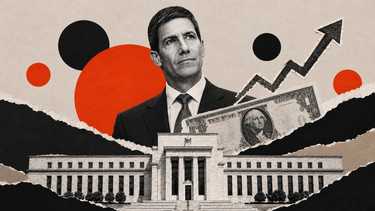
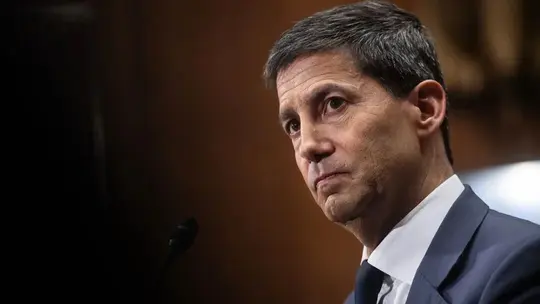
Federal Reserve Chair Jerome Powell delivered a major speech at the Jackson Hole central bank symposium, stating that current conditions suggest rising downside risks to employment. This shift in the risk balance could imply a need for interest rate cuts.
At the outset of his speech, Powell noted that this year, the "risk balance" facing the Fed's dual mandate of employment and inflation "appears to be shifting." He believes the implications of current economic conditions for monetary policy are:
"The stability of unemployment and other labor market indicators allows us to carefully consider adjustments to our policy stance. However, because policy remains in restrictive territory, the baseline outlook and evolving risk balance may require us to adjust our policy stance."
On the labor market, Powell stated:
"Overall, the labor market is balanced, but it is a 'peculiar balance' resulting from significant slowdowns on both the supply and demand sides of labor. This unusual situation suggests that downside risks to employment are increasing."
Regarding tariffs' impact on inflation, Powell said a "reasonable baseline assumption" is that tariffs will cause a "one-time" rise in price levels, though these effects take time to fully manifest in the economy.
Taking all factors into account, Powell concluded:
"In the near term, inflation risks are tilted upward, while employment risks are tilted downward—a challenging situation."
On adjustments to the monetary policy framework, Powell pointed out that the new framework removes two previous statements: one referring to the Fed's aim of achieving average 2% inflation over time; and another using "deviations from full employment" as a basis for decision-making.
"New Fed Press Corps": Powell Opens Door to Rate Cuts as Early as September, Expresses Greater Confidence in Assumptions About Tariff Impacts
Commentators observed that Powell’s remarks—highlighting stable unemployment and labor market indicators allowing the Fed to cautiously consider adjusting its policy stance—cautiously opened the door to rate cuts at the next meeting in September.
Nick Timiraos, known as the "New Fed Press Corps," wrote that Powell's speech emphasized concerns about the labor market, paving the way for rate cuts. His article began by stating:
"Powell said the prospect of further labor market cooling could ease concerns that tariff-driven cost increases will intensify inflation, opening the door to rate cuts as early as the next meeting."
Timiraos believes this speech marks the first time Powell has signaled growing confidence in a baseline assumption—that price increases caused by tariffs will be relatively short-lived.
He noted that Powell believes the effects of tariffs are now clearly visible and expected to continue accumulating over the coming months. The key question for the Fed is whether these price increases will "significantly increase the risk of persistent inflation."
Powell also considers it a reasonable baseline assumption that tariffs cause a one-time price hike, although this does not mean the price impact occurs instantly. Timiraos added that such an outcome is more likely if labor market tightness is insufficient to support stronger wage negotiations by consumers who have lost purchasing power due to tariff pass-through.
Full Translation of Powell's Speech:
Monetary Policy and the Review of the Fed's Framework
Jerome H. Powell, Chair of the Federal Reserve
Remarks delivered at the economic symposium hosted by the Federal Reserve Bank of Kansas City in Jackson Hole, Wyoming, titled "Labor Markets in Transition: Demographics, Productivity, and Macroeconomic Policy."
This year, the U.S. economy has shown resilience amid significant shifts in economic policy. Regarding the Fed's dual mandate goals, the labor market remains close to full employment, while inflation—though still somewhat elevated—has declined substantially from its post-pandemic highs. At the same time, the balance of risks appears to be shifting.
In today's remarks, I will first discuss the current economic situation and the short-term outlook for monetary policy, then turn to the results of our second public review of the monetary policy framework, reflected in the revised Statement on Longer-Run Goals and Monetary Policy Strategy released today.
Current Economic Conditions and Short-Term Outlook
A year ago, when I spoke here, the economy was at an inflection point. Our policy rate had been held in a range of 5.25% to 5.5% for over a year. This restrictive policy stance helped reduce inflation and brought aggregate demand and supply toward sustainable balance. Inflation has moved significantly closer to our goal, and the labor market has cooled from its earlier overheated state. Upward inflation risks have diminished, yet unemployment has risen nearly one percentage point—an unusual occurrence historically without an economic downturn. At the subsequent three FOMC meetings, we adjusted our policy stance, helping lay the foundation for the labor market to remain near maximum employment over the past year.
This year, the economy faces new challenges. Significantly higher tariffs among global trading partners have reshaped the global trade system. Stricter immigration policies have sharply slowed labor force growth. Over the longer run, changes in tax, spending, and regulatory policies may also have substantial effects on economic growth and productivity. It is difficult at present to determine where these policies will ultimately settle or their lasting economic impacts.
Changes in trade and immigration policies affect both demand and supply. In such an environment, distinguishing cyclical changes from trend or structural shifts becomes difficult. This distinction is crucial because monetary policy can stabilize cyclical fluctuations but has limited influence over structural changes.
The labor market exemplifies this challenge. The July jobs report showed that over the past three months, job growth slowed to an average of just 35,000 per month, markedly below the 168,000 monthly average in 2024. This slowdown is even greater than previously assessed, as May and June data were significantly revised downward. Yet, the deceleration in job growth does not appear to have led to widespread labor market slack—a result we aim to avoid. The unemployment rate edged up slightly in July but remains historically low at 4.2%, largely unchanged over the past year. Other labor market indicators have changed little or only moderately declined, including quit rates, layoffs, job openings relative to unemployment, and nominal wage growth. Labor supply has also slowed significantly, greatly reducing the number of new jobs needed to maintain stable unemployment—the so-called "breakeven" level. Indeed, labor force growth has notably slowed this year due to a sharp drop in immigration, and the labor force participation rate has declined in recent months.
Overall, the labor market is balanced, but it is a "peculiar balance" caused by sharp slowdowns on both labor supply and demand sides. This unusual situation suggests that downside risks to employment are increasing. If these risks materialize, they could quickly manifest as surging layoffs and a rapid rise in unemployment.
Meanwhile, GDP growth slowed markedly in the first half of the year to 1.2%, roughly half the 2.5% pace in 2024. This slowdown primarily reflects weaker consumer spending. Like the labor market, part of the GDP slowdown also stems from a reduction in supply or potential output.
On inflation, higher tariffs have begun pushing up prices for some goods. According to the latest data, total PCE prices rose 2.6% over the 12 months through July. Excluding volatile food and energy components, core PCE increased 2.9%, above last year's level. Within core, goods prices rose 1.1% over the past 12 months, a stark contrast to the mild decline seen throughout 2024. By comparison, shelter services inflation continues to trend downward, while non-shelter services inflation remains slightly above levels typically consistent with 2% inflation.
The impact of tariffs on consumer prices is now clearly visible. We expect these effects to continue building over the coming months, though the timing and magnitude involve high uncertainty. The core concern for monetary policy is whether these price increases will significantly raise the risk of persistent inflation. A reasonable baseline assumption is that most of these effects represent a one-time level shift. Of course, "one-time" does not mean "immediate"; tariff adjustments take time to fully transmit through supply chains and distribution networks. Moreover, ongoing changes in tariff levels could prolong the adjustment period.
The price pressures from tariffs could also trigger more persistent inflation dynamics, a risk that must be assessed and managed. One possibility is that workers, facing pressure on real incomes, demand and obtain higher wages, sparking a wage-price spiral. But given that the labor market is not particularly tight and faces greater downside risks, this outcome seems unlikely.
Another possibility is rising inflation expectations driving actual inflation higher. With inflation above our target for over four years, households and businesses are especially attentive. However, both market-based and survey-based measures of long-term inflation expectations remain clearly anchored, consistent with our 2% long-run inflation goal.
Of course, we cannot take the stability of inflation expectations for granted. No matter what happens, we will never allow a one-time increase in price levels to evolve into a sustained inflation problem.
In sum, what are the implications for monetary policy? In the near term, inflation risks are tilted upward, employment risks are tilted downward—a challenging situation. When our objectives come into some tension, our framework requires us to balance the pursuit of our dual mandate. To date, the policy rate has moved 100 basis points closer to neutral compared to last year. The stability of unemployment and other labor market indicators allows us to carefully consider adjustments to our policy stance. However, because policy remains in restrictive territory, the baseline outlook and evolving risk balance may require us to adjust our policy stance.
Monetary policy is not on a preset path. FOMC participants will make decisions based on incoming data and their implications for the economic outlook and risk balance. We will never depart from this principle.
Evolution of the Monetary Policy Framework
Turning to the second part of my remarks, our monetary policy framework is rooted in our enduring congressional mandate: to promote maximum employment and price stability for the American people. We remain firmly committed to fulfilling this statutory mandate, and the updated framework supports our ability to achieve this task under various economic conditions. Our revised Statement on Longer-Run Goals and Monetary Policy Strategy—our "Statement of Principles"—describes how we pursue our dual mandate goals and is vital for enhancing transparency, accountability, and policy effectiveness.
The changes in this review are a natural extension of our deepening understanding of the economy. They build on the initial Statement of Principles developed in 2012 under Chairman Bernanke. Today’s revision is the outcome of our second public framework review, which we conduct approximately every five years. This review included three components: Fed Listens events hosted by regional Reserve Banks, a flagship academic conference, and discussions and analysis among policymakers and staff during FOMC meetings.
One key objective of this review was to ensure the framework applies across a broad range of economic conditions. At the same time, the framework must adapt as the economy and our understanding evolve. Different eras—ranging from the Great Depression and the era of high inflation to the Great Moderation—have posed distinct challenges.
During the last review, we were in a new normal—interest rates near the effective lower bound (ELB), low economic growth, low inflation, and an extremely flat Phillips curve, meaning inflation responded very weakly to economic slack. For example, after the global financial crisis erupted in late 2008, the policy rate remained at the ELB for seven years. Many recall the slow and painful recovery of that period. At the time, even a modest recession seemed likely to bring the policy rate back to the ELB and keep it there for a prolonged period. In weak economies, inflation and inflation expectations would fall, while nominal interest rates stuck near zero would cause real interest rates to rise, exacerbating employment weakness and further depressing inflation and expectations—an adverse dynamic.
The economic forces pushing policy rates toward the ELB and prompting the 2020 framework change were thought to stem from global, slowly changing factors that might persist for many years—had it not been for the pandemic. The 2020 Statement of Principles emphasized risks related to the ELB, drawing on two decades of research. We underscored the importance of well-anchored long-term inflation expectations for achieving both price stability and maximum employment. Drawing on extensive literature on strategies for addressing ELB risks, we adopted a flexible average inflation targeting (FAIT) approach—a "makeup" strategy designed to keep inflation expectations anchored even when constrained by the ELB. Specifically, we stated that after periods when inflation runs below 2%, appropriate monetary policy might aim for inflation moderately above 2% for some time.
In reality, rather than low inflation and the ELB, the post-pandemic world saw the highest inflation in 40 years. Like most central banks and private-sector analysts, we expected until late 2021 that inflation would subside quickly without requiring substantial policy tightening. When it became clear this would not happen, we acted swiftly, raising rates by 5.25 percentage points over 16 months. These actions, combined with the unwinding of pandemic-related supply chain disruptions, brought inflation broadly near target—without the large rise in unemployment typically associated with such disinflation in the past.
Key Changes in the Revised Statement
This review examined how economic conditions have changed over the past five years. During this period, we have seen inflation move rapidly in response to major shocks, and interest rates far above the levels prevailing between the global financial crisis and the pandemic. Currently, inflation is above target, and policy rates are restrictive—in my view, moderately so. We cannot be certain where long-run interest rates will settle; some estimates of the neutral rate may be higher than in the 2010s, reflecting changes in productivity, demographics, fiscal policy, and other factors affecting the saving-investment balance. In the review, we also discussed how the 2020 Statement’s emphasis on the ELB may have complicated communication when confronting high inflation. We concluded that emphasizing overly specific economic conditions could create confusion, leading to several important adjustments in the revised statement.
First, we removed language defining the ELB as a defining feature of the economic environment. Instead, we emphasize that "the monetary policy strategy is designed to promote maximum employment and price stability under a wide range of economic conditions." The challenges near the ELB remain relevant, but they are no longer central. The revised statement reaffirms that the Committee stands ready to use its full range of tools to achieve maximum employment and price stability, particularly when the federal funds rate is constrained by the ELB.
Second, we returned to a flexible inflation targeting framework, eliminating the "makeup" strategy. The deliberate and moderate overshooting of inflation as a strategy has proven inapplicable. As I acknowledged publicly in 2021, shortly after we announced the 2020 Statement revision, inflation emerged that was neither deliberate nor moderate.
Anchored inflation expectations enabled us to successfully curb inflation without increasing unemployment. Well-anchored expectations help bring inflation back to target following adverse shocks and reduce deflationary risks during economic weakness. Moreover, anchored expectations allow monetary policy to support maximum employment during downturns without jeopardizing price stability. Our revised statement emphasizes that we are committed to taking strong action to ensure long-term inflation expectations remain anchored, benefiting both aspects of our dual mandate, and notes that "price stability is essential to a healthy, stable economy and the well-being of all Americans." This view was strongly reflected in feedback from the Fed Listens events. The past five years remind us that the hardships of high inflation fall especially hard on those least able to cope with rising basic costs.
Third, the 2020 Statement stated we would alleviate "shortfalls" from maximum employment, rather than "deviations." Using "shortfalls" reflected our recognition of high uncertainty regarding the natural rate of unemployment and real-time assessments of "maximum employment." In the post-financial-crisis period, actual employment remained above mainstream estimates of sustainable levels for an extended period, yet inflation stayed below 2%. Without inflationary pressures, tightening policy based solely on uncertain real-time estimates of the natural rate was unnecessary.
We still hold this view, but the term "shortfalls" was not always correctly interpreted, creating communication challenges. In particular, "shortfalls" was misconstrued as a permanent commitment against preemptive action or as indifference to labor market tightness. Therefore, we removed the term "shortfalls", more accurately stating that "the Committee recognizes that employment sometimes may exceed its estimates of maximum employment without causing risks to price stability." Of course, if the labor market becomes excessively tight or other factors threaten price stability, preemptive action may be warranted.
The revised statement also clarifies that maximum employment is "the highest level of employment that can be sustained over the long run under conditions of price stability." It highlights that a strong labor market creates broad opportunities and benefits for all, a principle strongly affirmed in feedback from Fed Listens events, demonstrating the value of a strong job market for American families, employers, and communities.
Fourth, consistent with removing "shortfalls," we clarified our approach when the employment and inflation goals conflict. In such cases, we will pursue both objectives in a balanced manner. The revised statement returns more closely to the original 2012 wording—we will consider the extent of deviations from the objectives and the different time horizons over which each may return to levels consistent with the dual mandate. These principles are guiding our current policy decisions and previously guided our response to deviations from the 2% inflation target during 2022–2024.
Beyond these changes, the statement maintains strong continuity with prior versions. It continues to explain how we interpret our congressional mandate and describes the policy framework we believe best achieves maximum employment and price stability. We still assert that monetary policy must be forward-looking and account for lags in its effects. Thus, our policy actions depend on the economic outlook and our assessment of the balance of risks. We continue to believe that setting a specific numerical employment target is inappropriate because maximum employment cannot be directly measured and varies due to factors unrelated to monetary policy.
We also maintain that a 2% longer-run inflation rate best serves the dual mandate. Our commitment to this goal helps anchor long-term inflation expectations. Experience shows that 2% inflation allows households and businesses to make decisions without constant concern about inflation, while providing central banks with some policy flexibility during economic downturns.
Finally, the revised Statement of Principles reaffirms our commitment to conduct a public review approximately every five years. There is nothing magical about five years—this frequency allows policymakers to reassess structural economic issues, facilitates communication with the public, industry, and academia about the framework’s performance, and aligns with practices of some global peers.
Conclusion
Finally, I want to thank President Schmid of the Federal Reserve Bank of Kansas City and all the staff for their tireless efforts in organizing this outstanding annual event. Including virtual appearances during the pandemic, this is my eighth time having the privilege to speak here. Each year, this symposium provides Federal Reserve leaders with an invaluable opportunity to engage with top economists and focus on pressing challenges. More than forty years ago, the Kansas City Fed successfully invited Chairman Volcker to this national park, and I am honored to be part of this tradition.
Join TechFlow official community to stay tuned
Telegram:https://t.me/TechFlowDaily
X (Twitter):https://x.com/TechFlowPost
X (Twitter) EN:https://x.com/BlockFlow_News