








"Dump the U.S." makes a comeback as Powell probe triggers stock, currency, and bond selloff
TechFlow Selected TechFlow Selected
"Dump the U.S." makes a comeback as Powell probe triggers stock, currency, and bond selloff
Institutions generally warned that this incident has intensified uncertainty surrounding U.S. monetary policy, potentially driving sustained capital outflows from dollar-denominated assets.
 Navigating Web3 tides with focused insights
By Li Jia
Source: Wall Street Insight
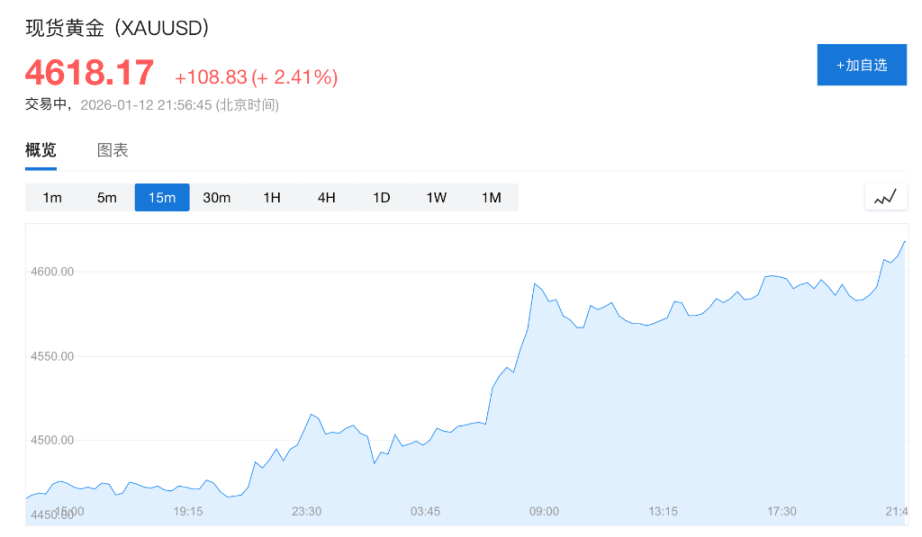
The U.S. Department of Justice has launched an investigation into Federal Reserve Chair Jerome Powell, sparking market concerns over the central bank's independence. Risk aversion surged, driving spot gold above $4,620 per ounce, a record high, with intraday gains reaching 2.4%. The dollar, U.S. stock futures, and Treasuries all fell in tandem, reviving the "sell America" trade sentiment.
On January 12, Bloomberg reported that this investigation marks the latest front in the Trump administration’s campaign against the Federal Reserve, following previous moves such as attempts to remove Governor Lisa Cook and repeated calls for aggressive rate cuts. The sensitive issue of Fed independence and its impact on U.S. assets has once again become a focal point for investor debate.
According to officials cited by The New York Times, the probe was initiated by the U.S. Attorney’s Office for the District of Columbia, focusing on the $2.5 billion renovation project at the Fed’s headquarters and whether Powell gave false testimony to Congress regarding the scope of the project. In a statement, Powell denied the allegations, saying, “The threat of criminal charges is the consequence of the Fed maintaining interest rates based on the public interest rather than presidential preferences.”
This escalation is prompting investors to reassess their exposure to U.S. assets and the dollar. This risk-off logic mirrors the dominant global market theme seen last April when Trump announced sweeping tariffs.
Safe-Haven Assets Rally as U.S. Equities, Bonds, and Dollar Fall
Financial markets are now exhibiting a classic risk-averse pattern, with U.S. equities, bonds, and the dollar under simultaneous pressure while capital floods into precious metals.
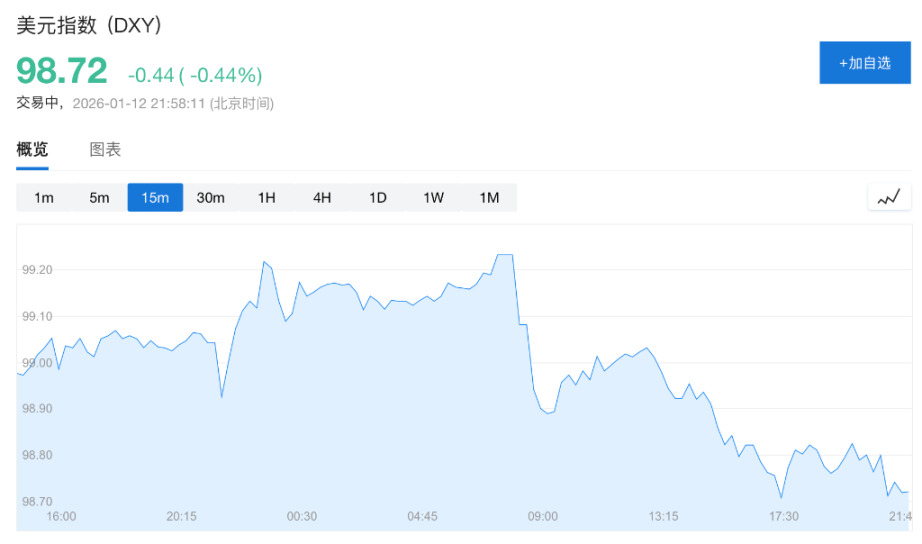
On the risk asset side, U.S. equity index futures declined collectively, with S&P 500 futures down 0.5% and Nasdaq 100 futures dropping 0.7%. Selling pressure in long-term Treasuries was pronounced, pushing the 10-year yield up 3 basis points to 4.20%. The dollar index fell 0.4%, marking its largest single-day drop in nearly three weeks.
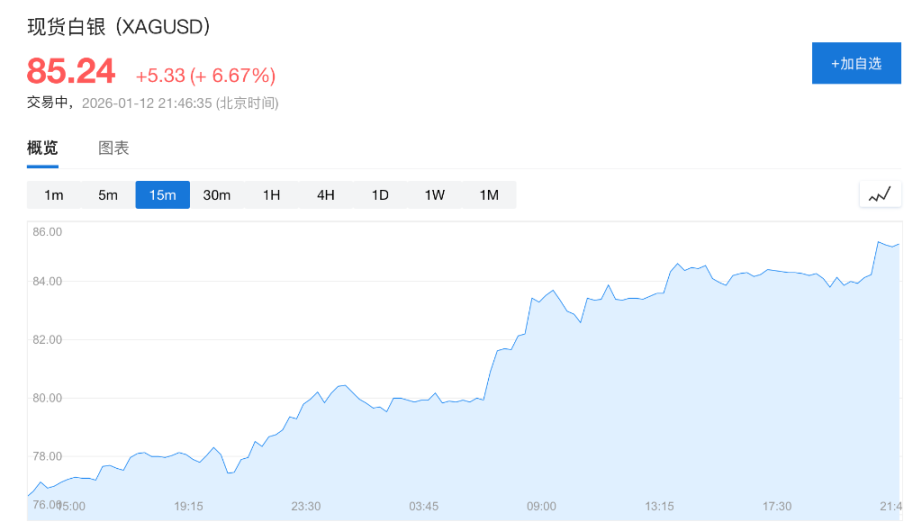
Precious metal prices soared to new highs. Spot gold broke above $4,620 per ounce, gaining 2.44% on the day and rising over $300 since the start of the year. Spot silver surged 7% to a historic high of $85.24.
Multiple institutions believe the market turmoil stems from investors repricing risks related to the politicization of the Federal Reserve. Gary Tan of Allspring Global Investments noted:
“Any development that raises questions about the Fed’s independence increases uncertainty around U.S. monetary policy, which could reinforce trends toward dollar diversification and boost demand for traditional hedges like gold.”
Mike Riddell, portfolio manager at Fidelity International, added:
“History is repeating itself—political pressure on the Fed often translates into a weaker dollar, higher long-end yields, and rising inflation expectations.”
John Woods, Chief Investment Officer for Asia at Lombard Odier, said:
“Gold is the premier geopolitical risk asset, surpassing all other categories. The level of geopolitical risk facing markets today is already too high.”
Institutions Warn of Portfolio Shifts
Investment firms broadly agree that this escalation will amplify market volatility and could have profound implications for long-term monetary policy.
JPMorgan Asset Management指出,基于更激进降息预期,美债收益率曲线可能进一步陡峭化,即长期利率涨幅超过短期利率。Lombard Odier 预计美元和美债将面临更大压力。
David Chao of Invesco Asset Management stated: “The subpoena of the Fed is another sign of declining appeal in U.S. assets.” European Central Bank Governing Council member Francois Villeroy de Galhau previously warned that the Trump administration’s criticism of the Fed threatens the dollar’s global standing.
Kevin Thozet, member of Carmignac’s Investment Committee, said: “The risk is that the confrontation between the White House and the Fed escalates fully over the coming quarters.” He cautioned that increased likelihood of a Trump-backed figure leading the Fed could lift inflation expectations.
Probe Centers on Renovation Cost Overruns
According to The New York Times, the federal prosecutor’s office led by Jeanine Pirro, a longtime ally of Trump, is examining whether Powell misled Congress about the Fed headquarters renovation project. The project began in 2022 and is scheduled for completion in 2027, with current cost overruns estimated at approximately $700 million.
The Fed explained that the overruns were due to rising material, equipment, and labor costs, as well as unforeseen issues such as asbestos and soil contamination. It noted that the two buildings had not undergone comprehensive renovations in nearly a century.
At a congressional hearing in June last year, Powell denied claims from a 2021 proposal that the renovation would include private elevators, dining facilities, and new marble finishes for senior officials. He emphasized that the plans had “continuously evolved” and some originally proposed features had been scrapped.
In his latest statement, Powell said the U.S. Department of Justice has issued a grand jury subpoena to the Federal Reserve and threatened criminal prosecution over his congressional testimony. He affirmed he would continue fulfilling the role confirmed by the Senate. Trump denied any involvement in the DOJ subpoena, saying, “I know nothing about it.”
Fed Leadership Transition Approaching
This investigation comes as Powell’s term as Fed chair is set to end in May this year. Trump said last week he has selected a successor and will make a formal announcement soon. His top economic advisor, Kevin Hassett, is currently considered a leading candidate.
Although Powell’s chairmanship ends in May, his term as a Fed governor runs until January 2028. Powell has not yet indicated whether he plans to remain at the central bank beyond this year.
Join TechFlow official community to stay tuned
Telegram:https://t.me/TechFlowDaily
X (Twitter):https://x.com/TechFlowPost
X (Twitter) EN:https://x.com/BlockFlow_News






