During Trump's administration, the crypto "regulation by prosecution" did not stop
TechFlow Selected TechFlow Selected
During Trump's administration, the crypto "regulation by prosecution" did not stop
The Trump administration did not differ significantly from the Biden administration in handling major encryption cases.
 Navigating Web3 tides with focused insights
By: Project Glitch, Mike Orcutt
Translated by: Block unicorn
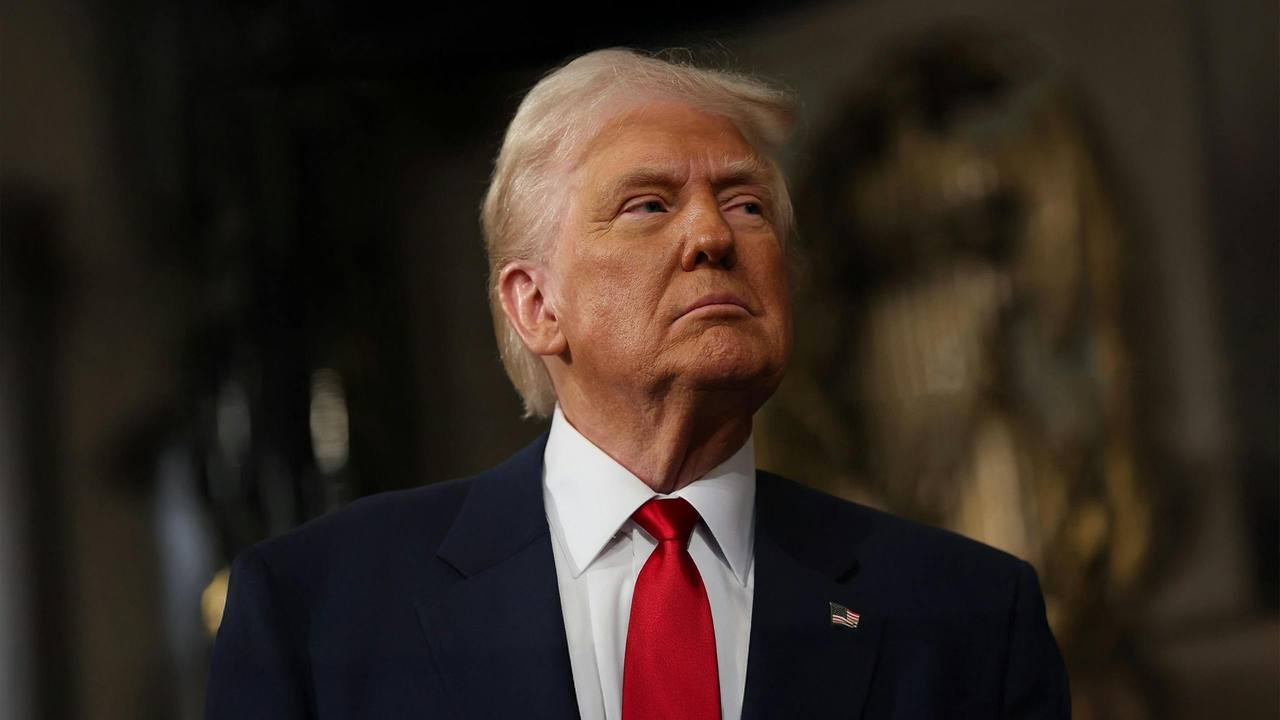
Donald Trump has promised to make America the "crypto capital of the world," and several actions appear to back that pledge. For example, he appointed openly pro-crypto officials into his administration, such as Treasury Secretary Scott Bessent and the new SEC chair Paul Atkins. His party controls both chambers of Congress and has drafted legislation that would greatly benefit the crypto industry. And of course, he proudly owns Trump-branded meme coins and stablecoins.
Yet the most extreme legal threats facing cryptocurrency during the Biden administration—threats that many in the industry say motivated their support for Trump in last year’s election—remain largely unchanged.
The most prominent case is that of Tornado Cash, an Ethereum-based privacy tool. Advocates had hoped the Trump administration would reverse course entirely on Tornado Cash, particularly by dropping charges against one of its developers, Roman Storm. That hope was strengthened when Todd Blanche, Trump’s deputy attorney general, issued a memo in April declaring that the Justice Department under Trump would end the previous administration’s “reckless strategy of regulating through prosecution”—a phrase echoing common criticisms from crypto advocates toward the Biden administration.
Nonetheless, last month, federal prosecutors from the Southern District of New York (SDNY) revealed in a letter to the judge overseeing the case that they still intend to pursue nearly all charges against Storm.
Combined with subtle legal maneuvers made in March when the Treasury Department removed Tornado Cash software from its sanctions list, the new administration appears to have no immediate plans to quell the fears of prosecution that have haunted many crypto developers for nearly three years.
Small Victories
The SDNY prosecutors’ letter did include one concession—seemingly minor in Storm’s case but potentially significant in the broader legal battle. The letter notified the judge that federal prosecutors would drop part of the charge accusing Storm of operating an “unlicensed money transmitting business.”
Storm and another developer, Roman Semenov, were indicted in 2023. The indictment alleged that North Korean hackers used Tornado Cash to launder hundreds of millions of dollars in cryptocurrency stolen from the video game Axie Infinity. It charged Storm and Semenov with conspiracy to commit money laundering, conspiracy to violate North Korea sanctions, and conspiracy to operate an unlicensed money transmitting business. Storm was arrested in August 2023 and is scheduled to stand trial this July. Semenov remains at large.
The unlicensed money transmitting charge has been the most inflammatory in the crypto policy community, leaving many in the industry feeling betrayed by the government.
Under the U.S. Bank Secrecy Act (BSA), money transmitting businesses must register with the Treasury Department’s Financial Crimes Enforcement Network (FinCEN). In 2019, FinCEN issued guidance widely interpreted to mean that one becomes a money transmitter only if they exercise “full control” over users’ funds.
Tornado Cash’s smart contracts are designed so that only users control their funds. Thus, the 2019 FinCEN guidance implied that Tornado Cash did not need to register.
But last spring, Justice Department prosecutors argued the opposite in court filings: that someone could be considered a money transmitter even without controlling user funds. Shockingly, the presiding judge agreed with the DOJ’s interpretation.
This clearly created a “rule of law problem,” said Peter Van Valkenburgh, executive director of Coin Center, a policy research and advocacy organization. “It seems to me that if a regulator says you don’t need a license, you shouldn’t be prosecuted for not having one,” he said at Project Glitch’s Washington Privacy Summit in October last year.
The Justice Department now appears to have reversed course. Last month, it announced it would no longer claim that Storm violated the law by failing to register with FinCEN. Van Valkenburgh called this development “major news.” But it’s also the only part of the charges where the government has backed down since Blanche’s memo. Even as the DOJ acknowledges registration wasn’t required, it continues to accuse Storm of operating an unlicensed money transmitting business. Prosecutors cite another provision in the law, arguing that because the transactions “involve the transfer or transmission of funds,” and because Storm allegedly knew those funds came from criminal activity, the charge still stands.
Confused? You’re not alone. “It makes no sense,” Van Valkenburgh said during a panel discussion this week at PGP* for Crypto, a monthly gathering of crypto policy insiders in Washington, D.C. “If you’re going to convict them of running an unlicensed money transmitting business, but nobody ever told them they needed a license—how crazy is that?”
The Justice Department has used the same argument in another criminal case against developers of the Bitcoin privacy tool Samourai Wallet, Keonne Rodriguez and William Lonergan Hill: dropping allegations that they failed to obtain licenses while continuing to charge them with conspiracy to operate an unlicensed money transmitting business. This case recently highlighted a rift between FinCEN and the DOJ over what constitutes a money transmitter. The defense team released a summary of a call between federal prosecutors and two FinCEN employees, in which FinCEN representatives stated that because Samourai does not control user funds, this “strongly suggests” it is not a money transmitter.
The persistence of these charges dashes hopes that Blanche’s memo signaled a full shift in the Justice Department’s approach. “I think the spirit of the memo is good,” said Amanda Tuminelli, executive director and chief legal officer of the D.C.-based policy advocacy group DeFi Education Fund, during the PGP* for Crypto panel. But on the high-stakes question of what counts as a money transmitter, “it doesn’t resolve anything.”
Tuminelli believes Congress should amend the criminal code to “eliminate any future misinterpretation” by explicitly stating that provisions do not apply to software developers who do not control or custody customer funds.
The North Korea Factor
Then there’s the issue of sanctions imposed in 2022 by the Treasury Department’s Office of Foreign Assets Control (OFAC) on Tornado Cash. Coin Center and others sued OFAC, arguing it lacked authority to sanction decentralized software. In November last year, the crypto industry scored a strong legal victory when the Fifth Circuit Court of Appeals ruled that OFAC could not sanction Tornado Cash’s “immutable” smart contracts because they are not “property.” In March this year, the Treasury removed those contracts from the sanctions list.
But several important signals suggest the government isn’t ready to back down on this issue.
First, Michael Mosier, co-founder of Arktouros and former OFAC official and FinCEN director, noted that the Treasury did not frame its action as an admission of error. Instead, the agency said it “voluntarily revoked economic sanctions.” Mosier, speaking recently in Washington, D.C., described this as an “extremely cautious response” to the Fifth Circuit ruling—one that may leave room for further enforcement actions.
A second key signal lies in how the government is handling Roman Semenov, the sanctioned Tornado Cash developer and Russian national.
Some background: OFAC initially sanctioned Tornado Cash software in 2015 under a cybersecurity executive order issued by President Obama targeting cybercrime. In November 2022, OFAC re-imposed sanctions using an additional designation under another Obama-era executive order aimed at stopping North Korea from funding nuclear weapons programs. In August 2023, OFAC added developer Roman Semenov to the sanctions list under both executive orders.
In March, OFAC lifted Tornado Cash’s cybercrime and North Korea-related sanctions—but kept Semenov on the list under the North Korea-related executive order.
“The enforcement authorities under the North Korea program are much broader than those under the more general cybersecurity order,” Mosier explained. This means the government faces fewer legal hurdles defending such actions in court. By removing Semenov’s cybercrime label while keeping him under North Korea sanctions, Mosier said, the Treasury sent a message. “They removed the cyber label but retained the North Korea designation, causing his sanctions to be publicly announced in the same press release announcing the removal of [Tornado Cash] address sanctions,” he said. “That’s a strong signal to Congress and to developers worldwide: ‘We’re not leaving this space.’”
Despite Trump’s love for crypto, his administration appears just as opposed as Biden’s to certain types of cryptocurrency.
Join TechFlow official community to stay tuned
Telegram:https://t.me/TechFlowDaily
X (Twitter):https://x.com/TechFlowPost
X (Twitter) EN:https://x.com/BlockFlow_News