Full text of Mai Gang's 2014 speech: Simulating Perfect Money, Bitcoin Will Become a New Battleground for Great Power Competition
TechFlow Selected TechFlow Selected
Full text of Mai Gang's 2014 speech: Simulating Perfect Money, Bitcoin Will Become a New Battleground for Great Power Competition
Bitcoin captures the essence of money; what it does is attempt to simulate a perfect currency.
 Navigating Web3 tides with focused insights
Speaker: Mai Gang, Founder of Startup Factory
Compiled by: Xu An / iHeima
Note: Yesterday, our article about Mai Gang sparked extensive discussion. In particular, his understanding and predictions regarding Bitcoin in 2013 have almost perfectly come true, which many found remarkable. Numerous readers have since asked us for the full details of Mai Gang's论述 on Bitcoin.
Here, we recommend the content published yesterday on Startup Factory’s official WeChat account titled "The 2013 Prediction: Mai Gang on Bitcoin, Currency Wars, and RMB Internationalization." Additionally, today we are sharing the full transcript of Mai Gang’s speech at a 2014 startup bootcamp. Have a wonderful weekend!
Full Speech Transcript:
The most fundamental element in economics is currency.
Before the financial crisis, I read a book about a famous physicist. He said that we science and engineering people study physical quantities—length, width, weight, time—which are constants. But you economists study units that are variables.
For example: "How much is one McDonald's worth?"
You must ask: Is it in US dollars, RMB, or Japanese yen?
You must also ask: Is it the dollar from 1958 or from 1985?
After reading this, I had an epiphany. Economics studies things that constantly change. I majored in economics as an undergraduate, so I should revisit the most fundamental yet ever-changing aspect of this discipline—money.
Later, books like *Currency Wars* sparked nationwide interest in money. I gradually developed a relatively comprehensive understanding of currency. So when Bitcoin emerged, my only reaction was: "Wow!"
Bitcoin Grasps the Essence of Money
What is Bitcoin? Let me explain in two sentences.
First, Bitcoin is a group of mathematicians, hackers, and network scientists using distributed algorithms to simulate the attributes of ideal money.
Second, these attributes are maintained by the immense computing power of a distributed network of computers.
That’s what Bitcoin is. All discussions, doubts, criticisms, and innovations around Bitcoin ultimately return to this framework. Therefore, Bitcoin isn't a conspiracy—it's an open strategy. Bitcoin clearly states its purpose: to simulate perfect money. All Bitcoin data is publicly accessible online at any time. Bitcoin has captured the essence of money and aims precisely to emulate ideal currency.
Why Can Bitcoin Simulate Ideal Money?
(1) Bitcoin's Monetary Properties Surpass Precious Metals
Currency has a 5,000-year history, while nation-states have only existed for about 3,000 years—meaning money predates nations. China’s monetary evolution included feathers, shells, stones, livestock, and even women as forms of currency in some societies, until precious metals emerged.
Precious metals cannot be easily counterfeited—or counterfeiting them is extremely costly. They are convenient to trade and store, divisible, and malleable—properties that made them suitable as currency. Yet gold still incurs transaction costs. Transferring gold across regions involves settlement and payment risks—a fact many overlook.
Bitcoin has a finite supply and is widely distributed. Anyone with a computer can participate equally. Bitcoin is a mathematically simulated commodity that possesses all the properties of precious metals—and surpasses them in every way.
Moreover, the Bitcoin network can continuously upgrade, avoiding the historical problem of gold becoming insufficient. For digital currencies, scarcity will never be an issue.
(2) Counterfeiting Bitcoin Is Extremely Unlikely in Probability
First, the computational power securing Bitcoin is enormous and globally decentralized. It's nearly impossible for one individual to simultaneously control enough human resources and computing power.
Second, even if someone could amass such power, economically and logically, they would choose to control rather than attack the network—because their wealth is denominated in Bitcoin. They wouldn’t destroy their own assets. This is both a probabilistic and logical argument.
Third, Bitcoin transactions are extremely low-cost—a critically important feature. The total supply of Bitcoin will forever be capped at 21 million. Currently, Bitcoin can be divided into units as small as eight decimal places (0.00000001 BTC being the smallest unit), thanks to its existing computational architecture.
(3) The Bitcoin Network Is an Advanced Clearing and Payment System
The Bitcoin network is an automated, decentralized clearing and payment system. Bitcoin is the circulating unit generated by this network. It is inherently a clearing and payment system that requires no centralized management. Bitcoin’s utility lies precisely in being a clearing network.
Western Union, founded over fifty years ago, earns annual profits in the billions of dollars, widely used especially in relatively underdeveloped countries. It enables remittances with delivery times of one to two weeks and fees ranging from 5% to 8%. What a highly profitable, beautiful business model.
In contrast, Bitcoin transactions settle in minutes, with negligible fees. Companies like VISA represent the legacy technological infrastructure of our current financial and commercial banking systems. Bitcoin, built on new technology and foundations, surpasses these outdated systems. This is how Bitcoin demonstrates superiority in transaction networks and banking exchange functions.
Decentralization Guarantees Bitcoin's Security and Freedom
Human society has seen three forms of money: first, precious metals like gold; second, fiat currencies backed by government credit. In the fiat era, we commonly observe inflation, excessive money printing, and currency wars. Today’s global monetary system is dominated by the US dollar—a system of dollar hegemony flooding the world. People worldwide, especially hardworking Chinese citizens, are effectively working for America. Why does a pair of American jeans cost $10–$20 in the US but sell for 100 RMB in China? It’s because the US dollar is the global reserve currency, leveraging its dominance to achieve this.
But Bitcoin ushers humanity into a third monetary era. By “third era,” I don’t mean replacing the previous two—just as the internet didn’t eliminate fax machines or telephones. They coexist. This third form is decentralized virtual currency, grounded in mathematical principles. Decentralization is what ensures Bitcoin’s security and freedom.
Bitcoin Is Supported by Trust and Will Exist for a Considerable Time
Currency requires trust. National governments support fiat money through state institutions, military power, laws, and authority. So what supports Bitcoin?
Simple: there are many forms of trust in the world. Someone swears, “I’ll love you forever”; someone pledges their entire fortune as collateral; someone claims, “I was a good student”—these are all forms of trust. Bitcoin’s trust is based on mathematics and probability. If you believe in math and probability, then Bitcoin exists.
I believe Bitcoin will persist as a medium of exchange for a significant period. In certain economic activities—especially those related to the internet, international trade, or virtual environments—Bitcoin will serve as a viable, unrestricted form of circulation.
Bitcoin Is a Tool for Multi-Party Strategic Competition
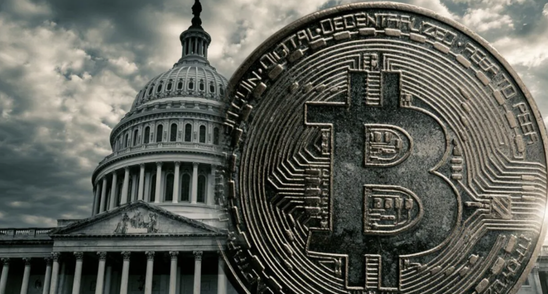
Let me pose a question: After Bitcoin emerged, which country fears it the most? — The United States.
This explains why the EU was the first region to openly support Bitcoin—when the dominant player gets challenged, the second-in-command benefits. It’s a subtle and fascinating strategic game. California’s state legislature has already declared Bitcoin legal tender (though it still needs approval from the House). Bitcoin represents major financial innovation, naturally prompting new regulatory considerations. Studying it is the U.S. government’s stance. The Chinese government holds a similar attitude, though new technologies inevitably bring new challenges.
I particularly want to emphasize that both the Chinese government and public must understand the complexity and sophistication of U.S. monetary strategy and the intricacies of global multi-national competition. Bitcoin is not merely a celebration for libertarians or anarchists—it is a tool for multi-party strategic competition.
Everyone Should Pay Attention to and Study Bitcoin
I’m not an anarchist, nor am I advocating abandoning the RMB for Bitcoin today. But let me tell you: within as little as 10 years or up to 30, the United States will likely reconstruct a new global monetary system. In this future system, the U.S. may link the dollar to a new set of assets—including cryptocurrencies represented by Bitcoin. To achieve this, the U.S. needs only one thing:话语权 in the Bitcoin space—whether in computing power, reserves, or pricing authority. Why does the U.S. have an advantage here? Because it has Wall Street—the elite of global elites.
I have a hypothetical story about Bitcoin: Imagine 30 years from now, when Bitcoin becomes a global asset. A child might ask their father:
Child: “Why do Americans and Europeans own Bitcoin, but not Chinese people?”
Father: “Sorry, kid. When I was young, I did have money, but back then in China, money could buy love—but not Bitcoin.”
Child: “Dad, where can we buy Bitcoin?”
Father: “We’ll need to make socks and shoes for another 30 years to trade with the Americans for Bitcoin.”
I hope every individual—and government agencies—recognize the grandeur and complexity of this Bitcoin competition, as it profoundly impacts our descendants. In the last century, Americans leveraged dollar supremacy to gain seigniorage rights, making the world work for them. If Americans secure Bitcoin话语权 in the coming decades, they will continue to make the world work for them.
I hope Chinese entrepreneurs, businesses, and ordinary citizens can gain话语权 in the Bitcoin arena. I urge everyone to pay attention to and learn about Bitcoin.
Join TechFlow official community to stay tuned
Telegram:https://t.me/TechFlowDaily
X (Twitter):https://x.com/TechFlowPost
X (Twitter) EN:https://x.com/BlockFlow_News