








Exclusive Interview with Junzhu, Co-founder of Infini: Why We Shut Down the U Card Business?
TechFlow Selected TechFlow Selected
Exclusive Interview with Junzhu, Co-founder of Infini: Why We Shut Down the U Card Business?
The idea of "simplifying DeFi yields" has never changed; Infini was just misled by U cards for a long time.
 Navigating Web3 tides with focused insights
By: TechFlow
On June 17, Infini announced the official shutdown of its crypto card service for individual users. For many users, this decision came as a surprise—but for the Infini team, it was the result of long and careful deliberation.
Crypto cards, once seen as full of promise, are increasingly being labeled as “difficult to execute” and “effort-intensive with little reward.” Regulatory barriers, cross-border clearing, risk management—challenges typically associated with traditional financial institutions—have become unavoidable realities for Web3 entrepreneurs. Faced with the imbalance between resource investment and business returns, Infini ultimately decided to halt this line of business.
What really happened behind the scenes? Where exactly did the U-card business encounter difficulties? And why is compliance so costly? To answer these questions, TechFlow interviewed Christine (Junzhu), co-founder of Infini, gaining firsthand insight into the full picture of this strategic shift.
Below is the full interview.
The Origin of the U Card: When NFT Enthusiasts Fell in Love with "Simple DeFi"
In May 2024, Blast launched USDB, an interest-bearing stablecoin that automatically distributes yield from underlying assets to holders. This attracted a large number of NFT community members to deposit their assets onto the Blast chain. "Tieshun," a top entrepreneur in the NFT space, introduced many NFT players to the appeal of "simple DeFi" through this single stablecoin product.
Around the same time, Ethena opened up funding rate arbitrage profits via USDE to retail users, similarly democratizing access to complex blockchain yield opportunities.
It was during this period that Junzhu and Christian, both rooted in the NFT community, recognized the potential of stablecoins as a vehicle to bring blockchain yields to the general public—an idea with strong crossover potential—prompting them to launch a venture in this domain.
At the time, industry discussions around stablecoins were relatively quiet, making Infini one of the early pioneers. However, the difficulty of building a stablecoin startup far exceeded their expectations—a stark contrast to the casual, experimental culture often seen in Web3. What Junzhu and Christian faced instead were harsh economic realities and a deeply entrenched traditional financial system.
Origins of Infini
TechFlow: What was Infini’s original motivation and vision?
Junzhu: We started working on Infini back in July last year, when yield-generating stablecoins were gaining traction. We noticed Blast had launched USDB, which offered around 5%–10% APY.
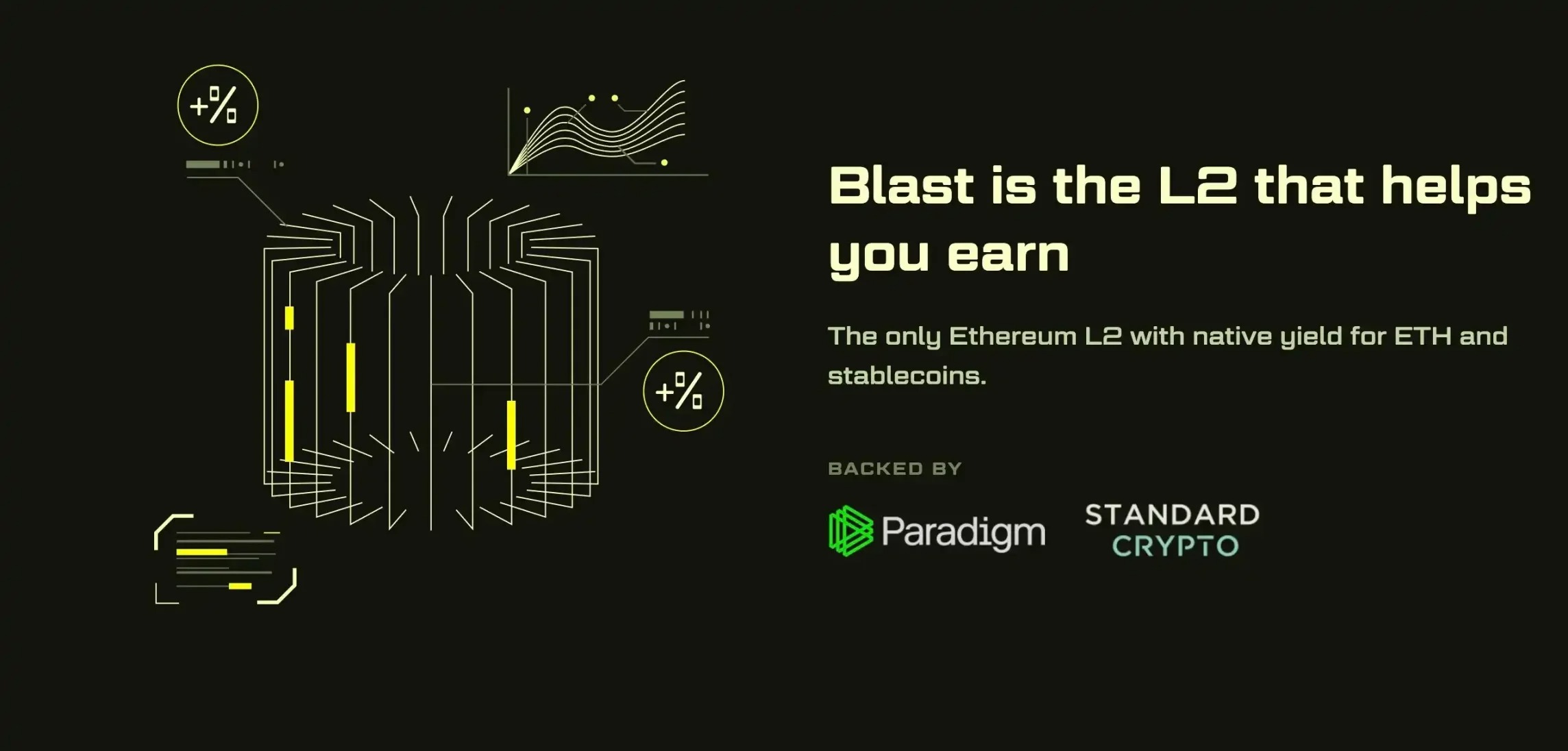
We realized there was significant interest among GameFi and NFT users in USDB—many of whom had previously known little about DeFi yields. At the time, Blast effectively packaged complex and abstract DeFi returns into a simple stablecoin; just by holding it, users received automatic payouts.
DeFi yields come from various sources such as lending and RWA. We saw clear demand for a product like USDB—a synthetic-asset-style stablecoin—that simplifies sophisticated on-chain returns for everyday users. That was our initial inspiration for launching Infini.
We actually had this idea as early as May last year. As a deep user of Blast myself, I thought it did something fascinating—introducing DeFi to the NFT and GameFi communities. Around that time, I suddenly noticed more people talking about stablecoins, and institutions began showing interest too.
This inspired me—it showed the power of expanding circles. NFTs brought new users into crypto; Blast brought NFT users into DeFi. It played a real educational role in the market.
We initially wanted to build our own stablecoin, but quickly realized how competitive the space already was. We didn’t believe we had the capital, team strength, or resources to compete with players like Ethena. So we began exploring differentiated positioning.
We studied the main use cases for stablecoins and went back to a fundamental principle: we invent money to use it.
So we thought—why not start with payments?
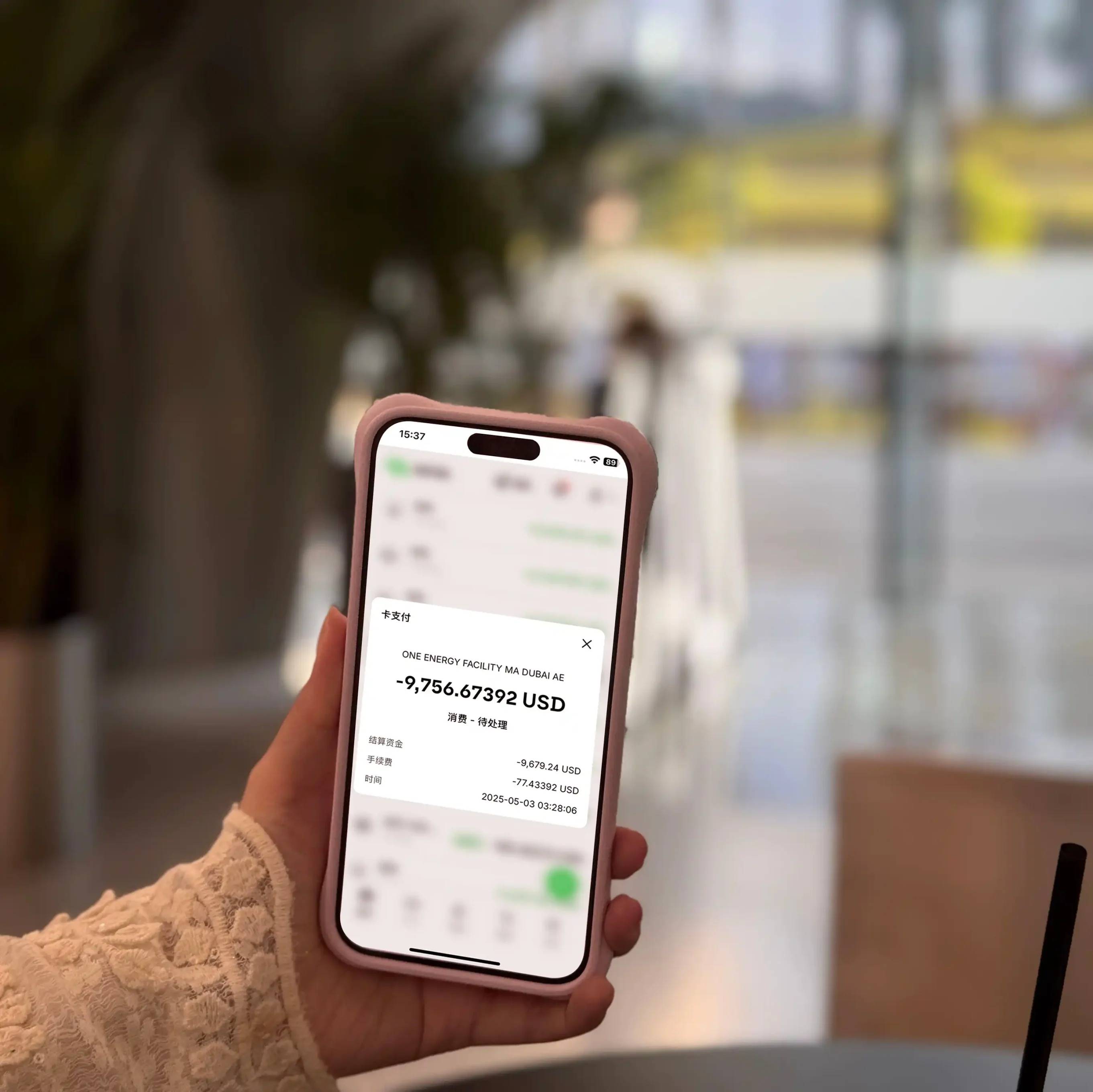
Our initial idea was to issue our own stablecoin, which all Infini U Card users would use for spending.
We also looked into the costs behind USDC and USDE. USDC has extremely high operational costs, though they’re already established leaders. USDE feels like a genius product, yet Binance still doesn’t list a trading pair for it—showing just how hard it is to get a new stablecoin adopted by major exchanges. Instead of fighting that uphill battle, we decided to start small and practical—from daily consumption—and let people actually use it. After all, the two core functions of any stablecoin are supporting trading or enabling payments.
TechFlow: So after your research, you found launching a stablecoin would be too expensive. But why did you assume the U card wouldn't require similar costs?
Junzhu: Because we thought U cards wouldn’t need much in terms of distribution channels or other resource-heavy investments. We believed we could grow it organically using a consumer-focused growth strategy—and indeed, we managed to scale the card at very low cost. Launching a stablecoin, however, requires massive backing and influence. We don’t have someone like Arthur Hayes as a figurehead.
We’re a grassroots startup. For us, lacking elite-level connections and institutional support is a major disadvantage.
TechFlow: Interestingly, from a structural standpoint, Infini already has something functionally equivalent to a stablecoin—you just haven’t branded it as “USDe.” Inside the app, it shows “USD,” but under the hood, it behaves almost identically to a stablecoin.
Junzhu: Yes, I don’t see much value in branding it formally. While packaging it might boost company valuation—after all, a stablecoin project generally commands a higher valuation than a U card company—I’d rather focus on achieving PMF first before worrying about presentation. Chasing valuation without product-market fit only wastes time. I’d prefer to get the business working solidly first, then think about how to position it later.
The U Card Business
TechFlow: After deciding to launch the U card, what preparations did Infini make?
Junzhu: First, we conducted extensive research because none of us had prior experience in payments. Our first call was to Yishi from OneKey—he’s very approachable and one of the few people we knew personally who had actually built a U card. He shared invaluable insights on costs, user acquisition, and even reasons for shutting down.
He mentioned compliance as a key reason for discontinuation. At the time, I didn’t take it seriously enough, but looking back, he was absolutely right. I underestimated compliance—I assumed as long as we stayed within legal boundaries, everything would be fine. But in reality, compliance carries many hidden costs.
TechFlow: You didn’t fully grasp how complex compliance would turn out to be at the beginning, correct?
Junzhu: Exactly. From day one, we were determined not to violate laws or cross red lines. But as we progressed, we realized the regulatory demands—and the associated licensing costs—were extremely high, not to mention numerous invisible compliance burdens.
TechFlow: Where do compliance costs typically manifest for U card companies?
Junzhu: First, you need a professional legal team, and top-tier legal talent is expensive. Second, obtaining licenses is costly. If direct application isn’t possible, you may have to acquire an existing licensed entity. Take Hong Kong, for example—MSO licenses are tightly controlled now, so most opt to buy shell companies. The price varies depending on the seller, but acquiring a license this way usually costs HKD 3–4 million.
Beyond money, time spent in communication is another major hidden cost. Processing times vary widely—one month, several weeks, or even years—depending on region and license type. From day one of the project, we hired dedicated legal staff to handle these matters.
We never expected compliance to consume so much effort. Since we chose the compliant path, ROI wasn’t our primary concern—we decided to secure licenses regardless of cost. This mindset sets us apart from most Web3 projects. Over time, we began seeing ourselves less as a crypto startup and more as a fintech company—we were doing payments, not crypto.
TechFlow: Do you feel you overcommitted to the U card? Did you ever regret it along the way?
Junzhu: That’s a great question. When you're getting positive feedback from a project, it's hard to recognize it might be heading in the wrong direction—you just keep going. Our user base grew rapidly, and watching those metrics climb every day was addictive.
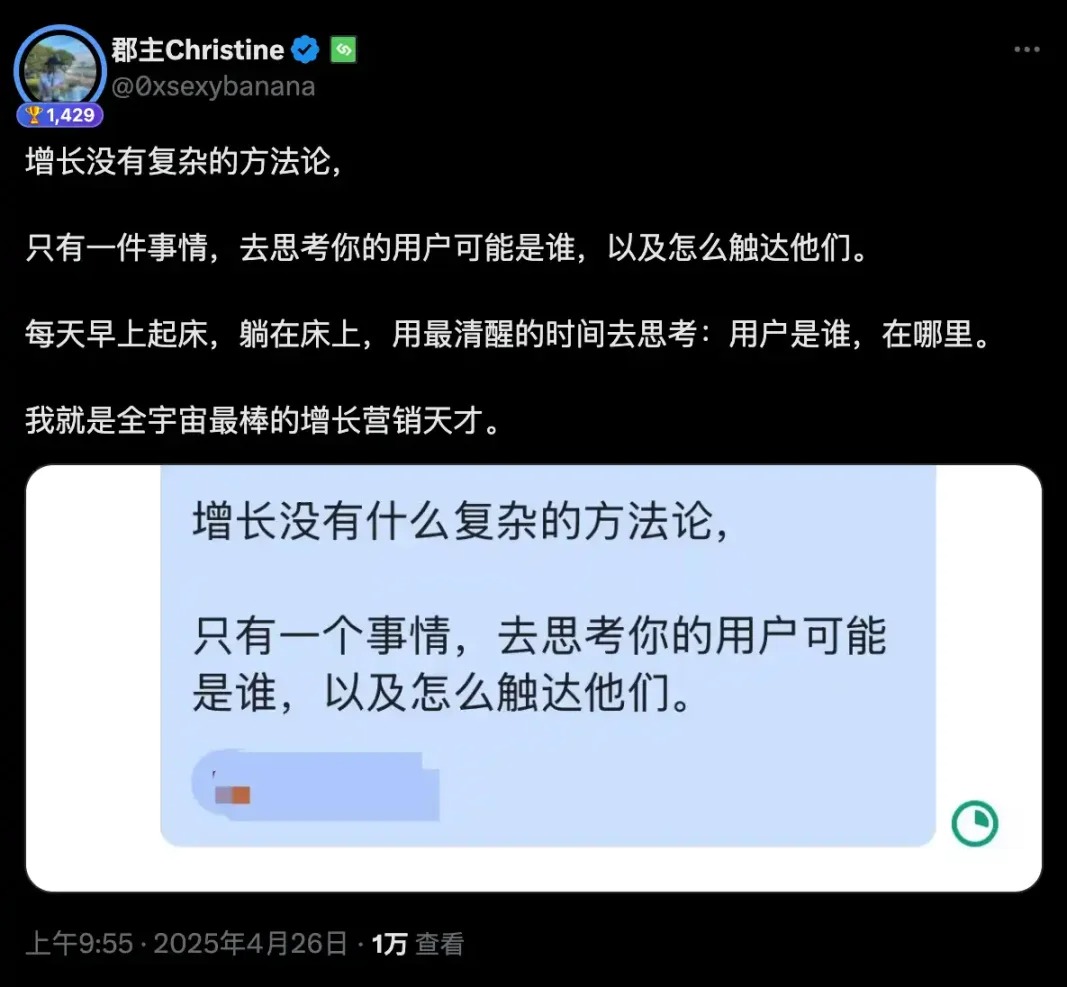
Before starting any initiative, we always set OKRs. Initially, our core business assumption was that as U card adoption increased, so would our TVL—we expected a strong correlation between card users and deposited value. So we treated user count as our North Star metric, and for a long time, I completely ignored TVL.
But eventually, we realized this assumption was flawed. User numbers kept rising sharply, but TVL barely moved. We realized we were driving fast—but in the wrong direction. Our initial hypothesis was wrong: we assumed users who loved using the card would deposit more funds, but in practice, people only topped up when they needed to spend.
TechFlow: How much money did you earn from the U card business?
Junzhu: Net loss. Not a single dollar in profit.
TechFlow: Are you uncomfortable becoming a fintech company?
Junzhu: I don’t mind what kind of company we become—even a yoga apparel brand works. What matters is profitability. We can’t ignore the essence of business. The core of any business is sustainable, efficient profit generation. Clearly, the U card was draining manpower, resources, finances, and energy. If a business keeps consuming without generating returns, it must be shut down.
TechFlow: When did you start considering shutting down the U card service?
Junzhu: I began thinking about winding it down in May—at least stopping further growth efforts. A key trigger was our painfully slow refund process. Normally, international card refunds take one to two weeks, but ours sometimes took four weeks, a full month, or even six weeks. We repeatedly chased upstream providers, but nothing changed. We were bombarded daily with customer complaints and felt utterly helpless—we’re downstream in the chain, so beyond pushing upstream, there’s little we can do.
This caused me nearly two to three weeks of internal conflict.
Starting a U card company isn’t hard. Anyone with money, time, and patience can do it—the barrier is low. If you want to be compliant, yes, it costs money; but if you skip compliance, practically anyone can launch one. All you really need is a custodian and an API connection to a card network provider. Once integrated, you can issue cards immediately.
Almost all cards on the market today work this way—but no one knows how many layers sit upstream. Some connect directly to card networks, others go through multiple intermediaries, like layers of an onion, potentially infinitely nested. We could offer our own API, and someone else could build on top of ours.
After months in this business, the more we operated, the more I felt Infini was moving backward historically. Personally, I’ve always wanted to break down traditional payment barriers, but the U card converts stablecoins into USD and routes transactions through banks—essentially reverting to legacy financial systems. That’s precisely why I decided to stop. It felt fundamentally wrong.
The refund issue especially troubled me—it highlighted that the U card doesn’t change the system’s logic at all. It’s just a traditional payment method, not a final solution.
TechFlow: Do you now believe the U card fulfills a real user need, or is it merely a compromise?
Junzhu: If you could directly pay for a burger with USDT or USDC, would you still need to cash out? The only reason people resort to a “U card” is because direct stablecoin payments aren’t yet feasible. So yes, the U card addresses a genuine need—but it’s not the ultimate solution.
I believe platforms like ChatGPT, OnlyFans, and Twitter will eventually accept stablecoin payments. That’s the inevitable trend. Once they do, the U card will lose most of its relevance.
Realigning the Compass: What’s Next for Infini?
Helping users simplify DeFi—that was Infini’s founding mission. Now, stepping back from daily consumer spending, the team is returning to its roots. Infini plans to refocus on on-chain yield and wealth management. This marks a different entrepreneurial direction from stablecoins and crypto payments, and while the team still faces unresolved challenges—old and new—such as brand positioning and rebuilding trust after security incidents and service shutdowns, their resolve remains firm.
Junzhu and her team are determined: Infini must not move backward. Stablecoins and crypto payments must not revert to traditional banking systems. “Use Stable Coins Directly”—that is the future.
TechFlow: With the U card service discontinued, what is Infini’s current positioning?
Junzhu: We’re focusing on two things. First, we’re returning to our original goal: delivering solid wealth management services. Currently, our yields primarily come from on-chain lending. As the bear market continues and on-chain activity declines, returns naturally drop—whereas bull markets might briefly offer 40%+ APR, bear markets may yield only 2%. To counter this volatility, we plan to integrate CeFi products to create more cycle-resistant, diversified returns—essentially building a comprehensive fund-of-funds (FoF) model, a hassle-free, trustworthy “Yu’ebao” for crypto users.
This was our original vision: simplifying complex yields for mass adoption. But the “payments” detour pulled us away for too long—we haven’t invested meaningful time into our core revenue-generating business in recent months. So we made the decision to cut the longest-running, unprofitable “payment” segment.

TechFlow: So you’re not pivoting to a new direction—you’re going back to your original plan?
Junzhu: Back in August or September last year, we were already integrating理财 products. Our goal was to bring diverse CeFi offerings to users, since CeFi platforms are often difficult for average users to navigate. High-quality CeFi strategies don’t lack capital, while poor ones aggressively fundraise but end up losing money.
So we aimed to leverage our scale to access relatively low-frequency yet stable-return products—offering around 10% annualized yield, which would be highly attractive to ordinary users. From Blast simplifying complex DeFi returns, to us opening up yield opportunities to retail investors—the philosophy hasn’t changed. The U card simply distracted us for too long and consumed too much time.
Therefore, our immediate priority is to rebuild and excel in wealth management—making it highly secure and resilient across market cycles.
TechFlow: Don’t you think this space is crowded?
Junzhu: It will be competitive, but ultimately money flows toward higher returns or safer, more stable options over time. So we’ll categorize our financial products into tiers based on different user needs.
TechFlow: You’ve previously stated multiple times that Infini has no token issuance plans and doesn’t intend to use token speculation for user growth. Has that stance changed with the pivot? Or are you considering listing or backdoor listing?
Junzhu: Whether issuing a token or going public, both involve asset issuance—which becomes a liability. You become accountable to tokenholders or shareholders. If our business lacks stable cash flow or hasn’t achieved perfect PMF, rushing into tokenization would be irresponsible—to ourselves and our community.
So let me give an official answer: In my view, token issuance and IPOs are financing and user acquisition tools. We should use them wisely and at the right moment. They are financial instruments—I won’t say yes or no outright. We’ll consider using them when the time is right, but now is too early. First, we must strengthen our core business, refine our product, meet user needs through productized solutions, and establish healthy cash flow and revenue—only then will we consider financialization. After all, product and PMF are the foundation of everything.
TechFlow: As former C-end users of the U card service, will we still have ways to participate after your transition? If you fully shift to B2B, it would be a shame to lose all the users you've accumulated.
Junzhu: Looking back on this journey, I’ve gained three major insights.
First, we’ve built a strong team. People always come first. As long as we share the same vision and maintain capability, determination, and stamina, I’m confident we’ll make solid progress post-transition. Team building has been our most important achievement over the past six months.
Second, brand reputation. In this industry, credibility is essential—it’s the foundation for any long-term endeavor. Without trust, sustained growth is impossible. We have zero interest in short-term user acquisition for quick profits. We aim to build something lasting—something that could endure for decades, even centuries.
Third, clarity of vision. We must fully embrace decentralized payment solutions—not centralized ones. We must not move backward. Imagine a future where, on MegaETH or BNB, users can open their wallet, scan a QR code to pay for a ChatGPT subscription, and directly spend their stablecoins. That would be a powerful scenario.
This is how stablecoins should be used—not via a U card, but directly from wallet to merchant. I believe this kind of payment has real value, unlike reverting to traditional banking infrastructure.
We need a decentralized payment solution where transactions are confirmed on-chain, payments are made directly from wallets, and users spend Stable Coins natively.
I believe this is the future.
Join TechFlow official community to stay tuned
Telegram:https://t.me/TechFlowDaily
X (Twitter):https://x.com/TechFlowPost
X (Twitter) EN:https://x.com/BlockFlow_News
 BlockBeats


