Can Kaia Public Blockchain Ride Korea's Policy Tailwinds into a "Stablecoin Summer"?
TechFlow Selected TechFlow Selected
Can Kaia Public Blockchain Ride Korea's Policy Tailwinds into a "Stablecoin Summer"?
Since the inauguration of President Lee Jae-myung, supporting the issuance of stablecoins pegged to the Korean won has become the latest policy indicator.
 Navigating Web3 tides with focused insights
By Zen, PANews
This week, the Kaia public blockchain has emerged as one of the focal points in the crypto market, driven by strong token price performance. Since its launch in August 2024 through the merger of Klaytn and Finschia, Kaia has been consistently advancing in both technical capabilities and ecosystem development. Recent moves into stablecoins and payment use cases have further fueled industry-wide investor interest. The foundation's CEO publicly stated, "Stablecoin Summer on Kaia is coming," signaling that its fiat-pegged token initiative is approaching implementation.
Following the inauguration of new President Lee Jae-myung, support for issuing a Korean won-pegged stablecoin has become a key policy direction. Seizing this opportunity, the Kaia team announced plans to collaborate with super apps such as KakaoPay and LINE NEXT to develop a Korean won stablecoin. Upon the announcement, KakaoPay’s stock surged nearly 30%, while the Kaia token also rose sharply—from around $0.10 to a high of $0.17—reflecting strong market optimism toward South Korea’s domestic stablecoin initiatives.
Riding Policy Tailwinds: Kaia Launches Stablecoin Initiative
After President Lee Jae-myung proposed supporting local-currency stablecoins in 2025, Kaia quickly responded by announcing plans to launch a Korean won-pegged stablecoin. Following the news, related stocks like KakaoPay surged nearly 30%, indicating significant market anticipation for won-denominated stablecoins.

The Kaia-led Korean won stablecoin project is jointly driven by Kakao and LINE (in cooperation with KakaoPay and LINE NEXT), though it remains in the planning phase without a concrete release timeline. With its established digital wallet infrastructure and QR-based payment system, KakaoPay is widely seen as a potential beneficiary of any domestically issued stablecoin.
Currently, the South Korean government is drafting the Digital Asset Basic Act, actively discussing a regulatory framework that would allow private institutions to issue stablecoins. The draft legislation aims to permit non-bank entities and payment service providers to issue stablecoins and relax rules on cryptocurrency exchanges, allowing them to offer lending services and independently list tokens. Under this proposed framework, approval authority for stablecoin issuers would shift from the Bank of Korea (BOK) to the Financial Services Commission (FSC). The bill also significantly lowers regulatory barriers, reducing capital requirements for issuers from an initially proposed 5 billion KRW to just 500 million KRW (~$365,000).
However, under the South Korean Constitution, currency issuance is a central bank monopoly, creating legal hurdles for private-sector fiat-backed tokens. The Bank of Korea has pushed back against these proposals, with Yonhap News reporting the central bank expressed a “panicked” reaction. It had planned to hold a meeting on stablecoins to voice concerns that indiscriminate issuance of won-pegged stablecoins could trigger a “currency run,” undermining the Korean won’s competitiveness.
On the policy front, the head of the ruling party’s Digital Asset Committee has expressed support for private issuance and intends to include provisions legalizing stablecoins in the Basic Act. Kakao Group—the parent company behind Kaia—already operates extensive payment and financial infrastructure, which could provide a smooth adoption pathway for future stablecoin applications.
Despite enthusiastic market reactions, the outlook for Kaia’s stablecoin project remains uncertain. Challenges remain around monetary sovereignty, AML compliance, unproven issuance and redemption mechanisms, and growing competition. While the Bank of Korea conducts trials on tokenized deposits and wholesale CBDCs, several major South Korean banks have already announced joint plans to issue their own stablecoins.
Therefore, while policy developments have sparked considerable speculation about Kaia’s stablecoin ambitions, actual regulatory approval and successful deployment face substantial uncertainty.
Social Giants Unite: Access to 250 Million "Potential Users"
Kaia is a large-scale blockchain network targeting Asia, formed by the merger of South Korea’s Klaytn (backed by Kakao) and Japan’s Finschia (formerly LINE Chain), officially launching in August 2024. Its core mission is to seamlessly integrate with messaging platforms KakaoTalk and LINE to bring Web3 services to hundreds of millions of Asian users.
KakaoTalk, one of South Korea’s most popular instant messaging apps, boasts nearly 95% penetration in the country, with approximately 50 million monthly active users. LINE, the dominant messaging platform in Japan, reaches 70% of Japan’s population and holds leading positions in markets like Thailand and Taiwan. Leveraging the combined distribution power of over 250 million users across these two social platforms, Kaia—positioned as a high-performance, user-friendly public chain—is widely regarded as a promising catalyst for mainstream crypto adoption. In 2025, the Kaia Foundation secured funding from investors including Blockchain Capital and 1kx to support ecosystem incubation and marketing efforts.
Prior to the merger, Klaytn was developed by Kakao’s blockchain subsidiary Ground X and launched in 2019, becoming a flagship blockchain in South Korea. Its user base grew by an astonishing 1,100% in 2023 alone, reaching 873,000 users. Finschia (formerly LINE Chain) launched in 2022 and powered LINE’s internal NFT platform DOSI, accumulating over 5.6 million users and completing approximately 560,000 NFT transactions. After merging, Kaia inherited Klaytn’s DeFi and gaming ecosystems along with Finschia’s NFT and payment applications, achieving technological and user synergy. The official vision emphasizes placing “Web3 at the fingertips of hundreds of millions of Asian users” and building an efficient platform capable of supporting large-scale decentralized applications.
As an Ethereum-compatible Layer 1 blockchain, Kaia inherits and optimizes Klaytn’s IBFT consensus mechanism. Its Istanbul BFT-based algorithm enables fast finality and supports multi-node participation. According to official documentation, the Kaia network can handle up to 4,000 transactions per second, with a block time of just one second and instant transaction finality. Unlike traditional PoW/PoS systems, Kaia uses a service-oriented BFT consensus model, ensuring blocks are finalized upon creation with no risk of rollback. The network features three node types: Consensus Nodes (CN), Proxy Nodes (PN), and Endpoint Nodes (EN). Consensus Nodes are managed by Core Consensus Operators (CCOs) and are responsible for block production and validation. The design allows more than 50 nodes to participate in consensus, balancing throughput and decentralization.
Technically, Kaia supports account abstraction and fee delegation, greatly simplifying user experience. It integrates identity and payment channels from LINE and KakaoTalk, enabling ordinary users to access on-chain services without additional registration. Kaia maintains full EVM compatibility with Ethereum and plans to support CosmWasm smart contracts. Its integration with leading cross-chain bridges provides developers with flexible multi-chain interoperability. Notably, the Kaia mainnet is essentially a hard fork of the original Klaytn mainnet, meaning all Klaytn state data was automatically carried over to Kaia upon launch.
Expanding from Gaming into Financial Services
When Kaia first launched, its user and capital metrics were still in early stages. As of mid-2025, Kaia ranks roughly within the global top 50 in terms of DeFi TVL, reflecting its nascent ecosystem scale. In terms of on-chain activity, Kaia officials previously disclosed that over 40 million users have accessed its Mini DApp portal. Wallet counts and transaction volumes grew rapidly during the initial phase but remain far below mature chains like Ethereum, Solana, or BNB.
In terms of ecosystem, Kaia combines the application landscapes of both Klaytn and Finschia, forming a comprehensive ecosystem spanning DeFi, NFTs, GameFi, and real-world asset (RWA) tokenization. According to official figures, more than 420 decentralized applications and gaming services have either launched or plan to launch on the Kaia network post-merger.
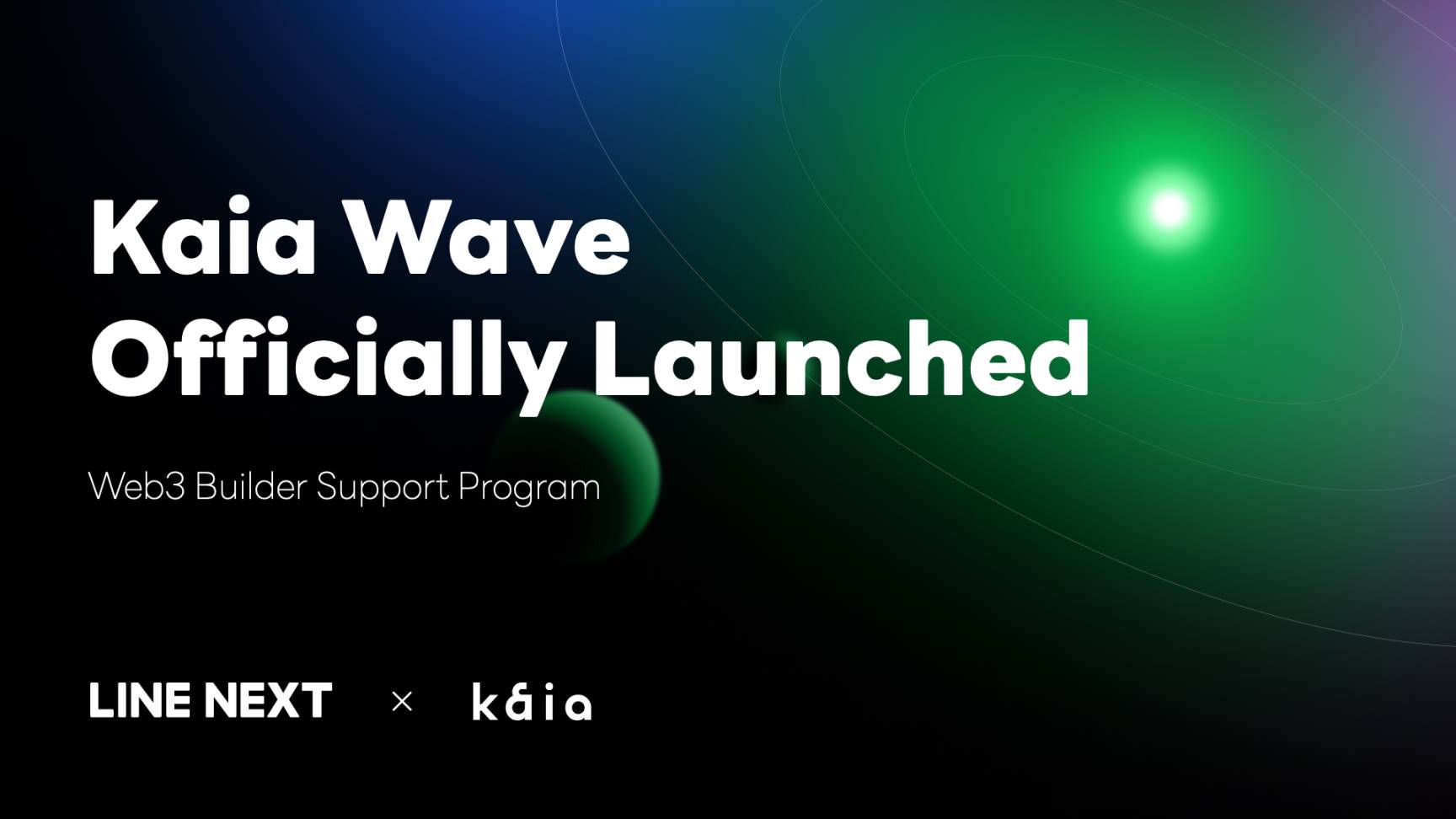
In addition, alongside the mainnet launch, LINE NEXT and the Kaia Foundation jointly introduced a builder support program called Kaia Wave. This initiative aims to empower promising DApps by helping them reach both Web2 and Web3 consumers, offering added advantages through access to LINE Messenger, Web3 marketing alliances, creators, and vertical services from Kaia and LINE NEXT. Official documents state that the Kaia Wave program allocates $10 million worth of KAIA tokens specifically for user acquisition and rewards.
In DeFi, multiple projects including KlaySwap and DragonSwap—ranging from decentralized exchanges to staking and lending platforms—are now operational on Kaia. The platform also supports critical infrastructure such as stablecoins and cross-chain bridges. On the NFT front, Kaia inherits the user base of Finschia’s DOSI platform, and its GameFi ecosystem benefits from the massive user bases and partner resources of both social platforms. Several game developers have begun launching mobile games and NFT items on Kaia.
Following the Telegram-Ton blockchain model, the Dapp Portal serves as a primary driver for Kaia’s ecosystem growth. Built atop the Kaia chain, the portal leverages official LINE Messenger accounts to enable users to access games, social apps, and trading services via Mini DApps—all without downloading additional software. In January, LINE NEXT and Kaia jointly launched the first batch of 32 Mini DApps, allowing users to instantly create wallets, play games, claim rewards, and trade NFTs directly within the chat interface.
Strategically, Kaia is gradually expanding beyond gaming into broader financial services and general-purpose applications. Early in 2025, it launched a USD stablecoin yield product on LINE, with future plans including introducing lending protocols, perpetual contracts, payment solutions, asset tokenization, and seamless conversion between Korean won and stablecoins.
For example, in May 2025, Tether officially deployed its USDT stablecoin on Kaia, enabling stablecoin payments and cross-border transfers for LINE’s 196 million users—an important step in expanding Kaia’s presence in the global stablecoin ecosystem. Overall, Kaia is accelerating the construction of a platform-level ecosystem, collaborating with industry partners to promote the vision of “messaging as the entry point, on-chain as the payment layer.”
Join TechFlow official community to stay tuned
Telegram:https://t.me/TechFlowDaily
X (Twitter):https://x.com/TechFlowPost
X (Twitter) EN:https://x.com/BlockFlow_News
 PANews