Discussing the Bitcoin Core transaction relay controversy and why it should be supported
TechFlow Selected TechFlow Selected
Discussing the Bitcoin Core transaction relay controversy and why it should be supported
People have completely different definitions of what constitutes a bad deal.
 Navigating Web3 tides with focused insights
Author: 0xTodd, Partner at Nothing Research
The Bitcoin Core team has released a new statement, and the entire Bitcoin core development community is in an uproar. I haven't seen much discussion in Chinese, so let me break down the background and share my strong personal views. Yesterday, Bitcoin Core published a statement titled "Bitcoin Core Development and Transaction Relay Policy," which critics have angrily compared to the notorious New York Agreement.
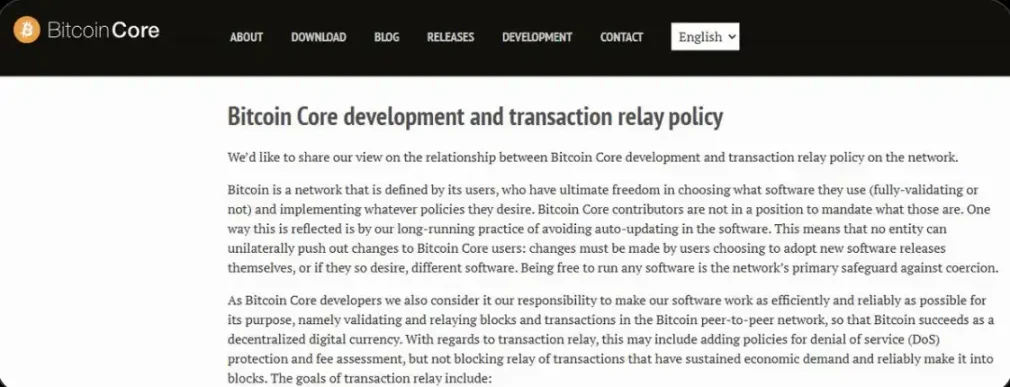
So what exactly does this statement say? Bitcoin Core wants to introduce its own built-in transaction relay mechanism. In my view, this relay system is paving the way for removing previous restrictions on the OP_RETURN field. Why has this sparked such intense debate?
Because there's a backstory behind the backstory—one I've discussed before. Two years ago, inscriptions began gaining popularity. These inscriptions and runes exploited what amounts to a "bug exploit," quietly storing their data within Bitcoin's OP_RETURN field, thereby circumventing the effective block size limit.
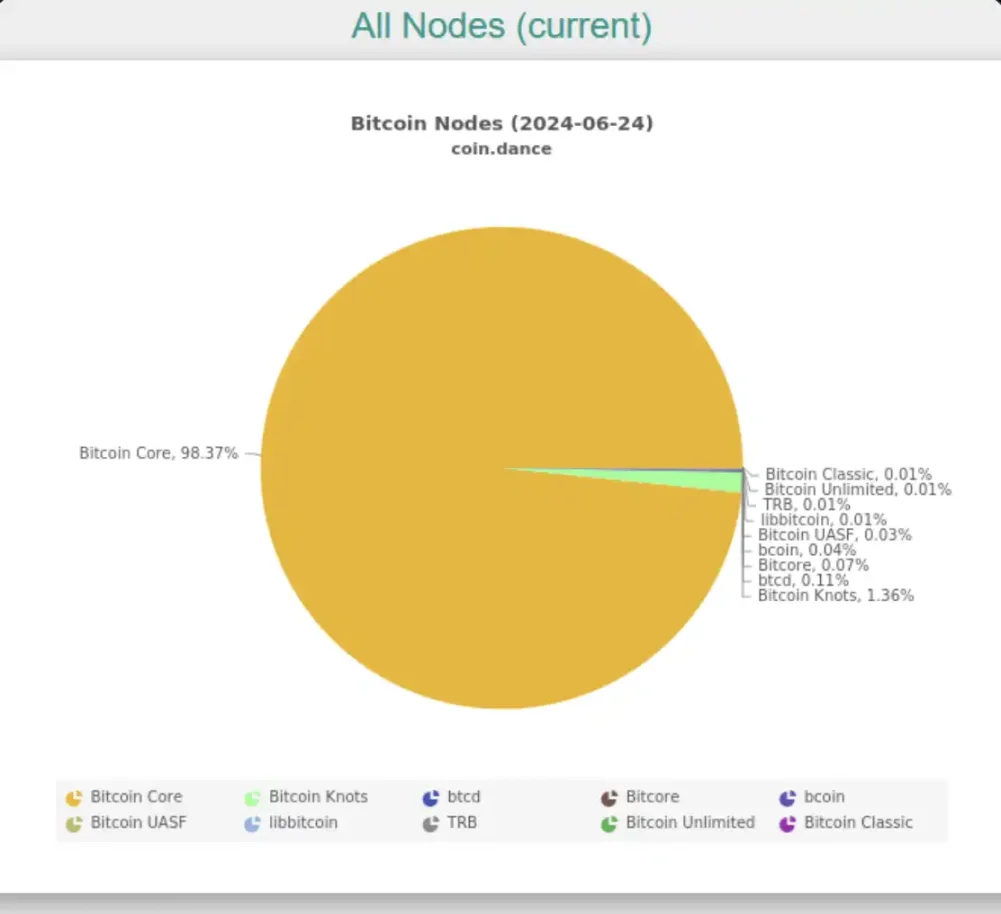
As a result, the Bitcoin community has split into right-wing and far-right factions. Inscriptions have provoked strong opposition from the far-right. Under the leadership of figures like Luke, Knots—the second most popular Bitcoin client—introduced a spam filter that treats inscription transactions as junk and refuses to include them. If you recall, this even caused a sharp drop in Ordi’s price. However, mainstream right-wingers—i.e., the Bitcoin Core team—believe that since inscriptions can already get onto the chain via exploits, it's better to legitimize them rather than keep pretending they don’t exist.
In recent months, the Core team has proposed a new PR to remove the 80KB limit on OP_RETURN, effectively eliminating restrictions on inscriptions and allowing them to enter the blockchain openly. Although most inscription activity has cooled down, I still believe these transactions provide some extra subsidies to miners. After all, more revenue helps strengthen Bitcoin's network security.
Now that we’ve covered the deeper context, let’s return to the main topic—what exactly is this “transaction relay”? In theory, Bitcoin is a peer-to-peer (P2P) network where every miner connects directly with others. That would be the most secure setup in principle. But given today’s relatively safe network environment, such extreme decentralization isn’t strictly necessary.
Hence, transaction relays emerged. Users can voluntarily submit transactions to these relays (note: not mandatory). This offers two major benefits:
1. Helps prevent DoS attacks—spammy zero-fee transactions won’t overwhelm miners’ P2P servers;
2. Speeds up block propagation and reduces latency, helping prevent large miners from gaining unfair advantages.
This is actually a good thing. Previously, different relays adopted various strategies—some aggressively filtered spam, while others remained completely permissive.
PS: I don’t consider this transaction censorship. It’s primarily about filtering spam, and users are free to bypass these systems entirely. Both the right-wing (Core team) and far-right (Luke et al.) agree on the need to filter spam, but their fundamental conflict lies in how they define “spam.”
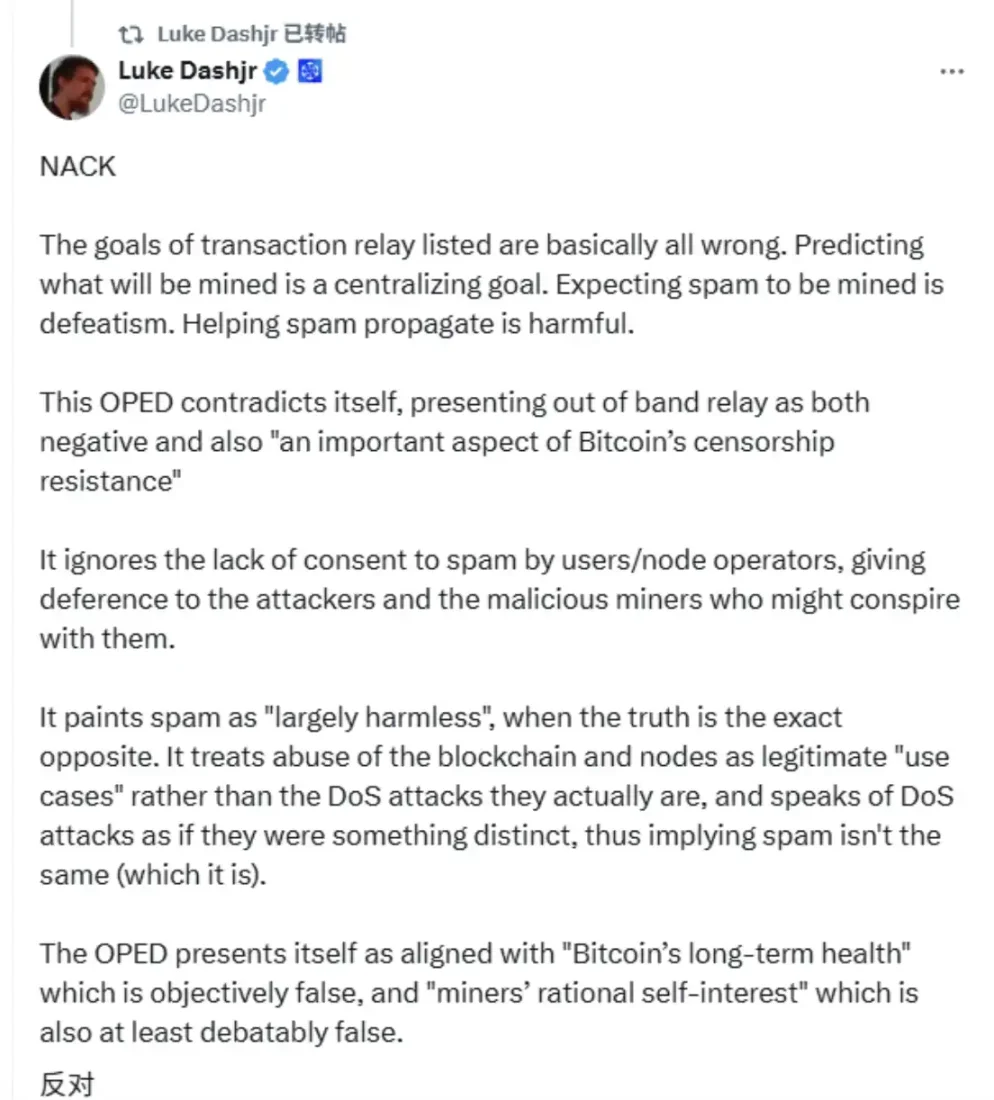
The far-right believes inscriptions *are* spam and should be banned—Bitcoin shouldn’t become a data storage chain. The right-wing argues we shouldn’t censor inscriptions or restrict any valid transactions from entering the chain. Filters should only block pure DoS attacks. PS: While I use the term “far-right,” it’s not meant pejoratively. One side advocates aggressive spam filtering; the other supports moderate filtering.
Previously, these relays were run altruistically by volunteers—especially those enforcing aggressive filtering rules, driven by a strong ideological conviction: disdain for inscriptions. But now that the Core team is integrating *moderate* filtering rules directly into the Bitcoin client, it could drastically shrink the market share of those previously dominant *aggressive* filters.
If you're feeling confused, here’s an analogy: imagine an official couple suddenly confirming their relationship, instantly invalidating countless fan-made pairings—essentially, canon killing fanfiction. Of course, even though Core holds over 90% market share, it doesn’t see itself as the “official” authority.
Bitcoin is a network defined by its users, who retain the ultimate freedom to choose which software they run and what policies to enforce. Bitcoin Core contributors have no power to mandate anything—and to avoid conflicts of interest, they even refrain from enabling automatic software updates.

Personally, I support this update by the Core team. As I always say: if your fence is only 10 centimeters high and everyone can walk through freely, you might as well tear it down. I’m indifferent to inscriptions myself, but I don’t consider them spam. Any transaction that pays proper fees is a legitimate one.
Inscriptions pay fees based on data size—no reason to turn down revenue. They bring additional income to miners, helping maintain Bitcoin’s security strength after multiple halvings. And I firmly oppose transaction discrimination. If the de facto standard client, Bitcoin Core, starts discriminating against properly-fee-paying transactions, it risks sliding toward full-blown transaction censorship.
One of Bitcoin’s proudest features is its security and resistance to censorship. Moderate spam filtering benefits both. Critics argue this move shows Core compromising with miners (by considering miner revenue) at the expense of users. I disagree—inscription users *are* Bitcoin users.
Times have changed. Hardware in 2025 is nothing like in 2008. Storing text and images on the Bitcoin blockchain poses no real burden to nodes anymore. Even Satoshi embedded a news headline in the genesis block. Bitcoin will never become a storage chain, but without altering its foundation, why not allow limited data storage as a side function?
Real physical gold can be engraved and used to record messages—our digital gold should tolerate the same. That’s why I fully support the Core team’s proposal.
Join TechFlow official community to stay tuned
Telegram:https://t.me/TechFlowDaily
X (Twitter):https://x.com/TechFlowPost
X (Twitter) EN:https://x.com/BlockFlow_News
 @0x_Todd