Crypto 2029: Dawn of a New Order
TechFlow Selected TechFlow Selected
Crypto 2029: Dawn of a New Order
Those who held Bitcoin early and remained steadfast, refusing to sell despite global skepticism, have become the new generation of elites.
 Navigating Web3 tides with focused insights
Author: hitesh.eth
Translation: Shan Obba, Jinse Finance
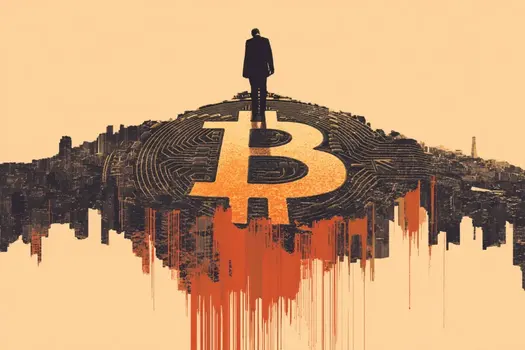
2029. Bitcoin has become the new consensus among global investors. This year, its price surpassed $500,000—not a sudden spike, but the culmination of a decade-long battle: narrative reversals, government concessions, institutional rule changes. Today, billions around the world are accumulating sats—the smallest unit of bitcoin—in countless ways. Just as people once bought gold jewelry to pass down through generations, families now gather together calculating how many sats they can leave for their descendants.
Sats have become a new asset class—one that needs no regulation to validate its worth. They are bought like collectibles, stored in decentralized vaults, and passed down as family heirlooms across generations. Millennials who mocked Bitcoin in their twenties now face unprecedented FOMO. This is no longer a competition for status, but a race for survival. Sats are no longer just currency—they represent access. Access to community, resources, and security.
Bitcoin is now humanity’s most popular financial tool—surpassing gold, stocks, even government bonds. Delivering the highest compound returns in the past 20 years, it is now standard in every financial advisor’s portfolio. Client managers who once promoted mutual funds and insurance plans now sell Bitcoin with the same professional smile and practiced tone.
Even developed nations’ treasuries now hold Bitcoin as a hedge—a scenario unimaginable ten years ago. Over 100 public companies include BTC on their balance sheets. This is not merely a safe-haven asset, but the foundational layer of a new economic order.
Those who held Bitcoin early, remaining steadfast while the world doubted, have become the new elite. They call themselves "Bitcoiners." But this is more than an identity—it's a movement, a philosophy, a new religion. Its moral pillars are monetary freedom, self-education, and non-traditional marriage contracts.
They’ve drafted their own laws, written their own code, formed alliances resistant to state control. They’ve done what governments feared most—they exited the system.
They built "Bitcoin Island"—a sovereign island nation somewhere in the Pacific, entirely funded by BTC. Starting with just 100 citizens, it now hosts over ten thousand—mostly early adopters, developers, investors, and thinkers. The island issues its own passports, operates a decentralized identity system, and has become a tourist destination. Blue skies, clear waters, no taxes, psychedelic rituals, armed privacy... everything illegal elsewhere becomes legal and accessible here through self-regulation. Every transaction is recorded on a public chain, yet freedom is absolute.
But the island is beginning to rot.
Now billionaires, Bitcoiners start treating outsiders as inferiors. A quiet colonial mindset is emerging. They pay in sats—but with imperial tones, aiming for obedience. As the outside world’s economy collapses, the island reshapes itself into a new power center—the next "America." Desperate and starving, outsiders voluntarily sign submission contracts. Bitcoiners no longer hide their dominance—they begin to enjoy it.
And at the heart of this movement—is Satoshi Nakamoto.
Bitcoin’s pseudonymous creator has become divine. Not just symbolically godlike—over 100 "Satoshi Temples" now exist worldwide. Weekly rituals are held—people chant SHA-256 hashes, meditate on decentralization principles. These temples also serve as recruitment centers. Prospective candidates undergo screening; if deemed "qualified," they’re sent to Bitcoin Island for training. Religious fervor around Satoshi has reached deification—his whitepaper becoming a fusion of the Bhagavad Gita, Quran, and Bible.
And beyond the island—lies another reality.
The global economy lies in ruins. America’s debt bubble finally burst. The post-Bretton Woods system collapsed under artificial market pressures—dominoes fell one by one. Inflation reached unprecedented levels. Fiat currencies crashed. Savings wiped out. People lost jobs, homes, sanity.
AI agents—trained on the entire memory of the human internet—took over white-collar work. Programmers, writers, lawyers, consultants—none were spared. Even therapists were replaced by highly personalized AI companions. Companies boosted efficiency with AI, then laid off millions. "Human inefficiency" had no place anymore. We optimized ourselves into extinction.
To escape, people turned to the "Metaverse."
The new middle-class toy wasn’t cars or houses, but VR headsets. These became windows to better lives—the only life worth living. In the Metaverse, they could design their homes, lovers, and jobs. They were gods in a sandbox. Relationships changed. Physical intimacy was replaced by sensory simulation. People spent 80% of their time in virtual spaces. 90% of communication happened digitally. Families became avatars sharing the same virtual room. Touch faded. Eye contact forgotten. Consciousness blurred. Reality became optional.
And the real world grew darker.
Talk of nuclear strikes became commonplace. Every nation kept fingers on the trigger. Everyone felt threatened. News spread rumors of conflict daily. Major cities resumed evacuation drills. Children learned survival strategies. The world sank into collective panic—Metaverse the last refuge.
But in the chaos, heroes emerged.
They wore no capes, had no billionaire backers. They were teachers, programmers, philosophers. Armed not with weapons, but awareness. Known as the "Hidden Circle," they began helping people "unplug"—teaching them to breathe, to feel, to remember what it means to be alive. But before awakening others, they first had to cleanse their own mental ecosystems.
Spirituality had become big business. Workshops, courses, "guru coins" sprang up endlessly. Every retreat center turned into a paid app. Opportunists turned healing into performance, draining wallets with false promises. People felt betrayed by "inner work," and the word "spiritual" lost all meaning.
So these superheroes began rebuilding the field. Returning to classical texts, practicing silence, helping others one-on-one. No fees, no labels—only pure intention. Slowly, they were creating a new culture—not based on control or escape, but centered on "balance."
Some still believed in crypto—not the casino it had become, but the underlying technology: cryptography, privacy, decentralized value transfer. They still believed these tools held liberating power. But what pained them most was seeing crypto turn into a scam.
The very tools they once revered were now used to deceive the innocent. Worthless meme coins, Ponzi farms on blockchains, influencers dumping on fans at peaks. Trust vanished. Crypto became seen as a playground for the dark web. The original believers—the cryptographers—were shattered.
Yet they did not give up.
A new movement was born: The Cypherpunk Manifesto 2.0
This was not just text, but a digital charter. A declaration calling builders, not speculators. It aimed to unite enterprises embodying crypto’s original spirit—transparency, privacy, value exchange. They began building tools, not tokens; systems, not speculation. A new era began.
The Cypherpunk Manifesto 2.0 spread like wildfire through encrypted channels—passed via QR-code tattoos at underground gatherings, whispered across zero-knowledge networks. It promised no wealth, demanded integrity. It criticized extremists who became oligarchs, questioned every project claiming to "change the world" while only pumping prices. Above all, it reminded the world why Bitcoin—and crypto broadly—was created: to dismantle the monopoly on trust.
This underground renaissance had no glamour. No flashy conferences, no influencer endorsements—only Git commits, research papers, anonymous nodes reconnecting like neurons reigniting in a sleeping brain. Small collectives regrouped in abandoned buildings, forests, repurposed bunkers. They didn’t just code—they philosophized: Can identity be rebuilt without government intervention? Can a child born in 2030 live a life free from surveillance? Can value distribution function without profit incentives, driven solely by protocol incentives?
In this silent storm, the Hidden Circle and the Cypherpunks began to converge.
They realized freedom must be both technical and spiritual. One cannot meditate in a surveillance society; and if the soul remains hollow, even the strongest privacy tech is meaningless. So they began "fusion"—the union of code and consciousness. They wear no robes, build no blockchains for billionaires. They build libraries for free thinkers, deploy nodes in temples. Their law is uptime. Their mantra: "Verify, then trust." Their practice of crypto is prayer—sacred, precise, altruistic.
By 2030, a whisper began circulating in the most unexpected corners of Earth:
"Decentralized soul."
No one knew its origin—but it became the slogan of a new age.
Bitcoiners fortified their island—but the real future was being quietly built in the ruins, by those who remembered why we started.
The true reboot won’t come from the top. It will sprout from below—quietly, relentlessly, decentralized.
Join TechFlow official community to stay tuned
Telegram:https://t.me/TechFlowDaily
X (Twitter):https://x.com/TechFlowPost
X (Twitter) EN:https://x.com/BlockFlow_News
 hitesh.eth