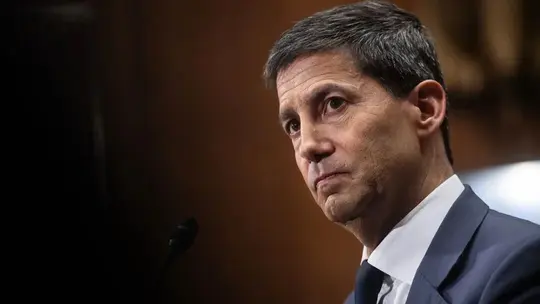
Powell's press conference full transcript: Wait and see, we won't preemptively cut rates
TechFlow Selected TechFlow Selected
Powell's press conference full transcript: Wait and see, we won't preemptively cut rates
Powell also stated that he has never proactively requested a meeting with any president and will not do so in the future.
 Navigating Web3 tides with focused insights
Compiled by: Ye Zhen, Wall Street Insights
In the face of tariff uncertainty, the Federal Reserve once again chose to hold steady. A key message Powell repeatedly conveyed during the press conference was: wait and see.
On Wednesday, May 7, the Federal Open Market Committee (FOMC) announced after its monetary policy meeting that the target range for the federal funds rate would remain unchanged at 4.25% to 4.5%. This marks the third consecutive FOMC meeting in which the Fed has paused action. The Fed had cut rates three times consecutively since September last year, lowering rates by a total of 100 basis points. Since President Trump took office in January this year, the Fed has remained on hold.
During the post-FOMC press conference, Powell stated that the scale of tariff increases announced so far has far exceeded expectations. However, all these policies are still evolving, and their economic impact remains highly uncertain. As economic conditions change, the Fed will continue to determine the appropriate stance for monetary policy based on incoming data, the outlook, and the balance of risks.
According to Powell, the economy has remained resilient, the policy positioning is correct, and the Fed is now in a favorable position to observe developments without rushing into action—further waiting entails relatively low costs.
Regarding the recent divergence between soft and hard U.S. economic data, Powell noted that over the past few years, the link between sentiment indicators and consumer spending has been weak—not a strong connection at all.
In response to President Trump's calls for rate cuts, Powell made it clear that such appeals have no direct impact on the Fed’s decisions, which are independent and based solely on economic data and analysis.
He also stated he has never proactively requested a meeting with any president and will not do so in the future. He believes the Fed chair should not initiate meetings with the president.
Below is the transcript from the Q&A session following the FOMC meeting:
Powell: Good afternoon. My colleagues and I remain focused on achieving our dual mandate goals of maximum employment and price stability, in service of the American people. Despite rising uncertainty, the economy remains solid. Unemployment remains low, and the labor market is at or near maximum employment. Inflation has declined significantly but remains slightly above our 2% longer-run goal. To support these objectives, the Federal Open Market Committee decided today to leave the target range for the policy rate unchanged. Risks of higher unemployment and higher inflation appear to have risen, and we believe the current monetary policy stance positions us well to respond appropriately to potential economic developments.
After briefly reviewing recent economic developments, I’ll say more about monetary policy.
Following growth of 2.5% last year, first-quarter GDP reports showed a slight decline. This reflects volatility in exports, likely due to firms importing goods ahead of potential tariff implementation. This unusual fluctuation complicates measuring last quarter’s GDP. Private domestic final purchases (PDFP), excluding net exports, inventory investment, and government spending, grew steadily at 3% in the first quarter, matching the pace from a year earlier. Within PDFP, consumer spending growth slowed, while equipment and intangible investment rebounded from fourth-quarter weakness. However, surveys of households and businesses show sharply declining consumer confidence and heightened uncertainty about the economic outlook, primarily reflecting concerns about trade policy.
How these developments will affect future spending and investment remains to be seen. Labor market conditions remain solid. Over the past three months, jobs have increased by an average of 155,000 per month, the unemployment rate remains low at 4.2%, and has stayed within a narrow range over the past year.
Wage growth continues to slow but remains above inflation. Overall, a range of indicators suggests labor market conditions are broadly balanced, consistent with maximum employment.
The labor market is not currently generating significant inflationary pressure. Inflation has fallen substantially from its mid-2022 peak, though it remains slightly above our 2% longer-run goal. Over the 12 months through March, the PCE price index rose 2.3%, and core prices, which exclude volatile food and energy categories, rose 2.6%. Recent inflation expectations have ticked up, as reflected in both market-based measures and survey-based indicators. Respondents including consumers, businesses, and professional forecasters point to tariffs as a factor pushing inflation higher.
However, most longer-term expectation measures for next year and beyond remain aligned with our 2% inflation objective.
Our monetary policy actions are guided by our dual mandate to promote maximum employment and price stability for the American people. At today’s meeting, the Committee decided to maintain the target range for the federal funds rate at 4.25% to 4.5% and to continue reducing the size of the balance sheet. The new administration is implementing major policy changes across four areas: trade, immigration, fiscal policy, and regulation.
The scale of tariff increases announced to date has far exceeded expectations. Yet, all these policies remain in flux, and their economic impacts are highly uncertain. As economic conditions evolve, we will continue to determine the appropriate stance of monetary policy based on incoming data, the outlook, and the balance of risks.
If the substantial tariff hikes already announced persist, they could lead to higher inflation, slower growth, and higher unemployment.
The inflationary effect of tariffs may be transitory, reflecting a one-time shift in price levels. Alternatively, the effects could prove more persistent. Whether this occurs depends on the magnitude of the tariff effects, how long it takes for them to fully pass through to prices, and whether longer-term inflation expectations can be effectively anchored.
Our responsibility is to control longer-term expectations and prevent a one-time price increase from becoming a sustained inflation problem. In fulfilling this duty, we will balance our responsibilities for both maximum employment and price stability, mindful that without price stability, we cannot achieve a stronger, more durable labor market that benefits all Americans.
We might find ourselves in a challenging situation regarding our dual mandate objectives. If that happens, we would consider how far the economy is from each goal and how long it might take to close those gaps. For now, we are in a good position to wait for greater clarity before considering adjustments to our policy stance.
At this meeting, the Committee continued discussions on the five-year review of our monetary policy framework, focusing on inflation dynamics and their implications for monetary strategy. The review includes outreach and public events with broad participation, including “Fed Listens” events around the country and a research conference scheduled for next week.
Throughout this process, we welcome new ideas and critical feedback, drawing lessons from the past five years to finalize our findings. We plan to complete the review by late summer.
The Federal Reserve’s monetary policy goals are maximum employment and price stability. We remain committed to supporting maximum employment, returning inflation sustainably to 2%, and keeping longer-term inflation expectations well anchored.
Our ability to successfully meet these goals matters to all Americans. We understand deeply that our actions affect communities, families, and businesses across the country, and everything we do is in service of our public mission.
We at the Federal Reserve are doing everything we can to achieve maximum employment and price stability. Thank you. I look forward to your questions.
CNBC Reporter: Thank you for taking my question. A lot has happened since the last meeting. Tariffs have gone up and down, and Congress is moving forward on a bill. I’d like to ask about the last part of your remarks. Are you now closer to determining which of the two mandates will need urgent attention first?
Powell: Well, as we noted in our post-meeting statement, we judge that risks of higher unemployment and higher inflation have both risen, relative to the March meeting. So that’s as much as we can say.
I think we can’t predict how things will unfold. There’s a great deal of uncertainty—for example, how and when trade policies will ultimately be resolved, and what their effects will be on the economy, growth, and employment. I think it’s too early to draw conclusions.
I mean, we ultimately feel that our policy rate is in a good place because we’re waiting for further clarity on tariffs and their ultimate economic impact.
CNBC Reporter: Hearing you describe what you’re seeking in making decisions, it sounds like this will be a prolonged process before you or the Committee would feel comfortable acting based on what the data tells you.
Powell: I think we don’t know. You know, if you look at where we are right now—if you look through the distortion in first-quarter GDP—you see the economy growing steadily, and the labor market appears solid. Inflation is slightly above 2%. So, this is a resilient and solid economy, and our policy is modestly or moderately restrictive—100 basis points less restrictive than last fall. So, we think this puts us in a wait-and-see posture. We don’t think we need to rush. We think we can be patient. We’ll watch the data. Data may come quickly or slowly. But we do think we’re in a good position to let things develop and gain greater clarity on the appropriate path for monetary policy.
Wall Street Journal Reporter: Some argue that the current situation differs significantly from the past—energy costs are falling, housing imbalances are very different from four years ago, labor demand seems to be cooling gradually, and wage growth is below 4%. Aside from this year’s goods price increases, what other factors could drive inflation higher?
Powell: I think underlying inflation prospects are good. As you see, inflation is slightly above 2%, and data on shelter and non-shelter services are generally favorable, with shelter being a large component of inflation. That part of inflation is moving down steadily.
But there’s just so much we don’t know. And I think—we’re in a good place to wait, that’s exactly where we are. We don’t need to rush. The economy has remained resilient and is performing quite well. Our policy is properly positioned. We think the cost of waiting further is quite low.
So, that’s what we’re doing. You know, we’ll see the administration negotiating tariffs with many countries. As weeks and months go by, we’ll learn more about where tariffs ultimately land. When we start to see the contours of the situation, we’ll better understand the implications. So, we think we’ll keep learning. I can’t tell you how long that will take, but for now, we seem to have made a fairly clear decision—to wait and see.
Wall Street Journal Reporter: When you say you don’t need to rush, does that mean circumstances could change enough that you might need to shift course by the next meeting?
Powell: As I said, we’re comfortable with our policy stance. We think now is the right time to wait and see how things unfold. We don’t feel the need to rush, and patience is appropriate. Of course, history shows that when the time comes, we can act swiftly if needed. But we believe the most appropriate course right now is to wait. There’s just too much uncertainty. If you talk to businesses, market participants, or forecasters, everyone is waiting to see how things turn out. Only then can we better assess the appropriate path for monetary policy.
So, we’re not there yet, and as things evolve, I really can’t give you a timeframe.
Bloomberg Reporter: Many economists have raised the probability of recession, some noting that with higher inflation risks, it’s harder for the Fed to cut rates preemptively. Given the outlook, do you still see a soft landing as possible? What’s the outlook for a soft landing?
Powell: Well, let’s look at where we are. Looking back from 2024 to now: unemployment has been below 4% for over a year, inflation is coming down and is now in the low-to-mid 2% range, and GDP growth reached 2.5%. That’s the economy we’re seeing now.
Given the scope and scale of tariffs, we’re likely to see rising risks of both inflation and unemployment. If that happens, and if these tariffs are implemented as currently envisioned—though that’s uncertain—it would make progress toward our goals difficult, perhaps delayed. In our view, we remain committed to our goals and haven’t wavered. But for at least the next year, we may not make visible progress. Of course, it all depends on how tariffs ultimately play out.
The issue is, we don’t know. There’s too much uncertainty around the size, scope, timing, and duration of tariffs. So, that’s it.
On preemption: you could look back at the 2019 rate cuts. I don’t think what we did last fall was fully preemptive. If anything, it was a bit late. But in 2019, we did cut rates three times. Back then, the economy was weakening, and inflation was at 1.6%. So, in that context, preemption makes sense. Now, inflation has been above target for four straight years. It’s not far above anymore, and we expect upside pressure if conditions change. If you look at forecasters, they all expect inflation to rise.
So, that creates a situation—yes, we’ve received forecasts of economic weakness, even recession. We won’t make or release any such forecasts. We don’t publish assessments of recession probabilities. But regardless, we can’t prepare in advance because until we see more data, we simply don’t know how to respond correctly.
New York Times Reporter: How much softening in the labor market and broader economy would the Committee need to see before cutting rates again? Would it take a certain rise in the unemployment rate over a period, or a certain number of negative monthly job reports? How do you make such an assessment?
Powell: First, we haven’t seen that yet. Our unemployment rate is 4.2%, labor force participation is healthy, wages are performing well—I mentioned earlier that participation is at a good level. So, for the labor market, we look at the full picture. We look at the level of unemployment and its pace of change. We analyze vast amounts of labor market data to see if conditions are truly deteriorating. At the same time, we look at the other side of our mandate. We may need to balance the two—that’s certainly a very difficult judgment call.
New York Times Reporter: On that balancing act, you mentioned the Committee would consider how far the economy is from each goal and how long it might take to return. But what does that mean in practice? To what extent is that assessment based on forecasts versus data?
Powell: Both. I mean, it would be a complex and challenging judgment we’d have to make. And we’re not in that situation now. If the two goals conflict—for example, unemployment rising in a troubling way while inflation rises too—that’s not the scenario we’re assuming. But we would consider how far each is from its goal, where we expect them to be, and how long it might take to get back. We’d weigh all these factors and make a difficult judgment—which is already embedded in our framework. It’s always been part of our thinking. We haven’t faced this in a long time. So again, it’s a hard call. And we’re not facing it today. We may never face it. But yes, we must keep it in mind now.
Fox Business Reporter: The latest CPI report just showed the biggest three-month rise in employment-related inflation in years. Job reports are solid. Meanwhile, we’re facing new tariffs. Given all this, should the Fed cut rates this year?
Powell: It depends. I think you have to step back and realize we’re in this position because we need to see how things unfold. There are scenarios where cutting rates this year would be appropriate. There are others where it wouldn’t. We just don’t know yet. Until we learn more about how things develop and their economic effects on employment and inflation, I can’t confidently say which path is right.
Fox Business Reporter: Then, President Trump has called on you personally and on the Fed to cut rates. How does that affect your decision today and the difficulty of your job?
Powell: It doesn’t affect our work at all. We will always do the same thing: use our tools to promote maximum employment and price stability for the American people. We only consider economic data, the economic outlook, and the balance of risks—and nothing else. That’s all we consider. So, it doesn’t actually affect our work or how we do it.
Reuters Reporter: Thanks for your time. Given first-quarter GDP data and the complexity of the outlook, I wonder what your intuitive sense is of the underlying trajectory of the economy. Many of your colleagues have said they feel growth is slowing. If so, can you estimate the degree or pace of that slowdown? What does your intuition tell you about how things are unfolding?
Powell: Uncertainty about the economic outlook is extremely high, and downside risks have increased. As we noted in our statement, risks of higher unemployment and higher inflation have risen. But those risks haven’t materialized. Not really. They’re not yet evident in the data. So, that’s more compelling than intuition, because clearly, the right thing to do is recognize we’re in a good position, our policy is in a good place, and we should wait for further clarity.
Usually, things become clearer over time, and the right direction emerges. That typically happens. It’s just hard to say what it will be now.
Meanwhile, the economy is in good shape. Our policy isn’t—well, it’s not highly restrictive. Just mildly so. 100 basis points less restrictive than last summer. So, we think the economy is in good shape, and it’s best to wait and gain a clearer picture of where it’s headed.
Reuters Reporter: I’d emphasize your comment that the economy is in good shape, because when I last read the Beige Book carefully, it contained a lot of negative information... People are watching weak data, as you yourself noted, sentiment is low. Some industries are starting layoffs, prices are rising in some areas, and major investment decisions are being postponed. Doesn’t that signal an economic slowdown?
Powell: That could happen, but it hasn’t shown up yet. You know, we all look at sentiment indicators and read individual comments to get a sense of the situation. Overall, both businesses and households are indeed worried and are deferring various types of economic decisions. Yes, if this persists and nothing alleviates these concerns, you could expect this impact to eventually show up in economic data. Maybe not overnight, but possibly over weeks or months. That might be what happens next—but it hasn’t happened yet. Also, there could be events that change this outlook, though they haven’t occurred yet, but we can imagine them happening. Anyway, right now, like everyone else, we’re watching the situation very closely, but in the current data, we’re not seeing many concrete signs.
By the way, consumers are still spending, credit card spending continues, and the economy remains healthy—even though individuals and businesses are under the shadow of very gloomy sentiment.
Bloomberg Radio Reporter: The Fed has recently faced criticism from a former governor who argues that the policy tools you’ve used make it unlikely you’ll take more aggressive action in the future. Do you think this criticism is fair? Is it something you’re considering?
Powell: Say the criticism again.
Bloomberg Radio Reporter: The Fed used too many new tools to solve problems, going too far. Is the criticism based on the fact that the Fed implemented quantitative easing beyond its mandate?
Powell: Well, it didn’t actually go beyond our mandate. I’d say, during the pandemic, we were in emergency mode for several years. If people look back at what we did and say, “Hey, you could have done better or differently,” that’s perfectly fair and welcome. One thing we often hear is that we could have explained QE better. We believed our explanations were appropriate for the circumstances. I fully accept the idea that we could have done better explaining it.
Many believe we kept QE going too long. I can tell you we did so because we feared the economy remained fragile, didn’t want sharp tightening or financial conditions to worsen, so we maintained QE for a long time, then gradually tapered, immediately entered QT, and ultimately reduced trillions in assets. But I know, in hindsight, we could have tapered earlier or faster. That’s completely valid.
But all of this is very welcome. You know, we realized at the time that real-time decisions can’t be perfect. Such retrospective reviews are important. And we’re doing similar work as we review certain issues.
Bloomberg Radio Reporter: Another part of the criticism is that you’ve discussed topics beyond your mandate, such as climate change, and tried to ensure certain groups benefit from your economic policies in areas like employment.
Powell: Okay. On climate, if you hear me say it over and over, we are not climate policymakers. Our role on climate is extremely narrow. I believe that’s true. We do very little on climate.
You could argue we’ve done a bit too much. But I don’t want to leave the impression that we consider climate alongside things we spend a lot of time on. We don’t. Our scope is extremely narrow.
We did one thing: issued guidance for banks, and conducted one stress test—a climate stress test—nothing more. We stepped away from networks focused on the financial system. We do little on climate. But—I’ve said publicly several times—I believe trying to take on such tasks would be truly dangerous for us, given how narrow our mandate is. The risk is, if you do things outside your mandate, why should you remain independent? I think that’s a very fair question. I do believe our work on climate is far less than some think. Anyway, that’s—
Bloomberg Radio Reporter: Should you consider lowering unemployment rates for specific demographic groups?
Powell: We don’t do that. We’ve never set unemployment targets for any racial or demographic group. We say maximum employment is a broad and inclusive goal. By that, we mean we consider the whole nation when defining maximum employment. We never intended to target any specific group. But I think some people want to hear that. That’s just not what we mean.
So, that’s not the right interpretation—understood—perhaps people find it confusing, and we must take that into account.
CBS News Reporter: Hi, Chair Powell, thanks for answering our questions today. You just said the economy is in good shape, but tariff effects are already showing at ports, and businesses big and small tell us they’re feeling it. Most importantly, they say consumers are feeling it—the challenge is here, and waiting is no longer an option. For Main Street, where’s the tipping point? What exactly needs to happen to prompt a rate cut?
Powell: Well, we haven’t seen major economic impacts in the data yet. What we see is sentiment—people worried about price increases, etc. So, people are concerned about inflation now. They’re worried about tariff shocks. But actually, the shock hasn’t arrived yet.
So, when assessing what we should do, we look not just at sentiment data but actual economic data. Remember, there are two effects: one is economic weakness, weaker activity leading to higher unemployment; the other is potentially higher inflation. Again, the timing, scope, scale, and duration of these effects are highly uncertain. So, the appropriate monetary policy response isn’t clear. By the way, our policy is in good shape, so we think we can wait until the right response becomes clear. Mr. President, we really don’t know what we should do yet.
So, people feel stress and worry, but unemployment isn’t rising, job creation is solid, wages are good. People aren’t being laid off—layoffs aren’t increasing sharply. Initial claims for unemployment insurance haven’t shown any notable rise. So, the economy itself remains solid.
CBS News Reporter: Quick follow-up. President Trump now says he doesn’t plan to remove you as chair. How do you feel hearing that?
Powell: On that, I have nothing more to say. I’ve basically covered it. Thank you.
AP Reporter: I just want to follow up. Earlier, you seemed to say it’s unclear what the Fed will decide on rates later this year. In March, there was guidance suggesting two cuts, with two planned for this year. Has today’s environment replaced the guidance from the last press conference?
Powell: You know, we don’t do Summary of Economic Projections every meeting, only every other meeting, so we didn’t do one this time. And we don’t conduct polls. So, I really don’t want to make specific forecasts about our current economic outlook.
In six weeks, we’ll have the June meeting, then another SEP. I won’t speculate on details today.
Again, I’d say we believe our policy rate is at a good level. We think it allows us to respond promptly to potential developments. That’s where we are. And depending on how things unfold, that could include rate cuts—sorry, cuts. Or it could include holding steady. We just need to see how things develop and then decide.
AP Reporter: I’d like to continue on this. When you talk about how the Fed would respond to rising unemployment and rising inflation, how do you view the fact that addressing one might worsen the other? For example, cutting rates to lower unemployment might exacerbate inflation, and vice versa. How do you handle these challenges?
Powell: You’ve just accurately pointed out—the exact dilemma we face in pursuing two goals. It’s a very challenging problem. Sometimes one variable deviates much farther from its goal than the other, and in that case, priority goes to the more distant one. Frankly, there have been such cases—well, though not truly conflicting goals. But if you look back at 2022, we clearly needed to focus on inflation. The labor market was also very tight, so it wasn’t really a trade-off.
I think you know what our framework document says. It says we’ll examine how far each variable is from its goal and also consider how long it might take to reach the goal. So, it could be a very difficult judgment. But data might skew somewhat. I just think we don’t know. Data could easily lean one way. Right now, we simply can’t—don’t need to choose, nor do we have a real basis.
POLITICO Reporter: Congress is extending tax cuts, and I know you’ve said multiple times that the debt trajectory is unsustainable. But given we’re now discussing economic slowdown or even recession, could spending cuts now significantly drag down growth?
Powell: We don’t offer fiscal advice to Congress. They just—our approach is to treat their decisions as given facts, incorporating them into our models and economic assessments. So, I don’t want to speculate. We do know debt levels are on an unsustainable path—not necessarily an unsustainable level, but an unsustainable path—and Congress should find ways to return to a sustainable path. We shouldn’t advise them.
POLITICO Reporter: Should they consider macroeconomic conditions when examining this issue?
Powell: I don’t think they need my advice or ours on how to set fiscal policy—just as we don’t need theirs on monetary policy.
Washington Post Reporter: Last year at Jackson Hole, you said you didn’t want labor market conditions to cool further, with unemployment at 4.2% then, and now. Many forecasters now predict higher unemployment. Compared to a year ago, how has your tolerance for labor market softness changed?
Powell: The situation is completely different. Last year, over six to seven months, unemployment nearly rose a full percentage point. Month after month, “click, click,” everyone was talking about downside labor market risks.
At the same time, job data grew weaker, so people clearly worried about labor market deterioration. So, at Jackson Hole and then in September, we wanted to address that directly—we wanted to show—we’d been focused on inflation for years, and we wanted to show we’re watching the labor market. Sending that signal was important.
Luckily, since then, the labor market and unemployment have moved sideways, staying within estimates of maximum employment, so concerns have eased a lot. Now unemployment is 4.2%. I think our situation then was different. Now, as we noted in our statement, risks are elevated, with both inflation and unemployment rising. We must watch both closely. We might face a “tropical wave” between them. That’s our situation now, and why I think it’s different.
Washington Post Reporter: How much unemployment rise can you tolerate?
Powell: I can’t give—won’t try to give a specific number. I’d say we must consider both variables now. Whichever needs more attention will guide policy. If they’re roughly equal in distance—or unequal—then we don’t need to assess. The key, again, is waiting.
So, I won’t try to specify what data we’d need to see. But if we do see significant labor market deterioration, that’s certainly one of our two variables, and we’d work to support it. You’d hope it doesn’t happen when inflation becomes severe. Again, we’re just speculating. We don’t know these things. We know nothing. It’s hypothetical. We can only wait and see how things unfold.
Financial Times Reporter: To clarify some points, we’ve had talks in Geneva between China and the U.S., and many economists place great weight on what we hear from these talks. How important do you think these talks are in judging the future path of the U.S. economy? Similarly, some economists say if we don’t ease U.S.-China relations, the U.S. economy could soon face shortages and price hikes like during the pandemic—within days, not weeks. I’d also like your thoughts on that.
Powell: We’re not involved in these negotiations at all. So, I really can’t comment directly. But I’d say: after the March meeting, there was general public assessment of tariff directions. The April 2 meeting results showed tariff magnitudes much larger than I’d seen in prior forecasts or our own. So, now we’re in a different phase—we seem to be entering a new stage, with the government starting negotiations with key trade partners, which could or could not materially change the situation. So, the outcome will matter. But we can only wait. It could certainly change things, and we must avoid making final judgments about the future when facts are changing.
Financial Times Reporter: Given tensions causing declines in freight volume from China, are you also concerned that if this isn’t resolved quickly, we might start seeing goods shortages and price increases in the coming weeks?
Powell: You know, I don’t want—we shouldn’t verbally intervene in the timing of these things. Yes, of course, we track all data. We look at shipping data. We’re aware of all these numbers. But ultimately, it’s the government’s responsibility, not ours. I know, as you see, they’re negotiating with many countries, which could materially change the situation. So, we can only wait.
Financial Times Reporter: Thanks. First-quarter imports surged dramatically. Could this delay the inflationary impact of tariffs, meaning it’ll take longer to reduce uncertainty? How does that affect your future decisions?
Powell: Our decision today? Which decision?
Financial Times Reporter: Future decisions. Imports, goods imports, surged dramatically. So, the impact on imported inflation might be delayed. How does that affect your future decisions?
Powell: Okay. So, I mean, we think—imports surged massively, reaching record highs. In response to tariffs, this should now reverse, so net exports—exports minus imports. Imports were huge. So, they made a very negative contribution to U.S. GDP, the annualized figure we know for Q1.
That could reverse in Q2, giving us an unusually large positive contribution, abnormally strong growth. That’s likely as imports drop sharply.
You might also—likely—see Q1 data revised upward. It may turn out consumer spending was higher, inventories higher, so you’d see those figures adjusted up. That could even affect Q3. So, I think the whole process slightly complicates clear assessment of U.S. demand.
I mentioned private domestic final purchases, excluding inventories and government spending—government spending. Anyway, that better reflects private demand. But that might also be slightly inflated by strong import demand to offset tariffs. That could be overstated. Q1 PDP grew 3%, which is a solid number. I don’t think it affects our decisions. But I’d say, it’s a bit confusing, and as we try to interpret it, we might be more confused than the public. It’s complex—GDP and PDFP are sending signals. It’s a bit confusing, but I think we understand what’s happening, and it doesn’t really change our position.
Axios Reporter: We’ve discussed potential layoffs, price increases, and economic slowdown, all evident in soft data. I’m curious why the Fed needs to wait for these to become hard data before making any monetary policy move, especially when hard data may be lagging or distorted by tariff effects. Are you concerned soft data might be a false alarm?
Powell: No. Look at the economy now. The labor market is solid, inflation is low. We can afford to wait for things to unfold. Right now, waiting carries no real cost.
And, frankly, we’re unsure what the right move is. Inflation may rise, unemployment may rise—these require different responses. So, before we know more—different responses may be needed. So, we have the ability to wait. That seems like a clear decision. Everyone on the Committee supports waiting. That’s why we’re waiting.
Axios Reporter: Quick follow-up. There was a time when soft data sentiment didn’t translate into hard economic data. How do you view that when interpreting milder survey data now?
Powell: I think, looking back over the past few years, the link between sentiment data and consumer spending has been weak—simply not a strong connection.
On the other hand, we’ve never seen swings of this speed and scale before. So, we won’t dismiss it entirely. But that’s another reason to wait. You’re right—during the pandemic, for years, surveys were very pessimistic, yet people went out and spent. So, that could happen, and to some extent might. We just don’t know. But this is a massive shift in market sentiment. So, none of us can look at this and say we’re confident. We’re not.
CNN Reporter: You mentioned monitoring shipping data. From shipping data, we see imports from China to the Port of Los Angeles have dropped sharply. This raises concerns about potential shortages. If tariffs do cause severe supply chain disruptions, what tools does the Fed have to ensure prices and inflation expectations don’t spiral out of control?
Powell: I mean, we don’t have tools good at handling supply chain issues. We just don’t. That’s primarily the government’s and private sector’s job.
We can use interest rate tools to support demand more or less, but that’s a very inefficient method for solving supply chain problems.
But we haven’t seen inflation yet. Of course, we read the same reports and watch the same data as everyone else. Right now, we see inflation moving sideways at a relatively low level.
CNN Reporter: Can I follow up? President Trump has said he might appoint a successor when your term as chair ends next year. But I believe your Board term runs until January 2028. Even if you’re no longer chair, would you consider staying on the Fed Board?
Powell: On that, I have nothing to say. My colleagues and I are focused on getting through this difficult period, making the right decisions. We want to make the best choices for the people we serve. That’s what we think about day and night. It’s a challenging situation, and it’s our 100% focus right now.
Yahoo Finance Reporter: Your public schedule this year shows you haven’t met with President Trump. Former Presidents Obama, Bush, and Clinton all met with Fed chairs, and you met him during his first term. Why haven’t you requested a meeting with the president?
Powell: I’ve never requested a meeting with any president, and I never will. I won’t do it. I’ve never had a reason to request one. Never.
Yahoo Finance Reporter: If it offered access to more information, would you be willing to meet with him?
Powell: I’ve never initiated it. It’s always been—well, I think the Fed chair shouldn’t initiate meetings with the president. Some may have done so. I never have. I can’t imagine doing it. I think it should always be the other way—the president wants to meet, but it hasn’t happened.
Yahoo Finance Reporter: On monetary policy. When rate cuts are needed amid labor market weakness, how would you determine how much to cut to balance maintaining the inflation target?
Powell: You know, I think once you have a direction—a clear direction—you can judge the pace, etc. So, I think the real difficulty is timing and when clarity comes. Luckily, as I said, our policy is in a good place, the economy is in good shape, and we think patience—waiting for things to unfold—is very appropriate, because we’ll gain greater clarity on what to do. Thank you very much.
Join TechFlow official community to stay tuned
Telegram:https://t.me/TechFlowDaily
X (Twitter):https://x.com/TechFlowPost
X (Twitter) EN:https://x.com/BlockFlow_News