Alliance DAO Founders in Conversation: Bullish on Bitcoin and Risk Assets Next Year, Bearish on U.S. Stocks
TechFlow Selected TechFlow Selected
Alliance DAO Founders in Conversation: Bullish on Bitcoin and Risk Assets Next Year, Bearish on U.S. Stocks
The Federal Reserve's dual mandate is to promote employment and control inflation, not to influence market prices.
 Navigating Web3 tides with focused insights
Compiled & Translated: TechFlow
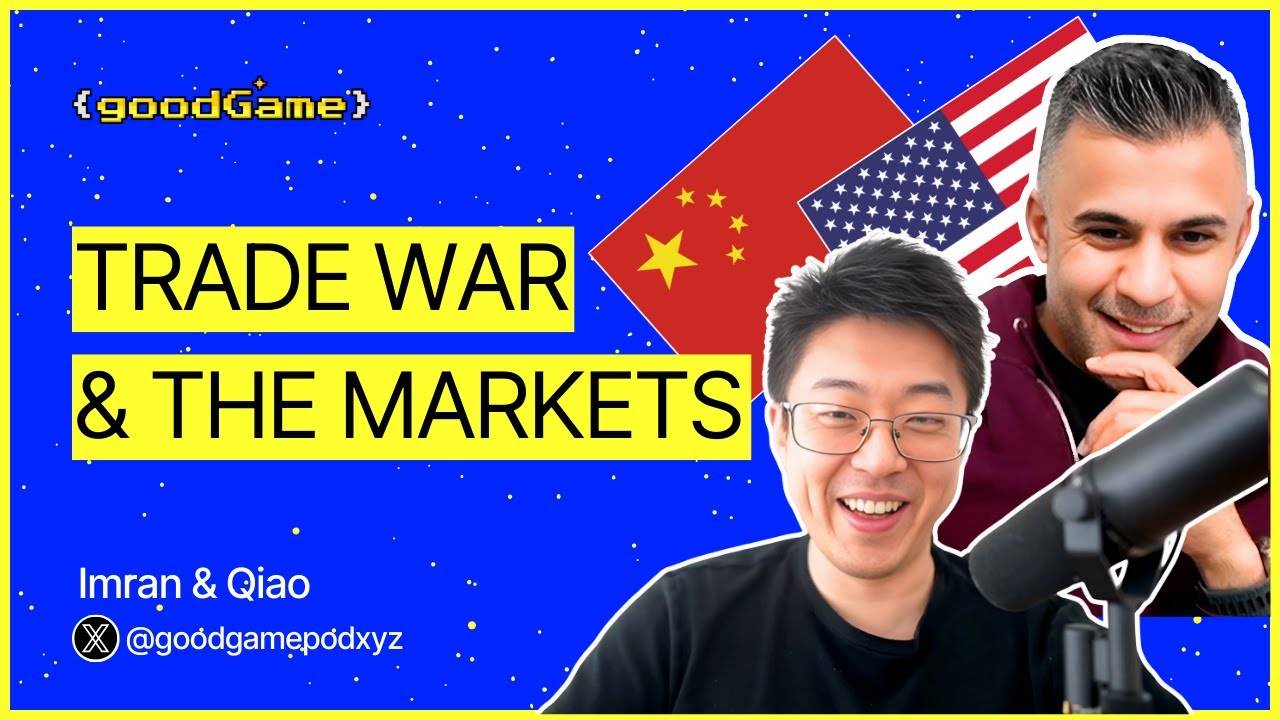
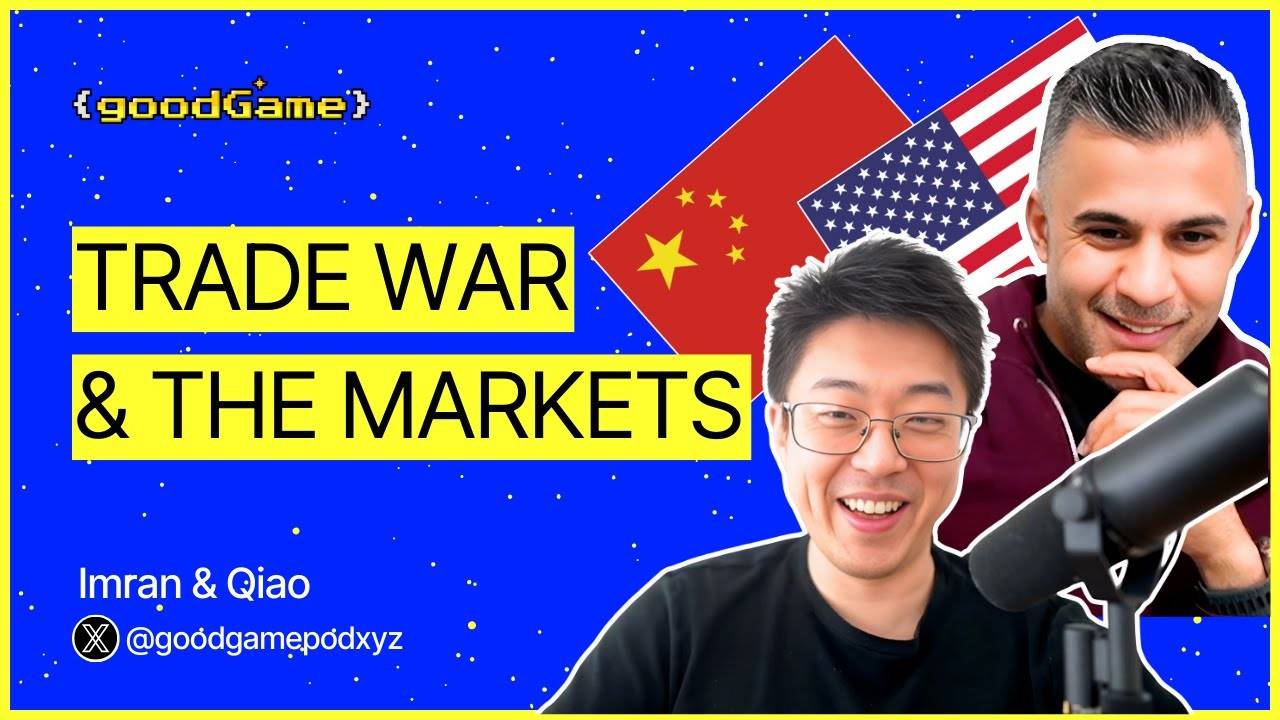
Guests: Imran Khan, Founder of Alliance DAO; Qiao Wang, Founder of Alliance DAO
Podcast Source: Good Game Podcast
Original Title: Trade War & The Markets | EP 74
Release Date: April 19, 2025
Key Takeaways
Imran and Qiao sit down to discuss the trade war and markets, offering straightforward crypto insights for founders.
Highlights Summary
-
Next year might be a good year for Bitcoin and risk assets.
-
Qiao: I’m not doing anything with my Bitcoin right now. My cost basis is essentially zero, and the tax rate is around 30%. So I’d need to be extremely confident that Bitcoin will drop by 30% before selling—and I don’t believe that will happen.
-
Imran: I sold all my stocks during the last rally. I’m just watching now. Currently, I only hold Bitcoin, Solana, Fartcoin, and some other cryptocurrencies. Fartcoin has been performing quite well—I see it as a safe haven.
-
The Fed’s dual mandate is promoting employment and controlling inflation—not influencing market prices.
-
I'm bearish on U.S. equities going forward.
-
My biggest concern isn't economic—it's potential military conflict.
-
Bitcoin combines Nasdaq-like growth characteristics with gold-like safe-haven properties, so its performance is expected to be strong.
-
If things go this way, under Biden, we could see regional or even global conflicts. Under Trump, I'm unsure whether he'd particularly focus on Taiwan.
-
China leads in many hardware manufacturing sectors—ships, automobiles, solar panels—all critical during wartime. The U.S. has gradually lost these capabilities over the past few decades.
-
If the goal of tariffs is to bring manufacturing back to the U.S., then tariffs may not be the best strategy. A smarter approach would be investing directly in these industries to ensure domestic companies remain competitive globally—rather than harming your own economy through tariffs, which is a zero-sum game.
-
Once enterprises start using your AI product, they're less likely to switch—enterprise lock-in is deeper.
Movement Labs
Imran:
Did you see the Movement Labs announcement?
That 0x balloon lever account has been talking about Rushi and Movement for the past six months—alleging insider trading, token price manipulation, and working with possibly unprofessional market makers. I don’t know the specifics. At an event in China, something happened—many people who participated in the airdrop became very angry, leading to the shutdown of Movement-hosted activities. Then it spread quickly. Many influencers started discussing improper handling by Rushi regarding the token launch. A few days ago, Rushi suddenly announced he’d take a temporary leave—not permanent. We still don’t know more details. If you want to talk about it, go ahead.
Qiao:
Did he sell his tokens?
Imran:
We’re not sure, but you know—OM Labs or OM—there’s insufficient disclosure from market makers and founders, same with exchanges. So many tokens look great on Twitter, but are actually artificially inflated.
Qiao:
How could OM crash 90% in one minute?
Imran:
No clear explanation, but someone pulled out a large amount of tokens and dumped them on the market.
Qiao:
Was it the market maker or a specific individual?
Imran:
Some accused Laser Digital, based in Southeast Asia. They claimed they weren’t involved. But Hasie and others pointed out there’s no transparent framework explaining how tokens get listed or how market makers operate—many areas are highly opaque now. As a result, people can be misled into buying tokens whose prices don’t reflect real market value. That’s why we keep seeing these kinds of incidents.
Market Discussion
Imran:
Anything else you want to talk about? Have we covered everything? Markets? Alright, let’s dive into markets. We briefly mentioned earlier that we might be bearish on the S&P 500. So, shall we discuss what you’re currently holding?
Qiao:
Actually, I’ve been selling stocks. Every time the market rebounds significantly, I sell part of my holdings, but I still hold the ones I mentioned: Google, TSMC, and PDD.
I am genuinely worried about war. So I’ve sold more TSMC than other stocks. Of course, my largest position is Bitcoin—but I don’t have much flexibility there. I think Bitcoin will continue trading as a hybrid between the S&P 500 and gold. Recently, Bitcoin’s performance has been roughly between the S&P 500 and Nasdaq—actually closer to being between Nasdaq and gold. So I’m not touching my Bitcoin. I can’t afford to make rash moves because my cost basis is nearly zero, and taxes are about 30%. I’d have to be absolutely certain Bitcoin would fall 30% to justify selling—and I don’t believe that’ll happen. That’s my current stance.
Imran:
I sold all my stocks during the last rally. I’m just observing now. Currently, I only hold Bitcoin, Solana, Fartcoin, and some other crypto. Fartcoin has performed quite well—I consider it a safe haven.
All the capital flowing into safe havens seems concentrated in one direction. Something similar happened with Pepe, if you remember—the same market dynamics, though that was during a bear market. As we emerged from the bear phase, our market cap went from around $300 million to—I sold half, then it rose to about $3–4 billion. So it’s similar dynamics. Other than that, nothing special. Let’s just see how the market unfolds.
Market Outlook
Imran:
Previously, we were bullish on the S&P 500—we’ve said this multiple times on the show.
Qiao:
I wasn’t super bullish—I did lean long, but with very limited upside expectations.
Imran:
We both thought things looked good, we were optimistic—but this was before Trump stirred things up. We were very bullish on crypto at the beginning, but we also felt exhausted. As I mentioned on our first episode this year, and you echoed it too—we were bullish, yet tired. That usually means you should sell, but we didn’t, because we’re die-hard believers in crypto, right? We like holding through volatility.
Qiao:
In the short term, I’m bearish on U.S. equities, while having no strong view on Bitcoin. Bitcoin somewhat combines Nasdaq-style growth with gold-style safe-haven traits, so it’s poised to perform well. However, I’m uncertain exactly how Bitcoin will behave, but next year could be a good year for Bitcoin and risk assets.
Crypto Regulation
Qiao:
This is frustrating because Massari tried solving this back in 2017—right? It’s been eight years, and it’s still unresolved.
For example, who owns which tokens, and who’s selling them? Under Section 5 of securities law, if you’re a major shareholder selling stock, you typically must disclose immediately—usually within one or two days. Whenever Warren Buffett sells shares of a company he holds, I get an SEC disclosure email. That threshold is above 10% ownership. There’s a reason for these rules.
Imran:
I agree. I think the permissionless nature of markets has led to inadequate regulatory frameworks, and no one has truly taken responsibility for defining what this should look like. To my knowledge, they’ve even discussed implementing quarterly earnings reports. Each quarter, we’d hold a call reviewing what we’ve done, what’s next, and offer forward-looking guidance on where we see the market and company heading.
Qiao:
The beauty of crypto is you can do this daily, not just quarterly—because everything is on-chain. If someone sells internal shares, it’s visible on-chain. You just need to link addresses to owner identities. Then you get real-time automatic disclosures. Traditional finance can’t do this—that’s why they rely on quarterly reports and such.
Imran:
So the question becomes: who takes responsibility? Is this something a company like ByteDance would do? Or Jupiter? Or is it more self-regulatory?
Qiao:
This was the conversation we had seven years ago with Massari. Unfortunately, it turned out this isn’t something a startup can solve. Back then, Massari only had five people. This should be tackled collectively by major exchanges and top industry players. Sadly, it hasn’t happened. This is clearly the responsibility of companies like ByteDance, Coinbase, and others.
Imran:
I’m curious how this would work. There needs to be some linkage between exchanges, market makers, and founders for this to function. But I don’t think this will happen under a Trump administration.
Qiao:
I was thinking recently—if crypto ultimately fails, it would be the biggest challenge to free-market ideology. In traditional finance, you can argue it’s not fully free due to regulation, SEC oversight, etc.—there’s a central planner setting rules. But in crypto, we have none. Maybe these rules are actually necessary. A 100% completely free market might not be ideal—perhaps it should be 90% free, with 10% centralized planning and regulation.
Imran:
I agree. I do believe there should be a moderate level of regulation governing how IPOs or ICOs are handled.
Impact of Crypto’s Speculative Nature
Imran:
This might be because crypto is generally not seen as a reliable investment—clearly due to its speculative nature, which in turn affects our overall image. As a result, high-quality talent may be reluctant to enter this tech sector because of what they see happening. If you keep seeing shootings on social media, would you really feel excited about changing the future? Probably not. But if you frame it around stablecoins—say, “We’re in crypto, but actually, we’re stable”—
Qiao:
It’s not a perfect analogy, but it feels like Web3 differentiated itself from crypto four years ago. And hardcore Bitcoin maximalists have always tried to distance themselves from crypto. So Bitcoin and crypto are becoming mutually exclusive concepts. Now, stablecoins are separating from crypto as well.
Imran:
That might be a better path. For elite talent in places like Silicon Valley, they might be more willing to join this sub-sector because they can distinguish their work from traditional crypto. “Oh, I’m not doing crypto—I’m doing stablecoins.”
Qiao:
I’m not entirely sure—stablecoins are relatively easy to understand. Even Bitcoin is hard for many people, but stablecoins feel like an extension of fintech. Essentially fintech 2.0—payments, remittances—things most traditional technologists can grasp easily.
Imran:
Yes, that’s the narrative I mean. I’m not worried about it. If we can achieve that, it could benefit the entire crypto industry.
Trade War
Imran:
On the trade war front, we’re seeing many interesting developments. Trump just tweeted today that we might soon reach a deal with China—and markets rose immediately.
S&P 500 jumped 0.79%. Yesterday, I listened to Powell speaking in Chicago—he was asked whether the Fed would intervene in stock markets, and everyone laughed. Powell responded that although people hope the Fed steps in, we believe the economy is doing well. Actually, I think markets are trying to digest this new information over the coming months. Until clarity emerges, the market will remain uncertain about its next move. Therefore, until things settle, it’s hard for me to make decisions.
Qiao:
He’s trying to exert pressure.
Imran:
I disagree with this kind of pressure. Powell said markets are digesting all information. If markets remain volatile, what’s the point of me making any decision? I agree with that.
Qiao:
Technically, markets aren’t part of the Fed’s dual mandate.
Imran:
The Fed’s dual mandate is promoting employment and controlling inflation—not influencing market prices.
Qiao:
But you can see it’s becoming an area of attention for the Fed—even if it’s not officially within their mandate. Interesting. Anyway, overall thoughts on the trade war?
Imran:
What are your thoughts?
Qiao:
I think the impact of the trade war on businesses, consumers, and markets will be far worse than anticipated. Over the past few weeks, retail investors are still “buying the dip.” What do you think? Have you talked to people around you? I feel people still expect the Fed to save the market. They keep buying, showing almost no signs of giving up. That’s one side. Meanwhile, U.S. stocks are still extremely expensive. Even assuming earnings stay flat—which isn’t guaranteed, since tariffs will hurt profits—U.S. equities still trade at a P/E ratio of around 24, which is historically very high.
Qiao:
I’m bearish on the future of U.S. equities. I’m very pessimistic about their outlook. While near-term movements are hard to predict, I believe in three to six months, the market will gradually recognize these issues.
Imran:
I think markets will only react after everything is finalized because there’s too much uncertainty now. People expect that once Trump announces a deal, we’ll get a V-shaped recovery—everything returns to normal. They might reverse previous decisions and adjust positions. But they fail to realize we may already be affected by all policy changes. Even in the short term, recovery will take time.
Qiao:
I think damage is already done—business confidence and consumer confidence have been psychologically impacted. This means consumers will spend more cautiously due to uncertainty. Same with businesses—they can’t make large investments when they don’t know what tariffs will be in one or three months. So everyone reduces spending, which will undoubtedly hurt the economy. A 10% tariff—let’s be clear—isn’t small. Yes, 10%. But it’s not applied to final goods prices—it hits production costs, which is worse than a 10% increase on end products. If your business operates on 10% margins and costs suddenly rise 10%, you’re no longer profitable.
Someone posted a chart showing that even 10% and 20% tariff levels are approaching those of the Smoot-Hawley Tariff Act from the late 1920s and early 1930s. These are the highest tariff levels in a century.
Imran:
U.S. toy prices have risen 80% since then. So a $3 toy now costs $70—a classic example. Average car prices will rise 15%, adding roughly $7,600. Plus, each household’s annual expenses will increase by $3,800 just from average grocery-type costs. These are real impacts people haven’t realized yet—they’re already being affected.
Discussion on Trade War Strategy
Imran:
So what’s America’s actual strategy in this trade war? I’ve read many analyses and comments—some traders and macro experts I follow think the U.S. strategy may align with Scott Besson’s views. His goal at Treasury might be containing China’s development, since China has become the world’s second-largest power and could surpass the U.S. To achieve this, the U.S. may try to stop other countries from trading with China. They aim to create a multipolar world, leveraging the dollar’s role in global commerce and trade as a security guarantee to attract others toward trading more with the U.S. rather than China. For instance, they tried using Vietnam as an example. I think Vietnam just pivoted toward cooperating with China.
They’re also attempting deals with Japan and others. This is just one example. If successful, China’s GDP could decline, forcing it to yield to U.S. pressure. That’s what some believe. What do you think?
Qiao:
If that were their goal, the actual execution contradicts it completely. Because Trump’s actions so far haven’t only upset China—they’ve unsettled all U.S. allies, including Europe, Japan, South Korea, and several neighboring countries. Now, these nations are at least attempting—or publicly stating willingness—to negotiate with China to reduce retaliatory tariffs. For example, Spain has started exporting pork to China at significantly reduced tariffs.
I saw news about this, though I don’t recall exact figures. Similar situations exist with South Korea and Japan. Historically tense relations among China, South Korea, and Japan now force them to cooperate somehow—at least publicly. Vietnam-China relations show similar patterns. So actual policy implementation doesn’t match stated goals. In my view, it’s more likely there’s no coherent strategy at all. Trump seems to be acting on instinct, without deep consideration. This fits my impression of Trump as a businessman—he likes bluffing, creating uncertainty, starting with big demands, then gradually backing down. It’s like Negotiation 101. Overall, I think this strategy is truly terrible—much worse than people expect.
Impact of Trade War on Global Relations
Imran:
I think this trade war will have profound global consequences. Clearly, U.S. equities could be severely negatively impacted.
I noticed someone tweeted that many people are now adding European equities, gold, and Bitcoin to their portfolios for the first time—as a new investment strategy.
Qiao:
My biggest concern isn’t economic—it’s potential military conflict.
Imran:
Do you think it could escalate to that level?
Qiao:
Economic hardship increases the risk of military conflict. If conflict happens, it’s most likely in the Taiwan Strait. Before tariffs emerged, I estimated the probability of U.S.-China military conflict over Taiwan in the next three years at around 25%. After this tariff turmoil and uncertainty, I think it’s now risen to 50%.
Imran:
If that’s true, under Biden, we might see regional or even global conflict. Under Trump, I’m not sure he’d specifically focus on Taiwan.
Qiao:
But he deeply cares about his image—he doesn’t want to appear weak. That’s a valid point. I’m unsure how much the U.S. would engage, but I believe the likelihood of military conflict between China and Taiwan has increased dramatically.
Imran:
That’s a fair point. If so, regional conflicts may not be limited to Taiwan and China—this could be catastrophic for global relations, business, and trade. Yes, I just hope he handles it properly, and we only go through a mild recession before moving on.
Impact of Trade War on Startups
Imran:
So how does this trade war affect local startups? For example, we might struggle to attract entrepreneurs from China and India. What’s your take?
Qiao:
Don’t you think if the economy slows, venture capital will slow too? This will similarly affect the VC market, as private markets typically lag public markets by a few quarters.
Imran:
I think it also depends on progress in AI. Right now, AI is extremely hot. You know, I just did a quick data analysis on the last two YC batches. I wanted to see the average post-demo-day valuation of these startups. Results show AI startups averaged around $22 million. That number feels quite high to me—ideally, you’d want it around $15 million. A $22 million valuation with no product or even MVP seems particularly high. I think this number will keep rising.
So I do believe we’re approaching a turning point—especially in AI, things could shift. Especially considering projects OpenAI is pursuing—Winsurf is a great example: without any product, unless they own some network, no one can secure it.
OpenAI’s Attempt to Acquire Windsurf
Imran:
Yesterday I mentioned in chat that OpenAI tried to acquire a company called Windsurf—for about $3 billion. OpenAI approached Cursor twice, but got rejected. Then they turned to acquiring Windsurf.
You can think of OpenAI as an L1, building applications on top. The company with the most apps will have the best models, attracting more users, helping develop more apps. Does that make sense?
Qiao:
Two things come to mind. First, OpenAI hasn’t developed the best coding model yet. They’ve been trying, but Anthropic may have an edge in coding. Cursor and Windsurf might even be using Anthropic’s models. OpenAI wants a top-tier coding model—but that requires massive data.
Where does the data come from? You can buy labeled data from companies specializing in data annotation, like Scale AI. But another way is to directly obtain data from Cursor or Windsurf. When you use Cursor and Windsurf to code, you’re feeding data to these platforms—you prompt, request code suggestions, and accept them, right? As a user, you’re accepting suggestions. That’s essentially labeling model outputs. It’s almost like reinforcement learning with human feedback. This data is extremely valuable. That’s why OpenAI wants it. That’s also why they tried to buy Cursor and got rejected—now they’ve acquired OneServe. That’s my first point.
Second, these large AI labs may be tracking market trends—where users are, what interests them. They might worry foundational models will eventually become commoditized—similar to crypto, right? The base layer may gradually become commoditized, while the application layer captures most value. By acquiring apps with large user bases—like Windsurf or Cursor—they can solidify their position in the app layer. Because ChatGPT is an app, right? Built atop various OpenAI models. But they want more—they want coding apps, maybe other things in the future. So I think that’s their acquisition strategy.
OpenAI as a Super App
Imran:
To me, this feels more like a super app. You’ve probably seen OpenAI’s announcements exploring social spaces. It’s almost like an integrated platform where you experience various forms of AI—tools for coding, tools for generating photos and videos to create content and stories, even general intelligence helping you understand daily matters—just like Googling things. This evolution is fascinating because every time OpenAI launches a new product, it gradually replaces hundreds of niche-focused startups. Even in our space, we focus on very specific niches—like building apps around crypto. We think unique opportunities exist due to crypto’s nature. But you could argue many of these might be replaced by bigger companies.
Qiao:
Actually, about half of YC startups say that whenever a new base model emerges, their ideas become unviable. Sure, they can pivot anytime—but as soon as a new base model drops, their current idea loses relevance.
Investing in AI Companies
Imran:
Another interesting phenomenon—I don’t know if you’ve seen that chart showing investments by major VCs like Index Ventures, A16Z, LightSpeed in key AI companies. It shows these firms typically invest two to three times in these startups. Vinod Khosla invested only once at the early stage—and that was in OpenAI.
Imran:
Interestingly, I spoke with Founders Fund yesterday. Their main AI investment is primarily OpenAI. They have minor stakes in a few other niche AI companies, but very small. When I talked to them, they said Peter Thiel doesn’t want to over-invest in AI. He thinks it’ll all get eaten up like the dot-com bubble. So he explicitly told the team not to overly focus on AI—because it reminds him of the internet bubble.
Qiao:
I remember he expressed similar views about six months ago—I saw that interview on the “All In” podcast. Yes, he did mention similarities between AI and the internet bubble.
Imran:
So he reiterated this point in launching his new fund, emphasizing they shouldn’t over-allocate to AI now.
Comparison Between AI and Crypto Startups
Imran:
You could say market consensus on AI has reached extreme levels—competition is incredibly fierce. If you think crypto competition is intense, look at what’s happening in AI. In our current batch, several AI startups each face about 25 to 50 competitors.
Qiao:
I feel AI competition and crowding might be several times higher than in crypto startups.
Imran:
I feel crypto has somewhat fragmented.
Qiao:
Actually, this fragmentation has become increasingly evident over the past two years.
Imran:
To the point they’re trying to redefine crypto from entirely new angles. For example, Bridge.xyz’s founder recently tweeted that after cloud computing and mobile internet, the next big platform should be stablecoins. So in his discussion, he completely excluded crypto—arguing stablecoins represent the next major shift.
Exciting Startups in AI and Crypto
Imran:
Which startups excite you the most? From a technical standpoint, we can at least predict industry trends one quarter ahead, right? Which startups interest you the most?
Qiao:
I think in our current batch, many startups focus on stablecoins—about a third of companies in this space—targeting specific regions or use cases like remittances or yield management. Also, we have some AI startups focused on specific verticals—like a tool company for scientific research, and another using AI video models for advertising. Plus, there’s a team providing coding services specifically for crypto apps—their team is strong and promising.
Poof.new
Imran:
I’m very excited to work with several startups that intrigue me—obviously, I’m interested in the ones you mentioned too. But Poof.new is a platform offering coding services for crypto—I think they have unique advantages here. The team is exceptionally strong—members from Phantom and Coinbase, with deep domain understanding, and they built similar products on Flow two or three years ago. So they possess the expertise to build excellent products, which I find crucial.
Slop.club
Imran:
This project is somewhat experimental. I know your thoughts on it. Anyway, Slop.club is a video generation platform. It uses cutting-edge models like Google’s Clean and Vo, enabling people to gather and remix content. The functionality is cool—you can even upload images and generate fun video models around them. This interactive remixing is sparking new consumer trends. Actually, OpenAI’s entry into the market was via image and video generation. So the question is—how will these video models be used? I think Slop is like 4chan, but focused on video models.
Qiao:
The core insight is that video models enable new behaviors previously impossible. Yes, they drastically reduce latency in video creation and remixing. Before, creators spent long hours making a video. Now, you can generate a video in seconds via a prompt—maximum minutes. Remixing works the same—you can remix instantly, whereas before it took much longer. That’s the fundamental insight behind this product.
01 Exchange
Imran:
The last one is 01 exchange, created by the Photon and Bullex team. You might have seen tweets about Bullex’s founder—he doesn’t seem very responsive lately. They made a lot of money, and in crypto, founder motivation presents a unique challenge. For example, even if you’re a billionaire, or have hundreds of millions in your bank account—would you still want to keep building a product? This is a unique challenge crypto founders face, and only the best overcome it. The Pump.fun team is a perfect example. They earned massive revenue and continuously innovate on their product—recently announcing live streaming features. This is a challenge founders must confront.
Imran:
Bullex has slowed down, same with Photon. Not sure about their product progress. So the 01 exchange team is highly motivated—working around the clock, with unique approaches to building upgraded products for traders. Those are the ones I mentioned.
Impact of Military Conflict on AI Development
Qiao:
Potential military conflict could disrupt semiconductor supply chains, affecting AI development—especially robotics, which relies more heavily on hardware.
Imran:
And a lot of hardware is imported from China, right?
Qiao:
Many advanced chips do come from China—not the most cutting-edge like 3nm, but slightly lower-tier chips and vast quantities of other electronic components are manufactured there.
China’s Dominance in Robotics
Imran:
Interestingly, I found China dominates in robotics. Specifically, while I haven’t dug deep into humanoid robots, China holds 51% of the global industrial robot manufacturing market, compared to just 5% for the U.S.
Imran:
This suggests that if humanoid robot production and sales scale up, China—not the U.S.—will likely dominate the primary market.
Qiao:
I think robotics development may mirror digital AI and AI agents. The U.S. innovates first, leading the way, creating many new technologies—then China steps in, making them cheaper and more efficient.
Imran:
Travis Kalanick, Uber’s founder, mentioned on a podcast that earlier, when competing with Chinese rivals, every time he launched a new feature, Chinese companies replicated it within a day. He was amazed by their speed and gained respect for these Chinese startups.
Look at BYD cars—they perform exceptionally well. I don’t know if you’ve seen related videos—the suspension system can move up and down. I’ve seen many cool features and even considered buying one. Can’t buy it in the U.S., but I’d really like to check it out.
Qiao:
I spoke yesterday with someone knowledgeable about Chinese EVs. Advantages: luxurious appearance, interior better-looking than Tesla’s, cheaper price, decent battery performance. But drawbacks: safety concerns—many reports of spontaneous combustion.
Batteries catch fire—not due to crashes, but battery explosions. It’s a problem. Such news rarely goes public because it gets censored quickly.
Another issue: full self-driving (FSD). They lack this technology. Tesla leads far ahead in FSD.
China’s Progress in Solar Energy
Imran:
In which products do you think China leads over the U.S.?
Qiao:
In solar energy—especially in power generation.
Imran:
I think they manufacture about 80% of the world’s solar panels.
Qiao:
About that. Most of this change happened in the past decade—very rapid development. Ten years ago, China barely had this industry, then they started pouring massive investments into these sectors. I think there’s strategic thinking behind it. Though I’m not sure, I believe China heavily invested in hardware manufacturing because these industries become critically important during wartime. Now, China leads in many hardware manufacturing fields—ships, automobiles, solar panels—all especially vital during war. The U.S. has gradually lost these capabilities over recent decades.
Imran:
I think the U.S. never truly had this capability. For example, when I read *Chip War*, I learned even back then, U.S. chip yields weren’t high. I think they made some efforts here.
Qiao:
This brings me back to the tariff war. If the goal of tariffs is to bring manufacturing back to the U.S., tariffs may not be the optimal strategy. A smarter approach would be investing in these industries, ensuring domestic companies remain competitive globally—rather than harming your own economy through tariffs, which is a zero-sum game.
Imran:
Indeed a zero-sum game. Yes, you must compete harder and faster. When reinvesting in manufacturing in the U.S., you must be careful not to raise costs, as that affects consumer confidence and the global economy. Still, I’m not sure—some say Trump is playing complex strategic games.
Benefits of Going Public
Imran:
While reading about Snapchat, I learned founder Evan recently gave a speech. He mentioned that after going public, operations became more efficient—both backend management and user acquisition improved.
It genuinely helped him manage the company better. So I think going public brings positive effects—it pushes founders to be more disciplined in capital management and user acquisition. If you launch new products, being public forces founders to care not just about short-term goals, but also 5–10 year horizons. So I believe improving operational efficiency through going public is very important.
Latest in AI
Imran:
Any fresh developments in AI recently? We talked about acquisitions—do you think founders developing products in certain areas should worry about OpenAI or other big AI companies? Are there any relatively safe industries or domains?
Qiao:
Personally, I think enterprise use cases are safer than consumer ones. You might disagree. Coming from the enterprise world, let me give reasons.
I think enterprises resist change more. Once enterprises start using your AI product, they’re less likely to switch—enterprise lock-in is deeper. Because enterprises consist of groups of people, while consumers are individuals. Coordinating a group to switch products is much harder than coordinating one person, right? So I think that’s why enterprise switching costs are higher. What do you think?
Imran:
Your argument makes sense. But in practice, I see enterprises do resist change—yes, but often because products are bundled.
Qiao:
Like Microsoft. If you subscribe to Office 365, you likely also use Azure, Outlook, etc.—basically locked in.
Imran:
Microsoft Teams is a classic case. It somewhat blocked Slack’s growth because it’s free for all Office 365 subscribers—mostly enterprises.
So I think enterprises can actually convert these customers to new products more easily because they’re already subscription-locked. Take Canva—yesterday one of our founders tweeted they launched an education product. Educational institutions—schools, universities—can be seen as enterprise clients, already locked into the software. Now they release a new product—any child can create an app, right? Imagine products like Lovable or Bold being offered free to everyone. Startups aiming to capture these users now have no chance. They can still try individually, but need sales teams to penetrate every market.
But here’s a counterexample—Zoom. I mentioned this before. Zoom isn’t as dominant now, but during the pandemic, usage surged. Zoom succeeded because every consumer used it. Since consumers adopted it, enterprises found it easier to accept this new video platform—because people used it daily at home.
Same thing happened between iPhone and BlackBerry. BlackBerry was the enterprise hardware standard, but iPhone became ubiquitous. This shift happened through consumer channels. Once consumers adopt something, enterprises eventually have to change. History repeats itself. Will this time be different? Maybe.
Qiao:
But you didn’t contradict my point. I said enterprises are harder for OpenAI to disrupt. If you build an AI product for enterprises, OpenAI’s interference is relatively smaller—while consumer-facing products are more vulnerable.
Imran:
OpenAI can build products for enterprises. They already have enterprise offerings. As first movers, many enterprises have already adopted OpenAI to some extent. So it’s relatively easy for OpenAI to enter the enterprise market.
Qiao:
Are you saying because OpenAI has massive consumer adoption, they can more easily enter enterprise markets?
Imran:
Exactly—because they’ve become synonymous with AI. So they can more easily win adjacent AI-related products. Microsoft is another example. The competition between Microsoft and OpenAI illustrates this. You know, Microsoft made major moves—their rivalry is intense. They shifted many workloads originally on Azure to Oracle and others to balance competition with Microsoft. So now Microsoft is building its own products—they must win these users. OpenAI is competing with everyone. I think they’re fighting too many battles on too many fronts—and that usually leads to failure.
Qiao:
Back to the original question—what types of AI applications are harder for OpenAI to easily disrupt? I think pure application-layer startups have an advantage over OpenAI because they can choose among multiple base models—each differing across domains. In some areas, certain models perform better. For example, Cursor and Windsurf use Anthropic’s models because in coding, Anthropic beats OpenAI. So OpenAI can’t just build dev tools on their own model—they have to acquire Cursor or Windsurf. That’s a form of defense for app-layer startups. Does that make sense? It’s essentially network effects.
Imran:
Yes, the ability to choose different models. But you can only do that if you have distribution, right?
Qiao:
But you gain distribution because you first built something useful.
Imran:
I think in these cases, they were early movers and adapted quickly.
Qiao:
I think it’s hard to predict which industries can resist OpenAI’s disruption. It’s genuinely difficult to foresee.
Imran:
Because it mainly depends on two factors. First, whether the app can move fast enough to gain massive users and broad distribution. Second, what OpenAI actually wants to do—what industries they aim to enter. It’s truly hard to predict.
OpenAI o3
Qiao:
OpenAI just released o3—their benchmark results are quite impressive. I think they’re doing exceptionally well.
Imran:
Some say it’s close to AGI—I don’t like that term.
Qiao:
But someone gave it a simple math problem, and it failed to solve it.
Imran:
Still, o3 ranks very high—outperforms Gemini 2.5. So o3 is now the top-performing model in this category, especially in long-context reasoning.
Imran:
How does it compare with Google’s Gemini?
Qiao:
As I said, I think Google’s Gemini 2.5 is now second place.
Competitiveness of AI Models
Qiao:
This circles back to the earlier point—the app layer’s advantage lies in rapidly adapting to latest models, while OpenAI can only use their own. That’s a fundamental difference.
Imran:
At this stage, the model itself almost doesn’t matter anymore—the key is distribution.
Qiao:
Yes. I think switching models is much easier than switching platforms. AI models have low defensibility—more like commodities—while blockchains are harder to replace.
Imran:
Interestingly, despite this, Zuckerberg recently launched Llama 3 and Llama 4—competition has become extremely fierce. Now almost no one wants to use Llama 4. Interestingly, some researchers who left Meta—those involved in Llama 2 and Llama 3—are now joining OpenAI. You can check their LinkedIn.
Qiao:
You saw that? I saw the post—quite interesting. In his job description, he wrote he worked on Llama 2 and Llama 3, but not prior versions.
Imran:
All this shows how intense the competition is. Without funding or top talent, you have no competitive edge. So the model race is over. Aggregated models like OpenRouter and Freedom GBT are an interesting direction.
Imran:
Because at least then, I pitched the idea of Freedom GBT to some people—asked if they thought OpenAI was the only option. By the way, I asked about 25 people—no one had heard of anything else, including Perplexity and Gemini. Now people only know OpenAI. I talked to kids aged 12 to 18—they’ve never heard of anything besides OpenAI.
Then I introduced the idea of Freedom GBT—asked if they understood the issue. They said sometimes they hate how OpenAI refuses to answer certain questions. I asked if they’d want X. They said yes. Then I explained Freedom GBT—walked them through the concept of multi-model vs. OpenAI-only. Finally, they got it.
Qiao:
My current AI usage pattern is asking a question across several different models. Usually ChatGPT and Gemini, but sometimes DeepSeek, Claude—because answers differ, and I need cross-validation.
Imran:
I find myself choosing specific models for specific tasks—we discussed this last episode. For example, I know Google’s Gemini has clear advantages in certain areas. I really like Gemini because it can analyze YouTube videos and other proprietary content, right?
It actually pulls from all sources—all videos—extracting content from everywhere. I think YouTube contains nuanced perspectives or info unavailable elsewhere. So I find that a very interesting angle.
AI Memory Function
Imran:
We previously discussed memory functions—I’ve made significant improvements with Oak. I feel there are patterns here, though you don’t seem to agree. Do you think memory functions exhibit patterns? I’d love to hear your thoughts.
Qiao:
I think there are indeed some patterns—though not very obvious, nor entirely absent. Of course, it’s useful, but I’m not sure exactly what improvements they made. What does “full memory” actually mean? I once asked ChatGPT—based on your knowledge of me, what’s my MBTI type? Its answer was pretty good. I always assumed memory existed already. So I’m unclear what changed with this release.
Imran:
Yeah, I’m also unclear about the exact impact. From what I gathered, they expanded memory to retain more information about you across conversations and extract insights from it. I know OpenAI has a memory toggle—I sometimes reset it. I used to be cautious. Now I’m less worried—since it has some background on me, answers feel better tailored. For example, it knows I have issues with X and Y, so it might adjust responses accordingly. I appreciate this. Sometimes, it feels personal—like it understands me. That feeling unsettles me a bit because I know it’s just AI. But if I feel this way, I imagine many people may already form relationships with it.
Qiao:
Like Iron Man and JARVIS. I don’t think it’s conscious, though some might believe so.
Imran:
I don’t think it’s conscious either, but its conversational style and personalized interactions do reflect human-like emotions. Just like you can resonate with someone, it can resonate with you—I find that strange.
I do think there are patterns here. The closer your relationship with a system, the more it knows about you, the harder it becomes to switch to something else.
Join TechFlow official community to stay tuned
Telegram:https://t.me/TechFlowDaily
X (Twitter):https://x.com/TechFlowPost
X (Twitter) EN:https://x.com/BlockFlow_News
 深潮TechFlow