








Plain-language explainer: What is Vitalik proposing with RISC-V to replace the EVM, and why?
TechFlow Selected TechFlow Selected
Plain-language explainer: What is Vitalik proposing with RISC-V to replace the EVM, and why?
Can a tech upgrade save ETH's price?
 Navigating Web3 tides with focused insights
By TechFlow
As a writer, I regularly come into contact with cutting-edge narratives and technologies.
For instance, Vitalik's technical blog occasionally drops serious, hardcore insights—content that media outlets rush to report on.
But while access is one thing, understanding is another.
A few days ago, Ethereum co-founder Vitalik proposed a bold idea: replacing Ethereum’s core component—the EVM (Ethereum Virtual Machine)—with something called RISC-V.
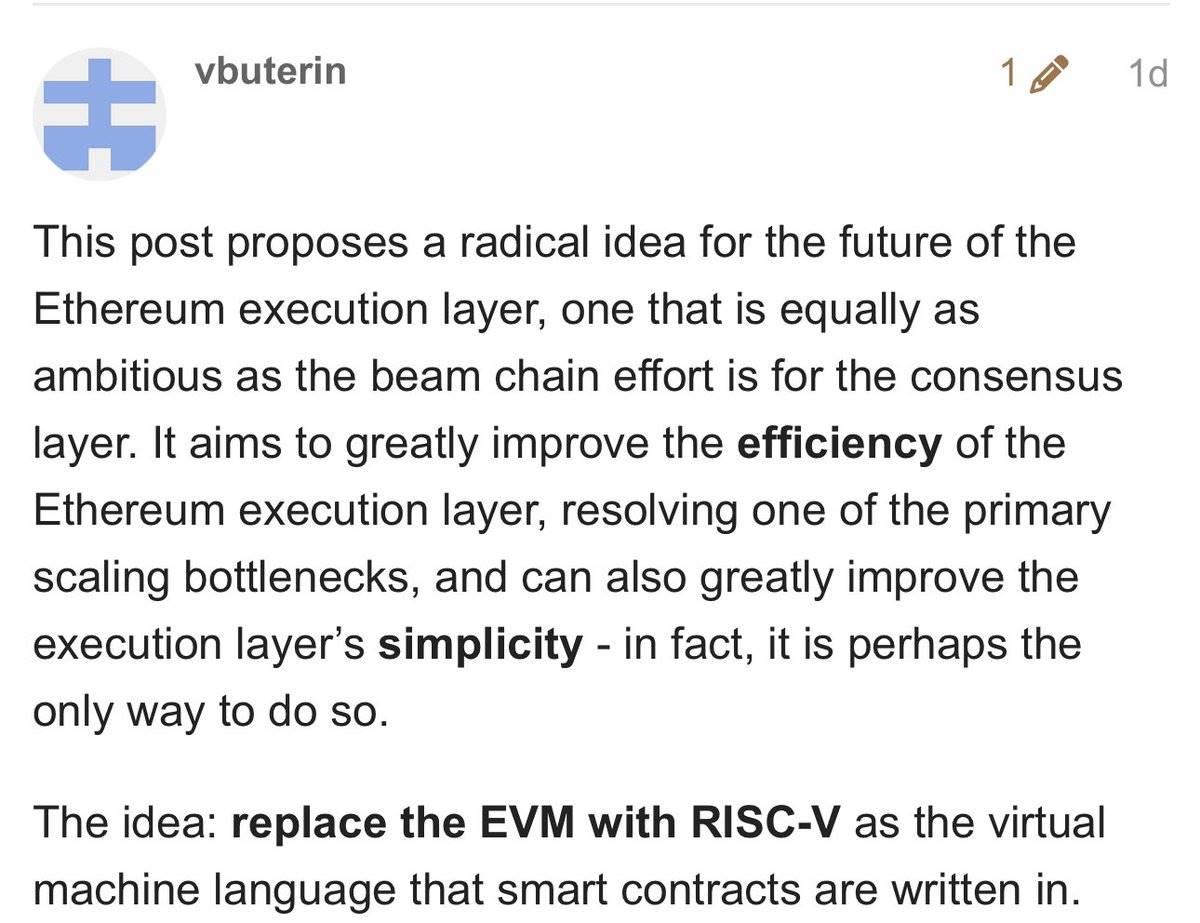
In English-speaking crypto circles on Twitter, there’s already extensive discussion about this. But in Chinese communities, such technically dense topics seem to attract little attention.
After all, it's undeniable that ETH’s price remains stagnant. The consensus has quietly formed: technical upgrades won’t save the “E-vangels.”
Still, driven by curiosity—and perhaps a desire to salvage my own buried ETH—I took the time to study Vitalik’s proposal on RISC-V, aiming to explain it in plain terms: what changes it could bring, and its potential implications.
Because hey, maybe you still care about ETH.
EVM Speaks Dialect, RISC-V Speaks Mandarin
First, some background.
Ethereum is a blockchain platform—a kind of decentralized "supercomputer"—capable of running smart contracts: self-executing programs used for things like DeFi applications or NFT trading.
The key point is that Ethereum’s smart contracts run on the EVM (Ethereum Virtual Machine).
Think of the EVM as a translator: it converts code written by developers (e.g., Solidity-based smart contracts) into executable instructions (bytecode) that Ethereum can process.
This system has worked well so far.
But EVM has a problem: it’s a custom-built system, poorly compatible with mainstream computing standards, leading to inefficiency—especially bottlenecks during complex tasks.
So where does RISC-V fit in?
RISC-V (pronounced “risk-five”) is an open-source computer instruction set architecture (ISA), akin to a standardized “language” for computers.
Developed in 2010 at UC Berkeley, it's now widely used in chips for smartphones, laptops, sensors, and more. Unlike proprietary ISAs from Intel or ARM, RISC-V is fully open-source—anyone can use it to design chips. It’s essentially the hardware world’s “Linux.”
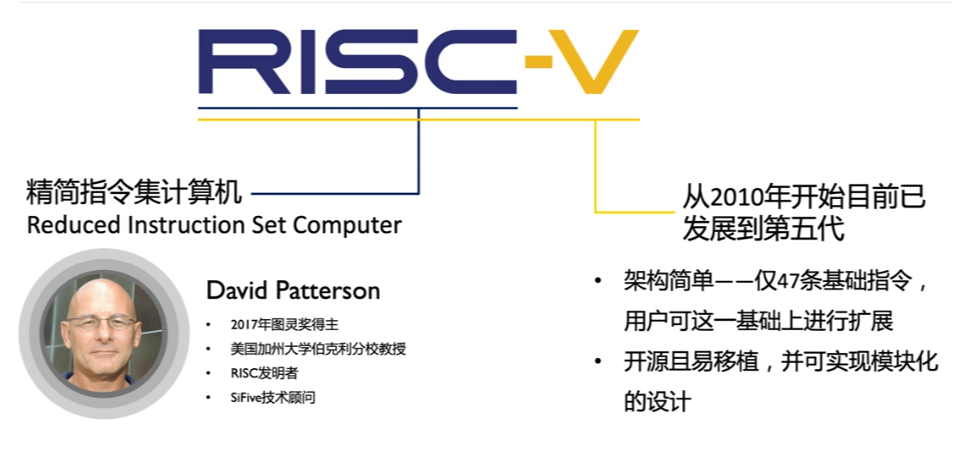
(Image source: CSDN)
You might wonder: what does a hardware chip instruction set have to do with Ethereum? Why is Vitalik interested in RISC-V?
Simply put, RISC-V could fix many of EVM’s flaws. As mentioned, EVM is like a “translator,” but it uses an outdated “dialect” incompatible with mainstream computing languages. Every time a smart contract runs, it requires laborious translation, resulting in painfully low efficiency.
RISC-V, by contrast, is a modern, universal language already adopted across countless devices, backed by mature tools and infrastructure. If Ethereum could run smart contracts directly in RISC-V, it would eliminate the need for constant translation—boosting efficiency significantly.
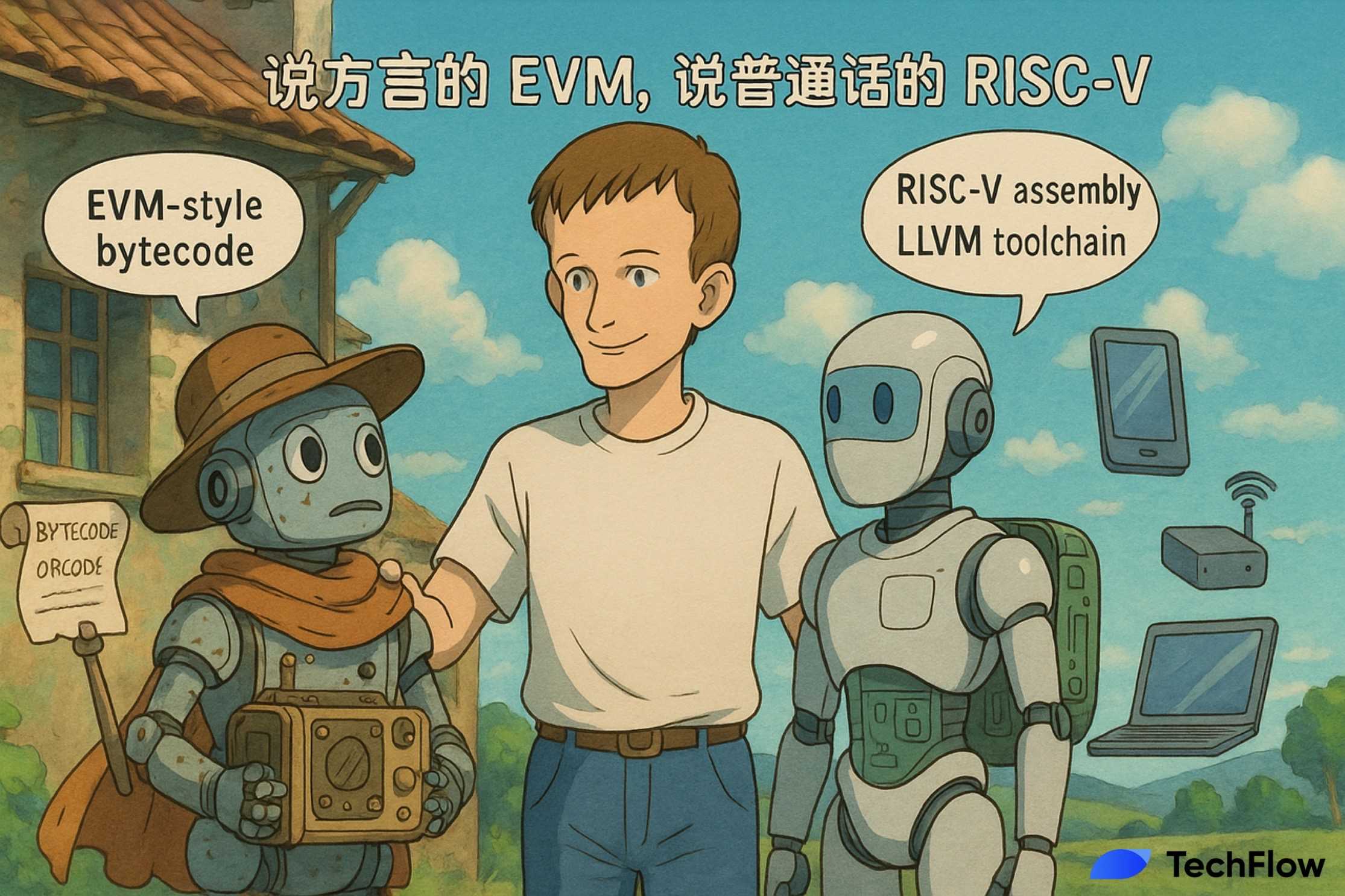
Specifically, RISC-V would be applied at Ethereum’s “execution layer”—the core engine responsible for processing smart contracts. Vitalik’s idea is to replace EVM, the old engine, with RISC-V, a new one, allowing smart contracts to run natively on RISC-V.
In his April 20, 2025 blog post, he suggested this swap could improve Ethereum’s execution efficiency by 100x.
Additionally, RISC-V offers better support for ZK (zero-knowledge proofs), making it particularly suitable for scaling solutions like zk-Rollups.
However, this idea is still just a “proposal,” introduced only days ago.
The community has only begun discussing it. Some see promise; others warn of risks, fearing increased system complexity.
Vitalik himself noted this is a long-term plan—likely years away from implementation. For now, Ethereum is focused on other upgrades (like the Pectra upgrade on May 7, aimed at improving Layer-2 and user experience). So RISC-V is still far off, with no immediate action expected.
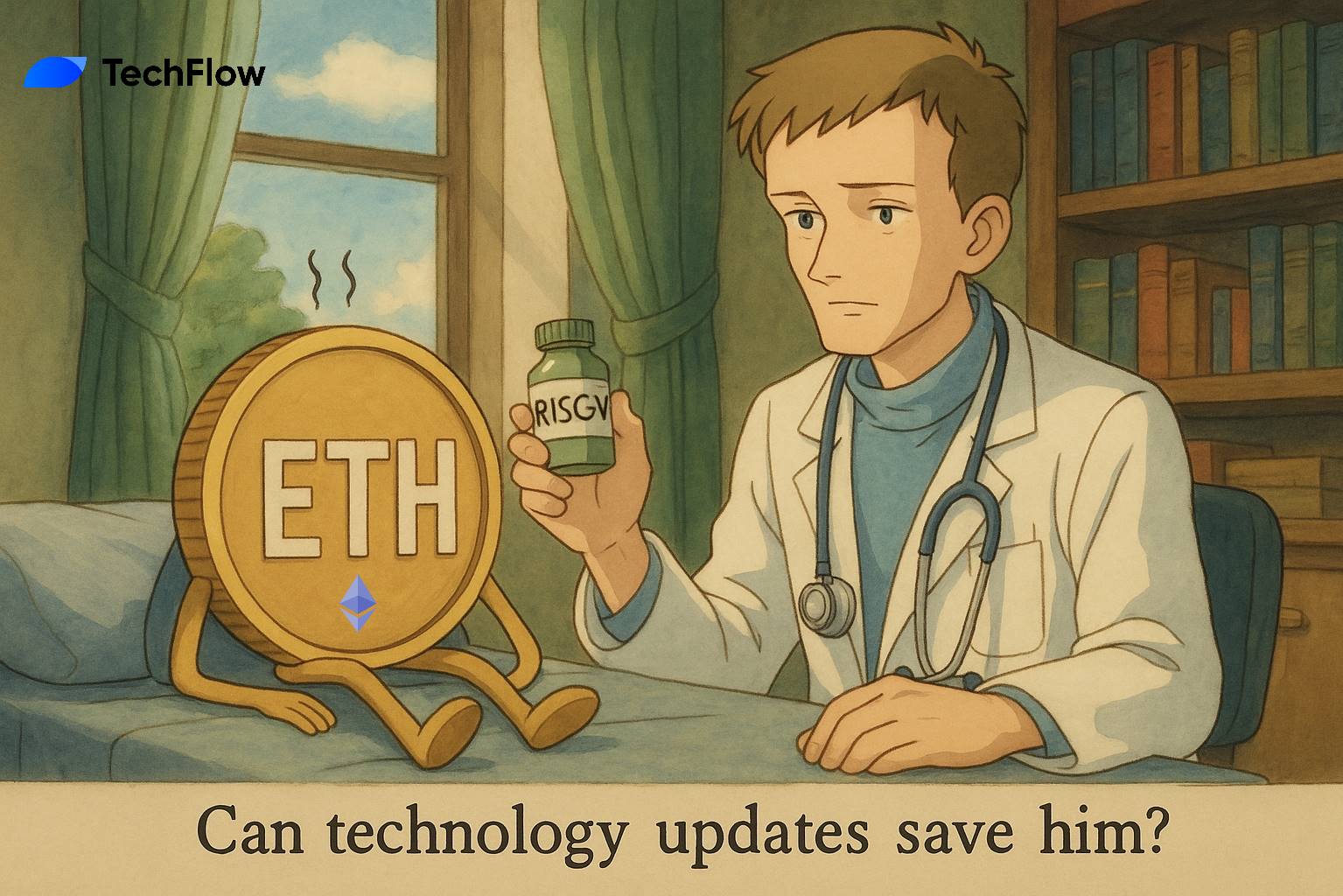
Can Medicine Save Ethereum?
Lu Xun once said medicine cannot save China—because when the spirit is numb, physical healing is meaningless.
Ethereum may face a similar dilemma.
Is solving performance issues through technical means viable? What impact would adopting RISC-V actually have?
Consider this: Ethereum is now a $400 billion ecosystem (ETH market cap ~$189 billion, plus locked asset value). Any major overhaul must proceed with extreme caution.
Let’s first look at the potential benefits of switching to RISC-V. The biggest change? Ethereum would become much faster. Currently, the network often clogs up during peak times—like during past NFT frenzies when everyone rushed to mint profile pictures, causing transaction delays and sky-high gas fees. Truly a “premium chain.”
In the long run, RISC-V could also boost Ethereum’s competitiveness. Competitors like Solana, known for high speed, have already captured significant user share.
If Ethereum adopts RISC-V and aligns with mainstream technology, developing new dApps will become easier, attracting more builders and users.
From Vitalik’s perspective, his goal may be ensuring Ethereum doesn’t just function today—but remains at the forefront for decades to come.
That said, switching to RISC-V isn’t without risks.
Some legacy smart contracts may not work under RISC-V, requiring compatibility solutions. Others worry RISC-V, while fast, may not perfectly suit Ethereum’s needs—potentially complicating the system or even disrupting existing scaling solutions like Rollups.
Another issue: developers will need to relearn tools and workflows. Most are accustomed to building on EVM. Transitioning to RISC-V means learning new methods—something many may resist as inconvenient.
Community opinions are divided. Supporters see this as a crucial step toward Ethereum’s future—making it faster and cheaper. Critics argue the risks outweigh the benefits, suggesting efforts should focus on optimizing the current EVM instead.
If you’re holding ETH and have become an unwilling “E-vangelist,” you’d naturally hope Vitalik’s vision improves Ethereum—and lifts ETH’s price along the way.
But honestly, whether technical upgrades can revive ETH’s price remains uncertain.
Markets don’t always follow technology—they follow sentiment.
Still, the RISC-V idea is intriguing. It shows Ethereum continues pushing forward. If you care about ETH, keep an eye on this. There might just be a surprise down the road.

Join TechFlow official community to stay tuned
Telegram:https://t.me/TechFlowDaily
X (Twitter):https://x.com/TechFlowPost
X (Twitter) EN:https://x.com/BlockFlow_News
 深潮TechFlow


