Ethereum 2026 "5x Opportunity Window": Institutional Giants Intensively Deploy, ETH Value Reassessment Imminent
TechFlow Selected TechFlow Selected
Ethereum 2026 "5x Opportunity Window": Institutional Giants Intensively Deploy, ETH Value Reassessment Imminent
In 2026, the global financial system will experience its "Internet moment," and this transformation will occur on Ethereum, the best platform for conducting business.
 Navigating Web3 tides with focused insights
Author: Vivek Raman, Etherealize
Compiled by: Saoirse, Foresight News
Over the past decade, Ethereum has established itself as the world's most secure and reliable blockchain platform for institutional adoption.
Ethereum technology has achieved scalable application, institutional precedents have been set, the global regulatory environment is open and welcoming to blockchain infrastructure, and the development of stablecoins alongside the process of asset tokenization is bringing about fundamental change.
Therefore, starting from 2026, Ethereum will become the optimal platform for conducting business.
After a decade of application promotion, stable operation, global adoption, and high availability assurance, Ethereum has become the preferred choice for institutions deploying blockchain. Next, let's review the key journey of how Ethereum has gradually become the default platform for tokenized assets over the past two years.
Finally, we will provide a prediction for Ethereum in 2026: tokenization scale, stablecoin scale, and ETH price are all expected to achieve 5-fold growth. The stage for Ethereum's resurgence is set, and the timing is ripe for various enterprises to adopt Ethereum infrastructure.
Ethereum: The Core Platform for Tokenized Assets
Blockchain's transformation of the asset domain is akin to the internet's reshaping of the information domain — enabling assets to become digital, programmable, and globally interoperable.
Asset tokenization achieves digitization by integrating assets, data, and payments onto the same infrastructure, thereby comprehensively upgrading business processes. Assets and funds such as stocks, bonds, and real estate will be able to flow at internet speed. This is a major upgrade the financial system should have achieved long ago, and now, global public blockchains like Ethereum are finally making this vision a reality.
Asset tokenization is rapidly evolving from a hot concept to a fundamental upgrade of business models. Just as no enterprise would abandon the internet to revert to the fax machine era, once financial institutions experience the efficiency, automation, and speed advantages brought by globally shared blockchain infrastructure, they will not return to traditional models; the tokenization process will be irreversible.
Currently, the vast majority of high-value asset tokenization is completed on the Ethereum platform — because Ethereum is the most neutral and secure global infrastructure. Similar to the internet, it is not controlled by any single entity and is open to all users.
As of 2026, the "experimental phase" of asset tokenization has officially ended, and the industry has entered the deployment phase. Major institutions are launching flagship products directly on the Ethereum platform to access global liquidity.
The following are some examples of institutions conducting asset tokenization on Ethereum:
- JPMorgan Chase directly deployed a money market fund on Ethereum, becoming one of the first banks to directly adopt a public blockchain;
- Fidelity launched a money market fund on Ethereum Layer1 (the first layer network), integrating asset management and operational processes into the blockchain system;
- Apollo launched the private credit fund ACRED on a public blockchain, with Ethereum and its Layer2 (second layer networks) offering the highest liquidity;
- BlackRock, as one of the most active proponents of the "tokenization of everything" concept, led the wave of institutional asset tokenization by launching the tokenized money market fund BUIDL on Ethereum;
- Amundi (Europe's largest asset management company) tokenized its euro-denominated money market fund on the Ethereum platform;
- BNY Mellon (the oldest bank in the United States) tokenized an AAA-rated Collateralized Loan Obligation (CLO) fund on the Ethereum platform;
- Baillie Gifford (one of the UK's largest asset management companies) will launch the first-of-its-kind tokenized bond fund on Ethereum and its Layer2 networks.
Ethereum: The Core Blockchain for Stablecoins
Stablecoins represent the first clear case of achieving "product-market fit" in the asset tokenization domain — stablecoin transfer volume exceeded $10 trillion in 2025. Stablecoins are essentially tokenized dollars, equivalent to a "software upgrade for money," enabling dollars to flow at internet speed and possess programmable characteristics.
2025 was a pivotal year for stablecoins and public blockchain development: the US GENIUS Act (also known as the Stablecoin Act) was formally passed. This bill established a regulatory framework for stablecoins in one fell swoop while giving the "green light" to the underlying public blockchain infrastructure for stablecoins.
Even before the passage of the GENIUS Act, Ethereum's adoption rate for stablecoins was already far ahead. Today, 60% of stablecoins are deployed on Ethereum and its Layer2 networks (if Ethereum Virtual Machine compatible chains that may become Ethereum Layer2s in the future are included, this proportion reaches 90%). The introduction of the GENIUS Act marks Ethereum's official "opening for business applications" — institutions received regulatory approval to deploy their own stablecoins on public blockchains.
The key to the large-scale adoption of email and websites was access to a unified global internet (rather than fragmented internal networks). Similarly, stablecoins and all tokenized assets can only fully realize their utility and network effects within a unified global public blockchain ecosystem.
Therefore, the explosive growth of stablecoins has only just begun. A typical case is: US national bank SoFi became the first bank to issue a stablecoin (SoFiUSD) on a permissionless public blockchain, ultimately choosing the Ethereum platform.
This is merely the "tip of the iceberg" for stablecoin development. Investment banks and neobanks are exploring issuing their own stablecoins individually or in consortiums, and fintech companies are advancing the deployment and integration of stablecoins. The digitization process of the US dollar on public blockchains has fully commenced, and Ethereum is the default platform for this process.
Ethereum: Building Dedicated Blockchains
Blockchain is not a "one-size-fits-all" tool. Global financial markets require customization based on differences in geography, regulatory systems, and customer groups. Precisely for this reason, Ethereum was designed from its inception with high security as a core goal and achieved a high degree of customization through "Layer2 blockchains" that can be flexibly deployed on top of it.
Just as every enterprise has its own dedicated website, applications, and customized environment on the internet, many enterprises in the future will also have their own dedicated Layer2 blockchains within the Ethereum ecosystem.
This is not a theoretical architecture but a practical application already in place. Ethereum Layer2 has established institutional application precedents, achieved scaled deployment, and become a core support for Ethereum's "business-friendly" characteristics. Below are some examples:
- Coinbase built the Base blockchain based on Ethereum Layer2, leveraging Ethereum's security and liquidity while opening up new revenue streams for itself;
- Robinhood is building its own dedicated blockchain, which will integrate tokenized stocks, prediction markets, and various assets, and is constructed using Ethereum Layer2 technology;
- The Society for Worldwide Interbank Financial Telecommunication (SWIFT) (the global bank information transmission network) adopted the Ethereum Layer2 network Linea to conduct blockchain-based settlement business;
- JPMorgan Chase deployed tokenized deposit services on the Ethereum Layer2 network Base;
- Deutsche Bank is building a public permissioned blockchain network based on Ethereum Layer2, laying the foundation for more banks to build Layer2 networks...
The value of Layer2 lies not only in customization; it is also the best business model in the blockchain domain. Layer2 integrates Ethereum's global security while enabling operational profit margins exceeding 90%, opening up new revenue streams for enterprises.
For institutions adopting blockchain technology, this is the best way to "have your cake and eat it too" — leveraging Ethereum's security and liquidity while maintaining their own profit margins and operating a dedicated environment within the Ethereum ecosystem. Robinhood's choice to build its own blockchain based on Ethereum Layer2 was precisely due to this consideration: "Building a truly decentralized secure chain is extremely difficult... By leveraging Ethereum, we get security by default."
Global financial markets will not concentrate on a single blockchain, but the global financial system can achieve synergy through an interconnected network — this network is precisely Ethereum and its Layer2 ecosystem.
The Transformation of the Regulatory Environment
Without regulatory support, a fundamental upgrade of the global financial system is impossible. Financial institutions are not technology companies; they cannot innovate through a "fast trial and error" approach. The flow of high-value assets and funds requires a well-established regulatory framework, and the United States is taking a leading role in this area:
- Under the leadership of US SEC Chairman Paul Atkins, the first pro-innovation regulatory system since Ethereum's inception in 2015 has been formally established. Institutions have actively embraced asset tokenization, the financial system is preparing to migrate to digital infrastructure, and Atkins himself stated that "within the next two years, all US markets will operate on-chain."
- The US Congress also supports the responsible adoption of blockchain technology. The GENIUS Act passed in 2025 (mentioned earlier in the "Stablecoins" section) and the upcoming CLARITY Act (which will establish a comprehensive framework for asset tokenization and public blockchain infrastructure) have incorporated blockchain into the legal system, providing clear guidance for financial institutions to apply this technology.
- The Depository Trust & Clearing Corporation (DTCC), although not a government agency, is the core infrastructure operator for the US securities market. This institution has fully embraced asset tokenization, allowing assets deposited with the Depository Trust Company (DTC) to circulate on public blockchains.
For over a decade, the blockchain ecosystem existed in a long-term "regulatory gray area," suppressing its potential for institutional-grade application. Now, led by the United States, the regulatory environment has shifted from a "resistance" to an "enabler." The stage for Ethereum to become the "best business platform" and achieve vigorous development is fully set.
ETH: An Institutional-Grade Treasury Asset
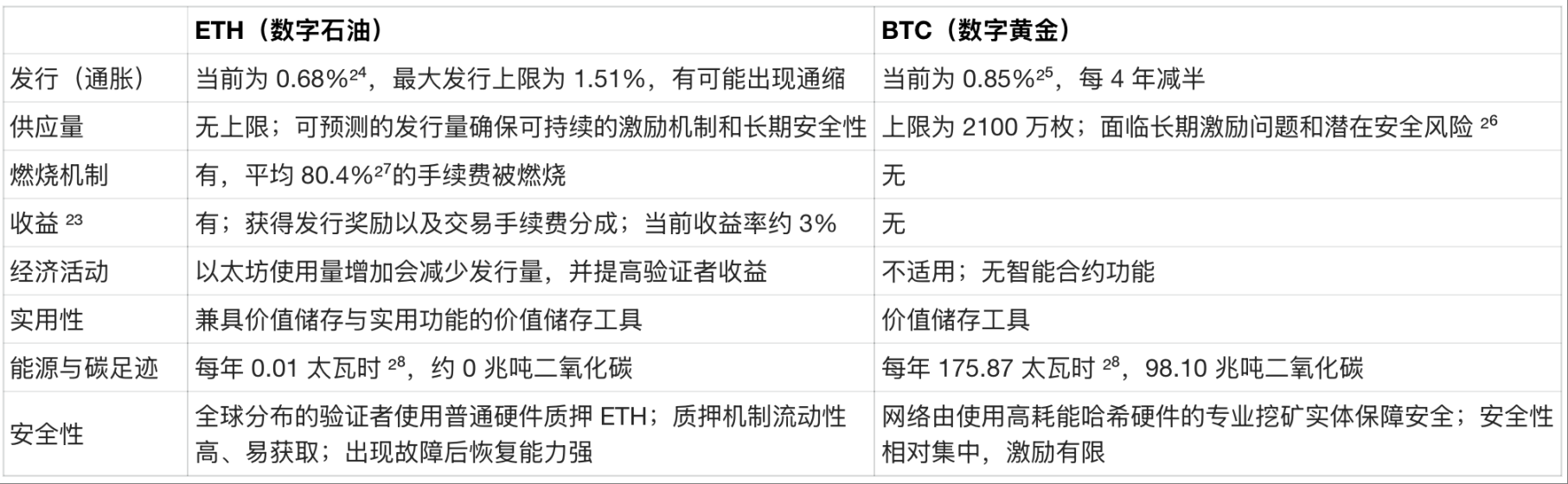
Ethereum has established its position as the "most secure blockchain," making it the default choice for institutional adoption. Based on this, ETH will be repriced in 2026, standing alongside BTC as an "institutional-grade store of value asset."
The blockchain ecosystem will have more than one store of value asset: BTC has established its position as "digital gold," while ETH becomes "digital oil" — a store of value asset that is yield-bearing, utilitarian, and underpinned by an ecosystem driving economic activity.
MicroStrategy, as the enterprise holding the most Bitcoin, led the process of BTC becoming a store of value asset. Over the past four years, MicroStrategy has continuously incorporated BTC into its treasury assets, advocating for BTC's value proposition, making it a core category for institutional digital asset holdings.
Now, the Ethereum ecosystem has seen the emergence of 4 "MicroStrategy-like" enterprises, driving ETH towards a similar breakthrough:
- BitMine Immersion (stock ticker: BMNR), operated by Tom Lee;
- Sharplink Gaming (stock ticker: SBET), operated by Joe Lubin and Joseph Chalom;
- The Ether Machine (stock ticker: ETHM), operated by Andrew Keys;
- Bit Digital (stock ticker: BTBT), operated by Sam Tabar.
MicroStrategy holds 3.2% of BTC's circulating supply. The aforementioned four enterprises holding ETH have collectively purchased approximately 4.5% of ETH's circulating supply in the past 6 months — and this process has only just begun.
As these four enterprises continue to incorporate ETH into their balance sheets, institutional ownership stakes in these ETH-holding enterprises are rapidly rising. ETH is expected to be repriced, standing alongside BTC as an institutional-grade store of value asset.
2026 Ethereum Prediction: 5-Fold Growth
Tokenized Assets: 5-Fold Growth to $100 Billion
In 2025, the total value of tokenized assets on blockchain increased from approximately $6 billion to over $18 billion, with 66% deployed on Ethereum and its Layer2 networks.
The global financial system has only just begun the process of asset tokenization. Institutions like JPMorgan Chase, BlackRock, and Fidelity have already adopted Ethereum as the default platform for high-value tokenized assets.
We predict that the total scale of tokenized assets will achieve 5-fold growth in 2026, reaching nearly $100 billion, with the vast majority deployed on the Ethereum network.
Stablecoins: 5-Fold Growth to $1.5 Trillion
Currently, the total scale of stablecoins on public blockchains is $308 billion, with approximately 60% deployed on Ethereum and its Layer2 networks (if Ethereum Virtual Machine compatible chains that may become Ethereum Layer2s in the future are included, this proportion reaches 90%).
Stablecoins have become a strategic asset for the US government. The US Treasury Department has repeatedly stated that stablecoins are a core initiative for consolidating the dollar's dominance in the 21st century. Currently, the total circulating supply of US dollars is $22.3 trillion. With the implementation of the GENIUS Act and the commencement of large-scale stablecoin adoption, it is estimated that 20%-30% of US dollars will migrate to public blockchains.
We predict that the total market capitalization of stablecoins will achieve 5-fold growth in 2026, reaching $1.5 trillion, with Ethereum playing a leading role in this process.
ETH: 5-Fold Growth to $15,000
ETH is rapidly developing into an institutional-grade store of value asset alongside BTC. ETH is a "call option" on blockchain technology growth, and its value appreciation will benefit from the following trends:
- The scaling expansion of asset tokenization
- The widespread application of stablecoins
- The process of institutional adoption of blockchain
- The "ChatGPT moment" for the financial system's upgrade to the internet era (referring to the inflection point of industry transformation brought about by technological breakthroughs)
Holding ETH is equivalent to holding a share of equity in the "new financial internet." Its value growth logic is clear: increases in user base, asset scale, number of applications, Layer2 networks, and transaction frequency will all drive ETH's value upward.
We predict that ETH will achieve at least a 5-fold increase in value in 2026 (market capitalization reaching $2 trillion, comparable to BTC's current market cap), ushering in ETH's own "NVIDIA moment" (referring to the key phase of explosive growth similar to NVIDIA's due to the AI wave).
Ethereum: The Best Platform for Conducting Business
As of 2026, the discussion of "why adopt blockchain" is a thing of the past. Now, institutions are fully competing in asset tokenization, stablecoin application, and customized blockchain deployment; the structural upgrade of the global financial system has already begun.
When choosing blockchain infrastructure, institutions prioritize factors including: long-term operational track record, application precedents, security, liquidity, availability, and risk level — and Ethereum performs optimally across all dimensions. If an enterprise has the following needs, Ethereum will be the ideal choice:
- Increase profit margins? Reduce costs through asset tokenization, use stablecoins to decrease fees, build a dedicated blockchain based on Ethereum.
- Open up new revenue streams? Build structured products on the Ethereum platform, launch new types of assets, issue your own stablecoin.
- Achieve business digital upgrade? Leverage Ethereum to optimize operational processes, achieve accounting and payment automation, reduce manual reconciliation work.
2025 was an inflection point for Ethereum's development: infrastructure upgrades were completed, institutional pilot projects achieved scaled implementation, and the regulatory environment shifted favorably.
In 2026, the global financial system will experience its "internet moment" — and this transformation will occur on Ethereum, the best platform for conducting business.
Join TechFlow official community to stay tuned
Telegram:https://t.me/TechFlowDaily
X (Twitter):https://x.com/TechFlowPost
X (Twitter) EN:https://x.com/BlockFlow_News
 @BowTiedBull