Upside.fun: A New Paradigm for Content Tokens on Base?
TechFlow Selected TechFlow Selected
Upside.fun: A New Paradigm for Content Tokens on Base?
Tokenize any link on the internet.
 Navigating Web3 tides with focused insights
By Pzai, Foresight News
In recent days, Jesse, the lead of Base protocol, has been actively promoting "content tokens" on X. As early as February 24, Zora enabled every post on its platform to become a token. On Zora, the official Base account has already launched three content tokens, with one reaching a market cap of up to $20 million—sparking notable market enthusiasm.
From ChillGuy to Base, the rise of content tokens is reshaping how creators interact with fans and opening new possibilities for the tokenization of information. Despite growing success stories, there remains a market gap in systematically tokenizing the vast array of internet content—such as blog posts, short videos, or even individual X posts. Existing solutions are confined to specific platforms (like Zora’s NFT ecosystem) and struggle to cover the diverse forms of online content. To address this, Upside.fun aims to tokenize any link on the internet through “Metacoin,” paving the way for a scalable “information economy.”
Consolidating Content Tokens
On X, Jesse distinguishes between “content tokens” and MEME tokens. Content tokens typically represent the value of a single piece of content and carry relatively lower user expectations. Individuals can create numerous tokens tied to individual content items, and some widely shared content may evolve into MEMEs with rising market caps. In contrast, MEME tokens serve as an “aggregated” form across multiple pieces of content, attracting concentrated attention and higher expectations. Major MEME tokens can even evolve into full projects or ecosystems (e.g., BONK, DEGEN). Over time, fragmented content has led to scattered attention—both in discourse and capital flow—turning what should be “many hands make light work” into a disorganized mess.

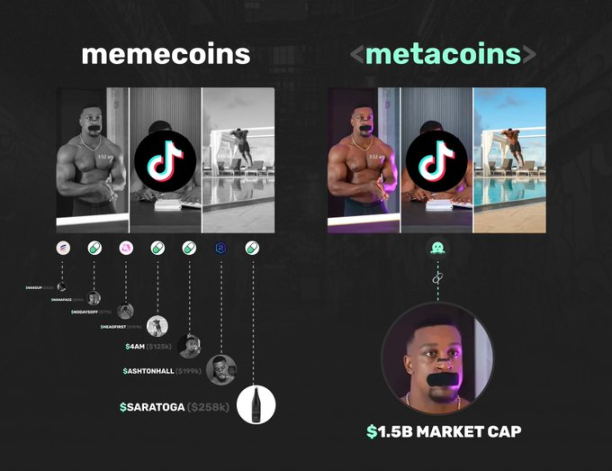
Upside.fun enters here by consolidating scattered “content” into meme clusters using “metacoins.” Under current issuance models, each new internet trend spawns dozens of meme coins, fragmenting liquidity, attention, and growth potential. Within the Upside.fun framework, a binding mechanism between links and tokens allows every internet link (e.g., from TikTok, X, etc.) to become part of a broader meme. The popularity of the token then feeds back into its own virality, creating a positive cycle. This design not only consolidates meme liquidity but also offers opportunities to identify and profit from emerging internet trends early—effectively making it a real-time “trending feed” for the entire internet.
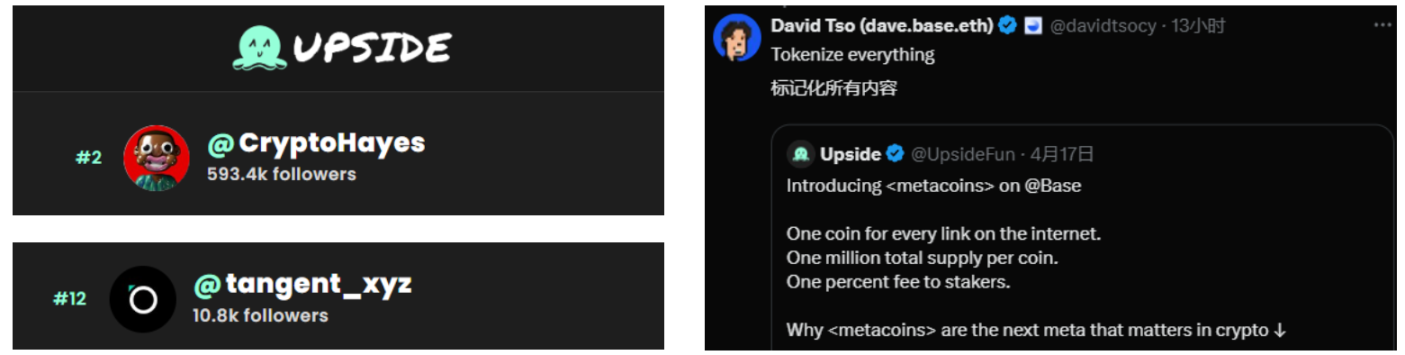
Following its announcement, Upside.fun quickly attracted attention during its Waitlist phase from prominent crypto figures and VCs including Arthur Hayes and Tangent, and was shared via retweet by David Tso, head of the Base ecosystem. As a chain that previously gave rise to creator economy apps like Friend.tech and Farcaster, Base stands to benefit from increased focus and capital inflow driven by Upside’s model. Users can currently reach out to its intern via DM to gain access to the Waitlist.
According to founder Zachary Dash, Upside.fun is an application for trading truth, virality, and relevance. By enabling communities to set prices for attention and trends, it returns the value of the internet directly to users. “It’s like Google, but instead of searching, you buy your way into owning a piece of the internet.” By combining the concept of content tokens with a broader audience base, can Upside.fun expand the scope of this idea and replicate the success of past phenomena like Farcaster? That remains to be seen—but anticipation is warranted.
Join TechFlow official community to stay tuned
Telegram:https://t.me/TechFlowDaily
X (Twitter):https://x.com/TechFlowPost
X (Twitter) EN:https://x.com/BlockFlow_News
 Foresight News