x402 goes wild on BASE, where are the asset opportunities on BSC and Solana?
TechFlow Selected TechFlow Selected
x402 goes wild on BASE, where are the asset opportunities on BSC and Solana?
Reviewed current x402 projects on BNB Chain and Solana in the market to help everyone better identify assets within this narrative cycle.
 Navigating Web3 tides with focused insights
By David, TechFlow
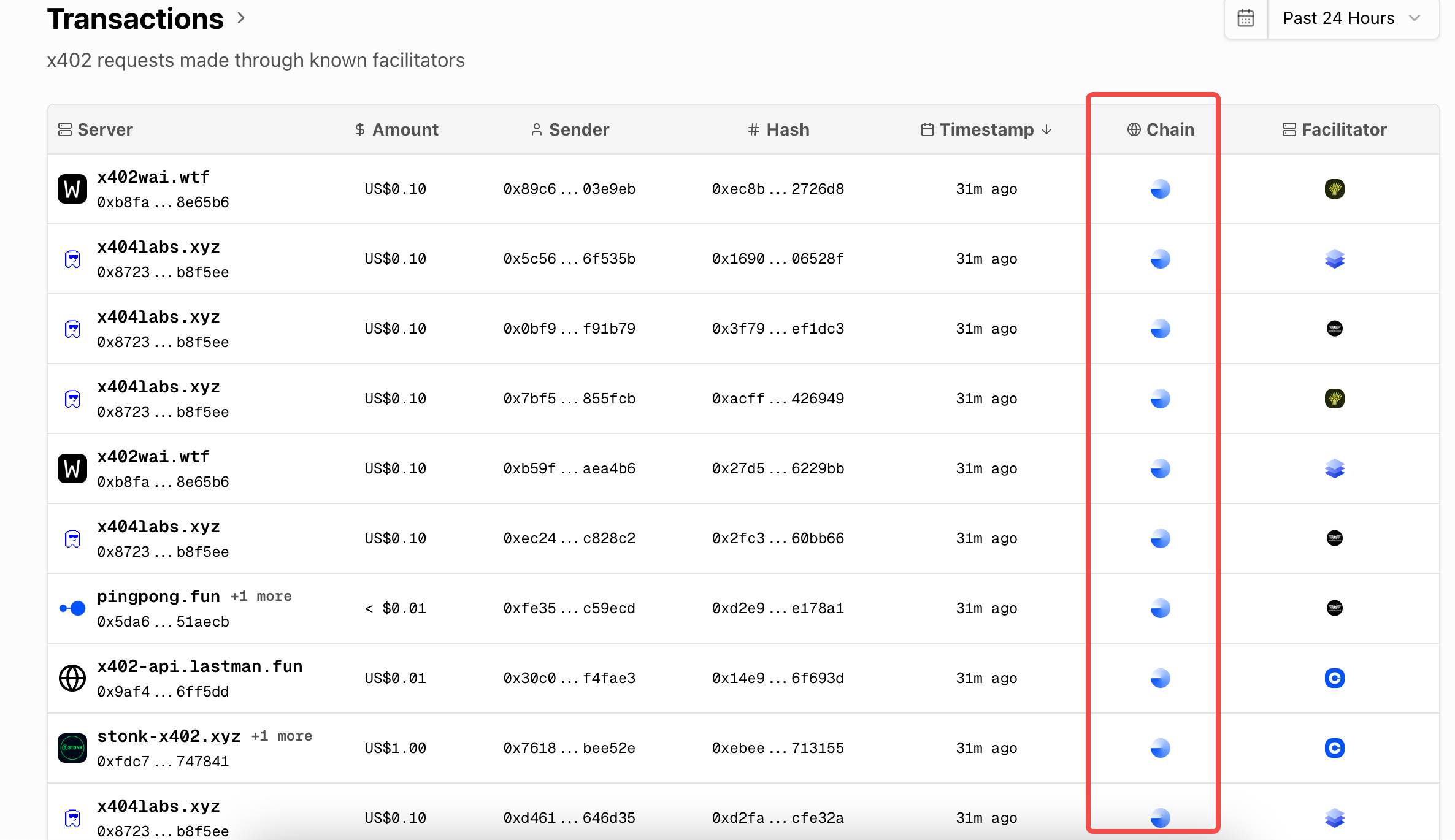
Open the on-chain data for x402 now, and you'll see an interesting phenomenon: a sea of Base blue checks.
In the past 24 hours, hundreds of thousands of transactions have all taken place on Base. No Ethereum mainnet, let alone BSC or Solana, is in sight.
This is normal—after all, x402 is a protocol proposed by Coinbase, so it naturally starts running on its own Base chain. With $PING's recent surge and various copycat projects emerging, Base has leveraged this ace to rapidly boost its daily activity and attention.
But is x402 only playable on Base?
Technically speaking, the core of x402 lies in the HTTP 402 status code combined with on-chain stablecoin payments. In short, any chain capable of running smart contracts, with affordable gas fees and stablecoin liquidity, can support it.
(If you're unfamiliar with the technical aspects of x402 and its supporting protocols, refer to: x402 Gets Increasingly Competitive: Early Opportunities in ERC-8004 Assets)
The reason x402 is currently limited to Base isn't due to technical constraints, but rather Coinbase's home-field advantage. However, the technology is open-source and the protocol can be forked, meaning other chains still have opportunities.
Currently, there’s an interesting dynamic within the x402 narrative:
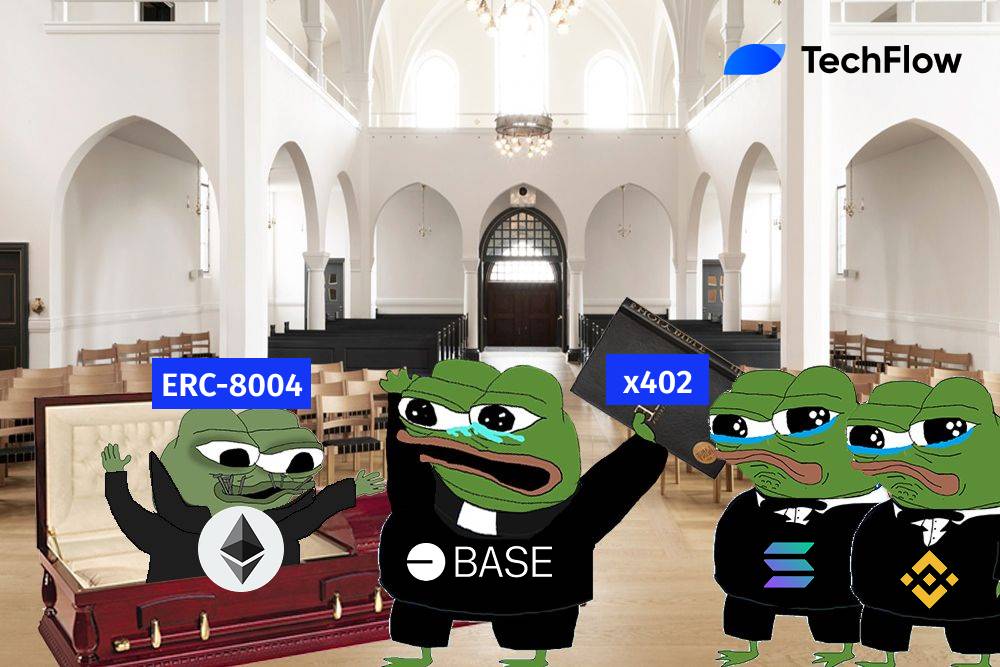
The two chains holding core technical standards (Ethereum and Base) each possess ERC-8004 and x402 respectively, yet lack hype traffic and liquidity; while the two most trafficked chains (BNB Chain and Solana) lack technical legitimacy and related projects.
Thus, in this uneven development, absence isn’t necessarily bad—it creates space for new projects to emerge.
We’ve reviewed current x402-related projects on BNB Chain and Solana to help you better identify assets during this narrative cycle.
BNB Chain Ecosystem Project Overview
BNB Chain has previously demonstrated strong momentum in Perp DEX and meme launchpad spaces, producing assets like $Aster and $BinanceLife. Now that x402 has arrived, however, the entire chain ecosystem appears unusually quiet.
Yet, from infrastructure to applications, some projects are quietly brewing and building.
-
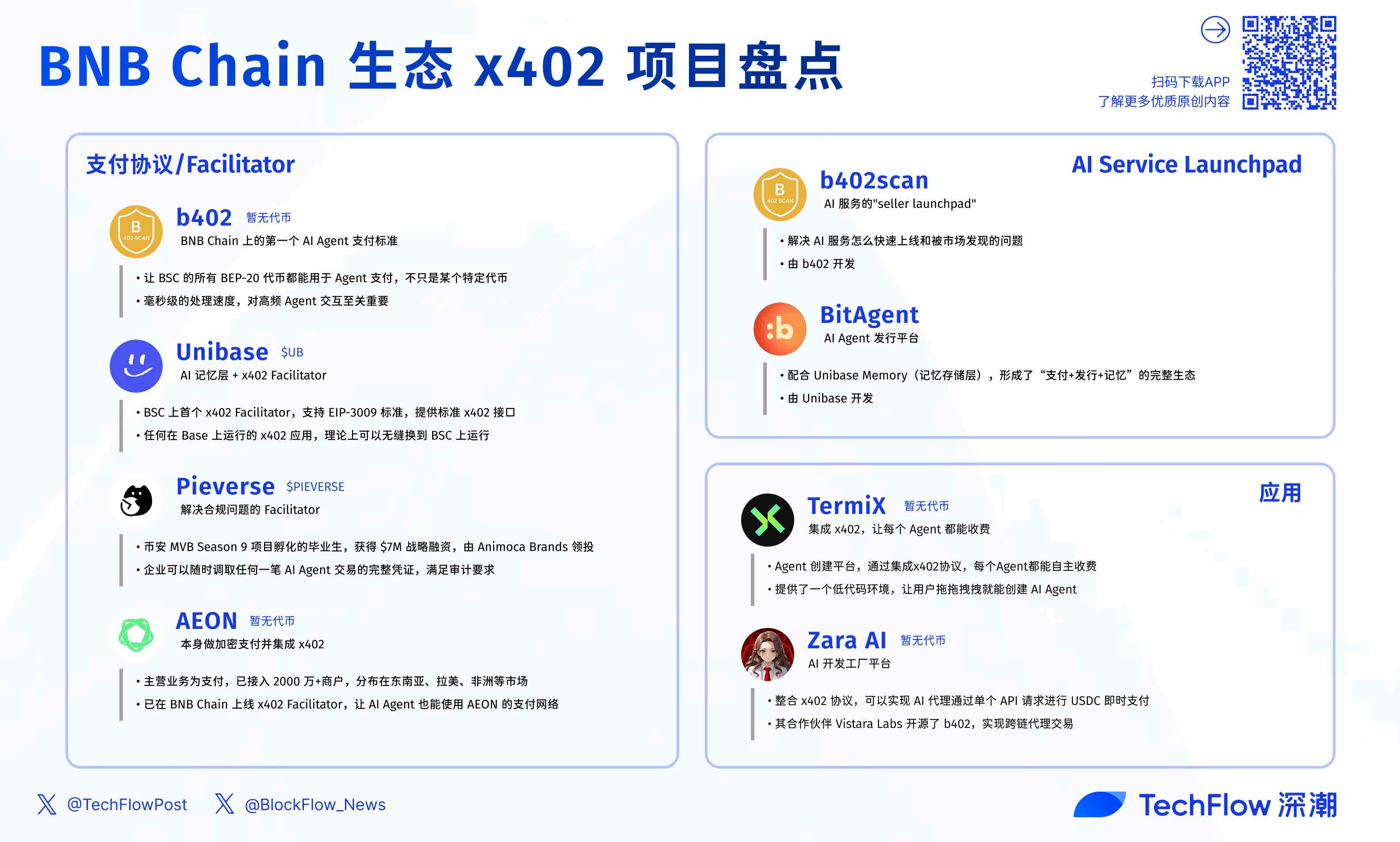
b402, Payment Protocol Standard (no token yet)
Looking at current x402 on-chain data, nearly all Facilitators operate on Base and Solana.
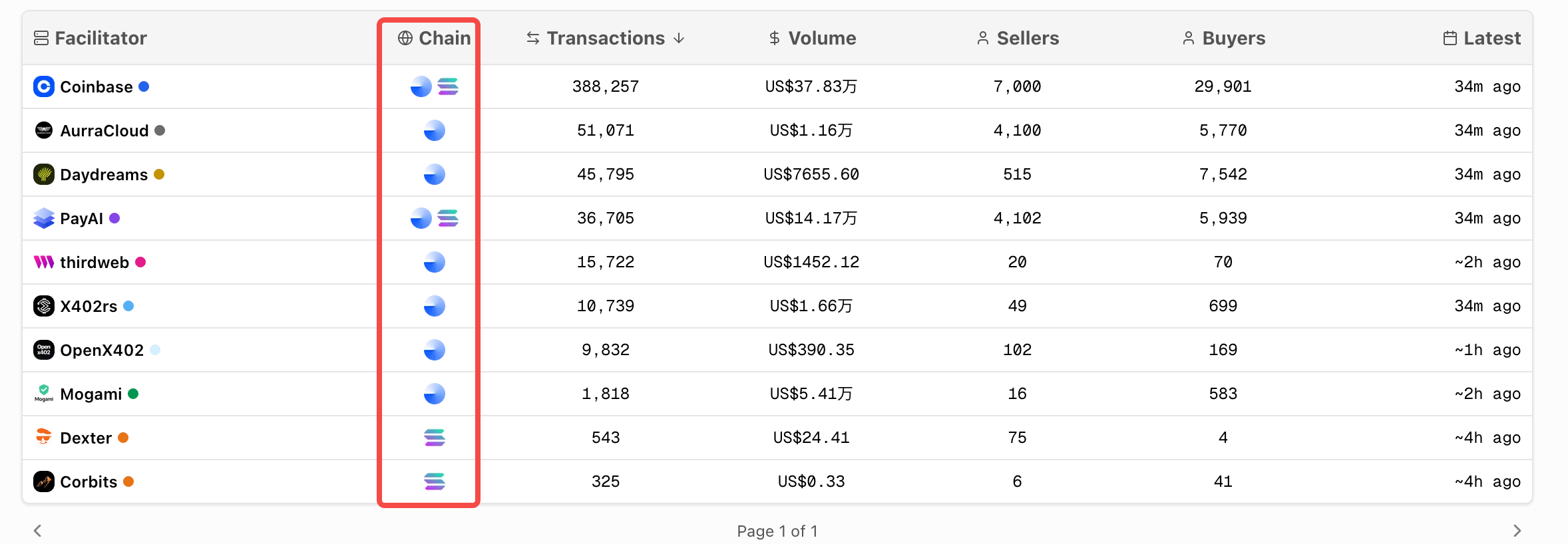
If you're unfamiliar with Facilitator, here's a simple explanation:
It’s the payment processing hub within the x402 ecosystem, responsible for validating AI payment requests and handling on-chain settlements. Without it, an Agent’s payment request cannot become an actual on-chain transaction.
What does this mean? If an AI Agent on BSC wants to charge fees, it must either bridge to Base or build its own payment system from scratch.
Among all potential BSC infrastructure needs, the payment layer is the most critical. Without payments, there’s no economic activity; without economic activity, Agents remain mere toys.
This is exactly what b402 aims to solve: the first AI Agent payment standard on BNB Chain.
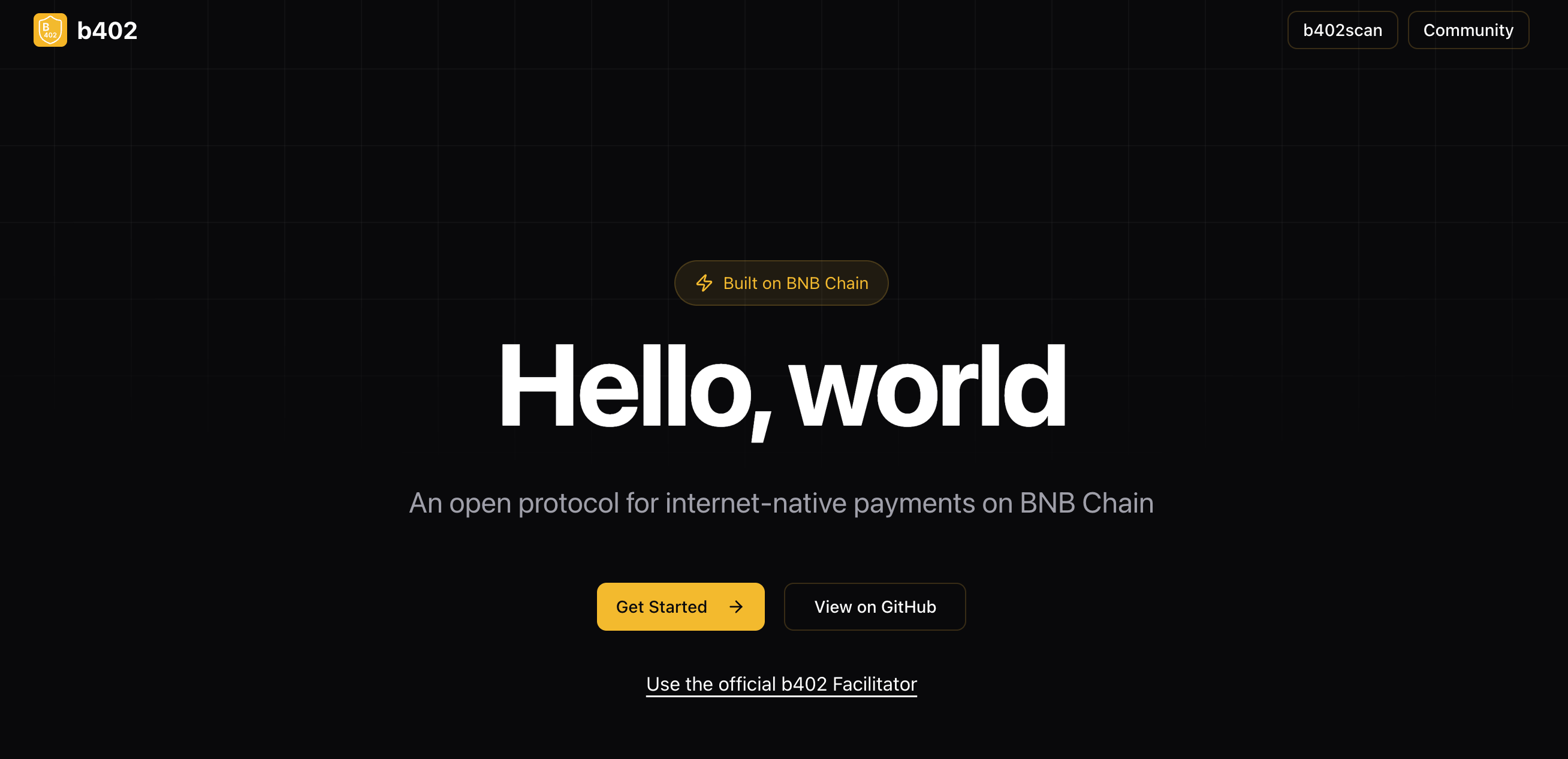
In short, b402 fully brings x402 capabilities to BSC, but via a different technical approach.
BSC tokens (like USDT) do not support EIP-3009, which is a standard enabling “gasless transfers” — allowing users to sign an authorization so that third parties (e.g., service providers) can pay gas fees on their behalf.
Why is the lack of EIP-3009 support in BSC’s USDT problematic?
Imagine an AI Agent needs to pay for API access. On Base, it simply signs an authorization, and the x402 facilitator pays the gas. But on BSC, without EIP-3009, the Agent must hold BNB to cover gas fees itself.
Thus, B402 implements mechanisms to achieve the same functionality—users can sign once and make payments without holding BNB for gas.
Reviewing B402’s documentation reveals it primarily solves three issues:
-
Enables all BEP-20 tokens on BSC to be used for Agent payments, not just specific ones;
-
Integrates ERC-8004 to allow Agent identity verification and payment within the same system;
-
Millisecond-level processing speed, crucial for high-frequency Agent interactions.
More ambitiously, B402 doesn’t aim to be just a protocol. Its architecture makes this clear:
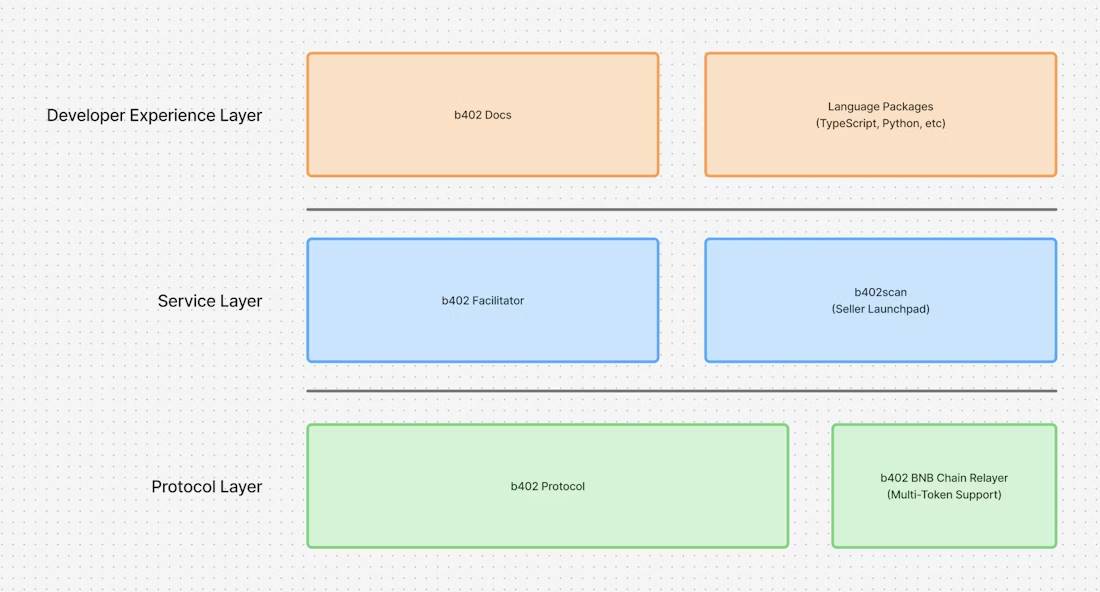
The foundation is the protocol (smart contracts), the middle layer includes services (Facilitator and b402scan), and the top layer offers developer tools (SDK).
Notably, b402scan deserves special attention—it’s more than a simple block explorer like x402scan, serving as an "AI seller launchpad," resembling a crypto version of Alibaba and Shopify.
Simpler still, b402scan addresses how AI services can quickly go live and gain market visibility. Suppose you have a weather data API you want to monetize for AI Agents.
Under traditional models, you’d need to build your own payment system, handle on-chain transactions, and find ways to attract users. With b402scan, you simply upload your API details, set pricing, and deploy on-chain.
All subsequent tasks—payment validation, on-chain settlement, curation—are handled by b402.
This resembles early Taobao. Before Taobao, individuals wanting online stores had to manage payments, logistics, and promotion independently. Taobao provided an all-in-one platform, enabling anyone to easily start selling.
For AI service providers on BNB Chain, b402scan serves exactly this role. Buyers seeking services can directly explore available options on b402scan.
-
Unibase, AI Memory Layer + x402 Facilitator ($UB)
Unibase does something different from B402. While B402 redesigns the payment protocol for BSC (due to BSC tokens lacking EIP-3009 support), Unibase directly ports Coinbase’s x402 protocol onto BSC.
According to its website x402.unibase.com, Unibase is the "first x402 Facilitator on BSC," supports EIP-3009, and provides standard x402 interfaces like verify and settle.
Instead of forcing BSC’s USDT to support x402, it created XUSD—a wrapped stablecoin designed specifically for x402 and compatible with EIP-3009. Users can wrap USDC 1:1 into XUSD and unwrap back afterward.
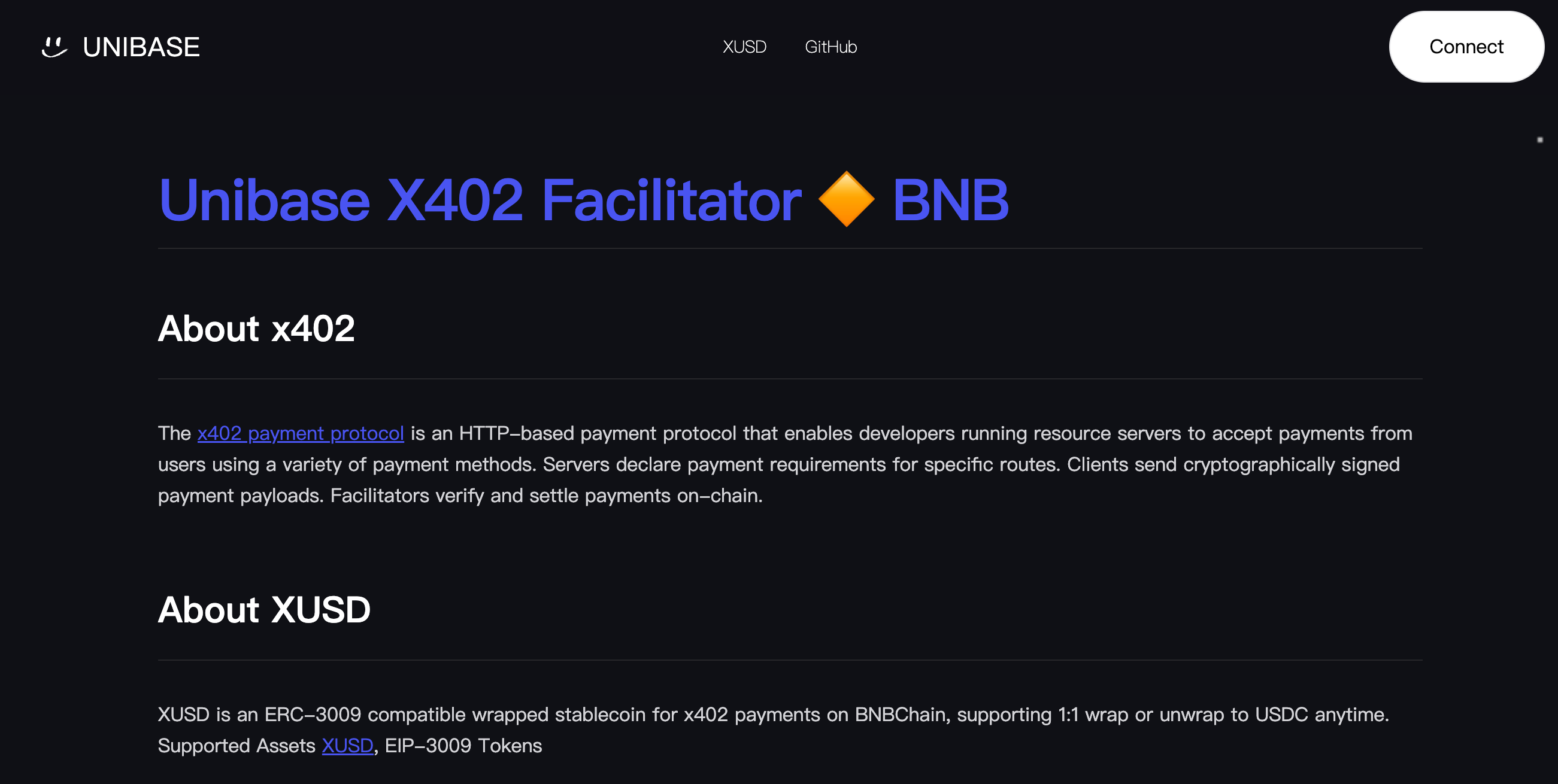
Theoretically, any x402 application running on Base only needs to change the Facilitator address and token (USDC → XUSD) on Unibase—the logic remains unchanged—to run seamlessly on BSC.
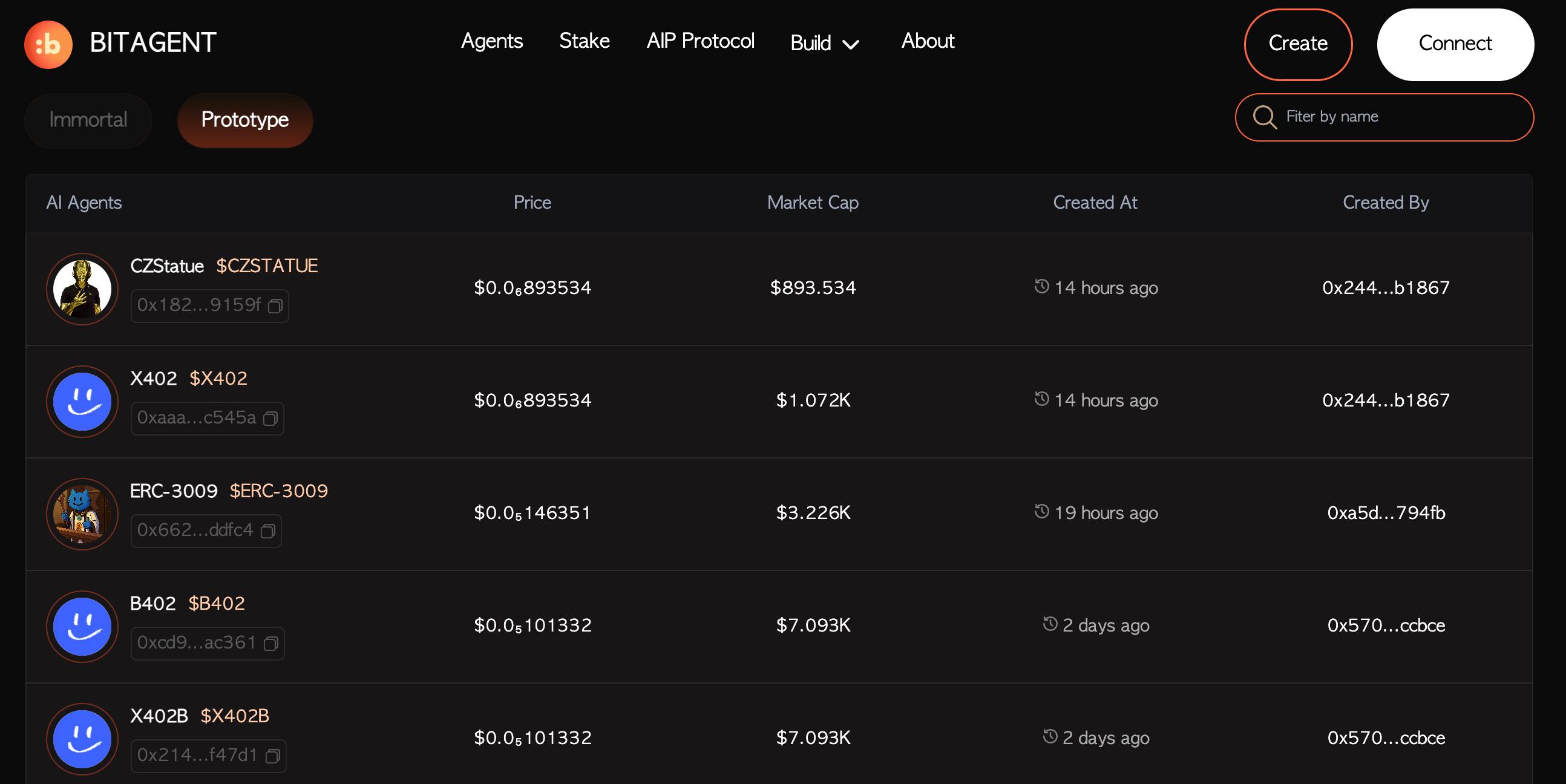
Beyond the Facilitator, Unibase also developed BitAgent, a platform allowing developers to quickly launch AI Agents, paired with Unibase Memory (memory storage layer), forming a complete ecosystem of “payment + issuance + memory.” It’s akin to replicating a mini version of Base’s AI ecosystem on BSC.
-
Pieverse, Facilitator Addressing Compliance Issues ($PIEVERSE, Pre-TGE Campaign Ongoing)
For traditional enterprises using AI Agents, the biggest headache may not be technical—but financial compliance. Every payment requires invoices, audit trails, and adherence to local tax laws.
The original x402 protocol doesn’t account for this, but Pieverse’s x402b does.
Pieverse’s Facilitator automatically generates "jurisdiction-compliant receipts" upon each payment settlement and permanently stores them on BNB Greenfield (BSC’s decentralized storage layer).
This means enterprises can retrieve full transaction records anytime to meet audit requirements.
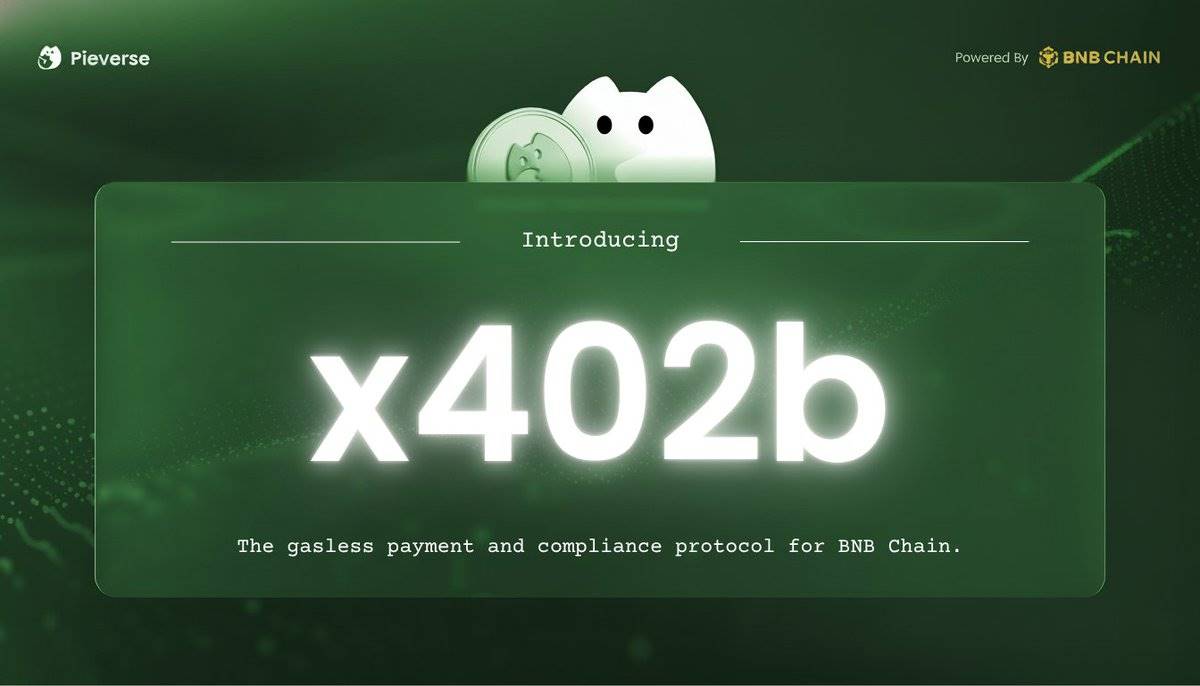
From an investment perspective, if you believe enterprise AI Agent markets will explode, Pieverse could be an interesting candidate. Previously, Pieverse graduated from Binance MVB Season 9 and secured $7M in strategic funding led by Animoca Brands.
Currently, Pieverse is conducting a Pre-TGE campaign via Binance Wallet, requiring 15 points plus completion of various tasks such as follows, retweets, and usage to qualify for airdrops.
-
AEON, Focused on Crypto Payments with x402 Integration (no token yet)
AEON is a broader AI payment framework, with x402 being just one of several integrated protocols.
AEON’s true mission is bridging cryptocurrency and real-world payments. According to their data, AEON already connects over 20 million merchants, primarily across Southeast Asia, Latin America, and Africa.
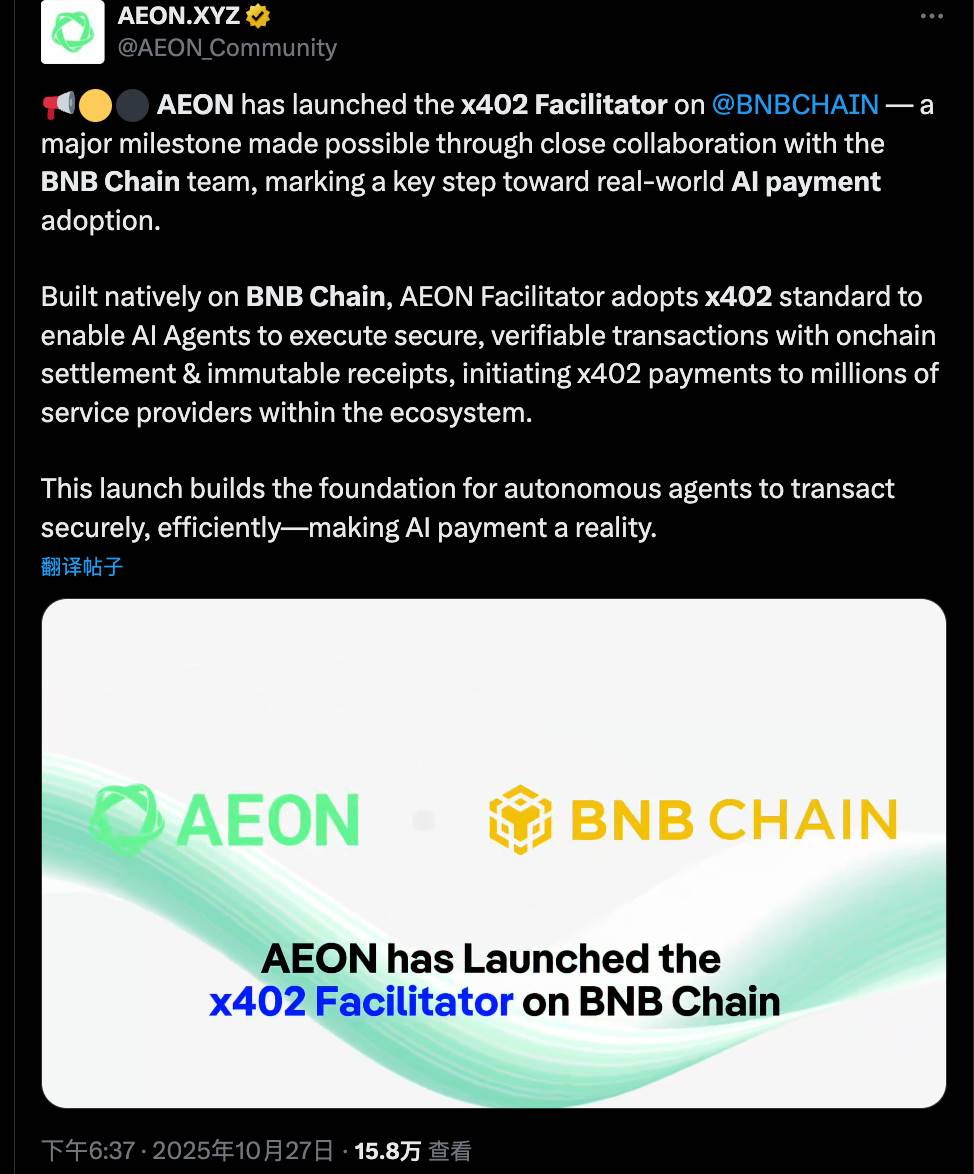
On October 27, AEON launched its x402 Facilitator on BNB Chain, enabling AI Agents to leverage AEON’s payment network.
AEON’s strength lies in winning BNB Chain MVB Season 10, standing out among over 500 projects. More importantly, it’s negotiating partnerships with Visa and Mastercard, planning expansion into North America and Europe by 2025.
From an investment standpoint, AEON isn’t purely an x402 play, but a convergence of “AI + Payments + Real-World Adoption.”
-
TermiX, Integrates x402 to Enable Monetization for Every Agent (no token yet)
TermiX plays a unique role in BSC’s x402 ecosystem: it’s an Agent creation platform with the key feature of enabling monetization via x402.
Simply put, TermiX provides a low-code environment where users can drag-and-drop to create AI Agents. More importantly, these Agents are born with built-in “cashier functionality”: by integrating the x402 protocol, each Agent can autonomously charge fees.
For example, if you create a “on-chain data analytics Agent,” other users or Agents accessing its services will automatically trigger x402 payments. TermiX’s SDK has already encapsulated the x402 payment flow—creators don’t need to understand payment tech details, just set prices.
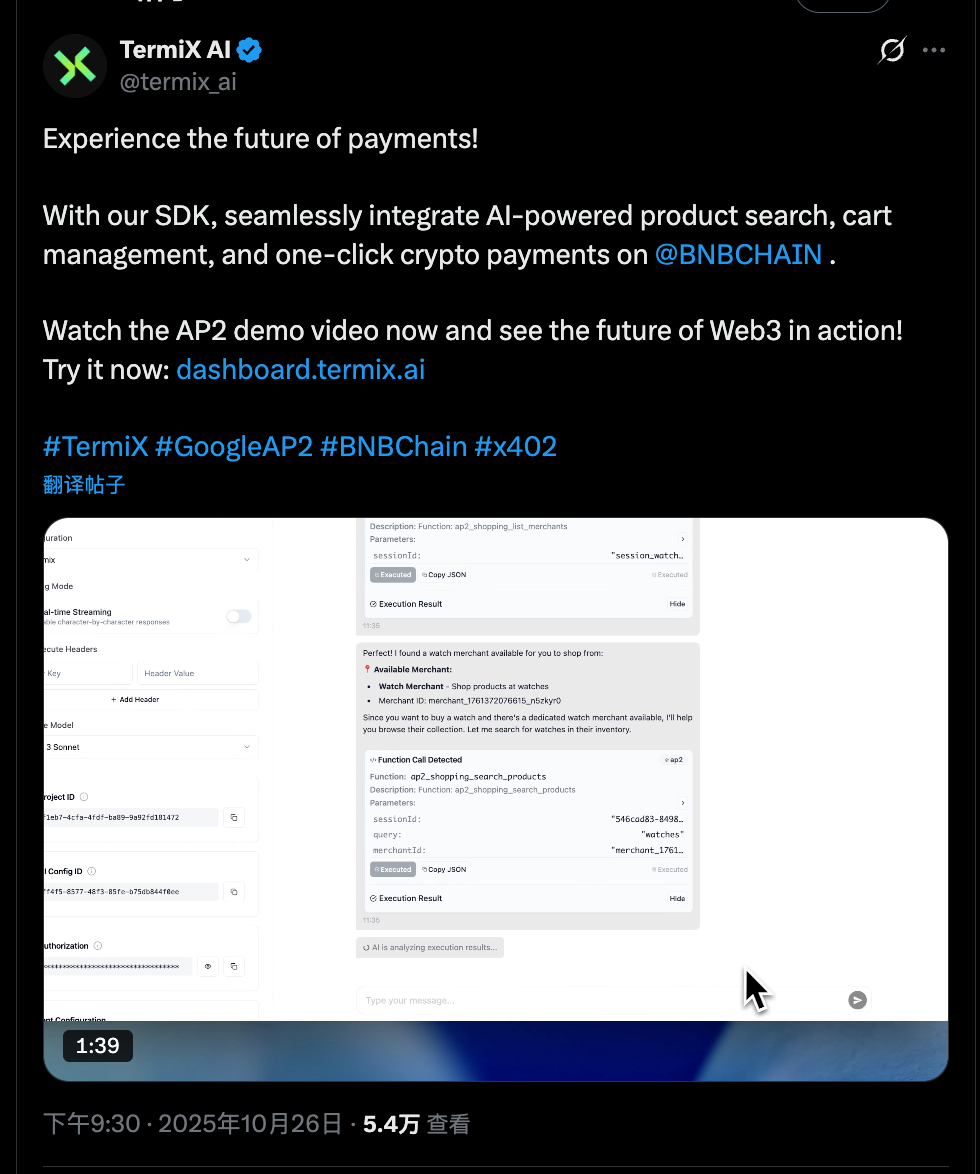
A demo posted on October 26 showed creating a token through simple conversation, with all associated on-chain operations automatically paid via x402. This implies Agents on TermiX not only charge fees but can also actively pay for other services.
From the perspective of BSC’s x402 ecosystem, if B402 and Unibase are foundational infrastructure, TermiX is the application layer—bringing more Agents to market, all of whom represent potential x402 users.
-
Zara AI, AI Development Factory Platform (no token yet)
Zara AI is an autonomous AI development factory and agent platform enabling users to rapidly build, test, deploy, and monetize AI-powered apps and agents within minutes.
Based on public information, Zara integrates the x402 protocol to enable instant USDC payments via single API calls for AI agents.
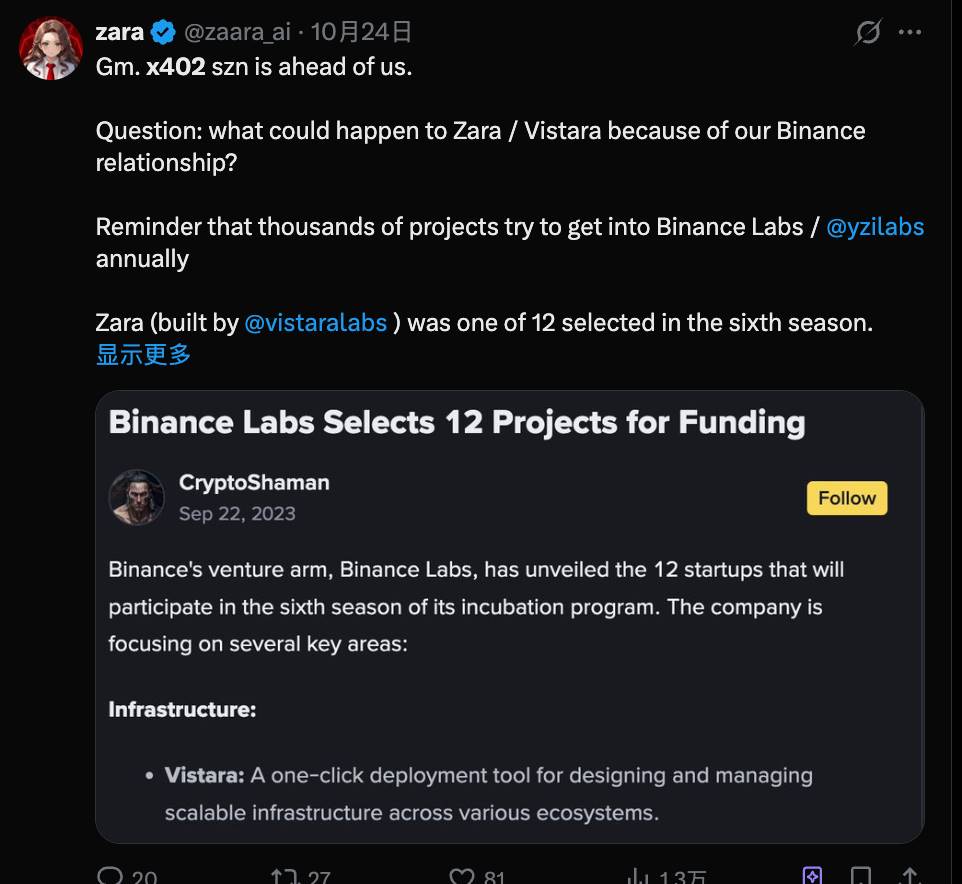
Agents can autonomously discover services, negotiate prices, and pay via x402 at runtime, deploying dApps with built-in payment functions on Solana, Base, and BNB Chain.
Its partner Vistara Labs also open-sourced b402 (gasless payments on BNB Chain, mentioned earlier), enabling cross-chain agent transactions.
Solana Ecosystem Project Overview
First, PayAI Network, which has already seen price increases, won’t be discussed here. As a core enabler in Solana’s x402 ecosystem, it currently acts as a Facilitator handling verification and settlement.
Beyond memes, some fundamentally stronger projects are gaining traction through official Solana hackathons.
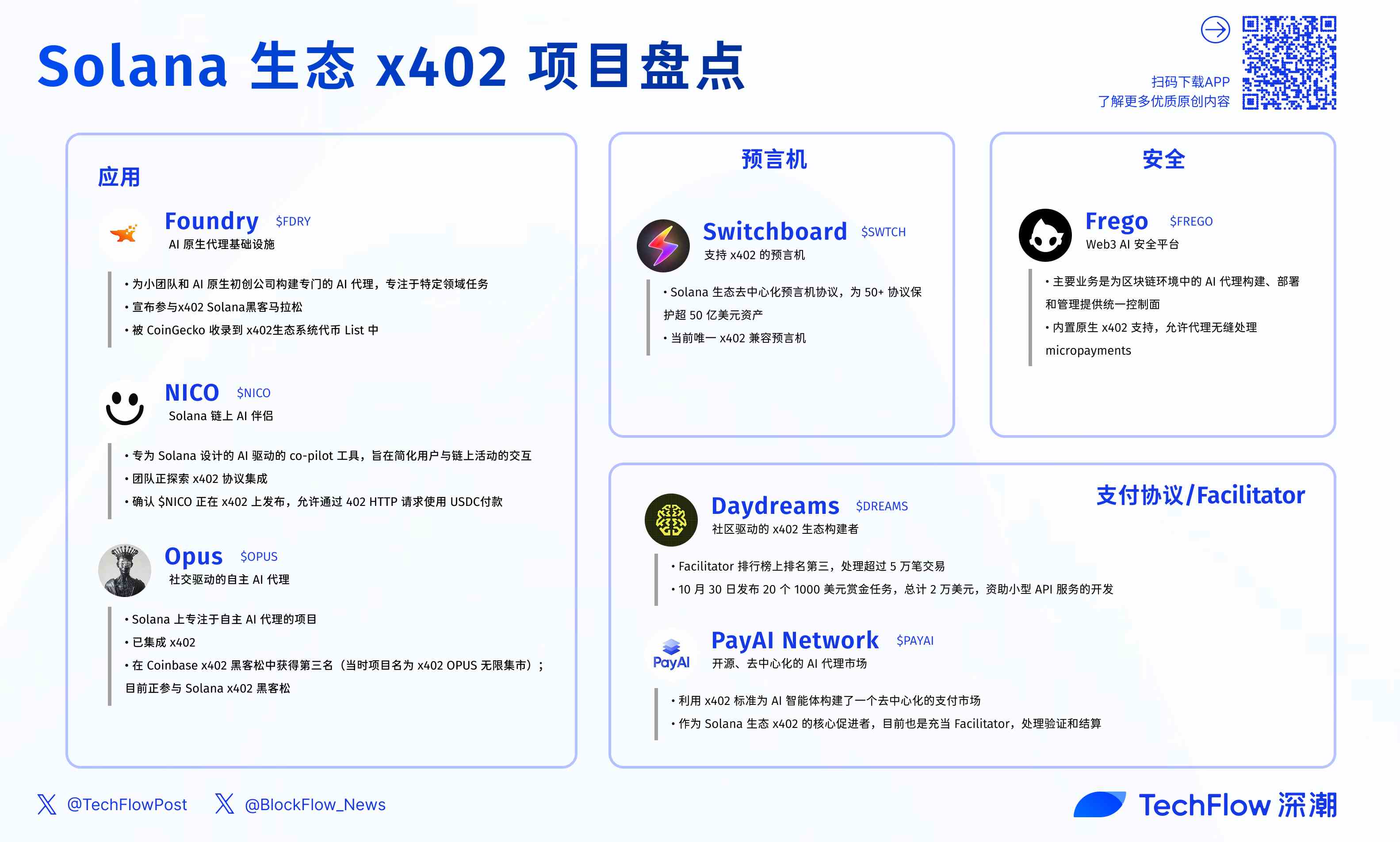
On October 28, Solana launched its official x402 hackathon in partnership with Trends.fun, offering a total prize pool of $50K across five tracks:
Best Trustless Agent, Best x402 API Integration, Best MCP Server, Best x402 Developer Tool, Best x402 Agent Application. The event runs until November 11, with winners announced on November 17.
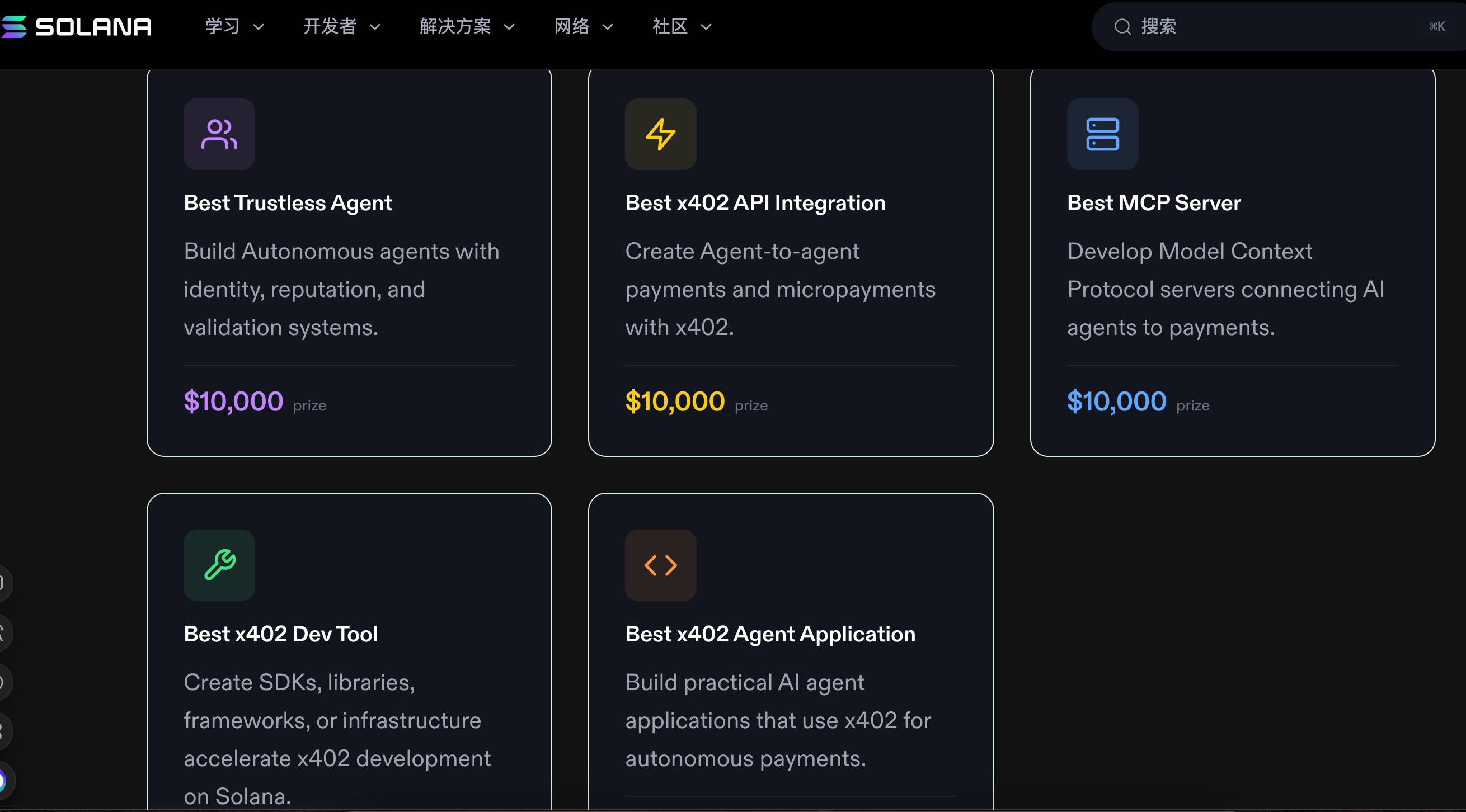
The themes of these competition tracks reveal popular—or currently missing—directions within Solana’s x402 ecosystem:
-
Prior: AI Verification/Reputation Assessment—Before transacting, how do I know who this AI is and what its reputation is?
-
During: Intermediary Bridge—Similar to PayAI, when an AI pays an API, crypto payments require intermediaries to relay requests on-chain.
-
Main Actor: AI—Develop real AI applications leveraging x402, not just meme plays like $PING.
Following the announcement, the comment section immediately lit up with various Solana-based projects actively responding.
-
Daydreams, Community-Driven Builder of x402 Ecosystem ($DREAMS)
On the x402 Facilitator leaderboard, Daydreams currently ranks third, having processed over 50,000 transactions.
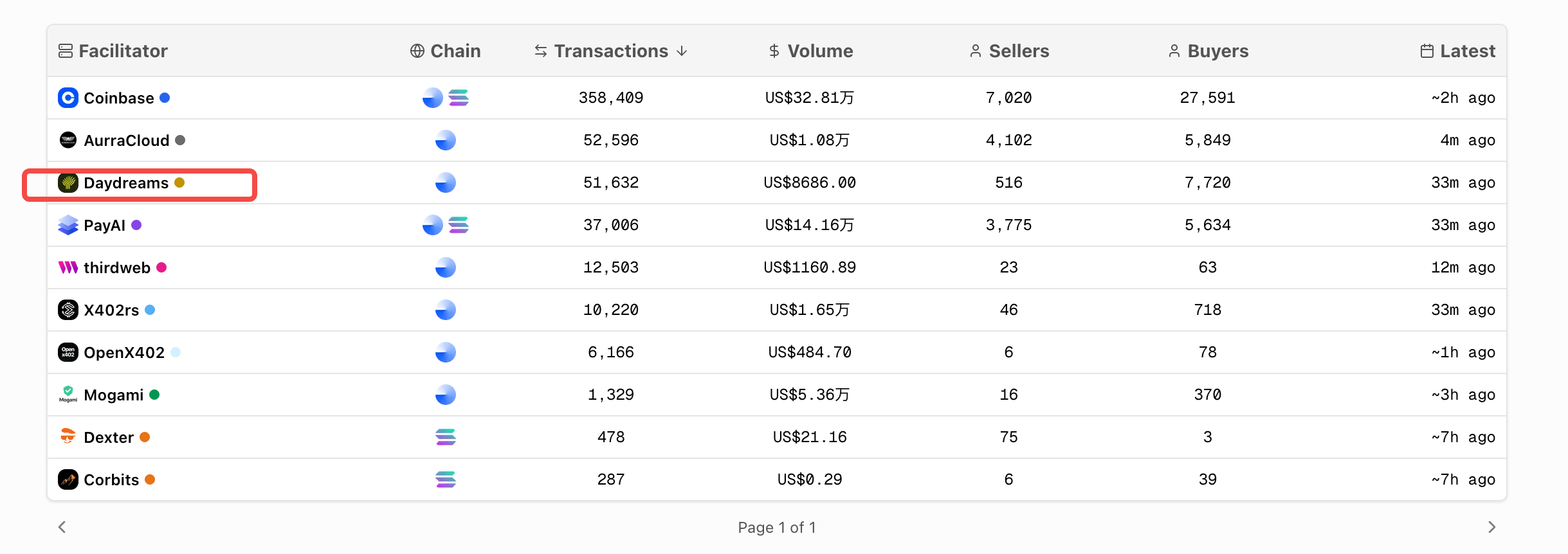
On October 30, Daydreams announced an intriguing initiative: launching 20 bounties worth $1,000 each, totaling $20,000. Each bounty funds the development of a small API service monetized via x402. They call these “Microbusinesses that can be built in a day.”
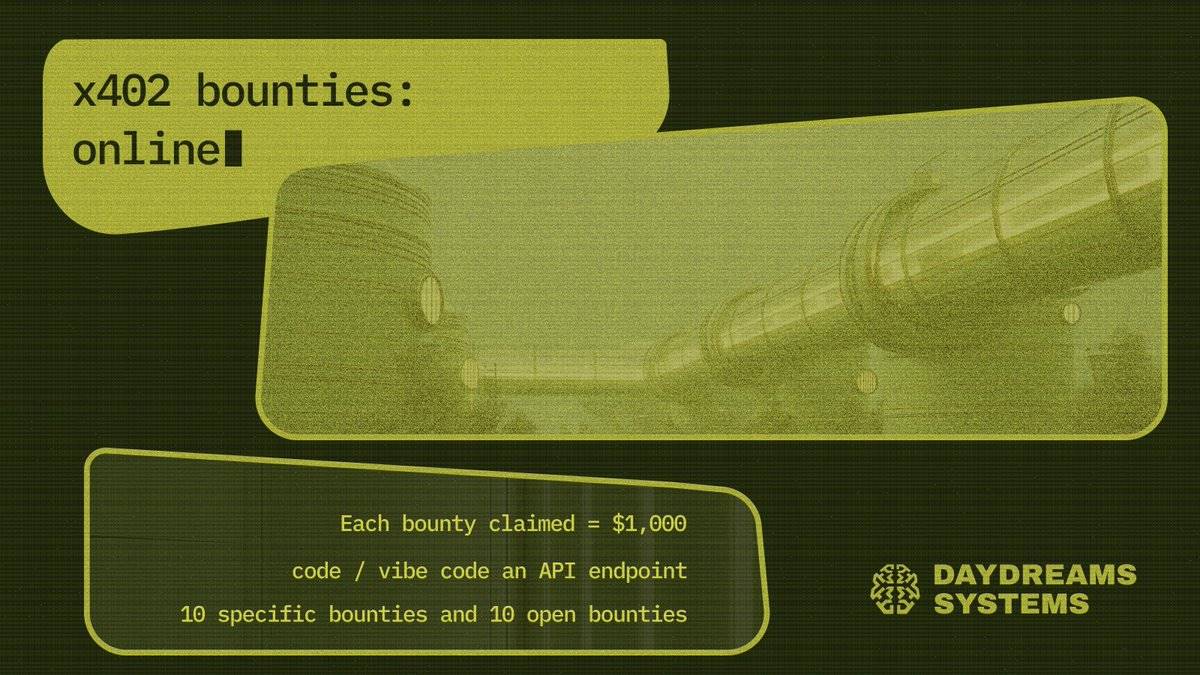
This model is clever. Instead of building all services themselves, they empower the community. Each funded developer creates an x402-paid API, attracting more AI Agents to use and pay. Daydreams supports this ecosystem with three core tools:
Daydreams Framework: A modular Agent-building framework supporting TypeScript for rapid AI Agent assembly
Daydreams Router: Enables Agents to access various AI models like GPT, Claude, Groq, with instant USDC settlements via x402
LUCID Platform (upcoming): Combines x402 and ERC-8004 to give Agents identity, payment capability, and autonomous operation
Daydreams supports not only Solana but also Base and Starknet, making it a truly multi-chain Facilitator.
-
Switchboard, Oracle Supporting x402 ($SWTCH)
Switchboard is a decentralized oracle protocol in the Solana ecosystem, with core products including Surge (sub-100ms real-time price feeds), Oracle Quotes (lock-free on-chain integration), and verifiable random number services, securing over $5 billion in assets across 50+ protocols.
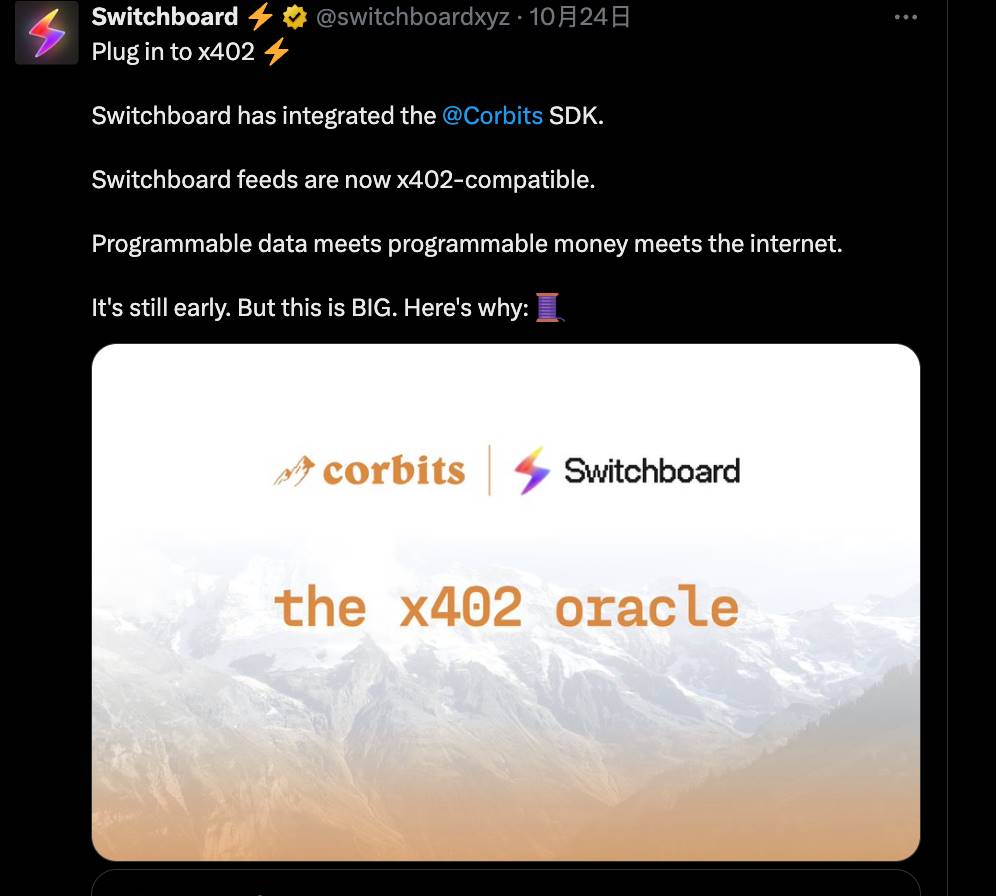
On October 23, Switchboard achieved x402 compatibility via Corbits SDK, becoming the current “only x402-compatible oracle.”
This integration allows AI agents to pay for data queries on-demand using SPL tokens (e.g., USDC), with each query costing less than $0.001.
-
Frego - Web3 AI Security Platform ($FREGO)
Frego primarily focuses on providing a unified control plane for building, deploying, and managing AI agents in blockchain environments.
Core features include FregOS (a Web3 AI agent operating system), real-time security guardrails, full observability, and automated compliance auditing.
FregOS has native x402 support built-in, enabling seamless micropayments (e.g., paying for cross-chain data or services using SPL tokens on Solana).
Features include risk-assessed transaction simulation, policy enforcement to block unsafe payments, and one-click API integration for inter-agent commerce.
Frego’s guardrail functionality ensures x402 transactions comply with security protocols, preventing exploits like unauthorized fund withdrawals.
-
Foundry, AI-Native Agent Infrastructure ($FDRY)
Foundry builds specialized AI agents for small teams and AI-native startups, focusing on domain-specific tasks rather than general-purpose tools.
Product offerings include generating professional video marketing content, programming AI agents, and a feature called Unbrowse that enables faster internet browsing for AI agents.
However, $FDRY has a small market cap and experiences high price volatility.
The recent catalyst is Foundry’s integration of x402 for autonomous web agent payments, enabling real-time micropayments for network-layer operations via Unbrowse.
On October 30, it announced participation in the x402 Solana Hackathon, focusing on real-time AI settlements, and was listed by CoinGecko in its x402 ecosystem token list.
-
NICO, Solana On-Chain AI Companion ($NICO)
Niconico.ai is an AI-powered co-pilot tool designed specifically for the Solana blockchain, aiming to simplify user interaction with on-chain activities.
It integrates APIs from DeepSeek (AI processing), Helius (Solana blockchain data), and Privy (wallet integration), allowing users to start with just an email. Core features include trend analysis (identifying trending Solana tokens), token insights, on-chain execution, price prediction, and an upcoming sniper tool.
Similarly, the $NICO token currently has a very low market cap and should be approached with caution.
The project team is exploring x402 integration to enable USDC micropayments within the app. On October 28, they tweeted confirmation: “$NICO is launching on x402, allowing users to pay with USDC via 402 HTTP requests.”
-
Opus Genesis, Social-Driven Autonomous AI Agent ($OPUS)
Opus Genesis is a Solana-based project focused on autonomous AI agents, integrating blockchain with social networks to cultivate self-operating AIs.
Opus has already integrated x402, enabling AI personas to conduct inter-agent transactions, data queries, and small-scale commercial activities.
Specific applications include pay-per-use API calls (0.001–0.01 USD per request) and M2M (machine-to-machine) payments for trend analysis or community governance.
The project placed third in the Coinbase x402 Hackathon (“then named x402 OPUS Infinite Marketplace”) and is currently participating in the ongoing Solana x402 Hackathon.
Due to space limitations, not all x402 ecosystem projects on Solana are listed here.
However, the above examples demonstrate the diversity of Solana’s x402 ecosystem—from oracle infrastructure to AI security, development frameworks, and autonomous agent platforms—hinting at promising projects likely to emerge post-hackathon.
Join TechFlow official community to stay tuned
Telegram:https://t.me/TechFlowDaily
X (Twitter):https://x.com/TechFlowPost
X (Twitter) EN:https://x.com/BlockFlow_News
 深潮TechFlow