Bitcoin Cycle Speculation: Who's Driving the Price Moves?
TechFlow Selected TechFlow Selected
Bitcoin Cycle Speculation: Who's Driving the Price Moves?
At which historical juncture are we standing?
 Navigating Web3 tides with focused insights
Author: Bitcoin Magazine Pro
Translation: Baishuo Blockchain
Bitcoin did not start 2025 with the explosive momentum many had expected. After prices surged past $100,000, a sharp correction followed, prompting investors and analysts to question where we stand within Bitcoin’s broader market cycle.
This article cuts through the market noise by analyzing a series of key on-chain data points and macro indicators to assess whether Bitcoin’s bull market remains intact or if a deeper correction lies ahead.
Healthy Pullback or End of the Cycle?
A good starting point is the MVRV-Z Score, a long-standing valuation metric that compares market value to realized value. After peaking at around 3.36, the MVRV-Z Score has declined to approximately 1.43—coinciding with Bitcoin’s drop from over $100,000 to a low near $75,000. At first glance, this 30% pullback may seem severe.
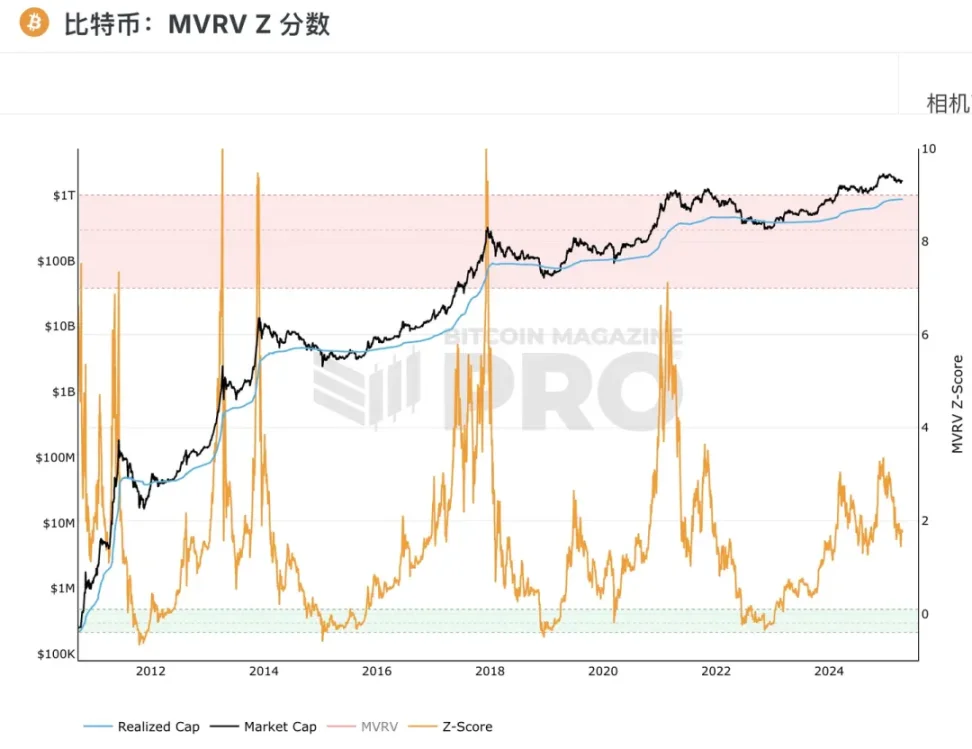
Figure 1: The MVRV Z-Score recently rebounded from its 2025 low of 1.43
Historically, periods matching the current MVRV-Z level have typically marked local bottoms rather than tops. Previous cycles—including those in 2017 and 2021—experienced similar corrections before resuming their upward trajectory. In short, while this decline has shaken investor confidence, it aligns with historical mid-bull market pullbacks.
Follow the Smart Money
Another critical indicator is the Value Days Destroyed (VDD) Multiple. This metric measures how quickly Bitcoin is moving, weighted by how long coins have been held. Peaks in the VDD Multiple often signal sophisticated holders taking profits, while lower levels suggest accumulation.
Currently, the metric sits at a low level in the “green zone,” comparable to late bear markets or early recovery phases. Given the sharp reversal from above $100,000, we may be witnessing the end of a profit-taking wave and the re-emergence of long-term accumulation—a sign pointing toward expectations of higher prices ahead.
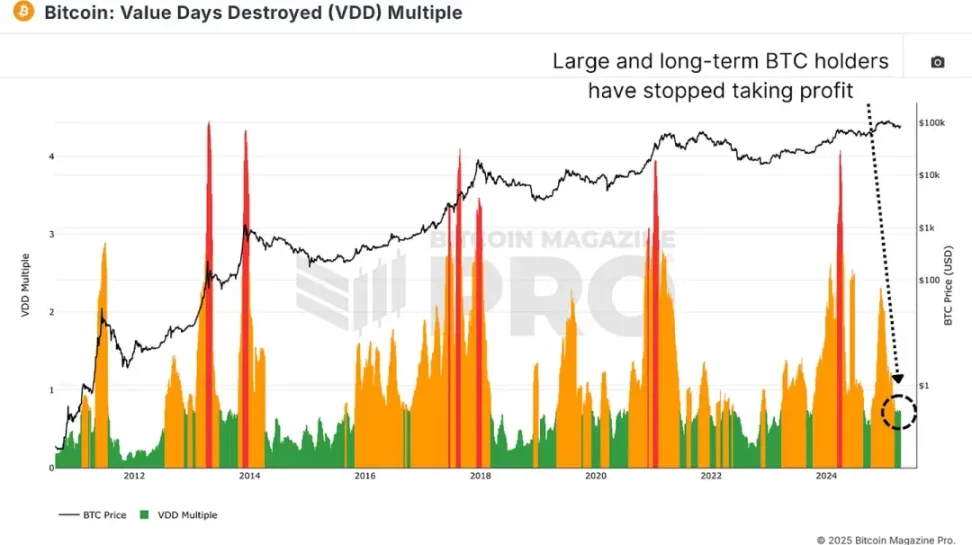
Figure 2: The current VDD Multiple indicates long-term holders are in accumulation mode
The Bitcoin Cycle Capital Flow chart—one of the most insightful visualizations in on-chain analytics—breaks down capital flows by coin age. It differentiates between groups such as new market participants (holding less than one month) and medium-term holders (1–2 years) to track capital migration. As Bitcoin reached its peak of $106,000, activity in the red band (new holders) spiked, indicating FOMO-driven buyers rushed in near the top. Since then, activity among this group has cooled significantly, returning to levels consistent with early-to-mid stages of a bull market.
In contrast, the 1–2 year holder cohort—typically composed of macro-aware accumulators—is beginning to rise again. This inverse correlation is crucial: long-term holders accumulate during market lows, while newer participants tend to capitulate or exit at these points. These dynamics mirror the accumulation-distribution patterns seen in earlier bull runs, particularly in 2020 and 2021.
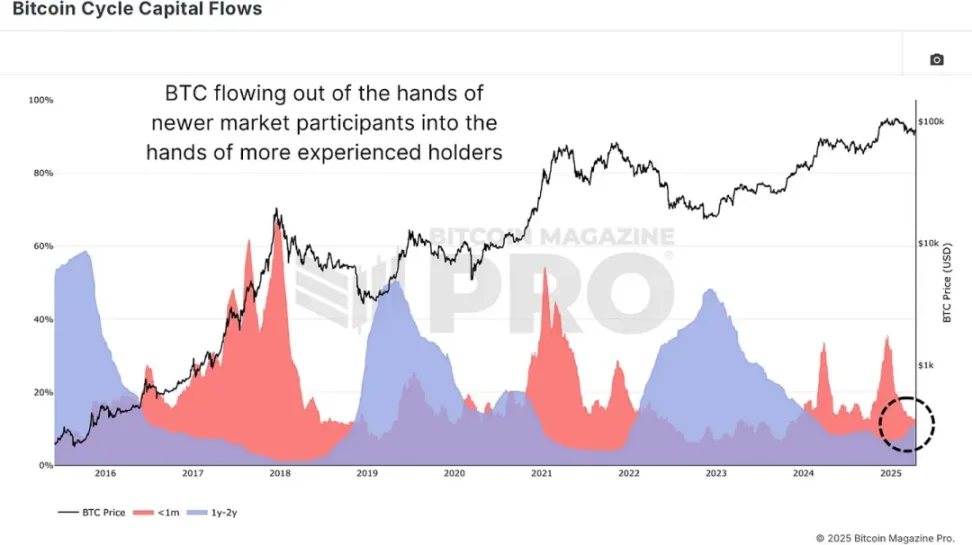
Figure 3: The Bitcoin Cycle Capital Flow chart shows Bitcoin flowing into more experienced hands
Where Are We Now?
From a macro perspective, we divide the Bitcoin market cycle into three key phases:
-
Bear Market Phase: Deep correction (70–90%)
-
Recovery Phase: Reclaiming previous highs
-
Bull / Exponential Phase: Parabolic rise following breakout from prior highs
The bear markets of 2015 and 2018 lasted roughly 13–14 months. Our most recent bear market also lasted 14 months. Past recovery phases spanned about 23–26 months, placing our current cycle well within this window.
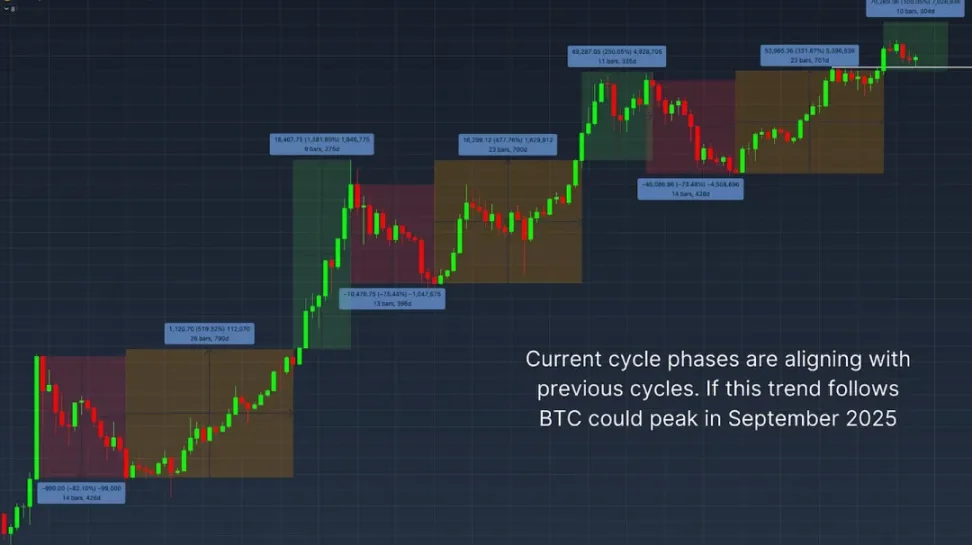
Figure 4: Estimating potential bull market peak using trends from prior cycles
However, this bull phase has been somewhat unusual. Rather than surging immediately after breaking all-time highs, the market pulled back. This could indicate we are forming a higher low before entering the steeper portion of the exponential phase. If we take the average duration of past exponential phases—9 and 11 months—we might expect this bull market to peak around September 2025, assuming the bullish phase resumes.
Macro Risks
Despite encouraging on-chain signals, macro headwinds remain. Correlation analysis between the S&P 500 and Bitcoin shows that Bitcoin continues to maintain a high degree of correlation with U.S. equities. With growing concerns over a global economic recession, ongoing weakness in traditional markets could constrain Bitcoin’s upside potential in the near term.
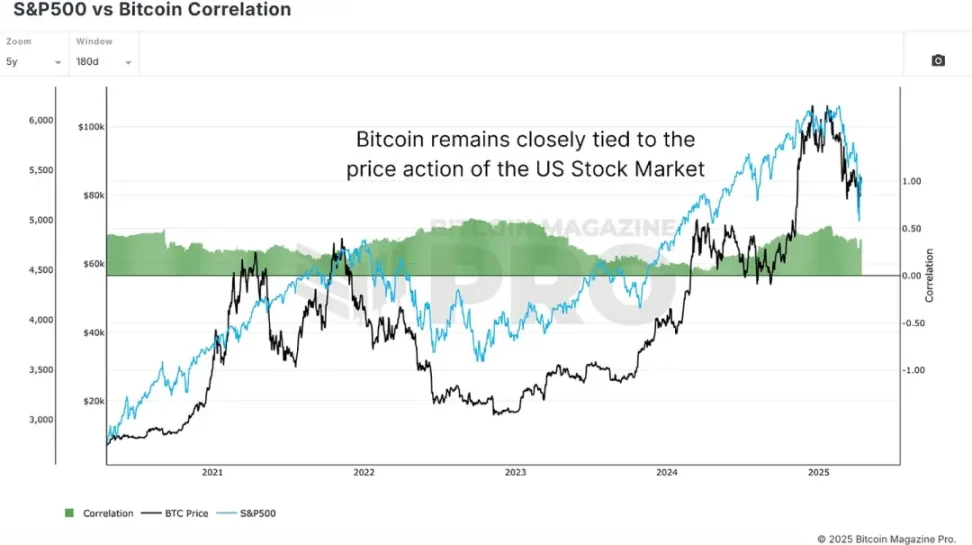
Figure 5: Bitcoin's correlation with U.S. equities
Summary
As our analysis shows, key on-chain metrics—including the MVRV Z-Score, Value Days Destroyed, and Bitcoin Cycle Capital Flow—reflect healthy, cycle-consistent behavior and signs of accumulation by long-term holders. However, significant macro uncertainty persists, representing a key risk to monitor.
This cycle has progressed more slowly and unevenly than past cycles, but it hasn’t broken the historical structure. Provided traditional markets avoid further deterioration, Bitcoin appears poised for another leg up, potentially peaking in the third or early fourth quarter of 2025.
Join TechFlow official community to stay tuned
Telegram:https://t.me/TechFlowDaily
X (Twitter):https://x.com/TechFlowPost
X (Twitter) EN:https://x.com/BlockFlow_News
 @BitcoinMagazine