








Can Trump Really "Fire" Fed Chair Powell?
TechFlow Selected TechFlow Selected
Can Trump Really "Fire" Fed Chair Powell?
No Federal Reserve Chair has ever been removed by a president.
 Navigating Web3 tides with focused insights
By Nik Popli
Translation and editing: Bitpush News
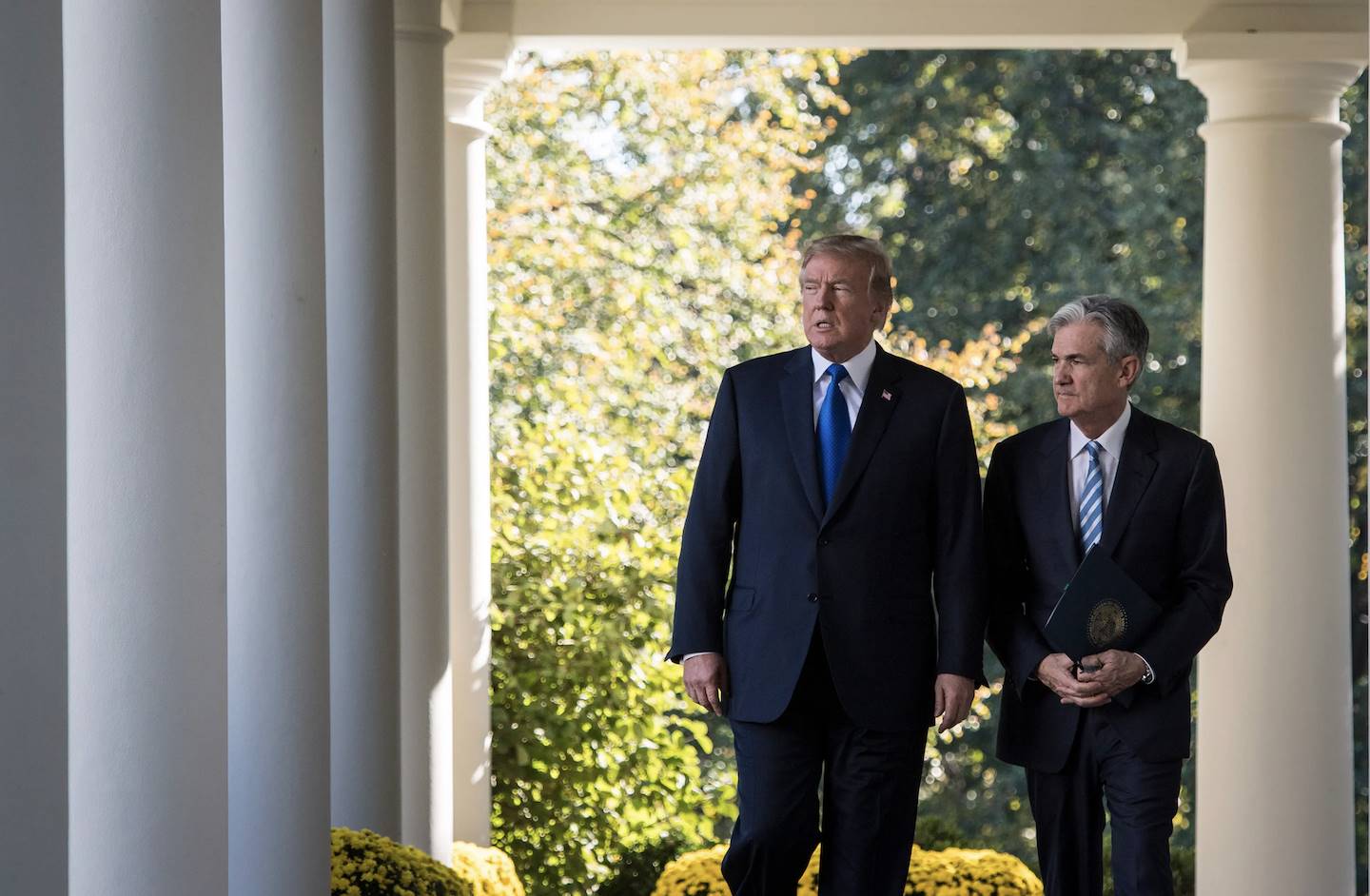
The Federal Reserve has long prided itself on its independence. But that tradition is now under fresh pressure as former U.S. President Donald Trump intensifies his attacks on Fed Chair Jerome Powell for refusing to cut interest rates.
On Thursday, speaking to reporters in the Oval Office, Trump said, "If I wanted him gone, believe me, he’d be gone very quickly."
On his social media platform Truth Social, Trump reiterated: "Fire Powell — and do it fast!"
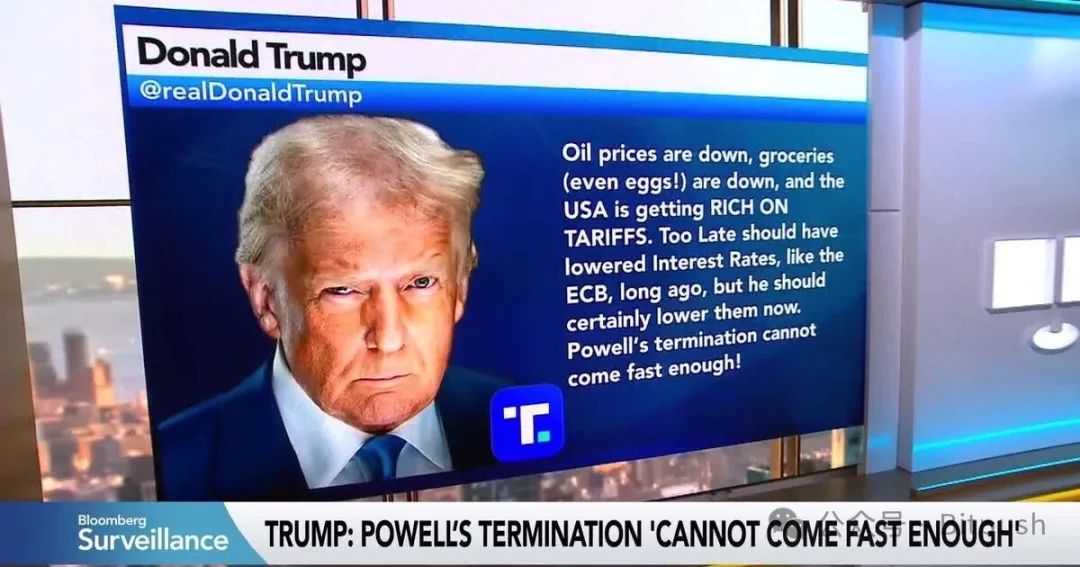
Image source: Bloomberg
These remarks represent one of Trump’s most aggressive moves yet to undermine the political independence of the Federal Reserve—the key institution traditionally insulated from White House influence and tasked with maintaining economic stability.
A day earlier, Powell pushed back against political interference during a speech at the Economic Club of Chicago, stating the Fed would make decisions solely based on what is best for the American people.
"That’s all we’re going to do… We will never be influenced by any political pressures… Our independence is a matter of law," Powell said.
He added that Fed governors can only be removed "for cause" and noted their terms are "long—seemingly endless."
Nonetheless, this hasn’t stopped Trump from attempting to oust the central bank chief. "I don't think he's doing a good job," the president said Thursday, accusing Powell of cutting rates "too late."
Powell was originally nominated by Trump in 2017 to lead the Fed and was reappointed by Joe Biden in 2022. His current term as chair runs until May 2026.
While past presidents have expressed dissatisfaction when Fed rate decisions conflicted with their policy goals, Trump’s rhetoric has sparked renewed concerns about political interference in monetary policy—a development that could unsettle markets and damage the central bank’s credibility.
Even some of Powell’s critics, including senior Democratic Senator Elizabeth Warren, have voiced alarm over Trump’s confrontational stance, warning earlier that undermining the Fed’s independence could bring disaster to U.S. markets.
"The Federal Reserve needs public confidence," said Sarah Binder, senior fellow at the Brookings Institution and Fed expert. "But if the president tries to force Powell out, that would only add uncertainty—a kind of uncertainty that markets hate."
Here’s what you need to know about the limits on presidential power over the Federal Reserve—and what’s at stake for the economy.
Can Trump fire Powell?
Legally, the answer is complex and untested. No Fed chair has ever been removed by a president.
The Federal Reserve Act allows members of the Board of Governors—including the chair—to be dismissed "for cause." Historically, this has been interpreted to mean misconduct or incapacity, not policy disagreements. "Courts generally don’t view disagreements over interest rate settings as 'misconduct,'" said Sarah Binder.
Although Trump and his allies have floated the idea of firing Powell since his first term, they never acted—likely due to uncertain legal grounds and potential backlash.
Powell himself has made clear he won’t resign voluntarily. When asked last November whether he would step down if Trump demanded it, he replied simply: "No."
Still, the Trump administration appears to be preparing for a potential showdown. Treasury Secretary Scott Bessent recently told Bloomberg he expects to begin interviewing candidates for Powell’s possible replacement this fall.
Trump’s push to remove Powell comes as the U.S. Supreme Court is currently hearing a case concerning the president’s authority to fire senior officials at independent agencies.
While the case involves the National Labor Relations Board and the Merit Systems Protection Board, its implications could extend further. A ruling in favor of the Trump administration might signal how the Court could approach the legal conflict surrounding an attempt to remove Powell—though the Fed maintains the challenge does not apply to it.
At the heart of this debate lies a nearly century-old legal precedent: the 1935 Supreme Court decision in *Humphrey’s Executor v. United States*, which limited the president’s power to remove leaders of independent agencies without cause. That ruling has long shielded Fed chairs from political dismissal—but may soon face a test before a conservative-leaning Supreme Court.
What’s at stake for the economy
Trump accuses Powell of failing to act aggressively enough to support economic growth, claiming the Fed chair is “playing politics” by holding rates steady.
But U.S. central bankers—and many economists—hold the opposite view: an independent Fed is essential for managing inflation and guiding the economy, and yielding to political demands could harm both the economy and global trust in U.S. institutions.
Powell insists the Fed’s decisions are "based entirely on what is best for all Americans."
In his Wednesday speech, he warned that Trump’s sweeping tariffs could push the U.S. economy into a "challenging situation"—higher inflation and slower growth—that complicates the Fed’s dual mandate of stabilizing prices and maximizing employment. Trump’s tariffs raise costs on many imported goods, squeeze household budgets, and fuel concerns that policy-driven slowdowns could emerge while inflation remains above the Fed’s 2% target.
Meanwhile, Trump is demanding immediate rate cuts, pointing to the European Central Bank’s rate cut on Thursday.
Yale Budget Lab estimates the inflationary impact of Trump’s tariffs amounts to an additional $4,900 in real tax burden per American household. At the same time, long-term interest rates have surged, raising borrowing costs for homebuyers, businesses, and consumers.
Jerome Powell’s tenure
Now 71, Powell is serving his second term as chair of the Federal Reserve, the most powerful economic policymaking body in the United States. A Republican and former investment banker, he was first appointed to the Fed Board in 2012 by Barack Obama and elevated to chair by Trump in 2017. Biden later reappointed him, reflecting broad bipartisan confidence in his leadership of the central bank.
During Powell’s tenure, the Fed has navigated a series of economic shocks—from the pandemic-induced recession to the worst inflation surge in four decades. Under his leadership, the central bank slashed rates to near zero in 2020 to stabilize the economy during COVID-19, then began hiking rates in 2022 to combat inflation that had soared above 9%.
Though inflation cooled in March to a six-month low, the journey has been bumpy, drawing criticism from both sides of the political spectrum over whether the Fed moved too slowly or too aggressively.
"Support for Powell may be significantly lower than during Trump’s first term, when the economy performed exceptionally well," said Binder. "Many might argue the Fed was far too late in curbing inflation in 2022–2023, committing a major policy error. So now the question is: who will step up to defend the Fed?"
Join TechFlow official community to stay tuned
Telegram:https://t.me/TechFlowDaily
X (Twitter):https://x.com/TechFlowPost
X (Twitter) EN:https://x.com/BlockFlow_News
 TIME
TIME


