Tariffs in Trump's Eyes: The Most Beautiful Words, the Ultimate Tool to Make America Great Again
TechFlow Selected TechFlow Selected
Tariffs in Trump's Eyes: The Most Beautiful Words, the Ultimate Tool to Make America Great Again
Let's examine Trump's new radical tariff policy, as well as analysts' conflicting views on the current state of the economy.
 Navigating Web3 tides with focused insights
Overview
The U.S. President has just disrupted global trade with radical tariff policies. There is significant uncertainty and debate over the potential geopolitical and economic impacts, with opposing viewpoints from different camps.
Before discussing this issue, we want to clarify that we believe in free markets and global trade. Trade is largely voluntary, so it only occurs when both parties believe they benefit. Therefore, trade is not a zero-sum game. There are also many legitimate reasons for persistent trade imbalances between nations. Thus, we view all tariffs—and reciprocal tariffs—as harmful. These tariffs will damage global growth and productivity. Nonetheless, there remains substantial disagreement about how international trade imbalances operate, what causes them, and how these tariffs affect capital flows. This is precisely the focus of this article.
Trump’s View
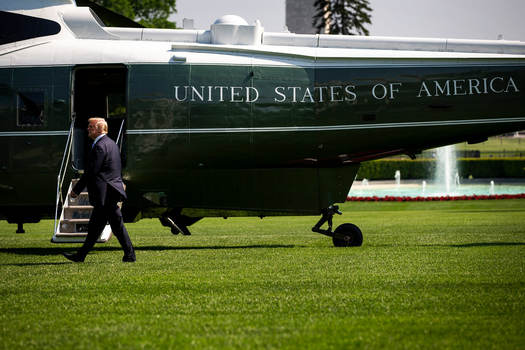
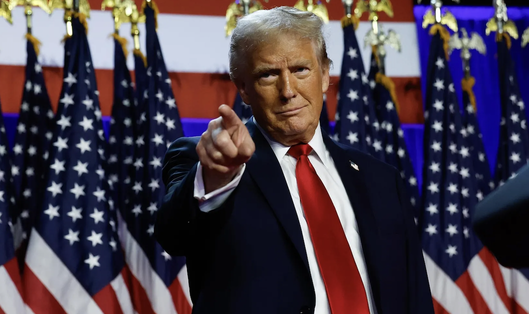
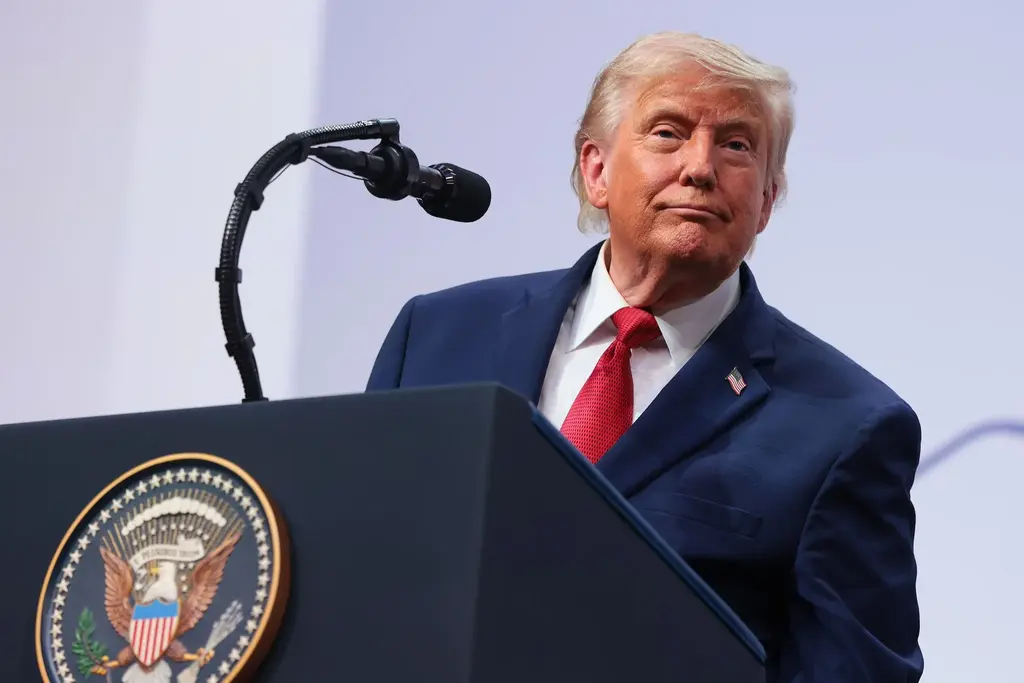
In Trump’s view, the United States has been severely cheated by its trading partners for decades, with the massive trade deficit serving as clear evidence. These deficits, he argues, are caused by protectionist policies from America’s largest trading partners—such as China, the European Union, and Japan. The formula Trump uses to calculate "reciprocal tariffs" suggests he believes persistent trade deficits have no valid justification and are entirely the result of protectionism.
According to Trump, these protectionist policies include:
1. Tariffs
2. Regulations favoring domestic producers
3. Currency manipulation by exporting countries such as China, Germany, and Japan to weaken their currencies against the U.S. dollar
As a result of these policies, America’s manufacturing base has eroded, leaving American workers in difficult economic conditions—workers who form a critical part of Trump’s “Make America Great Again” political base. By finally leveling the playing field, as he promised during his campaign, American consumers would buy more domestically produced goods, revitalizing U.S. manufacturing and driving an economic revival.
Petrodollar View
Many argue that Trump’s perspective on trade reveals a lack of economic understanding. The reality, they say, is that Americans benefit from trade deficits. Americans gain by consuming all the goods produced by hardworking, low-wage Asian laborers in China, Japan, India, Thailand, Vietnam, and South Korea—and also by benefiting from oil produced in the Middle East (or lower oil prices resulting from Middle Eastern production). Americans win because they receive all the goods, while Asian workers lose, toiling long hours under harsh conditions for minimal pay. This has effectively been a successful trick the U.S. has pulled off on its trading partners for decades. Somehow, the U.S. has convinced surplus countries to reinvest their earnings into the dollar, maintaining a strong dollar and perpetuating this favorable arrangement. Remember, without the gold standard, trade deficits do not deplete America’s precious gold reserves. The U.S. can run these deficits with almost no immediate consequences. This view stands in stark contrast to Trump’s narrative, which portrays the U.S. as the victim of exploitation.
However, this situation is unsustainable because trade deficits accumulate over time. The only reason this has lasted so long is that the dollar serves as the world’s reserve currency. When countries export goods to the U.S., they invest their dollar earnings back into dollar-denominated assets, sustaining what amounts to a Ponzi scheme. At some point, accumulated imbalances could grow so large that the system collapses, drastically reducing Americans’ real incomes. To avoid this fate, individuals should invest in gold—and, of course, Bitcoin.
The U.S. has implemented several policies aimed at preserving the dollar’s status as the global reserve currency, some of which are kept secret to prolong this arrangement. Some of the most sinister alleged policies include:
Colonel Muammar Gaddafi of Libya was overthrown and killed because he held substantial gold reserves and wanted to sell oil for gold, which would have undermined the dollar’s reserve status. Indeed, as speculated in a leaked 2011 email from Sidney Blumenthal to Hillary Clinton, Libya’s gold policy was one of the “factors” influencing the decision to attack Libya. (France and the UK were heavily involved, as was the U.S.)
In October 2000, Iraqi President Saddam Hussein decided to stop selling oil in dollars and switch to euros. This is said to have been a key motive behind the U.S. invasion of Iraq and the killing of Saddam Hussein. Concerns about weapons of mass destruction and Saddam’s abysmal human rights record were thus pretexts—a lie. It was all about oil.
Due to the above and other aggressive foreign policies, other oil exporters like the UAE and Saudi Arabia understand they must continue selling oil in dollars and reinvest much of their petrodollar wealth into dollar assets and U.S. securities—or risk provoking the wrath of the CIA and other U.S. military agencies.
Clearly, this view sharply contradicts Trump’s apparent stance on global trade. Trump now accuses China of manipulating its currency downward, while the U.S. manipulates its own currency upward—sometimes through clearly nefarious means.
To highlight this apparent inconsistency, Trump recently tried to deter BRICS nations from creating a currency to compete with the dollar—a move that, if successful, would likely weaken the dollar and strengthen local currencies. Doesn’t Trump want this? A weaker dollar would support the “Make America Great Again” agenda by boosting domestic manufacturing. Yet Trump’s recent tariff moves and accusations that BRICS nations are manipulating their currencies downward to increase exports to the U.S. seem contradictory. What does the U.S. want China to do—buy or sell U.S. Treasuries? It’s almost as if the U.S. cannot tolerate either choice. We don’t mean to single out Trump here; he’s not alone in being confused about the direction of Chinese currency manipulation. Many politicians across parties have expressed similar confusion, including Obama and Geithner. Our point is that, under the petrodollar worldview, U.S. policy aims to prop up the dollar, while China is planning to end the dollar’s reign as the global reserve currency.
This petrodollar perspective on global trade may be the most popular among our audience and Bitcoin enthusiasts. Notable analyst Luke Gromen is a leading proponent. Under this worldview, the dollar is entering a period of high uncertainty. The rise of BRICS poses an increasing threat to dollar hegemony, potentially leading to a gradual abandonment of the dollar as the primary trade and settlement currency. Consequently, the dollar’s role as the global reserve currency could weaken, possibly triggering sharp increases in the prices of oil, gold, and even Bitcoin.
If one accepts this view, the impact of Trump’s new tariff policies could be especially damaging and dangerous for the U.S. Exporting nations would see their trade surpluses shrink, meaning they would no longer invest vast sums annually into U.S. government bonds and other American assets. They might even begin selling existing U.S. holdings to fund domestic consumption and offset lost exports to the U.S. This could act as a catalyst for a U.S. debt crisis and undermine the almighty dollar.
Capital Flows View
There is another, less-discussed perspective on trade imbalances that we believe holds considerable merit compared to the petrodollar theory. Recall Economics 101: the balance of payments (BoP) must always balance. Every buyer of dollars must have a seller. So if a country runs a trade deficit, it must have a corresponding surplus in its capital account (financial asset flows), and vice versa. But what drives what? Perhaps diligent Chinese workers produce high-quality goods that Americans genuinely want, causing the U.S. trade deficit and, consequently, a capital surplus. Alternatively, perhaps foreign investors seek exposure to the U.S., generating a capital surplus that leads to a trade deficit with countries like China.
This argument presents a more positive outlook for the U.S. than the petrodollar theory. The U.S. hosts the world’s best companies—firms that prioritize profits and returns on equity more than their global peers. American corporations also emphasize meritocracy more than in Europe or Asia, where connections, background, race, or gender may carry greater weight. This helps attract the world’s top talent. The U.S. is home to the most innovative and successful companies—Google, Microsoft, Apple, Amazon, Nvidia, Meta, OpenAI, Tesla, Broadcom, Visa, Netflix, and others. Global investors naturally want exposure to these high-quality, high-growth assets.
Many Asian investors also seek to move capital abroad to protect it from government seizure. In contrast, the U.S. offers stronger rule of law and investor protections—at least in principle. Therefore, Trump’s claim that Asian exporters have been manipulating their currencies downward is entirely backwards: in fact, many have tried to prevent depreciation and have actively fought capital flight. Under this worldview, these factors generate a massive U.S. capital account surplus, which in turn produces a large trade deficit. Hence, persistent trade deficits may not be a problem—they could be a sign of success. It depends on the underlying drivers.
We believe these economic fundamentals are more important than U.S. Middle East diplomacy in making the dollar the global reserve currency. Killing dictators who want to sell oil for gold likely had limited long-term impact. This isn’t to excuse the dishonest and malicious motives behind U.S. foreign policy in the region. Some within the U.S. security apparatus may still subscribe to the petrodollar theory, even if it’s now somewhat outdated. If that’s not true, there are plenty of other dishonest theories to cite. Moreover, even if competing fiat currencies stand little chance against the dollar due to superior U.S. investment opportunities, gold remains a competitor. The CIA may still need to play dirty games to suppress gold. Perhaps U.S. elites want global trade conducted in dollars—not to preserve the dollar’s value, but simply to maintain control and power over global affairs, enhancing their ability to block payments and freeze foreign wealth.
If you accept this view, even if you believe “tariffs are always a bad idea,” Trump’s new policy may not immediately destroy the dollar’s reserve status. Yes, it’s still a tax that harms U.S. businesses and weakens the economy—everyone loses—but dollar dominance could persist for some time.
Conclusion
The reality is that the global economy is complex. The petrodollar view has merit—trade deficits do contribute to capital account surpluses. On the other hand, the reverse interpretation is equally valid: capital inflows can drive trade deficits. The causality runs both ways, and recognizing this is crucial to understanding global trade. For the U.S., both factors matter, and analysts should not ignore either. Trump’s views on trade occasionally contain grains of truth, and some politicians genuinely believe them. This partly explains why certain politicians appear inconsistent when discussing the direction of Chinese currency manipulation.
That said, we do believe Trump’s overall trade perspective is largely flawed. Tariffs are taxes on Americans and will weaken the U.S. economy. The American middle class may have been relative losers from globalization, while elites benefited—but that doesn’t mean reversing globalization will make the middle class winners. Trump might abolish the IRS, replace income taxes with tariffs, and revert to pre-1930s economic policies. If that happens, that’s a separate issue—but we wouldn’t bet on it.
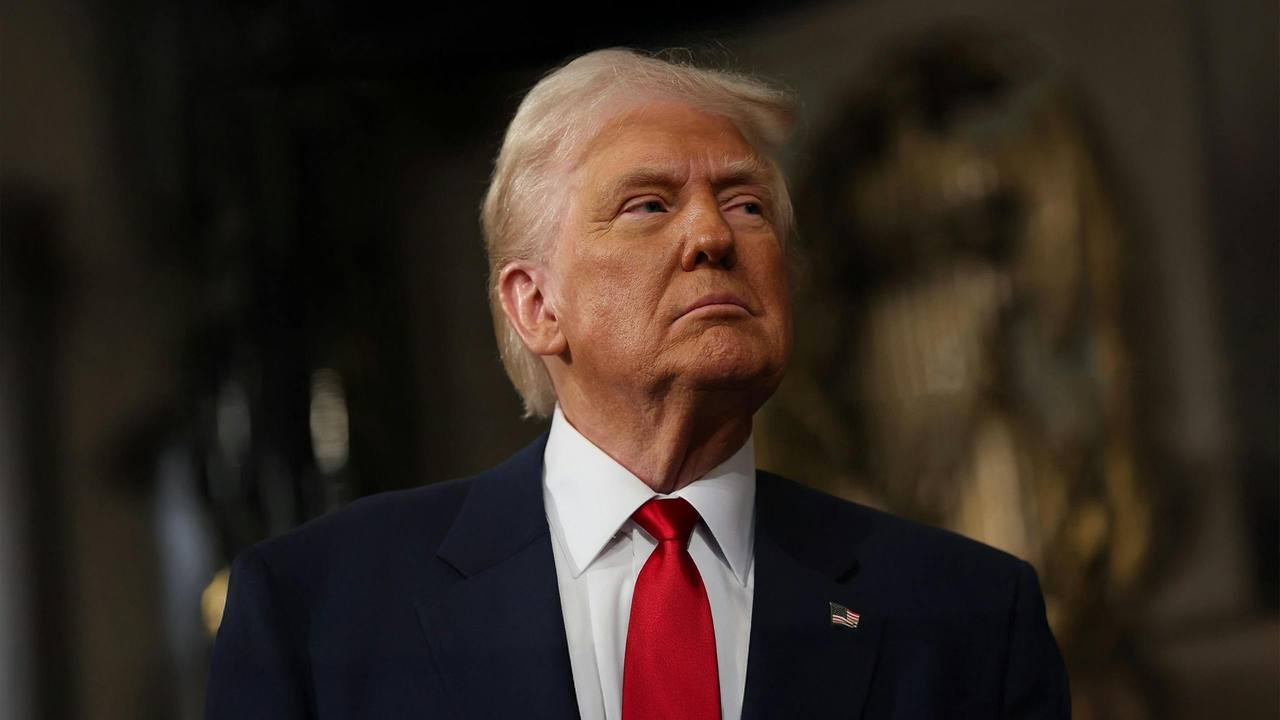
Of course, conspiracy theories abound. Some claim Trump announced these tariffs deliberately to crash the economy, forcing investors into U.S. Treasuries to lower yields, allowing the U.S. to refinance its debt at lower interest rates and delay the inevitable crisis of unaffordable debt servicing. We consider this possible but unlikely. Occam’s Razor probably applies here: the simplest explanation is often the best. Trump simply likes tariffs and considers them “the most beautiful word”.
Join TechFlow official community to stay tuned
Telegram:https://t.me/TechFlowDaily
X (Twitter):https://x.com/TechFlowPost
X (Twitter) EN:https://x.com/BlockFlow_News
 @BitMEX