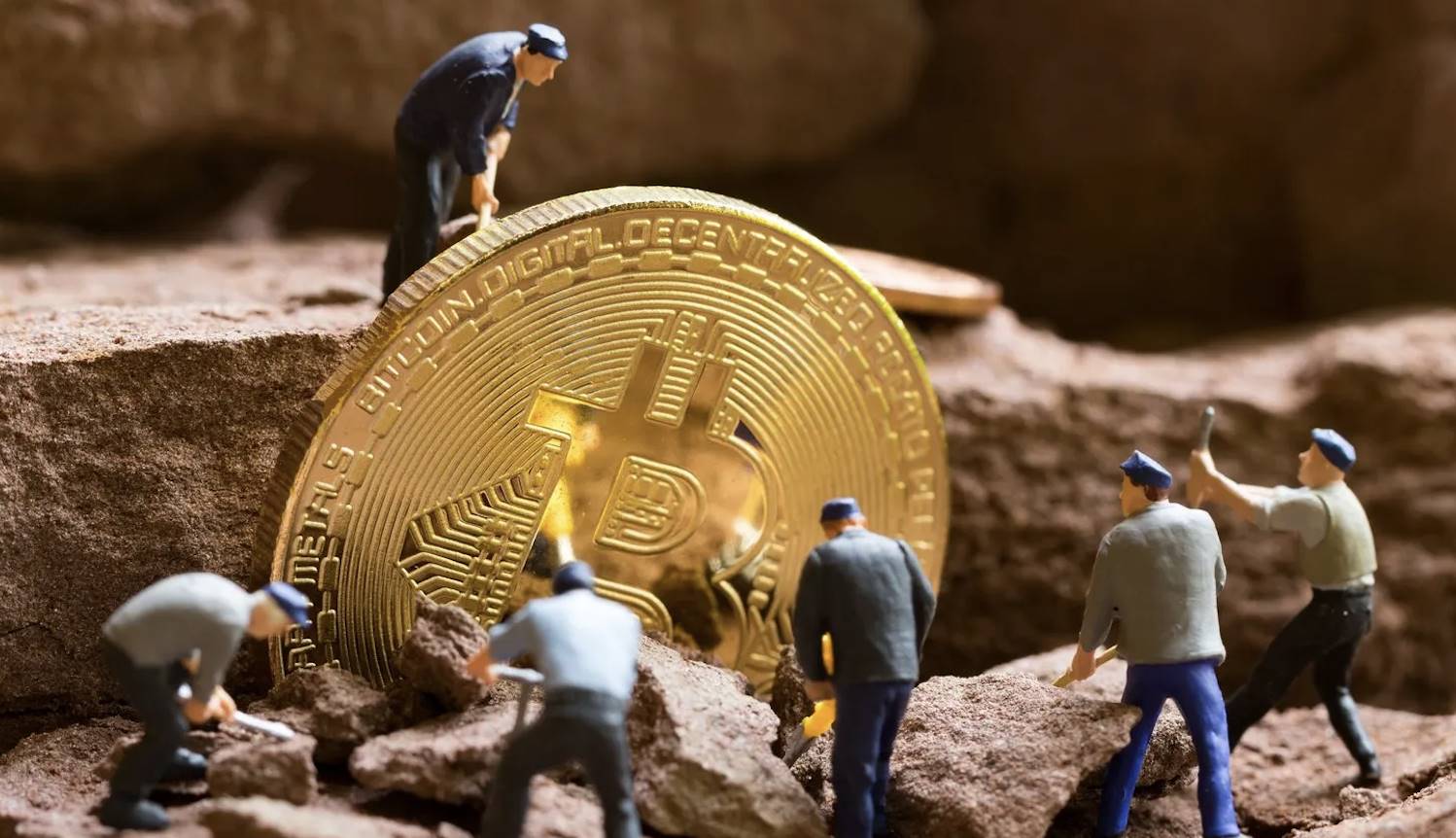
"Lottery-style" mining: Why are solo miners frequently winning block rewards?
TechFlow Selected TechFlow Selected
"Lottery-style" mining: Why are solo miners frequently winning block rewards?
Mining without support from large mining pools is still like buying a lottery ticket.
 Navigating Web3 tides with focused insights
By Mat Di Salvo, Decrypt
Translated by Feilx, PANews
Last week, another Bitcoin miner broke the mold by independently processing a block and claiming the 3.125 BTC reward—worth $259,637 at the time, including transaction fees. Over recent months, multiple instances have emerged of solo miners successfully mining Bitcoin blocks.
Is it just luck? Is solo mining becoming more common? Can ordinary individuals connect a hobbyist rig and succeed with minimal resources, compared to publicly traded mining operations?
The answers vary. The term "independent miner" encompasses a range of operators—from individual hobbyists to groups that prefer to operate discreetly. Their success has become more frequent, though not dramatically so—and overall numbers are unlikely to surge significantly.
Scott Norris, CEO of independent Bitcoin mining company Optiminer, said mining without support from large mining pools is still "like buying a lottery ticket."
In 2022, independent miners using Solo CKPool—a service allowing anonymous mining without running one's own full Bitcoin node—processed seven blocks. In 2023, that number jumped to 12 blocks. In 2024, it reached 16 blocks.
However, blocks mined via Solo CKPool do not necessarily mean someone mined Bitcoin alone in their bedroom with extremely low hash power. Some in the crypto community have claimed this, but it’s incorrect.
The mining pool industry is dominated by a few major companies—such as Foundry, AntPool, and F2Pool. Miners connect to these pools, share resources, and split rewards. With services like Solo CKPool, miners receive the full block reward (minus a small fee) when they find a block, keeping nearly all the proceeds.
As the Bitcoin network grows, mining demands more power and resources, and is typically run as a business by public companies. Some Bitcoin enthusiasts view this trend negatively, arguing that the Bitcoin network should remain as decentralized as possible.
Hobbyist mining devices like Bitaxe and FutureBit Apollo, priced between $200 and $500, have now become favorites among "Bitcoin maximalists." In January, a FutureBit Apollo processed a block—but only because a nonprofit donated hashing power from other machines to it.
At the time, anonymous Bitcoin miner Econoalchemist stated on X that their goal was "to dismantle proprietary mining empires and make Bitcoin and free technology accessible to everyone."
While the likelihood of fully realizing this vision remains slim, the rise of hobbyist miners in recent months may be contributing to a noticeable increase in individual mining success rates.
"Every once in a while, and increasingly frequently, a Bitaxe or similar small mining device independently processes a block, quietly operating in someone’s home," said Econoalchemist.
Optiminer’s Scott Norris pointed out that corporations can also process blocks without large mining pools—as long as they possess sufficient hashing power.
Even Solo Satoshi, a Houston, Texas-based company selling mining hardware such as the Bitaxe Gamma, states on its website that using a $180 Bitaxe machine with 1.2 TH/s hash rate gives you a 0.00068390% chance of mining a block each day.
But Matt Howard, founder of Solo Satoshi, said engaging in solo mining isn't necessarily about profit. "The primary goal is further decentralization. Finding a block and earning Bitcoin is a bonus. For Bitcoin maximalists, it's understood that mining must be decentralized."
Join TechFlow official community to stay tuned
Telegram:https://t.me/TechFlowDaily
X (Twitter):https://x.com/TechFlowPost
X (Twitter) EN:https://x.com/BlockFlow_News
 Decrypt