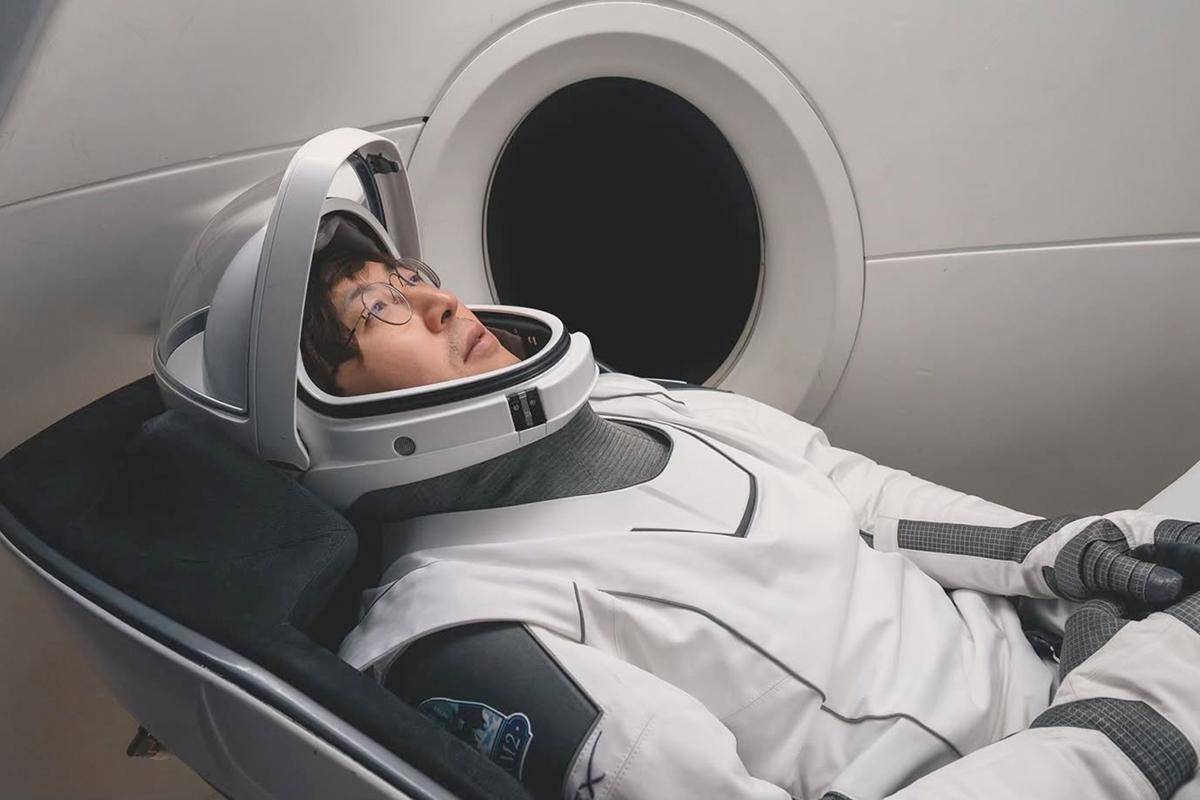
The man named Wang Chun has gone to space.
TechFlow Selected TechFlow Selected
The man named Wang Chun has gone to space.
Beyond the stars, even more unknowns await, and Wang Chun is still on the journey.
 Navigating Web3 tides with focused insights
Text: Yanz, Liam
Editor: Liam
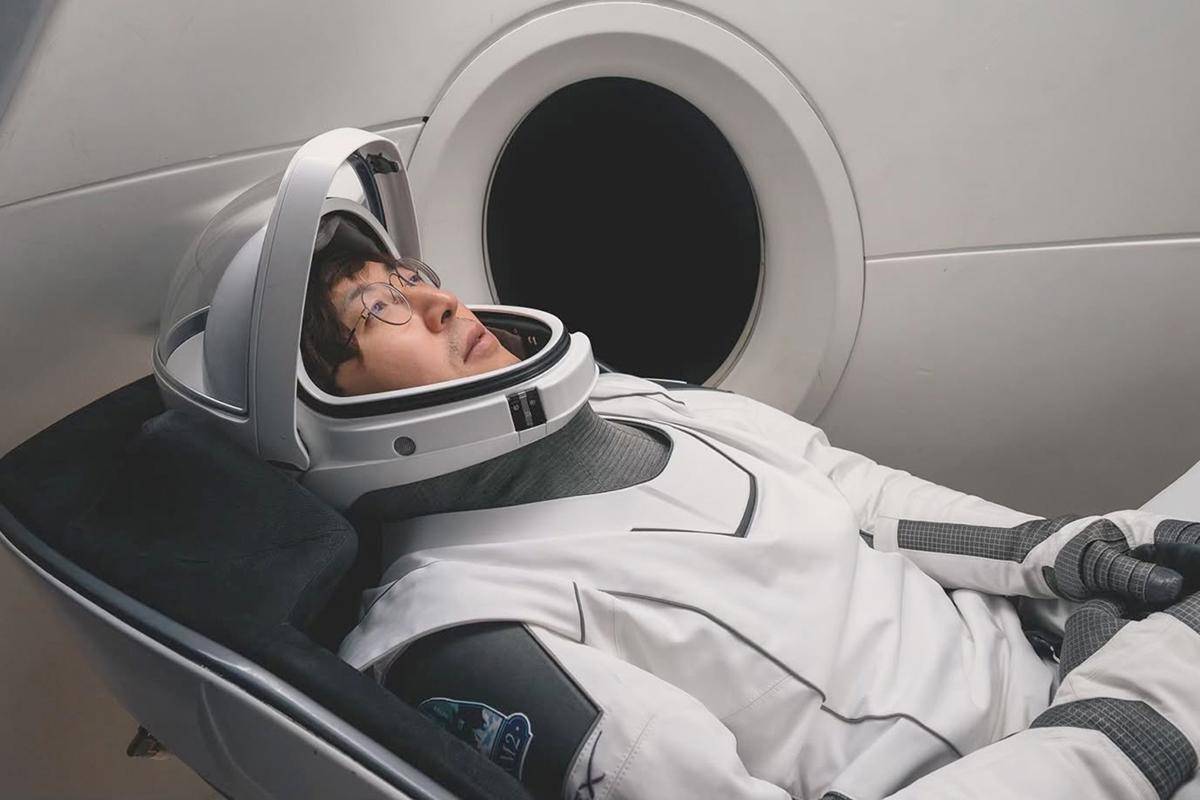
On the evening of March 31, 2025, at Cape Canaveral Air Force Station in Florida, SpaceX’s Falcon 9 rocket lifted off amid a brilliant burst of fire.
The rocket, carrying the Dragon spacecraft "Resilience," broke the sound barrier and soared through the atmosphere, heading toward an orbit never before visited by humans—Earth's polar orbit.
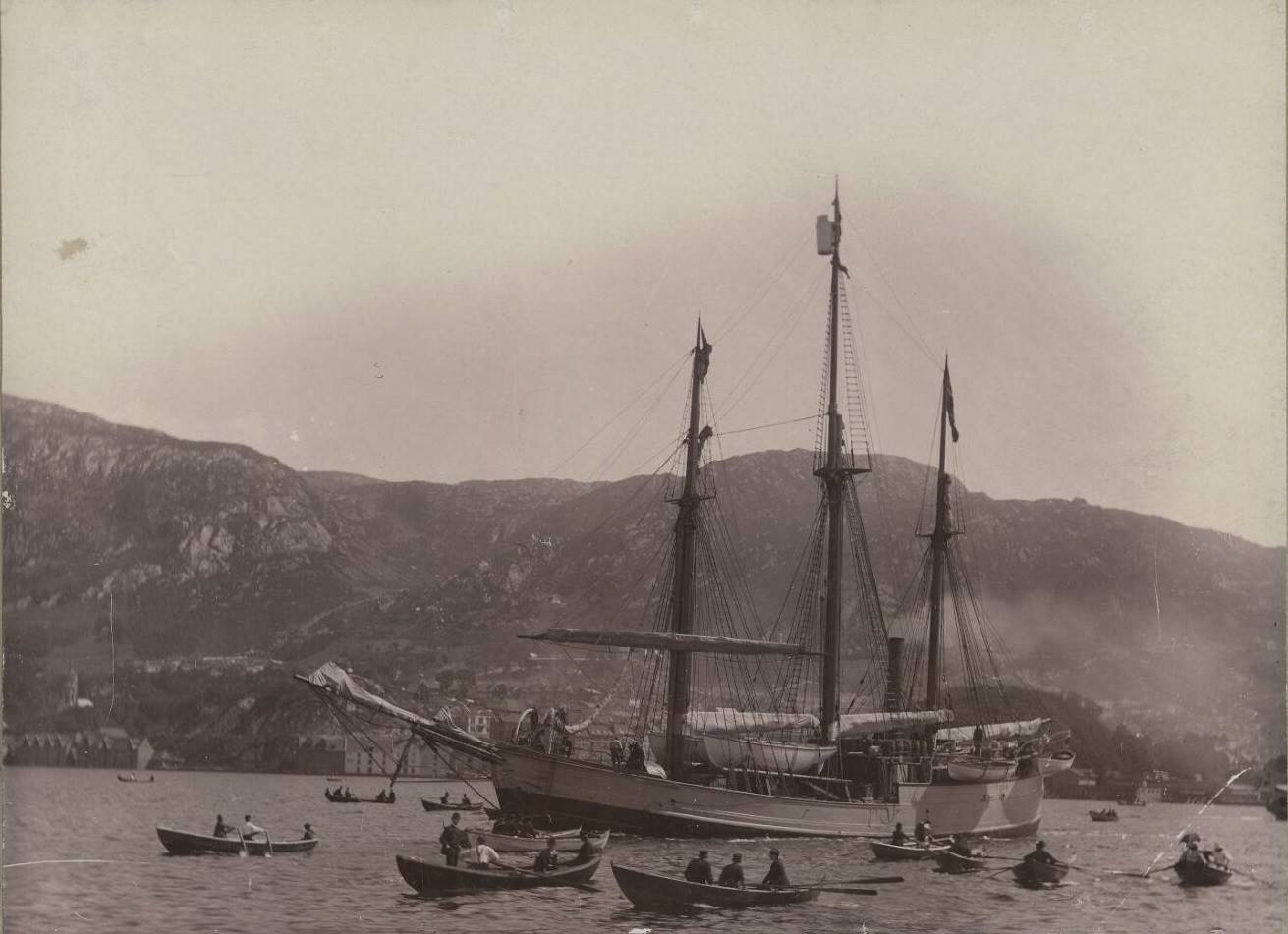
"Fram" means "forward" in Norwegian, and was also the name of a pioneering polar exploration vessel from the late 19th century. In 1893, the ship named "Fram" led scientists into a new era of human polar exploration.
Over the past sixty years, humanity has made tremendous progress in space: leaving footprints on the Moon, sending probes to the edge of the solar system, and even building space stations. Yet no crewed spacecraft had ever flown over Earth’s North and South Poles—until Fram2 arrived.
Fram2 marked a milestone in space history—the first time humans observed Earth comprehensively from a polar perspective.
Even more astonishing is that Fram2 was not a government-backed space mission, but rather a $200 million personal expedition funded by a Chinese entrepreneur.
This low-key and enigmatic businessman is Wang Chun, a key figure in the global Bitcoin mining industry. His feat made him only the second private individual in history to launch a personal space mission, after billionaire Jared Isaacman (now NASA administrator).
Before the mission, his friend Bao Er Ye posted on X stating that Wang Chun had made no backup of his Bitcoin private keys, saying that if anything happened during the mission, his Bitcoin would effectively be permanently destroyed.
Who exactly is Wang Chun?
What kind of belief drives someone to stake their life on the balance of exploration, investing $200 million just to seek an unknown answer among the stars?
A Legend Started with Two Graphics Cards
On May 28, 2011, Wang Chun bought his first Bitcoin for $8.70.
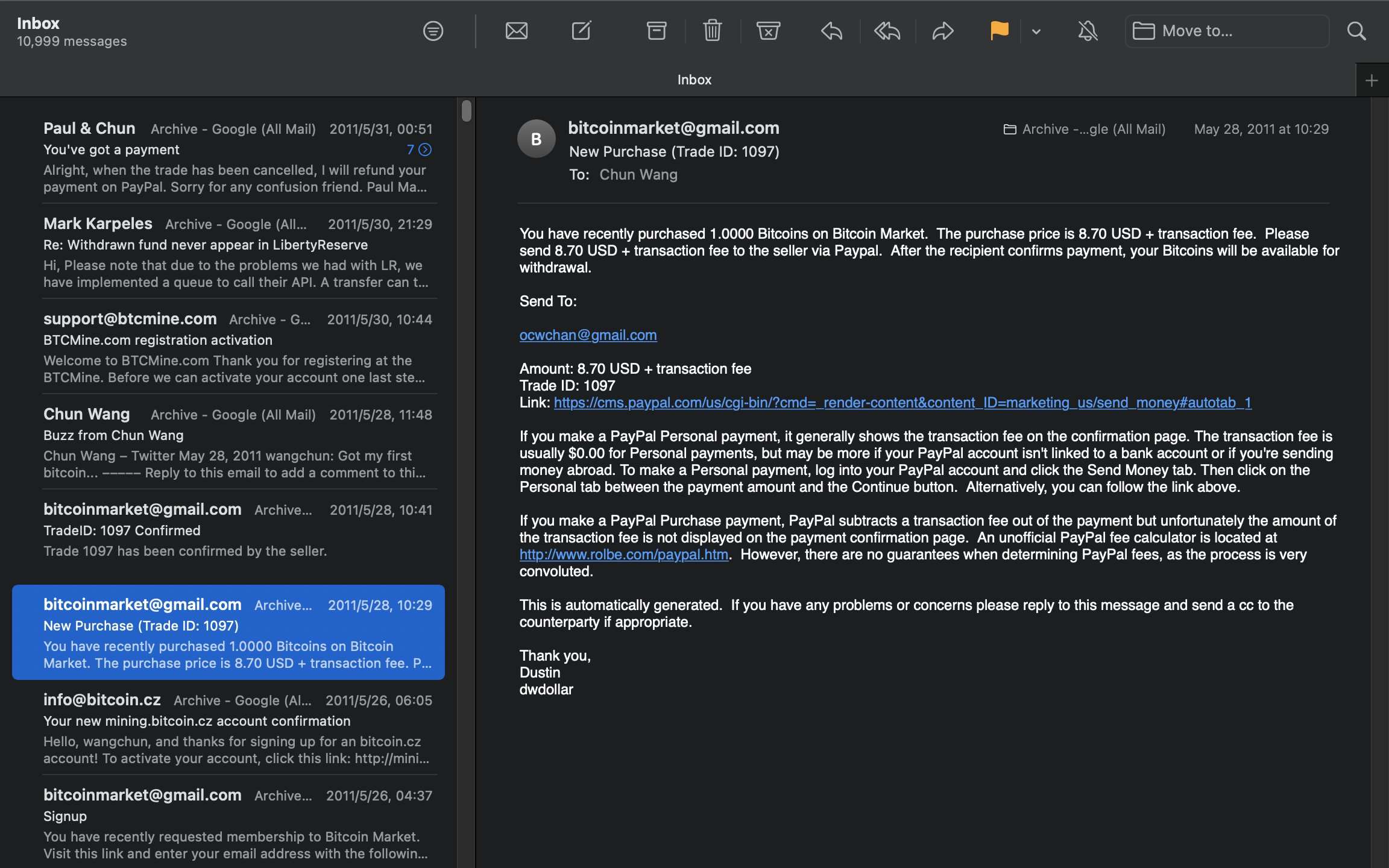
The story began in April, when two news alerts from tech website Solidot introduced Wang Chun to Bitcoin for the first time.
At the time, Wang knew nothing about economics or finance. But driven by intense curiosity, this tech-savvy geek spent an entire sleepless night reading every page of the wiki on en.bitcoin.it.
That night, he devoured all available content, as if discovering a new world.
What followed was a tale filled with hacker-like experimental spirit and bold adventurer’s courage. He tried mining using his MacBook, but found zero results.
On May 28, 2011, he went to Zhongguancun and purchased two graphics cards, assembling them into a “Bitcoin miner.” He then proudly shared photos of his setup on http://forum.bitcoin.org (now bitcointalk).
Just two days later, he felt it was “still too slow, mining too little,” so he partnered with another early Bitcoin adopter—Wu Gang, who later founded BTC.com.
On June 1, 2011, the two embarked on a bolder adventure: they spent a month acquiring dozens of mining rigs, rented four residential units, and built a small-scale mining farm.
The equipment was shockingly rudimentary—dusty second-hand motherboards, 512MB memory sticks, Ubuntu systems installed on 4GB USB drives, and even tampered electricity meters. Despite its simplicity, the startup capital—"angel funding"—came from a $40,000 “loan” provided by Wang Chun’s father, a small business owner in Tianjin.
Yet these humble machines opened the door to the world of Bitcoin mining.
In the first two years, this basic mining farm earned Wang Chun 7,700 Bitcoins.
When asked where those Bitcoins went, Wang often responds with self-deprecating humor: “4,000 paid for electricity, 660 bought me an iPhone—which I then lost to theft in St. Petersburg Metro.”
More ironically, he liquidated the remaining Bitcoins in early 2013 at $17 apiece.
In 2013, Zhang Nangen (“Pumpkin Zhang”) released the first ASIC-based mining device, causing a massive surge in network computing power and marking the end of the GPU mining era.
As Bitcoin mining reached a turning point, so did Wang Chun’s career.
In April 2013, he co-founded F2Pool (aka “Fish Pool”) with “Qicai Shenshenyu” (Shen Yu), known as “Shenyu.” This was China’s first Bitcoin mining pool, which later grew into one of the largest comprehensive mining pools globally.
The name carried a touch of “Wang Chun-style humor”: “Fish” came from Shen Yu’s nickname “Colorful Discus Fish,” while “2” originated from the first digit of Wang’s QQ handle “2523.”
Unlike physical mining farms, a mining pool functions like a virtual “mining cooperative,” where numerous miners combine their computing power to mine collectively and share rewards proportionally based on contribution.
Around 2018, Wang founded his second company, Stake.fish, in Thailand, focusing on staking services for blockchain assets under the Proof-of-Stake (PoS) mechanism.
To achieve globalization, he assembled an international team spanning 16 nationalities across 11 regions. Proudly, he declared: “I want to build a company like Facebook and Google.”
His dedication to work borders on obsession—he works tirelessly, day and night.
Super Jun, a well-known KOL in the crypto space, recalled staying overnight at Wang’s home in Phuket. Waking up in the middle of the night, he saw Wang still downstairs, discussing Stake.fish architecture with employees from the Netherlands. Most of Wang’s energy goes into coding, studying math and physics, and traveling the globe.
Wang holds himself and his employees to strict standards, paying extreme attention to detail.
“My biggest grievances against him were using half-width punctuation in emails, writing the ‘P’ in F2Pool in lowercase, and stepping on his weighing scale,” recalled Zhang Li, former CMO of F2Pool and Wang’s ex-colleague.
Xiao Maoge, who once worked at Stake.fish, said Wang required everyone to speak English at work without any grammatical errors. Wang taught himself English and now speaks it fluently.
Wang enjoys hiring unconventional people—or geniuses—often giving numerical “IQ test questions” during interviews. Yet he admits, “The problem with geniuses is they’re hard to manage.”
At work, Wang is engaging and loves connecting with Bitcoiners around the world. But outside of work, others see him as distant socially. “Can’t really call anyone a friend. Too many businessmen in this circle. Hard to form real friendships,” he says.
When not working, Wang enjoys reading. At one point, his bookshelf featured *Parallel Universes*.
How vast is the universe? What lies beyond? Perhaps these are the very questions he seeks answers to throughout his adventures.
The Thousand-Times High-Speed Rail Rider, Forever on the Move
“He finished riding every train long ago, then flew every airline worldwide—going to space was just natural.”
Zhang Li wasn’t surprised at all by Wang Chun’s space journey.
In Zhang’s memory, “Wang might be in Beijing in the morning, flying off to some unknown country by evening, yet somehow appear back in the office the next day.”
A typical Wang-style trip: arrive in Afghanistan, stay overnight near the airport hotel, leave early the next morning. A pure destination-checking enthusiast.
Compared to airplanes, Wang actually prefers trains.
In 2007, using only weekends, Wang traveled 75,900 kilometers by rail—meaning he spent two full months aboard trains annually, leaving ten months for sleeping and office work.
He once showed Zhang Li ticket stubs saved from 2008, reflecting his former Weibo nickname: “High-Speed Rail Thousand-Timer.”
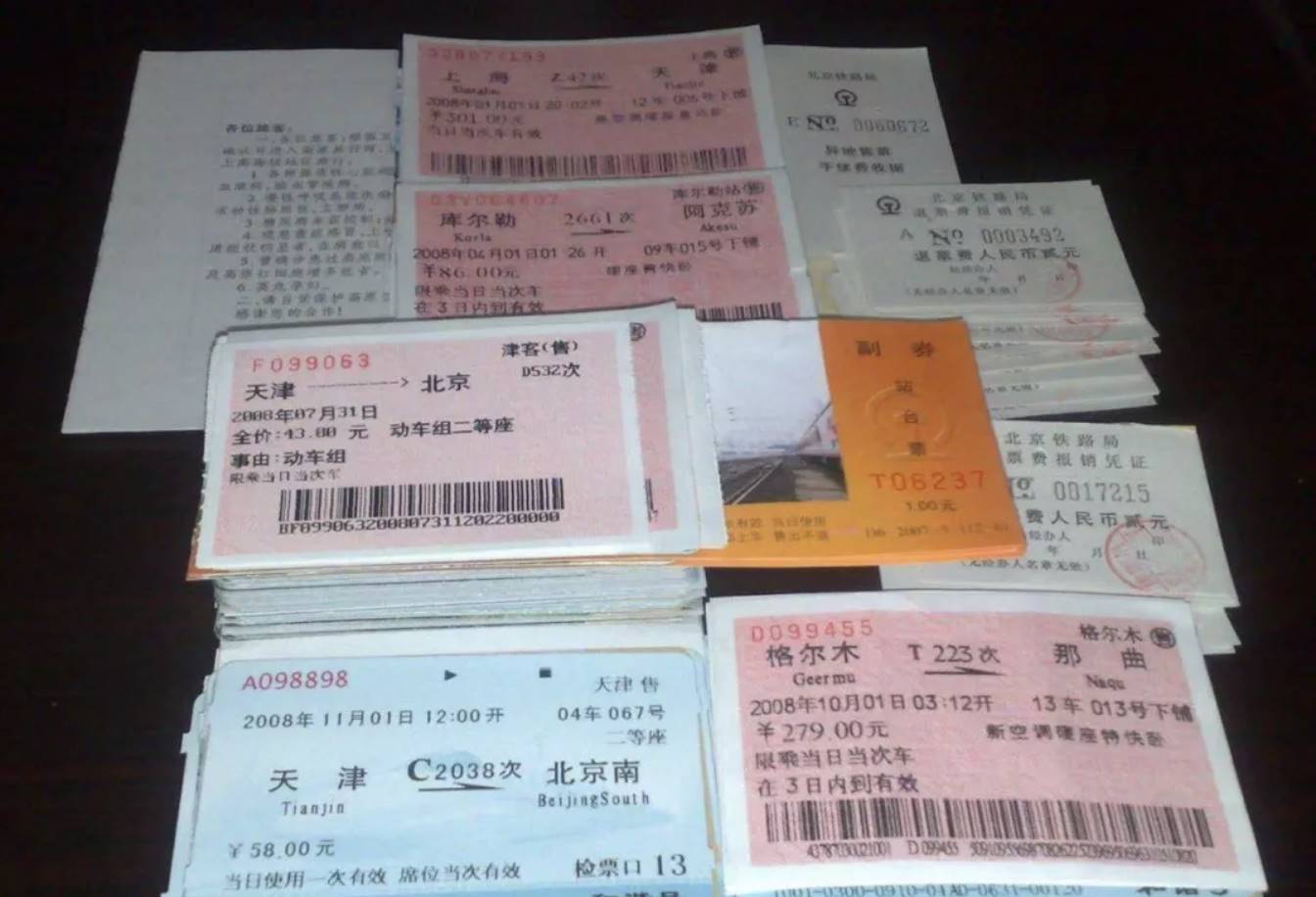
Image: Li Says
In 2013, after completing high-speed rail travel across all Chinese provinces, Wang shifted his checklist to the skies, documenting each flight on social media.
“This is my 110th air trip of 2019—Air China CA4029, Chengdu Shuangliu to Beijing Daxing. It’s the inaugural flight on Air China’s CTU-PKX route, hence no detour via Ordos,” Wang wrote on WeChat Moments on October 27, 2019.
In 2021, despite the pandemic, he visited 27 countries and set foot on Antarctica, crossing icy wilderness to experience the harshest and most isolated region on Earth.
Two years later, in 2023, he ventured again—this time to the Arctic, exploring endless ice fields and witnessing the wonders of midnight sun and polar night.
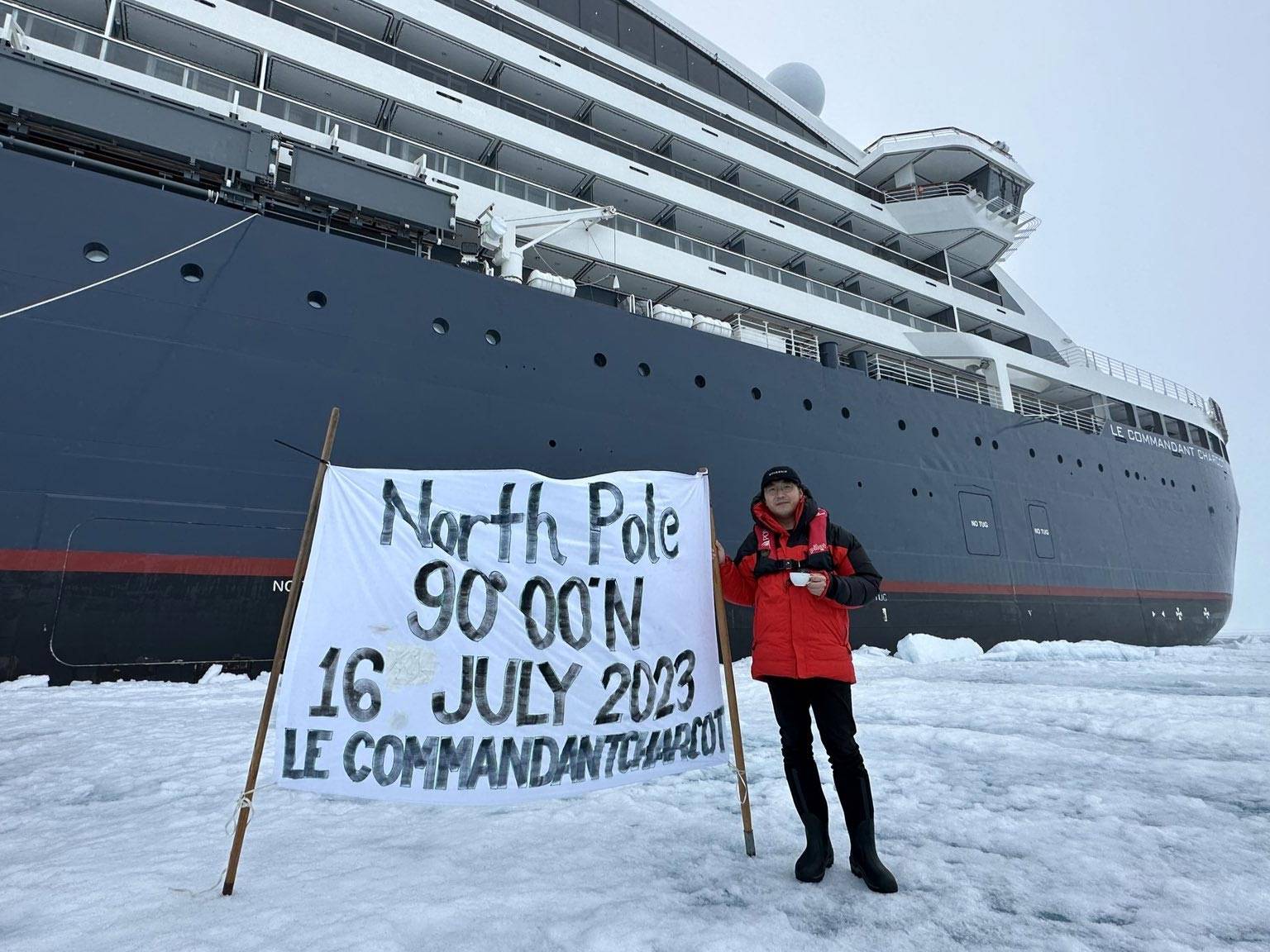
His life goal is to visit all 249 countries and territories listed under ISO3166.
“My journey has been shaped by lifelong curiosity and a fascination with pushing boundaries,” Wang once explained in an interview.
To date, Wang has completed 54% of his journey (135 out of 249), extending his checklist into orbital space.
“Hello, Antarctica.
Different from what I imagined, from 460 km above, everything appears purely white—no signs of human activity visible.”
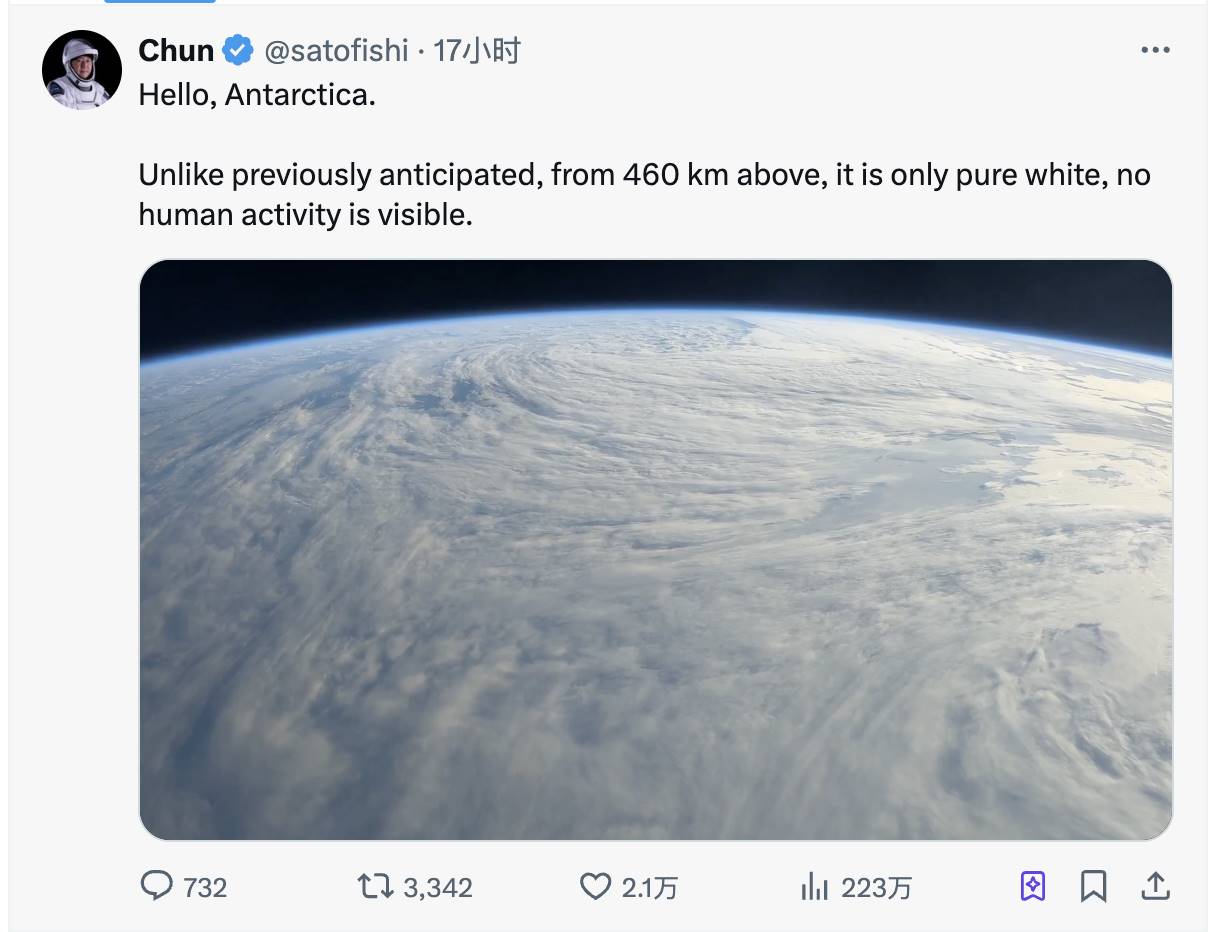
On April 2 at 16:14, Wang posted a new check-in from above the poles.
This time, he re-examined lands he once measured with his own feet—from an entirely new perspective.
Counting, Then Ascending
“Counter”—this is the nickname Super Jun gave to Wang Chun.
The title reflects how he measures time in blocks and maintains blockchain order through computational power. More directly, it signifies his near-obsessive love for numbers.
Since childhood, he has memorized digits of pi, √2, √3—and even keeps his private keys in memory.
During job interviews, he sometimes asks candidates: “What is the nth digit of pi?”
Most famously, he maintained a QQ signature counter for 2,523 consecutive days. Starting in middle school, he updated his signature daily with an incrementing number—from 1 to 2,523—until he grew bored and stopped. His QQ signature thus permanently remained at 2,523.
This seemingly random number later inspired the name of the mining pool F2Pool he co-founded with “Colorful Discus Fish”—the “2” derived from the first character of his QQ nickname “2.”
In the cryptocurrency community, prominent early Bitcoin adopters are often nicknamed “Wan Bi Hou” (“Marquis of Ten Thousand Coins”).
No one knows exactly how many BTC Wang held at his peak, but it was certainly more than ten thousand. Wang openly tells friends how much Bitcoin he “wasted.”
For example, in 2016, he sold 5,000 BTC to buy a luxury apartment on the 67th floor of Bangkok’s landmark Pixel Building. At the time, Bitcoin was priced at 6,000 RMB; today it trades around 600,000 RMB.
Besides being a major Bitcoin holder, Wang is also a Dogecoin supporter. He once operated http://dogecoin.org, produced a Dogecoin film titled *Dogecoin Billionaire*, and later donated the domain name to the Dogecoin Foundation.

On November 11, 2024, Wang proudly announced that since F2Pool launched in 2013, they had mined 16.2 billion $DOGE—accounting for 11% of the existing Dogecoin supply.
(Note: The 16.2 billion DOGE represents collective mining output by the entire pool and its miners, not Wang Chun personally. The pool plays an organizational role, allocating computing resources and providing stable mining services globally.)
The next day (November 12), Wang set a new goal: “If DOGE price breaks $1, I will fund and fly a Mars mission to flyby Phobos. The mission will be called Marsrise, launching on January 19, 2029—the last day of Trump’s term.”
Also passionate about spaceflight, Wang’s path seemed destined to cross with another Dogecoin enthusiast—Elon Musk. Wang owns a Tesla.
Now, Wang has already boarded SpaceX’s Dragon spacecraft, “soaring” along Earth’s polar orbit, accompanied by stars.
He brought aboard a piece of deck timber from the 19th-century polar exploration ship “Fram,” paying tribute to the spirit of polar exploration.
On the Fram2 official website, a “Star Wars”-style opening crawl scrolls upward:
At 21:46:50 Eastern Time on March 31, 2025, SpaceX will launch Fram2. You are about to witness human spaceflight unlike any before.
Following in the heroic footsteps of early polar pioneers, a four-member crew from six nations will become the first humans to fly over Earth’s North and South Poles and view Earth’s polar wilderness from space. They will orbit Earth for 3 to 5 days…

The crew plans to conduct 22 scientific experiments during the mission, including aurora photography and studying the effects of weightlessness on the human body. These experiments provide valuable data for science and experience for future space exploration.
In an interview with CBS, Wang said: “This mission isn’t about going to space—it’s about pushing boundaries and sharing knowledge… We hope our mission inspires more people to follow their curiosity.”
Stefan Zweig wrote in *Moments of Life*: “One of the greatest strokes of luck in a person’s life is to discover their life’s mission halfway through—while still young and strong.”
Wang Chun is lucky—simple and pure.
A former Bitcoin mining insider noted that while he may disagree with Wang on certain ideological views, he deeply respects how Wang has stayed true to his mission and passions, uncorrupted by the crypto world.
In his eyes, the crypto space is a melting pot. Most early participants came from humble backgrounds, and after getting rich overnight, many indulged their desires, drowning in hedonism. Only Wang embraced solitude.
His ex-girlfriend described Wang as unlike others in the crypto world. “His world consists only of code, stars, and oceans. I admire how he’s preserved his unique ‘childlike innocence’ amidst the chaos of crypto. Having few friends might indeed be his optimal choice.”
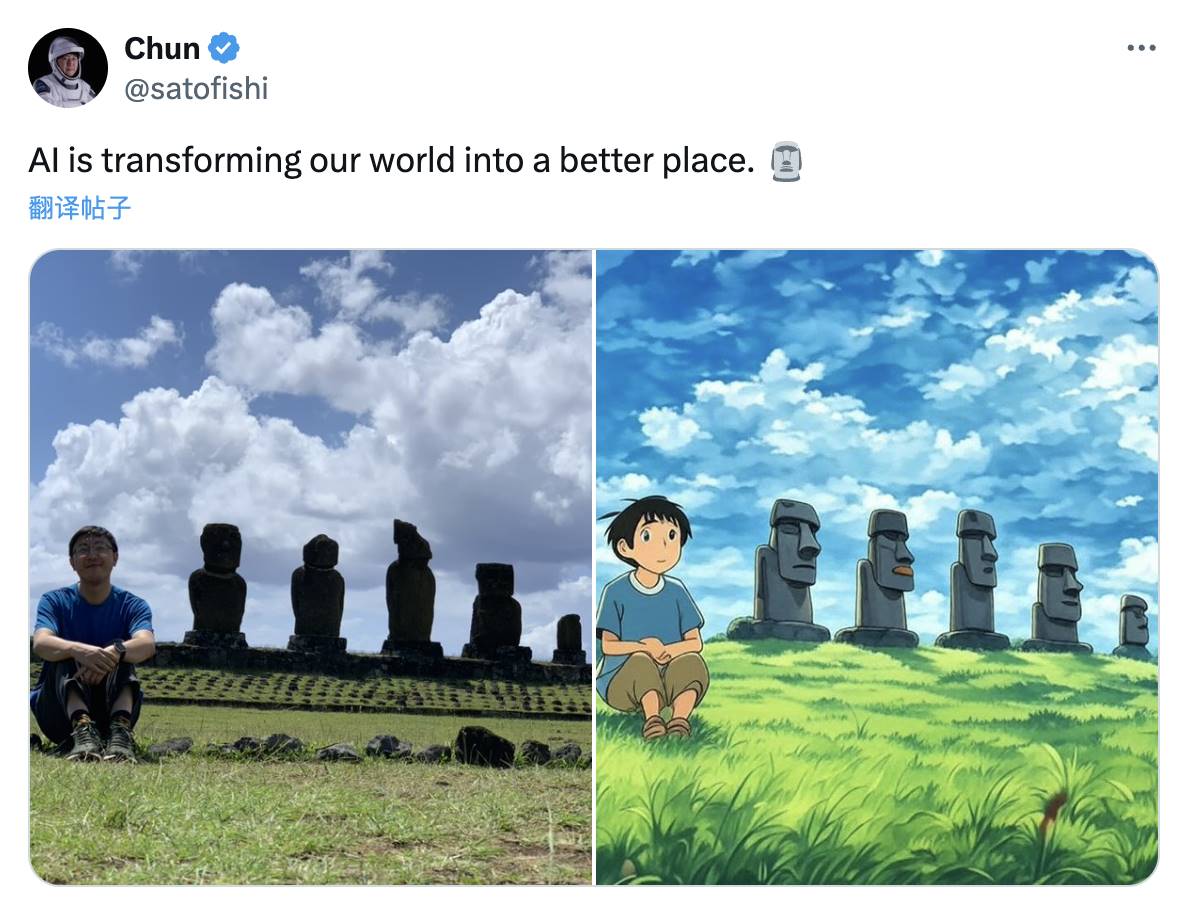
In March, Wang posted a tweet showing a photo of himself beside the Moai statues on Easter Island, Chile, alongside a corresponding Ghibli-style AI-generated image, captioned: Artificial intelligence is making our world better.
Perhaps this is the life Wang dreams of—a quiet freedom found at the intersection of technology and poetry.
Wang Chun’s story began with numbers and order. He counts time, he counts space, then completed the countdown before the Falcon 9 launch, seeking true stars in polar orbit.
Right now, he gazes toward deeper starfields. This planned 3-day, 14-hour journey is an unfinished adventure—and an unfulfilled human dream.
Beyond the stars, more unknowns await. And Wang Chun—remains on the move.
References:
“Wang Chun: Why I Don’t Buy Private Jets,” by Zhang Li
“The Counter: Wang Chun,” by Super Jun
Tencent News: “Who Is Wang Chun? Why Did He Spend $200 Million on a Private Spaceflight Ticket?”
How to fly to space for $1: Story of early Bitcoin investor Wang Chun, by Eugene Komchuk
CNN: SpaceX is set to launch 4 people on a first-of-its-kind mission around Earth’s poles. Here’s what to know
CBS: SpaceX's Fram2 launch sends civilian crew into first flight around Earth’s poles
Join TechFlow official community to stay tuned
Telegram:https://t.me/TechFlowDaily
X (Twitter):https://x.com/TechFlowPost
X (Twitter) EN:https://x.com/BlockFlow_News
 深潮TechFlow