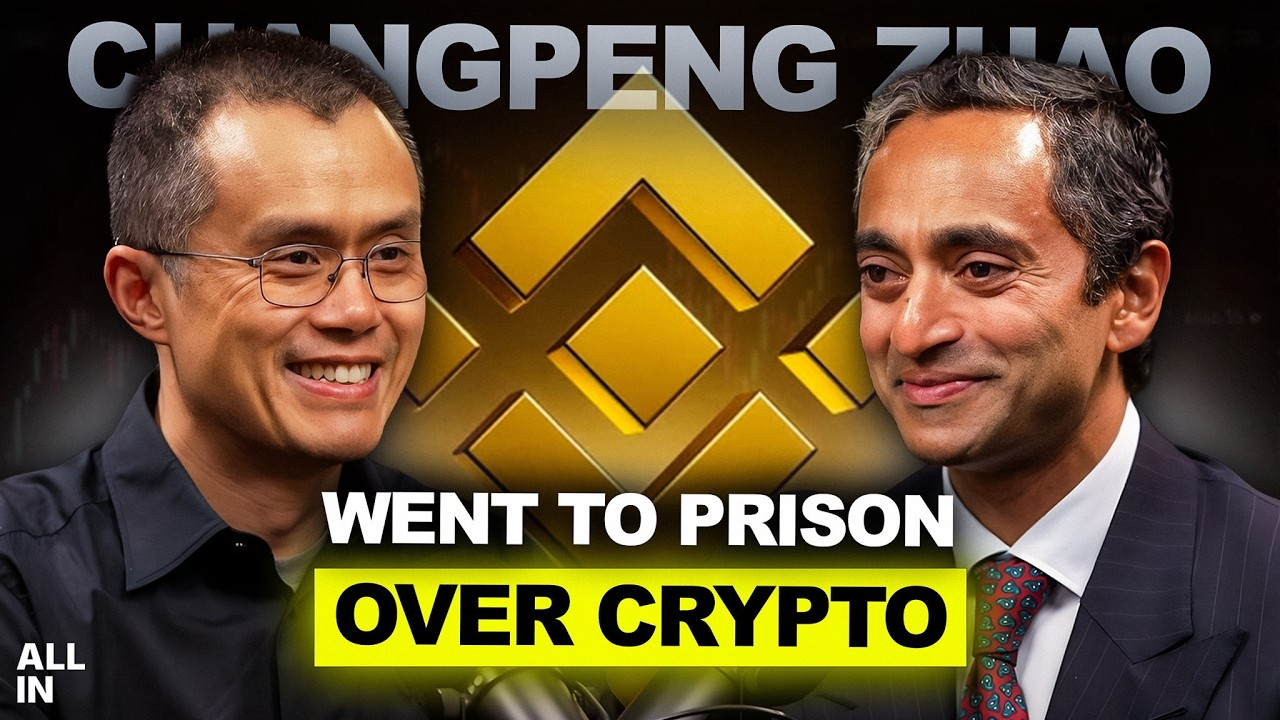
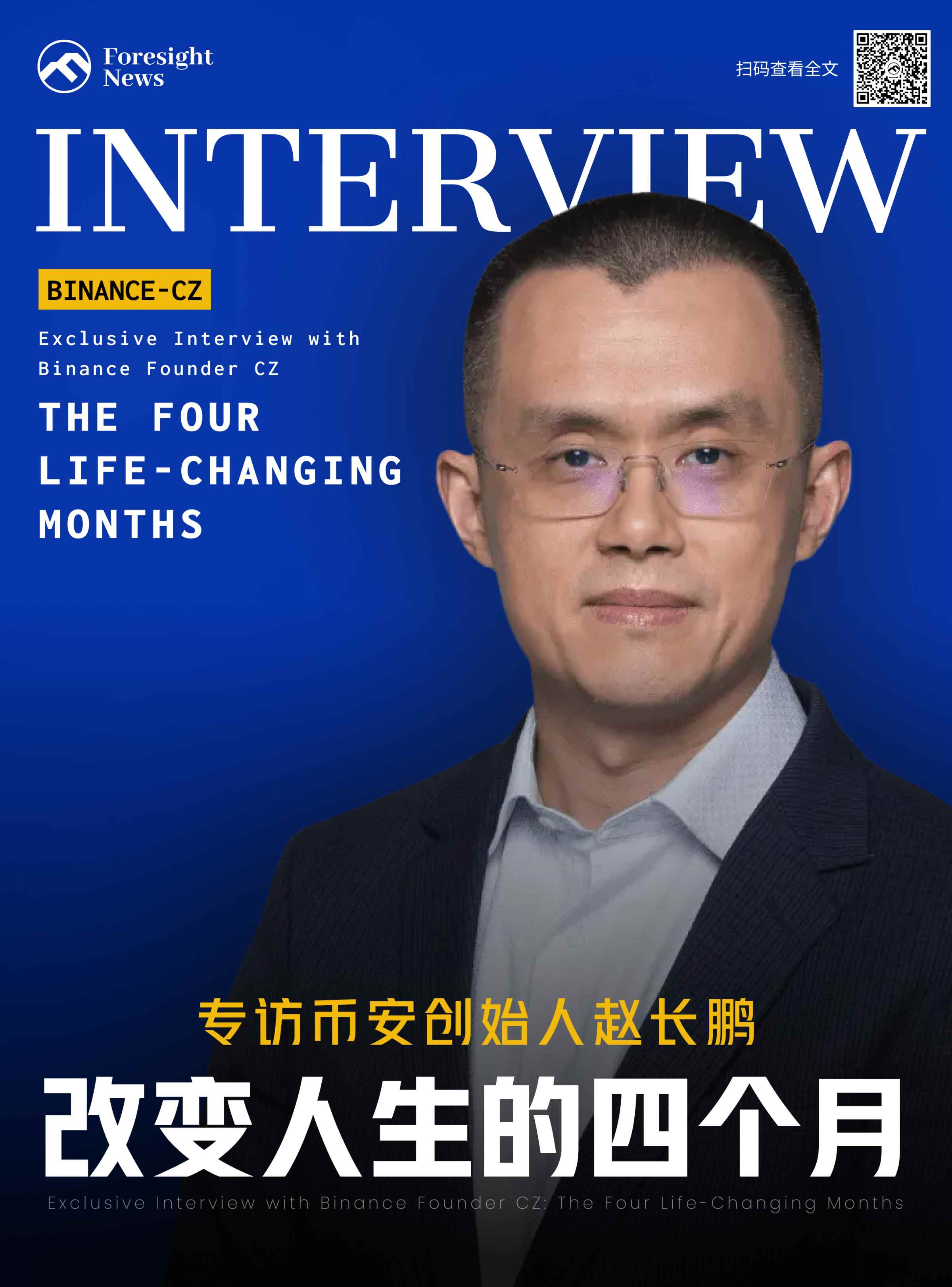
Exclusive Interview with Binance Founder Changpeng Zhao: The Four Months That Changed My Life
TechFlow Selected TechFlow Selected
Exclusive Interview with Binance Founder Changpeng Zhao: The Four Months That Changed My Life
"In prison, all material things are gone; what I miss most is not work, but family and friends."
 Navigating Web3 tides with focused insights
Written by: Anderson Sima, Executive Editor of Foresight News
TL;DR
Abu Dhabi strategic investment:
-
Binance chose Abu Dhabi for its regulatory framework and strategic positioning, not due to financial needs. The UAE's compliant environment provides Binance with a key global foothold.
Meme coin ecosystem:
-
Meme coins reflect community creativity but carry significant risks.
-
Binance supports innovation but must balance user education with risk warnings.
-
Trump's meme coin: Most celebrity tokens are third-party opportunistic projects. Public figures should focus on long-term value initiatives.
Binance listing strategy:
-
Binance should not become a place where large holders exploit retail investors. Exchanges should avoid acting as "gatekeepers." Decentralized exchanges (DEX) are expected to become mainstream in the future.
-
Projects should publicly disclose vesting mechanisms and adopt third-party smart contracts to enhance transparency.
Industry development:
-
The shift from "issuing coins requires building a chain" to the ERC-20 standard has lowered technical barriers, but the core logic remains unchanged—community consensus equals value.
-
The industry must move beyond financial speculation and explore practical applications such as government identity verification and DeSci (decentralized science).
Ethereum and L2:
-
Missed investing in Ethereum, but acknowledges its foundational role in DeFi.
-
Ethereum’s current bottleneck lies in insufficient application-layer innovation, not technical limitations.
Prison experience:
-
Four months in prison reshaped life priorities, highlighting the importance of family and health.
-
Lost 6 kg physically but became healthier; mental stress stemmed from uncertainty.
Educational project Giggle Academic:
-
Aims to address global educational inequality through gamified learning, cultivating job-enhancing skills like AI data labeling.
Future plans:
-
Investment focus: Web3 infrastructure, AI, and DeSci (decentralized science).
-
Vision: Support a thousand entrepreneurs, build sustainable unicorn projects, and reshape the industry landscape.
In 2013, a 36-year-old entrepreneur arrived in Las Vegas, where he met a 19-year-old youth. Despite their age gap, unlike the gamblers seeking thrills and wealth, the older man saw pure hacker spirit in the young man’s eyes—he knew he had come to the right place.
A month later, he sold his house in Shanghai and used all the proceeds to buy Bitcoin—a move met with confusion and opposition from those around him. Shortly afterward, Bitcoin prices plummeted while Shanghai housing prices surged anew, making his decision appear foolish at the time.
Still, he became close friends with that unassuming young man, who lived simply—once staying at his home, sleeping in bunk beds with his son, teaching him about “smart contracts.” From that moment on, both their lives began to change dramatically.
Later, that young man founded Ethereum—a blockchain network worth over $200 billion. And he founded Binance, the world’s largest cryptocurrency exchange. These two protagonists are Vitalik and Zhao Changpeng (CZ).
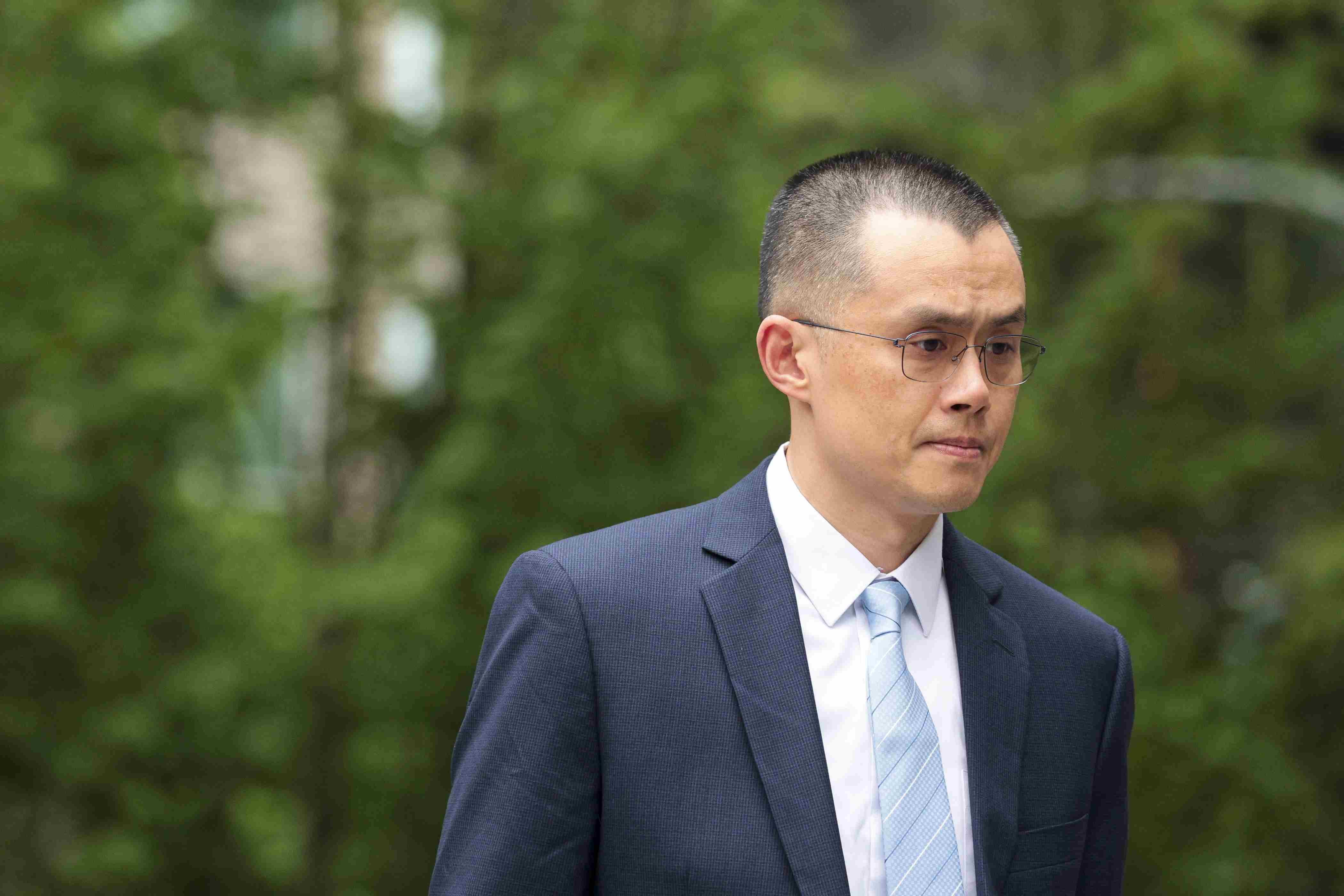
CZ carries many labels and identities. People prefer calling him CZ—the founder and largest shareholder of Binance, once dubbed the “richest Chinese” by Chinese media, though he denies it. In the crypto community, he was the first KOL to surpass 10 million Twitter followers. Young Meme enthusiasts affectionately call him “Big Cousin.” Like other passionate entrepreneurs, his journey hasn’t been smooth. In 2024, he spent four long months in an American prison—his darkest hour.
Recently, Foresight News sat down with one of the most important figures in crypto. He shared that just before our interview, he was discussing biotech investments with Vitalik. Twelve years have passed—both men’s lives have transformed completely, yet that natural human connection seems unchanged.
Below is the edited full transcript:
Foresight News: Recently, MGX (established in 2024 and closely tied to Abu Dhabi’s government and royal family) invested $2 billion into Binance—the largest single funding round in crypto history. Why did Binance choose to form a strategic partnership with this Abu Dhabi-based institution?
Zhao Changpeng: Yes, this is a strategic investment. Binance doesn’t actually need money—our growth has never been constrained by capital.
When accepting such investments, we always consider strategic benefits. Currently, the UAE, particularly Abu Dhabi, holds high strategic significance in terms of regulatory clarity and government support within the digital currency sector. Other sovereign funds or institutions have approached us, but we only partner with those offering genuine strategic alignment.
Foresight News: You’ve been very active on X lately, which differs from your previous cycle persona. Regarding Meme coins, opinions among crypto leaders vary widely. What’s your take on the Meme trend?
Zhao Changpeng: A few points here. I've always interacted quite a bit on X, just less so with the Meme coin community previously. Throughout 2024, I was occupied with U.S.-related matters and paid little attention to the broader industry, including four months without internet access while in prison.
So my community engagement dropped during that period, though I was highly interactive before. Personally, I enjoy engaging and learning from the community. My recent interactions with the Meme coin space were meant to understand what this ecosystem is really like. I’ve never bought any Meme coins myself, nor participated in “dog coin” projects—I hadn’t engaged much, so I wanted to learn through dialogue and questions.
When they asked if I had pets, I suspected someone might want to launch a token based on my pet’s name. I didn’t mind, so I shared my dog’s name—and sure enough, people created tokens and even built a pet-versus-pet (PVP) game around it. I hadn’t experienced anything like this before, but observing the community made it seem quite interesting. Later, people asked me to pick which token was legitimate since several same-name Meme coins had sizable market caps. But I refused—I didn’t want to hurt the feelings of any community members by favoring one. So I stayed neutral.
If new, fun projects emerge, I don’t mind interacting. Aside from buying one BNB TST and one Mubarak, I haven’t purchased any other Meme coins. For me, engaging with the community is a learning process. People can see that I’m learning, and I find the Meme coin ecosystem fascinating. I now have a better understanding.
Foresight News: Today’s Web3 on-chain experiences, especially Meme coin-related activities, differ greatly from when you first read the Bitcoin whitepaper. How has the blockchain transaction and user experience evolved?
Zhao Changpeng: There are similarities and differences. Early crypto enthusiasts championed freedom and decentralization. Back then, launching a new coin required creating an entire new chain—coding tens of thousands of lines, as seen with Ethereum or China’s Antshares (later renamed NEO, now less prominent).
Then Ethereum introduced the ERC-20 standard—no longer requiring a new chain, just a smart contract. This led to the 2017 ICO wave, where teams still needed to write 10-page whitepapers and build websites.
Now it’s even simpler—posting an image can launch a project. The barrier to issuing coins keeps dropping, communities grow larger, and capital inflows increase. Yet the core logic remains: if enough people recognize a concept and participate, it gains value; otherwise, it doesn’t.
Of course, many projects are genuinely building products and platforms. Today’s Meme coin culture is uniquely innovative, driven by several factors.
First, dissatisfaction with traditional VC models—VCs invest early, exit upon listing, often followed by founders dumping shares, leaving retail investors holding the bag. Also, the previous U.S. administration and SEC viewed many tokens as securities. Meme coins sidestep this by declaring no utility—just for fun—avoiding potential legal issues.
Additionally, many small retail investors hope to turn modest amounts—say $100 to $2,000—into life-changing returns of 10x or 100x. Combined, these factors fueled the Meme coin boom. I believe Meme coins carry high risk and extreme volatility, but they’re relatively transparent. Their longevity is uncertain, but given strong community interest, we support them. My mindset has always been to observe community trends and support them, while continuing to back entrepreneurs and platforms with real business models, revenue, and users. While formats evolve, the industry’s core philosophy hasn’t changed much over the years.
Foresight News: Even Trump joined the Meme coin trend—he’s the first president in human history to launch one. What do you think about a president issuing a coin?
Zhao Changpeng: As far as I know, the Trump coin wasn’t necessarily issued by Trump himself. His direct involvement appears minimal—likely a third party leveraging his name, possibly with tacit approval. I’m unclear about his actual participation or financial ties, but I’ve heard they’re minimal.
I suspect Melania, Milei, and others may have been exploited in similar ways. If they personally announced the launch, that’d be different—but if others use their names and ask them to promote it, they might lack sufficient industry knowledge and get taken advantage of.
For influential figures, I believe launching coins should be done cautiously. Their tokens should offer long-term value and real-world utility, delivering lasting benefits. Many athletes and celebrities, especially retirees, see this as a quick profit opportunity—understandable, but not ideal. Active public figures should focus on tokens with enduring use cases.
Foresight News: As the world’s largest crypto exchange, Binance faces constant challenges regarding listings. What’s your view on listing VC-backed coins and Meme coins?
Zhao Changpeng: Listing VC and Meme coins is complex. From my perspective, as Binance scales up, listing decisions become increasingly intricate. As a shareholder, I least want Binance to become a playground where whales exploit retail traders—this harms users, Binance itself, and the entire industry.
But going to the other extreme—listing tiny-market-cap coins too early—is problematic too. Suppose a coin has only a $5 million market cap. Binance has 250 million users. If everyone buys a little, the price could spike artificially, then collapse without fundamentals—creating a “spike-and-crash” pattern, which isn’t good either.
The best approach is balance: list early, but ensure sufficient market cap to prevent manipulation, and ensure token holders are widely distributed—not concentrated among a few VCs or large holders. Additionally, whether VC or whale, long-term lockups are advisable, preferably via third-party solutions rather than self-controlled smart contracts. We recently invested in a company called Sign, which offers third-party custody through smart contracts.
Of course, if a founder is exceptional, with strong product and user traction, and unwilling to adopt such models, we must weigh accordingly.
Listing is indeed complex. I don’t participate in Binance’s listing decisions, but I find their recent moves interesting. I wrote in a blog post before—we shouldn’t even have the concept of “listing.” A platform with massive users should let users access any coin in the blockchain world, on-chain or off-chain, empowering users to choose rather than letting platforms filter. I believe this is the right direction. The blockchain industry shouldn’t have intermediaries making decisions for users—platforms should merely provide access. Years ago, I said decentralized exchanges (DEX) will eventually surpass centralized ones in scale. I believe this will happen.
Foresight News: As Binance’s largest shareholder, do you still believe DEX will be more important than CEX in the future?
Zhao Changpeng: I still hold that belief.
Foresight News: You recently revealed your portfolio on Binance Square—98.5% BNB, 1.32% BTC, and 0.17% from an early payment project airdrop. You’ve never held Ethereum. What’s your investment philosophy? Why no other tokens?
Zhao Changpeng: Binance Square displays my personal wallet. At various times, we’ve held small amounts of Ethereum, but never at investment scale. BNB was originally issued on the Ethereum ERC standard, so we naturally used ETH.
But personally, I completely missed the Ethereum investment opportunity. I entered the industry in 2013 and met Vitalik (Ethereum’s founder) early on—back when the space was tiny. We met multiple times in 2014, attending conferences together.
In 2015, he planned to stay at my place in Shanghai, but due to space constraints, I arranged for him to stay with a friend. Later, he visited Japan and stayed at my home, sleeping in bunk beds with my son and teaching him blockchain basics.
By 2015, Ethereum was largely formed. When he introduced the project, I questioned it—thinking Turing-complete languages implementing complex functions on-chain would be extremely difficult. So I never invested. Later, Ethereum rose thousands of times in value—I truly missed a major opportunity.
Still, Vitalik and I remain close. This morning, I discussed biotech investment opportunities with him.
Though I didn’t invest, I recognize Ethereum’s immense contribution to the industry. Without Ethereum, there’d be no ERC-20 standard, no subsequent wave of projects. It’s now the second-largest cryptocurrency by market cap. While it faces current issues—network congestion, slow processing—many complain. But Vitalik is still young, and there’s vast room for future growth.
Foresight News: What’s your view on Ethereum’s current state and future? Has it hit a development bottleneck?
Zhao Changpeng: It’s hard for me to assess Ethereum specifically. Vitalik is a genius, very different from me—less interested in social interaction, deeply focused on R&D. Perhaps due to youth, having faced online criticism repeatedly, he pays little attention to external opinions.
I feel that today’s L2s and L1s aren’t vastly different. Our research shows that currently, choosing between L1 and L2 makes little practical difference. Beyond Bitcoin, most chains aren’t saturated—they have ample capacity for more transactions.
What’s truly lacking now are on-chain applications. Transfers are mature, but real-world use cases remain sparse. I strongly encourage building on-chain apps. Both BNB Chain and Yzi Labs actively support development in areas like social media, AI, biological data collection, and blockchain-based government identity verification.
Foresight News: Since blockchain’s inception, breakout innovations have mostly been finance-related—ICO, DeFi, etc. Beyond finance and profit, where should the industry head next?
Zhao Changpeng: To me, industry development falls into two broad categories. One is finance—transfers, investments, ICOs, DeFi. The other, less developed but potentially more impactful, stems from Bitcoin’s original idea: anything requiring notarization should go on-chain. Previously, demand was weak and applications weren’t built. Now, starting in the U.S., figures like Musk propose using blockchain to improve government efficiency. I’ve spoken with many governments—they share similar ideas, like the UAE. Implementing this likely starts with decentralized identity (DID). With DID, applications span banking accounts, visa applications, border control, land registration, medical records, diploma verification, government procurement, securities, and real estate investments.
We’re still in experimental stages, but attempts are far more numerous than before. Just as video conferencing took decades to mature after the internet’s birth, blockchain applications will follow a similar path. Though uncertain when they’ll fully materialize, I see many people working hard. Yzi Labs participates in many such initiatives—we’re heavily invested here.
Foresight News: You spent considerable time last year studying DeSci. What’s your outlook on such projects? Is fundraising via blockchain meaningful, or just another short-lived trend like Meme coins?
Zhao Changpeng: These projects—merging scientific research with blockchain—are undoubtedly meaningful long-term. They’re polar opposites of Meme coins. DeSci projects have long R&D cycles—like developing cancer cures or hair-growth drugs—which take years.
Currently, global pharmaceutical R&D funding is dominated by a few big pharma companies, primarily profit-driven rather than cure-focused. Take an extreme case: if a scientist discovers a low-cost cure for all cancers, big pharma might resist adoption—it threatens their massive existing supply chains and profits.
Yet countless scientists and medical researchers in universities or independent labs lack funding to build proper labs. Their needs may be modest—$100K–$500K—with recurring annual costs. Blockchain enables easier fundraising, and globally, many people are willing to fund such researchers. Using blockchain smart contracts, fund usage can be restricted—e.g., releasing only $100K–$200K per year, disbursing funds only after reaching milestones approved by community voting.
If a scientist stops research, they lose future funding. Upon success, with patents and revenue, they should also reward investors.
However, project timelines are long, while crypto investors typically have short attention spans—Meme coins grab attention, while these projects don’t. Long-term, though, their societal impact is enormous. I believe they will succeed—just unsure when.
Foresight News: You launched an education project, “Giggle Academic,” seemingly unrelated to crypto or finance. Why venture into education? Could this relate to your family background?
Zhao Changpeng: Hard to say about family influence—subconsciously, perhaps a little. But I believe education is profoundly important. Last year, with little to do in the U.S., I reflected on how to create the greatest positive impact—how to maximize my time’s value.
Ultimately, education stands out as the most worthwhile long-term investment—not financially, but in terms of positive impact. Current education systems have deep flaws—textbooks unchanged for decades, classroom teaching severely limited. Classrooms teach averaged content to 20–30 kids. A child strong in math but weak in English may be told to reduce math time and focus on English—producing average students.
But the future is global competition. Take programmers—now everyone uses AI to code. To succeed, you must outperform millions. You need to excel in your specialty, not aim for balanced mediocrity. Moreover, roughly 1.2–1.3 billion people lack access to education—700–800 million adults, two-thirds being illiterate women, plus 300–500 million out-of-school children. Building schools to solve this is highly inefficient.
With today’s technology, we can leverage gamification via smartphones and iPads (even cheap Android tablets) to build an educational platform where kids learn while playing games. I assembled a team—starting with three to five people, now around 30. We’ve developed 30–40 courses, highly game-like, immersing kids in learning letters, colors, vocabulary—everyone loves them.
I calculated: producing a full Grade 1 English curriculum costs up to $1 million. Twelve grades: $12 million. Thirty different courses—English, math, biology, science—would cost about $300 million. The U.S. allocates $110 billion annually to education subsidies. We’d spend just 0.3% of that to digitize 18 years of school content and deliver it directly to children via platform.
I’m not doing this to profit—all content is free. I believe this investment’s return—not financial, but social impact—exceeds any charity or donation. That’s why I’ll keep going. This project brings me joy. Last year, I spent 4 months in prison, plus 5–6 months preparing for trial—only a few months of actual work. Yet already, over 7,800 kids use our product. Many universities have only 5,000–6,000 students—this success gives me great pride.
Our goal isn’t helping kids earn diplomas, but equipping them for jobs. A 10-year-old can earn money through AI data labeling. My 13-year-old nephew manages a 14,000-member gaming community—a real income source. Earning a diploma requires mastering language, math, English, science, PE, and more.
Getting a job may require only one skill, with flexible age limits. For programming, basic English suffices. For graphic design, other subjects matter less. My platform isn’t designed to help African kids get into Harvard—it’s to help them get jobs, remote or in-person, earning $300–$2,000 monthly—high income in Africa. So our platform differs fundamentally from traditional education, both in mission and design.
Foresight News: Beyond crypto’s vibrancy, the global macro environment this year is tough—tariff issues exist not just between China and the U.S., but also between the U.S. and its allies; the Ukraine-Russia war continues; Israel-Hamas conflict persists in the Middle East. Do you follow these macro developments?
Zhao Changpeng: I don’t follow closely, but I’m optimistic. The previous U.S. administration was unfriendly toward crypto—this is my personal experience. The new administration has been in power for about 60 days. Like a company changing CEOs, it takes months to stabilize operations. I don’t expect all problems solved in 10 days. Many issues—like the Ukraine-Russia war—have deep historical roots.
But I clearly see the U.S. government actively addressing these issues, with significantly improved approaches. Solutions won’t come overnight, but negotiations are ongoing. Business negotiations typically take months. The U.S. government is moving fast—new actions daily.
This administration is friendlier toward digital assets and business overall. Of course, business-friendly doesn’t mean stock prices rise forever—negotiations with countries like China, Canada, and Mexico involve taxes and trade. But as long as talks continue, there’s hope. I see clear improvement compared to two months ago—not all issues resolved, but a positive trend emerging.
I remain optimistic about the macro environment. Future advancements in AI, robotics, and blockchain require cooperation among major powers. China’s manufacturing strength is vital—many components for U.S. robots come from China. Supply chains are hard to decouple. So yes, I’m optimistic.
Foresight News: You spent 4 months in prison last year—an unimaginable experience for most. How did it change you? Was it a nightmare?
Zhao Changpeng: The experience was terrible, but not quite a nightmare. In the U.S. prison, I faced no physical threats—no fights or violence—but psychological pressure was intense.
The biggest worry was uncertainty—how long I’d be detained. Had I known it was exactly 4 months, I’d have been calmer. But I constantly feared they’d find reasons to extend it. That uncertainty caused immense mental stress.
This experience definitely changed my worldview—clarifying what truly matters. Before, I was a workaholic. In prison, stripped of all external possessions, what I missed most wasn’t work, but family and friends. And if you fall ill, unless near death, doctors won’t treat you—fevers and colds must be endured alone. That taught me how precious health is.
With nothing else to do, I worked out daily. Food was poor, but I ate what I could. Over 4 months, I lost 6 kg, yet my body improved—more muscular. After release, I cherish time with family more. My life priorities have shifted. It was a deeply negative experience—I wouldn’t wish it on anyone.
Foresight News: Did you get sick in prison?
Zhao Changpeng: Yes, I had throat pain and coughs three or four times over four months. Over-the-counter fever reducers, painkillers, and vitamin C effervescent tablets were available for purchase. Within two weeks of arrival, I had a sore throat and mild fever. During a routine check-up, I mentioned feeling unwell. The doctor said they only measured blood pressure and weight. For treatment, I could either buy OTC meds or reapply to see a doctor—but wait three weeks. So in prison, you mostly self-medicate.
Foresight News: Does prison have its own economic and monetary system?
Zhao Changpeng: Yes. Every two weeks, you can spend up to $180. Purchases require filling out forms—cumbersome, and you can only shop every two weeks. If items are out of stock, your request fails. So the $180 limit is rarely reached—shopping is highly restricted.
Foresight News: Another key figure in crypto is still in prison—Sam Bankman-Fried (founder of FTX). Based on your experience, do you think he deserves a second chance? What’s your assessment of his actions?
Zhao Changpeng: I think it’s better to say less. People might feel I’ve commented too much already. I just believe any fraudulent behavior should face appropriate consequences—many suffered significant losses. But I’m not an expert on sentencing, so I’ll refrain from further comment.
Foresight News: What matters most to you right now? What are your next steps?
Zhao Changpeng: Right now, I spend most of my time thinking about how to help other entrepreneurs succeed. I’m not personally starting new ventures anymore—my entrepreneurial phase has yielded some results. We have investment funds, and I can serve as an advisor. Many seek my help—we do some filtering. I hope to mentor hundreds, even a thousand successful founders, turning their projects into unicorns. That would bring me great joy, as it indirectly drives societal progress. That’s what excites me most today.
We already have Yzi Labs, which handles most of our investments and startup support. I don’t make grand long-term plans—no detailed 5- or 10-year roadmaps. I see general directions: blockchain will grow, AI will advance, and bioscience will progress. So I’ll keep investing in these three areas, supporting startups along the way.
Join TechFlow official community to stay tuned
Telegram:https://t.me/TechFlowDaily
X (Twitter):https://x.com/TechFlowPost
X (Twitter) EN:https://x.com/BlockFlow_News
 Foresight News