








180 Days Before Zhao Changpeng's Pardon
TechFlow Selected TechFlow Selected
180 Days Before Zhao Changpeng's Pardon
From Prison to Presidential Pardon: Chinese-Canadian Billionaire Changpeng Zhao's Road to Redemption
 Navigating Web3 tides with focused insights
By Lin Wanwan
In the early hours of October 23, 2025, Zhao Changpeng, the wealthiest Chinese crypto entrepreneur, was announced to have received a presidential pardon from Donald Trump of the United States.
According to public information, President Trump previously told his advisors that he sympathized with Zhao Changpeng's claims of facing "political persecution in the United States."
Yet just one year earlier, on April 30, 2024, Zhao Changpeng was experiencing the darkest moment of his life: stripped naked, subjected to a humiliating body search, forced to expose his buttocks, then locked into a cold cell surrounded by muscular inmates covered in tattoos, their heads also scarred with markings [1].
Dressed in prison garb at a federal court in Seattle, Zhao Changpeng pleaded guilty. The man dubbed "China’s richest man" voluntarily agreed to pay a $4.3 billion fine and publicly stated: "I chose to pay this political penalty willingly."
If someone had told him then that within a year he would not only be pardoned by the U.S., but also allowed to return to China—and that the cold stares and violence inside that Seattle jail, along with the $4.3 billion political fine, would all be wiped clean—he might have muttered under his breath: what kind of dark humor is this?
The signal for Zhao Changpeng's pardon began radiating on September 17, 2025. That day, CZ suddenly updated his Twitter bio, changing "ex-@binance" back to "@binance." In a way, it marked the final confirmation of his return to Binance.
Meanwhile, in October, two major "compliant gateways" into the U.S. market sent nearly simultaneous signals: Coinbase, the listed crypto platform, and Robinhood, a mainstream brokerage regulated by the SEC, both opened trading for BNB—the platform token from the Binance ecosystem founded by Zhao Changpeng—granting it an official entry into the mainstream U.S. financial system for the first time.
White House Press Secretary Karoline Leavitt announced the pardon had taken effect, emphasizing: "The Biden administration’s war on cryptocurrency ends here."
Let us rewind 180 days before the pardon. As Zhao Changpeng, the Chinese billionaire and founder of Binance, stood one step away from political clemency, what exactly was he doing?
In the spring of 2025, the air around Victoria Harbour carried a long-lost buzz. A group photo quickly went viral.
At the center stood four figures: Li Lin, founder of Huobi; CZ (Zhao Changpeng); Sun Yuchen (Justin Sun); and Kong Jianping.
From left: Li Lin (9th), founder of Huobi; Zhao Changpeng (10th), founder of Binance; Kong Jianping (6th)
To outsiders, it was just another photo of crypto moguls. But to those in the know, the image itself was a signal.
Eight years earlier, China banned ICOs and cryptocurrency exchanges entirely. Binance hastily fled overseas, and Zhao Changpeng became “the person least likely to ever return.” Eight years later, there he was again in this photo—a prelude to reestablishing ties with local capital and institutions.
The host of this gathering, Li Lin, once founder of Huobi—one of the world’s top three exchanges—had sold the company he built three years prior to Sun Yuchen, who sat beside him at the dinner. After the meal ended, however, it was Kong Jianping standing next to them who developed the closest connection with CZ.
Kong Jianping was formerly co-chairman of the board at Canaan Creative, a well-known mining hardware manufacturer. In 2020, he founded Nano Labs and serves as its chairman. He is also a director at Hong Kong Science and Technology Parks Corporation, a member of Hong Kong’s "Task Force on Promoting Web3 Development," and was even appointed by Hong Kong SAR government’s Financial Secretary as a panel member of a tribunal [2].
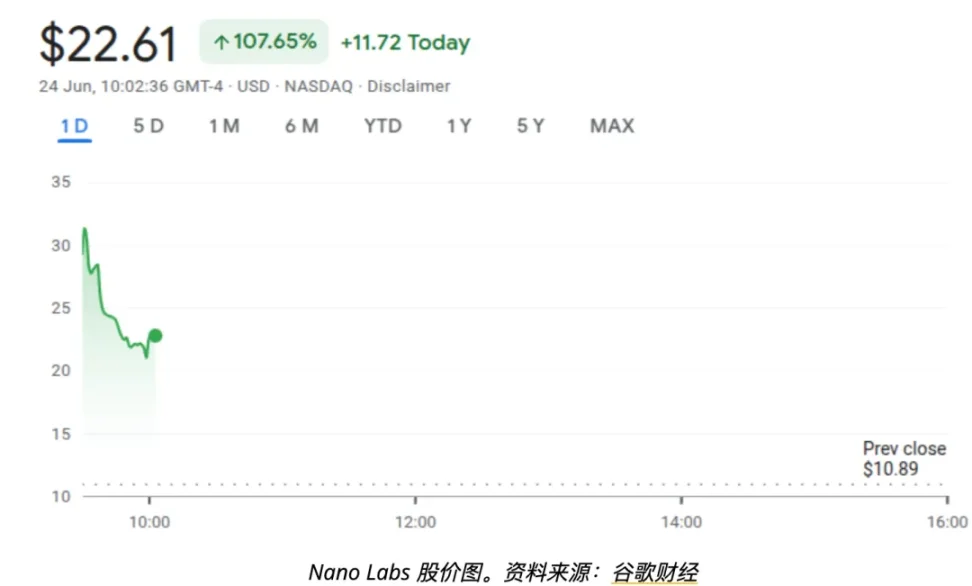
Two months after the dinner, Kong Jianping publicly announced plans for a $1 billion BNB treasury aiming to acquire 5%–10% of the circulating supply, packaging Binance’s native token BNB into a "U.S.-listed company."
CZ personally retweeted the announcement, instantly igniting market sentiment. The stock price surged, peaking with intraday gains exceeding 107%. Zhao Changpeng emphasized that neither he nor any affiliated entities participated in this funding round—but they remained “strongly supportive.”
Since then, Kong Jianping has been visible behind most of Zhao Changpeng’s public speaking events in Hong Kong.
Four months later, when Zhao Changpeng returned to Hong Kong for the second time, he was no longer merely a “mystery guest” at Binance events, but arrived with a clear agenda: announcing a partnership with Huaxing Capital ahead of the event, and securing coordination with OSL afterward. These moves together signaled a gradually solidified path for his presence in Hong Kong.
Huaxing Capital shares many parallels with Binance—glamour intertwined with ambiguity. Its founder, Bao Fan, was once the most influential dealmaker in investment banking, orchestrating historic mergers like Didi-Kuaidi and Meituan-Dianping, and investing in Circle, the leading stablecoin public company.
But in February 2023, Bao Fan suddenly “disappeared,” making Huaxing a sensitive name in capital markets. While its operations continued, the founder’s detention placed it in prolonged limbo: too risky for traditional finance, yet seen by emerging internet capital as past its prime.
In late August 2025, Binance officially announced cooperation with Huaxing Capital.
Just before this collaboration materialized, a subtle coincidence occurred. On August 8, 2025, Caixin reported that Huaxing’s founder Bao Fan had been “released,” ending a two-and-a-half-year investigation. Only three weeks later, Huaxing announced a $100 million investment in BNB and launched a compliant fund alongside Zhao Changpeng’s family fund, YZi Labs. Bao Fan’s wife, Xu Yanqing—who currently chairs Huaxing’s board—attended the fifth anniversary event of the BNB ecosystem as a keynote speaker.
Beyond this, Zhao Changpeng and Huaxing implemented a seemingly minor initiative: advancing BNB’s compliant listing on virtual asset trading platforms licensed by the Hong Kong Securities and Futures Commission (SFC).
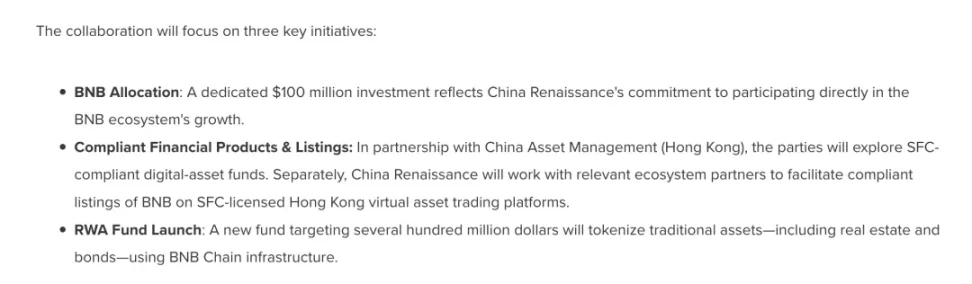
Just 12 days later, OSL—the first licensed exchange in Hong Kong—announced that BNB, Binance’s platform token, had become the fifth crypto asset approved for trading on licensed platforms in Hong Kong.
Backed by BC Technology Group, a licensed fintech group listed on the Hong Kong Stock Exchange, OSL holds one of Hong Kong’s earliest virtual asset trading licenses and operates custody and brokerage services, directly connected to local brokers, ETF custodians, and institutional distribution networks.
The company stands out in the industry, widely attributed to its early management team’s strong financial background. Its largest shareholder, holding 25.43%, originated from traditional brokerage before moving into crypto, and is also the founder of Bitget, known for the most thorough integration of compliance and capital markets.
Zhao Changpeng’s return to China was pieced together through these coincidences and maneuvers—each block of capital and politics completing the puzzle.
In the 180 days before receiving the U.S. presidential pardon, Zhao Changpeng’s seemingly scattered moves were all serving one goal: first, restoring the legitimacy of CZ’s return to the Chinese-speaking world.
During an event at the University of Hong Kong, Zhao Changpeng said: “When I left mainland China four years ago, I thought I’d never return to the core stage of the Chinese-speaking community. But standing here in Hong Kong today, I clearly see that my previous wandering was merely preparation—the real story is just beginning.”
Some dismissed it as mere rhetoric, but knowing the backstory reveals it may have been heartfelt.
In July 2017, Binance launched in Shanghai. Two months later, China banned ICOs and exchanges nationwide. CZ was forced to evacuate with a team of over thirty people. Within six weeks, they migrated data from Alibaba Cloud to AWS and processed visas for engineers who had never traveled abroad—a hastily assembled expedition arriving in Tokyo.
Japan appeared an ideal haven—its government had recognized cryptocurrencies as legal. Binance rented office space, and ten-some staff formed its “global headquarters.”
The 2017 bull run roared—Bitcoin surged from $3,000 to $19,000. Within five months, Binance topped global trading volume. They worked nonstop; registration spiked so high they temporarily halted new accounts.
But the tide turned fast. In early 2018, scammers used fake Google ads to phish investors’ Binance accounts and funds. Japan’s Financial Services Agency tightened regulations abruptly, warning Binance in March about unlicensed operations. Regulatory hostility proved scarier than hackers—CZ packed up again, leaving Tokyo.
After retreating from Tokyo, CZ bet on Malta in the Mediterranean. In 2018, Prime Minister Muscat proclaimed Malta a “Blockchain Island.” Zhao Changpeng partnered with the government, declaring Binance’s global HQ established there. Within three months, the team expanded to employees from 39 countries. But two years later, Malta’s Financial Services Authority issued a cold statement: Binance had never registered.
This back-and-forth—Japan’s rejection, Malta’s reversal—pushed CZ to declare: Binance would no longer seek a headquarters.
In September 2021, this “no-headquarters model” began playing a unique role in regulatory battles. That year, a rival exchange sued Binance in the U.S., filing a class action naming Binance, CoinMarketCap, and Zhao Changpeng as defendants.
Here came the legend: subpoenas could locate companies, but a “headquarters-free” entity had no address—forcing plaintiffs to chase the founder. So plaintiff lawyers hired a private investigator, a retired Marine, to track down CZ. The hunt spanned Asia, Europe, and the Middle East, scouring flight records, business registries, and social media. Months passed—still nothing.
Finally, the investigator wrote in his report: “We made extraordinary efforts to track Zhao Changpeng, but his whereabouts remain nearly impossible to determine.”
Lawyers even suggested serving the subpoena via Twitter, since CZ posted daily. The judge rejected it.
Wandering was just preparation. Headquarters could vanish, passports could be swapped—but soon Zhao Changpeng would face an even tougher identity test: when Americans targeted his ethnic Chinese roots, how would he respond?
On the table of global power games, lineage is shown first, passport displayed second—competence often comes last in conversation.
From American prison to presidential pardon, Zhao Changpeng’s journey toward so-called “compliance” has always involved far more than mere compliance.
At the end of 2022, FTX, the U.S.’ second-largest exchange, collapsed, creating massive financial holes. Seven months later, the U.S. SEC sued CZ for illegal operations, issuing a $4.3 billion penalty by year-end.
Outside the courtroom, Washington’s power games never ceased. The Democratic-led regulatory storm cast CZ as the perfect target: a Chinese entrepreneur controlling half the crypto world, accused of violating anti-money laundering laws and sanctions. Prosecutors alleged Binance “facilitated illegal activities,” while CZ’s background—born in China, raised in Shanghai—became the cheapest, most efficient attack vector.
On November 24, 2023, a viral Reddit post shot to the top of crypto discussions, questioning whether Binance could truly afford the $4.3 billion fine compared to FTX’s $6.8 billion shortfall. Many American netizens even implied the government was “draining blood” from Binance to fill gaps in the U.S. crypto sector.
But money can only fix balance sheets. Questions about origins lingered relentlessly.
U.S. Congresswoman Stacey Plaskett bluntly declared during a hearing: “Although he is a Canadian citizen, he is Chinese.” [3]
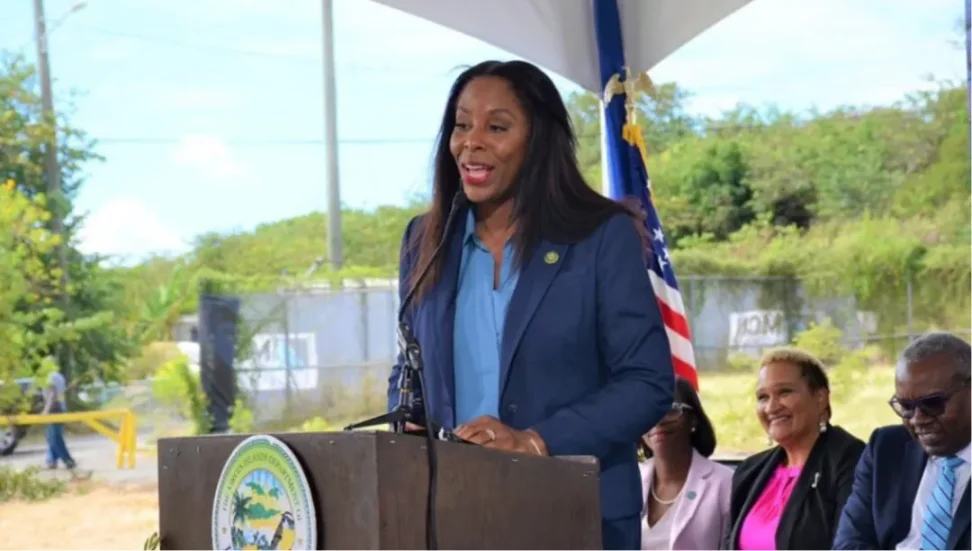
Congresswoman Stacey Plaskett, photo source: Federal Newswire Report
In a Forbes article, Zhao Changpeng said: “My Chinese heritage is being brought up again, as if it matters.” He had previously been discriminated against due to his ethnicity, especially when some tried linking him to Asian governments.
In spring 2024, Zhao Changpeng paid the $4.3 billion fine and served time in a prison uniform at a facility in Seattle. This period, which he called “the hardest time of my life,” did not fully reset his political identity.
The real turning point came when Republican Donald Trump returned to the White House, delivering a sweeping “amnesty” to the crypto industry.
The $4.3 billion fine paid to Democrats became a sunk cost of political sacrifice. He had to start betting anew.
In March 2025, Binance announced a $2 billion investment from Abu Dhabi’s sovereign fund MGX. Terms—including stake, governance rights, and fund usage—were undisclosed. But the settlement method drew real attention: not U.S. dollars, but USD1 stablecoin—backed by World Liberty, closely tied to the Trump family.
Soon after, Zhao Changpeng posted a photo with Zach Witkoff on social media. Zach, a co-founder of USD1, is also an ally of the Trump camp. His father, Steve Witkoff, serves as Special Envoy for Middle East Affairs in the Trump administration.
This gave the financial deal deeper political meaning: Middle Eastern capital entering, the Trump family’s stablecoin rising, and CZ gaining a new layer of protection.
Just two weeks later, USD1, the Trump family’s stablecoin, officially launched on Binance’s BNB Chain.
USD1’s slogan is simple: “America’s Digital Dollar.” And CZ’s first move was integrating it into his core ecosystem. BNB Chain, already a bustling marketplace offering lending, DEXs, and memes, welcomed USD1 with lending pools, cross-chain tools, and even meme coins like Four.meme boosted by the Trump family fund.
In fact, nearly 90% of USD1’s total issuance now circulates on the BNB Chain.
On the surface, it’s a product partnership. In reality, everyone envies this hard-to-get political endorsement. Still, Zhao Changpeng formally applied for presidential pardon from Trump in April this year—only after five full months did he receive official confirmation of approval.
Bob Dylan sang in his famous debut hit “Blowin’ in the Wind”:
How many roads must a man walk down
A man to be called a man
For a man to be called a man.
For Binance, the question is equally arduous: “How many roads must one walk, how many barriers crossed, before truly stepping onto the stage of compliance?”
For Zhao Changpeng, it’s personal fate. For Chinese entrepreneurs, it’s a collective challenge. Passport nationality pages can be changed, but in political narratives, Chinese identity becomes an indelible label in strategic games.
This label brings structural fragility. Business competition occurs within legal frameworks, but warfare knows no rules—opponents use any means necessary to achieve strategic goals.
Zhao Changpeng once said: “If there were listeners, I might privately mentor a few emerging entrepreneurs. If nothing else, I could at least tell them what not to do.”
Because for Chinese entrepreneurs, “compliance” is never just compliance—it often represents a higher-barrier “identity redemption.”
On the surface, it reflects institutional friction behind commercial competition. At a deeper level, it reveals the projection of identity politics in global markets. German, Japanese, or Korean entrepreneurs rarely have their “national backgrounds” infinitely magnified under regulation. But when the subject is Chinese, identity inherently carries geopolitical metaphor—as if every corporate expansion secretly embodies national intent.
Shein’s CEO, Chris Xu, obtained a Singapore passport but failed to secure Shein’s smooth IPO. TikTok appointed Singaporean-national CEO Shou Zi Chew, yet couldn’t stop congressional scrutiny over “Chinese identity.” Temu moved its headquarters to Ireland, but couldn’t escape Washington’s accusations of “forced labor.”
Thus, for Chinese entrepreneurs, a gap persists between “passport” and “identity.” Passports can be swapped repeatedly—Canada, Singapore, Grenada… But “identity” is a deeper imprint—etched on faces, carved in experiences, impossible to erase. It forces these entrepreneurs to pay extra costs on cross-border expansion: more explanations, more scrutiny, even greater compromises.
Some say this is inevitable as globalization reaches deeper waters: capital flows freely, but human identity cannot easily cross political barriers. The success and struggles of Chinese entrepreneurs epitomize this contradiction.
They prove the diligence and resilience of the Chinese diaspora, yet are constantly reminded that no matter how vast the market or how strong the capital, they remain in a position where they must continually prove they are “harmless.”
This may be the shared silent pain of Zhao Changpeng and others: they can alter corporate structures, embrace diverse markets, but must learn to seek shelter within different power structures across America, Europe, and the Middle East; must accept that passports can be tools, while identity is another inescapable destiny.
Shortly after receiving the pardon, Zhao Changpeng tweeted: “Thank you to President Trump for the pardon. I will do everything possible to help make the U.S. the capital of cryptocurrency.”
Perhaps for Chinese entrepreneurs, the battle over “identity” is far from over.
Join TechFlow official community to stay tuned
Telegram:https://t.me/TechFlowDaily
X (Twitter):https://x.com/TechFlowPost
X (Twitter) EN:https://x.com/BlockFlow_News
 BlockBeats






