How did Binance's CZ, who fled to Shanghai, get pardoned by Trump?
TechFlow Selected TechFlow Selected
How did Binance's CZ, who fled to Shanghai, get pardoned by Trump?
A veteran crypto enthusiast's ten-year memories and industry conundrum.
 Navigating Web3 tides with focused insights
Author: JayZhou
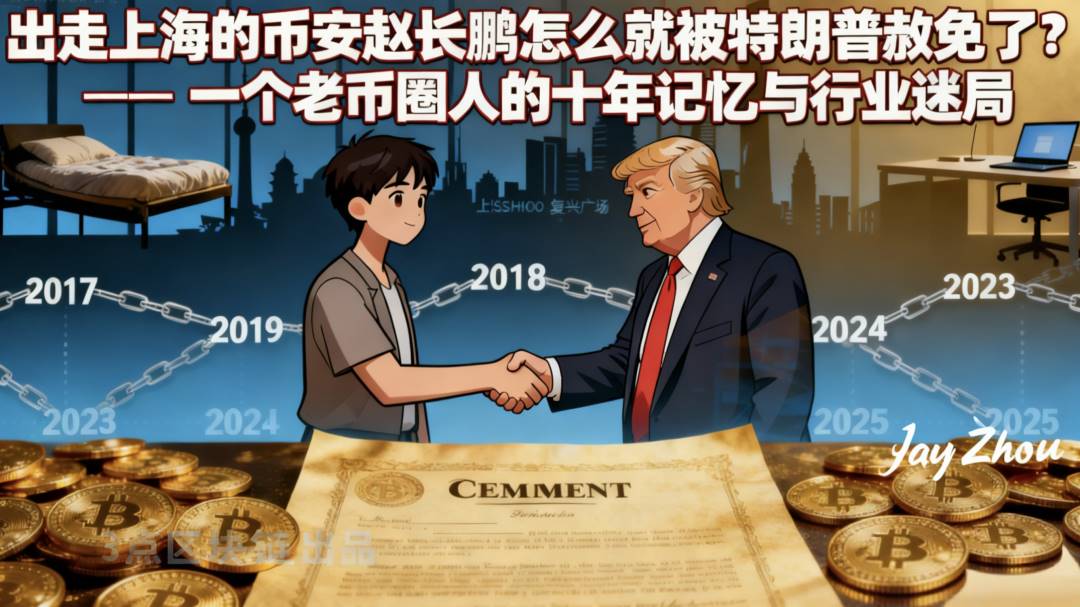
From the wild west era of Beijing's Xierqi in 2014 to Trump’s pardon order in 2025, Zhao Changpeng's decade-long journey acts like a mirror reflecting the cryptocurrency industry’s chaotic growth, regulatory storms, and power struggles. Those scattered details across time have become the keys to unlocking the "mystery of the pardon."
First Encounter: The Hustle of Xierqi and the “Wild West Era” of Crypto
1 The "Triad" at the Yiquan Hui Office in Beijing
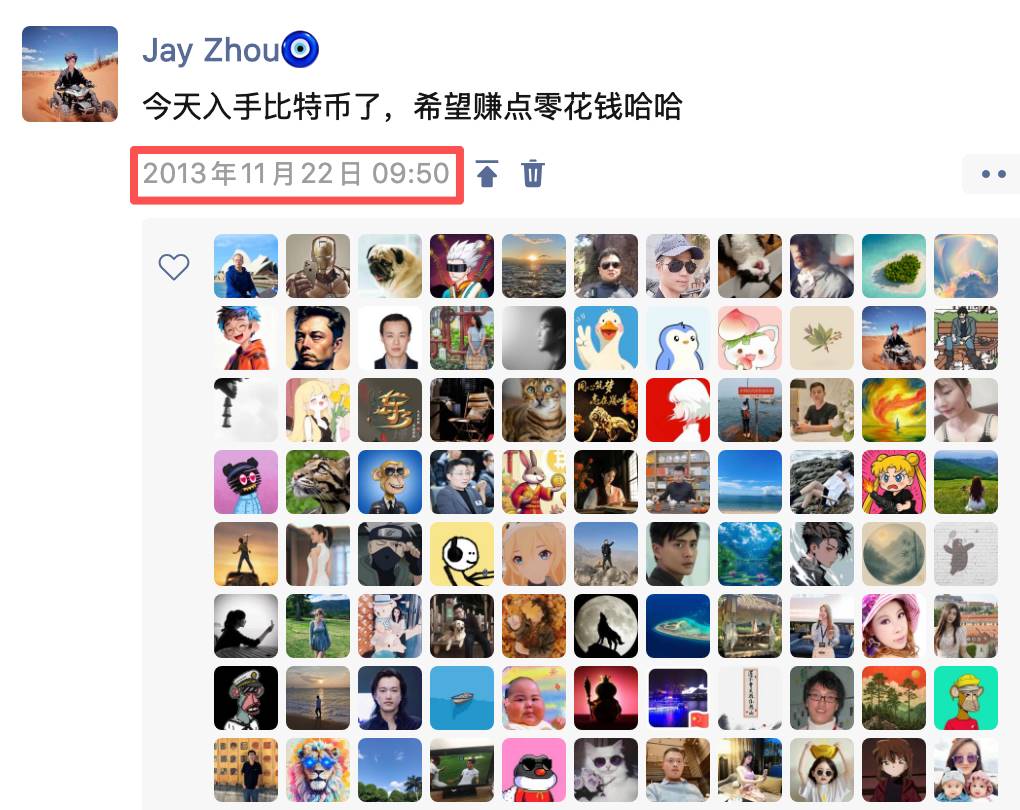
In 2010, I worked as a senior product operations manager for Shanda Online under CEO Chen Tianqiao, where Shanda Group had invested in hundreds of companies, including Moji Weather co-founded by Zhao Dong ([Profile] Zhao Dong: Passive Locked-in Behind Bars) and Docin.com where Xu Mingxing served as CTO. My job was to integrate all Shanda-invested products into our open platform. That was when I first met Xu Mingxing—before even knowing what Bitcoin was—to coordinate integrating Docin.com into Shanda’s open platform. On November 22, 2013, I bought Bitcoin for the first time and posted about it on WeChat (feel free to add jaymeta), receiving hundreds of likes and comments.
In 2013, Zhao Changpeng met a venture capitalist through Texas Hold’em, opening the door to the world of digital cryptocurrencies. As an early believer in crypto, he saw the potential future the moment he realized virtual currencies could enable high-speed money flow. Shortly after, Zhao joined blockchain wallet provider blockchain.info, embarking on his voyage into the vast ocean of cryptocurrencies.
In 2014, blockchain was still a term requiring a half-hour explanation. In Beijing's Xierqi, inside the Yiquan Hui office building, a sign read “OKCoin”—the product of Beijing Lekuda Network Technology Co., which later evolved into OKEX after China’s September 4th crackdown in 2017, and eventually became today’s OKX.
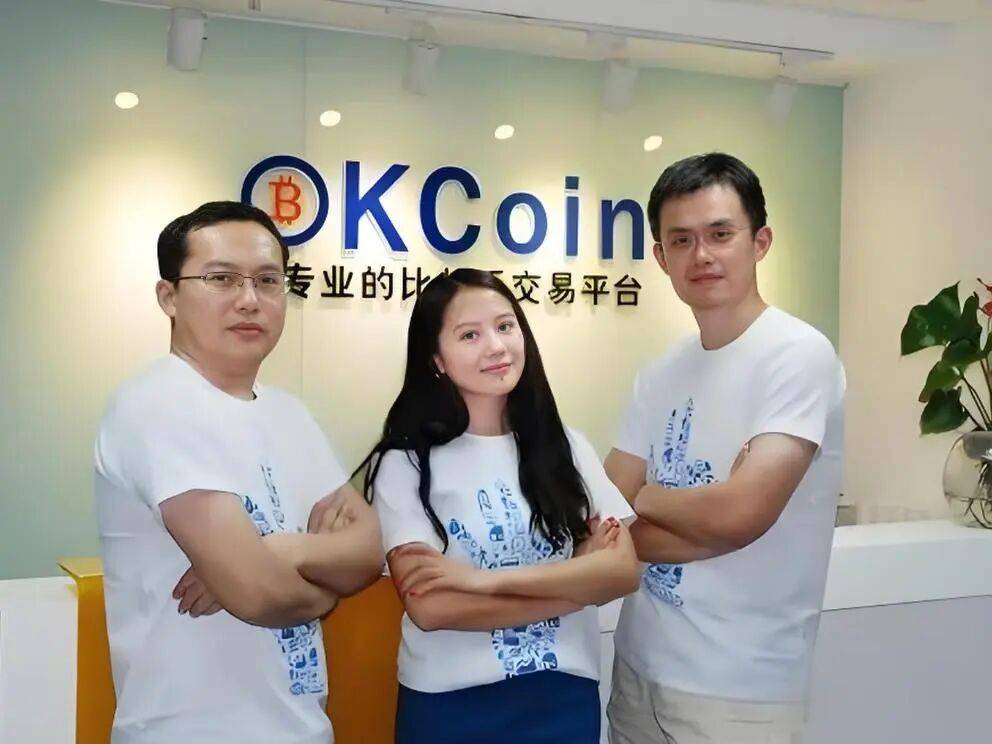
One day, Xu Mingxing hosted lunch to welcome the tech team. Pushing open the glass door, I entered a cramped 20-square-meter office packed with over ten workstations, keyboards clacking nonstop. Xu Mingxing, wearing a plaid shirt, came forward and pointed to a man in black-rimmed glasses and outdoor jacket in the corner: “This is Zhao Changpeng, our new technical director, back from Canada—he understands blockchain.”
He then gestured toward a woman in a red dress: “He Yi, head of marketing, formerly a host at Travel Channel.” Zhao spoke little, clutching a thermos cup, but lit up when discussing the matching logic of Bitcoin trading systems.
Zhao had just left Blockchain.info, giving up a high-paying Silicon Valley job to take a monthly salary of tens of thousands in Beijing. He Yi had left CCTV, abandoning her stable public-sector position to dive into the then-unpopular field of “virtual currency.” Xu Mingxing had bet everything on Bitcoin trading—the military cot in the office still piled with his bedding.
He said OKCoin’s system throughput wasn’t sufficient and he was optimizing the code: “Once we fix this, user volume will triple.” He Yi joked about making educational shorts explaining “What is Bitcoin?” so “even uncles and aunties can understand.” Lunch was donkey burgers from downstairs. Xu Mingxing insisted on paying, saying, “The company just turned profitable—we need to save.”
Later I realized: in 2014, the crypto world was exactly like this—“wild yet pure.” People gathered simply because they “believed this thing had potential.”
2 The “Emerging Brotherhood” at Small Salons
From 2013 to 2016, crypto events were often intimate gatherings of around ten people, held either in free incubator meeting rooms or corners of Garage Café. I followed Xu Mingxing to several such events and almost always encountered Zhao Changpeng, He Yi, Li Lin, Du Jun, and Bao Er Ye—figures who would later become “big shots.”
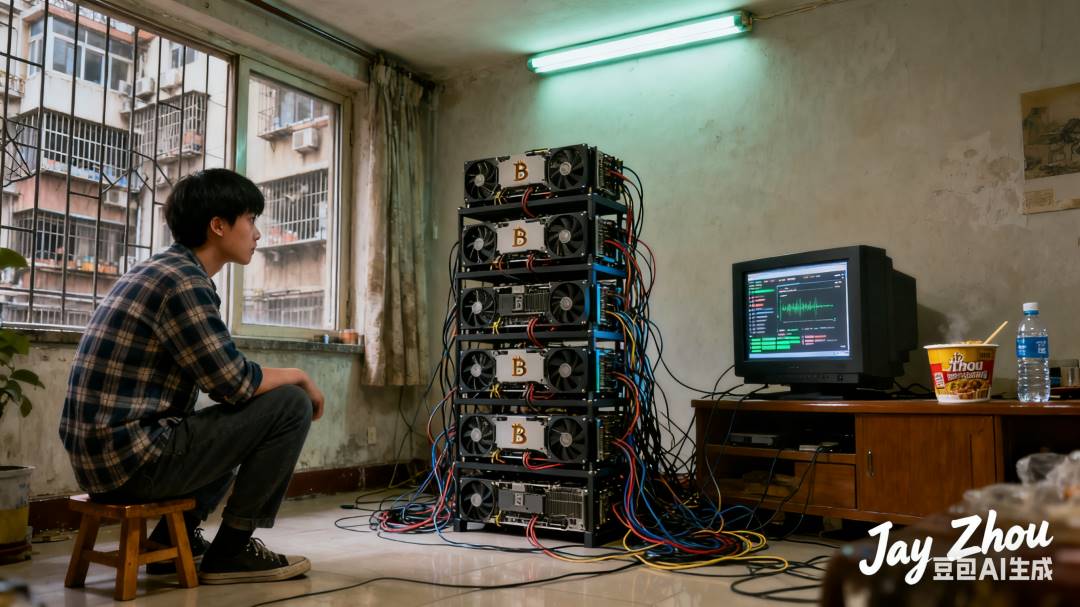
The most memorable was a winter 2014 salon at Zhongguancun’s Startup Street, themed “Bitcoin Development Trends.” Li Lin arrived with Huobi’s tech leads, holding a sample mining chip, backpack slung over his shoulder, handing out business cards. He Yi was the liveliest, joking, “Though few are here now, once crypto blows up, we’ll host a thousand-person conference.” Back then, Zhao Changpeng hadn’t yet shown the aura of a “ruthless leader,” appearing more like a tech-obsessed engineer.
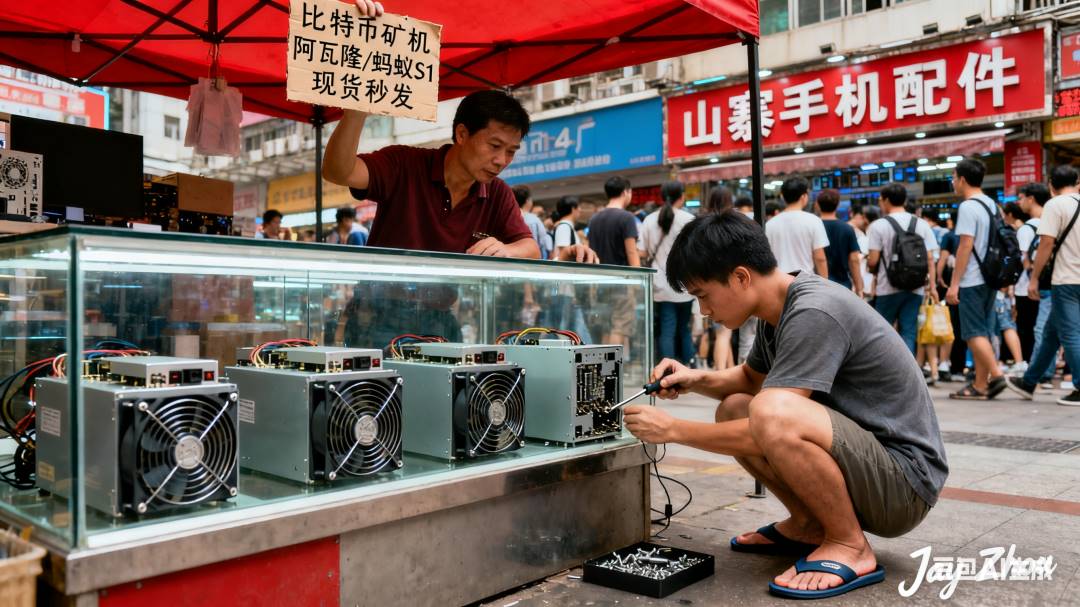
After one salon, he shared his thoughts on the industry: “The biggest problems right now are compliance and technology. Once those are solved, blockchain can truly rise.” No one expected that a decade later, it would be precisely “compliance” that would land him in prison—and later free him through political maneuvering.
Old WeChat chat logs still preserve his occasional shares: forwarding the “Ethereum White Paper Chinese Version” in 2015, warning me about exchange security vulnerabilities in 2016, and in early 2017 saying, “I’m planning to do my own thing—let’s meet in Shanghai sometime.” Looking back now, the foreshadowing of fate was already laid long ago.
Rise: Binance Speed at Shanghai SOHO and the Eve of Going Global
1 Recommending Candidates to Zhao Changpeng’s Early-Stage Binance at SOHO Renaissance Plaza
2017 was crypto’s “explosion year” and also #ZhaoChangpeng’s personal “turning point.” That year, he left OKCoin to found #Binance, assembling the initial team at Shanghai’s SOHO Renaissance Plaza, then hastily relocating overseas after the “94” storm. I had the privilege of witnessing this history of “lightning-fast rise and flight.” The details of those offices concealed the codes to Binance’s future destiny.
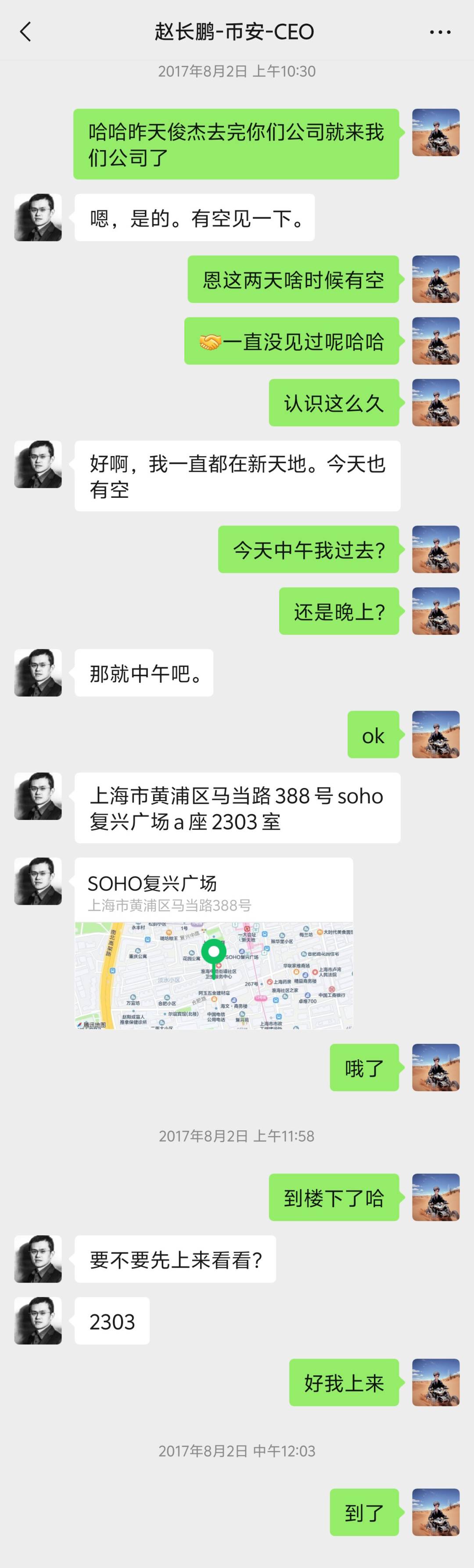
On August 2, BNB traded at 0.8 RMB per token. At noon, I arranged my first meeting with Zhao Changpeng, visiting his newly established Binance office at SOHO Renaissance Plaza—right above Xiaohongshu’s office. The space was small, dozens crammed into desks. Zhao’s desk sat in a corner, beside stacks of mineral water bottles. He Yi hadn’t joined Binance yet. He told me, “Busy with Binance’s globalization—lots of people reaching out for partnerships”—at that time, Binance had just launched, and offline events were their main way to “quickly connect resources.” He asked if I’d be interested in joining. As a four-year crypto veteran since 2013, I was definitely intrigued, but my P2P platform was in the middle of a three-year campaign. I told Changpeng, “Once I finish this phase, I’ll help you properly—but until then, I’m available to assist however needed.”
Since college, I’ve maintained a blog, connecting with internet industry leaders and helping many find jobs. After graduating, I joined Alibaba Group, internally recommending over 100 people. I also helped place talent at many early-stage crypto firms. Over time, my personal resume database grew to nearly a million entries. Later, working as CEO assistant at Kanzhun & BOSS Zhipin, I handled product operations, marketing, and strategy, deepening my expertise in internet HR recruitment. On August 24, 2017, I sent Zhao Changpeng the first resume—from a friend—when Binance had only three product managers.
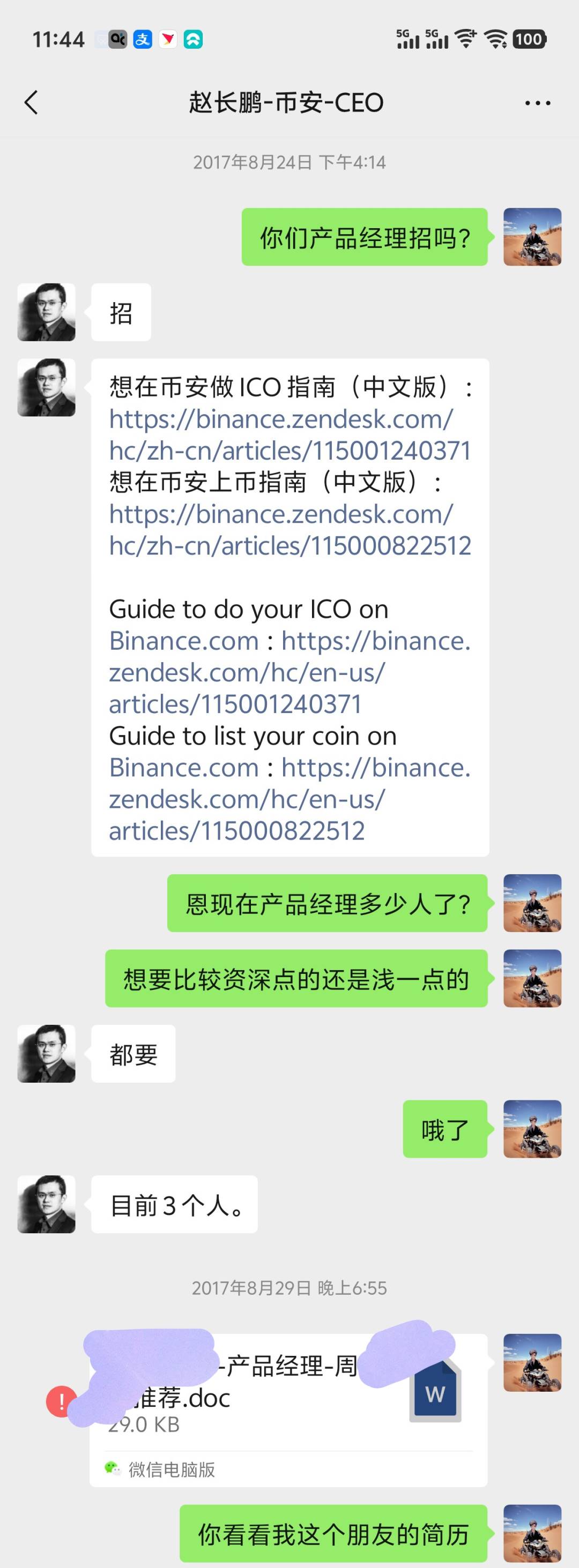
I encouraged my friend to join Binance despite perceived risks, as reliable startups like this were rare. Initially, Changpeng invited me during lunch, but I was too busy, promising to join later—so I referred other friends first.
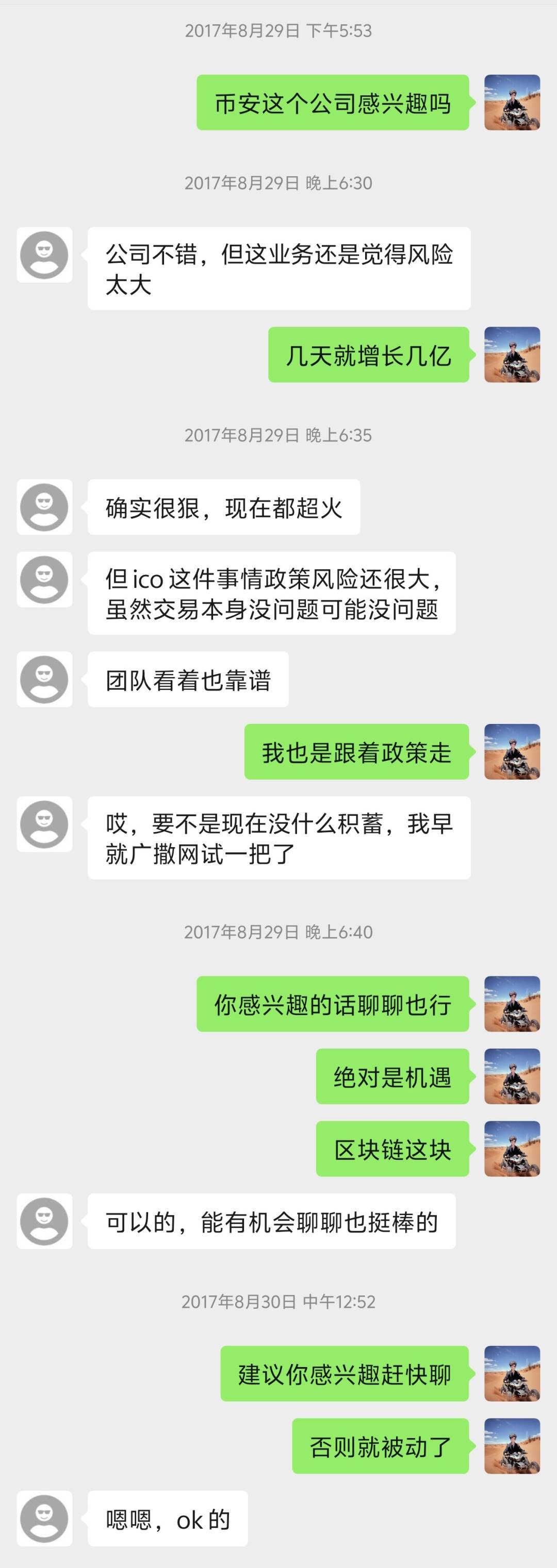
In 2017, I was widely seen as a dependable “part-time headhunter,” having placed massive talent across major internet companies. That day, Changpeng and I talked for two hours, eyes sparkling with excitement. He said Binance aimed to be the “world’s fastest exchange,” already integrated with over ten cryptocurrencies, with fees half those of Huobi and OK.
“Every day, people come seeking partnerships—there’s someone sleeping on the sofa.” He pointed to a pile of sleeping bags in the corner. I noticed his laptop filled with handwritten notes on compliance: “How to handle regulations in different countries?” “How to build an anti-money laundering system?” In hindsight, these issues seemed buried under “growth speed” then, but later became serious liabilities.
Before leaving, he said, “Shanghai is a treasure trove—full of talent, especially people like you. Please recommend more to join Binance. And feel free to join us soon—we really lack operational talent like you!” Right after my P2P company finished its third anniversary event, the “94” crackdown hit!
2 The “94” Storm, Wanxiang Conference, and the Decision to Go Overseas
On September 4, 2017, seven Chinese authorities including the central bank issued a notice banning ICOs and cryptocurrency trading, plunging the crypto world into panic. WeChat Moments flooded with posts like “Exchanges are shutting down” and “Crypto prices collapsing.” I messaged Zhao Changpeng immediately. He replied: “Don’t panic. Wait for my update—see you at October’s Wanxiang Conference.”
Post-94, the 2017 Shanghai Wanxiang Blockchain Conference became an industry safe haven. With a media pass, I ran into Zhao Changpeng and He Yi at the entrance. Wearing a black coat, Zhao looked far more serious than before, saying, “We’re scouting overseas offices—Japan’s policies are more favorable.”
At the conference, Ethereum founder Vitalik Buterin delivered a keynote on “the importance of compliant blockchain development.” I asked several exchange founders about their plans—they said “clearing domestic users and moving overseas.” Zhao revealed, “The Binance team flies to Japan next week—renting temporary office space in Tokyo.” He Yi added, “Leaving a few in Shanghai to wrap things up. Some equipment has to be sold cheap—that’s a pity.”
In October, Zhao and He swiftly arrived in Tokyo. A photo showed them standing by the window of their new office, captioned “Starting over.” Seeing that image, I recalled the folding bed at SOHO Renaissance Plaza, suddenly sensing a premonition: this team fleeing Shanghai would stir global crypto markets—but might also face even greater storms.
No one expected this “going overseas” was just the beginning of Zhao Changpeng’s global migration. From Japan to Malta, to Dubai, Binance relocated headquarters repeatedly, yet never fully resolved the sword of “compliance” hanging over its head.
Fall: $4.3 Billion Fine and Four Months in Prison
1 Regulatory Storm: 18 Months from Lawsuit to Guilty Plea
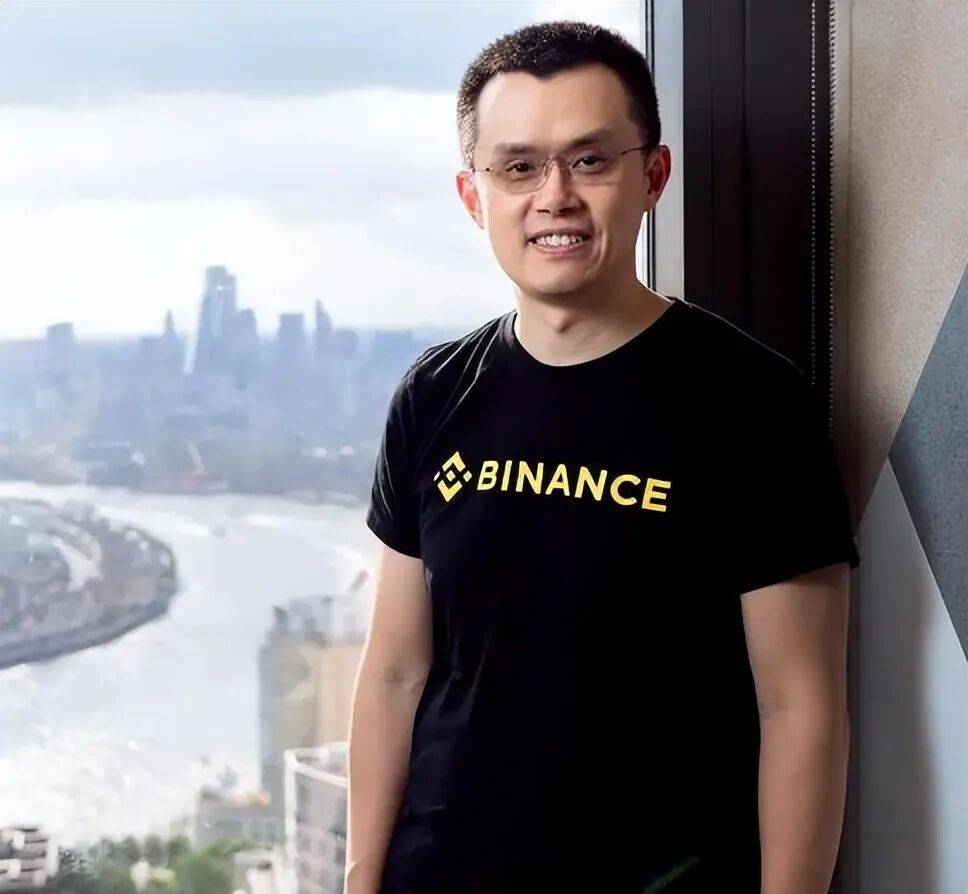
Zhao Changpeng’s legal troubles began in March 2023, when the U.S. Commodity Futures Trading Commission (CFTC) sued Binance and Zhao, accusing them of “operating an unregistered exchange and violating trading rules.” Then in June, the U.S. Securities and Exchange Commission (SEC) filed 13 charges, including “providing false trading oversight statements and selling unregistered securities.”
When news broke, I was attending an event in Hong Kong. Attendees debated, “Will Binance collapse?” A lawyer familiar with U.S. regulation told me, “This time it’s real—the Department of Justice has long targeted Binance’s AML issues.” Indeed, in November 2023, Zhao admitted in a Seattle court to “failing to maintain an effective anti-money laundering program” and stepped down as Binance CEO. Binance itself admitted to “money laundering, unlicensed remittance, and sanctions violations,” agreeing to pay a record $4.32 billion fine—$2.51 billion in forfeitures and $1.81 billion in criminal penalties.
The $4.3 billion penalty set a crypto industry record. I recalled Xu Mingxing’s “save every penny” comment from the Xierqi office in 2014, contrasting sharply with today’s staggering sum—a testament to how much the industry has changed. An old OG remarked in a WeChat group: “Back then, Binance grabbed market share with low fees, but neglected AML systems. Now they’re paying for rapid expansion.”
After pleading guilty, Zhao wrote an apology letter: “I should have prioritized compliance from day one—I accept full responsibility.” But regret came too late. On April 30, 2024, the U.S. District Court in Seattle sentenced him to four months in prison—far below the prosecutors’ requested three years, yet making him “the only crypto founder in U.S. history imprisoned solely on Bank Secrecy Act charges.”
2 Time in Prison and Dubai’s “Timely Help”
From April to September 2024, Zhao Changpeng served his sentence at Lompoc Federal Prison in California. During this period, crypto discussions shifted from “Will he get a harsh sentence?” to “Can Binance survive?” Just as many assumed Binance would decline, in March 2025, shocking news emerged: UAE AI investment firm MGX injected $2 billion into Binance—the first institutional investment in Binance’s history and the largest single investment in crypto history.
MGX was no ordinary investor—it operated under Abu Dhabi’s sovereign wealth fund, serving as the UAE’s core platform for AI and blockchain. The investment was paid in stablecoins, with MGX acquiring a minority stake in Binance. Market estimates placed Binance’s valuation between $20–40 billion—not close to the rumored $200 billion in 2021, but enough to pull Binance through.
A source close to Binance revealed Zhao personally negotiated the deal post-release. On September 27, 2024, Zhao was released early due to a weekend release date. His first stop? Dubai, to meet MGX executives. Dubai’s willingness to “help in times of need” stemmed from two factors: seeing blockchain’s potential and aiming to build a “global crypto hub,” and recognizing Binance’s still-strong user base and technical capabilities—this $2 billion investment could quickly elevate Dubai’s industry standing.
After release, everyone knew that as long as the U.S. criminal record remained, Zhao couldn’t truly return, nor could Binance re-enter the U.S. market. At this moment, another key figure—Trump—entered the crypto spotlight.
Reversal: Trump’s Pardon and the Game Behind It
1 The Pardon: Trump’s “Crypto Card”
On October 23, 2025, when Trump announced “pardoning Zhao Changpeng” before the press, I was sitting in the main forum of the Shanghai Wanxiang Blockchain Conference. Veteran OGs around me erupted. Some refreshed news on their phones; others exclaimed, “This plot twist is more dramatic than a movie.” Though seemingly sudden, the pardon was actually a meticulously calculated move intertwining politics, business interests, and industry dynamics.
Trump pardoned Zhao primarily to solidify his image as a “friend of cryptocurrency.” Since taking office, he had been rolling back Biden-era enforcement actions against crypto: pardoning Silk Road founder Ulbricht, freeing multiple BitMEX founders—now Zhao was merely following this policy trend.
White House spokesperson Leavitt stated bluntly that Zhao was a victim of the Biden administration’s “war on crypto,” and Trump’s pardon exercised “constitutional authority.” To any observer, this was clearly a partisan battle over crypto policy.
Trump sought support from young voters and tech capital by backing the crypto industry, and pardoning a symbolic figure like Zhao was the most direct signal possible. But more crucially, commercial interests were at play. According to The Wall Street Journal, Binance began approaching Trump allies around the 2024 U.S. election, forming a dedicated team to explore “re-entering the U.S. market” and “securing Zhao’s pardon.”
The breakthrough came via Trump’s family-owned crypto firm, World Liberty Financial (WLFI). Binance not only assisted WLFI in launching a stablecoin—generating tens of millions annually for the Trump family—but also discussed investing in WLFI in exchange for Zhao’s pardon. This wasn’t unprecedented: Tron founder Justin Sun invested $30 million in WLFI earlier, after which the SEC suspended fraud litigation against him.
Though Zhao denied “making a deal for pardon,” the market widely believes this “business cooperation for political endorsement” model is already established. Trump himself admitted the pardon came “at the request of many influential figures,” while stressing, “I’ve never met Zhao Changpeng.” This rhetoric serves as political semantics—denying direct ties while achieving the goal of courting the crypto industry.
2 Could Barron Join Binance US? Ambitions Behind the Rumors
After the pardon announcement, a more explosive rumor spread: Trump’s youngest son, Barron Trump, might join Binance US. While neither Binance nor the Trump family confirmed, the rumor wasn’t baseless.
Insiders revealed Binance had long wanted to re-enter the U.S. market, but its 2023 guilty plea made it toxic in America, hard to find partners. Aligning with the Trump family offered the “perfect entry card.” If Barron joined Binance US, it could leverage the Trump name to improve Binance’s public image and gain favorable government policies to rapidly obtain compliance licenses.
For the Trump family, it’s a smart business move. As crypto rises globally, owning a stake in a top-tier platform like Binance US allows direct participation in market gains. Analysts estimate that if Binance US restarts, its valuation could reach billions. Even a minority stake would yield substantial returns.
Notably, Barron Trump himself shows strong interest in tech and crypto, publicly expressing optimism about blockchain in recent years. If he joins Binance US, he gains business experience while adding a vital piece to the Trump family’s “political-business empire.” Though unconfirmed, from an industry logic standpoint, this “power alliance” is highly plausible.
3 Industry Shockwaves: Ripple Effects of the Pardon
News of Zhao’s pardon instantly triggered chain reactions across crypto markets. BNB surged, hitting an all-time high. Binance’s trading volume spiked 30%. More importantly, this may allow Binance to end its three-year external monitoring early—the 2023 guilty plea required independent compliance oversight, but the pardon could nullify this obligation.
For the global crypto industry, this pardon sends a clear signal: U.S. crypto regulation is loosening. A compliance expert told me, “More crypto firms will apply to enter the U.S. market. Trump wants to make America the ‘crypto capital’—good for the industry, but possibly introducing new risks.”
Yet criticism persists. Democrats demand Trump detail interactions with Binance, calling the “mix of business ties and political pardons” a serious ethical concern. Some bluntly call it “naked quid pro quo,” undermining judicial integrity.
At OG dinner tables, views are more balanced. One said, “The pardon solves Zhao’s personal issue, but Binance’s compliance journey remains long.” Another mused, “Binance, born in Shanghai, now relies on U.S. political power to rebound—what unpredictable turns life takes.”
Resonance: Shanghai’s Legacy and the Industry’s Future
1 Shanghai: The “Birthplace” of Blockchain
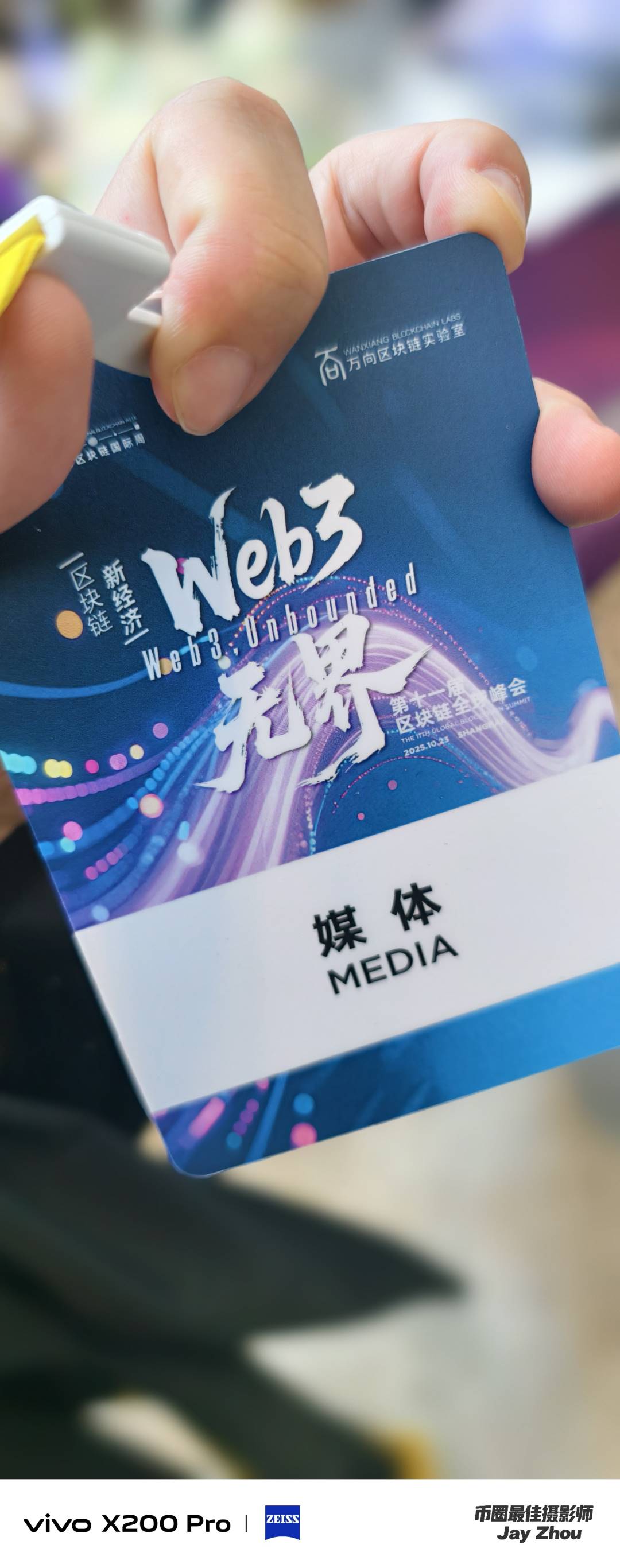
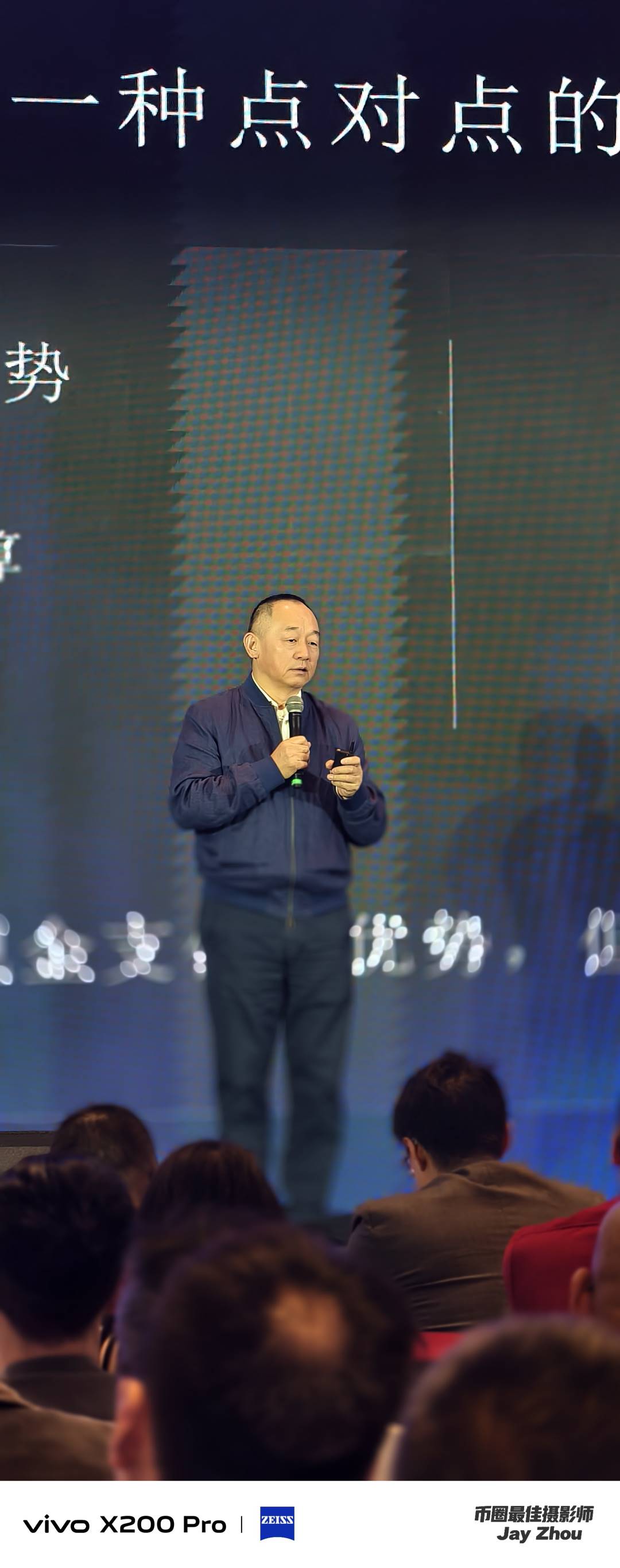
On October 23, 2025, the Shanghai Wanxiang Blockchain Conference buzzed with activity. On stage, Dr. Xiao Feng delivered a passionate speech. Young entrepreneurs presented use cases of “AI + blockchain.” At booths, new project teams handed out flyers. During tea breaks, newcomers saw me wearing a BINANCE-branded shirt and asked if I worked for Binance. I said no, but our connections run deep. When they heard I knew Zhao Changpeng, they gathered around: “Was his office in Shanghai really that humble?”
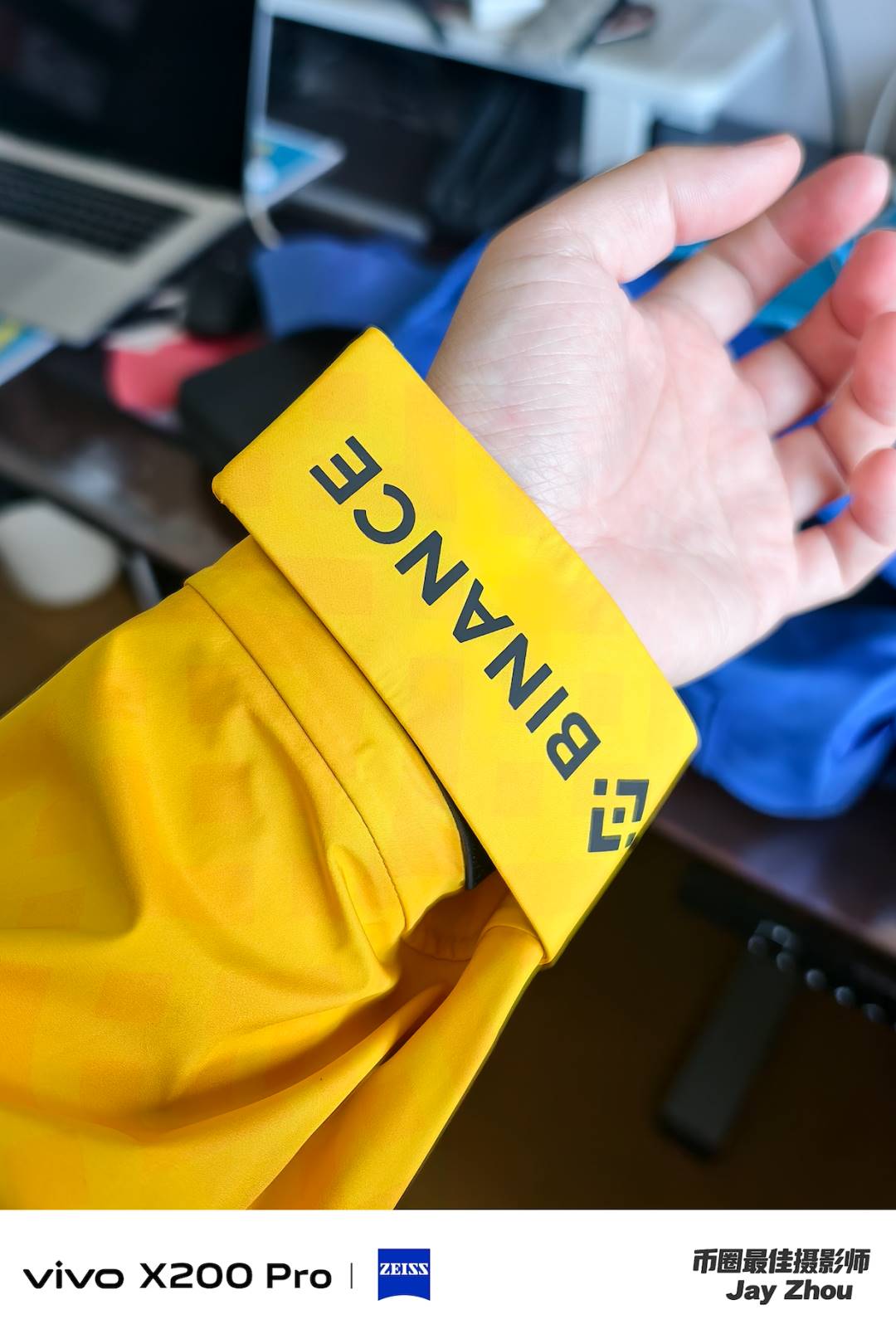
Looking at these fresh faces, I realized: crypto is no longer that tiny “dozen-people salon” circle. Yet those old stories and places live on in legend—especially Shanghai’s SOHO Renaissance Plaza from July to October 2017, where the Binance dream began.
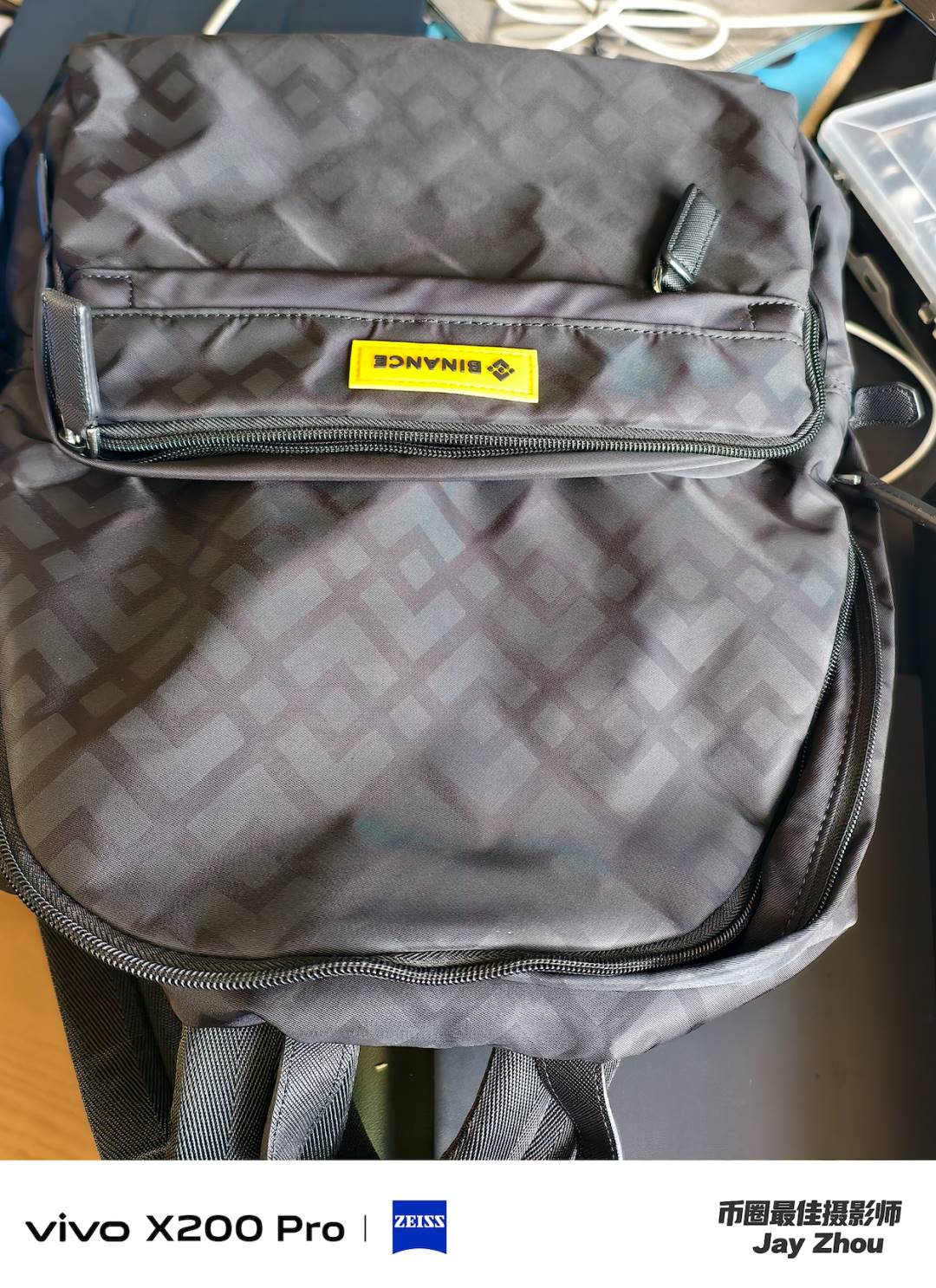
Today, Shanghai has become mainland China’s most open city for blockchain policy. Tech parks offer “enterprise subsidies” and “talent residency” programs. In 2024, Shanghai’s blockchain sector flourished. The annual Wanxiang Blockchain Conference has become a barometer for China’s blockchain industry.
Yet OGs know the most precious elements are the “historical imprints.” OKCoin’s Xierqi office has long moved, but the Yiquan Hui security guard still recalls “a bespectacled Canadian engineer who worked late every night.” The former Binance office at SOHO Renaissance Plaza now hosts an internet company, but the ground-floor café owner remembers “a group of young people rushing in with laptops, ordering takeout.” Photos from Vitalik’s 2017 talk still hang in the Wanxiang Conference hall.
During the conference, I visited SOHO Renaissance Plaza. Standing at the 15th-floor elevator, I could almost hear He Yi shouting “Keep pushing!” and see Zhao resting on a folding bed. The security guard, hearing I sought the “old Binance office,” smiled: “Lots of people ask. I heard that company’s now huge overseas?” I nodded, emotions swirling.
Shanghai’s inclusiveness nurtured Binance’s earliest form; the “94” storm forced Binance to go overseas. Today, Shanghai continues supporting blockchain, and Binance has stabilized abroad—but that “Shanghai version of Binance” remains frozen in autumn 2017.
2 The OGs’ Brotherhood and the New Generation’s Era
Over dinner, after discussing Zhao, OGs naturally turned to Xu Mingxing, He Yi, Li Lin, Du Jun, Bao Er Ye—the “elders.” Some said Xu Mingxing’s OKX now focuses on compliance; others praised He Yi as a diligent “customer service rep”; some noted Li Lin’s Huobi stayed true to its roots; others mentioned Zhao Dong [Profile] Zhao Dong: Passive Locked-in Behind Bars.
These people who once ate donkey burgers at Garage Café salons are now industry “veterans.” Their stories are a microcosm of crypto’s decade: from wild beginnings to regulated growth, from domestic roots to global expansion, from tech obsession to business maturity.
Younger attendees now focus on “MEME,” “decentralized DEX,” “regulatory sandbox opportunities,” and “RWA.” They never saw Xierqi’s barebones offices or lived through “94” panic, yet enter the industry with more professional knowledge and clearer strategies. At this year’s Wanxiang Conference, 90% of attendees were under 30. Their discussions have long surpassed the basic question of “What is Bitcoin?”
A newcomer told me: “Zhao Changpeng’s story is legendary. Now when we launch projects, compliance comes first—we won’t repeat past mistakes.” I felt deeply moved: elders paved the way through lessons learned; newcomers walk steadily forward. Perhaps this is the inevitable path of industry evolution.
3 Future: Balancing Compliance and Innovation
Zhao’s pardon resolved his personal legal crisis but left deeper questions: How should blockchain balance innovation and compliance?
Binance’s experience offers an answer: early rapid expansion captures market share, but ignoring compliance exacts a heavy price. The $4.3 billion fine and four-month imprisonment serve as stark warnings for all crypto firms. Now, backed by MGX’s $2 billion investment, Binance is aggressively pursuing compliance—reportedly securing licenses in over ten countries.
Shanghai’s development path offers another model: clear policy guidance and robust industrial ecosystems enabling blockchain innovation within compliant frameworks. From supply chain finance to digital governance, from copyright protection to agricultural traceability, Shanghai’s blockchain applications have long transcended “virtual currency,” advancing into RWA and real economy sectors.
On October 24, 2025, Zhao Changpeng posted on X: “Thank you President Trump. We will help make America the ‘crypto capital.’” Meanwhile, in Shanghai, the final day of the Wanxiang Blockchain Conference featured a packed panel on “Compliance and Innovation.”
One side: the world’s largest exchange staging a political comeback. The other: mainland blockchain progressing steadily. Two paths diverge, yet both point the same direction: only innovation grounded in compliance can endure.
Conclusion: The Brotherhood Lives, Legends Endure
Though Binance’s HQ isn’t in Shanghai, its bond with the city has never truly broken.
Reflecting on these ten years—from donkey burgers in Beijing’s Xierqi to pizza and coffee in Shanghai, from folding beds at SOHO Renaissance Plaza to sovereign fund investments in Dubai, from courtroom confessions to presidential pardons—Zhao Changpeng’s story reads like an epic of the crypto world. The contemporaries who walked with him, the landmarks that witnessed it all—these are the industry’s living fossils.
Some say crypto is a “forgetful” space—new projects and trends emerge daily, old stories fade fast. But I disagree. Like that office at SOHO Renaissance Plaza, like the familiar faces at Wanxiang Conferences, like the OG dinner after Zhao’s pardon—these details are etched into the industry’s DNA.
The future will bring more “Zhao Changpengs,” more “Binance stories.” But the dream born in Shanghai in summer 2017—the memories of初心, expansion, setbacks, and rebirth—will never vanish. Because it’s not just a company’s origin; it’s the youth imprint of an entire industry.
The brotherhood lives. Legends endure. If you’re new to #web3 #crypto #blockchain, study this history. This world has never been smooth sailing. But as long as you uphold compliance and preserve your innovative初心, light will come. Just as Zhao once said at SOHO Renaissance Plaza: “Shanghai will always be Binance’s starting point.”
Join TechFlow official community to stay tuned
Telegram:https://t.me/TechFlowDaily
X (Twitter):https://x.com/TechFlowPost
X (Twitter) EN:https://x.com/BlockFlow_News