








Mubarak surged 1300x over the weekend, and CZ has added several more A8 players to BSC again
TechFlow Selected TechFlow Selected
Mubarak surged 1300x over the weekend, and CZ has added several more A8 players to BSC again
The key to reviving BSC lies in dual drivers: stabilizing BNB price expectations as the foundation, and continuously creating new Memecoins as fuel.
 Navigating Web3 tides with focused insights
By: BUBBLE
Head wrapped in cloth, we all get rich together! In every cycle, crypto’s P-little-generals must revisit cultures from around the world—and recently, Twitter has been taken over by Middle Eastern culture. Everyone is rushing to share greetings, and "Mubarak" has become the focus of this weekend. But what exactly is Mubarak, and why has it emerged as the leading name in this wave of “CZ-themed” memecoins?
The story begins on March 12, when MGX, the sovereign wealth fund of the UAE, announced a $2 billion investment into Binance. The news captured the entire market's attention, with KOLs and media outlets racing to report and analyze the development. BlockBeats also covered the event in detail.
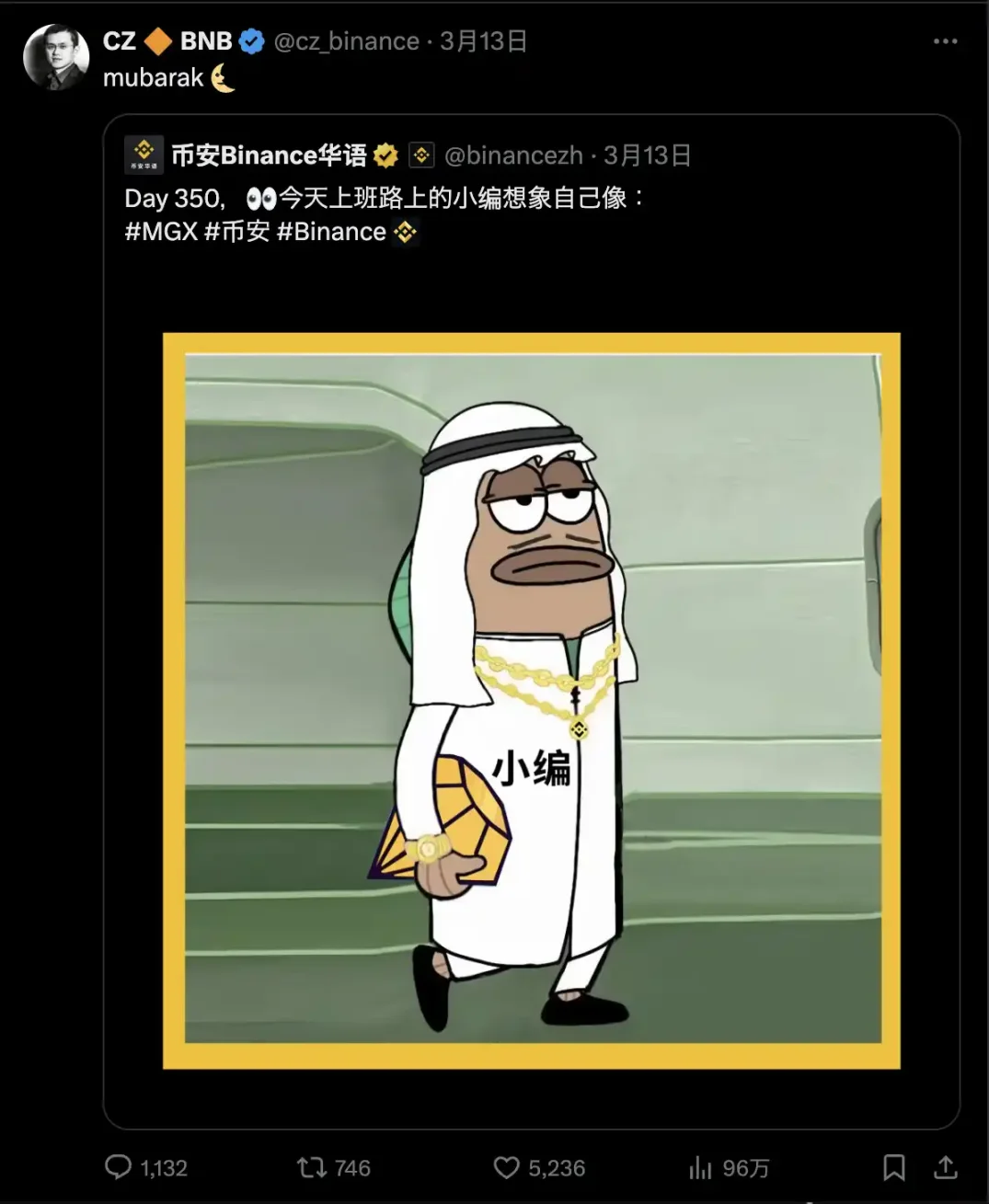
But things got interesting the next day at 2:38 PM, when Binance Chinese’s official Twitter account posted a meme featuring an Arabic-styled character wearing a shirt labeled “Editor.” Three hours later, CZ retweeted the post with the single word “Mubarak.” Within minutes, dozens of tokens named $Mubarak appeared on Four.meme. One of them, a memecoin with contract address (CA) ending in “6f6,” quickly surged to a market cap of $1.55 million before sharply pulling back to $230,000. It then fluctuated between $200,000 and $800,000 in market cap.
The real excitement began when CZ stepped in personally. In the early morning of March 14 at 6:07 AM, he retweeted a community member’s post about $Mubarak (the “6f6” version), adding a meme image. Whether to prevent chaotic fragmentation similar to the previous “broccoli brawl” or for other reasons, CZ indirectly endorsed this particular CA as the “leading” token. Following his endorsement, the coin’s market cap skyrocketed from $400,000 to $13 million within 10 hours.
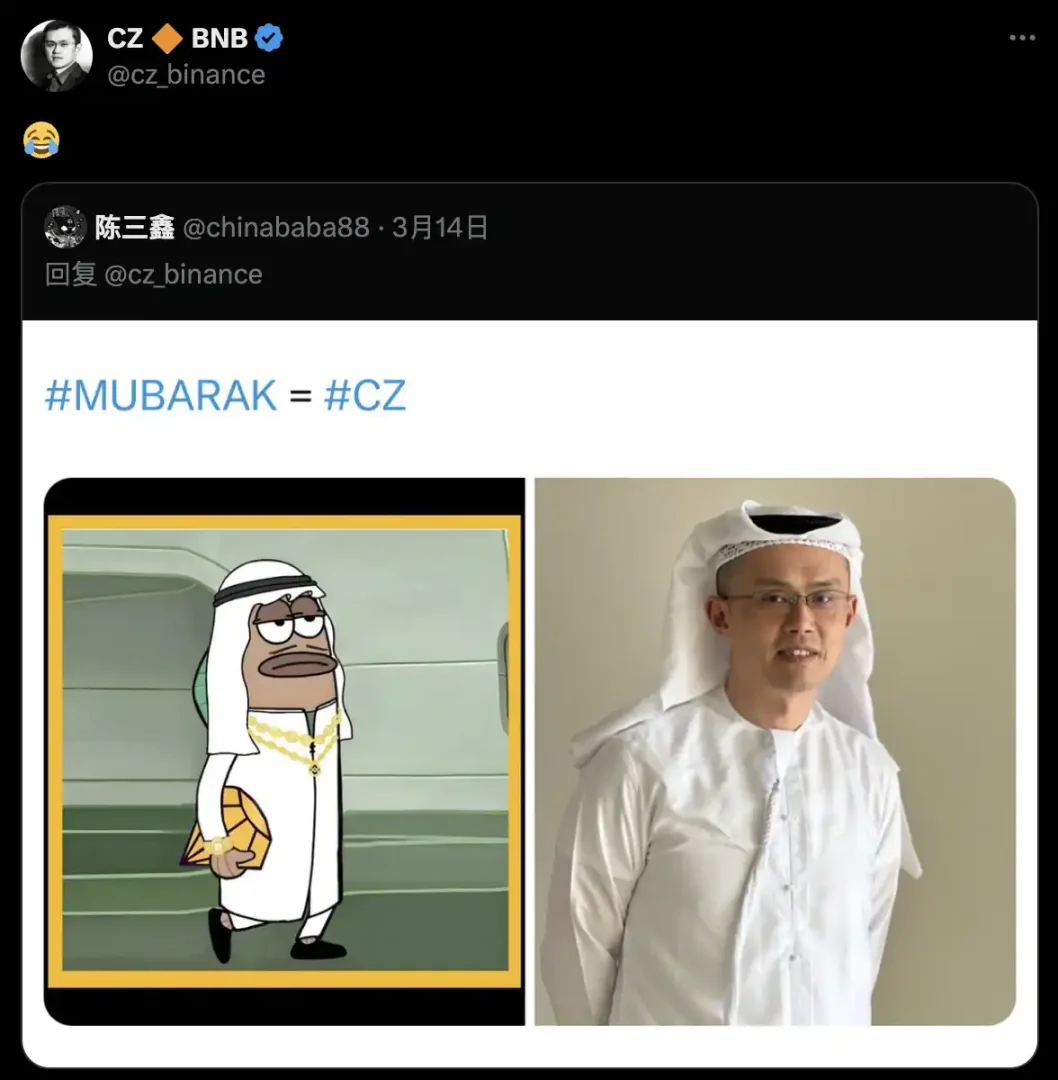
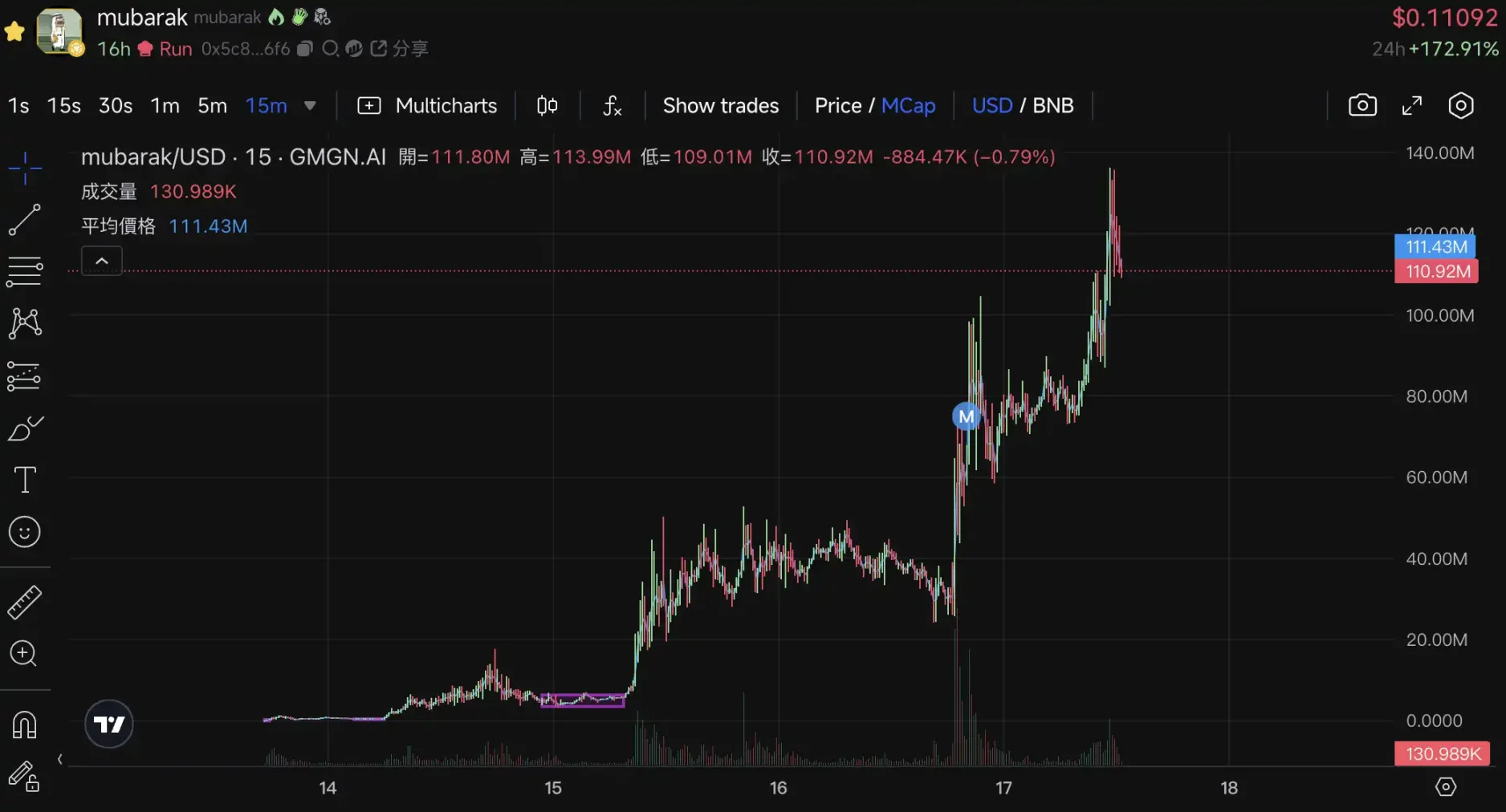
In the following 12 hours, the market cap dropped again to $3.5 million. During nighttime in the China timezone, discussions began spreading online—articles analyzing BSC and CZ circulated widely on social media, and prices gradually rebounded. By 8:40 AM, CZ posted a meme on Binance Square photoshopping Mubarak’s face onto his own, captioned “Heading out to meet a friend this weekend.” The market reacted strongly—the token’s market cap surged from $7 million to $47 million. Exactly 12 hours after CZ’s “meeting a friend” post, Binance Alpha listed Mubarak. The day that followed saw continuous price swings, with the token stabilizing between $30 million and $40 million in market cap. Then, at 7 PM on March 16, CZ’s public wallet purchased 1 BNB worth of $Mubarak, dramatically boosting community confidence that the token would soon be listed on Binance. Seventeen hours later, at the time of writing, $Mubarak’s market cap exceeded $130 million, with a 24-hour trading volume reaching $80 million.
In fact, $Mubarak didn’t just lift itself—it ignited the entire BSC ecosystem. CZ and He Yi seemed to have cracked the code for virality, retweeting a three-year-old post saying “Inshallah” and sharing a photo of CZ with Tahnoun, the actual leader behind UAE’s sovereign fund MGX, captioned “Mashallah.” The former reached a $1 million market cap, while the latter easily hit $15 million.
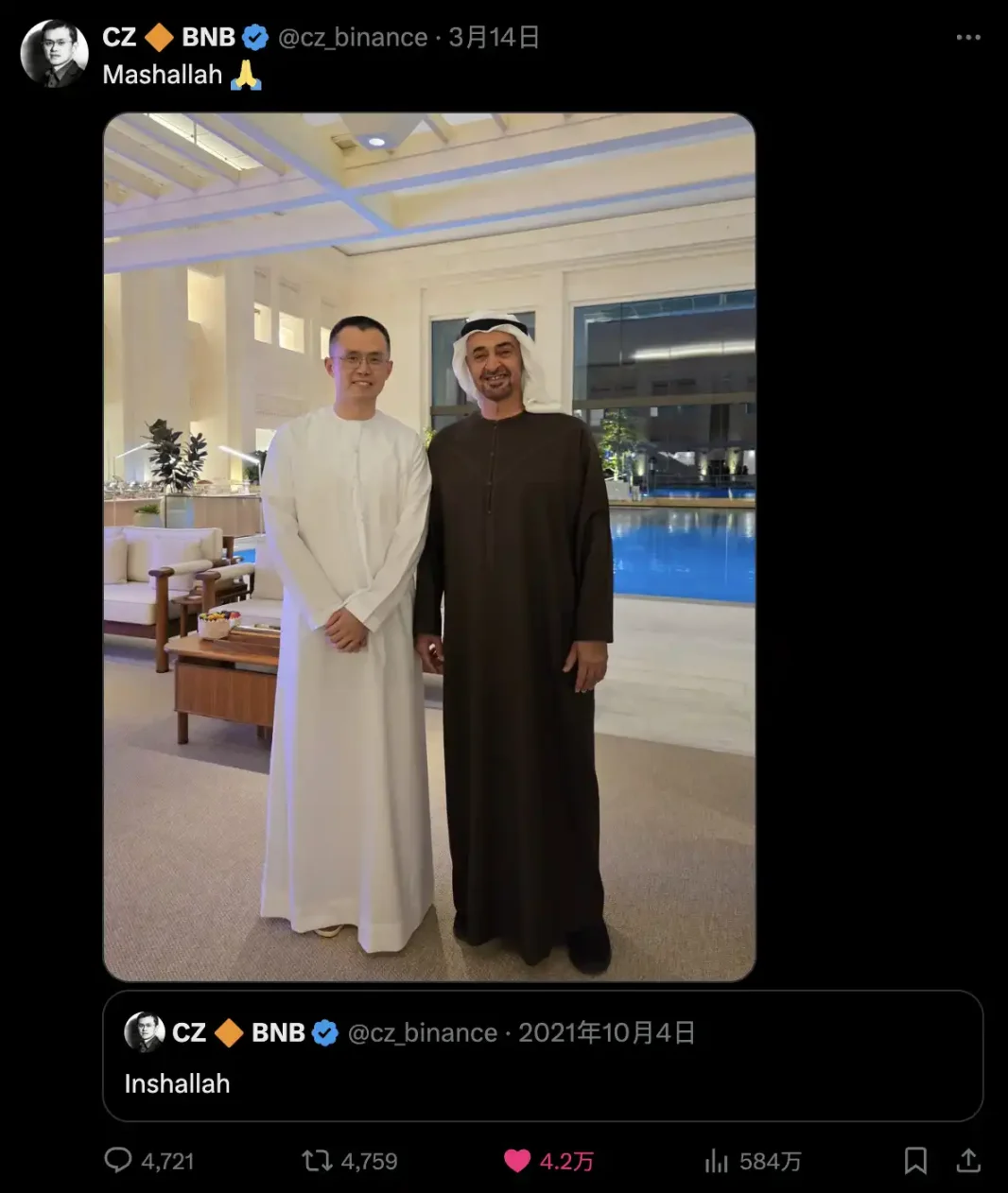
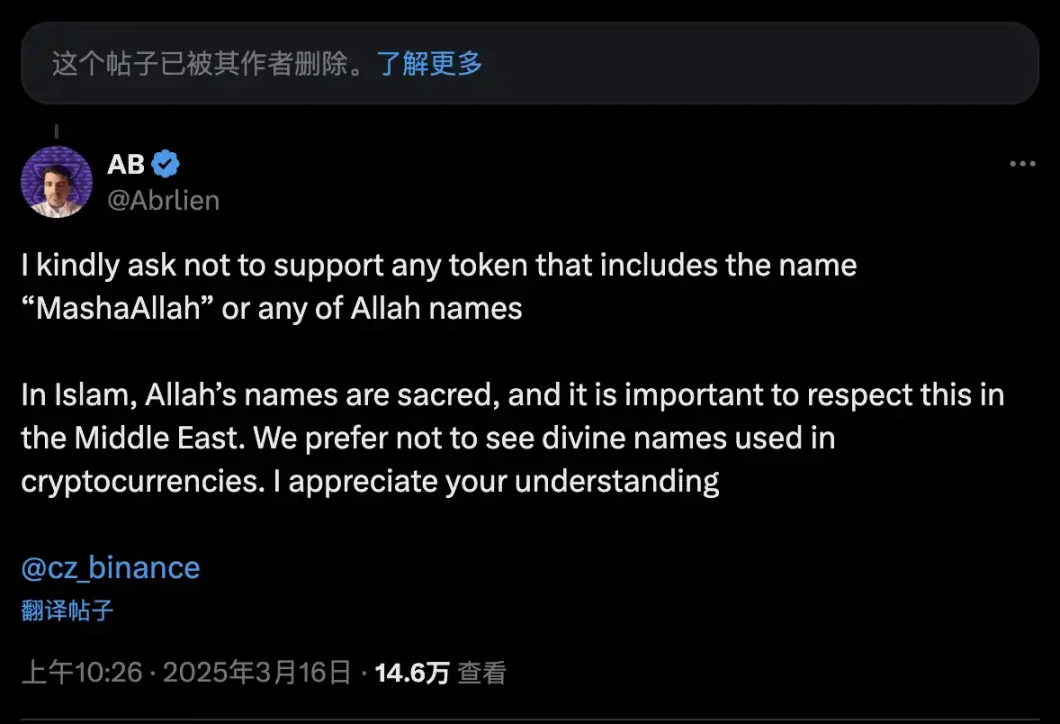
There was a small incident involving “Mashallah”: Four.meme originally published a meme referencing several recent BSC memecoins, including $Mashallah. Abrlien, who won Binance’s Global Best Content Creator award last year, politely pointed out potential religious sensitivities related to the term in Middle Eastern culture. CZ promptly un-pinned the post. However, when asked whether “Mubarak” was appropriate as a memecoin name, Abrlien gave a positive response.
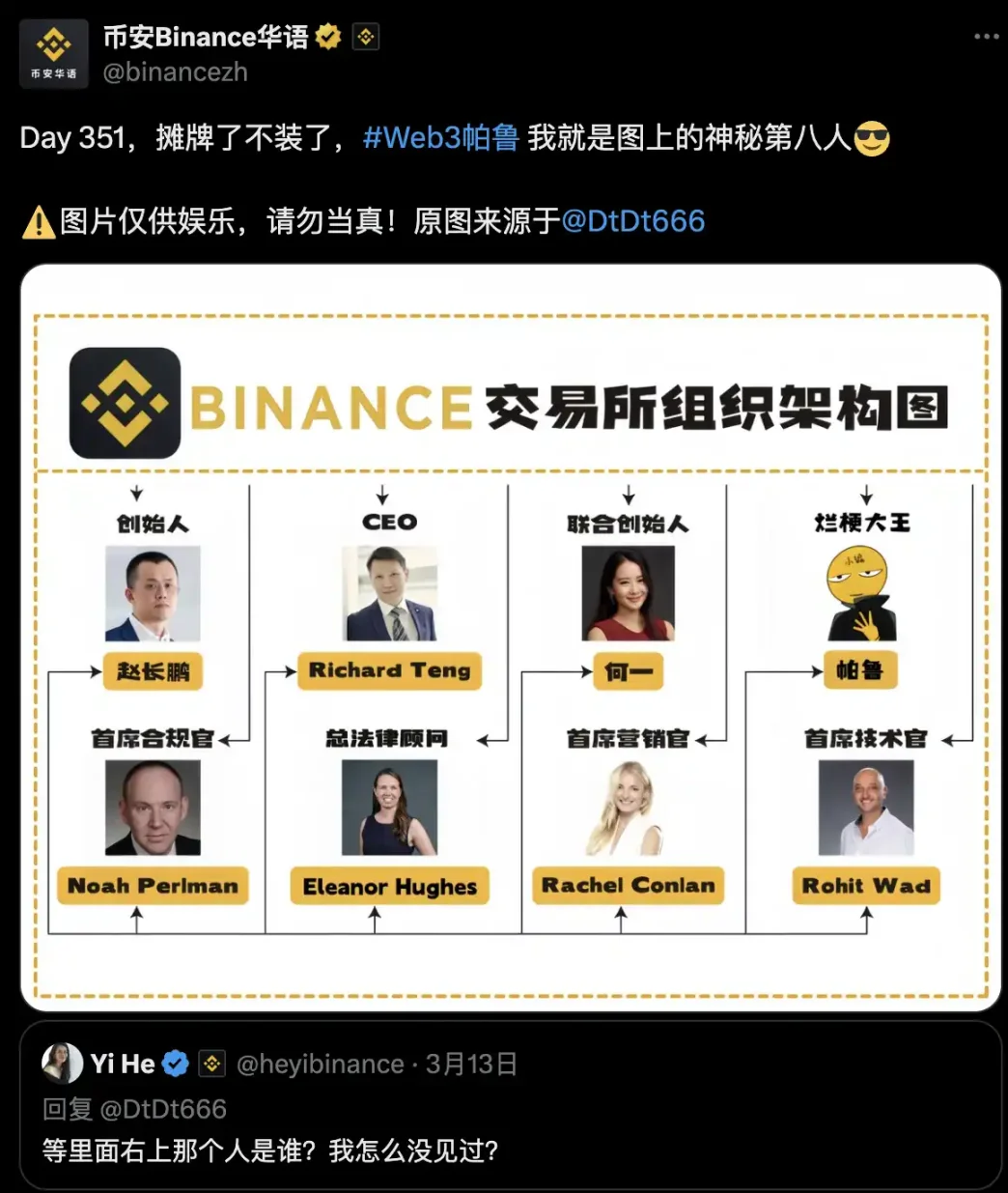
Binance Chinese’s editor also shared an organizational chart of the Binance exchange, with the notorious meme king “Palu” clearly displayed in the top right corner. He Yi expressed confusion too—and soon after, the meme evolved into the $Palu memecoin, now boasting a $70 million market cap. Community members now comment to the Binance Chinese editor: “At your command, we will crown you the new CEO.”
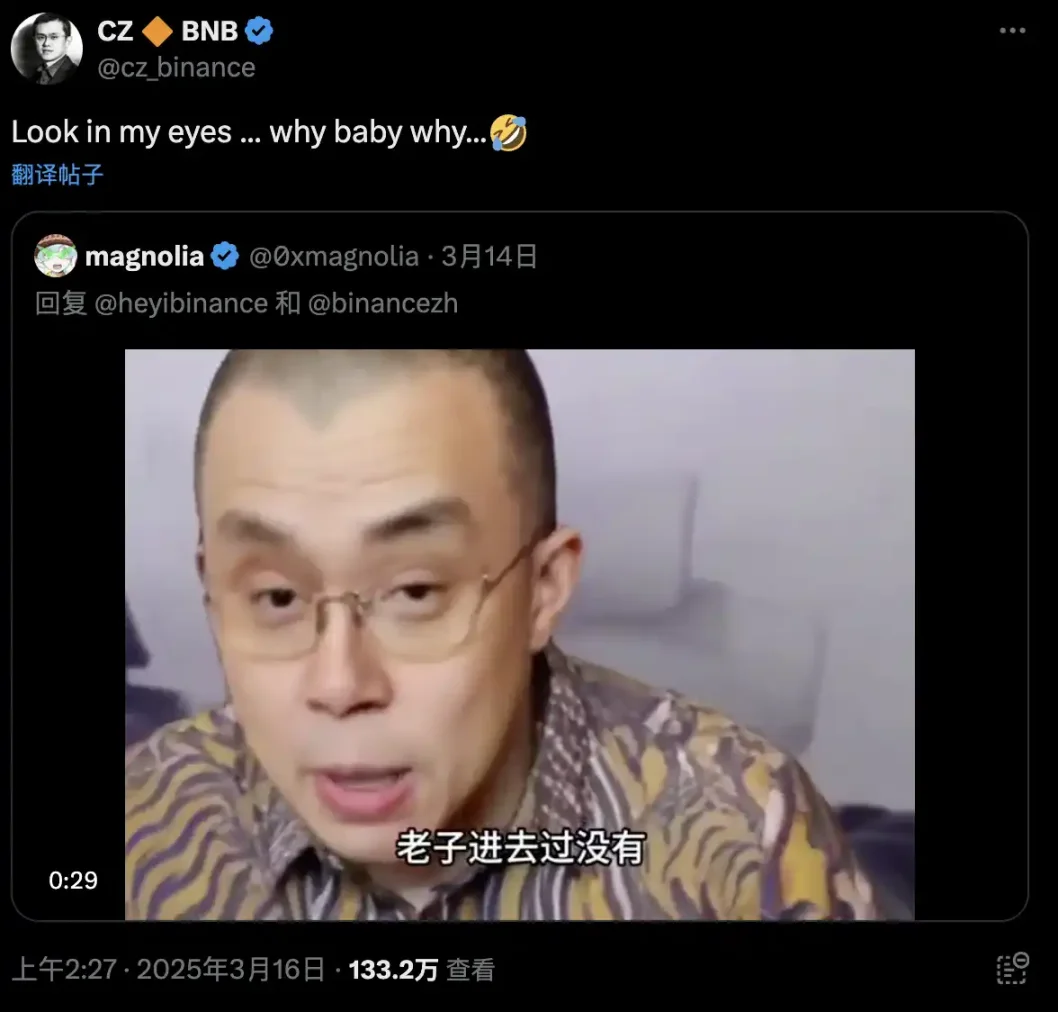
CZ also retweeted an abstract video created by a netizen, featuring the haunting, repetitive phrase “Answer me! Answer me!” Unsurprisingly, $Answer surged 20x within a minute, jumping from a $100,000 to $2 million market cap, with $2.8 million in 24-hour trading volume.
Famous KOL Jia Mi Wei Tuo commented on BSC’s recent momentum, stating that CZ’s strategy is correct. Reviving BSC hinges on dual-engine growth: stabilizing BNB price expectations as the foundation, while continuously launching highly viral new memecoins as fuel. Through split-market liquidity management—“exiting old coins at high prices, relaunching new ones at low levels”—Binance keeps ecological debt under control, enabling retail investors to repeatedly reinvest across 100x narratives instead of getting trapped holding depreciating assets.
Moreover, BNB serves as the ultimate liquidity endpoint, giving BSC a built-in breakout advantage. Unlike Solana, which relies on external capital inflows, Binance only needs to pump new memecoins → attract market makers → accumulate TVL → feed value back into BNB. Once this flywheel is established, Binance can launch a BNB-denominated memecoin market to deliver the final blow.

Indeed, under CZ’s recent maneuvers, BSC has come back to life. Market sentiment is clearly reflected in token prices. However, markets are volatile—please remain cautious of investment risks and potential noise. The above content does not constitute financial advice.
Join TechFlow official community to stay tuned
Telegram:https://t.me/TechFlowDaily
X (Twitter):https://x.com/TechFlowPost
X (Twitter) EN:https://x.com/BlockFlow_News
 BlockBeats


