TechFlow: Economist Mark Carney officially becomes Prime Minister of Canada — how will the bitcoin "critic" shape crypto policy?
TechFlow Selected TechFlow Selected
TechFlow: Economist Mark Carney officially becomes Prime Minister of Canada — how will the bitcoin "critic" shape crypto policy?
As a heavyweight figure in the economic field, Carney was once dubbed a "bitcoin critic" for his negative comments on Bitcoin and cryptocurrencies.
 Navigating Web3 tides with focused insights
Author: Zen, PANews
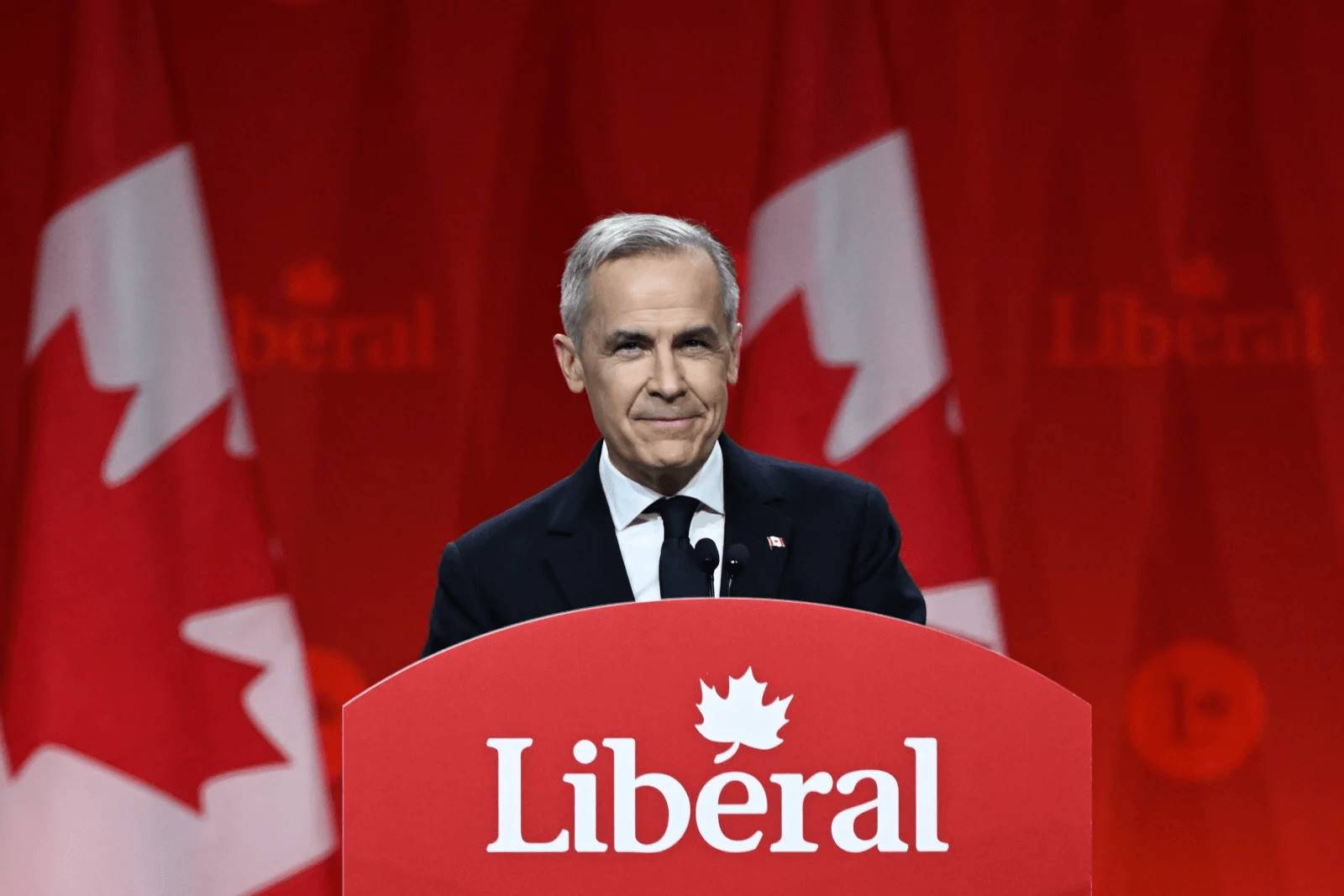
On the morning of March 14 local time, Mark Carney, who won nearly 86% of the vote in the Liberal Party leadership election, will officially assume office as Canada’s Prime Minister.
A 59-year-old economic expert and former central banker, Carney is also a political newcomer, becoming the first person in Canadian history to serve as Prime Minister without ever having held a seat in Parliament.
Since the resignation of former Canadian Prime Minister Justin Trudeau, U.S. President Donald Trump has imposed high tariffs on Canada and repeatedly suggested making Canada the 51st U.S. state. Under normal circumstances, an outsider like Carney would struggle to gain candidacy—but his successful track record as a central bank leader may make him uniquely qualified to lead Canada through the tariff crisis triggered by Trump. Carney believes he is the only one prepared to deal with Trump.
"I know how to manage crises... In this situation, you need experience in crisis management, and you need negotiation skills," Carney said during last month's leadership debate.
"Pragmatic banker": Former Governor of Canada and the UK
In 1988, Carney graduated from Harvard University with a bachelor’s degree in economics, then pursued further studies at Oxford University, earning both a master’s and doctorate in economics. His career began at Goldman Sachs, where he worked for 13 years across its London, Tokyo, New York, and Toronto offices. In the early 2000s, he returned to Canada and entered public service. In 2003, he was appointed Deputy Governor of the Bank of Canada, overseeing monetary policy, and became Senior Deputy Minister of Finance the following year.
In February 2008, Carney became Governor of the Bank of Canada—just as the global financial crisis erupted. Within a month of taking office, he cut interest rates, a move followed by other measures that helped restore market confidence and allowed Canada to recover faster than most countries. Carney earned widespread praise for his handling of the 2008 crisis, establishing new emergency lending mechanisms and unusually offering clear guidance that record-low interest rates would be maintained for a specific period.
In 2013, Carney was recruited by then-British Chancellor George Osborne to become the first non-British governor of the Bank of England. With a resemblance to Hollywood actor George Clooney, Carney was nicknamed the "rock star central banker." Upon arriving in London, he sought to modernize the centuries-old institution. He introduced polymer banknotes and pioneered a communication tool called "forward guidance" to help investors better anticipate interest rate movements.
Carney also intervened in the heated debate over Brexit, repeatedly warning of the economic risks it posed—a stance that drew criticism for allegedly politicizing the independent central bank. However, Carney insisted discussing such risks was part of his duty. After the 2016 Brexit referendum result caused the pound to plummet within hours, Carney delivered a televised address assuring markets that the central bank stood ready to provide liquidity support if needed. He left the Bank of England in 2020 and later served as the UN Special Envoy for Climate Action and Finance, continuing work in areas emphasized during his tenure: aligning financial markets with climate-related risks.
On January 16, 2025, Carney formally announced his candidacy for the Liberal Party leadership. Though his path into politics is unusual, he told supporters: "These are far from ordinary times." Notably, Carney was born in Canada; his grandparents emigrated from Ireland, and he says Irish heritage is a key part of his identity. He obtained Irish citizenship in the 1980s and became a British citizen in 2018 while leading the Bank of England. As a prime ministerial candidate, however, he stated his intention to renounce both British and Irish citizenship.
Advocating strict regulation of crypto assets, supports CBDC
As a heavyweight in economics, Carney has been dubbed a "Bitcoin critic" due to his negative comments about Bitcoin and cryptocurrencies. His views on crypto assets have largely centered on a 2018 speech titled "The Future of Money."
"The fixed supply of cryptocurrencies like Bitcoin is not a strength, but a serious flaw. Fundamentally, widespread adoption would create deflationary pressures in the economy," Carney argued. Re-establishing a global "virtual gold standard," he said, would reflect historical ignorance about money.

Carney also stated that cryptocurrencies perform poorly as short-term stores of value. "Over the past five years, Bitcoin’s daily standard deviation (volatility) has been ten times that of the British pound. Imagine borrowing 1,000 pounds worth of Bitcoin last December to pay for next year’s living expenses in pounds—you’d now be down about 500 pounds. But if you did it last September, you might now be up 2,000 pounds. It’s essentially a lottery."
Moreover, he noted that fundamental skepticism about the long-term value of cryptocurrencies stems from uncertainty over whether they can function effectively as a medium of exchange.
"Regardless of the merits or flaws of cryptocurrencies as money, regulators must proceed cautiously—not to stifle innovations that could enhance financial stability, enable more innovative, efficient, and reliable payment services, and unlock broader technological potential."
Carney warned that adopting a blanket isolation strategy might cause policymakers to miss major opportunities arising from advances in underlying payment technologies. A better approach, he said, is to regulate certain parts of the crypto asset ecosystem to combat illicit activities, ensure market integrity, and protect the safety and soundness of the financial system. "It’s time to bring the crypto asset ecosystem under the same regulatory framework applied to the rest of the financial system."
Carney acknowledged the transformative impact of the core technology behind cryptocurrencies. He believes regulating crypto assets could foster innovation and deliver better services to the public. In fact, he sees crypto assets pointing toward the future of money in three key ways:
- Highlighting how money and payments must evolve to meet changing societal needs—especially decentralized peer-to-peer interactions;
- Demonstrating the potential of underlying technologies to improve the efficiency, reliability, and flexibility of payments;
- Sparking debate over whether central banks should offer central bank digital currencies (CBDCs) directly to the public.
Carney is a strong advocate of central bank digital currencies (CBDCs), having previously stated that in his vision of the future, CBDCs will form the backbone of the economy. He believes CBDCs offer greater security and a superior user experience compared to cryptocurrencies and stablecoins—a view aligned with his predecessor, Trudeau, who has long criticized cryptocurrencies and favored launching a Canadian-dollar CBDC.
Canada has previously taken an open approach to cryptocurrencies, treating them as commodities and requiring platforms operating in Canada to register and comply with securities laws—though without actively supporting them. Carney’s critical stance toward Bitcoin suggests he will not follow the U.S. model of building strategic crypto reserves.
Ideologically, Carney’s push for CBDC may stem from a desire to improve the economic condition of the country he deeply cares about. By contrast, Conservative opposition leader Pierre Poilievre remains firmly opposed.
It should be noted that Carney may not remain Prime Minister for long. According to polls, the opposition Conservative Party currently holds a slight lead ahead of the general election, which must be held by October 20 this year. However, rising anti-Trump sentiment—and doubts that populist Poilievre would stand up to Trump—are fueling a rapid surge in support for Carney and the Liberal Party.
Join TechFlow official community to stay tuned
Telegram:https://t.me/TechFlowDaily
X (Twitter):https://x.com/TechFlowPost
X (Twitter) EN:https://x.com/BlockFlow_News
 PANews