Canada's new anti-crypto leader takes charge: Where is the crypto market headed?
TechFlow Selected TechFlow Selected
Canada's new anti-crypto leader takes charge: Where is the crypto market headed?
Canny's policies may drive blockchain innovation, but strict regulation could restrict decentralized development.
 Navigating Web3 tides with focused insights
By Luke, Mars Finance
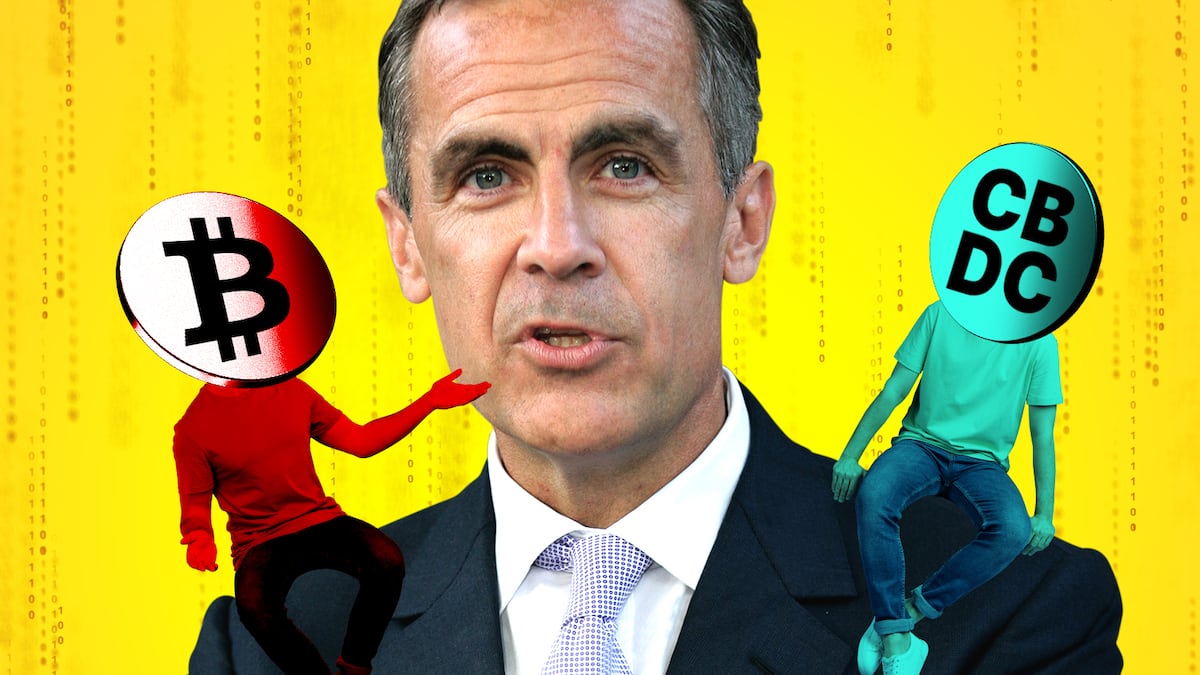
On April 28, 2025, Mark Carney, former governor of the Bank of Canada and the Bank of England, led the Liberal Party to a landslide victory in Canada’s federal election, becoming the country’s 24th Prime Minister. The economist renowned for navigating the global financial crisis has made a dramatic leap from the ivory towers of central banking into the turbulent arena of Canadian politics. Carney’s victory was fueled in part by rising anti-Trump sentiment and his promise to position Canada at the forefront of emerging technologies. Yet for the cryptocurrency community, his ascension raises an urgent question: How will his cautious, even critical stance toward Bitcoin and decentralized finance shape the future of crypto in Canada?
A Career Forged in Crisis
Mark Carney’s path to the prime ministership is both unconventional and remarkable. Born in Fort Smith, Northwest Territories, and raised in Edmonton, Alberta, he is deeply rooted in Canadian soil—yet his career has spanned the globe. Armed with an economics degree from Harvard and a doctorate from Oxford, Carney began at Goldman Sachs, spending 13 years working in New York, London, and Tokyo, mastering the intricacies of complex financial systems.
In 2003, he joined the Bank of Canada as Deputy Governor. By 2008, at age 42, he became its youngest-ever Governor, steering Canada through the global financial crisis with innovative measures like emergency lending facilities and forward guidance on interest rates, shielding the economy from the worst impacts. In 2013, Carney broke precedent as the first non-British Governor of the Bank of England, managing Brexit fallout and the early chaos of the pandemic. His calm, data-driven leadership earned him the nickname “rock star of central banking”—a label that followed him back to Canada.
After leaving central banking, Carney transitioned into roles blending finance and social impact: Chair of Transition Investing at Brookfield Asset Management and UN Special Envoy for Climate Action and Finance. In 2024, he advised then-Prime Minister Justin Trudeau on economic growth, laying the groundwork for his political ambitions. When Trudeau resigned in January 2025 amid plunging approval ratings and looming trade war threats with the U.S., Carney seized the moment, winning the Liberal leadership with a staggering 85.9% of the vote. His campaign, centered on resisting Trump’s tariffs and strengthening Canadian sovereignty, resonated deeply with a public anxious over external pressures.
Carney’s Cautious Stance on Crypto: A Central Banker’s View
Mark Carney’s perspective on cryptocurrency, particularly Bitcoin, is deeply shaped by decades of experience as a central banker. To him, financial stability and centralized monetary control are foundational to economic order—principles challenged by decentralized digital assets. As early as 2018, Carney declared Bitcoin to have “serious flaws” during a speech at the Scottish Economic Club. He criticized its fixed supply of 21 million coins for fostering deflationary pressure, rendering it ill-suited as either a stable store of value or reliable medium of exchange. During a Q&A at Regent’s University London, he stated bluntly: “Bitcoin fails almost entirely in the traditional functions of money.” He pointed to extreme volatility, citing Bitcoin’s plunge from nearly $20,000 to under $3,000 between 2017 and 2018 as proof of its inadequacy for everyday transactions.
Carney’s critique extends beyond technical shortcomings to broader societal and economic risks. In a 2018 Bloomberg interview, he warned that Bitcoin’s anonymity makes it a haven for money laundering and illicit activities, threatening financial integrity. He cautioned that unregulated expansion of crypto markets could trigger systemic risks akin to the pre-2008 derivatives crisis. He also voiced concerns about stablecoins. In a 2021 speech to the Bank for International Settlements, he highlighted how tech-backed stablecoins—like Facebook’s proposed Libra—could fragment liquidity and undermine national monetary sovereignty. He argued that such stablecoins, controlled by a handful of corporations, fail to solve decentralization’s volatility issues while introducing new governance risks.
Conversely, Carney has long championed central bank digital currencies (CBDCs). He believes CBDCs can offer the convenience of digital payments while preserving financial stability and regulatory oversight through centralized design. In a 2020 address, he asserted: “CBDCs can enhance the transmission of monetary policy and reduce the risks posed by private cryptocurrencies.” He emphasized their potential to combat illegal finance via traceable transactions and to lower consumer transaction costs compared to existing payment infrastructures. This view aligns with global trends, including China’s digital yuan pilot and the European Central Bank’s digital euro initiative.
Yet Carney’s stance on crypto is not uniformly dismissive. Between 2021 and 2025, while serving on Stripe’s board, the company launched crypto-enabled payment solutions allowing merchants to accept Bitcoin and other digital assets. This suggests Carney acknowledges crypto’s commercial utility—provided it operates within strict regulatory boundaries. At a fintech conference in 2021, he noted: “Blockchain technology itself holds revolutionary potential, but its applications must serve the public good.” This reflects a balancing act: supporting technological innovation while remaining skeptical of decentralized ideology. He likely favors blockchain use cases in regulated domains like supply chain tracking, cross-border payments, or digital identity—rather than in permissionless, decentralized ecosystems.
His central banking pedigree has made him acutely sensitive to financial risks, explaining his caution toward crypto. Having navigated global crises and Brexit, he understands how innovation can trigger cascading failures. In a 2019 parliamentary testimony, he warned: “The rapid rise of cryptocurrencies demands globally coordinated regulation, or we risk repeating the mistakes of 2008.” This systemic mindset leads him to favor integrating digital finance into the existing system rather than allowing it to grow unchecked outside regulatory frameworks.
The Crypto “Tightening”: Where Does Canada Go From Here?
Carney’s premiership may usher in a tightly regulated environment for Canada’s crypto industry. Unlike Conservative leader Pierre Poilievre, who openly champions crypto and criticizes Trudeau’s restrictive policies, Carney’s platform emphasizes “prudent” innovation. Morva Rohani, Executive Director of the Canada Web3 Council, told Cointelegraph that crypto is unlikely to be a major electoral issue—concerns like housing affordability and Trump’s tariffs dominate public discourse. Still, Carney’s past statements suggest digital finance won’t be ignored—only closely controlled.
First, Carney is expected to accelerate CBDC development. His longstanding advocacy for a digital Canadian dollar aligns with ongoing explorations at the Bank of Canada. Unlike Bitcoin’s decentralized nature, a CBDC would grant the government full transactional visibility—a prospect troubling to crypto purists. Memories of Trudeau’s 2022 freeze on bank and crypto accounts during the trucker protests remain fresh; Carney’s ideological alignment with Trudeau on CBDCs could deepen public skepticism toward decentralized finance.
Second, Carney’s pledge to make Canada a leader in “AI, technology, and digital industries” may open doors for blockchain innovation—but under tight constraints. His focus on AI-driven economic transformation could benefit from blockchain’s strengths in secure, transparent data management. However, any advancement is likely to occur through regulated, government-approved frameworks. Decentralized protocols like Bitcoin and Ethereum may be sidelined. As X user @JinJooWon observed, Carney’s policies might “ignite blockchain innovation” while making “decentralization struggle to survive.”
Third, Carney’s focus on countering U.S. tariffs may limit crypto’s growth. Trump’s trade war—including 25% tariffs on Canadian steel and aluminum and broader tariff threats—has sparked recession fears. Carney’s response—retaliatory tariffs and diversifying trade partners—reflects a pragmatic, risk-averse approach. In this climate, crypto’s volatility and regulatory uncertainty may be seen as liabilities rather than assets.
Carney vs. Trump and Trudeau: Crypto’s Polar Opposites
To grasp Carney’s potential impact on crypto, it’s essential to contrast him with U.S. President Donald Trump and former Canadian Prime Minister Justin Trudeau.
Donald Trump: The Pro-Crypto Counterweight
Trump’s second term, beginning in January 2025, has taken an unexpected pro-crypto turn. He signed an executive order banning a U.S. dollar CBDC while establishing a strategic Bitcoin reserve—marking a sharp reversal from his first term. Positioning Bitcoin as an inflation hedge, Trump has energized the American crypto community. His policies stand in direct opposition to Carney’s, potentially straining Canada-U.S. relations.
While Carney advocates centralized control and CBDCs, Trump embraces decentralization—potentially drawing crypto investment southward. Canadian crypto startups, already facing stringent regulations, may find the U.S. increasingly attractive. Moreover, Trump’s tariff threats and inflammatory rhetoric dominate Canadian political discourse, pushing domestic issues like crypto regulation to the sidelines. With Carney focused on defending against U.S. economic aggression, detailed crypto policymaking may take a backseat, reinforcing a conservative regulatory posture.
Justin Trudeau: Continuity and Change
Carney’s predecessor, Trudeau, also viewed crypto with skepticism. In 2022, he dismissed Poilievre’s pro-crypto agenda as “reckless.” His government prioritized CBDC development and froze crypto transactions during the trucker protests to disrupt funding. Carney shares Trudeau’s support for CBDCs but differs in experience and approach. While Trudeau’s crypto actions were reactive—driven by crisis—Carney’s are likely to be proactive, grounded in central banking doctrine.
His emphasis on AI and technology signals a more strategic vision for digital finance—one that may integrate blockchain into public services while keeping decentralized networks at arm’s length. However, unlike Trudeau, who spent years in elected office, Carney lacks direct political experience and may be less attuned to public sentiment, especially among younger Canadians who favor crypto-friendly policies.
The Long Road Ahead: Balancing Innovation and Control
Carney’s arrival at the Prime Minister’s Office suggests his crypto policy will mirror his broader governance philosophy:稳健, prudent, and stability-first. His skepticism toward Bitcoin and DeFi stems from his central banking roots, foreshadowing tighter regulations and accelerated CBDC development. Yet his commitment to technological leadership leaves room for blockchain innovation—if aligned with state priorities.
For Canada’s crypto community, the challenge lies in advancing decentralization within a regulated framework. Carney’s global stature and crisis-management expertise make him a formidable leader, but his top-down approach may clash with crypto’s grassroots ethos. As one X user put it: “Will digital finance soar while decentralization struggles?” The question isn’t whether Carney will shape Canada’s crypto future—he will—but whether he can strike a balance between innovation and control.
Compared to Trump’s pro-crypto enthusiasm and Trudeau’s reactive measures, Carney’s vision is both ambitious and cautious—a technocrat’s blueprint for the digital age. Whether it elevates Canada’s tech leadership or stifles its crypto potential remains to be seen. For now, the world watches Carney—the crisis-tested banker—as he confronts his greatest challenge yet: guiding Canada through uncharted waters of trade wars, technological revolution, and the future of money.
Join TechFlow official community to stay tuned
Telegram:https://t.me/TechFlowDaily
X (Twitter):https://x.com/TechFlowPost
X (Twitter) EN:https://x.com/BlockFlow_News