Who are the big players making money in this cycle, earning in crypto and spending outside?
TechFlow Selected TechFlow Selected
Who are the big players making money in this cycle, earning in crypto and spending outside?
Common traits of losers: lack of technical expertise, information disadvantages, retail investors blindly chasing price surges and drops, and project teams failing to adapt to regulatory changes.
 Navigating Web3 tides with focused insights
Author: Professor Suo
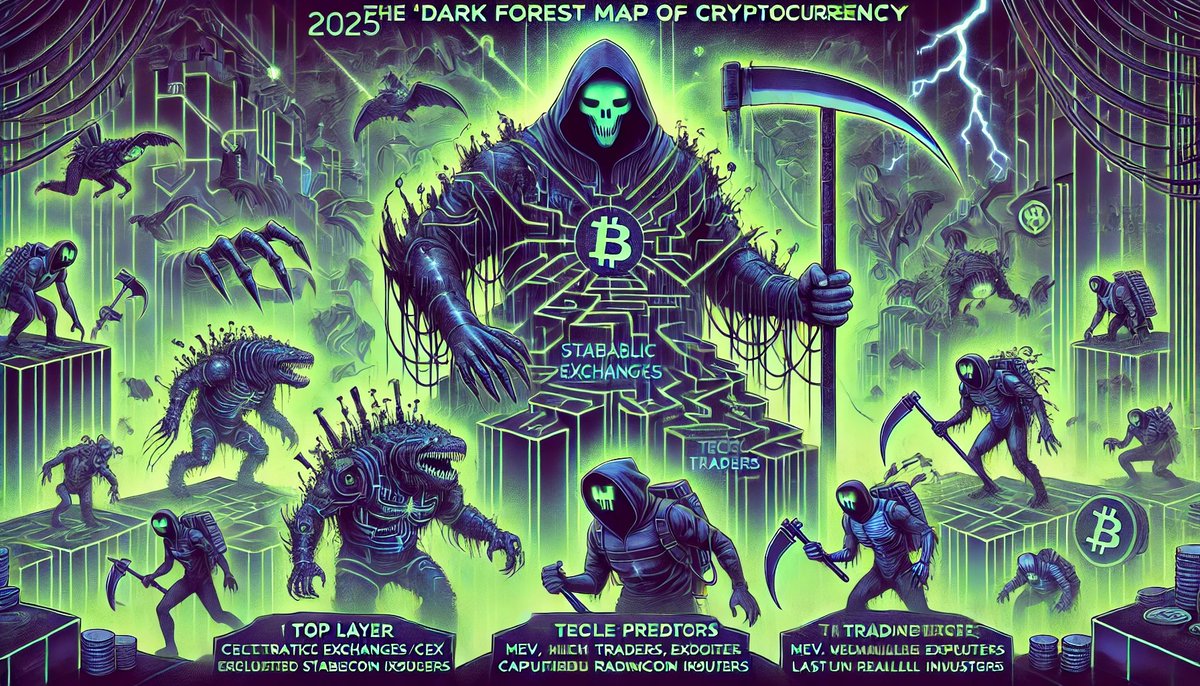
In 2025, despite the overall crypto market cap reaching new highs, people are finding it increasingly difficult to make money. Most individuals around them—even the majority—are losing money, prompting curiosity about who exactly is profiting in the market. After sifting through comments from online readers, I’ve pieced together some insights and hope they point toward the truth.
1. Centralized Exchanges (CEX)

-
Profit Logic: Trading fees: Transaction volume surges during bull markets (e.g., post-Bitcoin halving in 2024), leading to exponential growth in fee revenue; derivative products (futures, options) maintain income during bear markets via hedging demand. Listing fees and project incubation: High-profile projects (e.g., Meme coins, RWA sector) pay substantial listing fees, with some exchanges participating in early investments (e.g., OKX Ventures). Lending and wealth management services: Profit from interest spreads on user deposits (e.g., OKX Earn).
-
Case Study: Binance’s derivatives trading volume accounted for over 60% in Q4 2023, while spot trading rebounded to an average daily volume of $30 billion at the start of the 2024 bull run.
- Revenue: Consider @Bybit_Official's hack disclosure revealing annual profits exceeding $1.5B—imagine how much higher others might be. The combined earnings across all exchanges are staggering.
Most trading still occurs on CEXs, where users keep their funds and conduct financial activities.
2. Decentralized Exchanges (DEX) and Liquidity Providers (LP)

-
Profit Logic: Fee sharing: Top-tier DEXs (e.g., Uniswap, Jupiter, Ray, Meteora) offer LPs 0.3%-0.25% transaction fees, especially lucrative during Meme coin speculation cycles (e.g., Solana-based DEXs surpassed $10B monthly trading volume in 2024).
-
Strategy Adaptability: LPs must avoid impermanent loss by choosing stablecoin pairs or low-volatility assets, as high volatility increases risk of total loss.
DEX total trading volume reached approximately $2.2–2.5 trillion in 2024, setting a record.
3. MEV (Arbitrage, Liquidations, Sandwich Attacks)

-
Profit Logic: Arbitrage and liquidations: Profits from price discrepancies between CEX and DEX, or DeFi liquidation events (MEV profits exceeded $2.5B in 2024). Sandwich attacks: Front-running and back-running retail trades (accounting for 15% of MEV profits post-Ethereum merge).
-
Technical Barrier: Requires high-performance nodes and algorithm optimization; top searchers earn tens of millions annually.
In simple terms, even when CZ buys a Meme coin on BNB Chain, he gets sandwiched 70%; every time there's a margin call, someone else is already picking up the pieces.
4. High-Frequency Trading Bots

-
Profit Logic: Cross-exchange arbitrage and volatility after new listings (e.g., price differences up to 20% within 5 minutes of a Coinbase listing). Meme coin sniping: Using on-chain monitoring tools (e.g., GMGN, OKX) to catch early signals (e.g., BOME surged 100x within 3 hours of launch in 2024). Rapid Meme buying: Using trading bots (e.g., GMGN) to enter early (e.g., most early Trump token adopters used GMGN).
-
Risk: Must contend with network congestion, gas fee fluctuations, and MEV sandwich attacks.
If bots weren’t profitable, you wouldn’t see so many people building them or GMGN constantly running promotions.
5. Project Teams with Cash-Flow Generating Businesses

- Profit Logic: Many projects lure users into inflating trading volume under the guise of airdrops, profiting from gas consumption (e.g., LINEA). Others sell services (e.g., KAITO) or assist in token launches (e.g., @pumpdotfun).
-
Risk: Regulatory pressure (e.g., SEC lawsuit against Pump) and long-term sustainability.
Some teams don’t need to issue tokens but choose to do so to monetize data aggressively—making ten years’ worth of profits in one year.
6. Stakers and Node Operators

-
Profit Logic: PoS rewards: Post-merge Ethereum staking yields stable annual returns of 4%-6%, Cosmos ecosystem APY ranges from 8%-15%, Solana staking APY averages 4%-5%. Restaking new paradigm: Protocols like EigenLayer, Solayer, Jto stack staking rewards across chains (TVL exceeded $5B in 2024).
-
Trend: Liquid staking derivatives (LSDs) such as Lido now control over 30% of the market share.
For ETH whales, this is drought-and-flood-proof income. Plus, node operators can prioritize their own transactions—strongly recommend checking BNB Chain.
7. Compliance Service Providers and Infrastructure Builders

-
Profit Logic: After Bitcoin and Ethereum ETF approvals, firms like BlackRock generate massive annual management fees. Additional compliance-related service fees also contribute. On-chain compliance tools: Chainalysis and Elliptic provide AML solutions for institutions; security firms like SlowMist audit projects.
No one thinks Grayscale earned little over the years in management fees—BlackRock entered swiftly and quickly became the top holder in ETFs.
8. SEC and National Judicial Authorities
- Profit Logic: Fines—the U.S. Department of Justice collected over $4B last year from the former CEO of @binance; the SEC fines various exchanges, recently imposing an $82M penalty on @okx and seizing $420M in illicit gains; other exchange penalties remain undisclosed.
-
Risks & Challenges: Governments worldwide are eyeing this revenue stream, with the U.S. extracting globally. With Trump’s return to power and increased crypto support, the SEC has started offering settlements—policy remains uncertain.
The U.S. collects tens of billions annually in fines; local governments use these to cover budget deficits—everyone wants a piece.
9. Market Makers
-
Profit Logic: Divided into active and passive market makers. Most profit from bid-ask spreads. Some only provide liquidity, while others manipulate prices ("pump and dump"). Many enjoy negative trading fees plus rebates from exchanges. The fact that Citadel is entering crypto speaks volumes about profitability.
-
Risks & Challenges: Regulatory scrutiny, technological competition, strategy rivalry, and insufficient liquidity.
So many traditional market makers are entering crypto—not out of conviction, but because of the profits.
10. Mining Equipment Manufacturers
-
Profit Logic: Selling mining hardware is key, especially in POW environments. Revenue comes from hardware sales, upgrades,托管 services, ecosystem partnerships, technology licensing, and derivative businesses. Remember, Bitmain nearly became a semiconductor company.
-
Risks & Challenges: Supply-demand imbalances due to price crashes, reliance on supply chains (e.g., TSMC), and regulatory compliance.
This is drought-and-flood-proof: whenever BTC or another POW coin surges, miner prices skyrocket. Only those with good connections can buy them—supply-demand dynamics shift rapidly.
11. Hackers

-
Profit Logic: Exploit technical vulnerabilities and strategic attacks to illegally profit—zero-cost operations. With strong skills, anyone can earn easily.
-
Risks & Challenges: Improved countermeasures, increasing sanctions on mixers, legal consequences and cross-border crackdowns, internal disputes exposing identities.
Hacking is a zero-cost business. Many hackers seek jobs at wealthy firms just to commit insider theft—quick paths to riches. But no one dares steal from generals’ wallets… because it could cost their lives.
12. Meme Coin Projects and Conspiracy Groups
-
Profit Logic: Industrial-scale issuance and exit scams, market manipulation, insider trading. KOL-led conspiracy groups collude with or become project teams, shilling and dumping at peaks while fans take the losses. This has become industrialized—launching en masse, small gains adding up.
-
Risks & Challenges: Regulatory scrutiny, backlash from repeated scams leading to real-world protests, legal risks when followers lose money.
Think about how many want to join these conspiracy groups—you assume your Meme coin is community-driven, but it's actually orchestrated.
13. Information Arbitrageurs
-
Profit Logic: Acting instantly on exchange listings or breaking news—a one-second edge could multiply profits several times over.
-
Risks & Challenges: The success of Equation has intensified competition—whether API speed or execution latency. Also fear misjudging direction, e.g., the massive crash after why and cheems launched futures contracts.
See how many rush to follow Equation’s API alerts—how many dream of being the next Equation? That tells you how profitable it is.
14. Stablecoin Issuers

-
Profit Logic: Investment returns on reserves, transaction fees, zero-cost funding pools—essentially "fiat-to-digital arbitrage."
-
Risks & Challenges: Regulatory, liquidity, and systemic risks.
Everyone knows—deposit dollars, convert to stablecoins, earn significant spread. Not to mention additional income streams.
15. A Few VC Firms
-
Profit Logic: Invest at low valuations, sell tokens post-TGE. If initial unlocks lack sufficient vesting periods, likely just hype without real profit.
-
Risks & Challenges: Project teams arbitrarily changing rules—unlock schedules, valuations—or outright rug pulls.
Few VCs actually made money this cycle—only rare ones like Dovey had pricing power. With many project teams being CS types free to alter terms, chances of profit were slim.
16. KOLs
-
Profit Logic: Project promotions, participation in KOL rounds, sharing profits with teams, joining or forming conspiracy groups. Some negotiate direct allocation shares; more powerful ones even become founders.
-
Risks & Challenges: Reputation collapse, legal compliance—don’t forget, in Dongguan, promoting a failed project could get you doxxed.
This cycle, KOLs reportedly demand at least 1% allocation upfront, leveraging influence to pressure project teams. At Hong Kong conferences, KOLs are clearly the elite class.
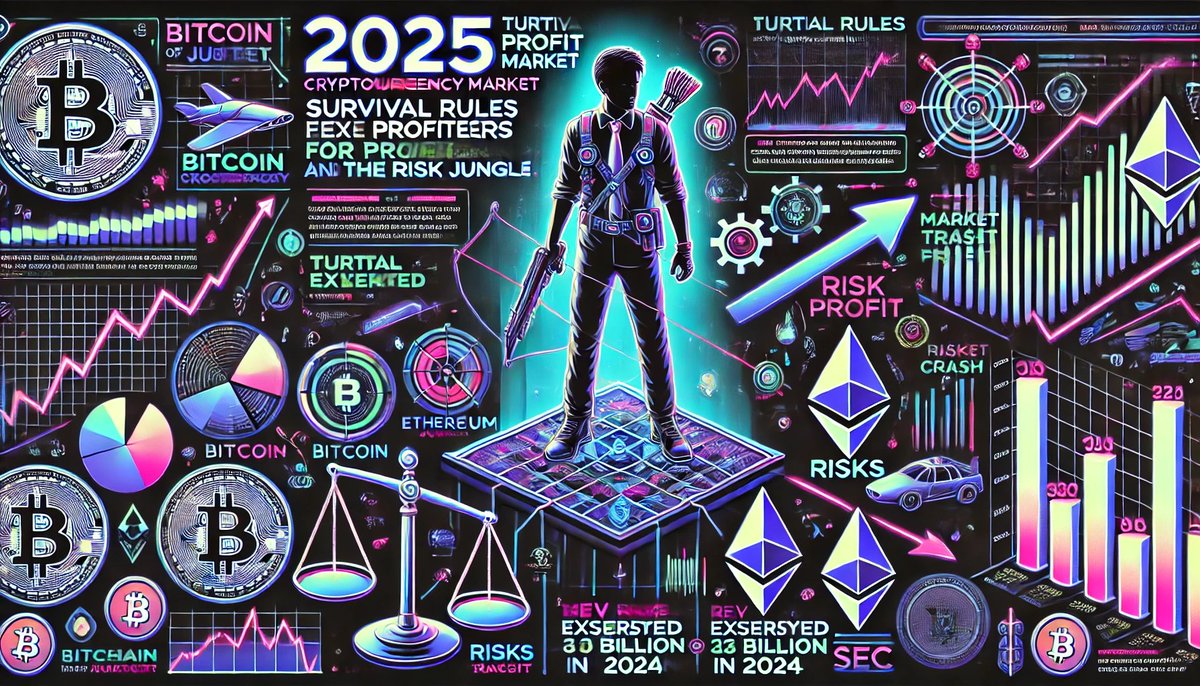
Key Commonality: Core Traits of Profitable Players
-
Technical Advantage: MEV searchers and bot developers rely on algorithms and infrastructure (e.g., low-latency nodes).
-
Market Sensitivity: Early investors and project teams accurately capture trend shifts (e.g., BRC-20 in 2023, RWA and AI in 2024).
-
Counter-Cyclicality: CEXs and compliance providers resist bear markets via diversified offerings (lending, custody).
-
Economies of Scale: Top exchanges and market makers monopolize profits through capital and liquidity dominance.
-
Influence Advantage: Leading VCs and KOLs leverage attention economies via clout concentration.
-
Cost Advantage: Whether $Trump or Meme coin conspiracies, these are largely zero-cost operations—so losses are nearly impossible.
Risks & Challenges
-
Regulatory Uncertainty: U.S. lawmakers propose banning public officials from launching tokens; SEC gradually moves toward settlements.
- Cross-chain bridge exploits (e.g., Poly Network lost $250M in 2023), smart contract flaws (e.g., Curve pool hit by flash loan attack in 2024), exchange hacks (e.g., Bybit recently lost over $1.5B due to issues with @safe).
-
Market Sentiment Swings: Political coin bubbles (e.g., TRUMP briefly surpassed $80B market cap in 2025 before crashing 85%).
-
Cyclicality: Profitability shifts with market cycles—DeFi last round, AI this round, unknown next.
Summary
Core profitable groups:
-
Infrastructure Monopolists (CEX, LSD protocols);
-
Capital Whales (Stablecoin issuers, Market Makers);
-
Technologically-Driven Players (MEV, Bots);
-
Trend Capturers (Early investors, Project teams);
-
Compliance Dividend Beneficiaries (Licensed exchanges, Auditors);
-
Influence Concentrators (Top VCs, Celebrities, KOLs);
Common traits of losers: Lack of technical or informational advantage, blindly chasing pumps and dumps, retail traders, and project teams unable to adapt to regulatory changes.
To be honest, after writing this, I feel somewhat proud I haven’t lost too much. So many are making insane profits—and most take their gains and leave the space. What can you even do about it???
This cycle, project teams aren’t necessarily profitable—especially those assumed to be making money. Building projects is almost mystical—success isn’t determined by skill, but by fate😂
Done writing. Please help me add more. Later, I’ll publish a separate deep dive ranking each player in this cycle by profitability🤣—but only if you guys actually enjoy reading this. Drop lots of comments.
Join TechFlow official community to stay tuned
Telegram:https://t.me/TechFlowDaily
X (Twitter):https://x.com/TechFlowPost
X (Twitter) EN:https://x.com/BlockFlow_News
 @hellosuoha